

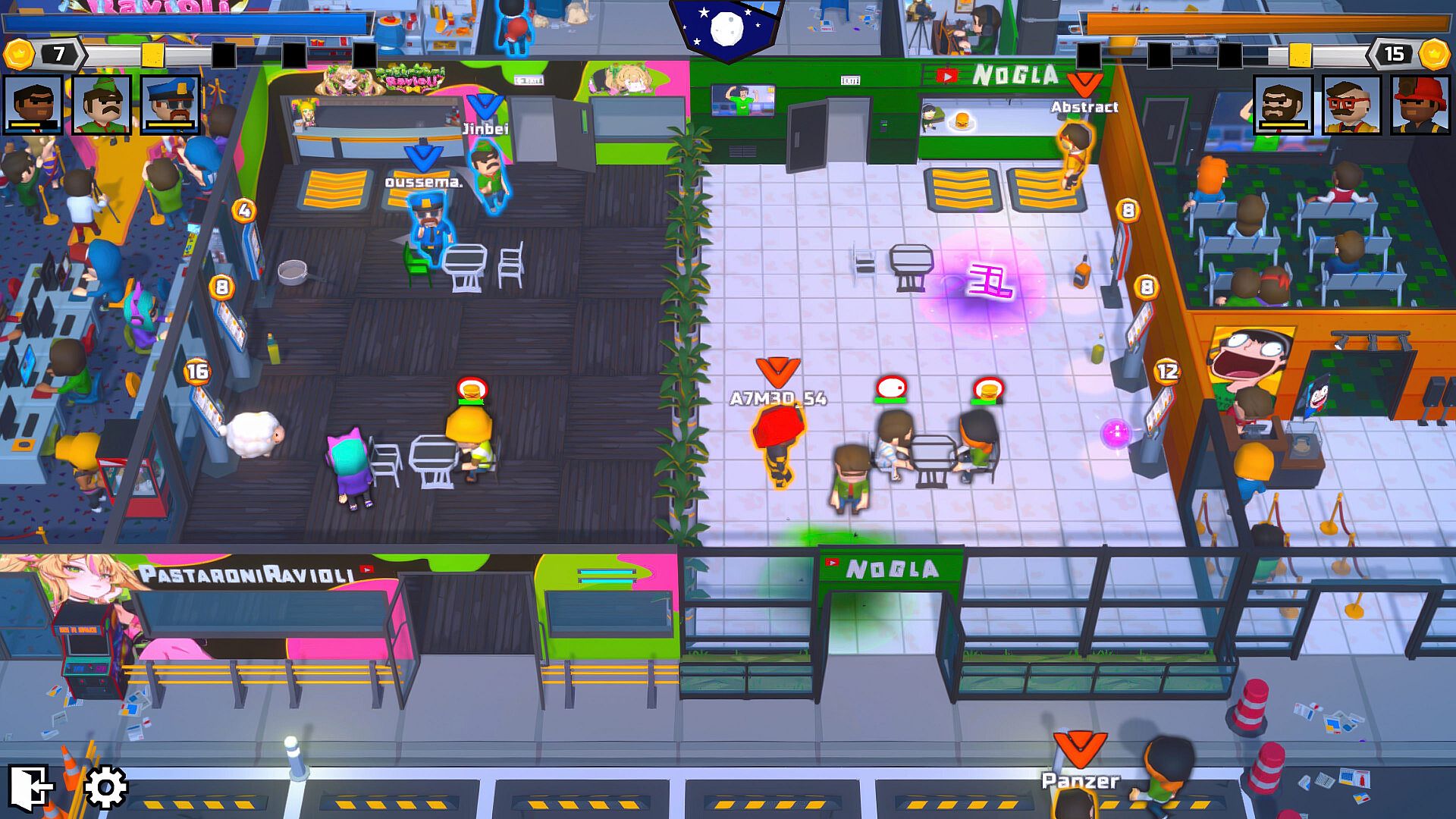
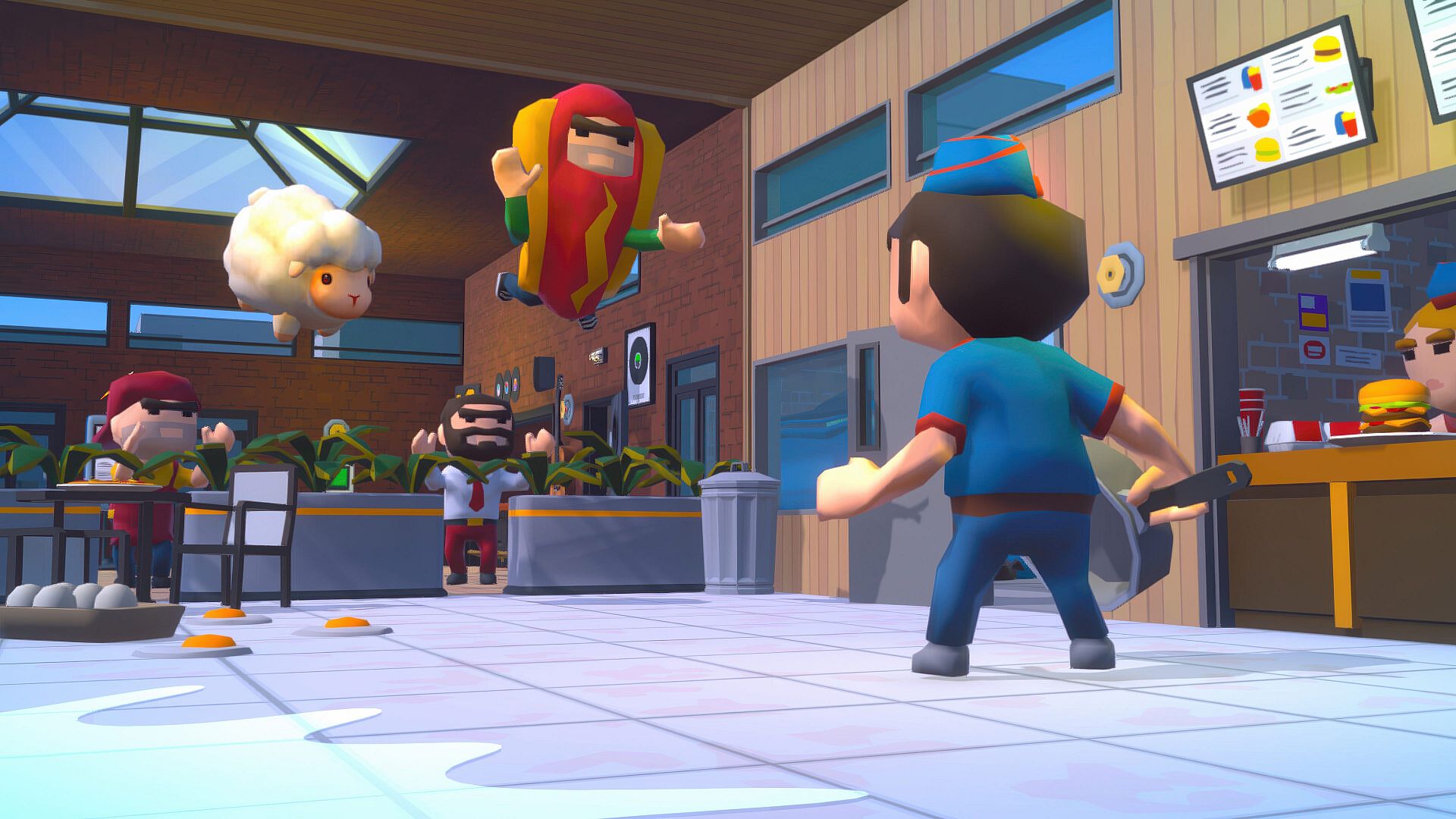
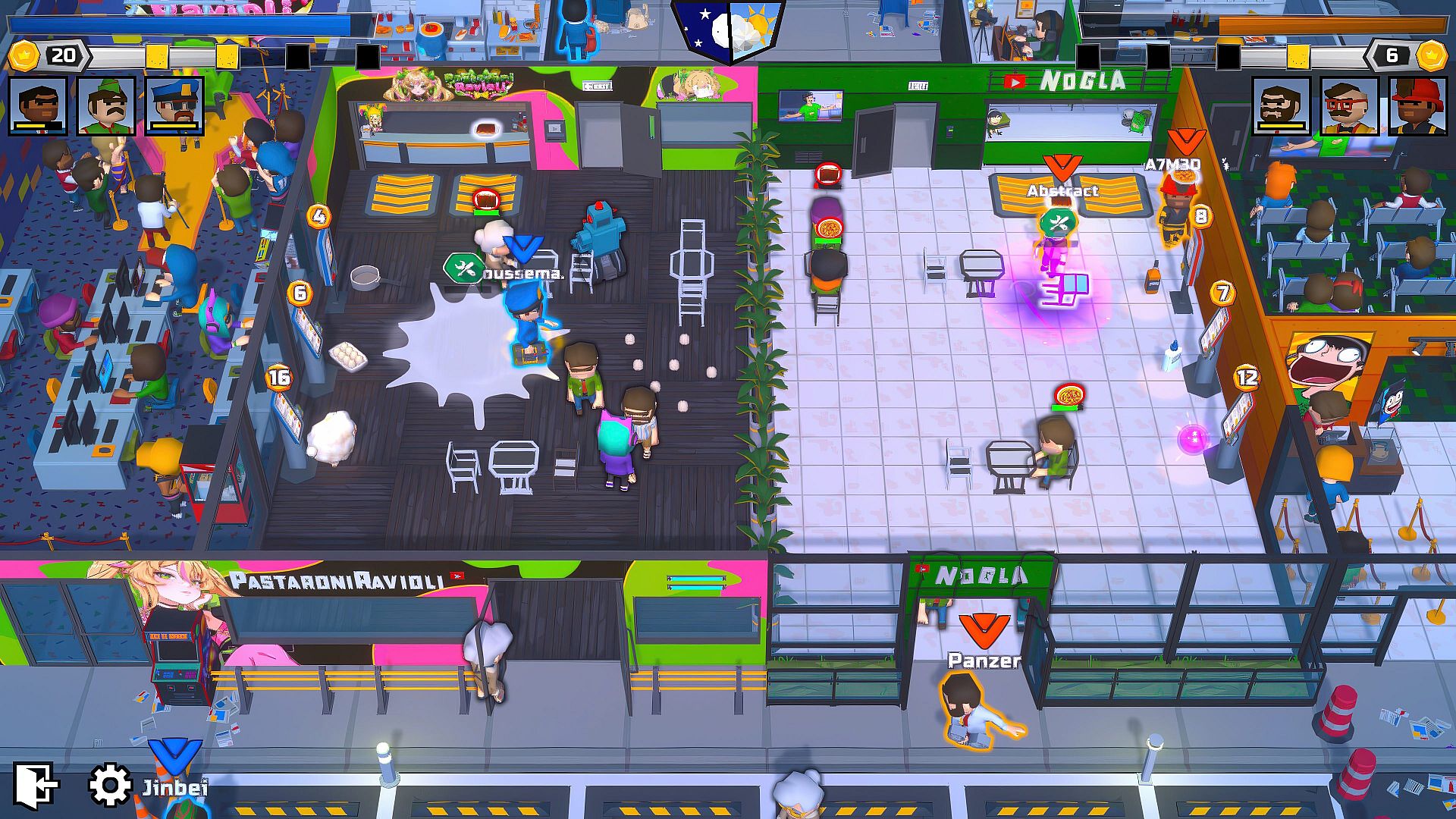
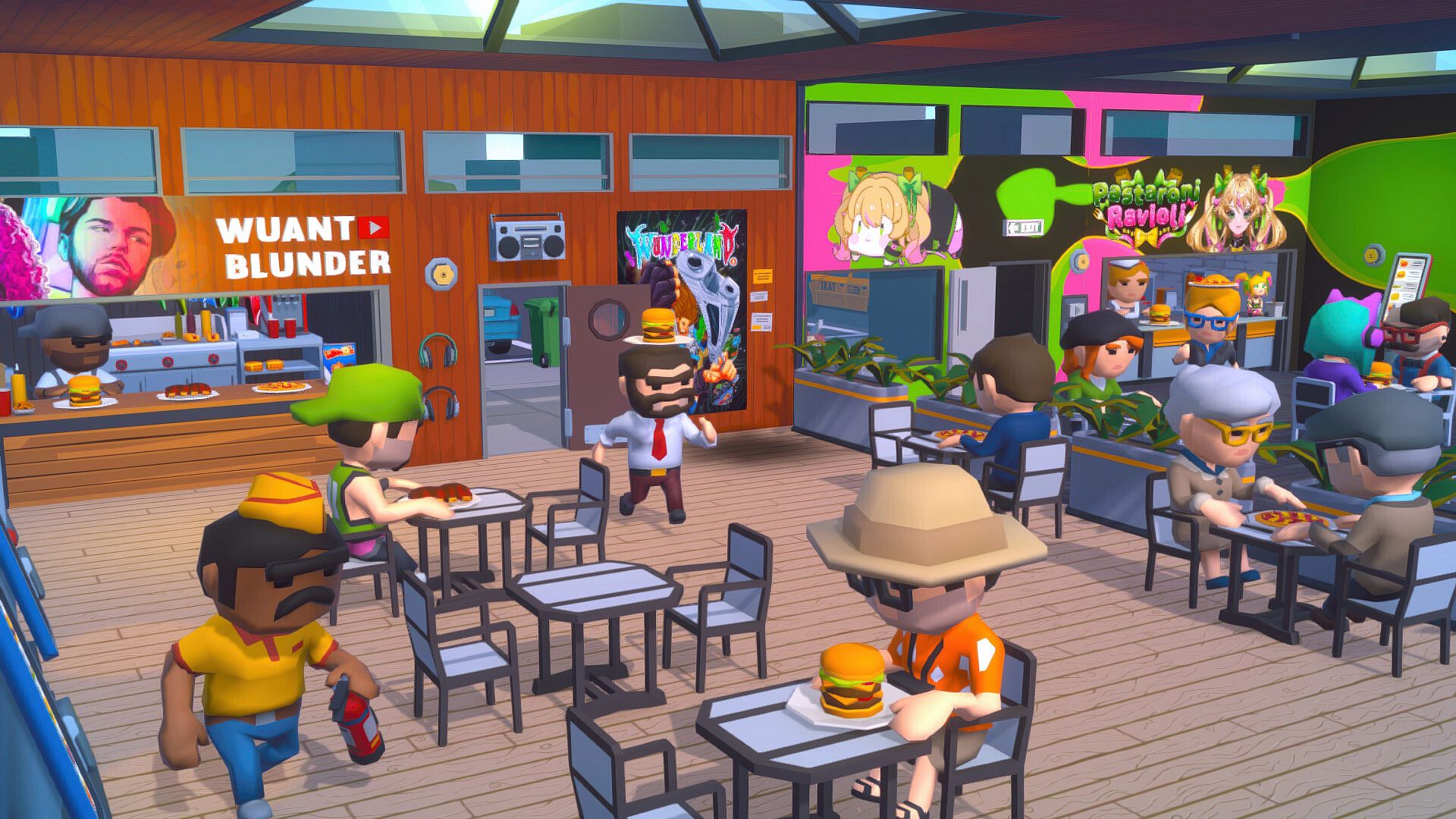



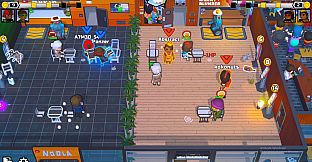
Kitchen Wars is a chaotic multiplayer party game that blends restaurant management with direct sabotage between rival teams. Players compete in matches where the goal is to keep customers satisfied in one kitchen while actively disrupting operations in the opposing one. The experience fits the action, indie, casual, and adventure genres with its emphasis on quick decisions, item throwing, and strategic upgrades rather than complex simulation.
Gameplay
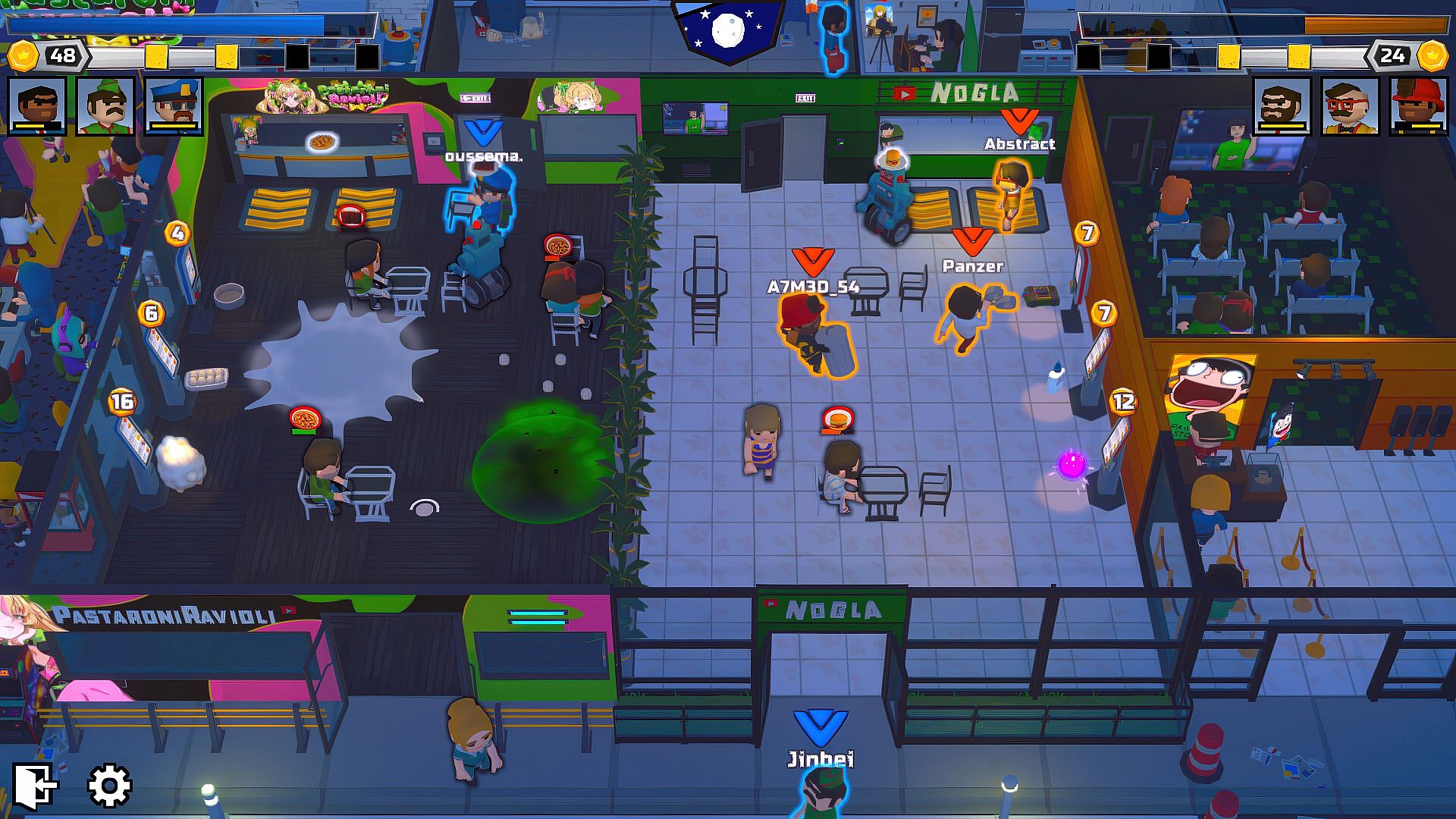
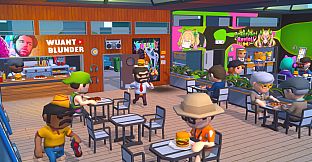
Matches revolve around a straightforward loop of serving prepared meals to waiting customers before their patience runs out. Successful deliveries generate coins that fund kitchen improvements and powerful items. There is no ingredient preparation or recipe crafting; the focus stays on efficient delivery, table management, and countering the other team.
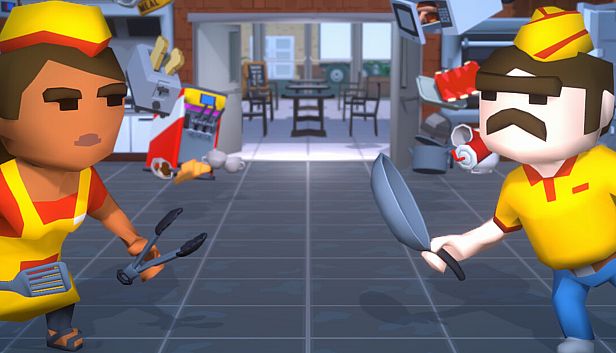
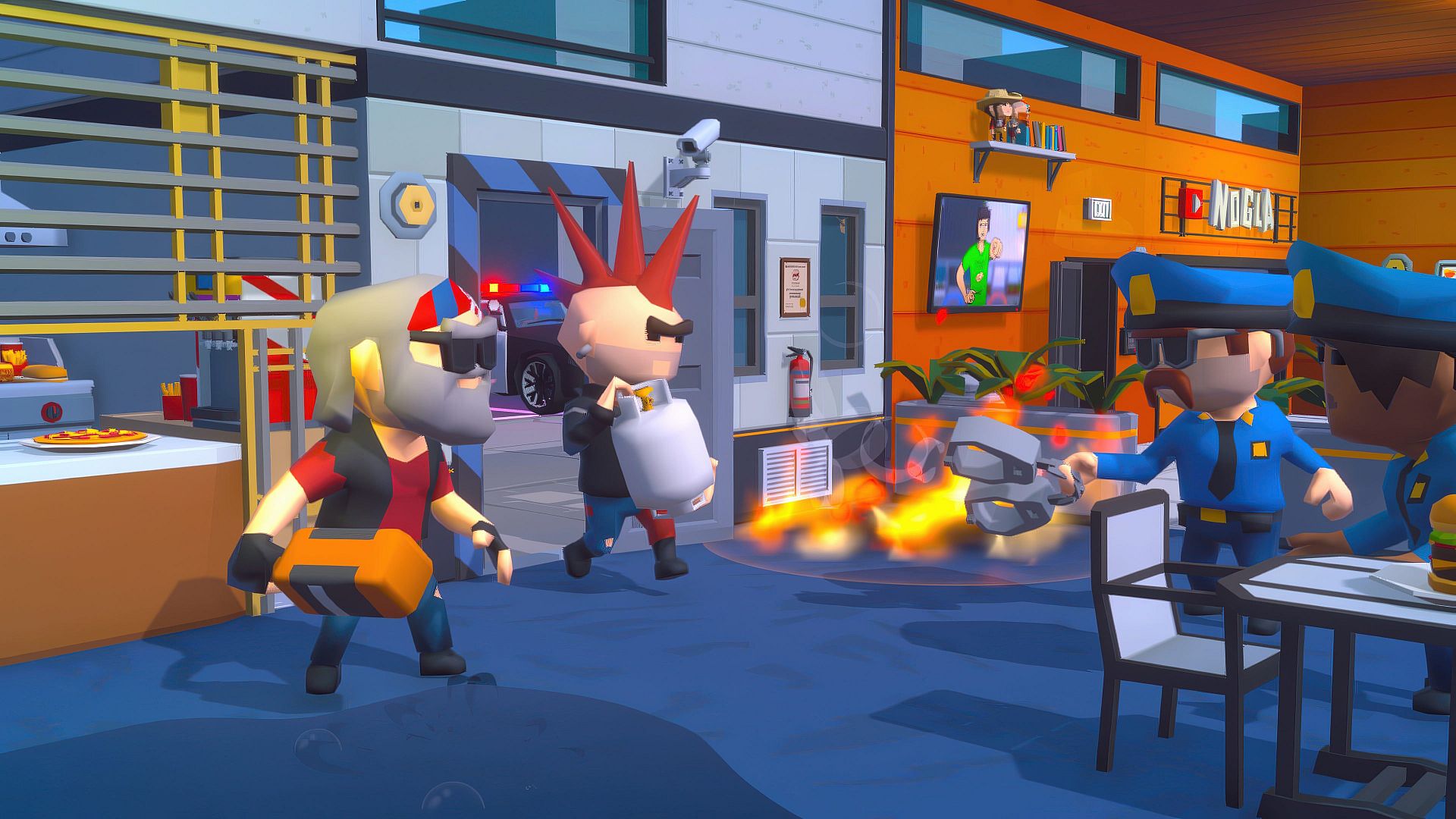
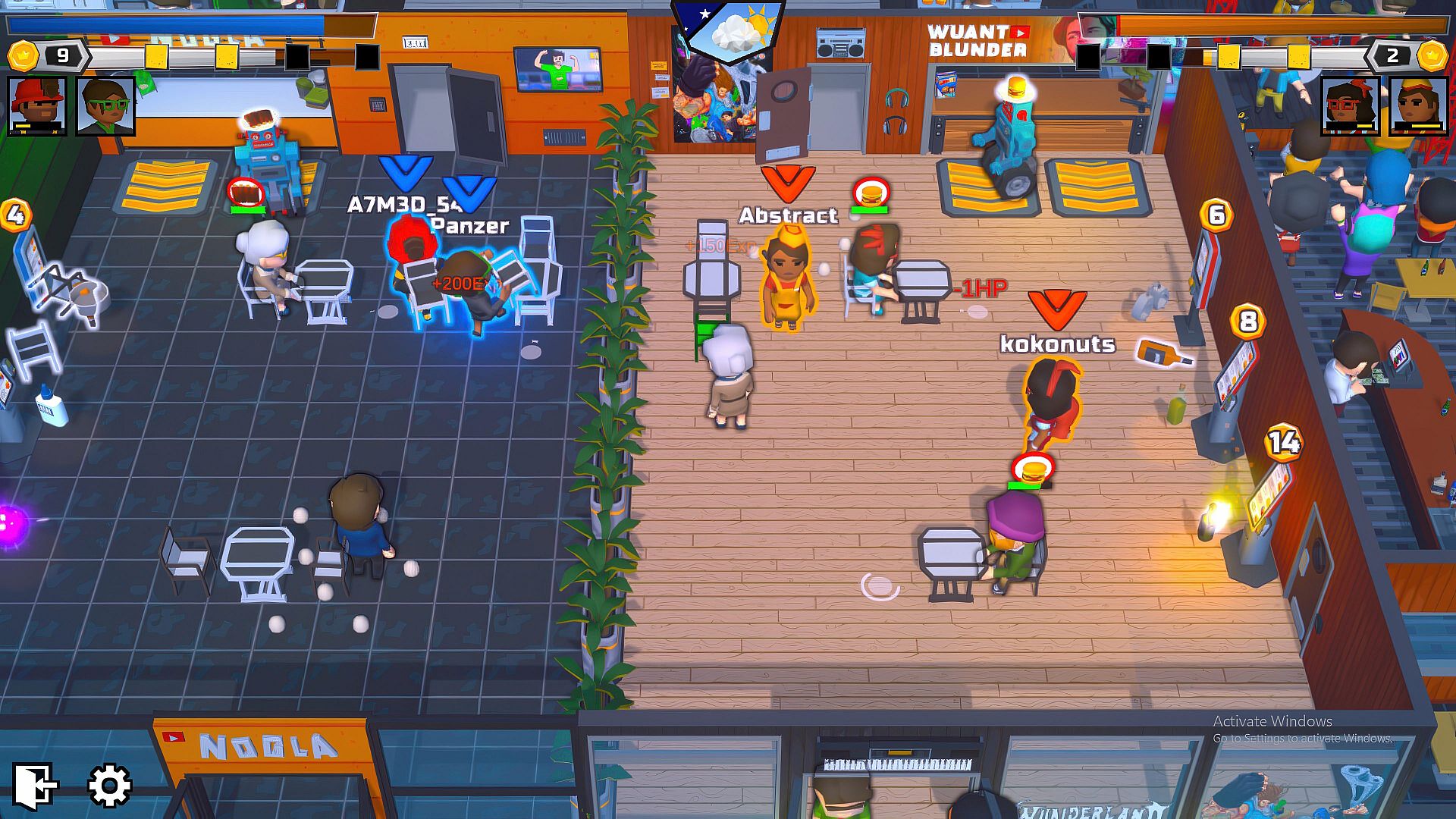
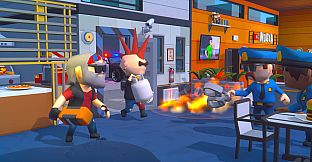
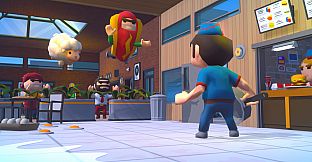
Sabotage forms the core distinction from similar titles. Players can steal chairs to shrink the rival restaurant's seating capacity, hurl objects across the divide, or deploy weapons for direct interference. Leveling up unlocks boosters that enhance service speed or defensive capabilities. The system rewards balancing personal restaurant growth with timely attacks, creating short bursts of frantic activity where one well-timed theft or throw can shift momentum.
Upgrades purchased with earnings improve restaurant efficiency or provide new tools for disruption. Physical confrontations and thrown hazards add a layer of direct competition, turning the shared space between kitchens into a battleground. The mechanics remain accessible for quick sessions yet require coordination when playing with others to maximize both service output and interference.
Game Modes
The primary competitive mode pits two teams against each other in matches lasting roughly ten to twenty minutes. Teams work within their own restaurant while launching attacks on the opponent, with victory determined by depleting the rival side's effective capacity through accumulated sabotage and superior customer service. Local and online play support the same rules, allowing groups to face off directly.
A survival mode offers a different pace, where players defend a single restaurant against waves of vandals attempting to cause damage. This mode emphasizes reactive defense and efficient serving under pressure without the direct team-versus-team element. Both modes support the full player range from smaller groups up to eight participants split across teams.
Multiplayer and Accessibility
The game supports one to eight players through local splitscreen or online connections, with teams typically balanced as even numbers on each side. Odd player counts can create imbalance in competitive matches, making even teams preferable for fair play. Controls focus on movement, item pickup, throwing, and service actions, keeping inputs simple enough for casual groups while allowing skill in timing attacks and upgrades.
Progression through levels and purchases carries across sessions, encouraging repeated play to unlock more options. The low price point positions it as an impulse purchase for parties rather than a deep single-player campaign. Humor arises naturally from the slapstick nature of chair thefts and projectile exchanges rather than scripted events.
Is It Worth Playing?
Kitchen Wars delivers its strongest moments in group settings where friends can trade sabotage and laugh at the resulting chaos. The core loop of serving while attacking stays engaging for short sessions, and the low cost makes it easy to try without commitment. Player feedback highlights the fresh twist on restaurant themes through direct competition, though some note repetition after multiple rounds and limited depth compared to more established party games.
It suits players seeking lighthearted, competitive multiplayer without heavy strategy or long learning curves. Those who enjoy quick matches with opportunities for creative disruption will find value, especially in local play. The game continues to receive updates post-release, maintaining a small but active community around its unique blend of service and sabotage. If group gaming with a humorous edge appeals, it offers solid entertainment at an accessible price.