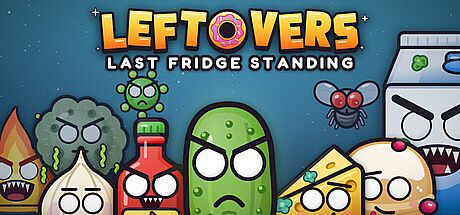


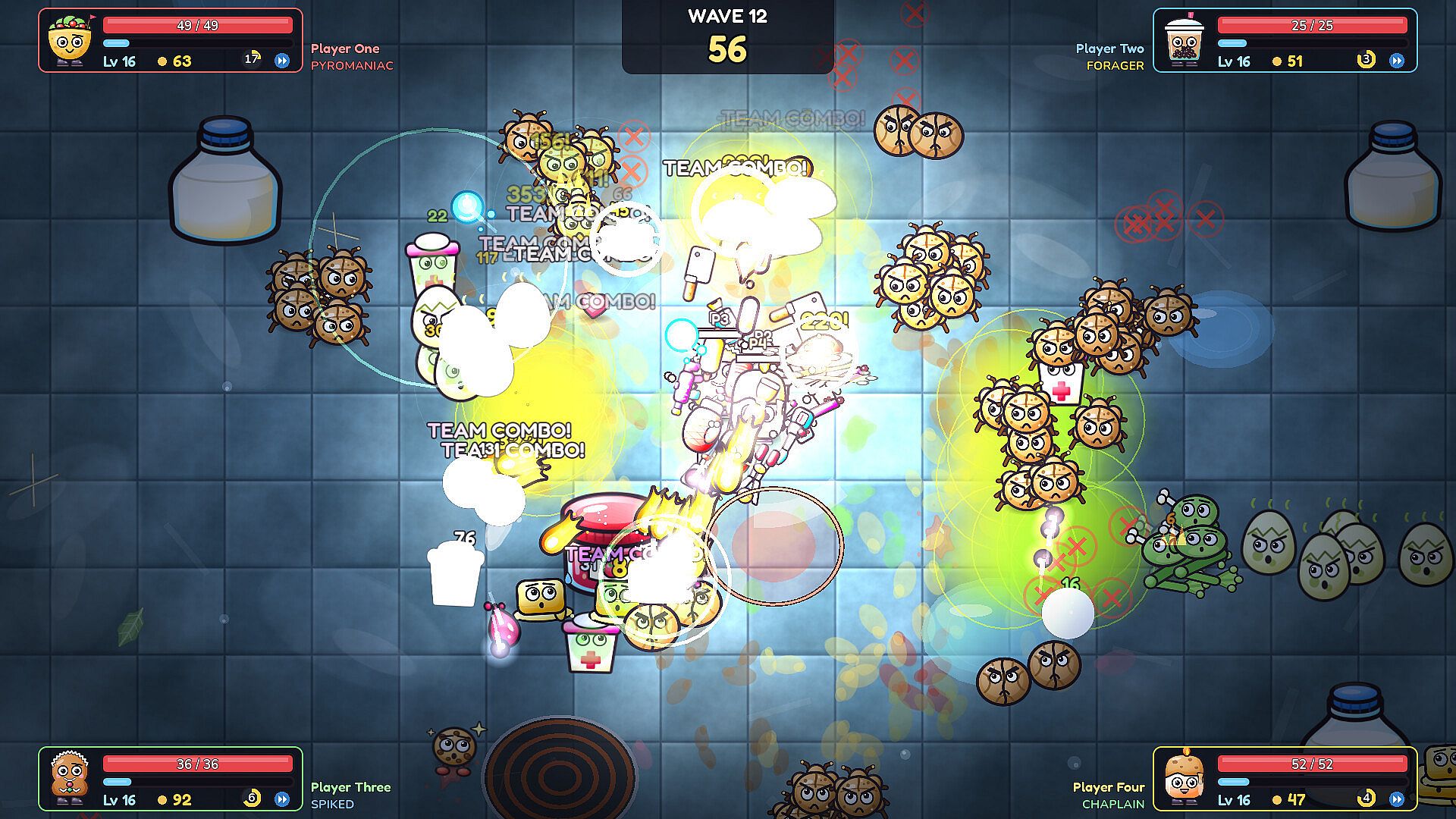
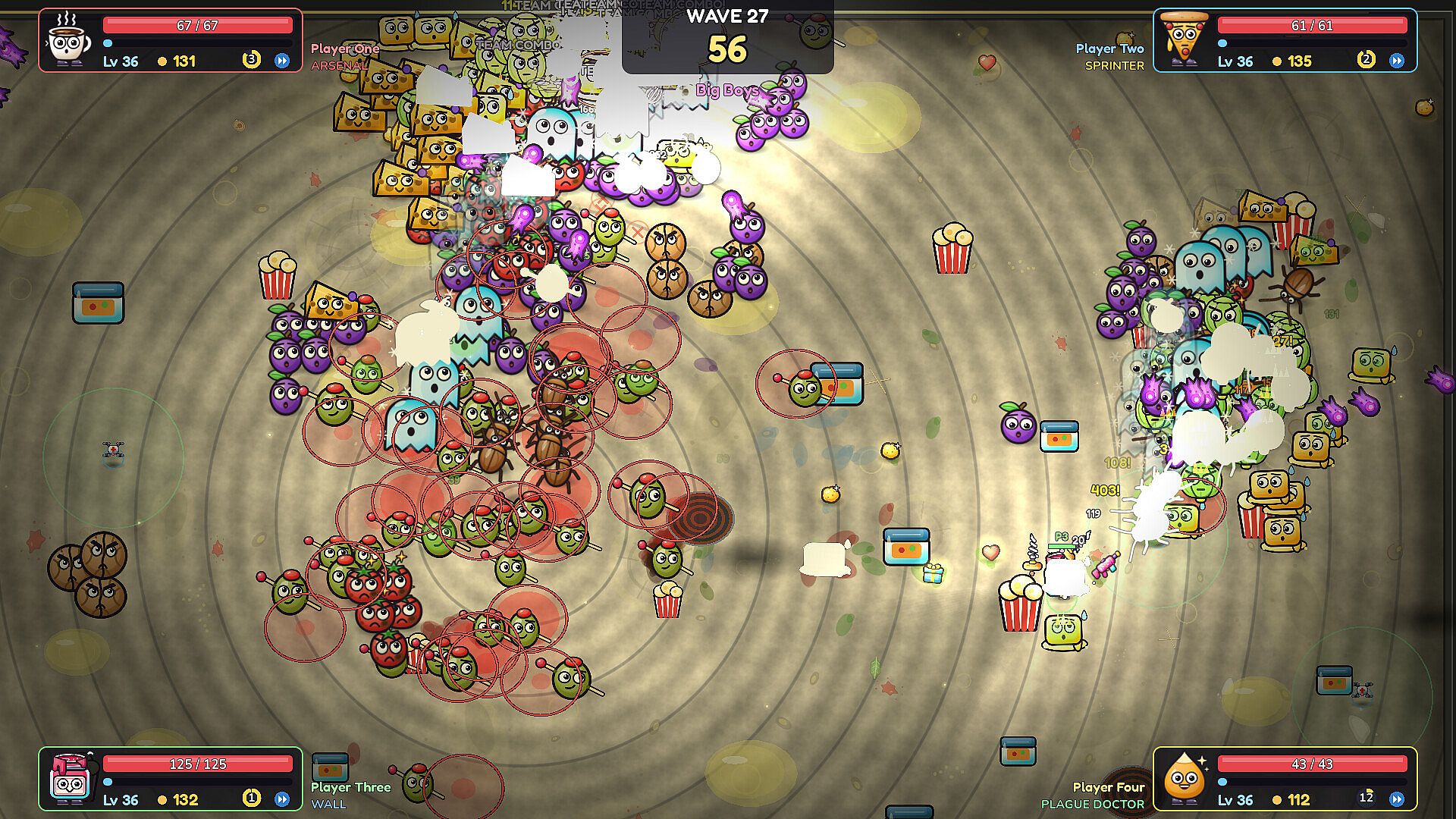
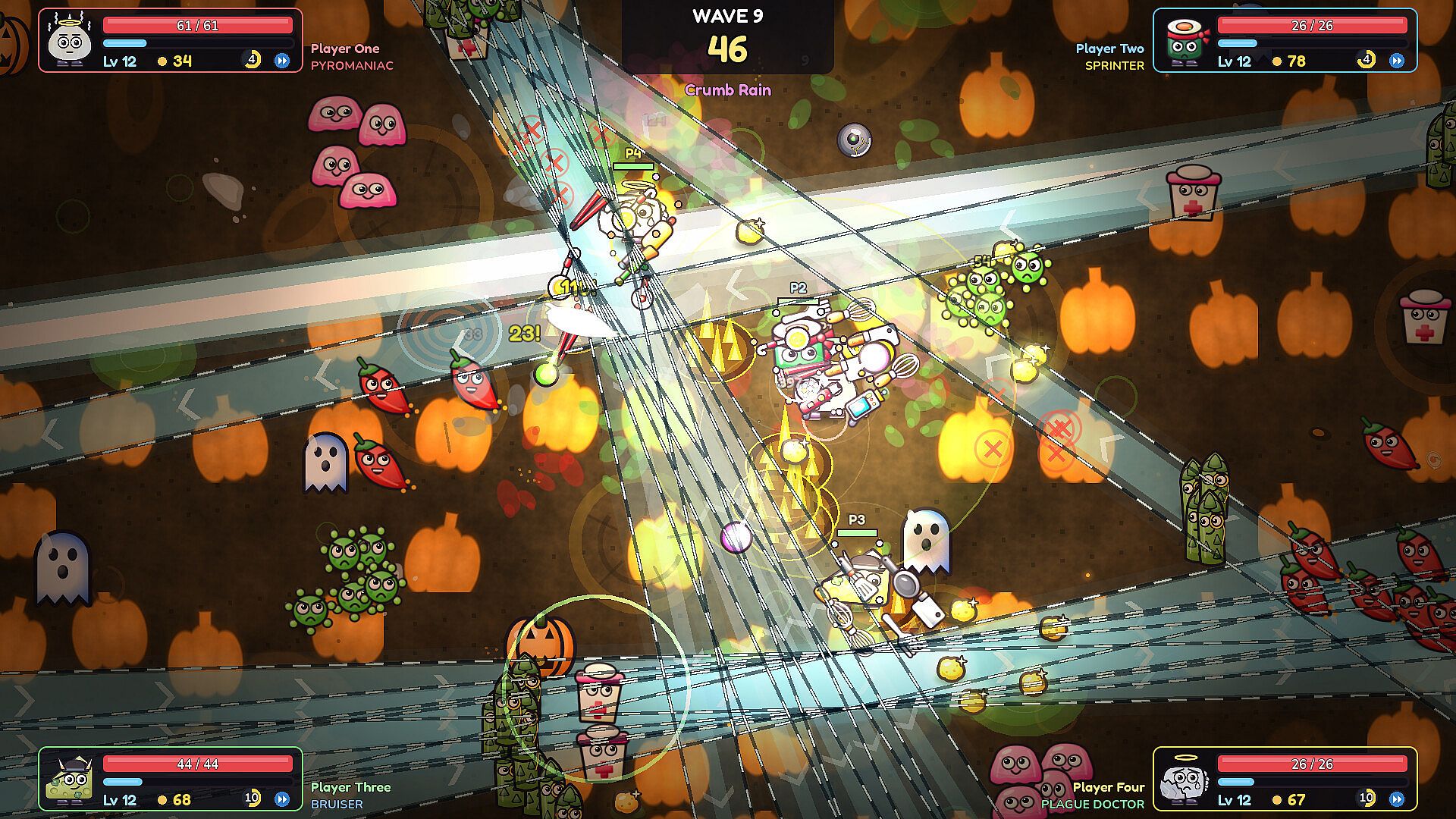
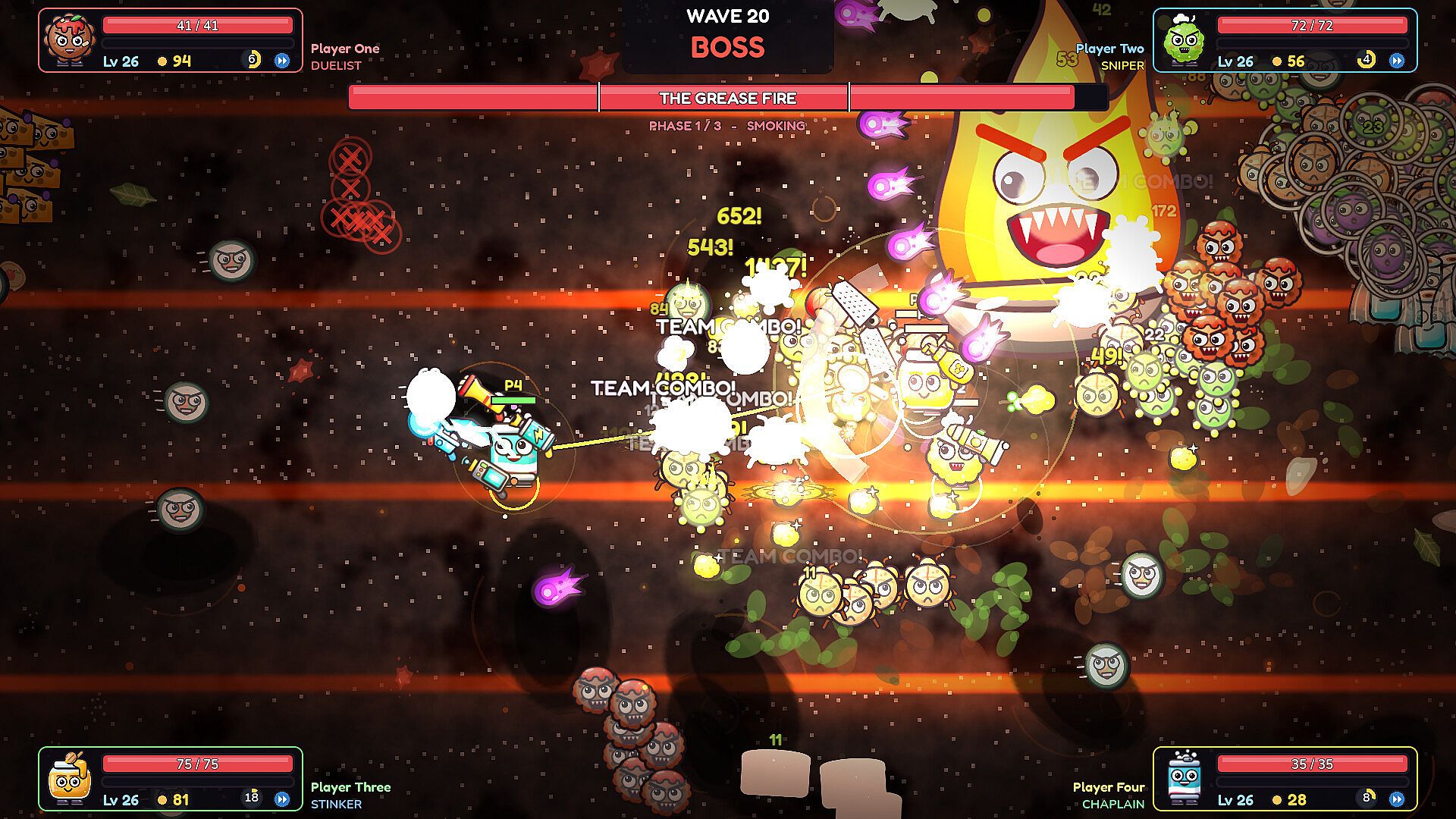
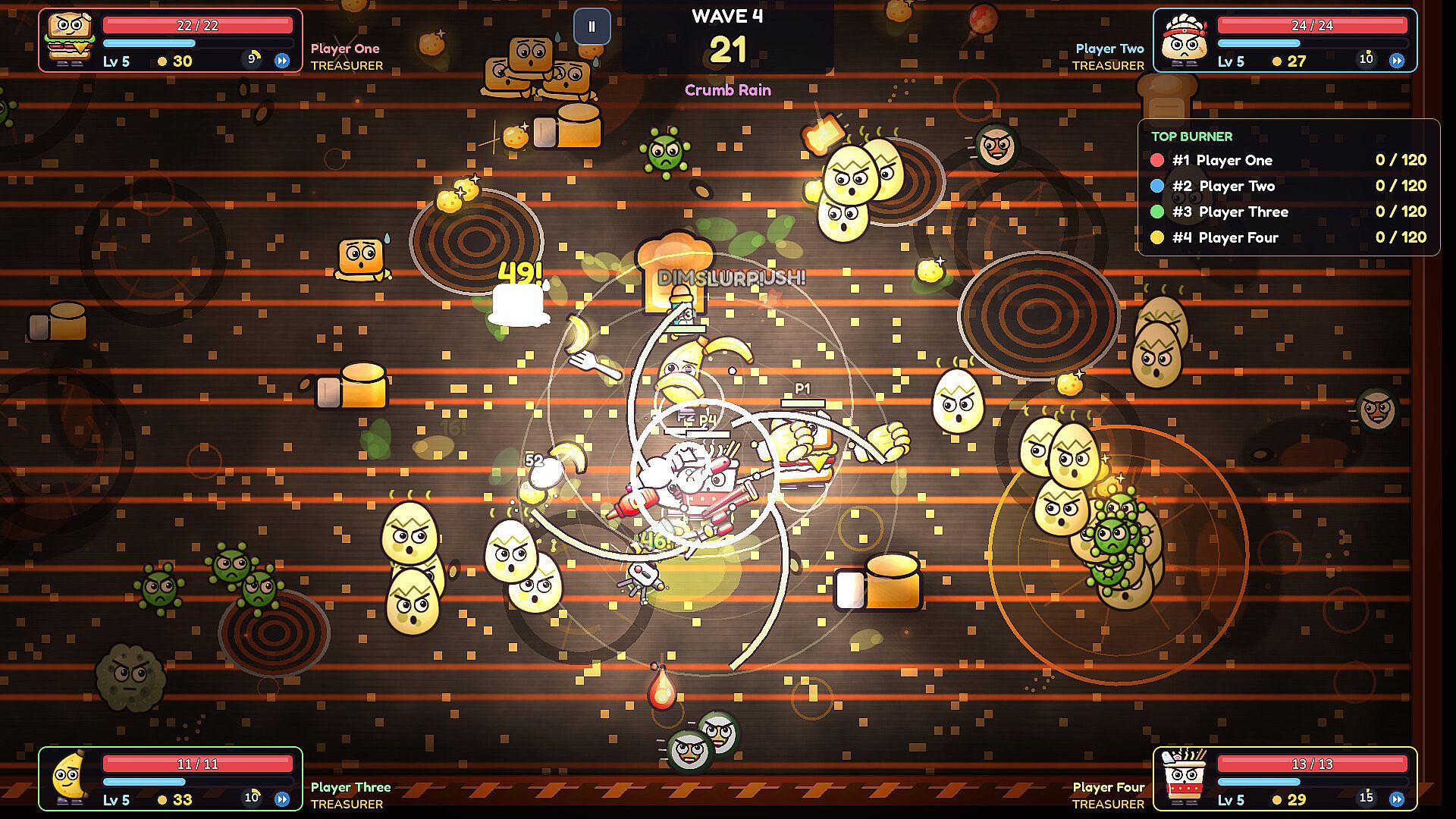
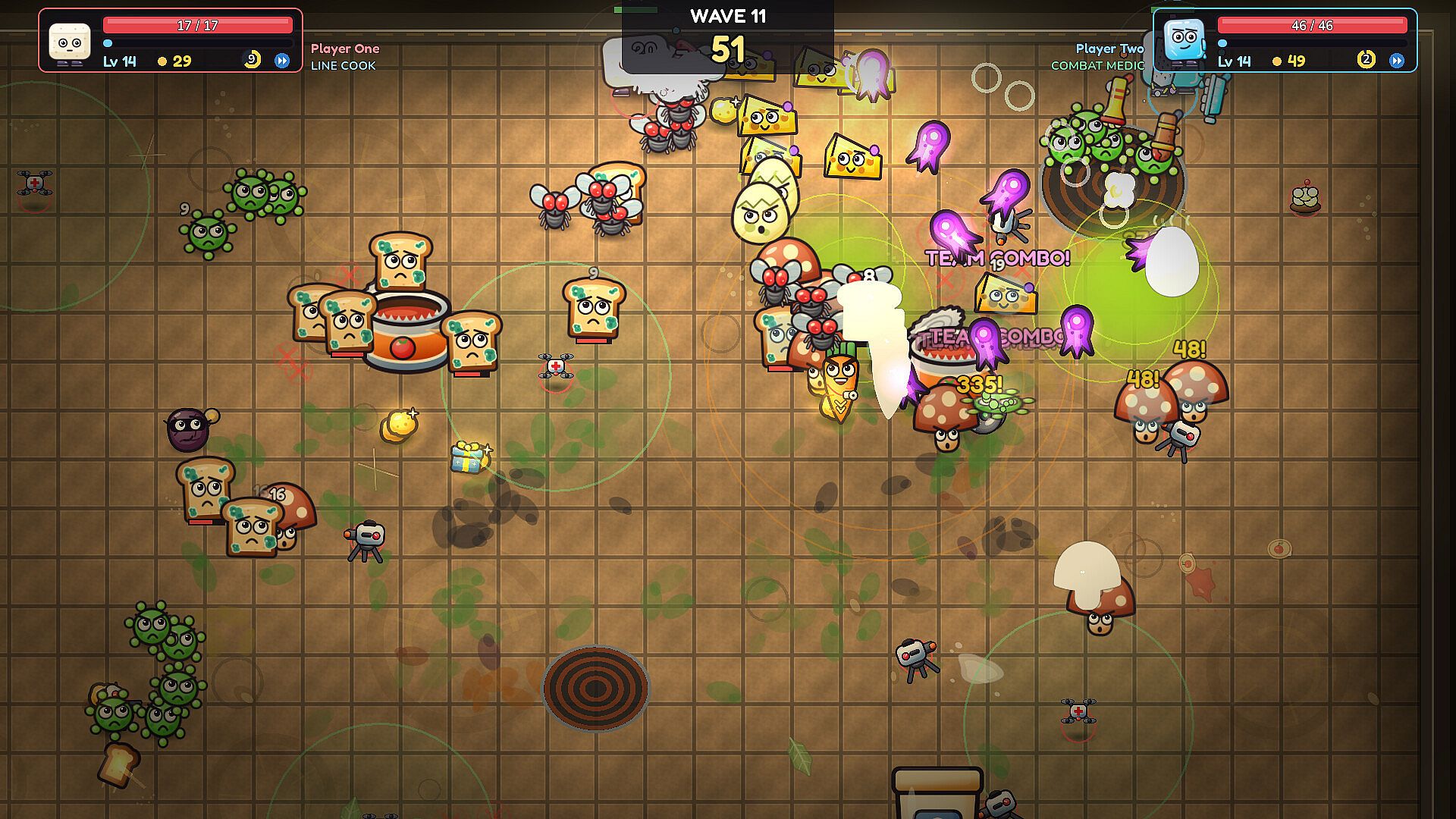

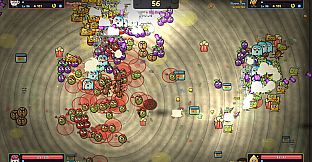
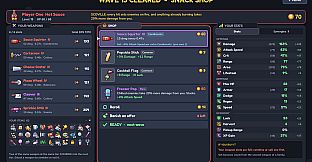


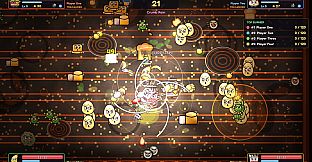
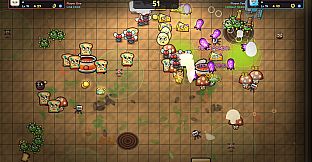

Leftovers: Last Fridge Standing is a top-down arena survivors roguelike that blends action, indie, and casual elements on PC. Players control food-themed characters fighting waves of germs and mold inside a fridge that has turned chaotic. The core loop revolves around surviving twenty waves in most runs, making build decisions between fights, and adapting to permanent changes voted on by the group.
Gameplay
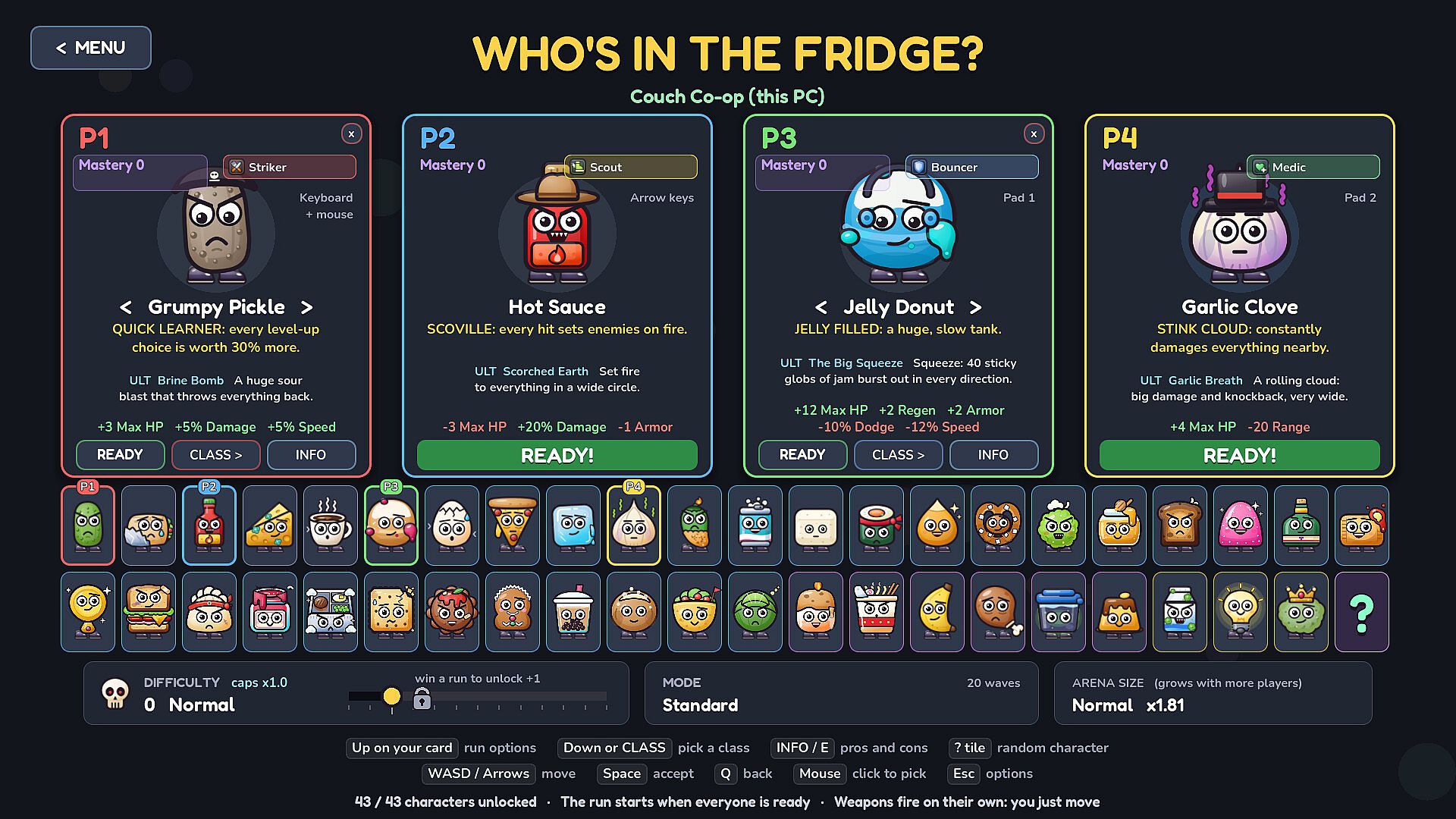
The action unfolds in fast-paced arena combat where a single pickle armed with a fork represents the player at the start. Each of the 43 characters follows unique rules that alter how they interact with weapons and items. Some characters refuse certain tools entirely while others amplify specific playstyles through size, elemental effects, or restrictions that reward creative combinations.
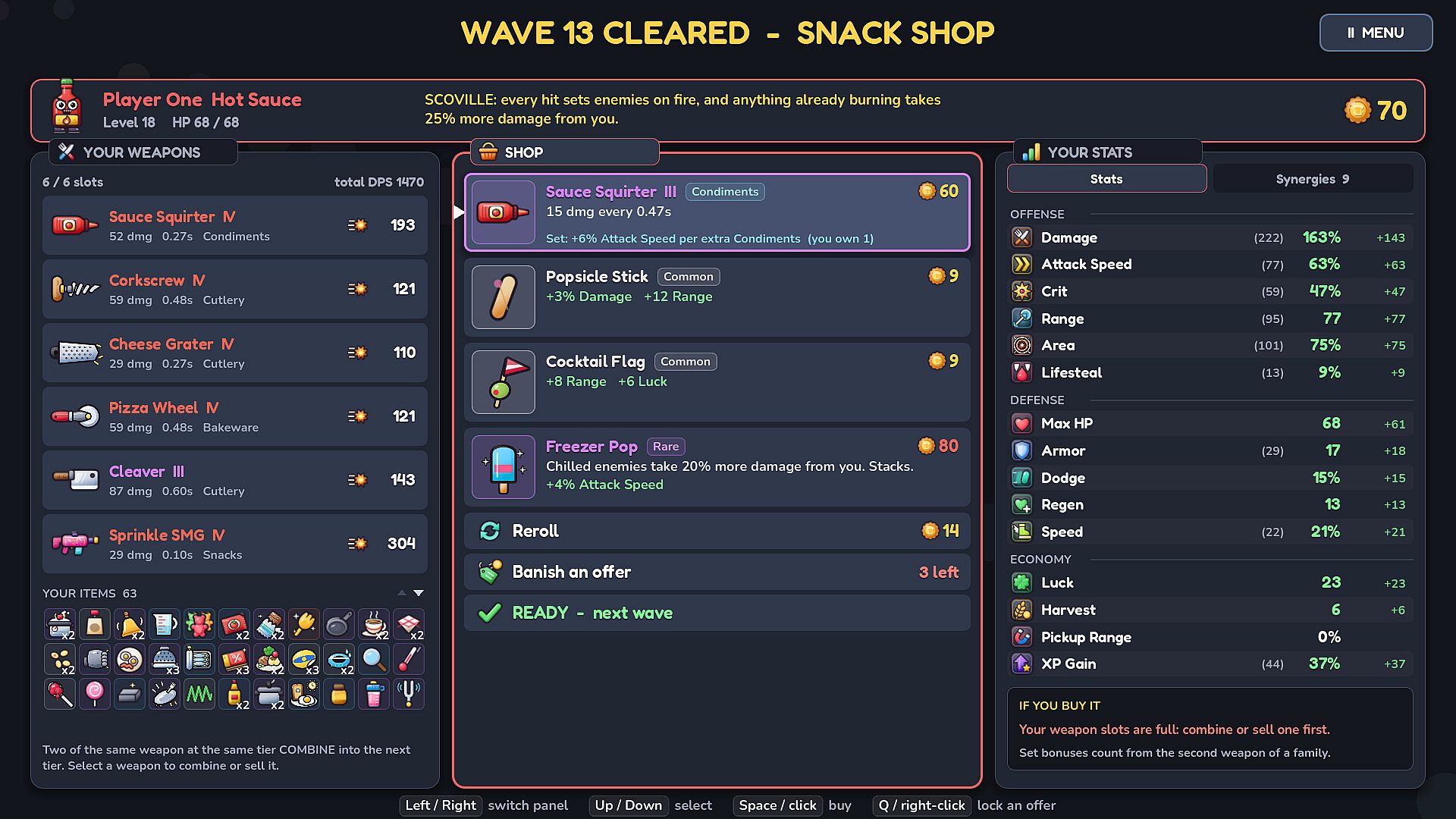
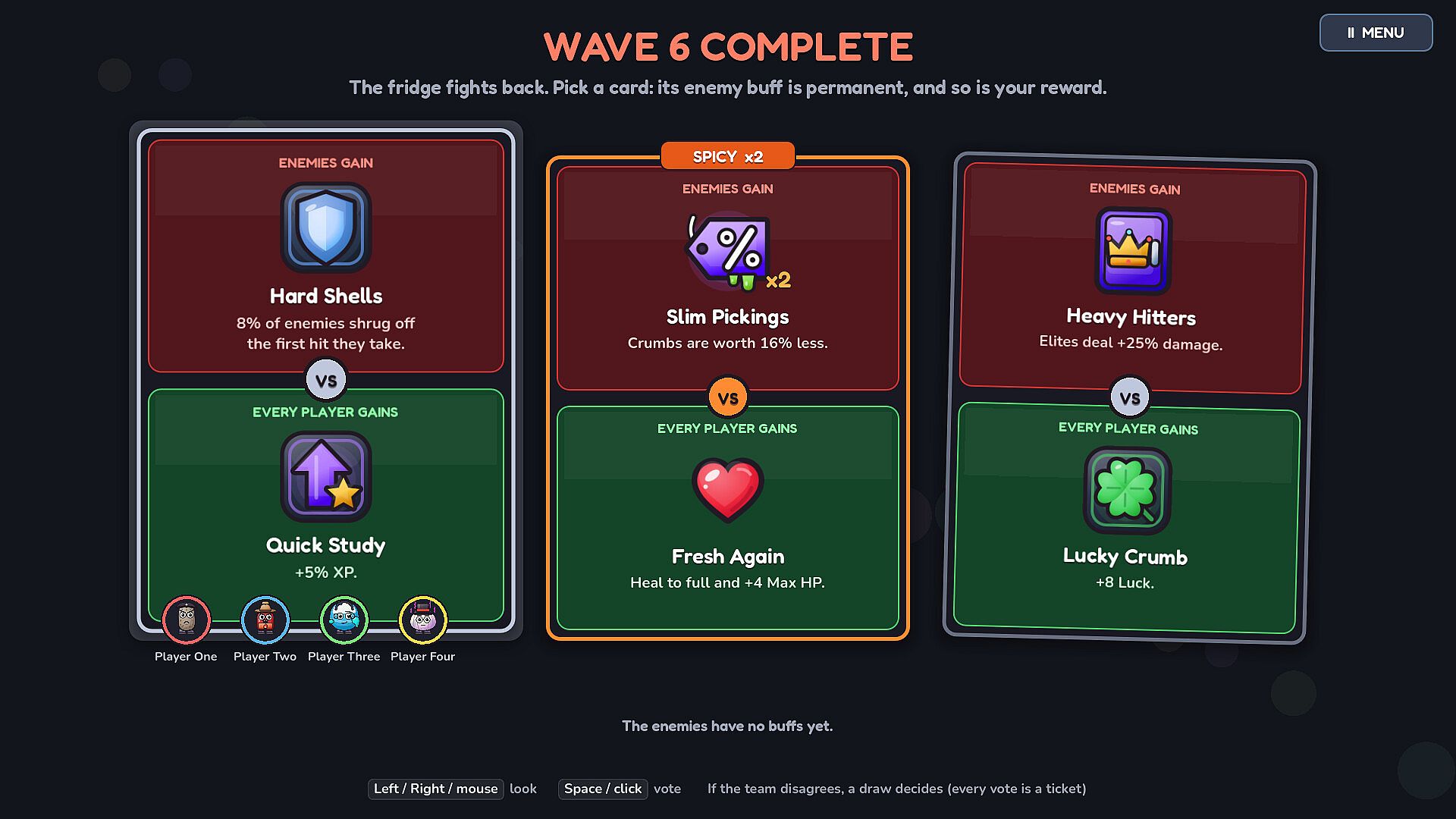
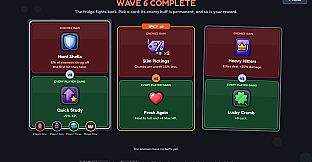
Weapon variety spans 37 options across categories like cutlery, condiments, and appliances. Every weapon evolves once, and identical copies can fuse into stronger versions. Gadgets such as turrets and mines occupy separate slots and scale with dedicated items. Synergies activate when the right mix of weapons, gadgets, and stat-scaling pieces come together, while area effects, ultimates, and auras expand in power as runs progress. Between waves the team votes on cards that either buff enemies or grant rewards, then selects from doors that lead to hordes, treasure, shrines, merchants, or cursed options carrying both risk and relic rewards.
Game Modes
Fourteen distinct modes support different group sizes and play styles. Co-op options include the standard twenty-wave run with shops after each wave, a defense mode that protects a central fridge from invasion, a drafting system where the team shares items before purchases, and a service mode that rewards completing kitchen orders to shorten waves. Shorter runs, permanent character progression across attempts, and a mode where one player controls the fridge itself round out the cooperative side.
Versus modes pit players against shared or separate hordes with scoring based on kills, positioning, or control of key spots. One variant lets players build together for a few waves before facing off directly. A solo mode pits the player against ghosts of previous builds, either their own or shared from friends via codes. All modes scale enemy numbers and rewards with player count and support mixed keyboard, mouse, and controller inputs on the same machine.
Progression and Variety
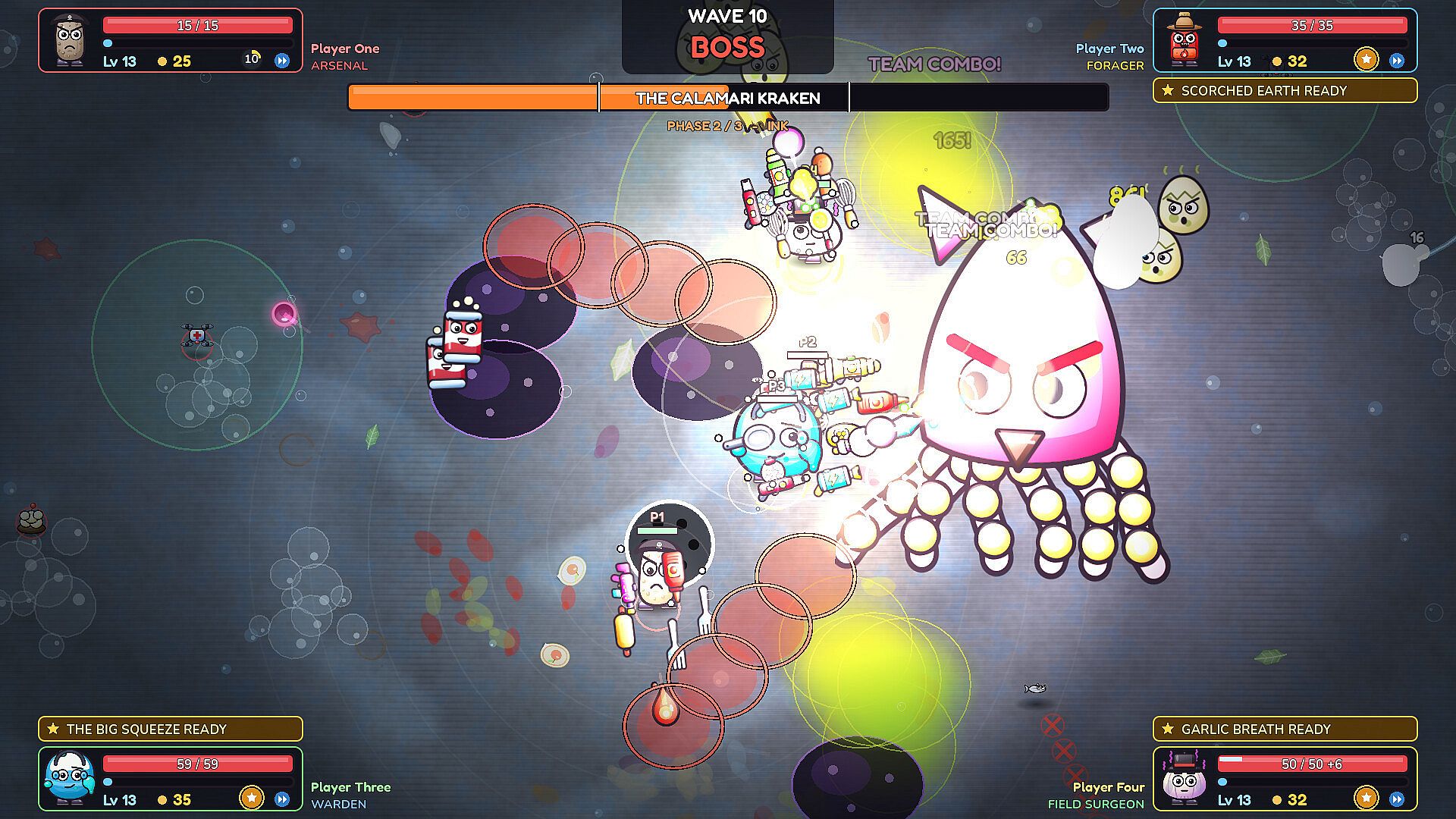
Classes such as Treasurer, Bouncer, Medic, Scout, Striker, and Engineer provide starting specializations that branch further at wave five. Permanent upgrades sit in a pantry of 54 options with loadout slots, while per-character mastery and skins reward repeated wins. Kitchens change across 48 base layouts plus seasonal variants, each with unique hazards. Eight bosses and six mini-bosses appear from a shuffled deck, supported by 66 enemy types and mutators that stack in endless play.
Contracts, blessings, and curses add side objectives and trade-offs. The game tracks wins across specific modes to unlock golden character variants. Endless runs can be saved and resumed later with the same group or solo.
Is It Worth Playing?
The game targets players who enjoy co-op roguelikes with strong emphasis on build crafting and group decision making. Its focus on couch and online multiplayer, flexible input support, and mid-run drop-in features make it suitable for regular sessions with friends. The variety of modes and the way synergies emerge from character rules and item combinations provide replay depth without relying on external content. Because the title remains in development with no release date confirmed, interested players can follow official channels for launch news. Those who prefer fast arena combat paired with meaningful choices between waves will likely find the systems engaging once it arrives on PC.