

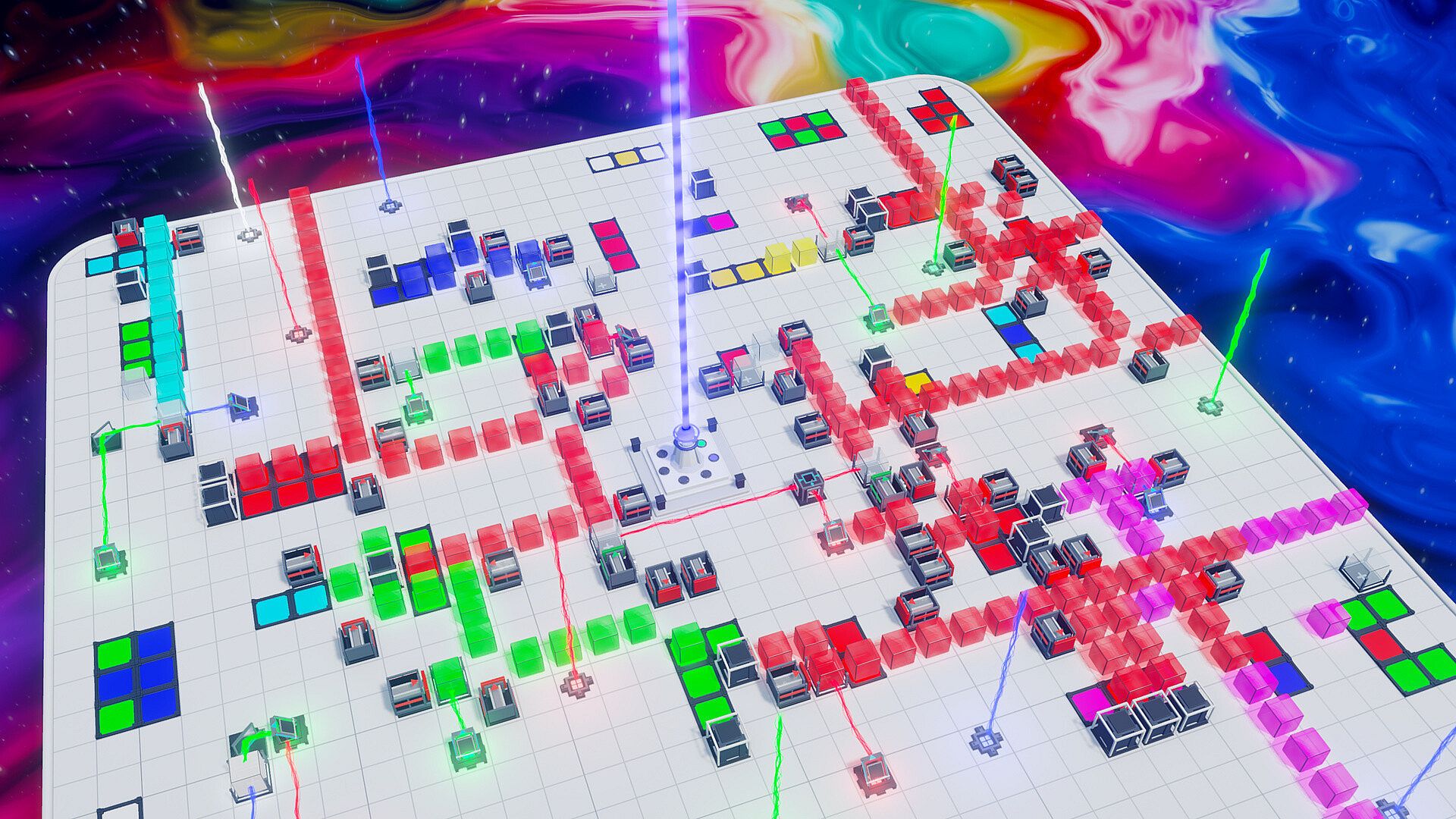
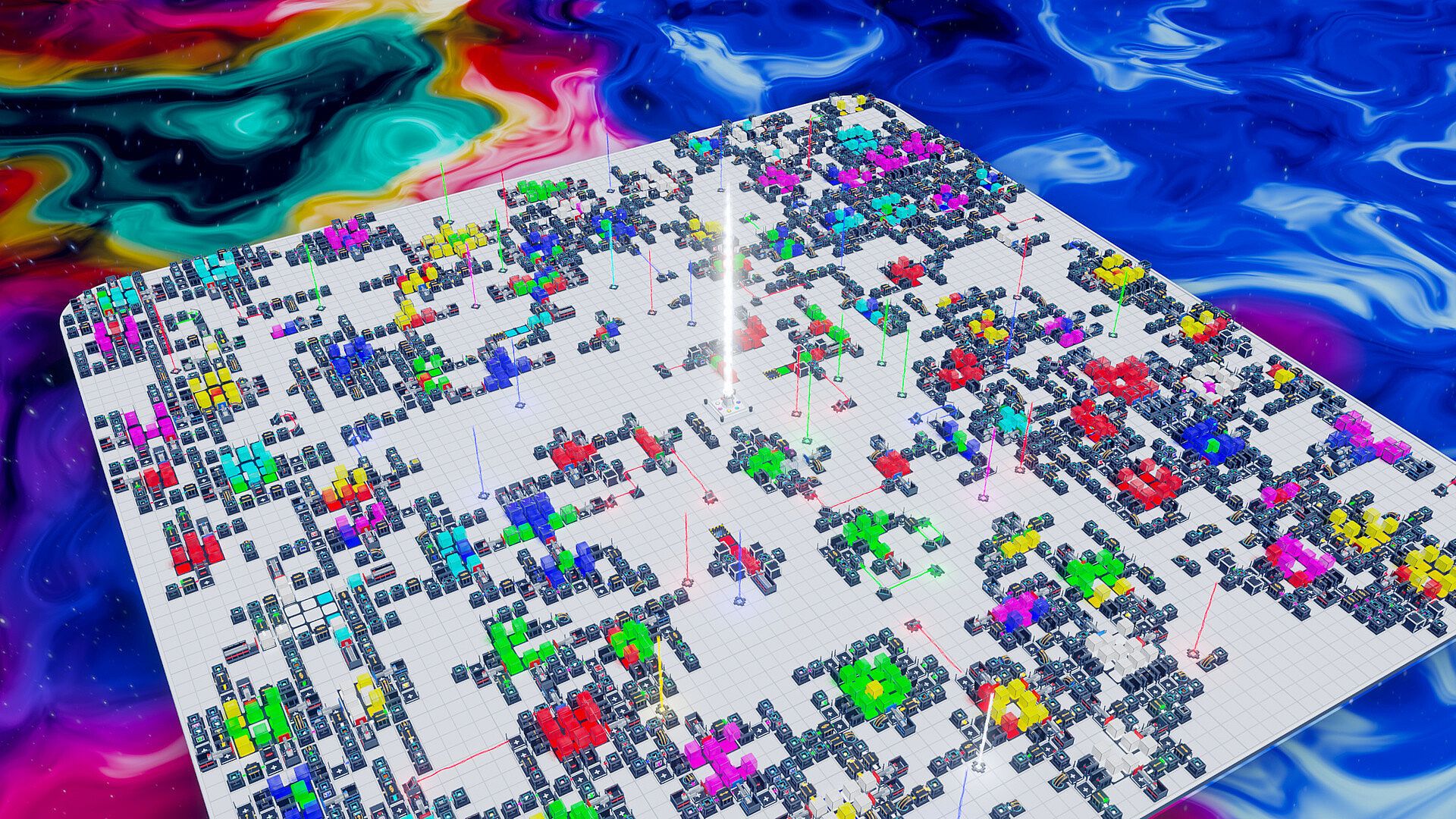
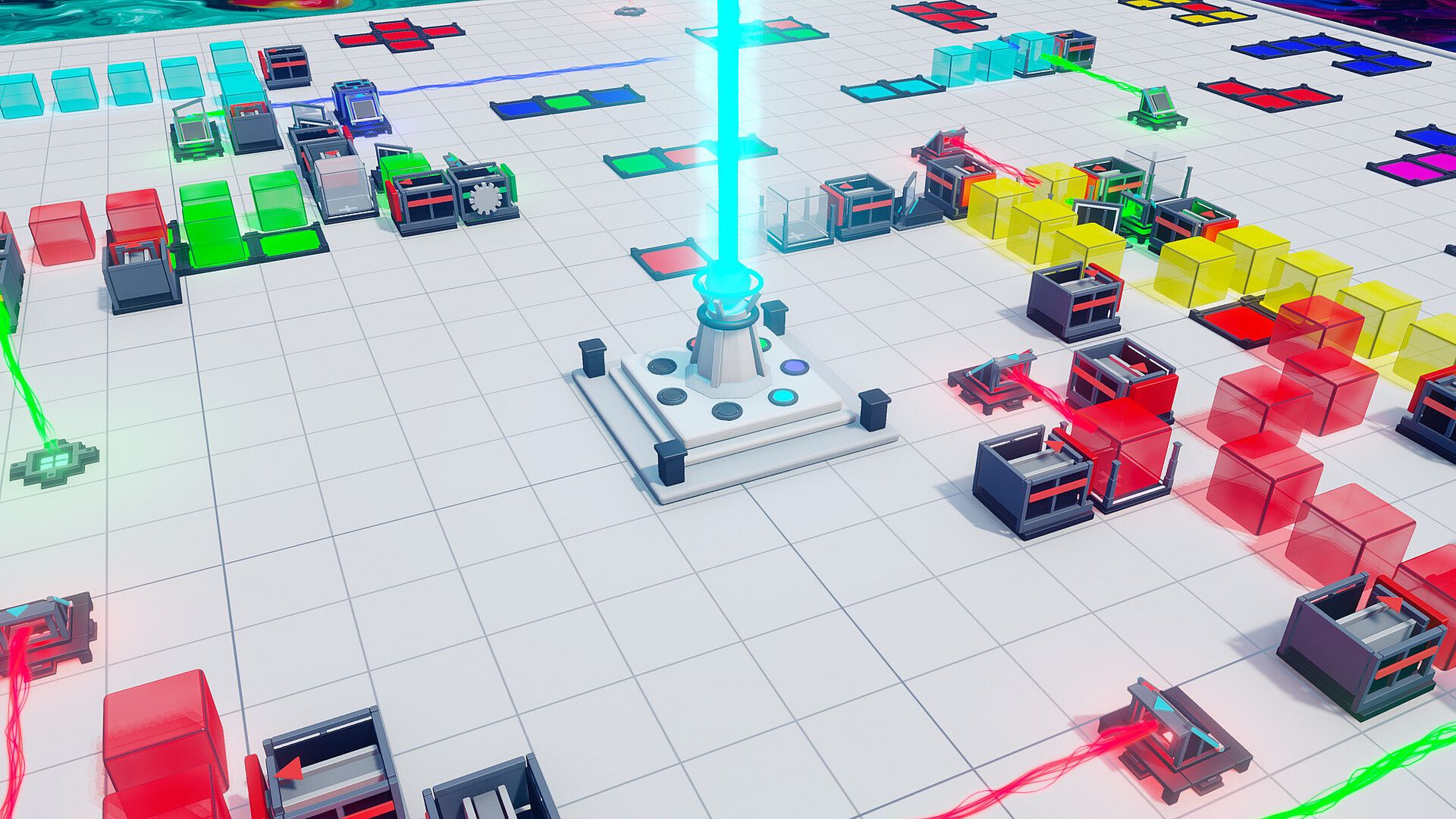
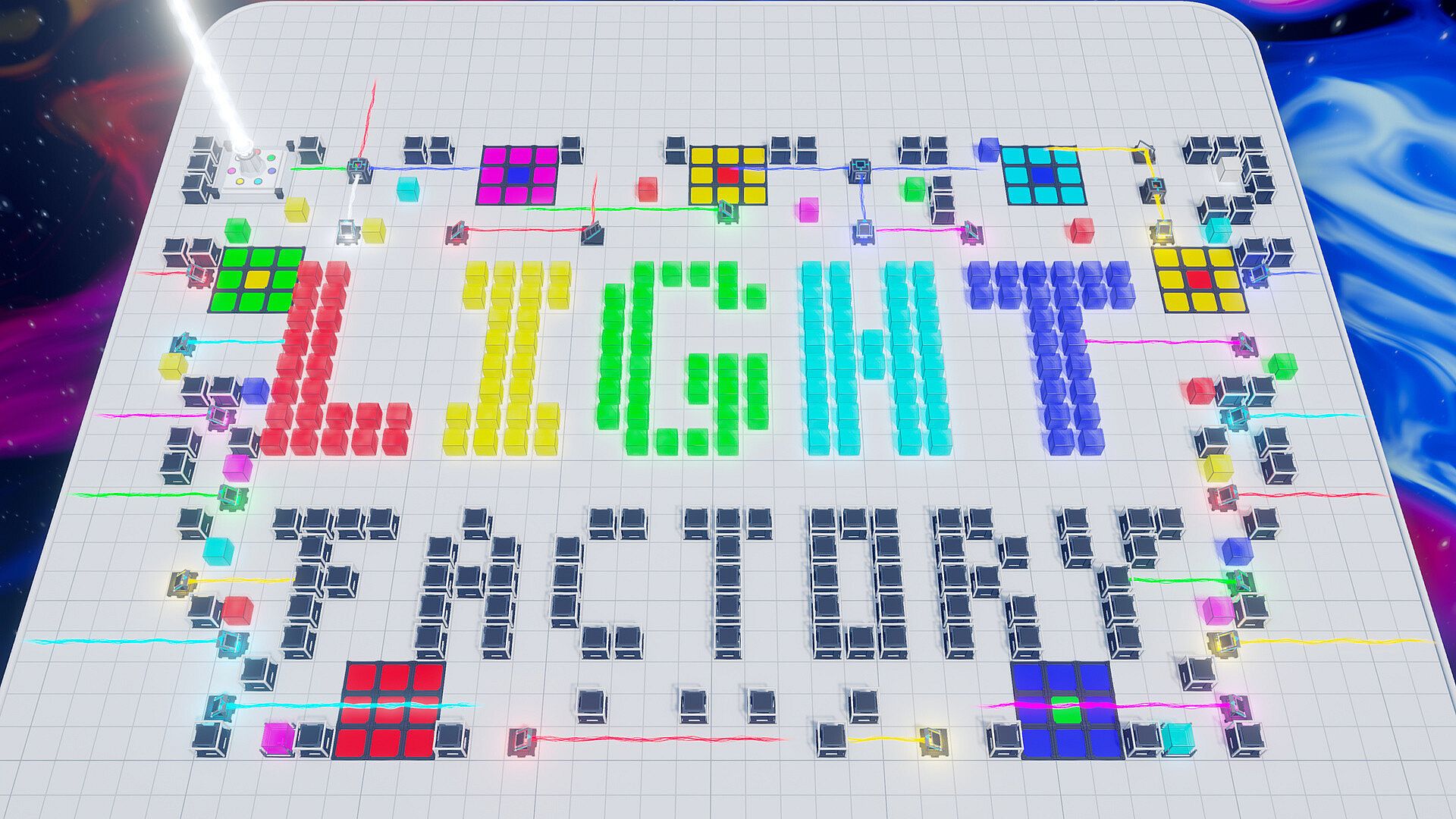
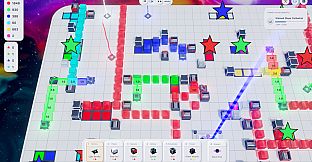
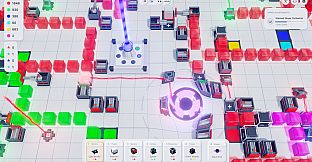
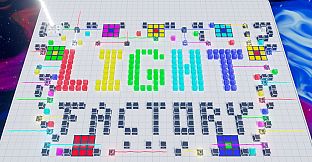
Light Factory is a single player strategy and simulation game centered on light manipulation and shape construction. Players direct beams through optical tools to fill pixel grids and assemble increasingly intricate patterns on a grid based board.
Gameplay
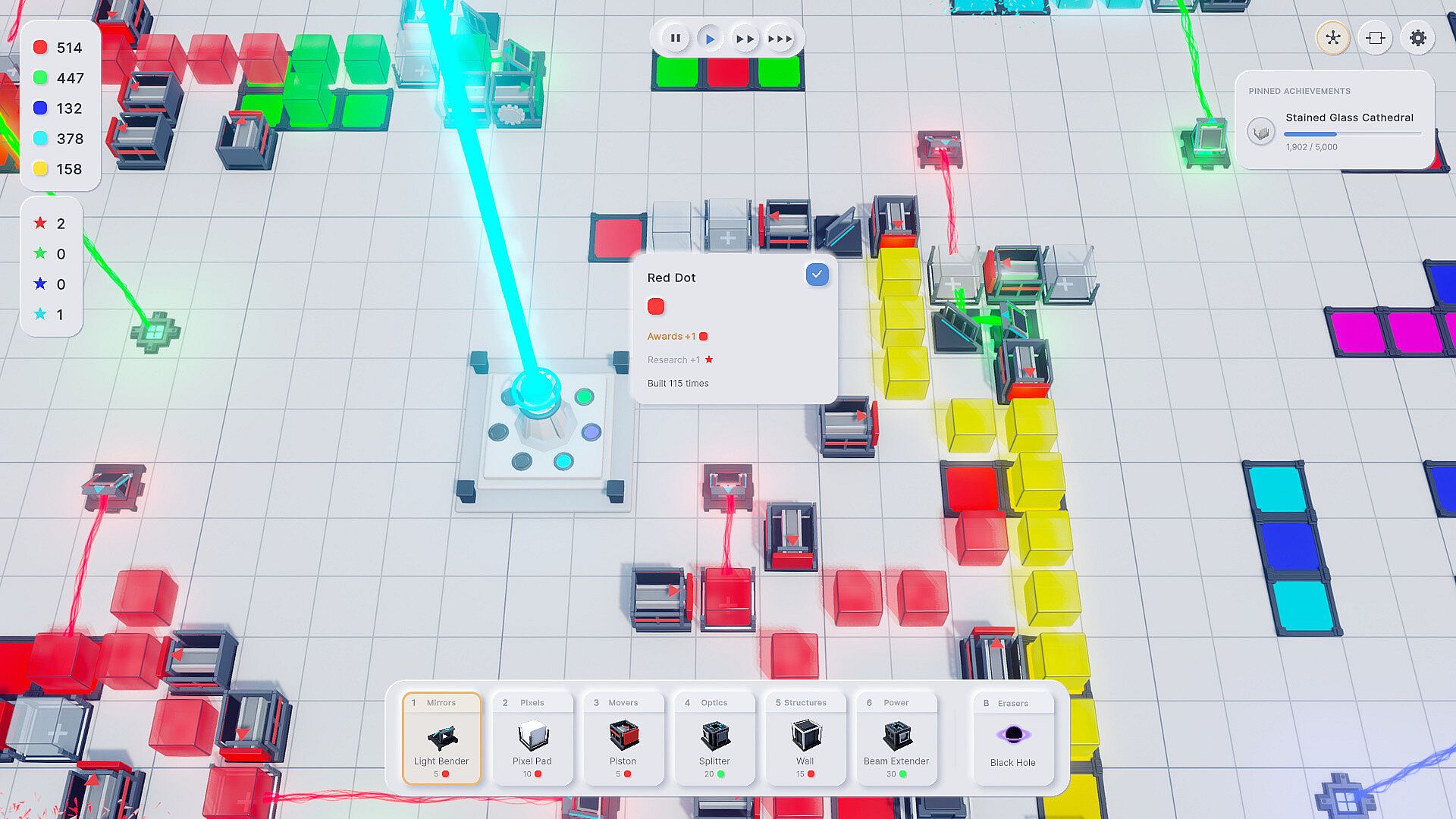
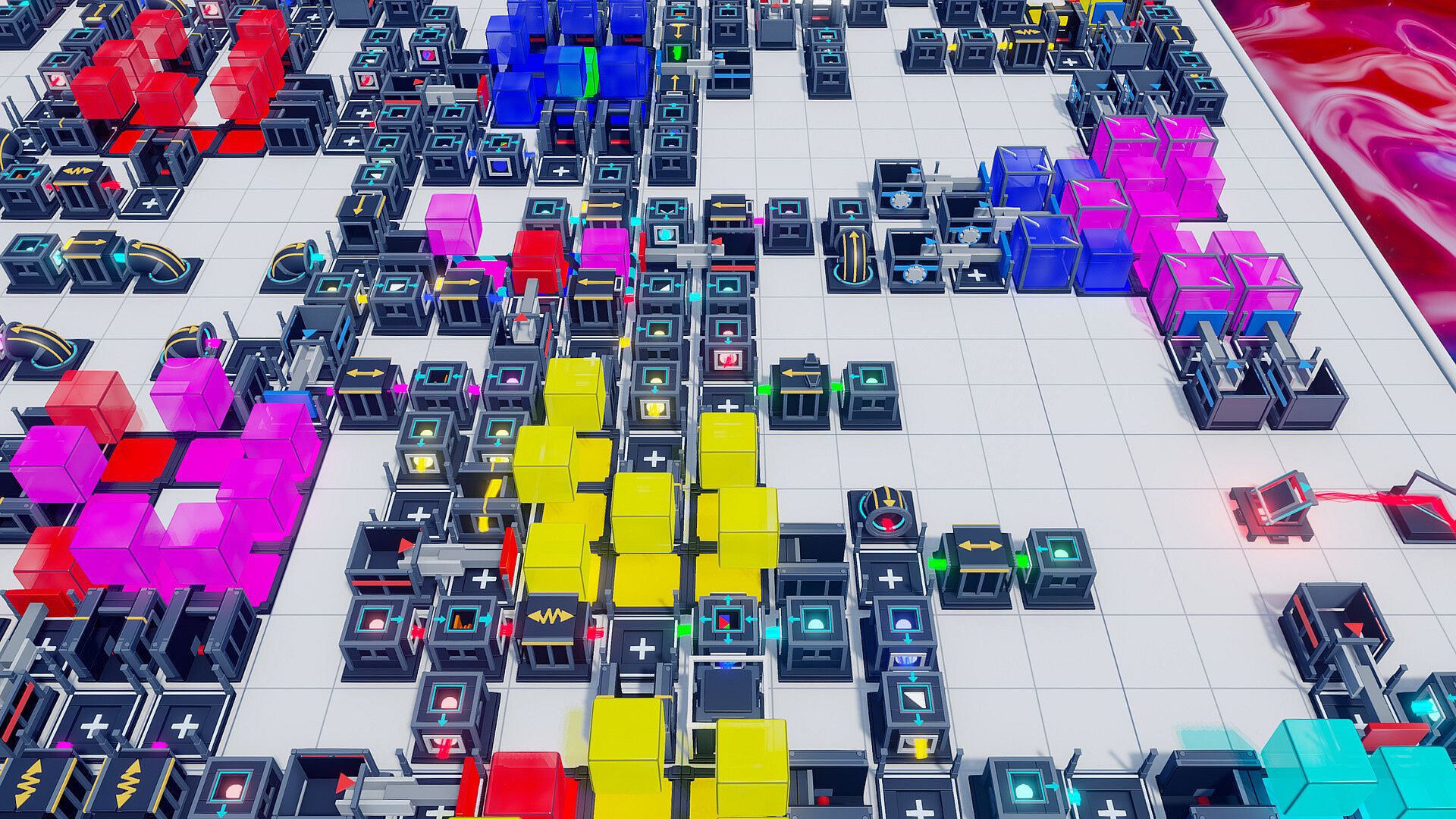
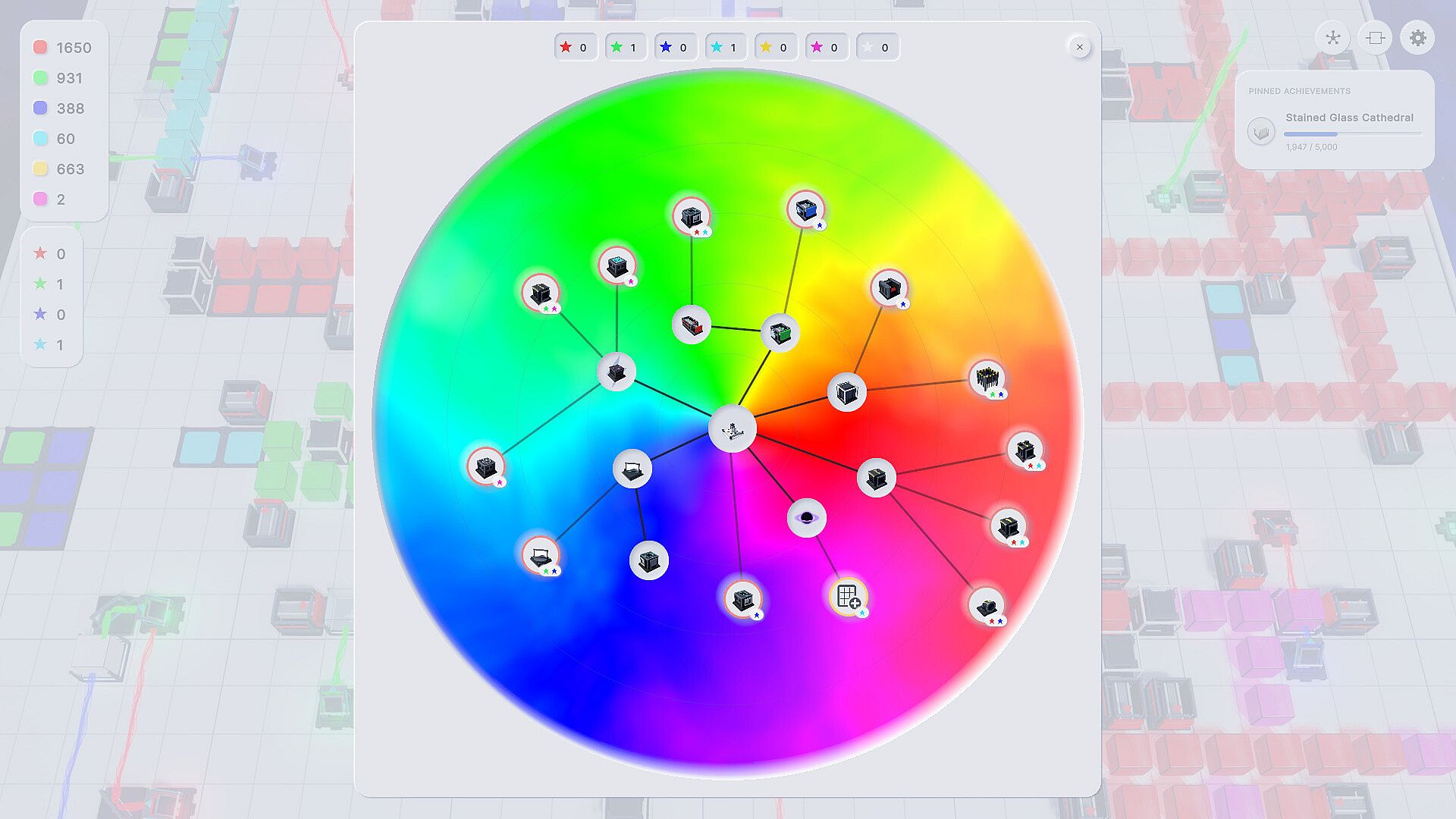
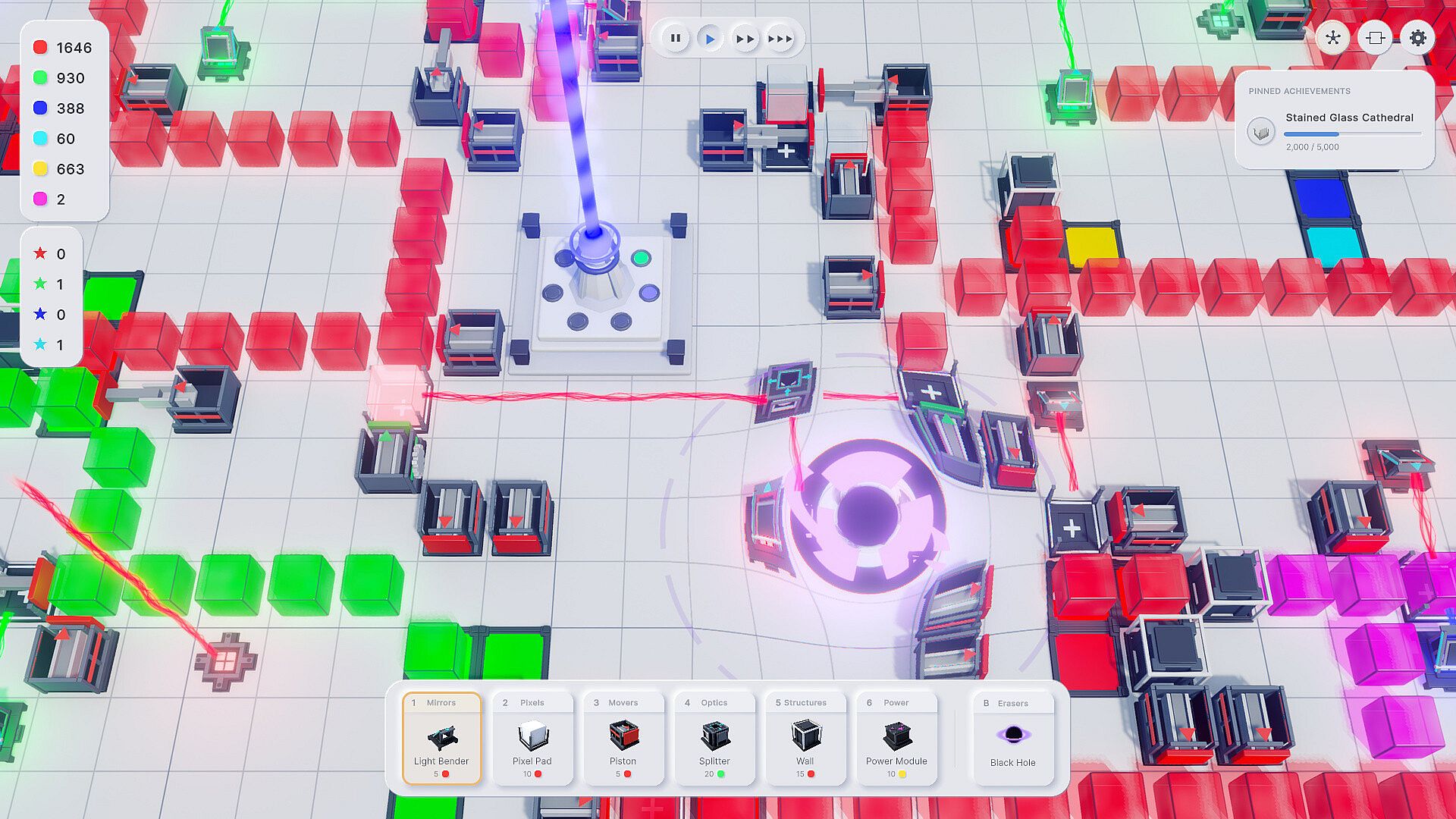
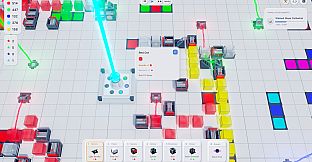
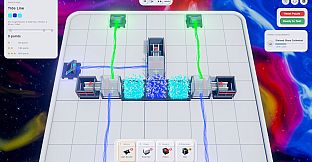
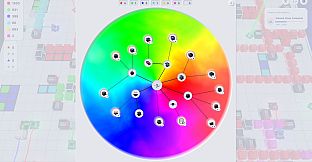
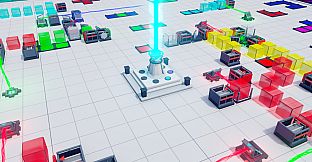
The core loop revolves around placing and connecting devices that bend, split, and combine light beams. Mirrors redirect paths while prisms divide white light into component colors. Additional machines handle movement, power distribution, and basic logic operations to automate sequences. A 35 node tech tree unlocks successive layers of these tools, allowing factories to scale from basic single color fills to layered multicolor mosaics. Progression ties directly to charging a central beacon, which expands the available play area and introduces new environmental constraints or shape requirements.
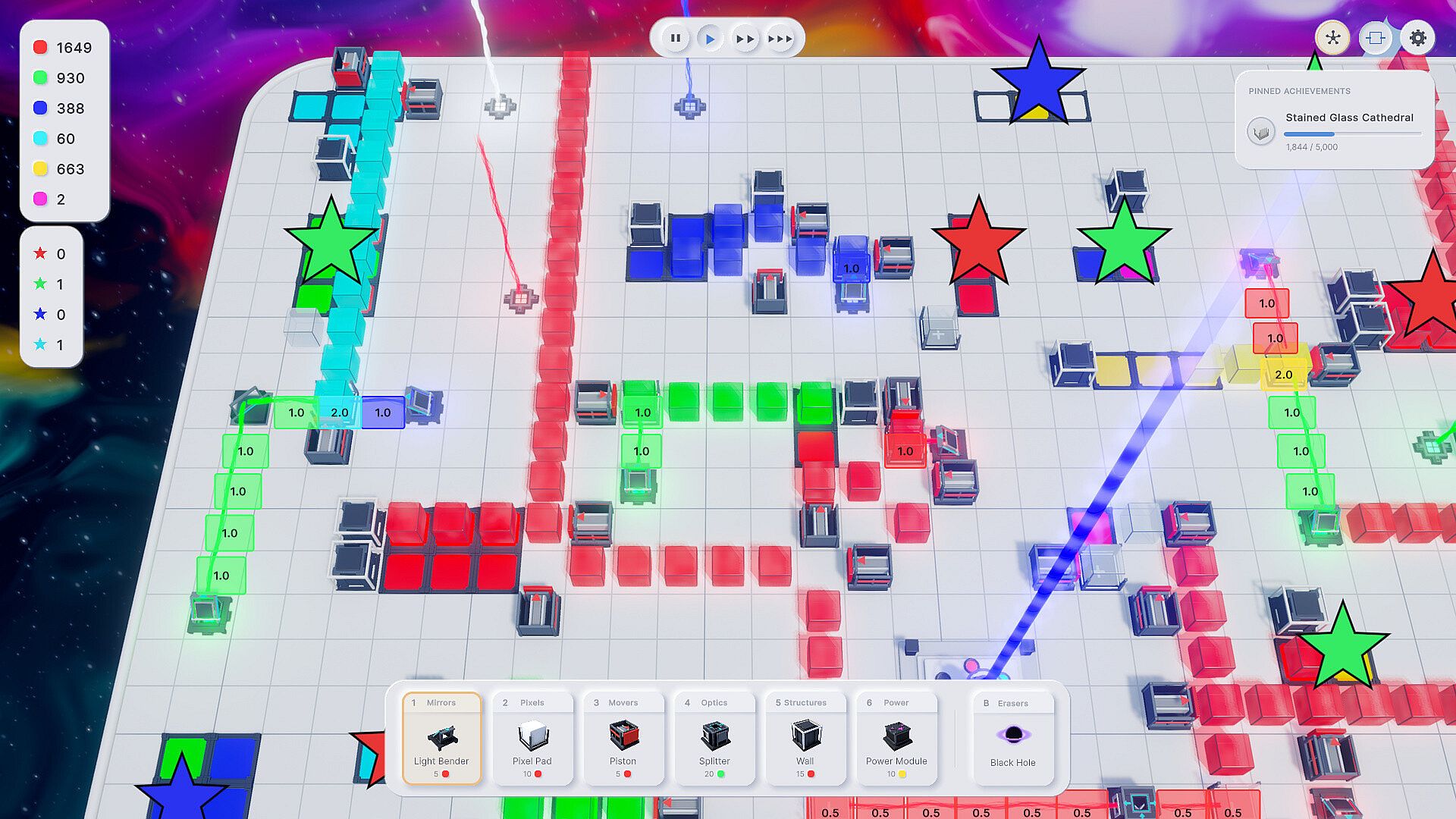
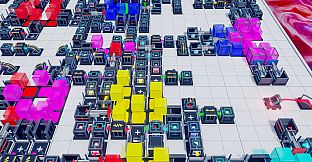
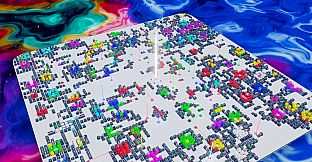
Every build operates on a pixel grid where light intensity and color must match target patterns exactly. Early setups focus on simple routing and color separation. Later stages demand precise timing, resource balancing across multiple beams, and integration of logic gates to handle conditional operations. The sandbox environment contains a wide variety of discoverable shapes that serve as both inspiration and construction targets, ranging from minimal monochrome icons to dense composite images.
Game Modes
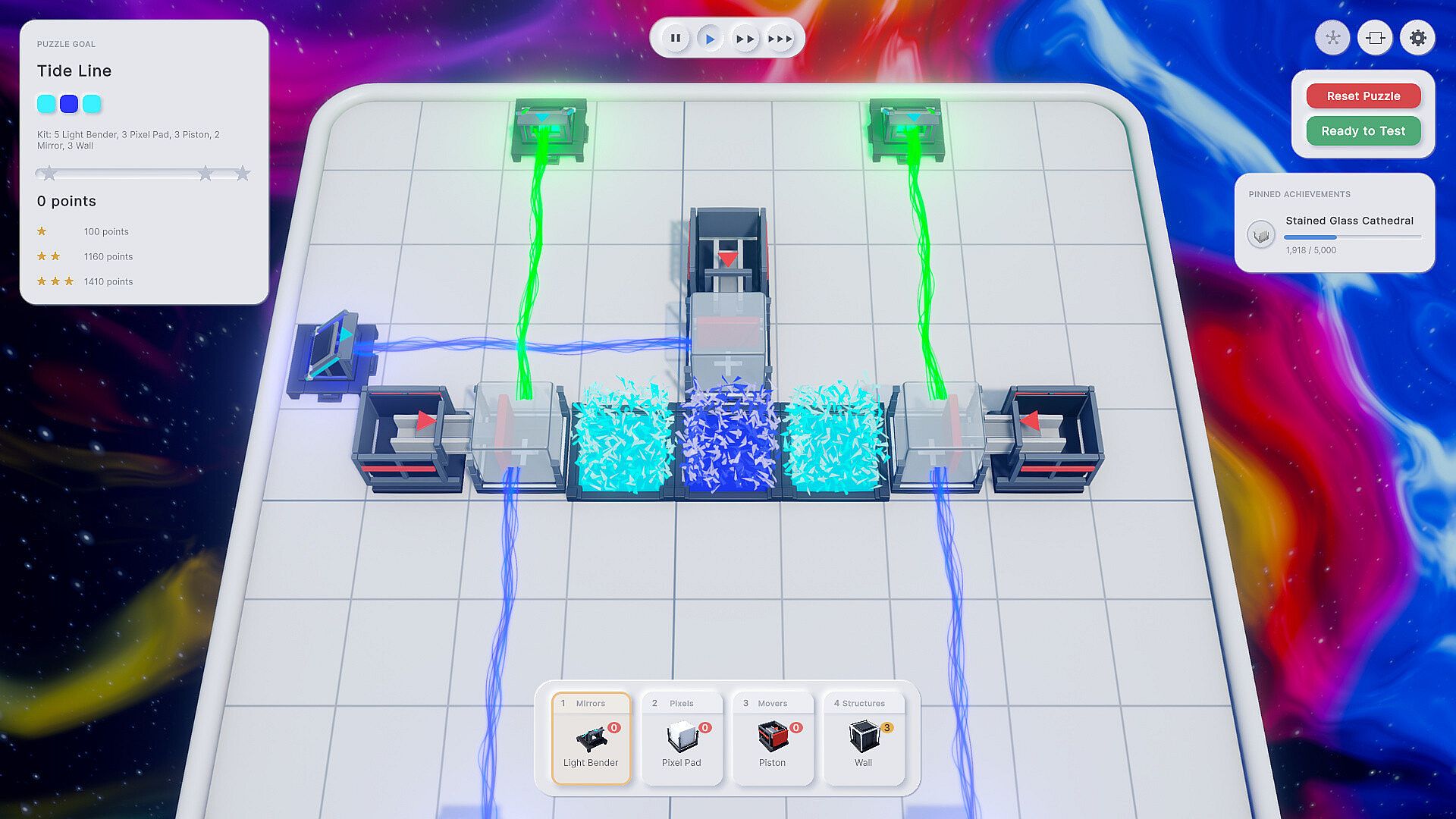
Puzzle Mode presents a series of handcrafted challenges that restrict available machines and resources. Each level requires efficient solutions under tight constraints, encouraging experimentation with different routing strategies and color mixing techniques. Success depends on careful planning rather than brute force expansion.
Creative Mode removes all resource limits and provides an empty grid with access to every unlocked machine. Players can experiment freely, iterate on complex layouts, and refine designs without external pressure. This mode supports open ended building where the goal is personal satisfaction in creating functional or visually striking light arrangements.
A dedicated level editor lets users design custom puzzles for personal use or sharing. Blueprints capture successful machine configurations so they can be reloaded, modified, or distributed to other players for reuse in their own factories.
Building Systems and Progression
Expansion occurs through the beacon charging mechanic, which gradually reveals new sections of the world and unlocks corresponding tech nodes. Optics form the foundation, with movers handling beam transport across distances and power systems sustaining continuous operation. Logic components introduce conditional behaviors that allow factories to adapt to changing inputs without constant manual intervention.
The 35 node tech tree organizes unlocks into logical branches, ensuring steady growth in capability. Early nodes focus on basic redirection and color separation. Mid tree additions introduce efficiency tools and automation aids. Later nodes enable sophisticated multi beam interactions and large scale mosaics. Full controller support ensures precise placement and adjustment even during extended building sessions.
Is It Worth Playing?
Light Factory appeals to players who enjoy methodical puzzle solving combined with creative construction in a relaxed single player setting. The combination of constrained puzzle challenges and unrestricted creative building provides variety for different moods. The tech tree and beacon expansion system deliver a clear sense of progression without overwhelming complexity.
Because the game remains in development with a planned release in Q1 2027, current information centers on the confirmed feature set rather than completed content volume or community feedback. Those drawn to light based mechanics, grid based optimization, and sandbox experimentation will find the described systems align closely with those interests. The level editor and blueprint tools add longevity through user generated content once the game launches.