







Local Game Store Simulator is a casual simulation game for PC in which players manage every aspect of their own local game store. Stock trading cards, video games, consoles, deck boxes, sleeves and other accessories while setting prices and responding to customer preferences. The experience blends retail management with personal collection building and a responsive economy that shifts based on in-game events.
Gameplay
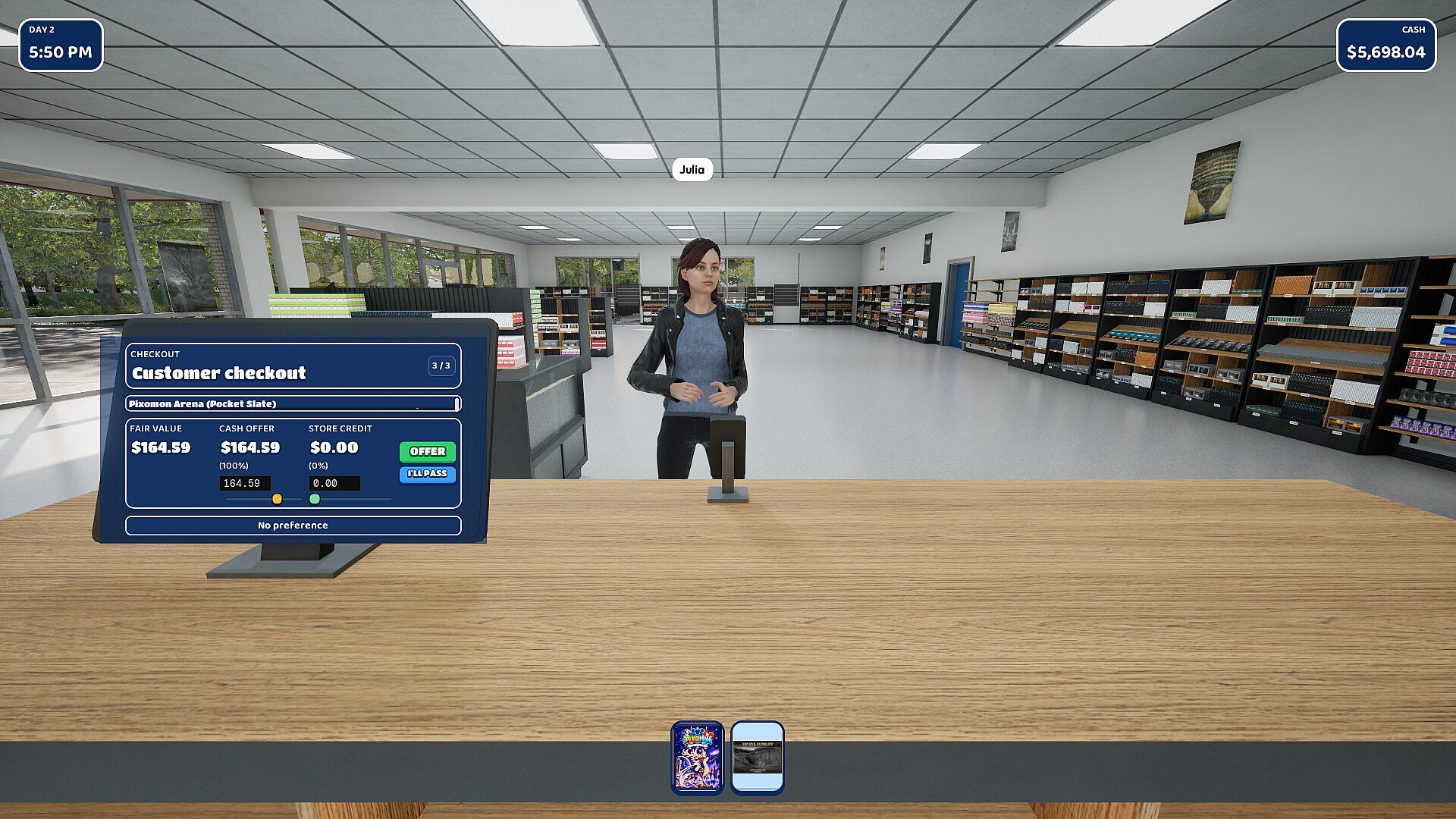
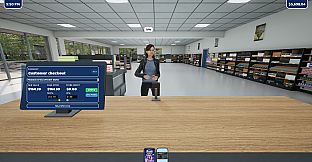
The core loop centers on daily operations inside the shop. Players purchase stock wholesale, then set individual prices for every item on the shelves. Customers arrive with their own budgets, preferred categories and notions of fair value, so overpricing drives them away and harms reputation. Working the counter involves ringing up sales and handling trade-ins, where haggling determines whether payment comes in cash or store credit.
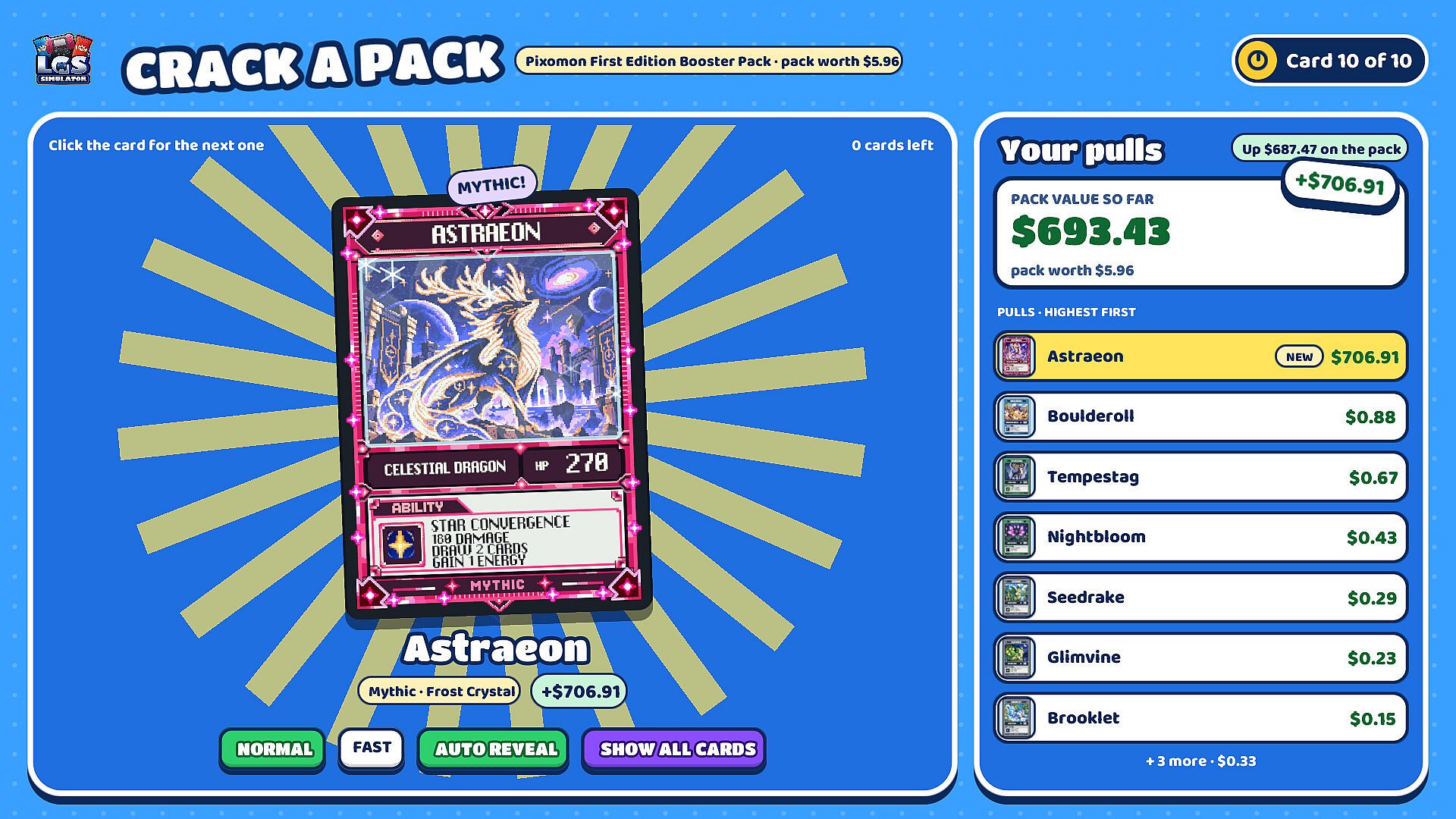
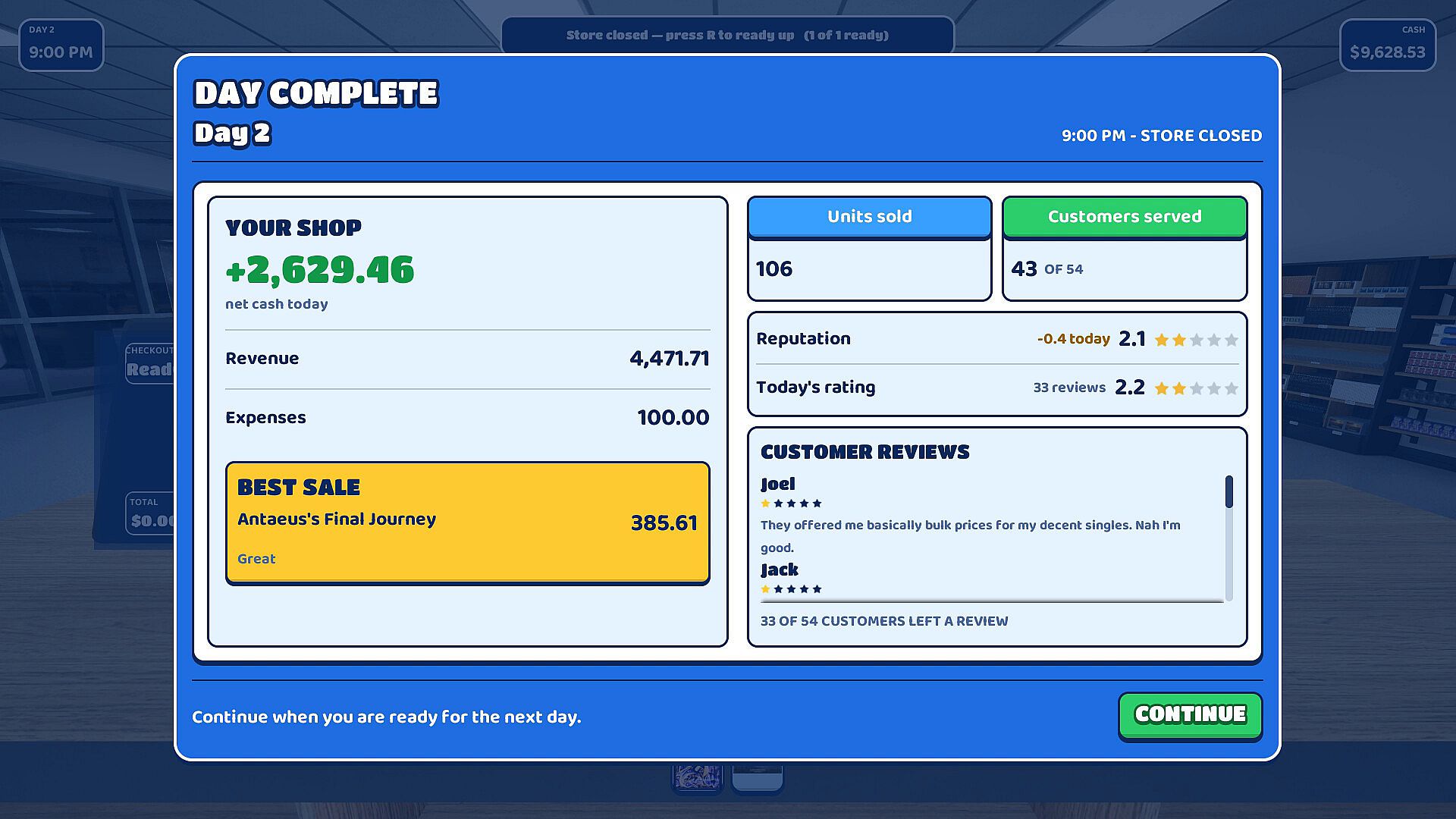
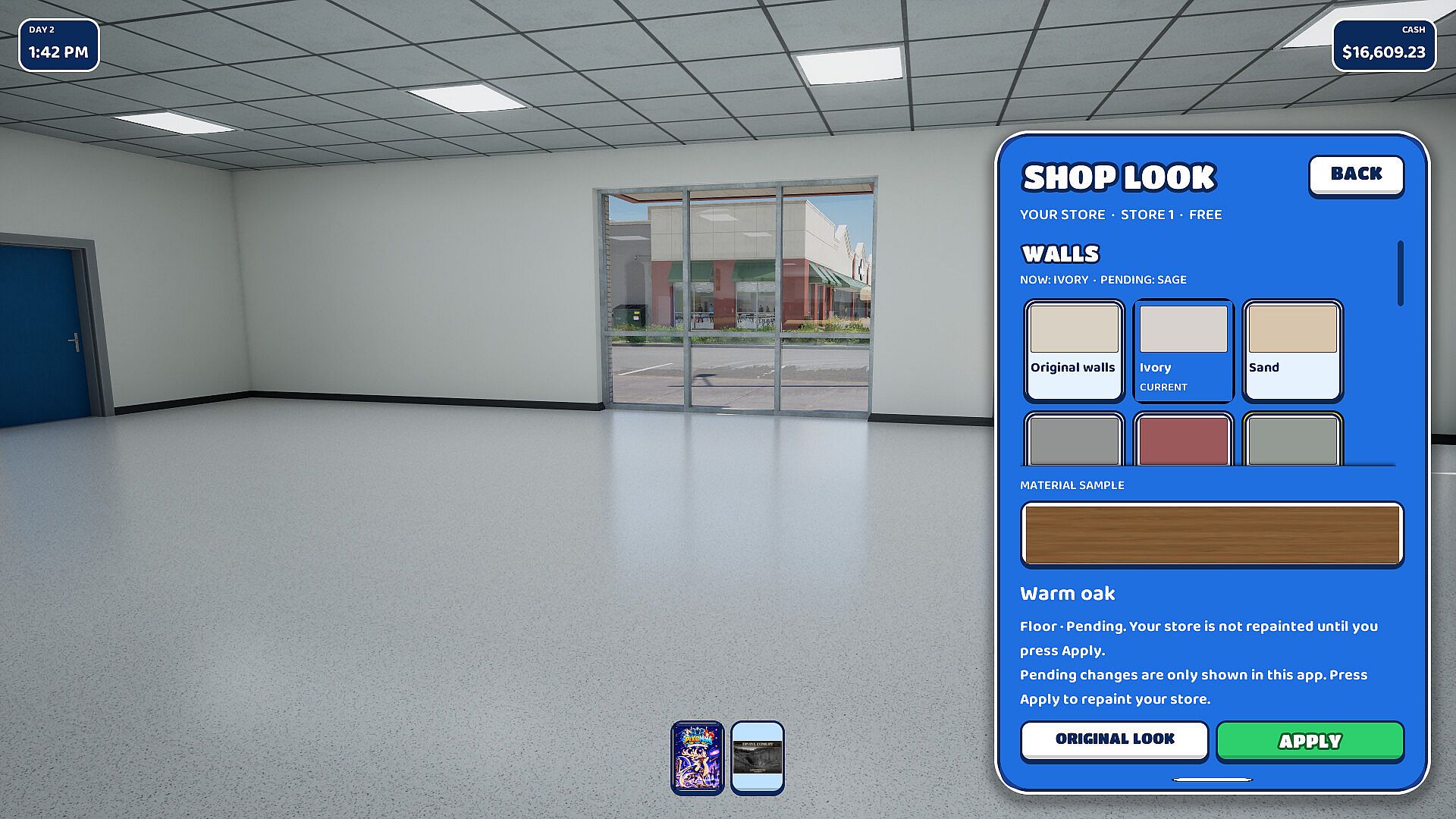
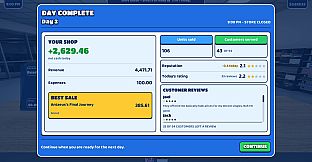
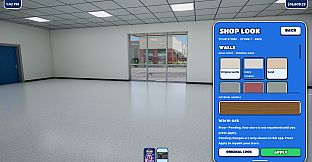
Reputation builds through consistent fair pricing and strong inventory selection. Regulars return when treated well, while poor service sends them elsewhere. Between customer interactions, players can open booster packs to chase foils and rare cards for their personal collection. High-value pulls can be sent for grading, then sold as slabs at a premium. The store itself expands as profits allow, with options to customize walls, floors, shelf layouts, posters and background music.
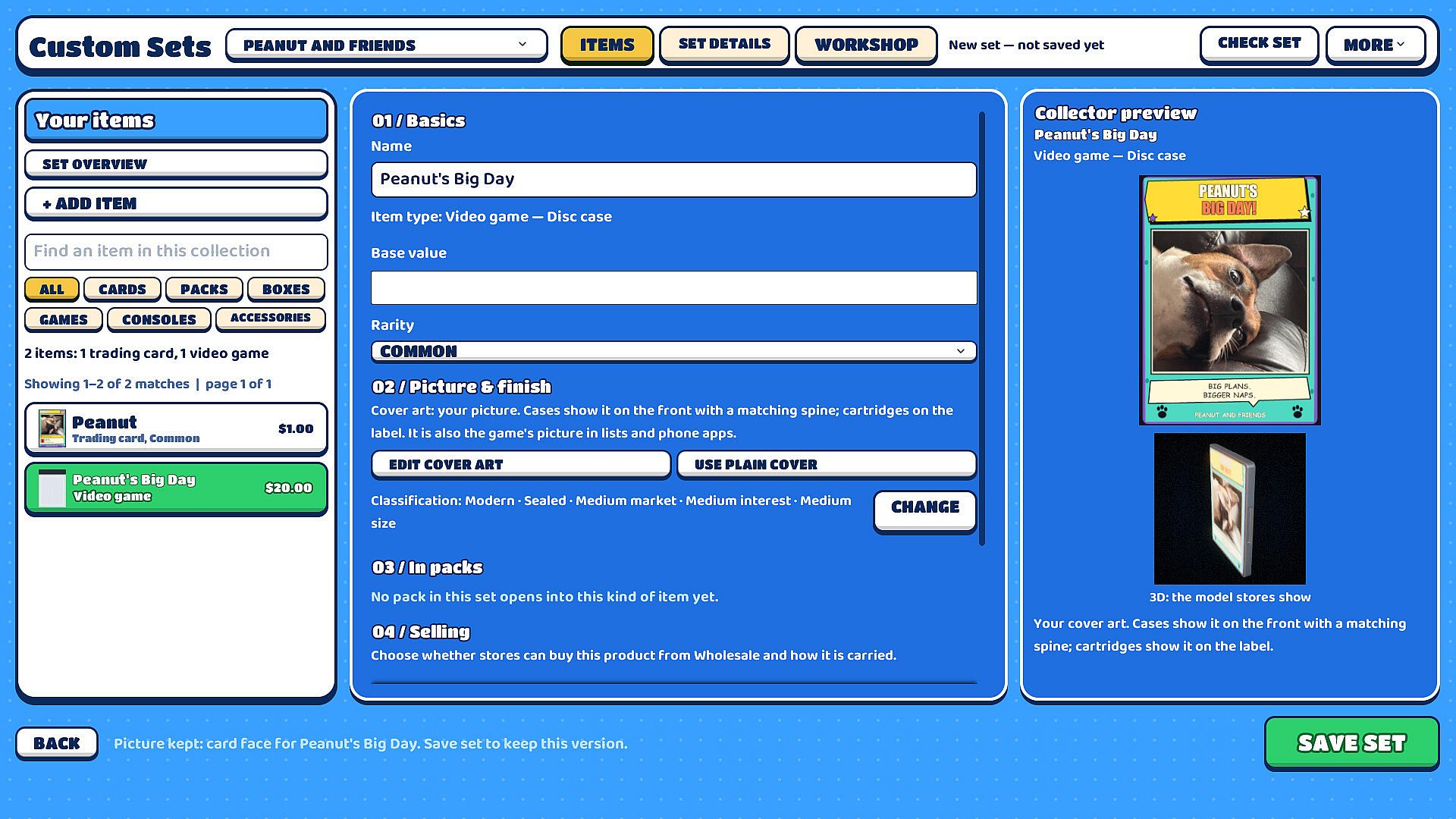
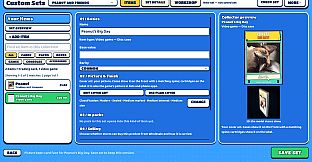
Advanced settings before each session let players adjust customer behavior, dialogue, pricing structures, wholesale costs, grading outcomes, convention events and market fluctuations. These tweaks support everything from relaxed play to aggressive profit-focused runs. Custom card sets, booster packs, video games and accessories can be created in the built-in editor, complete with foil effects, rarities and pull rates. Finished creations appear alongside official stock and can be shared with others.
Game Modes
Solo play delivers the full experience without other participants. Players handle all buying, pricing, customer service and collection activities on their own schedule. Multiplayer expands the options in several directions. Rival stores mode supports up to eight players total, with each person operating a separate shop and competing directly for the same pool of customers and available product.
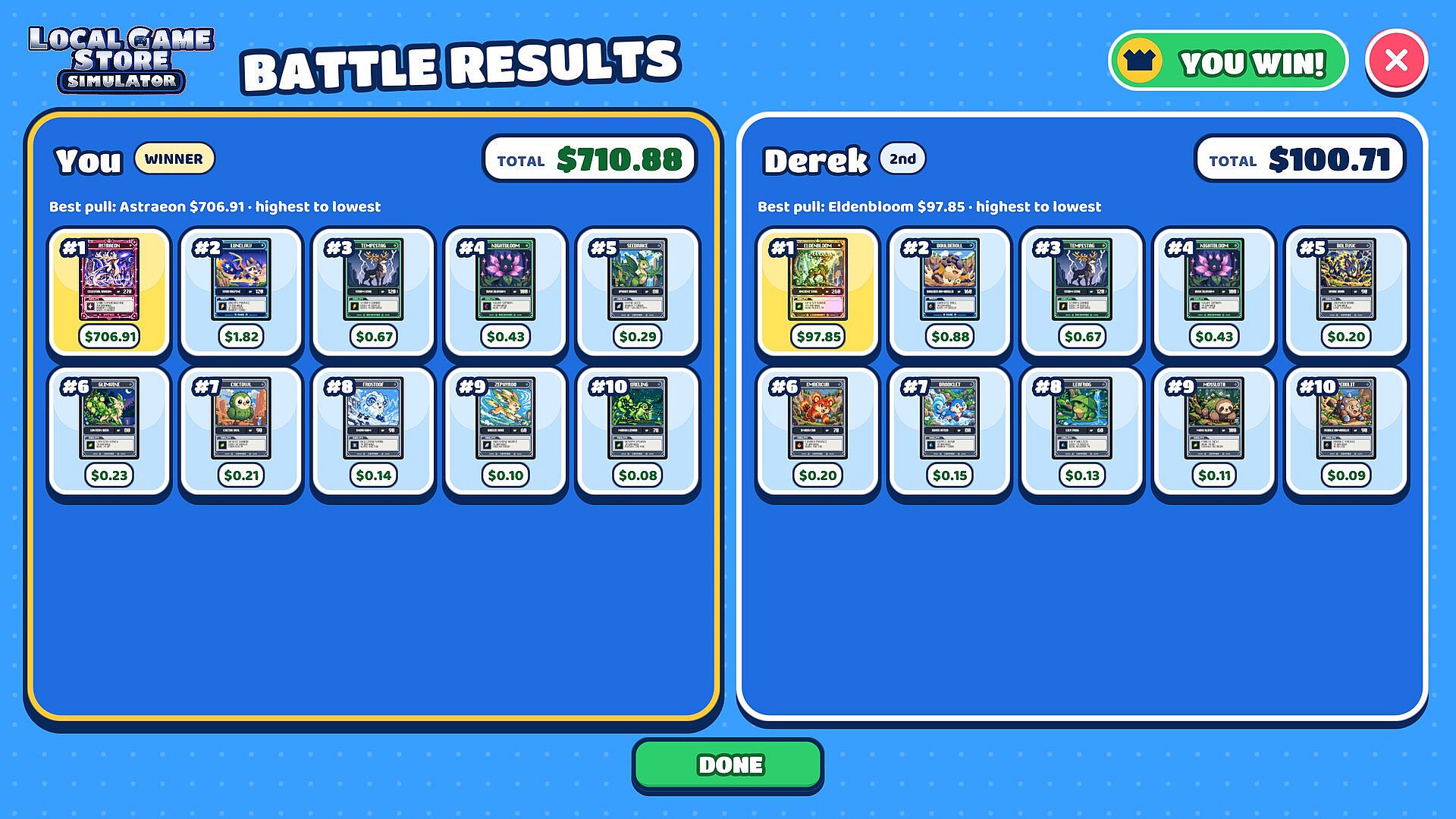
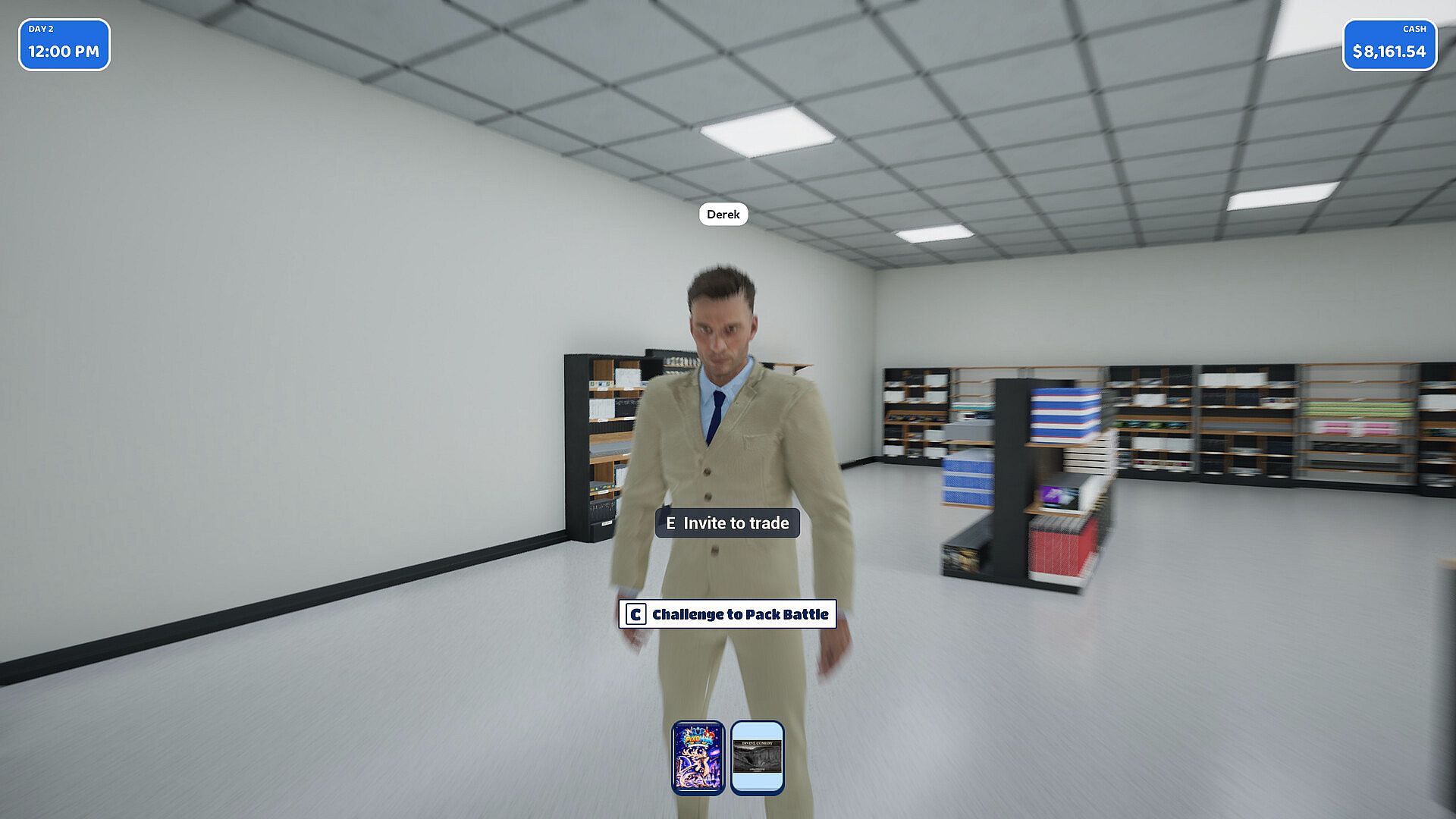
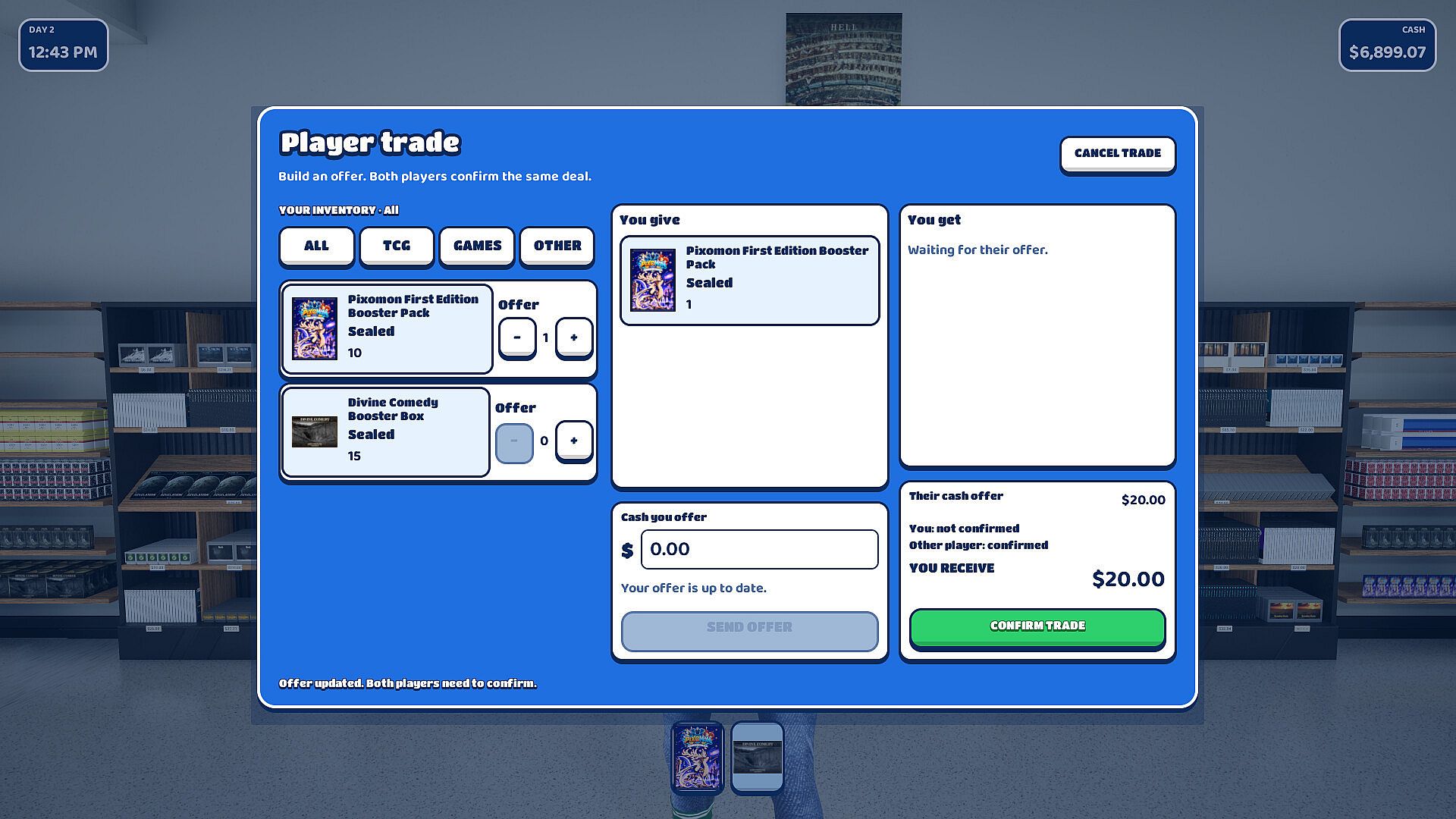
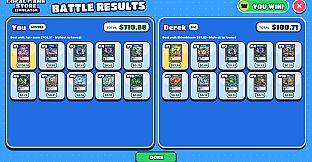
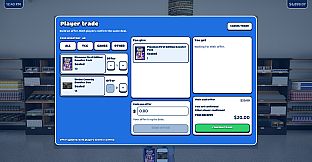
Shared-store mode lets up to four players work together inside one location, dividing tasks such as stocking, counter work and expansion decisions. Friends can also trade cards and games directly or enter winner-takes-all pack battles. All modes remain available whether playing alone or with others, and custom settings or created content transfer across sessions through the workshop system.
Customization and Creation Tools
Almost every element of the experience can be altered. Store appearance receives full attention through wall and floor choices, fixture placement and poster displays. Players name their business and expand into adjacent units as revenue grows. The product creator supports entire custom sets, including trading cards with varied finishes and values, booster packs with defined pull rates, video games, consoles, accessories, posters and card backs. These user-made items integrate fully into the shop, market and grading systems.
Advanced settings further tailor the ruleset. Customer numbers, dialogue lines, price sensitivity, wholesale availability, grading success rates, convention schedules and market events can all be modified. Shared workshop uploads allow players to load rulesets or product libraries created by the community, turning each session into a personalized variant of the base simulation.
The Moving Economy
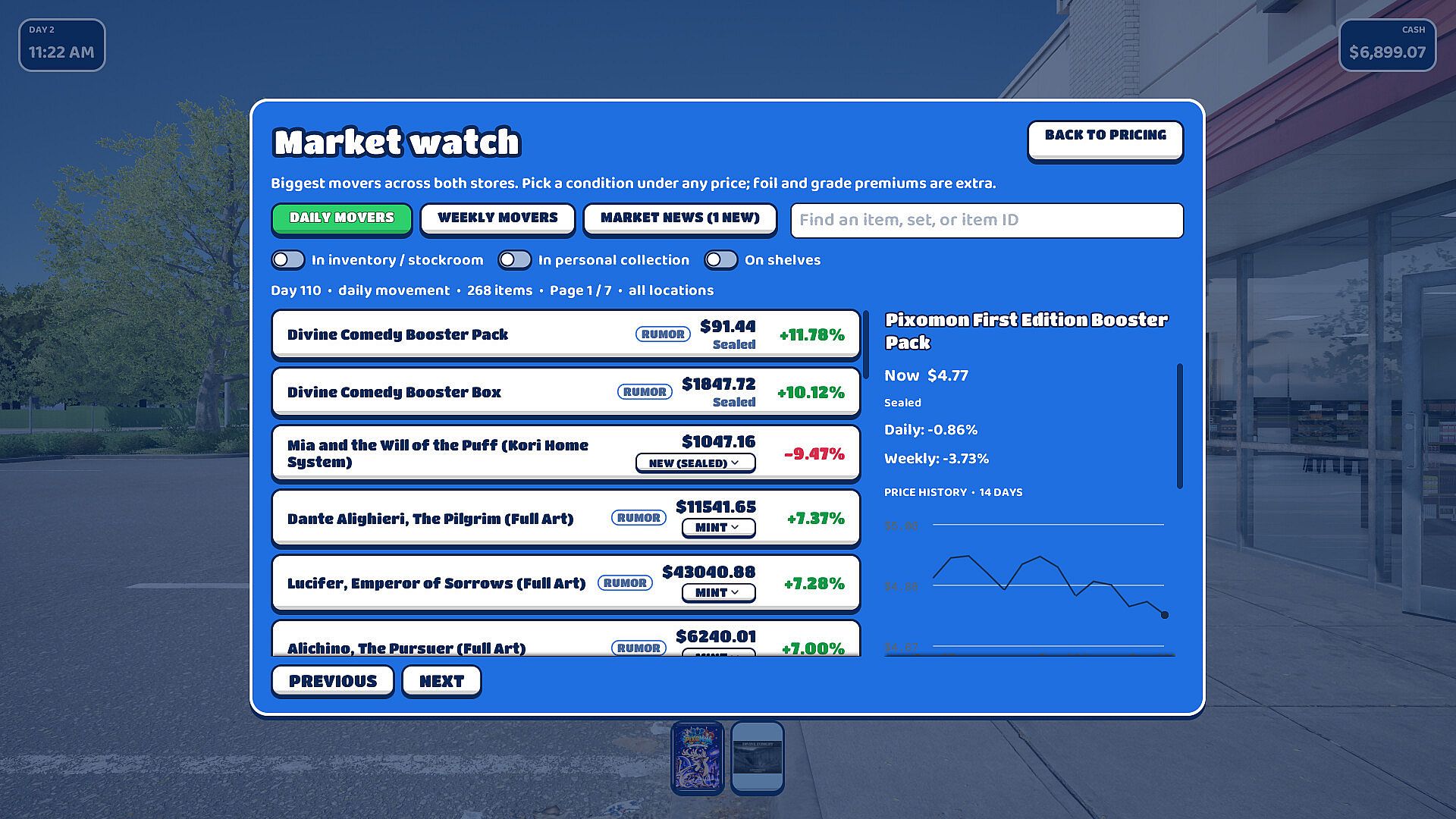
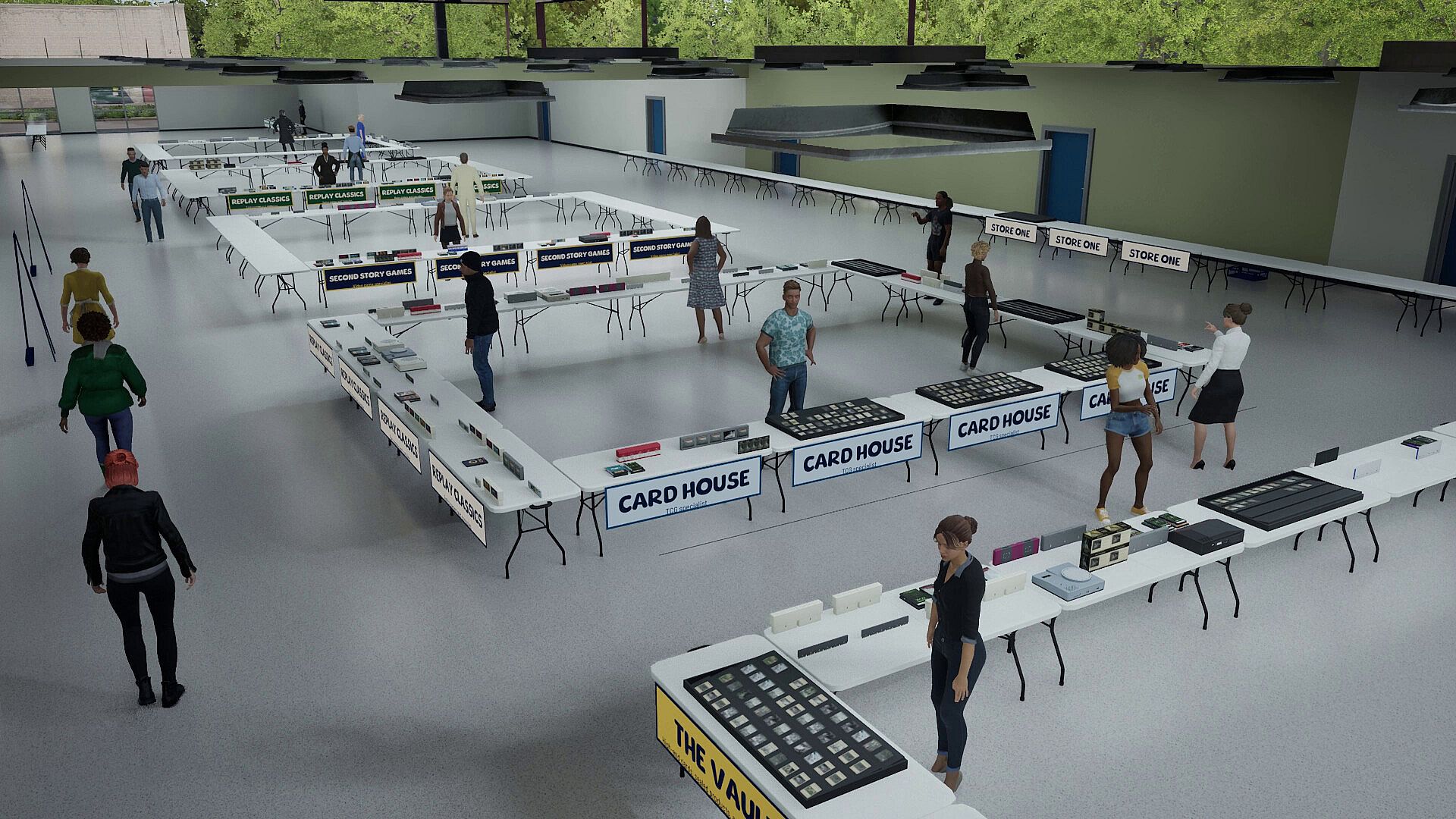
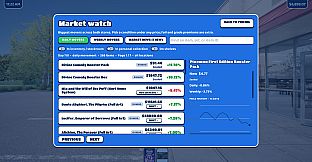
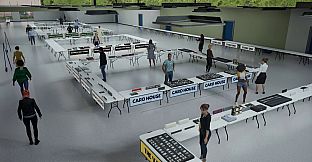
Item values change daily in response to tournament results, ban lists, reprints, streamer attention and retro revivals. Rumors provide early signals that let attentive owners stock up before prices rise. Additional buying opportunities appear at conventions, the online marketplace, consignment auctions and nearby boutique or thrift locations. This system rewards observation and timing rather than static pricing strategies.
Is It Worth Playing?
Local Game Store Simulator targets players who enjoy detailed store-management simulations with strong emphasis on customization and collection elements. The combination of hands-on counter work, trade haggling, pack opening and a reactive market creates a self-contained loop that supports both short sessions and longer campaigns. Multiplayer modes add competition or cooperation without requiring constant online presence, while the advanced settings and creation tools give experienced players extensive control over difficulty and content.
Those drawn to casual simulation experiences that reward careful pricing, inventory decisions and gradual shop growth will find the systems align closely with that preference. The game functions completely in solo mode, so it suits single-player focused users as readily as groups. Because the title remains unreleased, current player feedback is unavailable, yet the documented feature set positions it as a specialized option within the store-simulator genre for anyone interested in trading-card and tabletop retail themes.











