


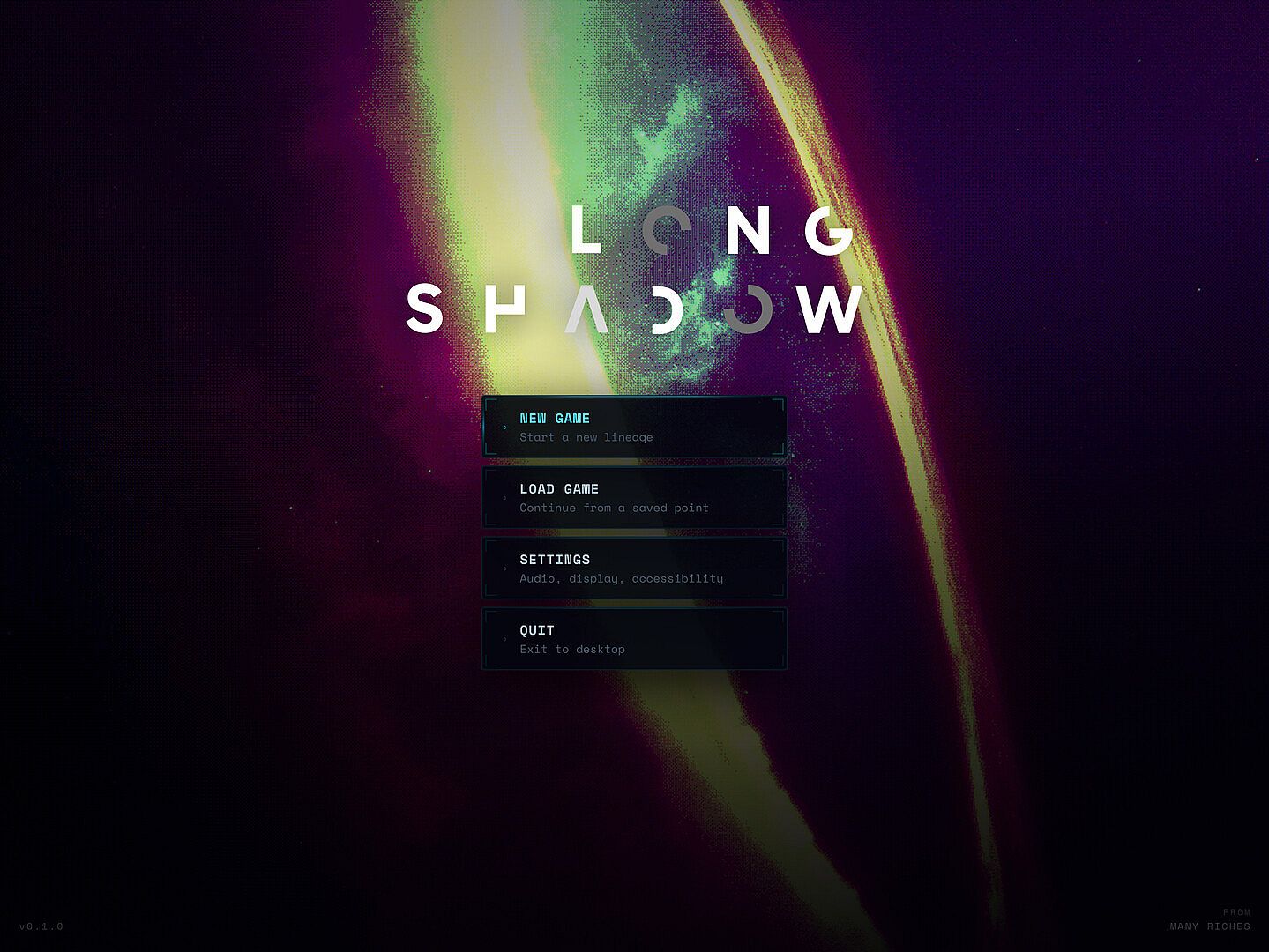
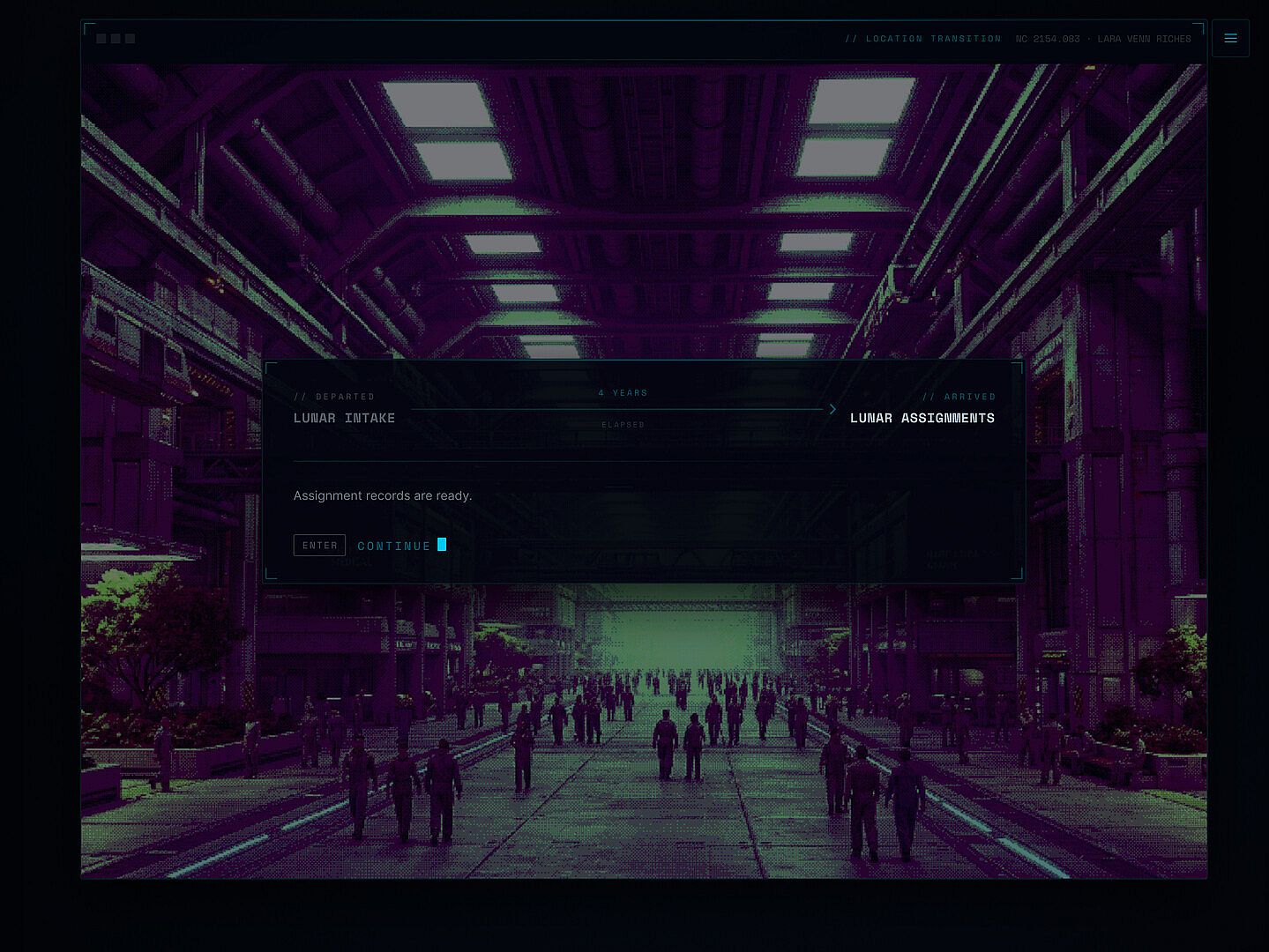
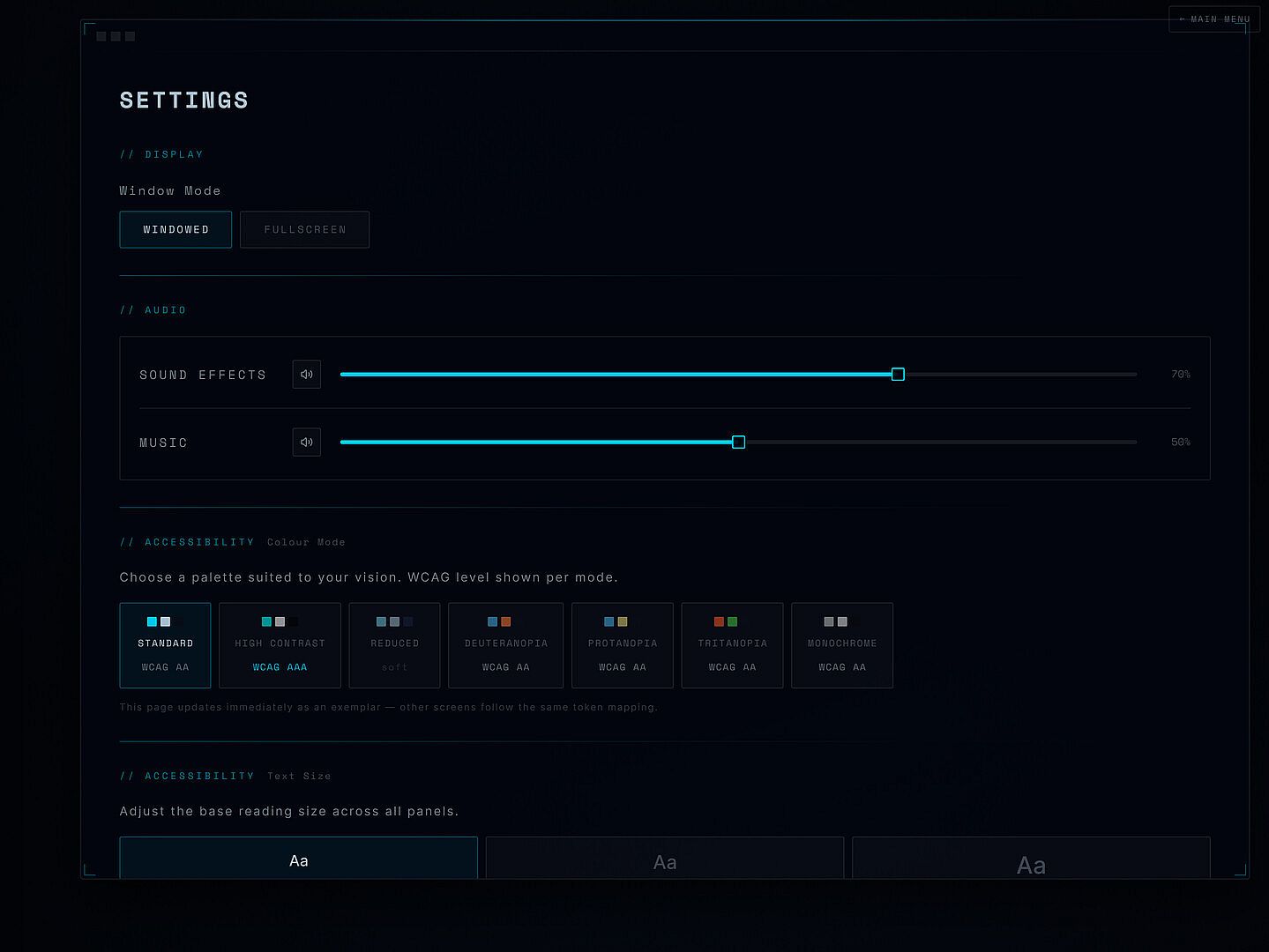

Long Shadow is a text-first science fiction RPG set on PC that follows one family through more than four centuries of human survival and expansion. Players begin in 2098 as an ordinary parent on a dying Earth and guide successive generations through collapse, evacuation, life on Lunar Base, a long voyage aboard a generation ship, the founding of New Earth, and eventual interstellar growth. The core loop centers on everyday decisions that carry forward as inherited property, relationships, reputation, legal records, and unresolved conflicts.
Gameplay
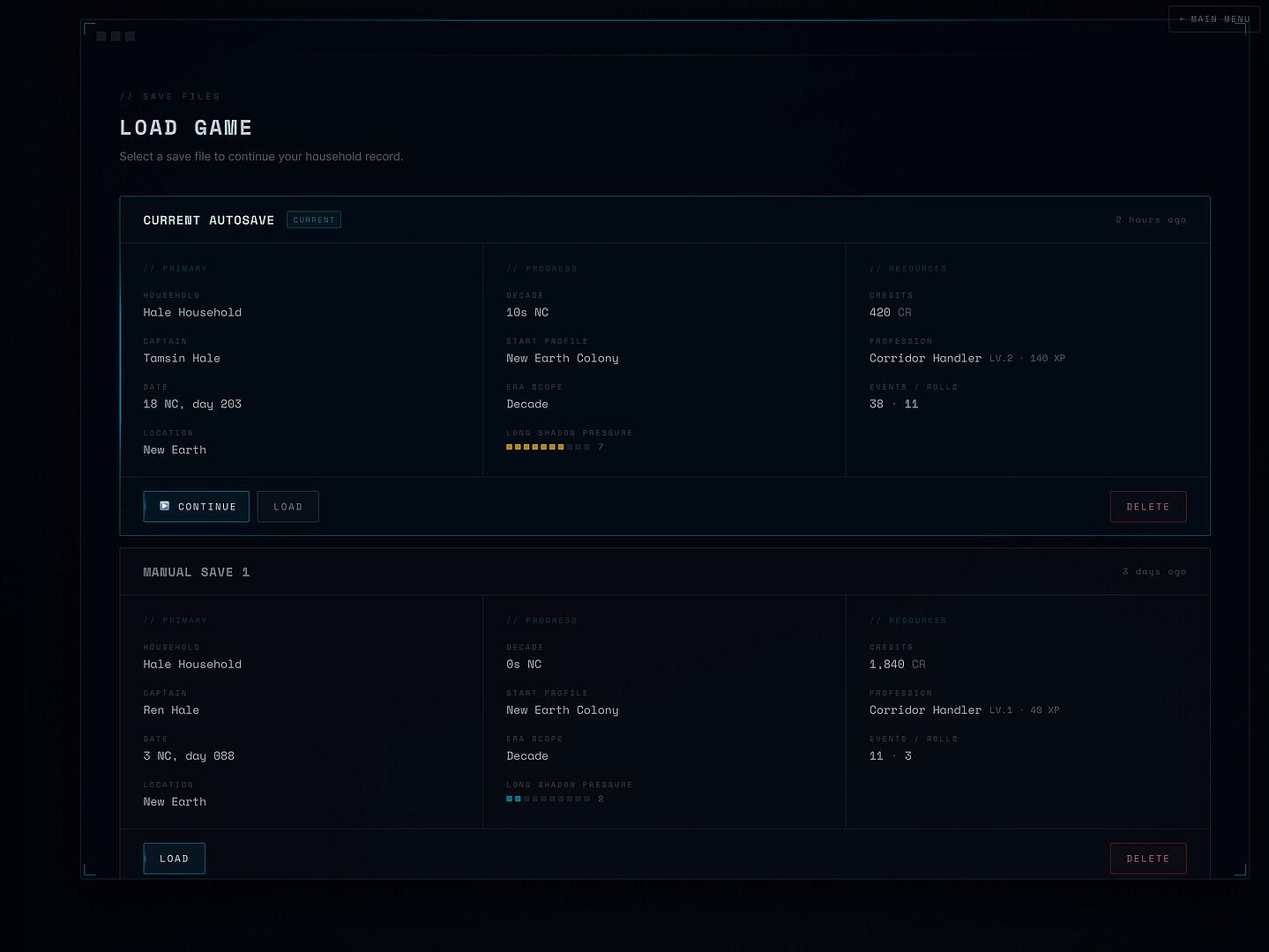
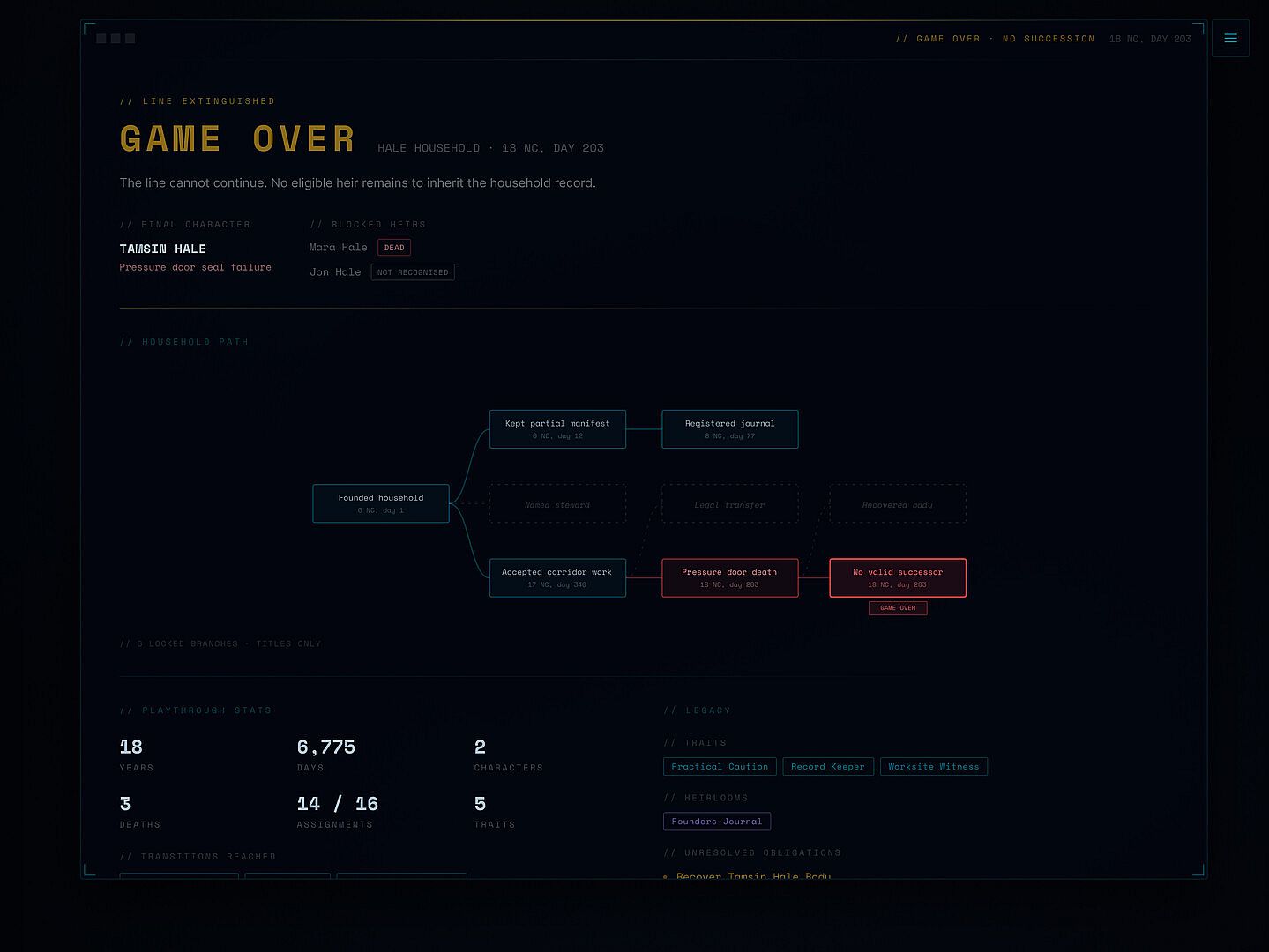
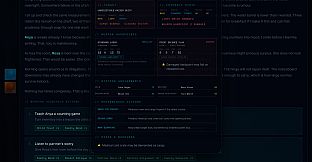
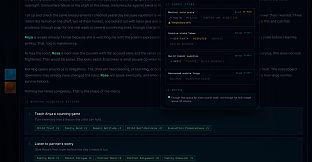
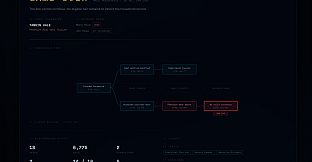
Gameplay revolves around choice-driven narrative progression rather than traditional leveling or combat systems. Each generation lives through distinct historical periods, from routine struggles on Earth with rationed resources and military checkpoints to industrial routines on Lunar Base and the slow drift of traditions aboard the Ark. When a character dies, control shifts to a descendant who inherits the accumulated consequences of prior actions. A single record created during evacuation processing can influence court cases centuries later, while a broken promise from one era shapes rivalries or alliances in the next.
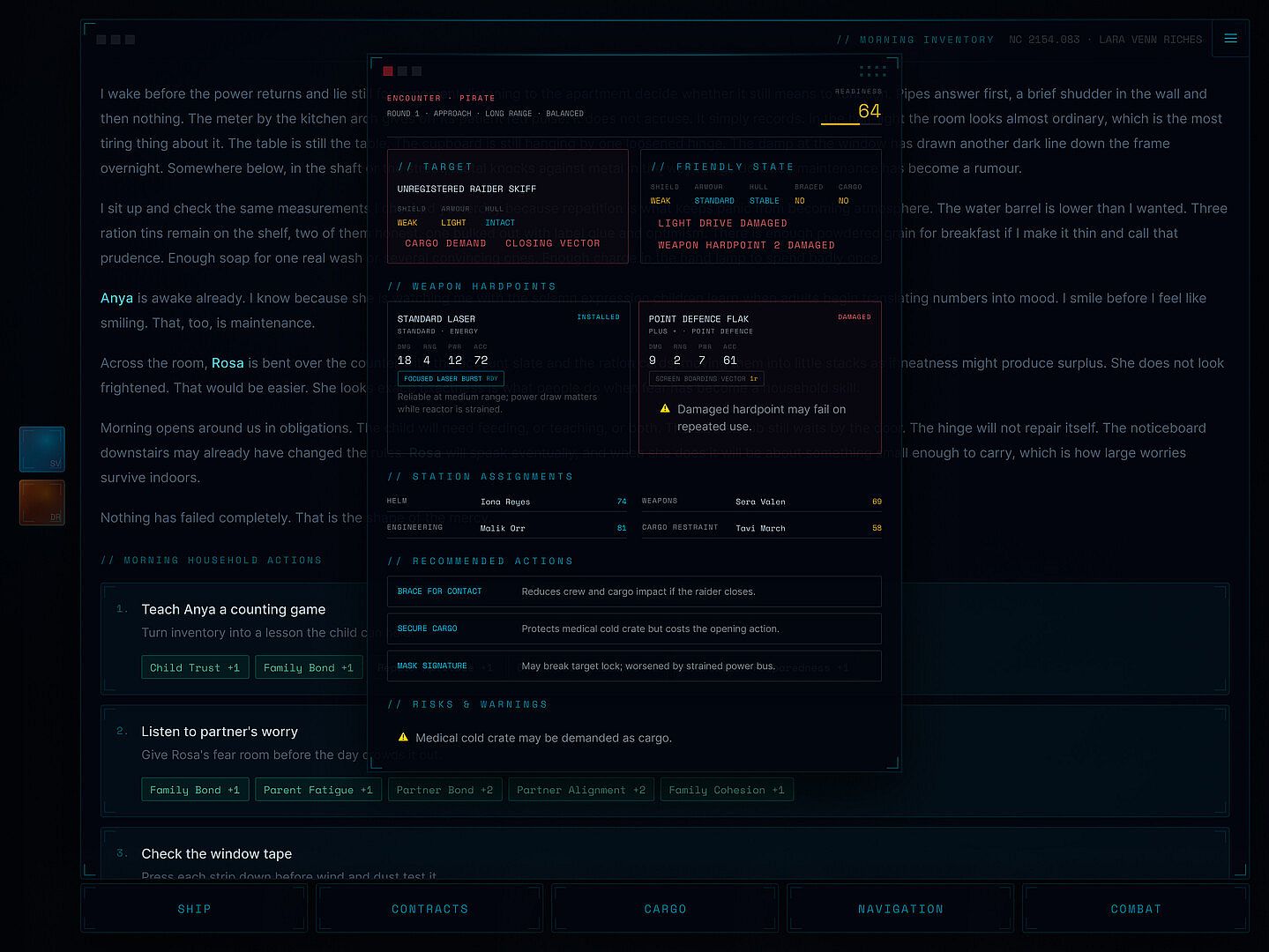
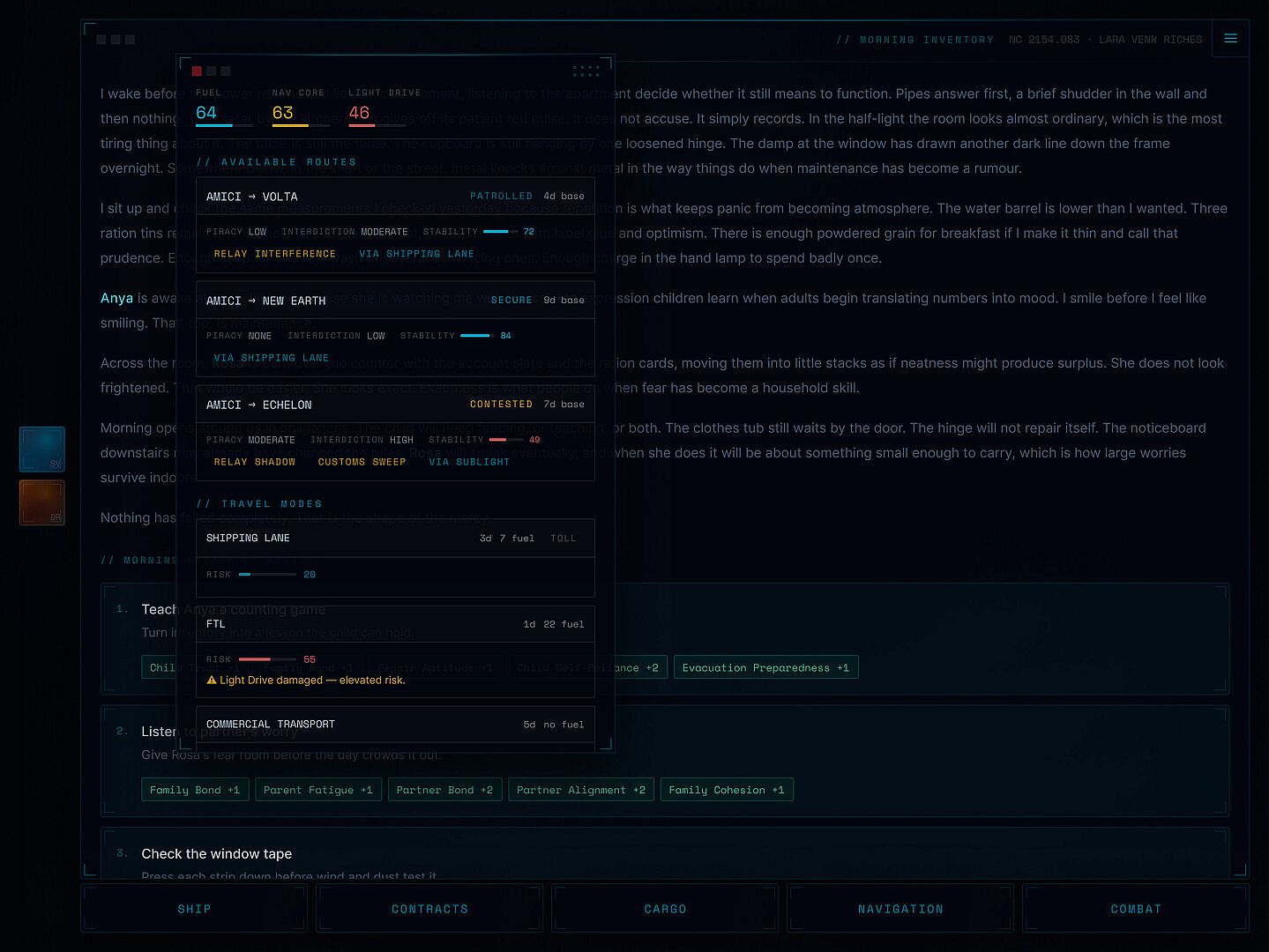
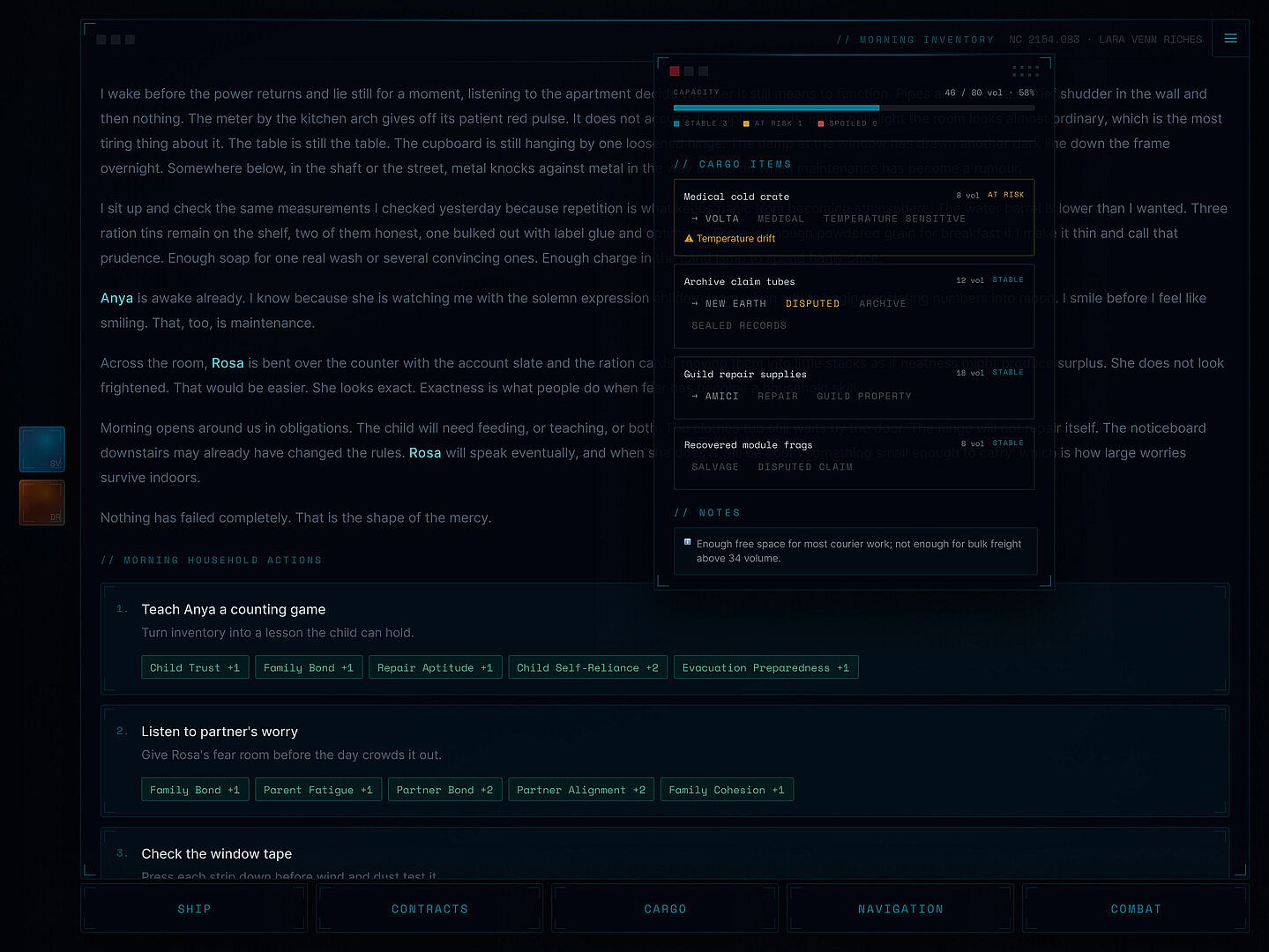
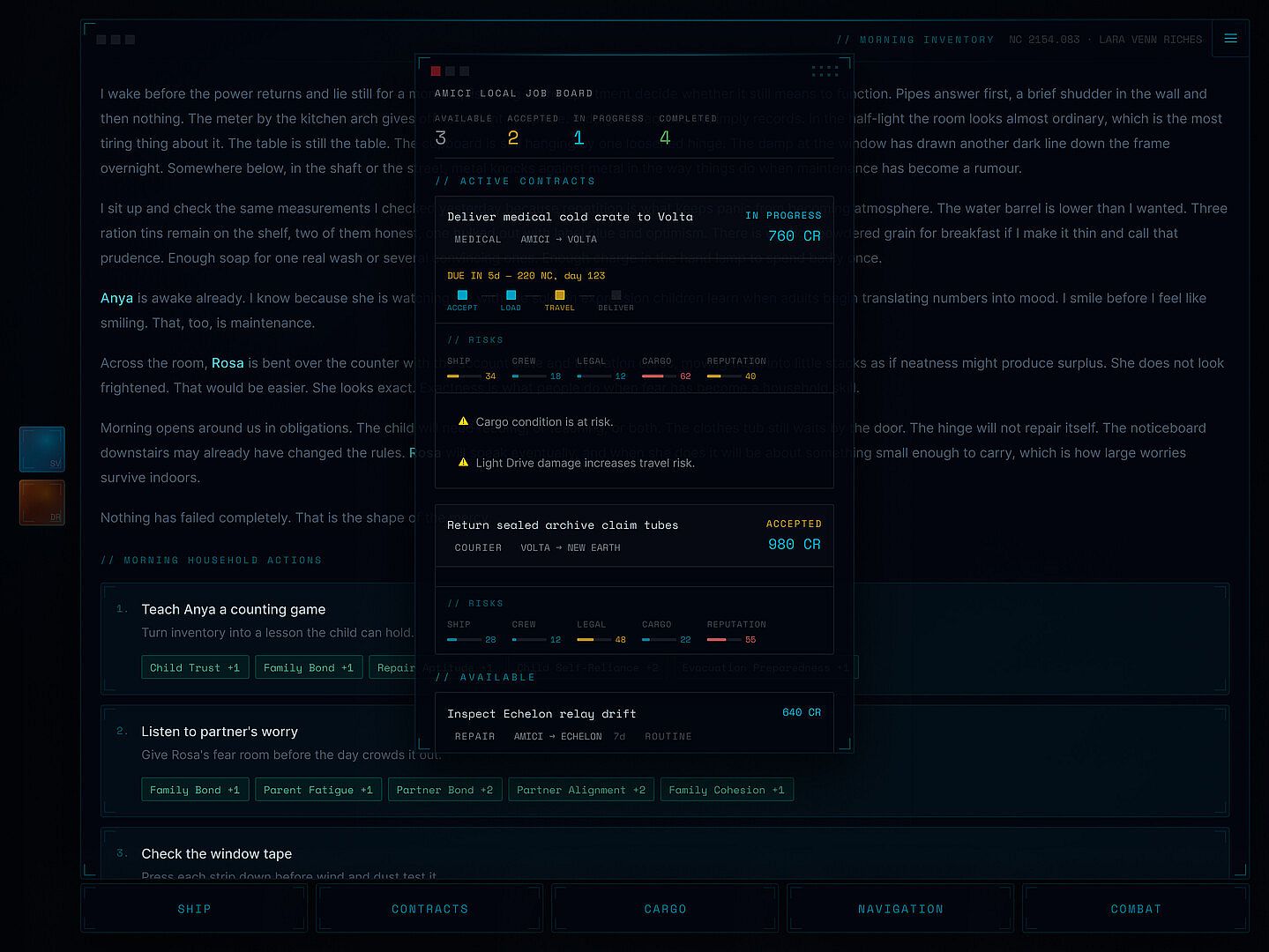
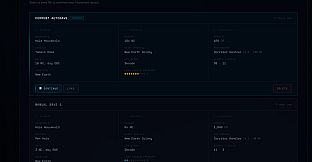
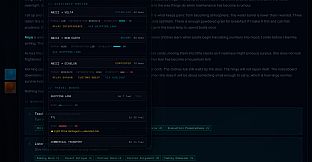
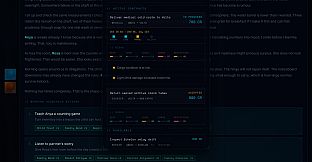
Players manage household resources, decide what to declare or conceal during official screenings, build relationships that persist across generations, and shape laws or customs that later societies follow. Exploration involves navigating changing environments such as sealed corridors on the aging ship or scattered landing sites on New Earth. Ship command appears in later eras, where descendants recruit crews, customize vessels for trade or survey work, and handle the long-term fallout from conflicts or negotiations. The simulation tracks persistent world state so that settlements expand, institutions endure, and family reputation influences opportunities or obstacles for descendants.
Game Modes
Long Shadow operates as a single-player branching narrative experience with no separate multiplayer or competitive modes. The primary structure is a continuous generational campaign that spans Earth's final years, Lunar Base survival, the multi-century Ark voyage, planetary settlement, and interstellar expansion. Every playthrough generates a unique family history through player choices, while the underlying deterministic rules maintain consistency across eras. Random events introduce variation without breaking established continuity, ensuring that inherited elements like debts, friendships, and political alignments remain relevant regardless of the path taken.
Key Mechanics and Progression
Progression occurs through succession rather than personal advancement. Descendants receive skills, knowledge, and social standing shaped by earlier generations, allowing players to influence distant future events through foundational decisions made centuries before. Relationship systems track friendships, marriages, and rivalries that echo forward, while record-keeping mechanics determine how official histories and family memories diverge. Later stages introduce ship customization and contract-based activities such as cargo transport or system surveys, where crew dynamics and prior family reputation affect outcomes. The Afterless era adds questions about identity and memory that test the legal and historical frameworks built across prior generations.
Is It Worth Playing?
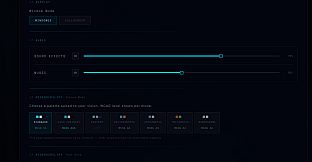
Long Shadow suits players who enjoy deep narrative RPGs focused on long-term consequences and family legacy rather than fast-paced action or grinding systems. Its text-first design and full accessibility features, including screen reader support and keyboard navigation, make it approachable for a wide audience. The game remains in active development with ongoing updates that expand eras and refine simulation consistency. Those drawn to choice-driven stories about survival, inheritance, and the weight of history will find substantial replay value in how small early decisions reshape entire civilizations. If the premise of guiding one lineage across collapse and rebirth appeals, the title delivers a focused, authored experience without reliance on procedural generation or external content.