




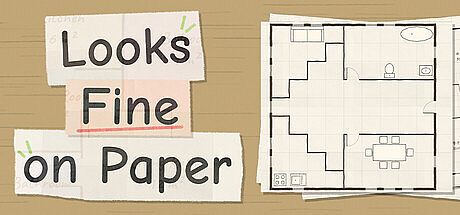


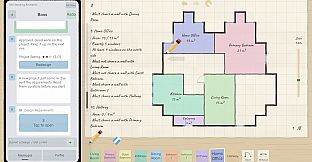
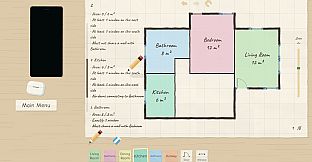
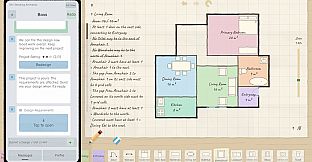
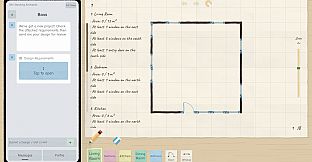
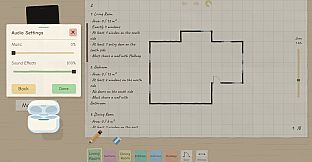
Looks Fine on Paper is an indie casual logic puzzle game for PC that centers on designing floor plans under strict spatial rules. Players begin with empty blueprints and must arrange rooms, furniture, doors, and windows to meet every requirement at once.
Gameplay
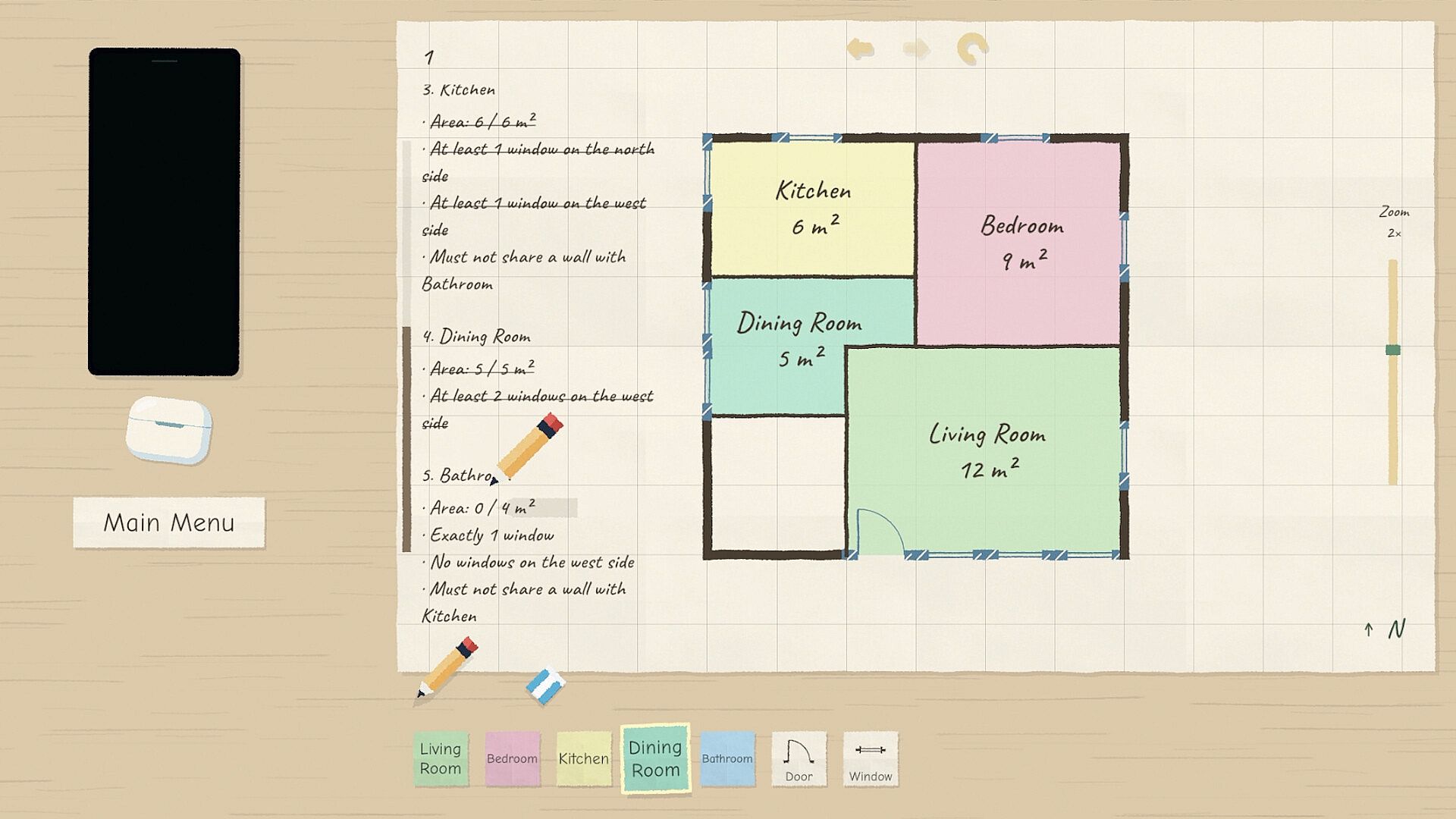
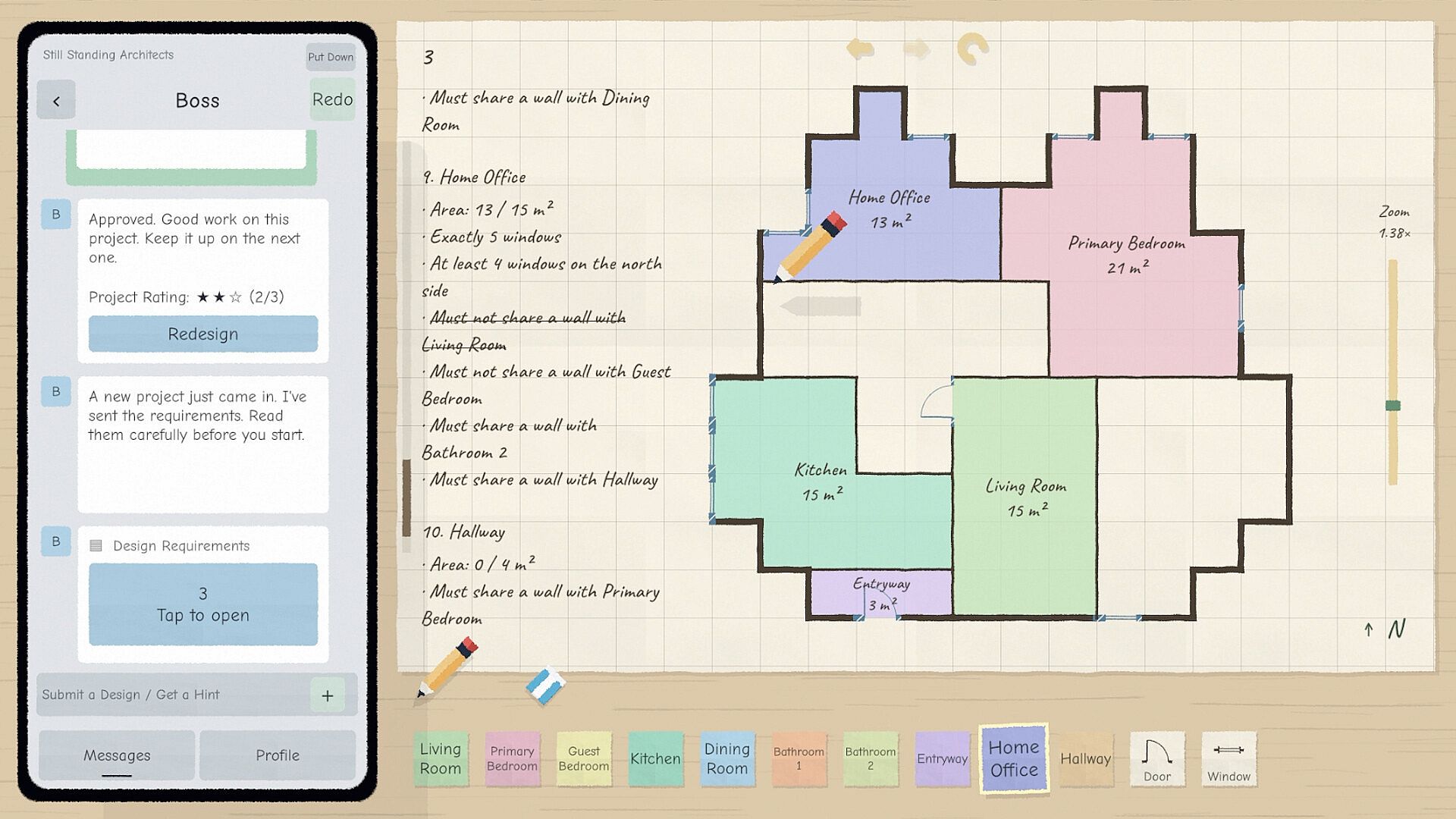
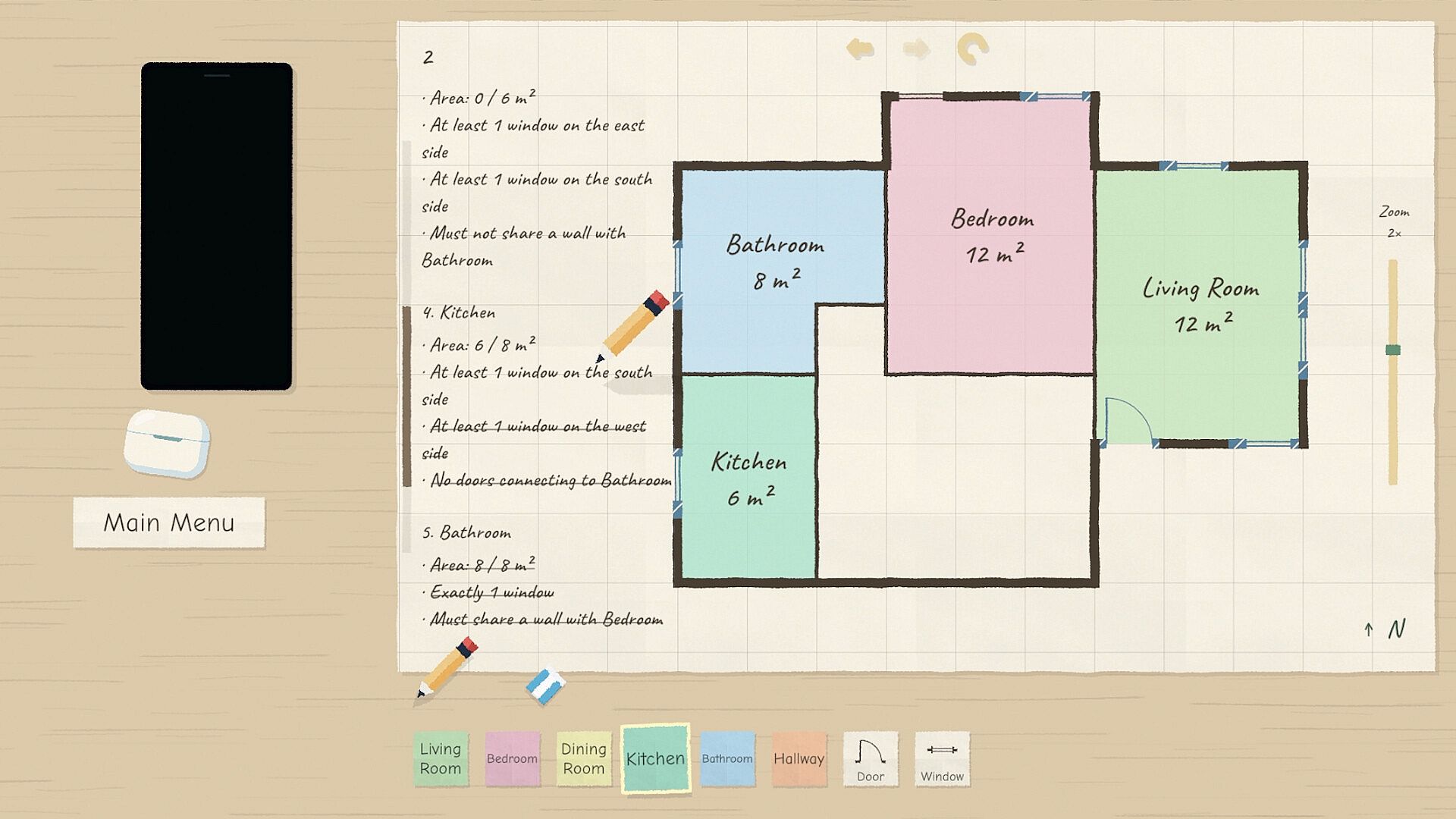
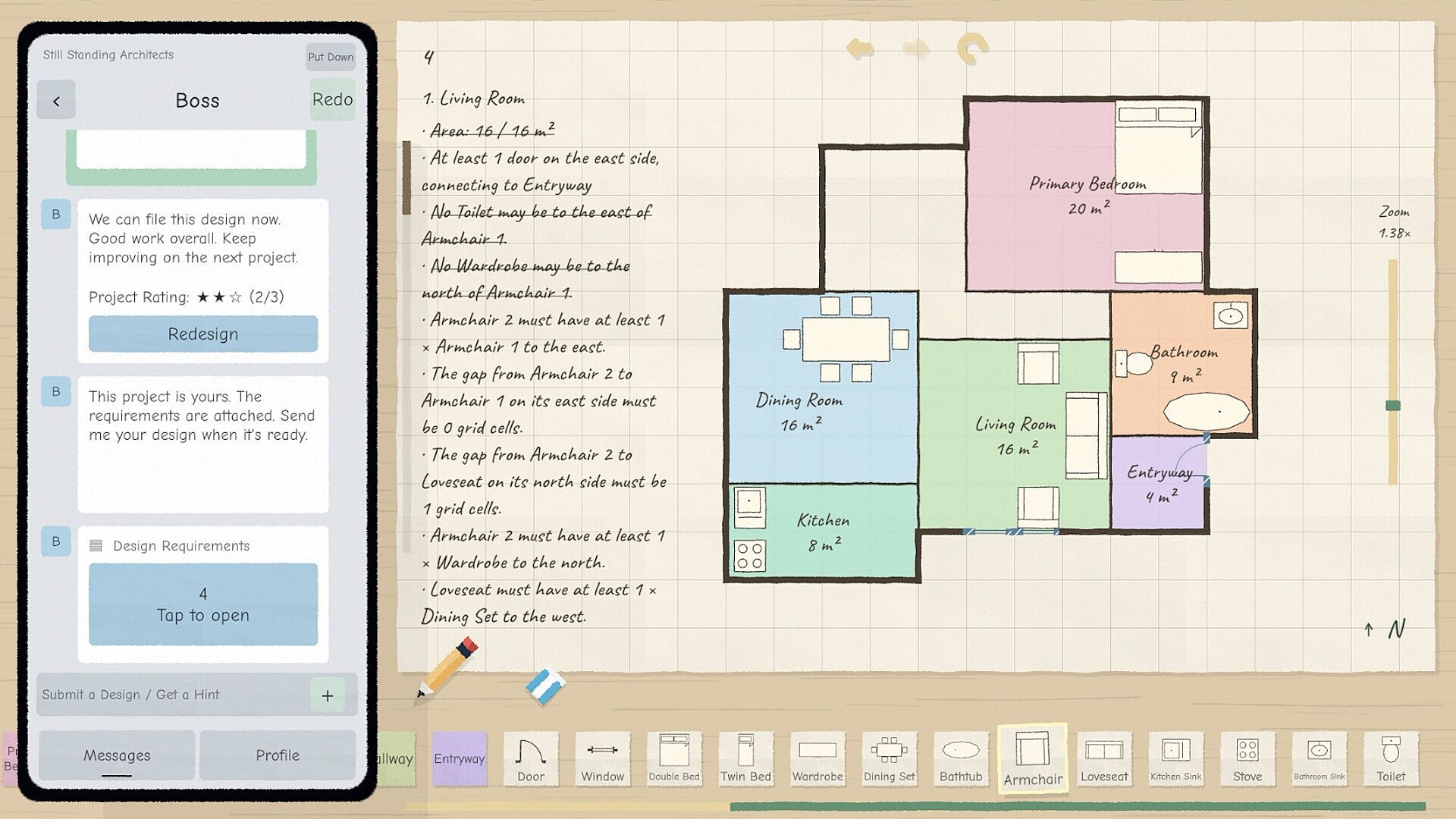
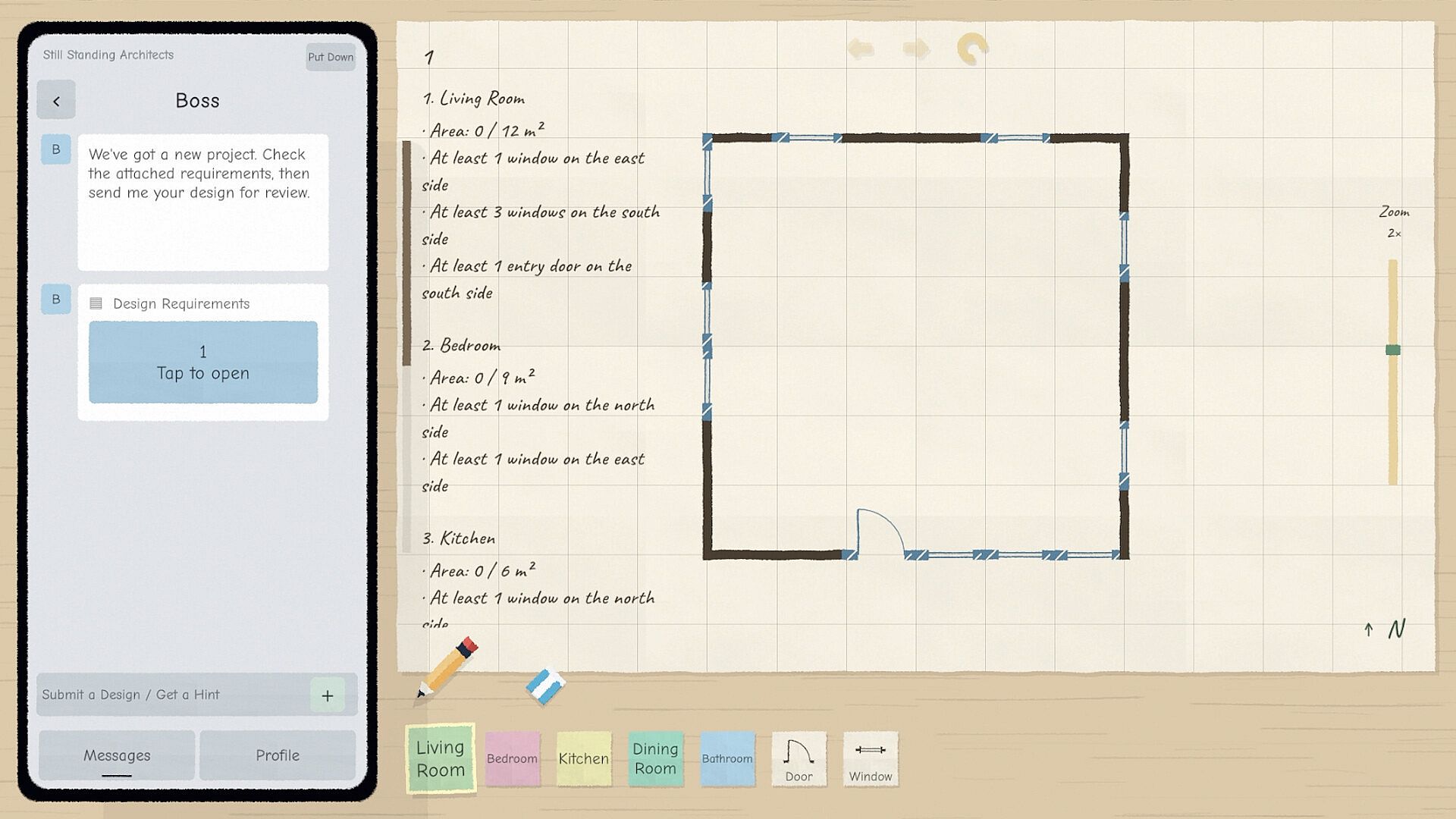
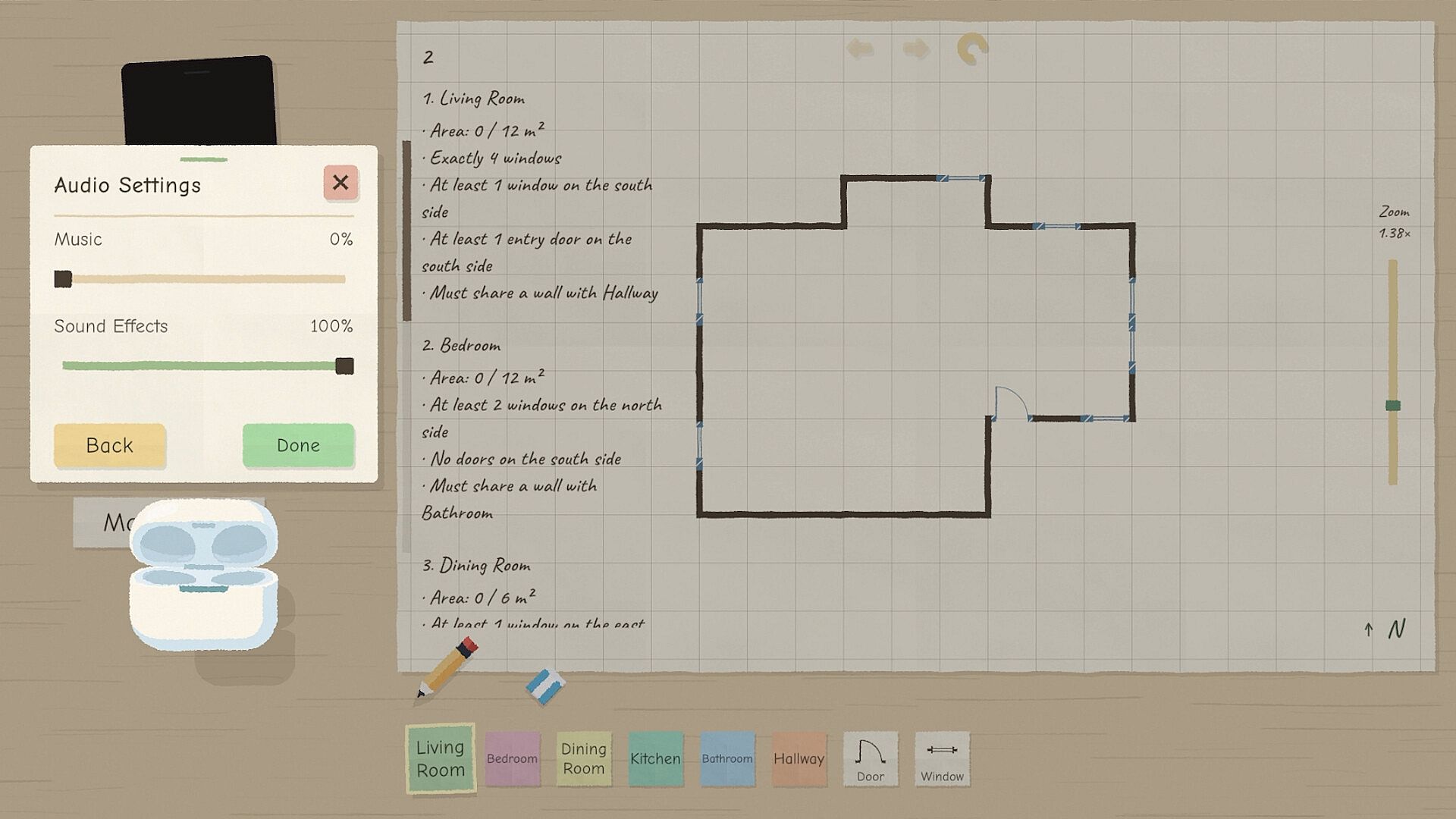
The core loop revolves around interpreting area requirements and spatial clues to shape and position rooms on a blank layout. Rooms start without fixed forms, so each decision about size and placement must satisfy multiple overlapping conditions simultaneously. Adjacency rules dictate which spaces can share walls, while door and window placements influence how furniture fits within boundaries and how rooms connect to one another.
Every adjustment carries ripple effects. Shifting one piece of furniture to resolve an area shortfall can block a required window or violate an adjacency rule elsewhere. Players test configurations repeatedly, tracing the chain of consequences until all constraints align. The process demands careful reasoning about how room boundaries interact with interior objects and external access points.
Progress builds level by level as new clues introduce tighter limits on space and relationships. The challenge lies in balancing every element without leaving any condition unsatisfied, turning the blueprint into a complete, functional plan.
Game Modes
The experience unfolds across individual levels, each presenting its own set of area specifications and spatial clues. There are no separate competitive or cooperative formats; the focus remains on solving these interconnected layout problems in sequence.
Players work through the levels at their own pace, applying the same core reasoning process to increasingly complex arrangements of rooms and furnishings. No additional variants or alternate play styles appear beyond this progressive puzzle structure.
Design and Constraints
Rooms lack preset shapes, forcing players to derive dimensions directly from the given requirements. Furniture must respect room edges, door swings, and window placements while also satisfying its own positional rules. These layers of dependency create situations where a solution for one room directly limits options for the next.
The system rewards methodical testing. A layout that meets area totals might still fail on adjacency or access rules, prompting further revisions. The absence of predefined templates keeps every level fresh, as solutions emerge only through iterative adjustment of the entire plan.
Is It Worth Playing?
This title suits players who enjoy deliberate spatial reasoning and untangling layered constraints without time pressure or combat elements. The single-player focus on blueprint completion offers a steady stream of logic challenges that build in complexity through new clue combinations.
Those drawn to casual indie puzzle experiences centered on design and problem solving will find consistent engagement in the requirement-satisfaction loop. The game provides no free modes, trials, or ongoing seasonal content based on available details, so interest depends on appreciation for its precise, consequence-driven layout mechanics.











