

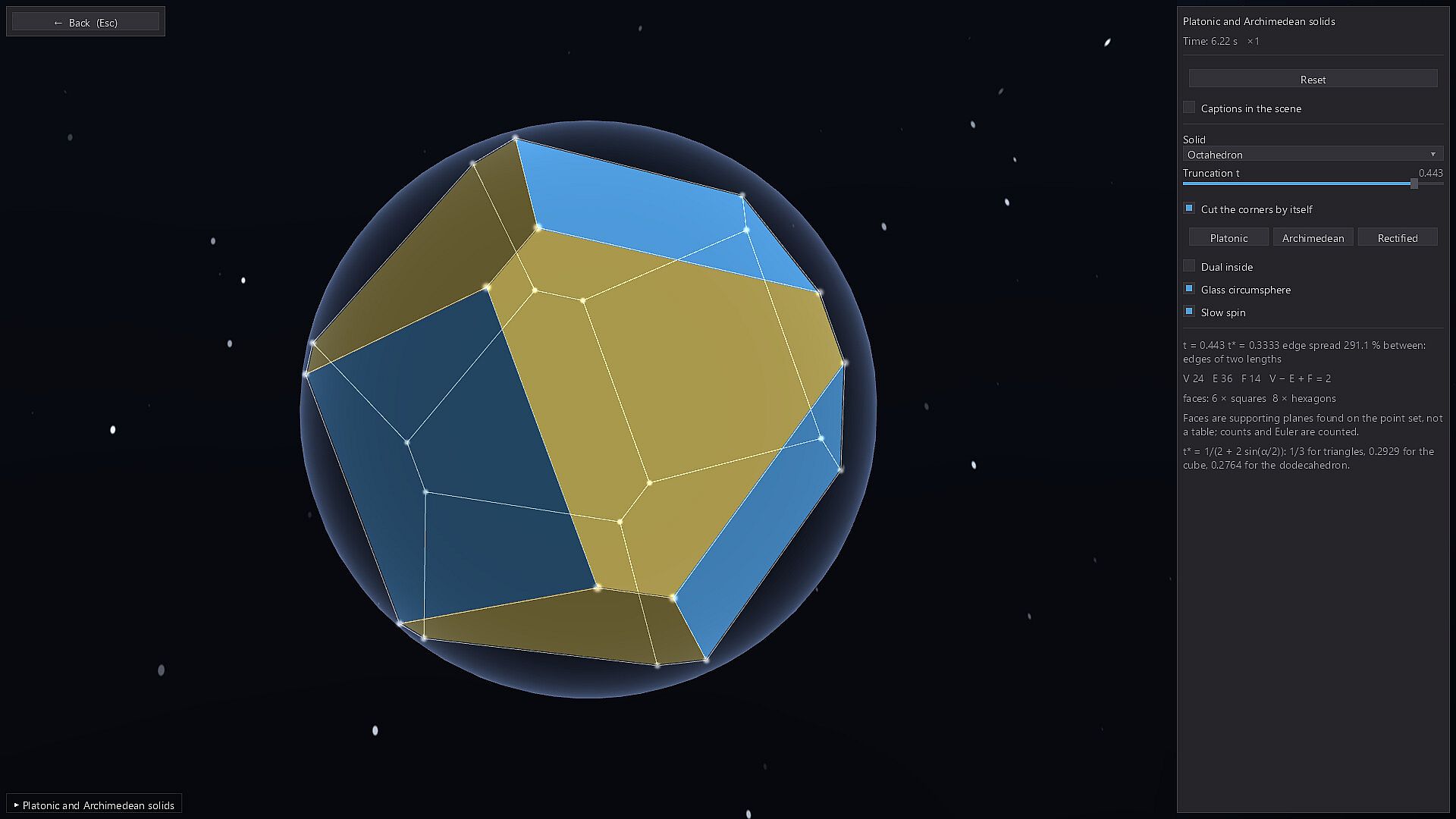
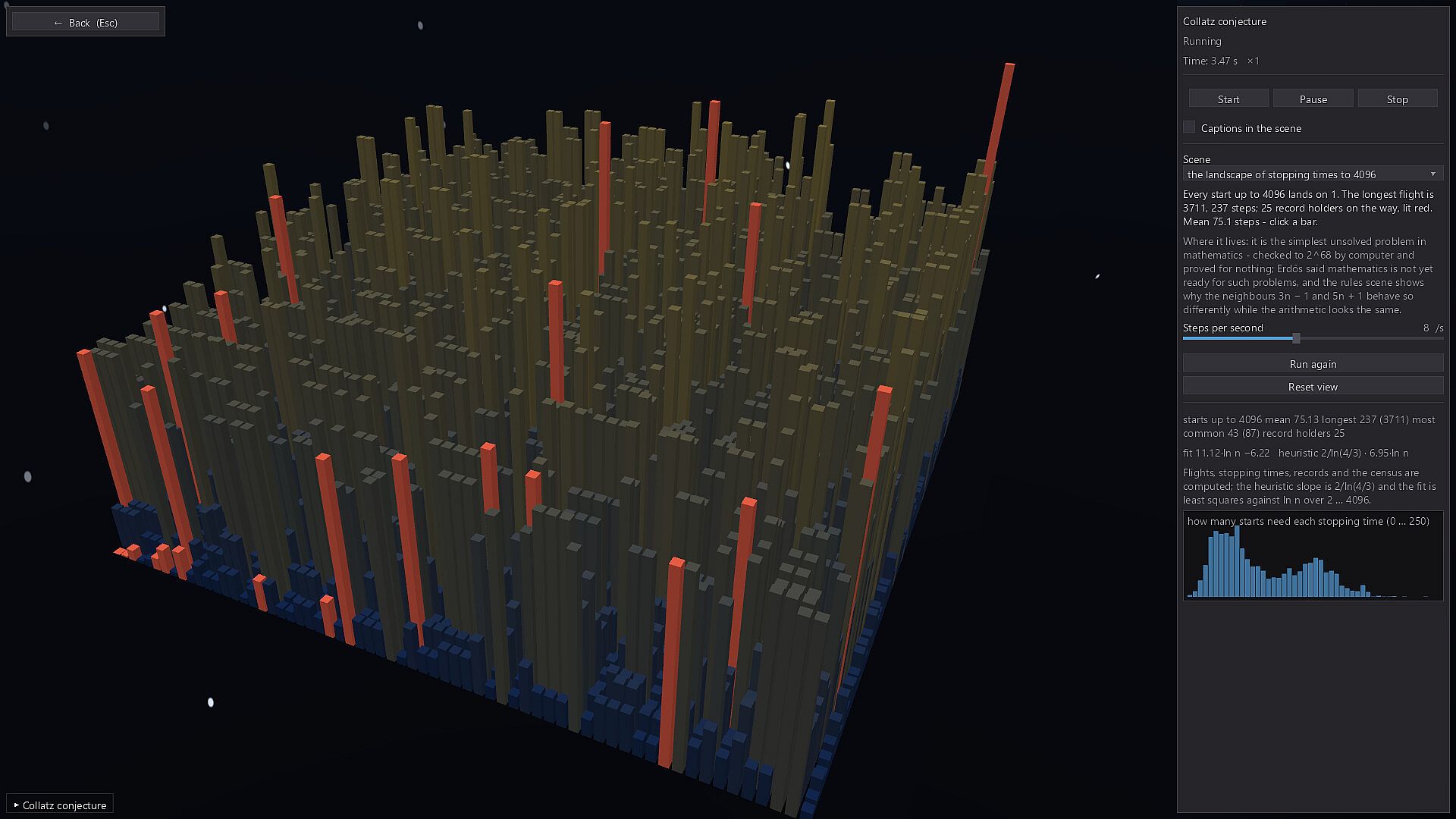
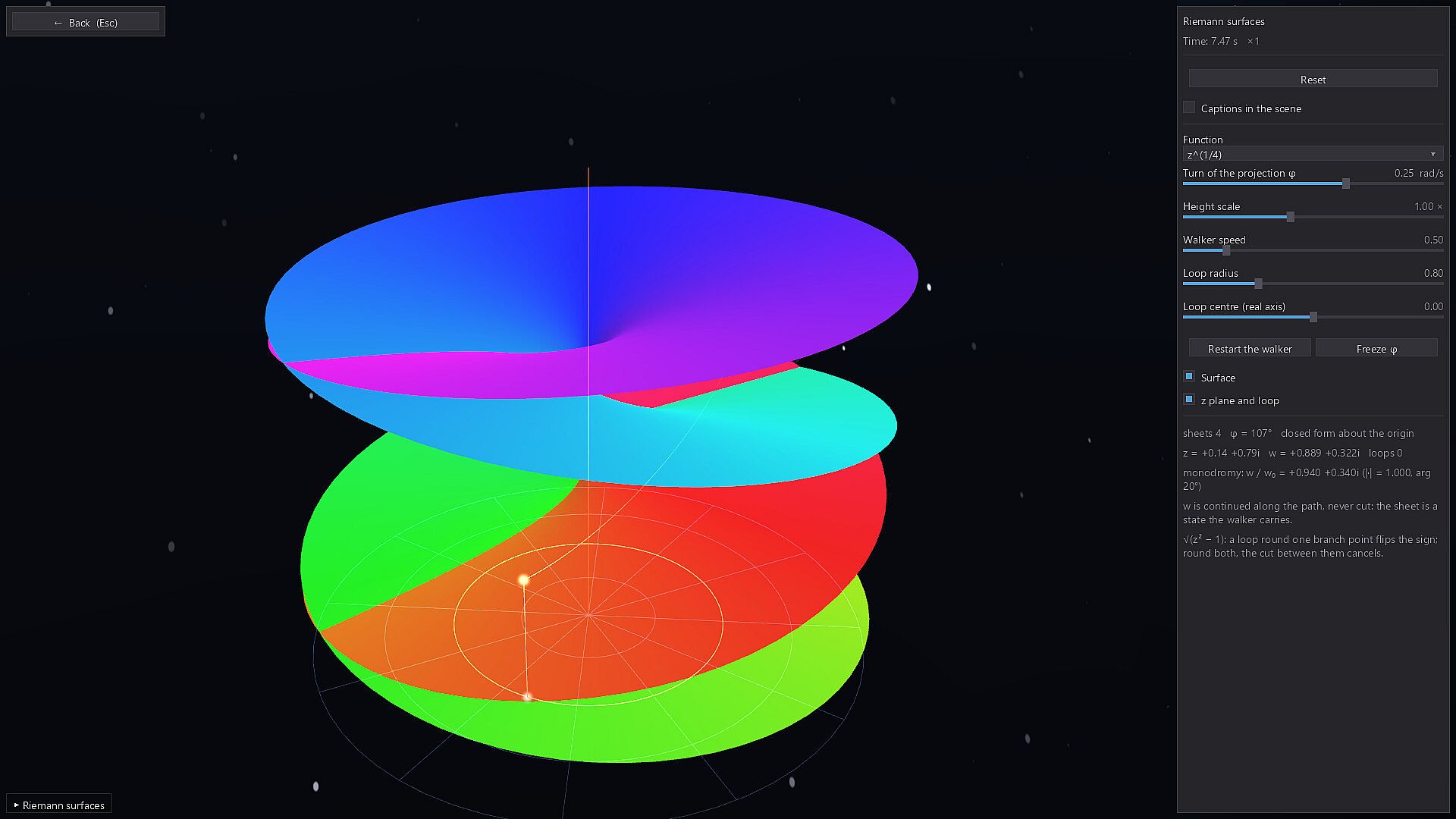
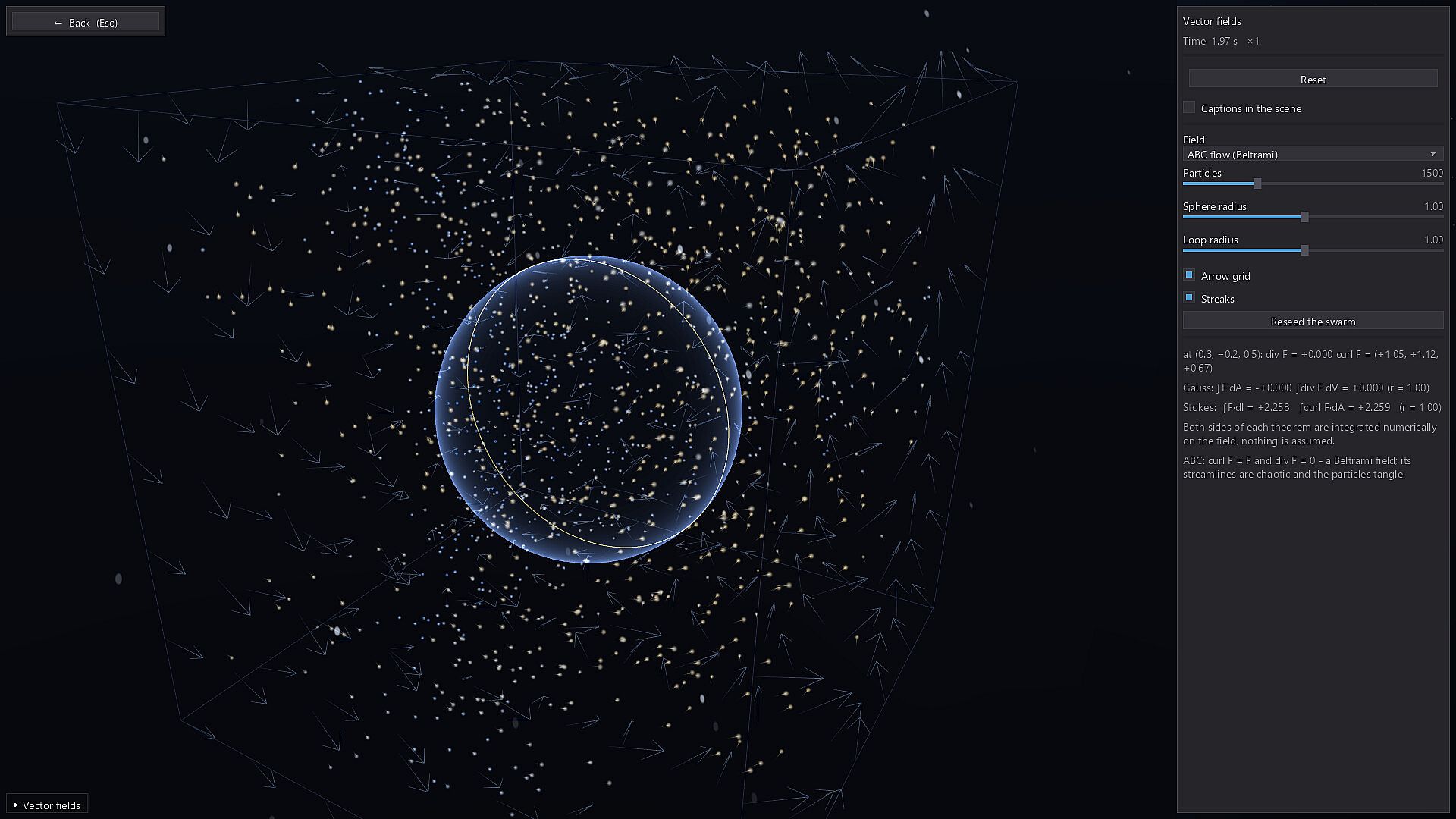
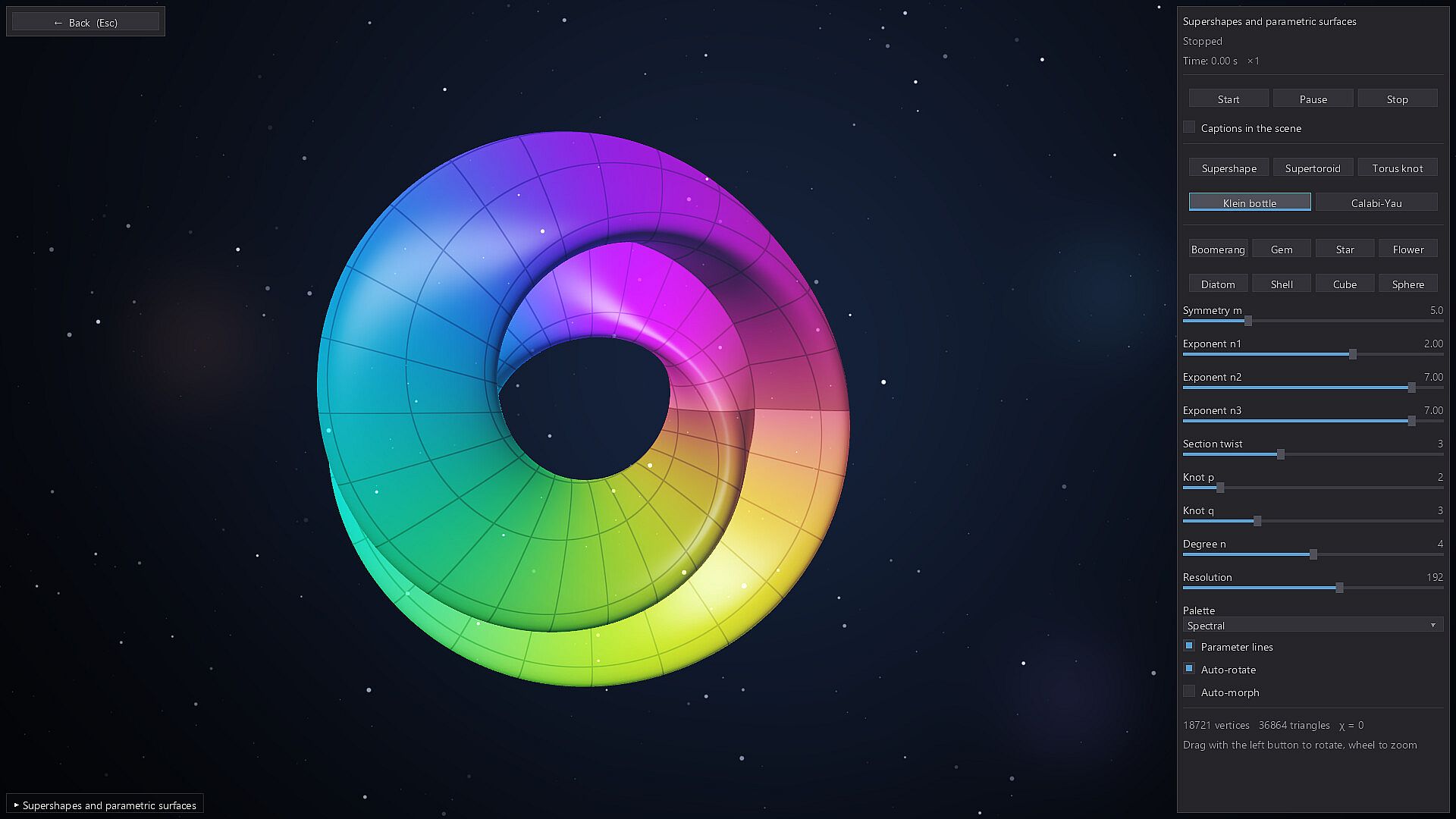
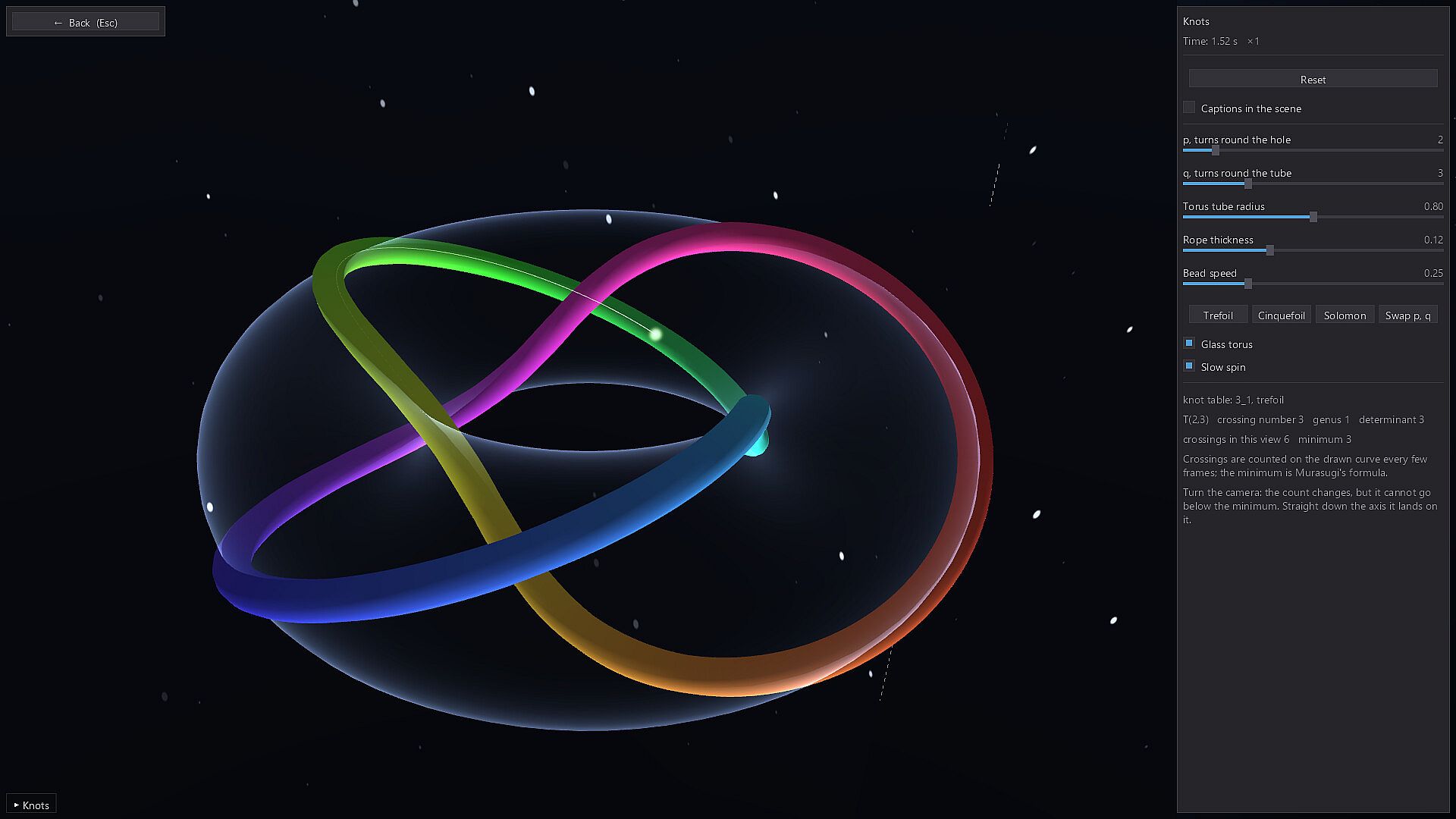
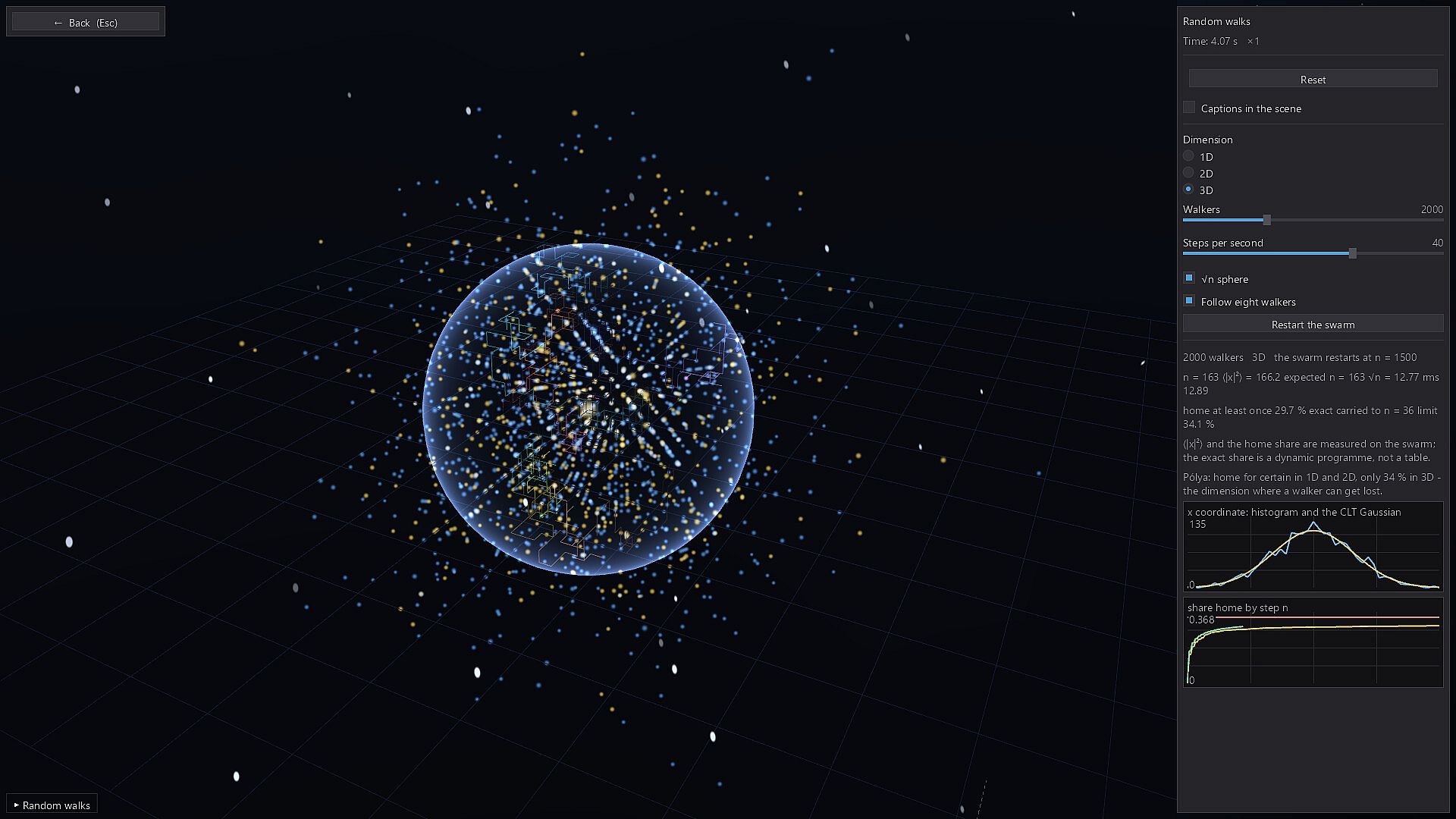
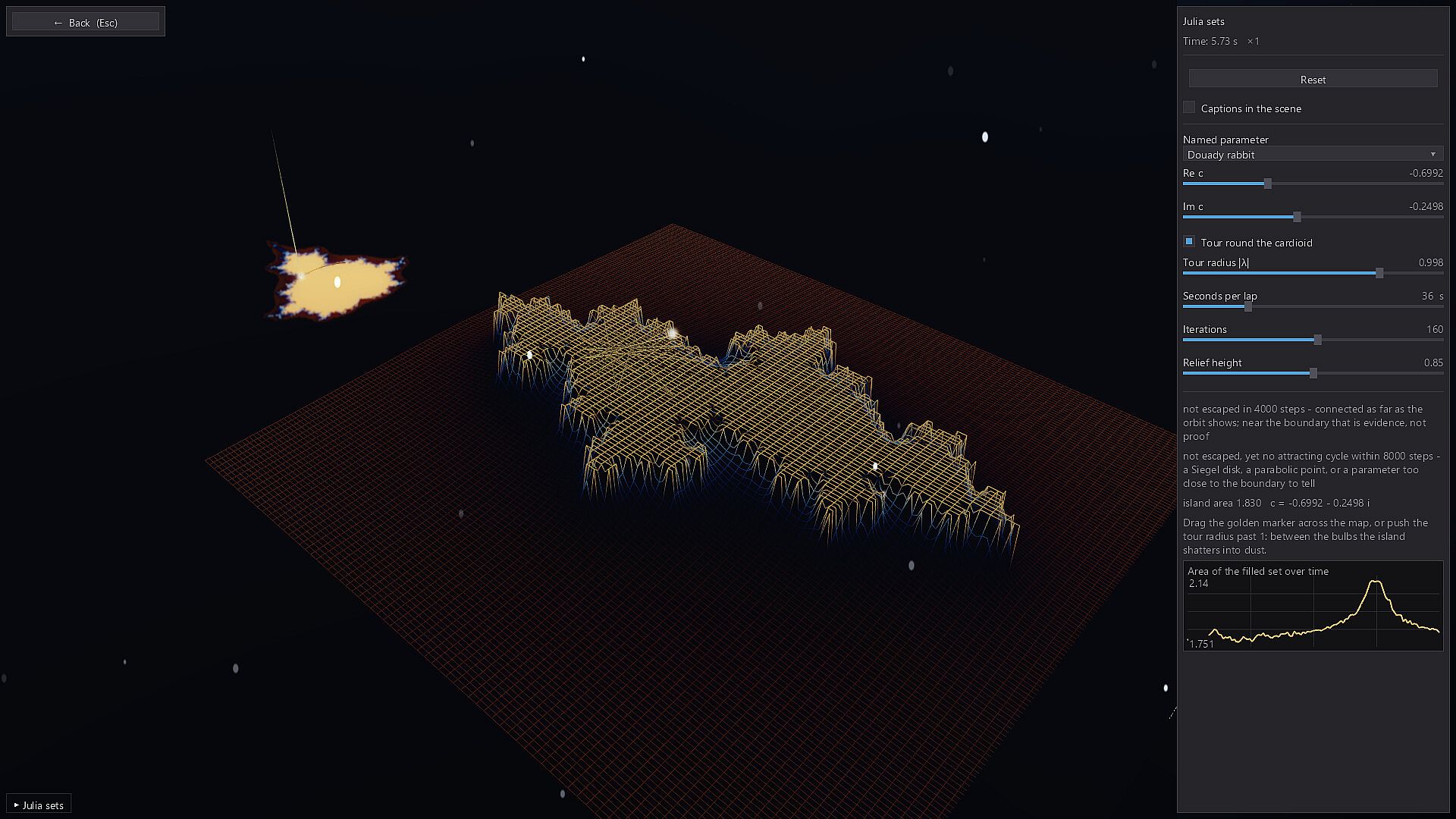
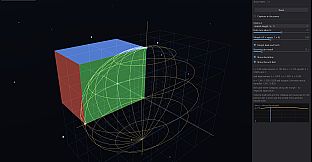
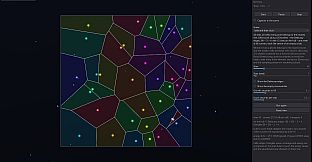
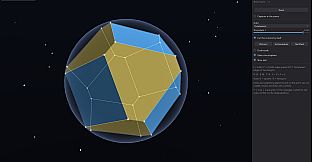
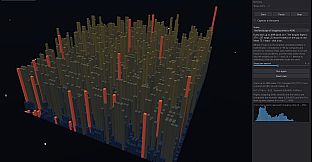
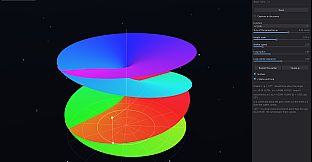
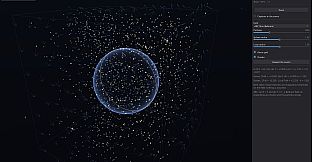
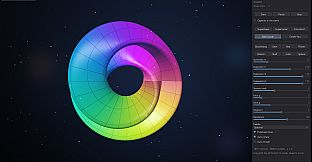
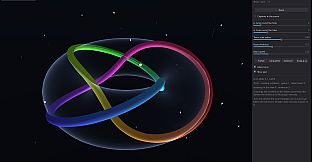
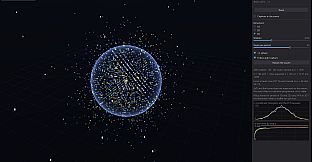
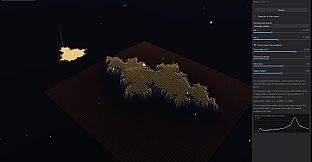
Makarov Math Suite is an indie casual simulation for PC that presents mathematics through live, interactive 3D models rather than static images or videos. Every visualization computes in real time from underlying equations and algorithms, allowing direct manipulation of parameters, points, and matrices to observe immediate changes in the output.
Gameplay
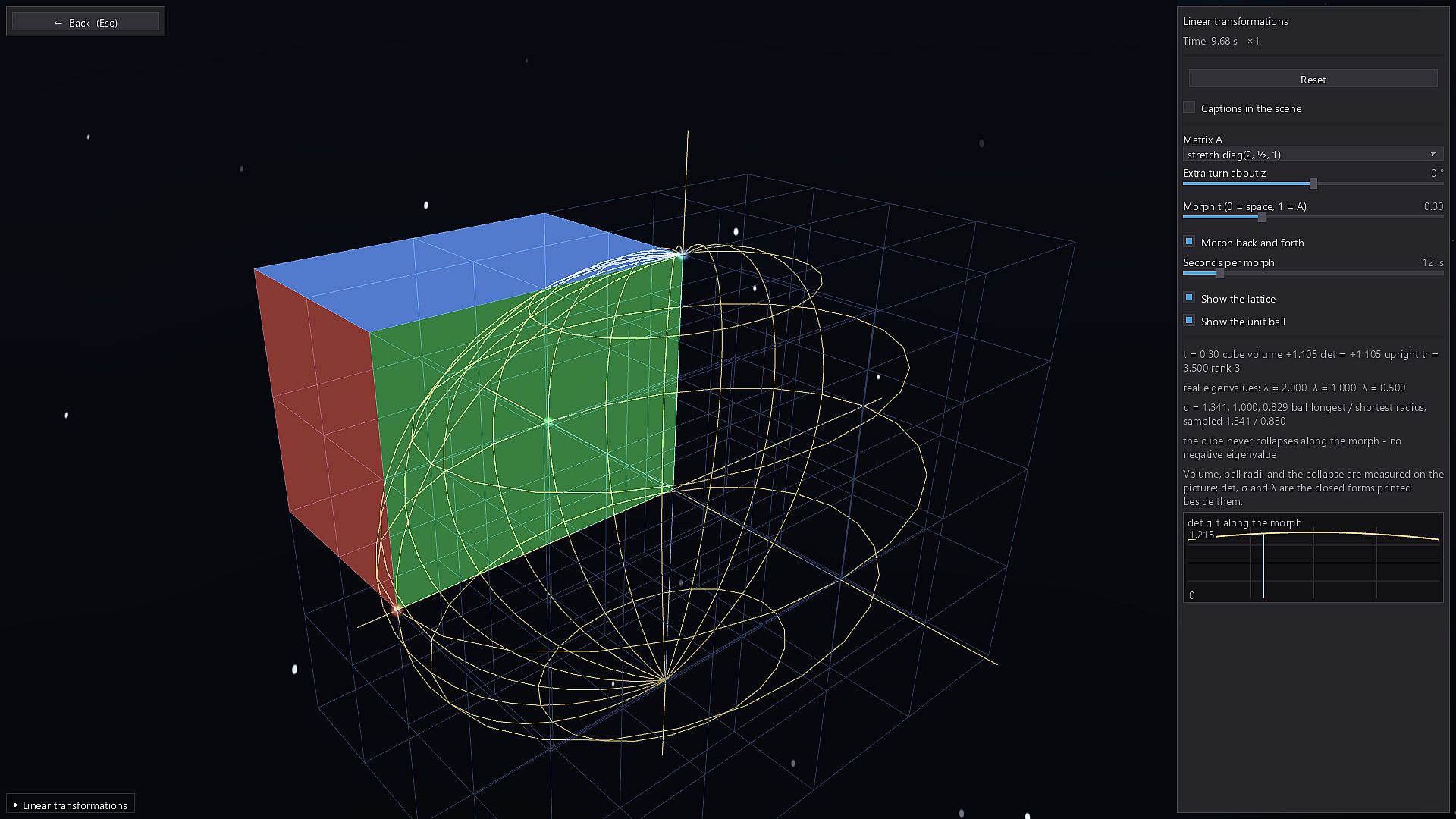
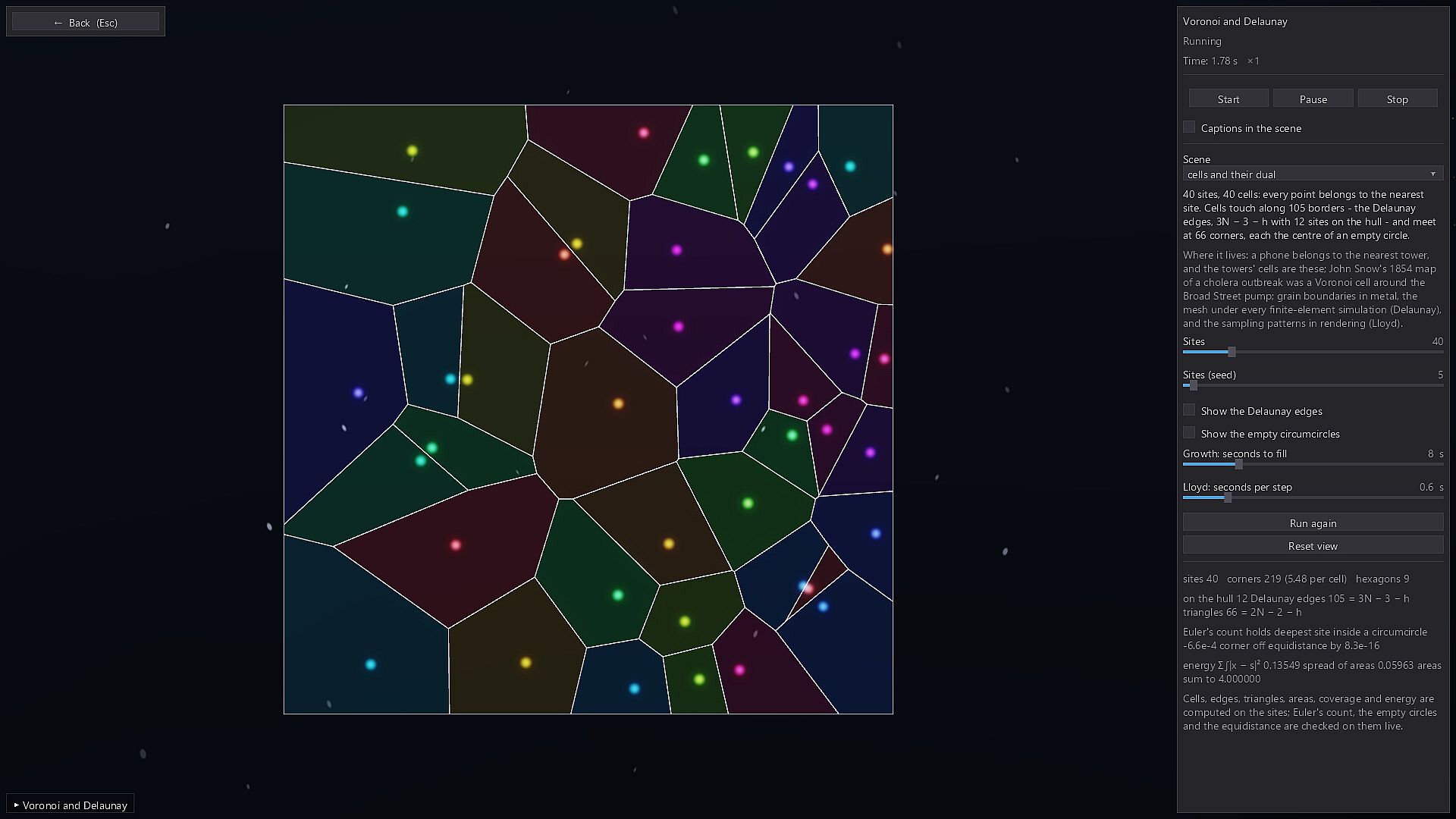
Players select individual modules that cover topics such as fractals, dynamical systems, linear algebra, Fourier analysis, probability, graphs, number theory, and cellular automata. Each module opens a 3D scene with draggable elements, adjustable sliders, and on-screen charts that update continuously. A concise caption explains the current state in plain language and connects the concept to practical applications like data compression or network routing. Presets cycle through different configurations, while measured values such as fractal dimensions or convergence rates appear beneath the visualization and match results from separate reference code. The interface supports eight languages and runs entirely offline without accounts or data collection.
Core interaction centers on real-time recomputation. Dragging a corner in the chaos game module alters the Sierpinski triangle formation on the fly. Adjusting matrix entries in the singular value decomposition view rotates and stretches the unit sphere into an ellipsoid step by step. Sweeping a probability parameter in the percolation module reveals the sudden emergence of a spanning cluster across the grid. These mechanics emphasize observation of mathematical behavior through direct control rather than passive viewing.
Game Modes
The suite organizes content into distinct modules, each functioning as a self-contained interactive demonstration. Modules include the chaos game for constructing fractals like the Sierpinski triangle, fern, dragon curve, and Menger sponge through repeated random jumps. Singular value decomposition illustrates matrix factorization by decomposing rotations and stretches. Percolation tracks cluster formation and the critical threshold where connectivity spans the entire lattice. Travelling salesman demonstrates heuristic improvements such as greedy selection, 2-opt edge uncrossing, and simulated annealing against a known optimum. Prime spirals plot integers on a square lattice to highlight unexpected diagonal alignments and compare prime-counting estimates. Deep zoom explores the Mandelbrot set at increasing precision, extending beyond standard floating-point limits with additional mantissa bits.
Additional modules address linear algebra operations, Fourier transforms, Monte Carlo methods, optimization problems, the Collatz conjecture, cellular automata, and neural network basics. Several modules overlap with the related Makarov Physics Suite where mathematics and physics intersect, such as the Ising model or flocking simulations. All modules share a consistent carousel navigation, control panel layout, and live charting system.
Technical Foundation
The application runs on C# with .NET and OpenGL 3.3 core profile rendering. Each module loads as an independent plugin. Fractal surfaces and deep zooms execute primarily in shaders for performance. Certain compute-intensive elements like reaction-diffusion or the Ising model can leverage CUDA on supported GPUs, yet every module falls back to full CPU execution when no accelerator is present. This architecture ensures consistent behavior across hardware while delivering precise numerical outputs verified against independent implementations before release.
Is It Worth Playing?
Makarov Math Suite suits users who want hands-on exploration of mathematical ideas through immediate visual feedback. The live recomputation and measured outputs provide a practical way to test hypotheses and observe limits of precision or convergence without writing code. Its offline design and lack of external dependencies make it reliable for focused sessions. Those seeking traditional entertainment or competitive elements will find the experience more aligned with educational tools than conventional games. The breadth of modules offers repeated value for repeated examination of core concepts in geometry, probability, and optimization.