


MarginCall is a PC simulation game centered on realistic stock market trading and economic systems. It places players in a world where prices emerge solely from matched buy and sell orders on a live order book rather than from formulas or scripts.
Gameplay
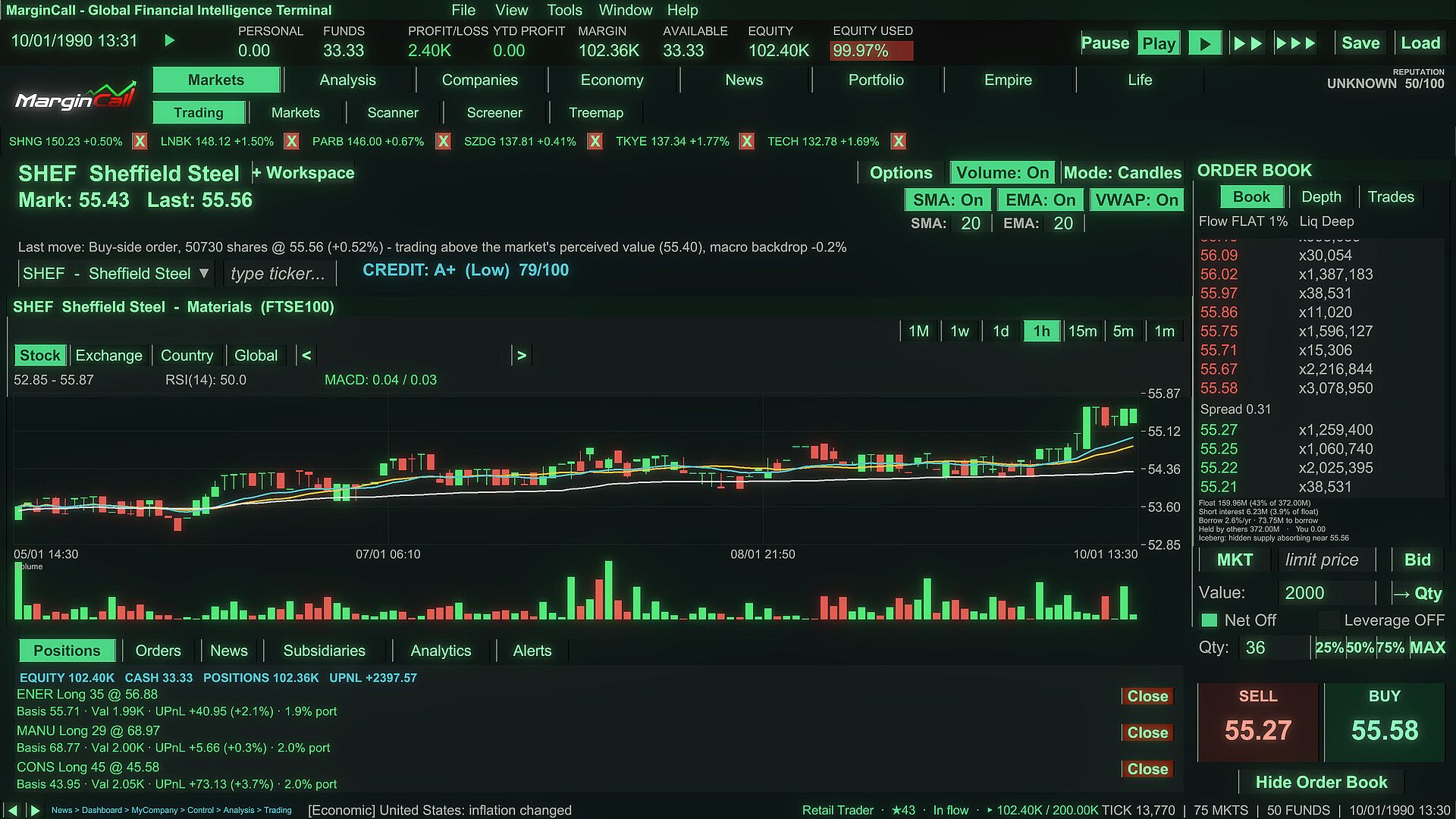
The core loop revolves around a central limit order book that processes every transaction between independent participants. Players issue market orders, limit orders, stop-loss orders, and trailing stops while managing long and short positions. Leverage reaches up to five times, with an active margin monitor that triggers automatic liquidation when equity drops below required levels. Every price tick results from actual matched trades backed by real cash and shares, creating genuine spreads, slippage, and depth that can evaporate during heavy selling.
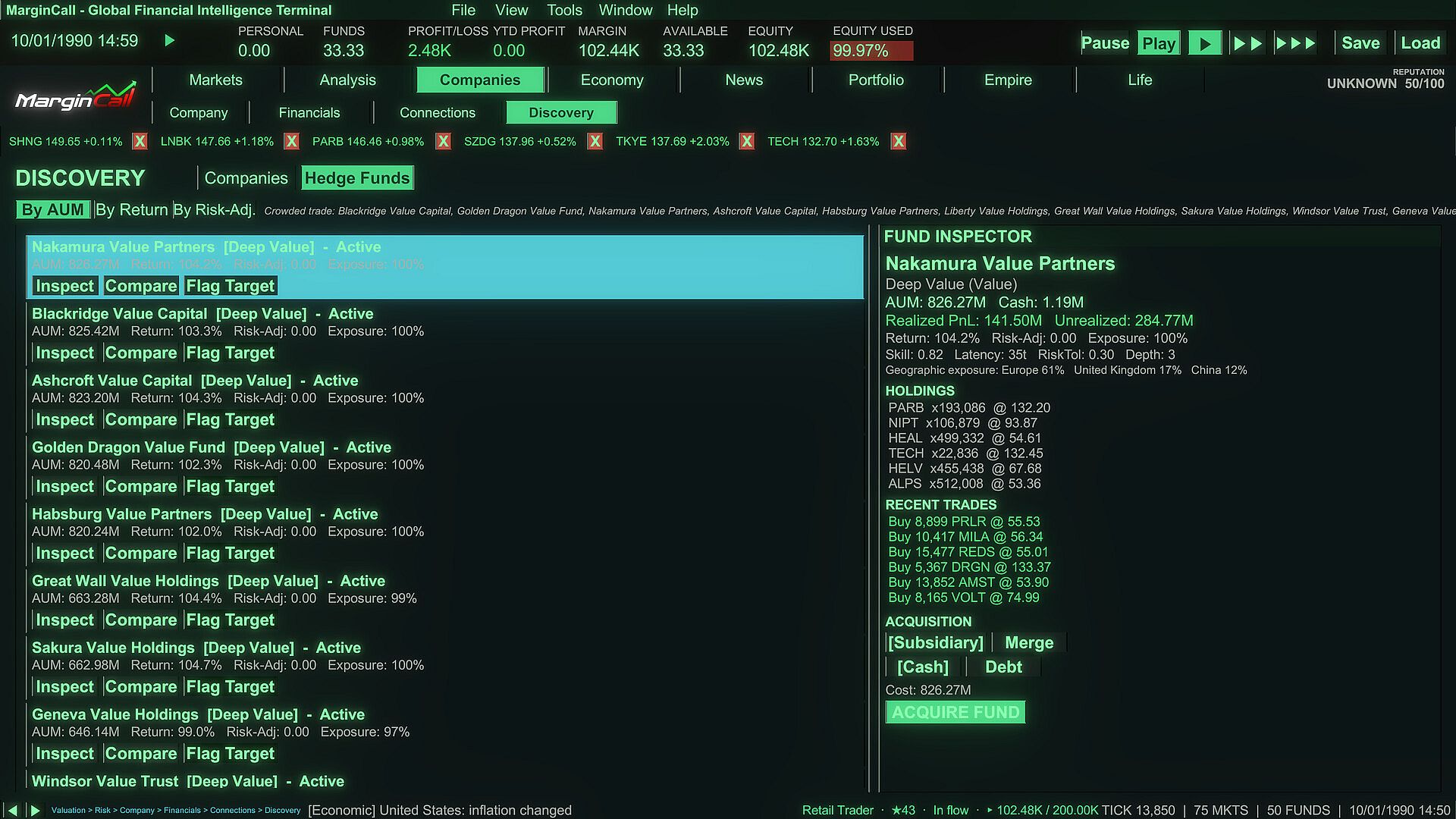
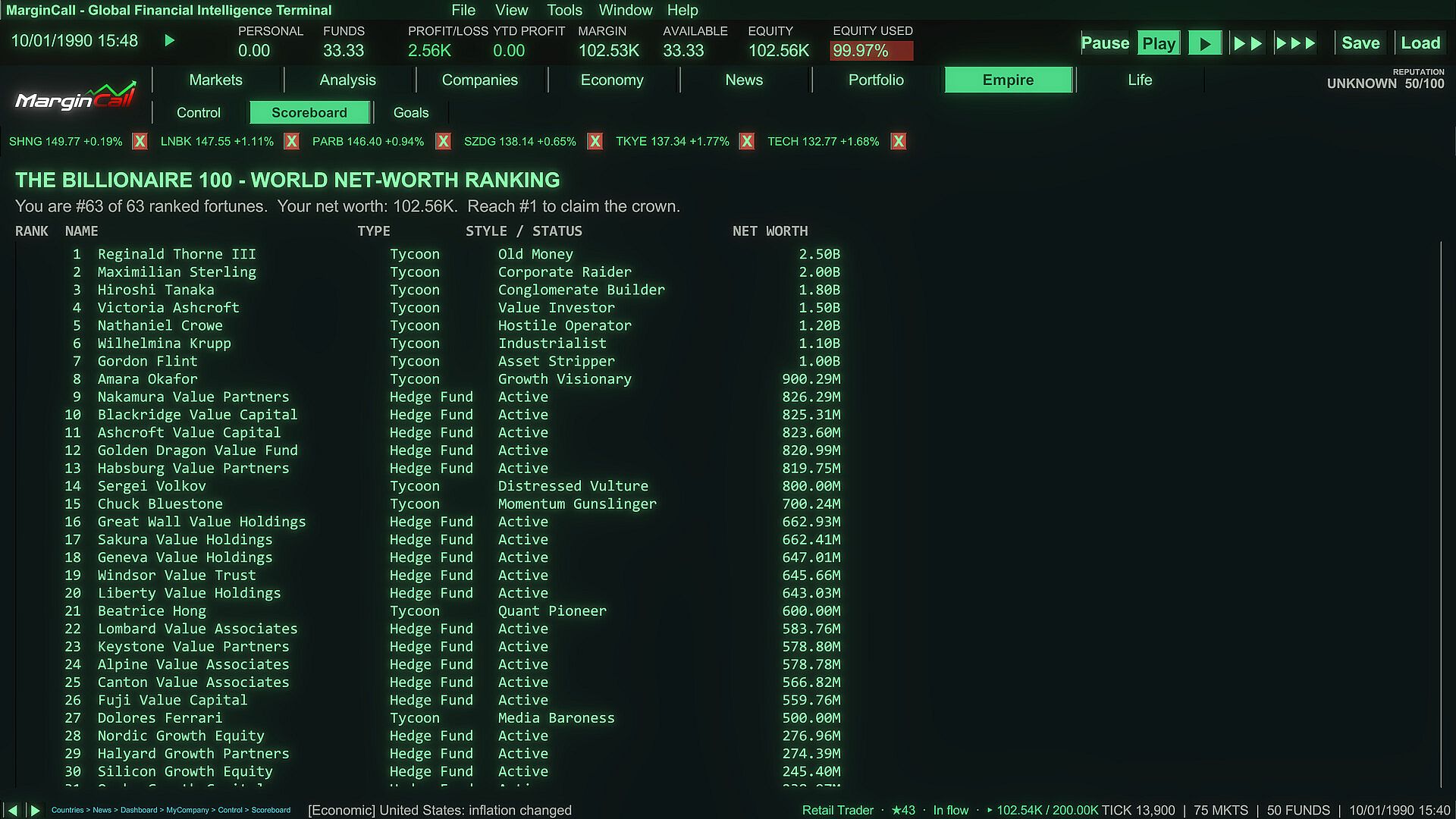
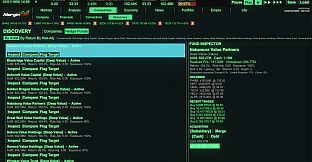
AI traders operate independently with their own valuations, biases, latencies, and information sets. Market makers provide continuous two-sided quotes, momentum funds follow trends, value desks seek mispricings, and retail participants chase rallies or panic on dips. These agents base decisions on imperfect data, allowing mispricings, trends, bubbles, and breakdowns to arise naturally. Full hedge funds track performance, risk blowups, and can even change hands through player acquisitions.
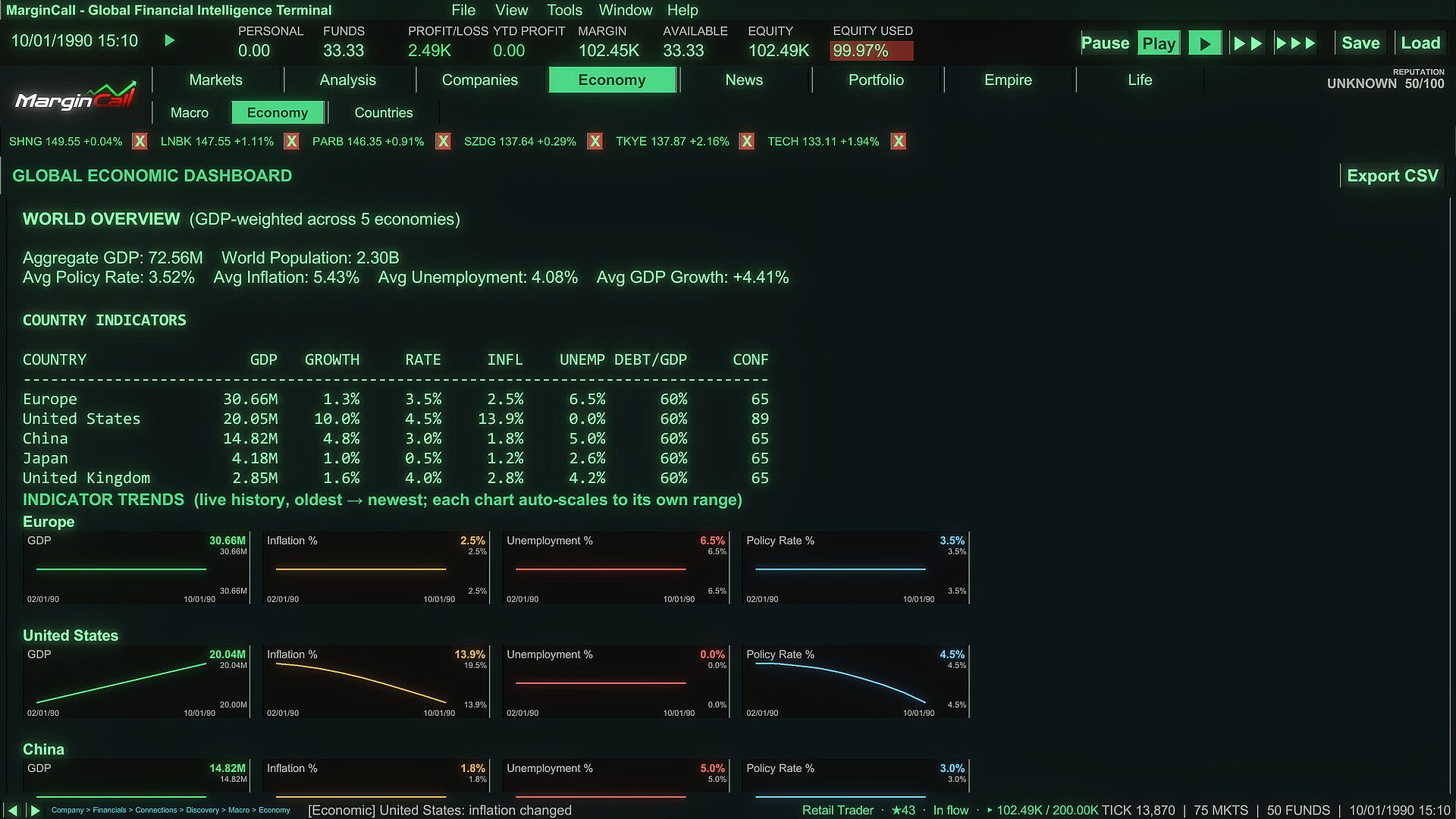
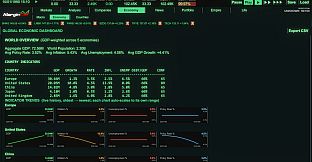
Beneath the market sits a complete economy simulation spanning five blocs. Industry output, resource flows, labor markets, consumer spending, and capital investment influence corporate earnings. Those earnings feed into discounted cash flow valuations that shape what participants are willing to pay. Rate changes, commodity shifts, sector booms, and company losses all propagate through the system in traceable ways.
Game Modes
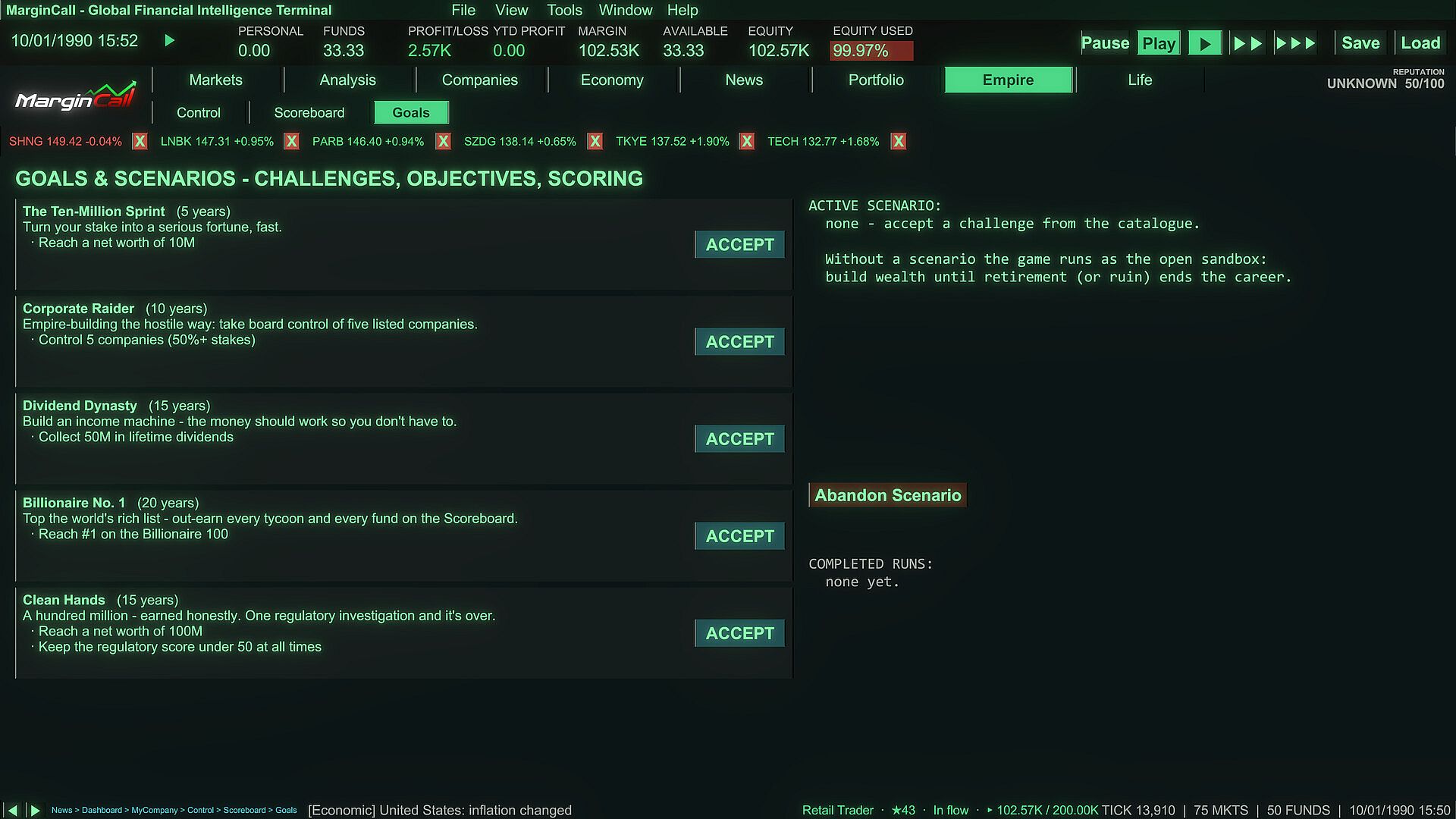
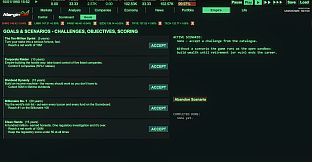
MarginCall runs as a single continuous simulation without separate game modes or difficulty settings. The same deterministic rules govern every session, so outcomes depend on player decisions rather than random events or scripted sequences. A shared clock drives the entire world, allowing saves and loads at any point while preserving cause-and-effect relationships across prices, earnings, and economic indicators.
Corporate Control and Personal Progression
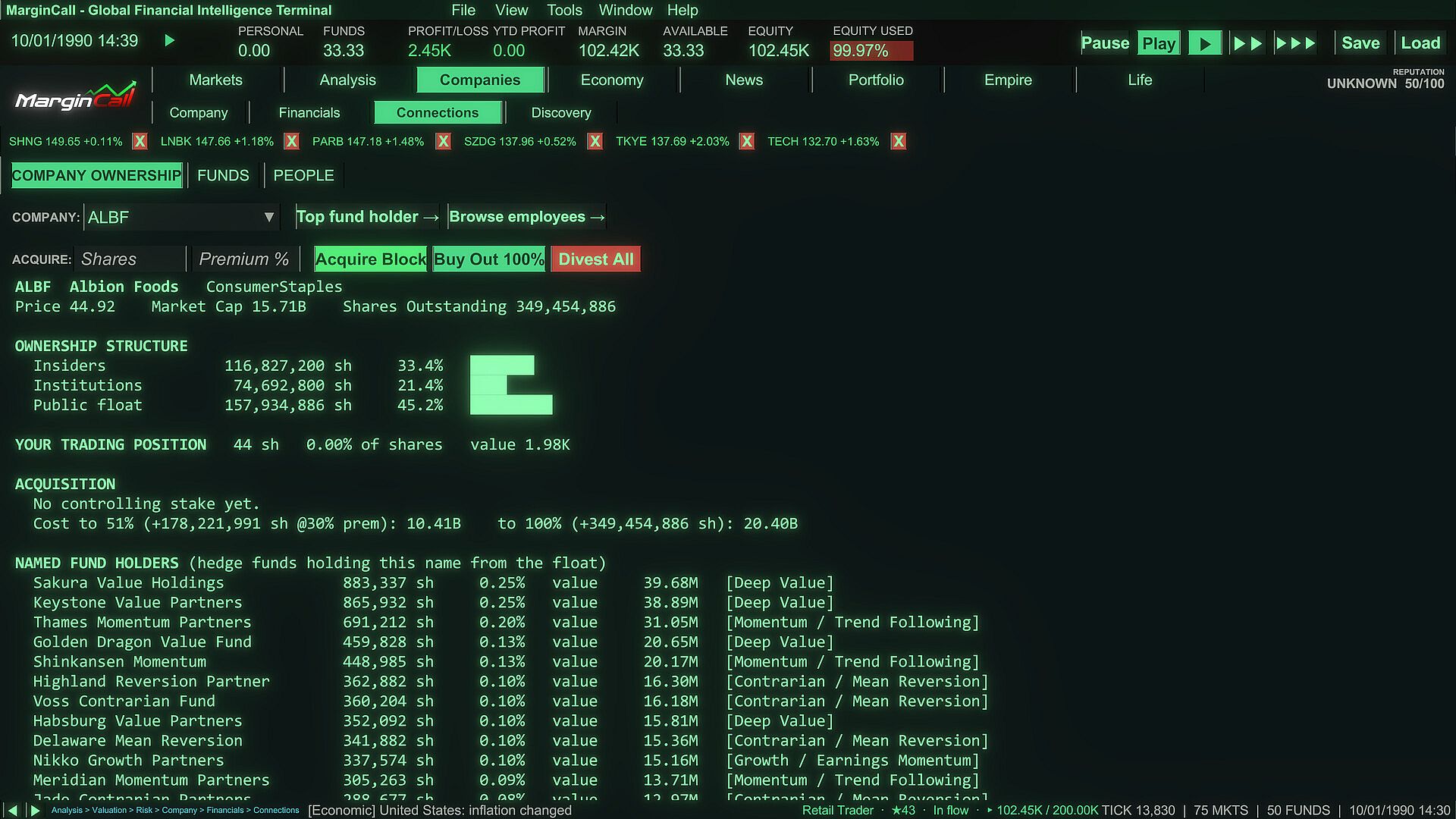
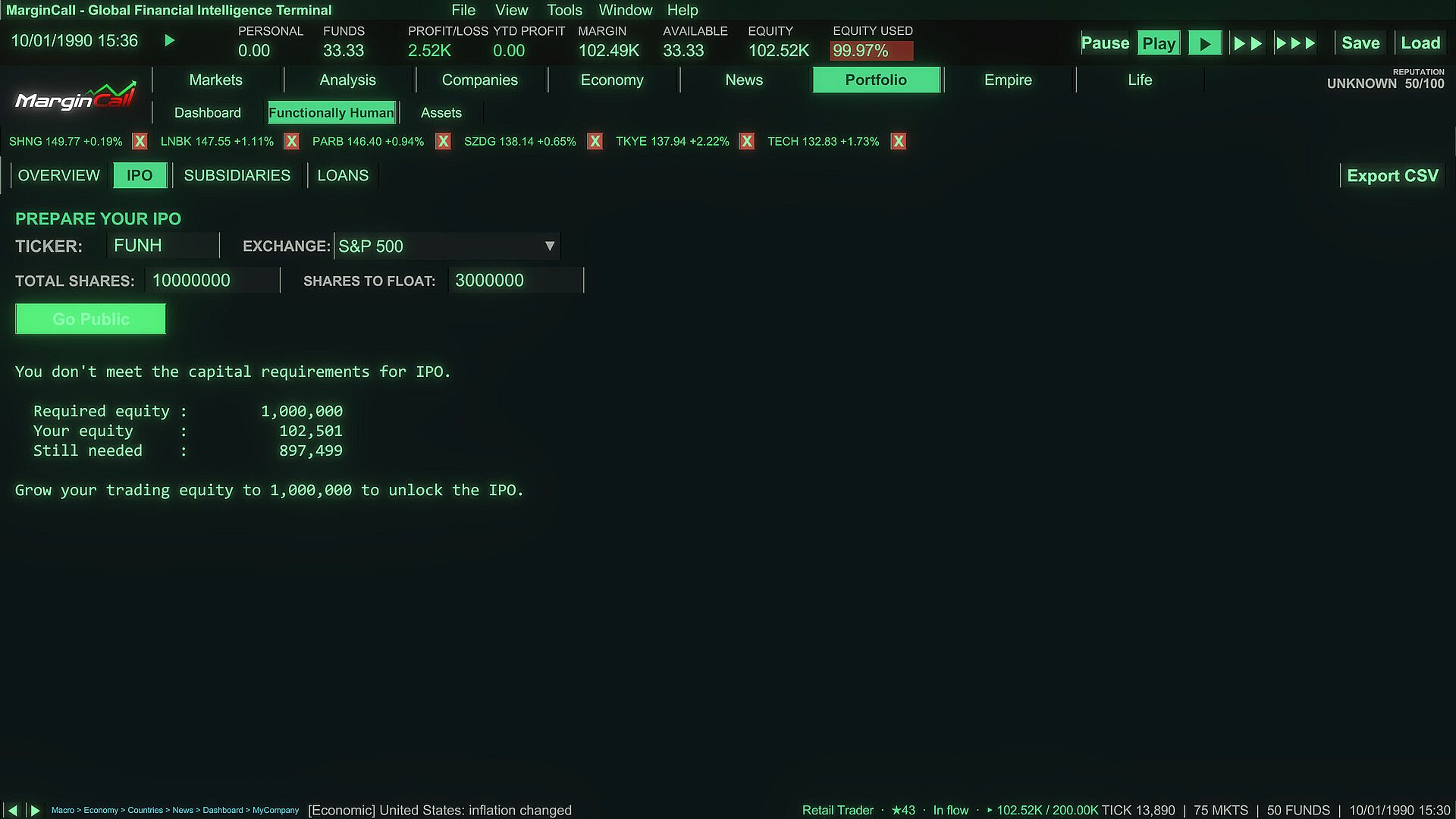
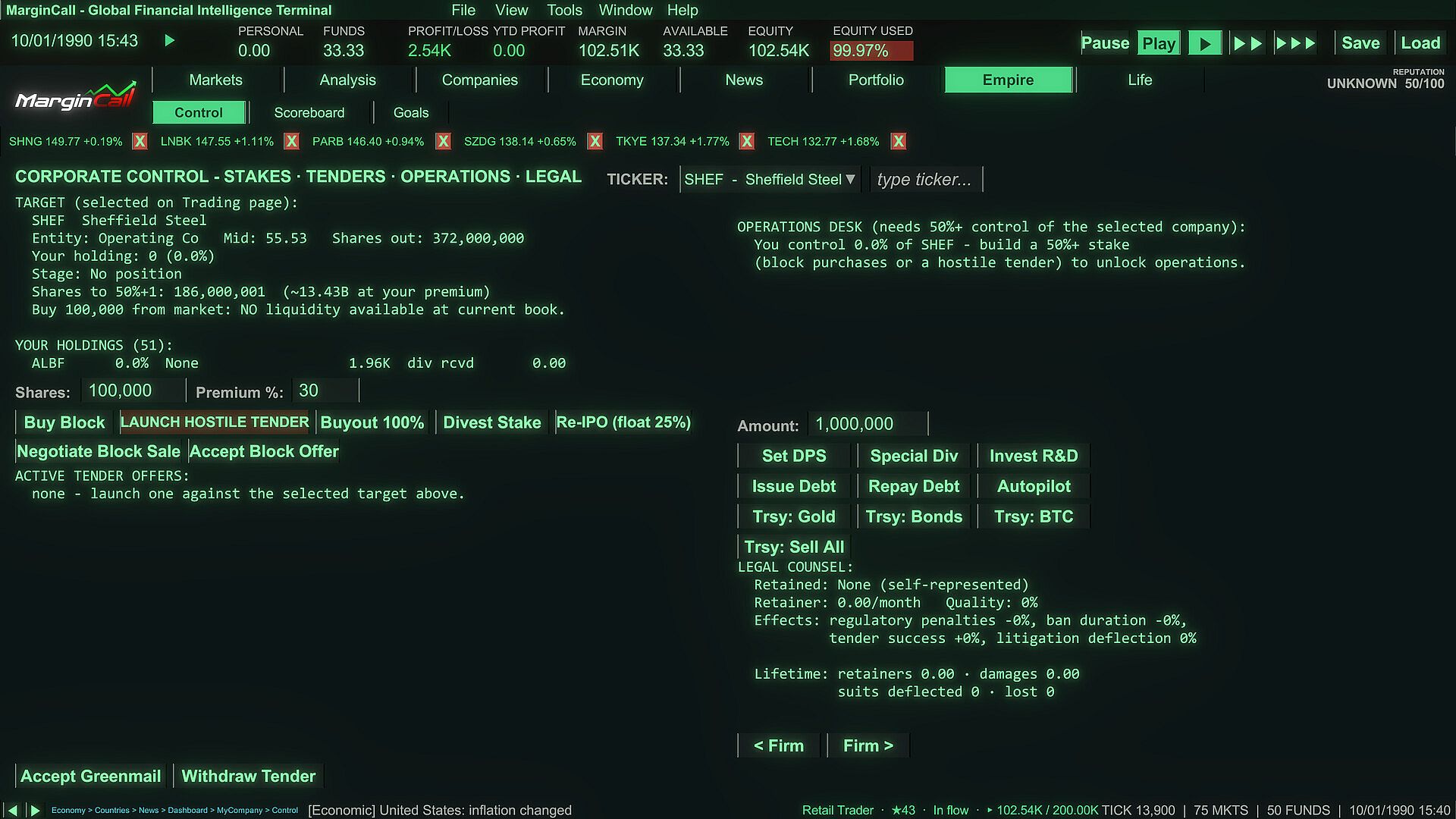
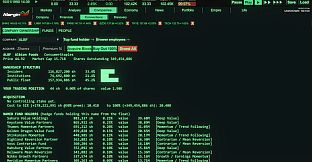
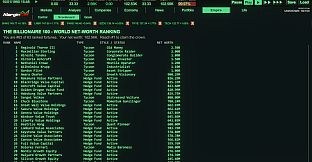
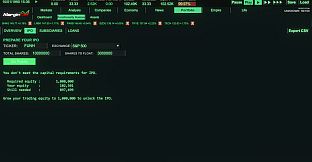
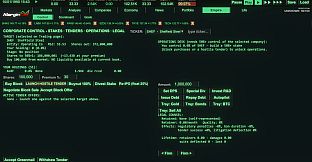
Players can accumulate stakes to reach observer, influencer, controlling, and consolidated ownership levels, eventually taking full control of companies. Actions include launching IPOs, executing mergers, managing spinoffs, forcing buyouts, or divesting holdings. Owning a firm outright brings the ability to issue stock, repurchase shares, and defend against rival takeovers that could remove the player as CEO. Insider information carries regulatory risk, with modeled investigations, fines, and trading restrictions that penalize violations.
Outside trading, players manage a personal life with age, health, loans, property purchases, vehicle ownership, insurance, and taxes. Fortunes compound over decades, with retirement possible between ages 60 and 100. The simulation ends with death, turning accumulated wealth and its costs into the final measure of success.
Professional Tools and Transparency
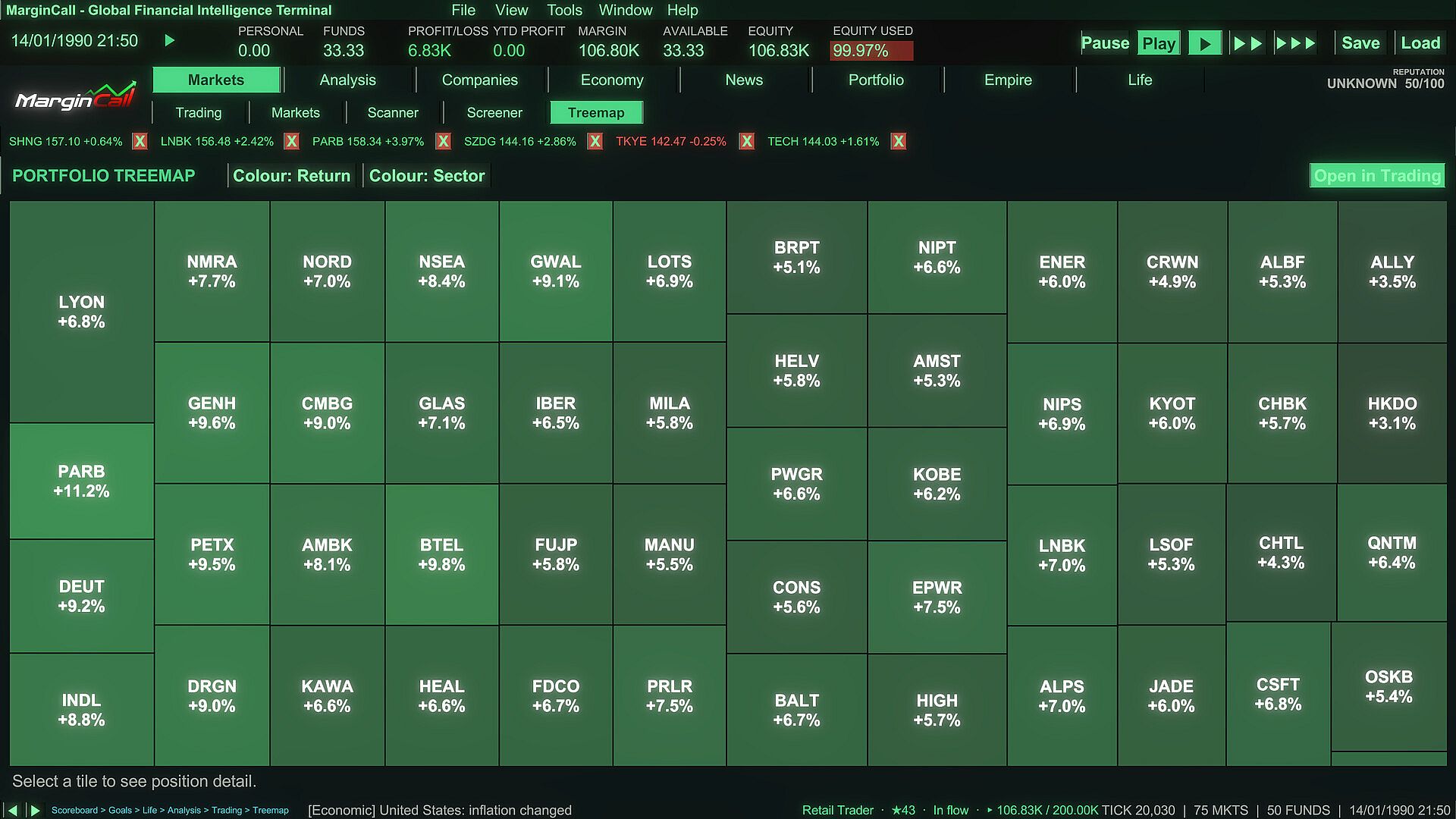
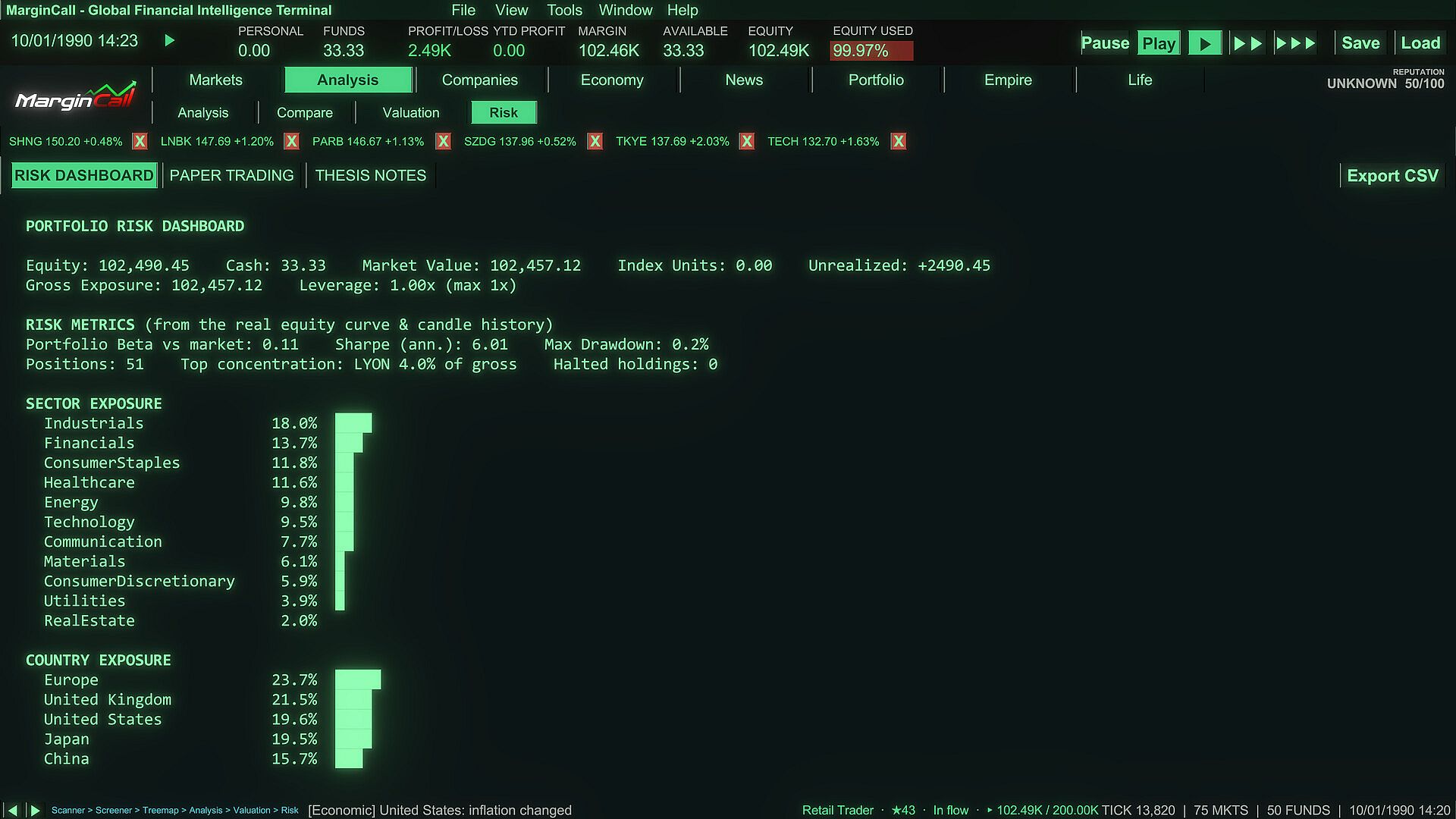
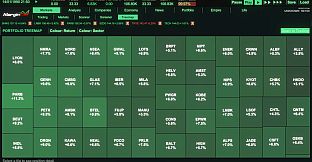
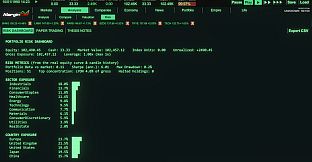
A multi-page terminal provides candlestick and line charts with moving averages, Bollinger bands, RSI, MACD, and volume data. Portfolio analytics track Sharpe ratio, drawdowns, beta, and correlations. Additional views include order-flow imbalance, liquidity heat maps, sector treemaps, ownership graphs, watchlists, and price alerts. News updates reflect actual state changes in the economy and companies rather than prewritten text. Every price movement can be traced back to the specific trades and signals that produced it.
Is It Worth Playing?
MarginCall suits players seeking an uncompromising simulation of market mechanics and economic cause and effect. The absence of scripted prices, artificial liquidity, or prewritten crashes means success or failure stems directly from understanding supply, demand, and participant behavior. Those who prefer guided experiences or forgiving systems will find the lack of rubber-banding and difficulty sliders demanding. The game rewards study of its interconnected systems and punishes incomplete strategies without external assistance or random luck. Its depth comes from verified mechanics that operate consistently across every run.