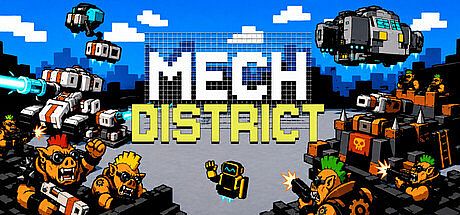





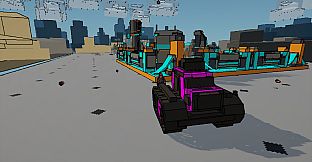
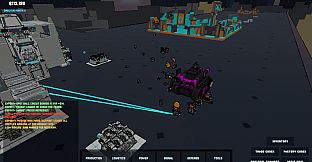
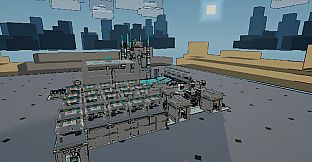
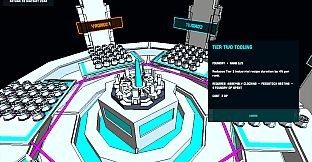
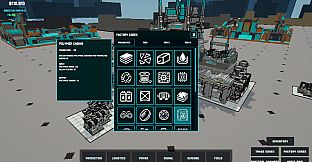
MECH DISTRICT is a 3D grid-based factory automation game that blends strategy, RPG, and simulation elements on PC. Players take on the role of an AI Core tasked with rebuilding District Zero, an abandoned industrial area presented as having strong foundational potential despite its ruined state.
Gameplay
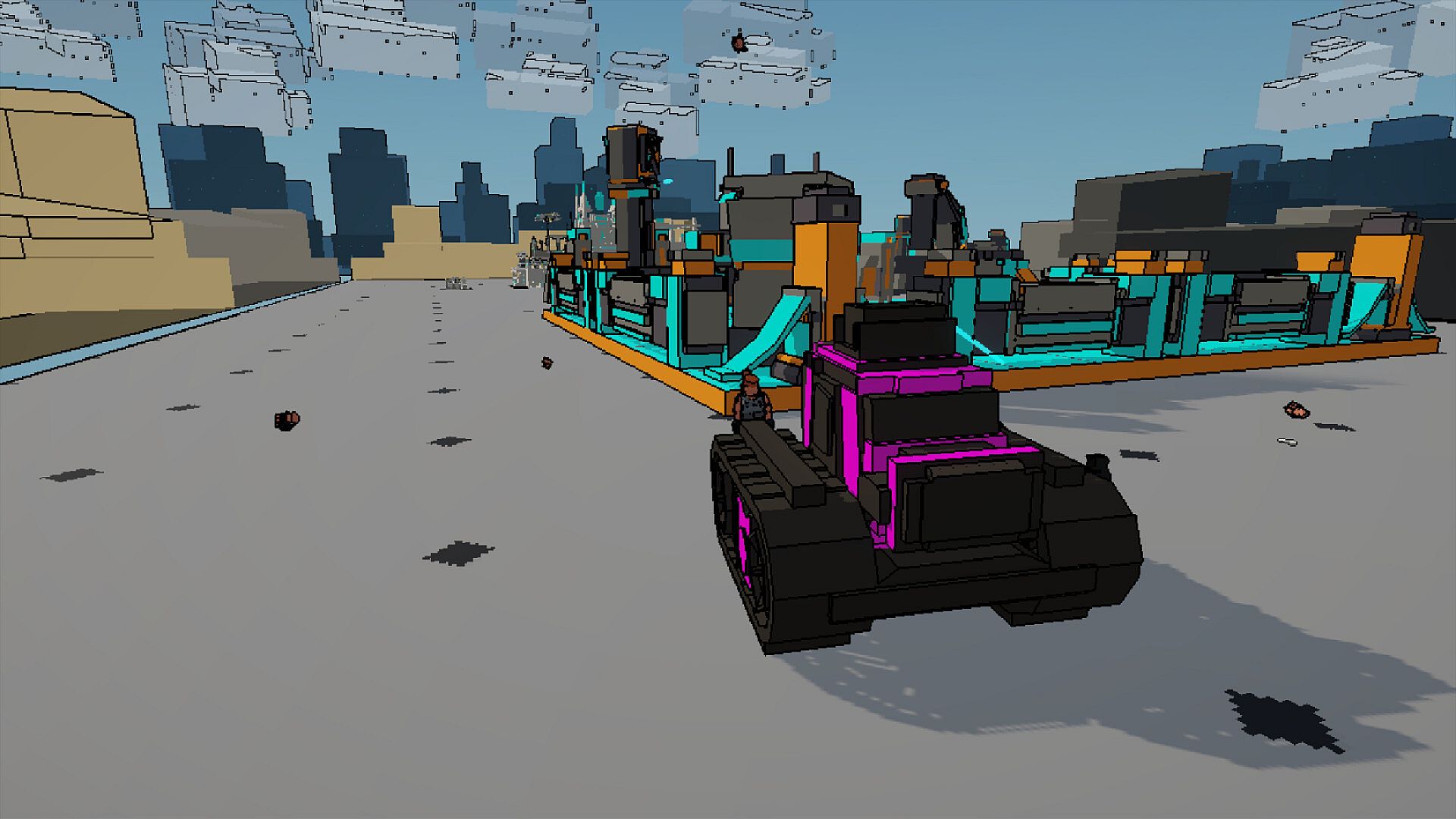
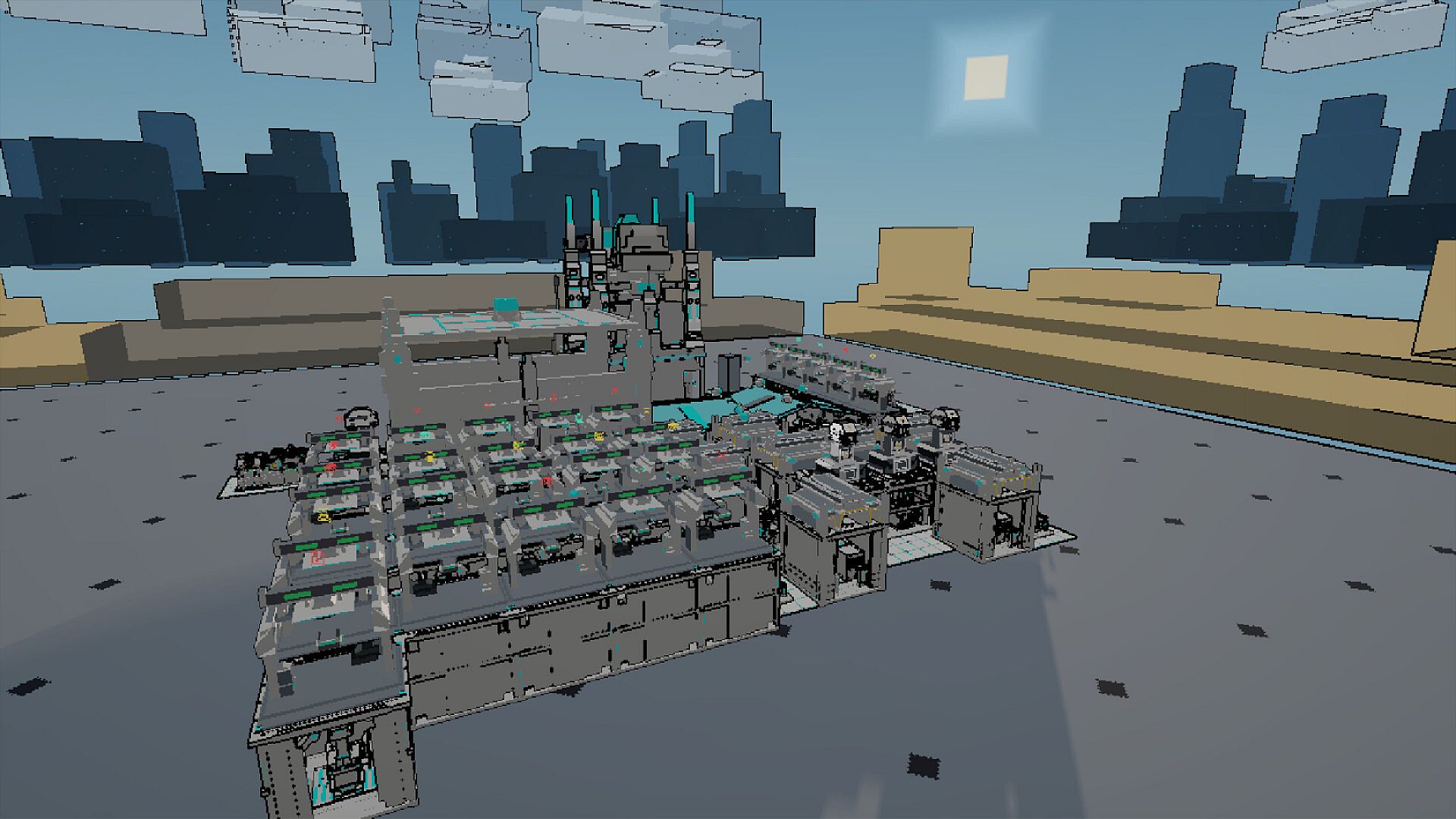
The core loop centers on constructing and managing production systems across a rigid industrial grid. Players place extractors to gather raw materials, set up production machinery, generators, storage facilities, and logistics infrastructure. Autonomous Hauler Bots handle the physical transport of inventory between buildings, requiring careful positioning of storage buffers to maintain supply chains and avoid bottlenecks.
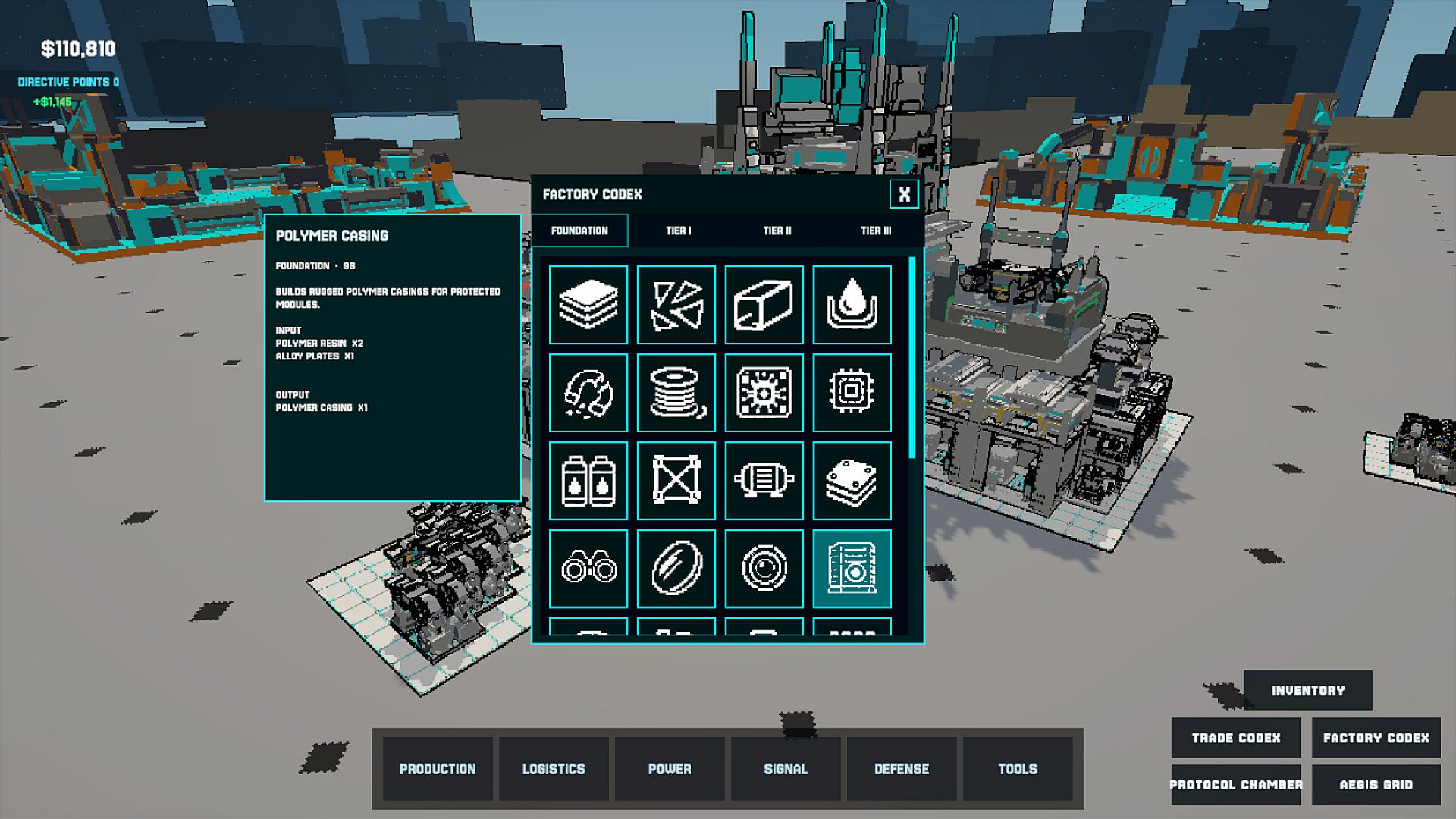
Power management, command coverage, material access, and production throughput all demand ongoing attention. Expansion into new areas solves immediate shortages but introduces larger logistical and defensive challenges farther from the central district. Interconnected production chains turn raw resources into components, machinery, defenses, and combat equipment, with every missing part capable of halting an entire sequence.
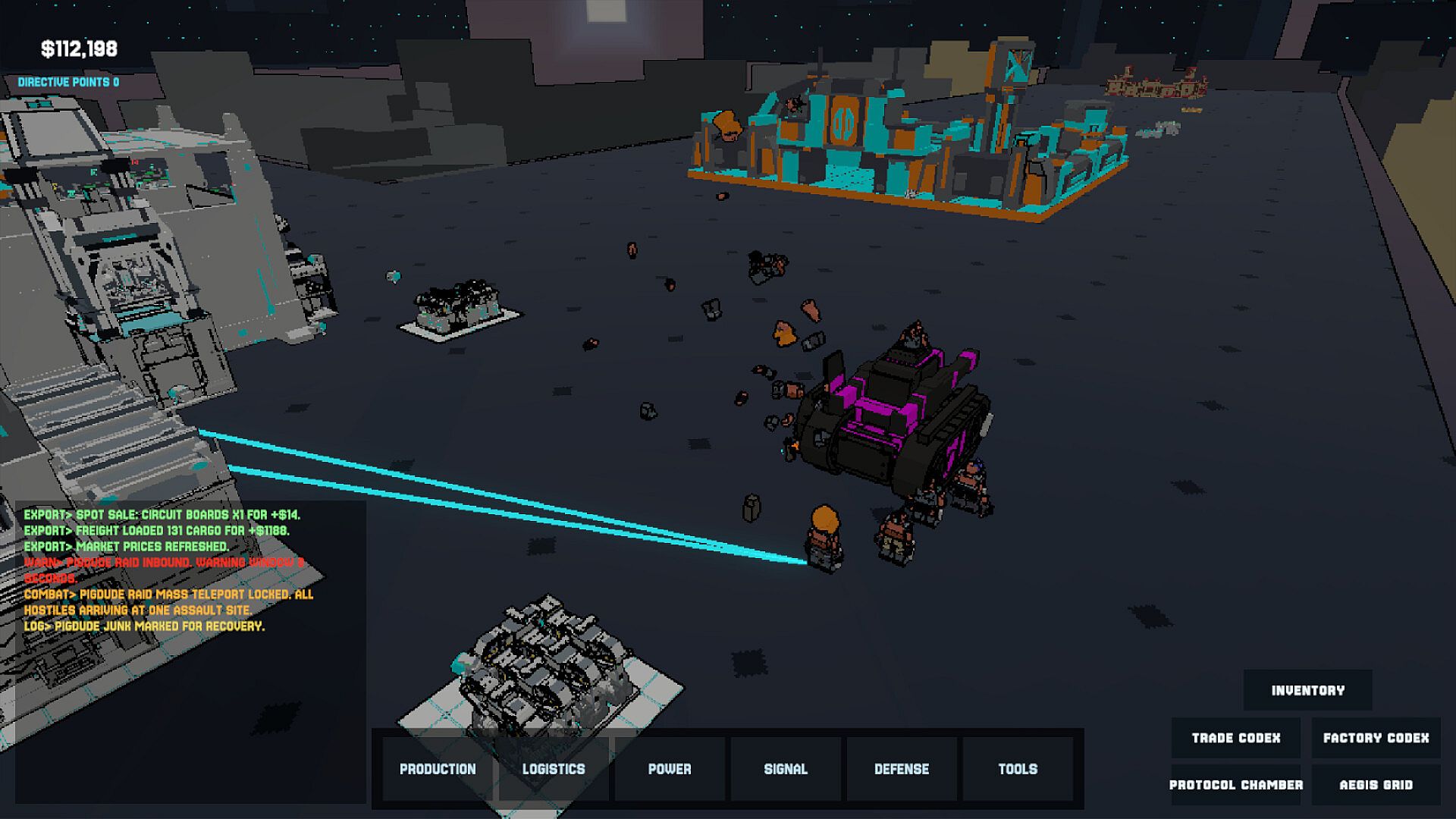
Combat integrates directly into the factory systems. PigDude raiders target generators, storage, logistics routes, and factories, forcing real-time defensive responses. Eight specialized turret systems provide overlapping coverage, with rapid energy weapons for lighter threats, heavy anti-armor platforms for hardened targets, and artillery for longer range. When raids occur, players defend the district before shifting to offensive operations.
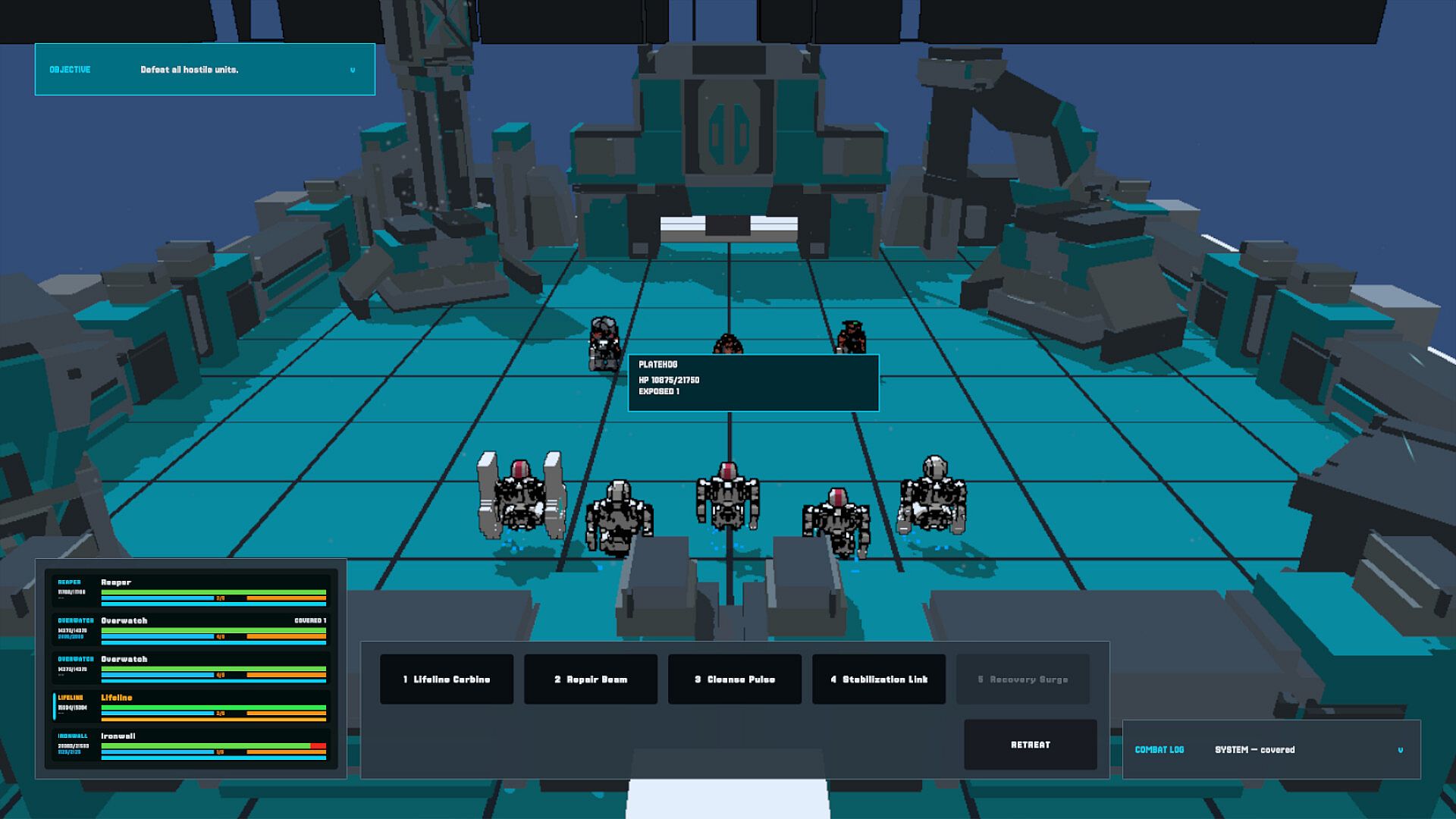
Raidframes are humanoid combat machines built for operations beyond the walls. Squads of these units handle turn-based tactical encounters where positioning, abilities, status effects, and class roles determine outcomes. Superframes represent larger autonomous war machines suited for assaults on fortified positions. Up to five can deploy in a squad, supported by dedicated production infrastructure. Both types of frames return damaged or lost, turning destroyed units into new manufacturing priorities.
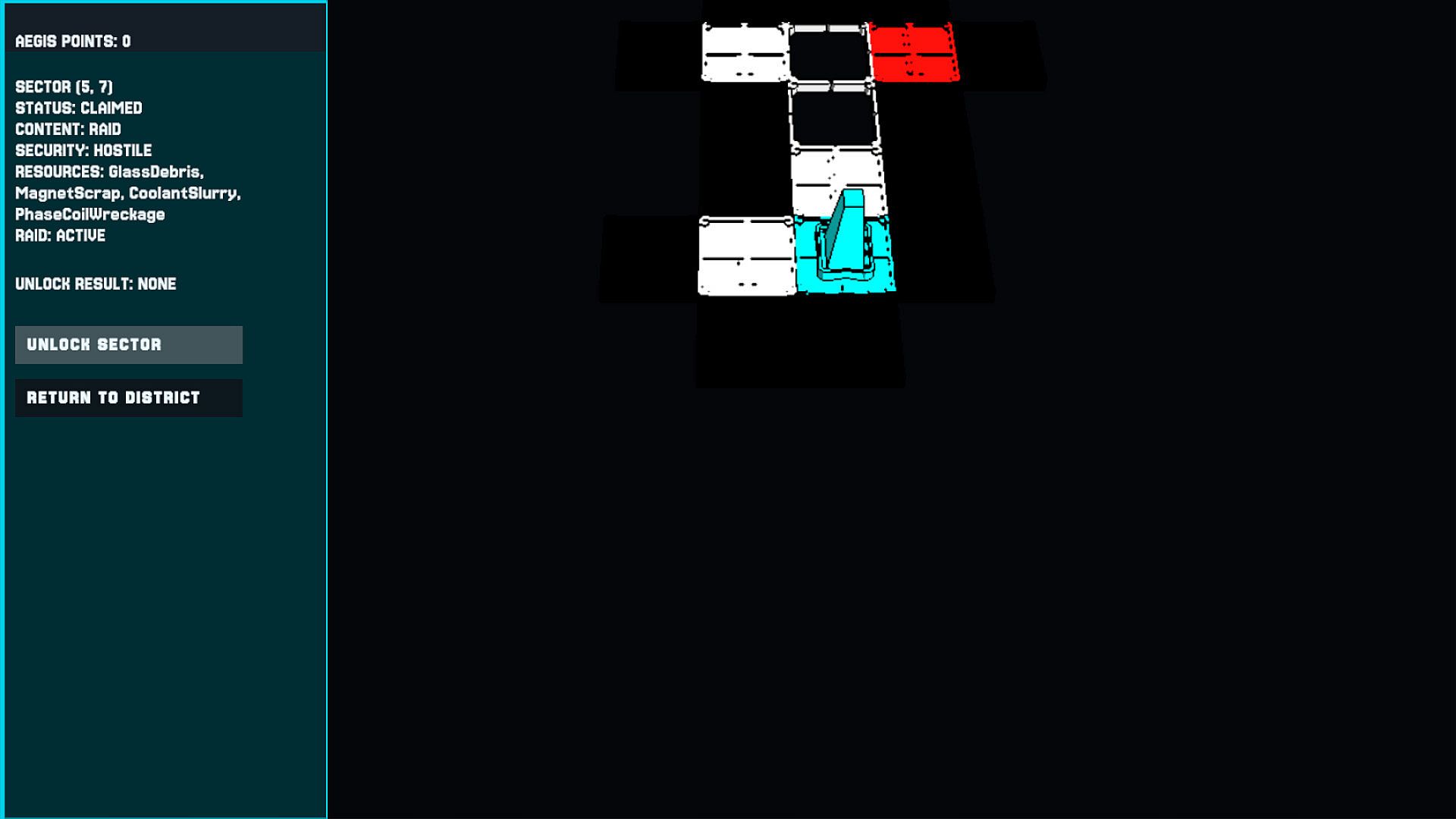
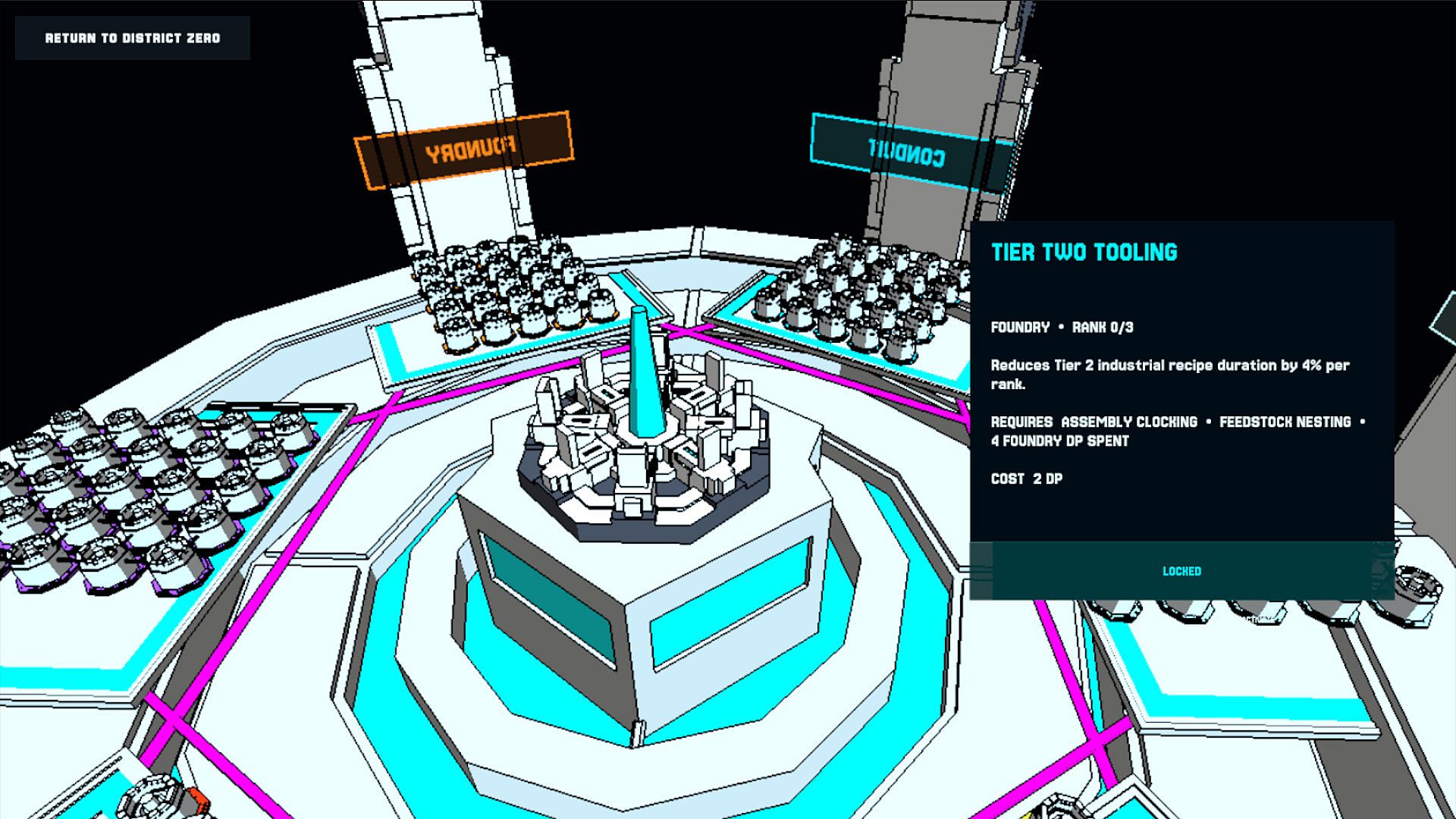
Directive Points spent across six Protocol trees allow specialization in production, logistics, defense, combat, deployment, and progression. Relics obtained from major operations serve as permanent system modifiers. The Aegis Grid expands the map into procedurally assembled sectors containing varied strategic opportunities, including damaged infrastructure that can be restored for ongoing benefits.
Game Modes
MECH DISTRICT structures play around several interconnected systems rather than separate standalone modes. Factory automation and base-building form the persistent foundation, where players expand District Zero through extractors, production blocks, and export terminals that generate funding for further construction and research.
Real-time defense occurs whenever PigDude forces strike critical infrastructure. Players position turrets and manage power to maintain coverage while the factory continues operating. Successful defense transitions into turn-based tactical operations using Raidframes or Superframes to clear threats, liberate territory, or confront specialized enemies such as Corrupted PigDudes.
Sector operations on the Aegis Grid involve exploring and securing new ground. These include assaults on occupied industrial areas, investigations of corrupted zones, and restoration of regional facilities that provide persistent upgrades to the larger network. Six Protocol bosses represent major endgame challenges that require prepared Superframe squads and adaptation to specific mechanics.
Progression ties everything together through research, relic equipping, and Protocol tree development. Production capacity directly limits what combat forces can be fielded, while battlefield losses feed back into the manufacturing schedule.
Key Mechanics and Systems
Logistics rely entirely on Hauler Bots moving physical loads rather than instant transfers. High-throughput machines need nearby buffers, and export of surplus goods trades components for funding while reducing available stock for emergencies. Every destroyed machine or turret adds to the next production queue.
Combat roles emphasize adaptation. Raidframe squads manage health, armor, cooldowns, and target priorities in turn-based encounters. Superframes add scale with specialized offensive systems and support interactions. Battlefield conditions and enemy mechanics require decisions about committing resources or withdrawing expensive equipment.
Infrastructure restoration offers non-combat solutions in some sectors. Investing materials into damaged facilities strengthens the overall district and unlocks lasting advantages, balancing military expansion with civil engineering efforts amid ongoing threats.
Is It Worth Playing?
MECH DISTRICT suits players who enjoy deep factory automation combined with real-time defense and turn-based tactical combat. The single-player experience emphasizes planning production networks that must also support military operations, creating constant tension between expansion and survival. Those drawn to grid-based building, logistics puzzles, and squad management in hostile environments will find substantial systems to engage with during Early Access. The integration of factory output directly determining combat capability provides a cohesive loop for fans of strategy and simulation titles. Availability remains limited to PC, with ongoing development focused on the core district rebuilding and Aegis Grid progression.