


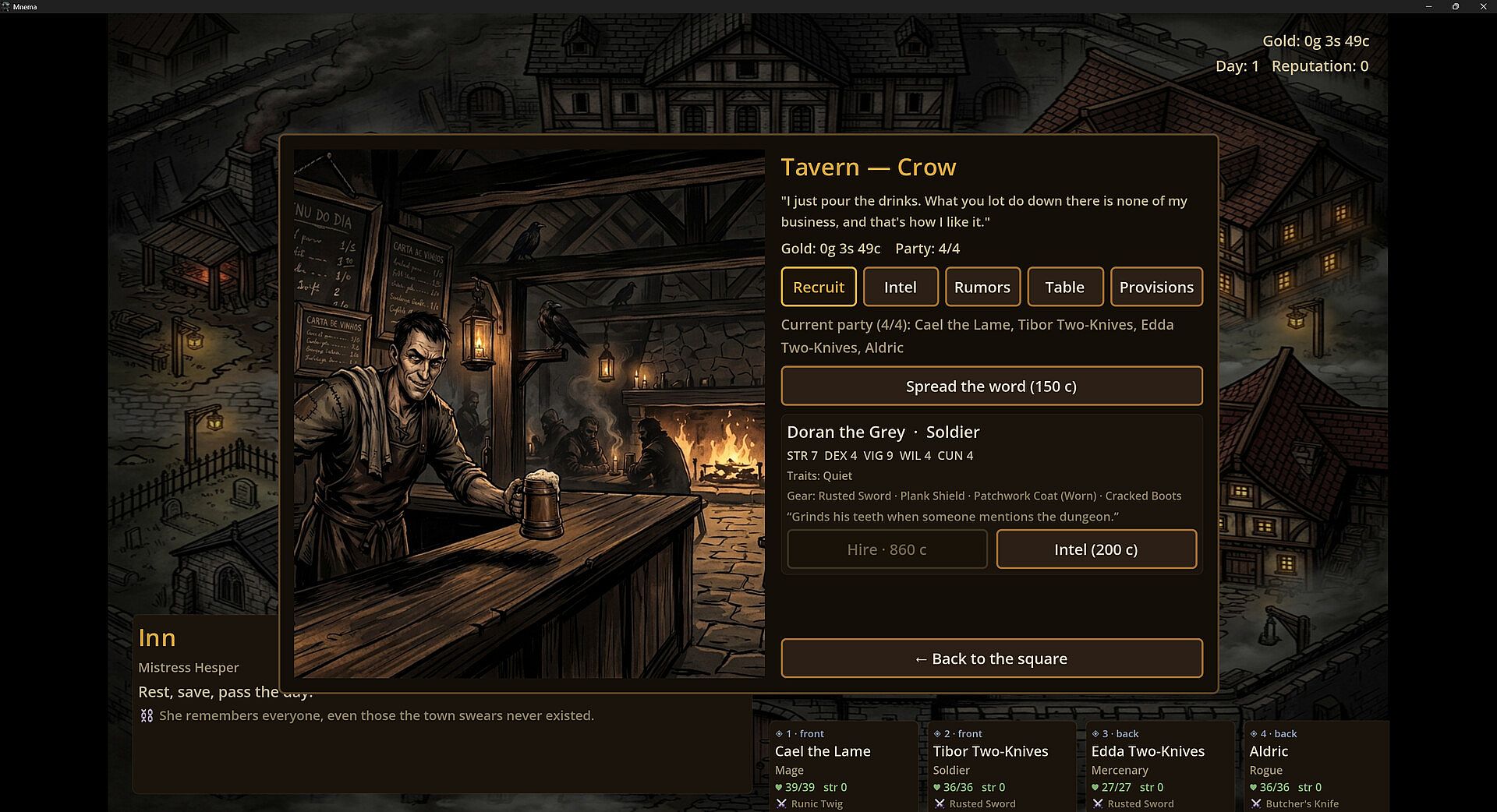
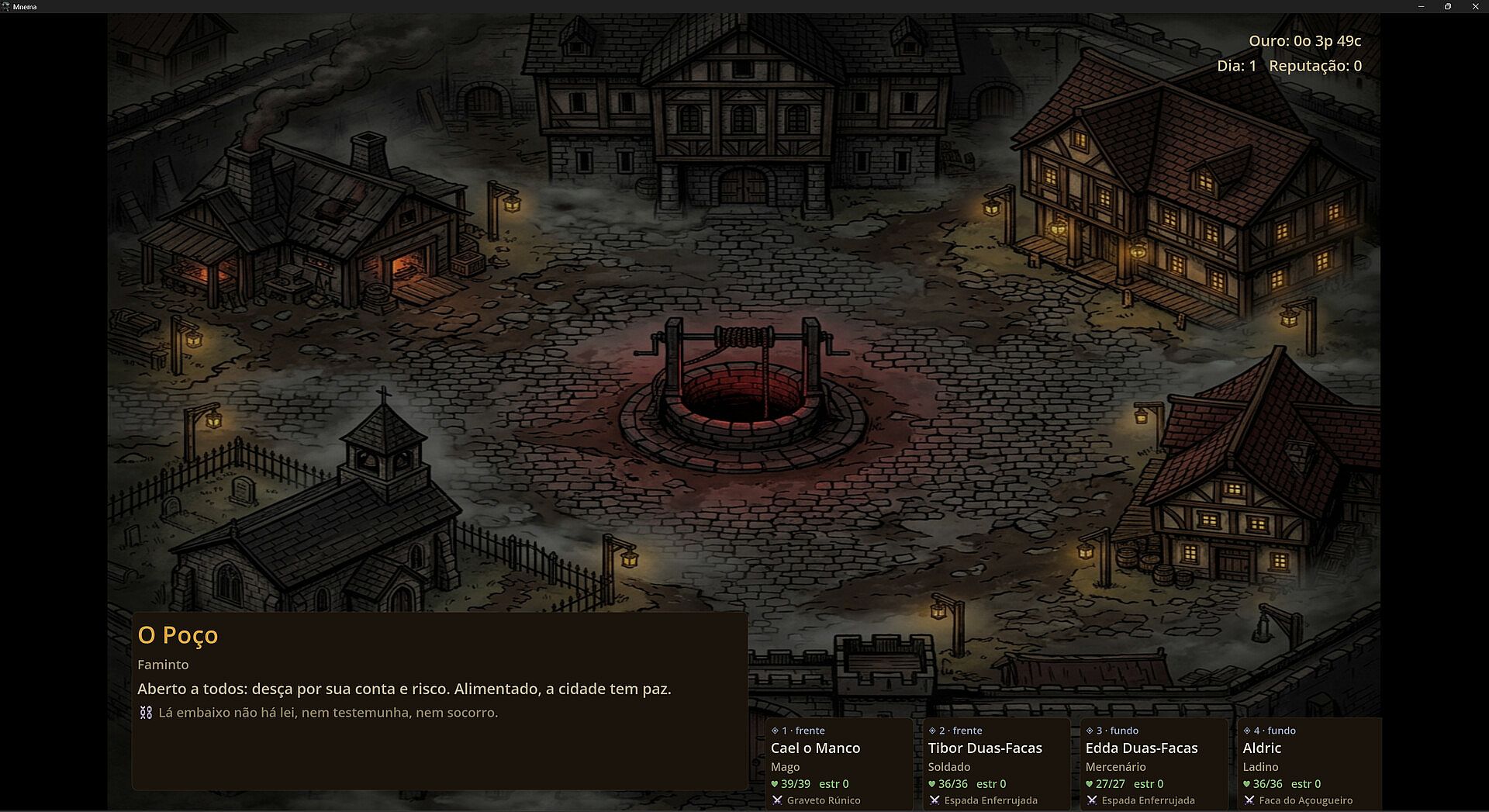
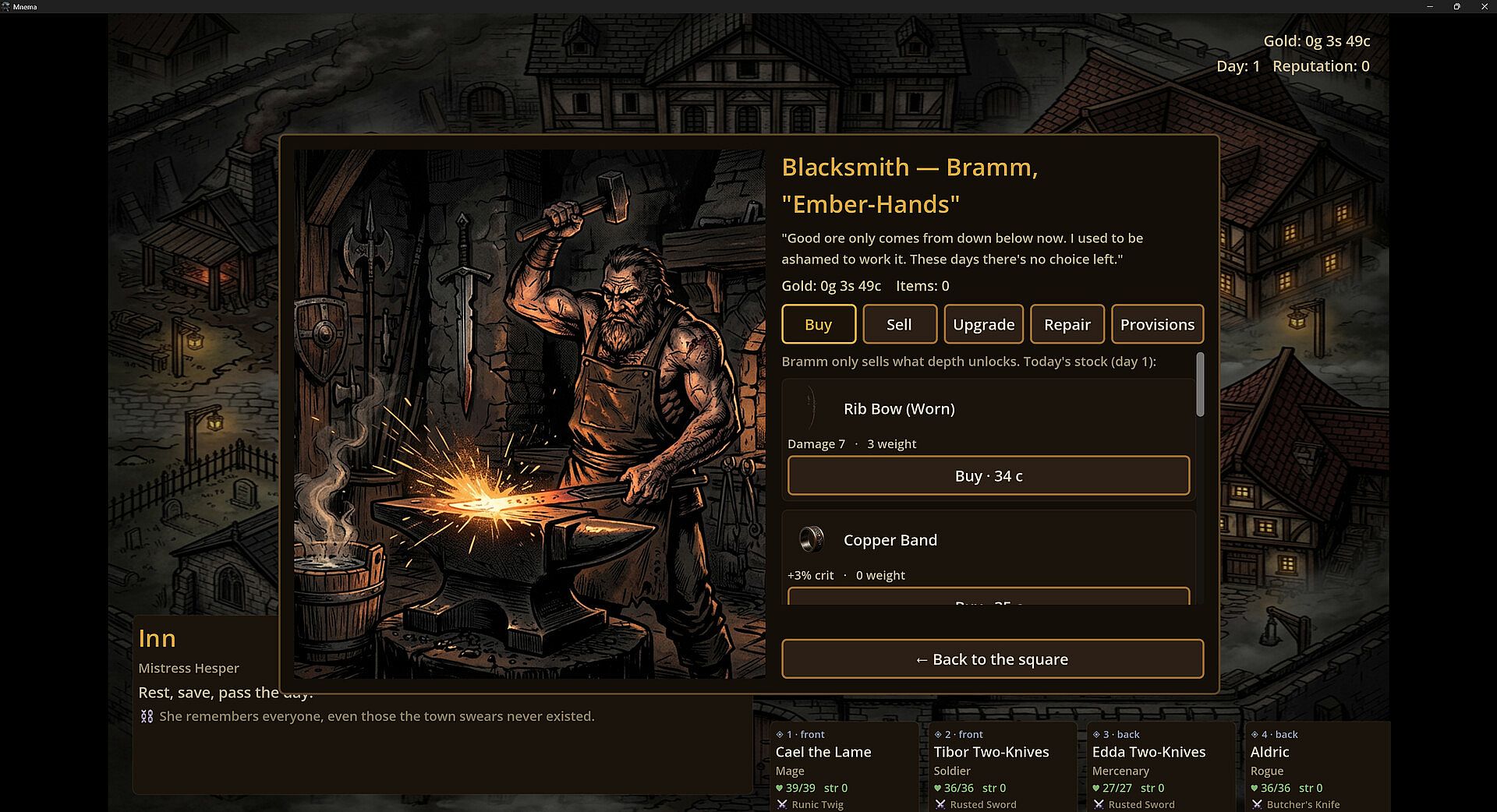
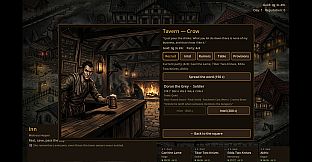
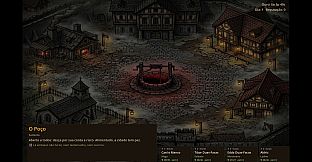
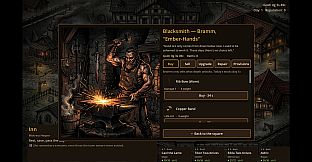
Mnema: The Fallen Remembered is a single-player dark medieval horror RPG set on PC. Players take on the role of the founder's heir in a city that profits from sending adventurers into a bottomless dungeon while ignoring what returns. The core loop involves recruiting a party of four at the tavern, equipping them, and descending floor by floor while managing the consequences of every choice made below the surface.
Gameplay
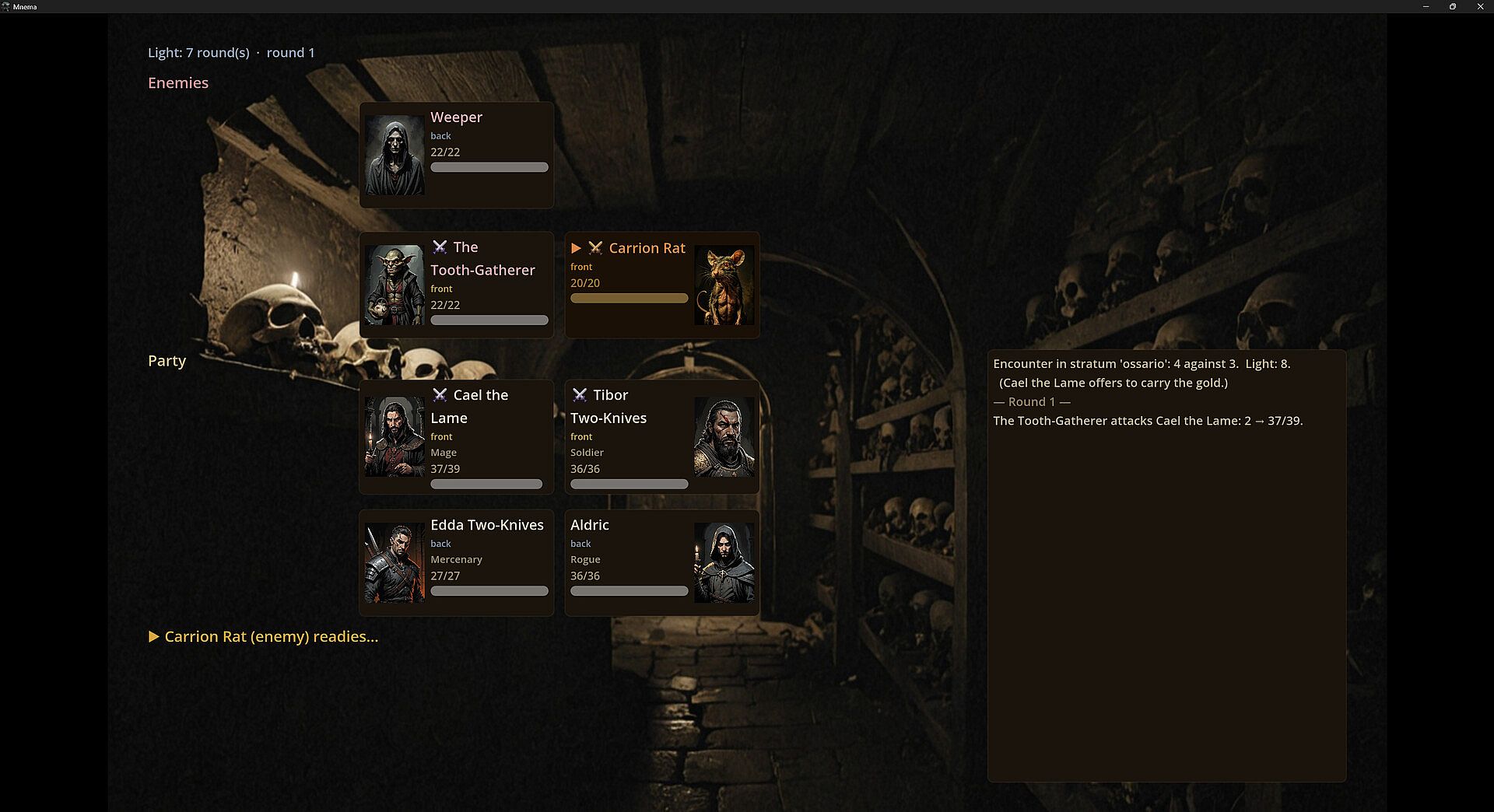
The game centers on turn-based tactical combat where party positioning determines survival. Frontline members absorb damage while rear positions support with abilities, and formation shifts matter when enemies target specific spots or when panic spreads through the group. Six classes offer distinct roles, and status effects such as poison, bleed, and horror accumulate over time. A light resource fades with each step deeper, forcing careful resource decisions during exploration and fights.
Permadeath removes any fallen character permanently from the world. Survivors return to the surface with whatever they carry, but the lost remain erased even from NPC memory. A trust and betrayal system operates without oversight once the party enters the dungeon, allowing theft, abandonment, or alliances that cannot be reported or punished above ground. This creates constant uncertainty about companion motives and potential traps set by wounded strangers encountered in the corridors.
Progression spans twelve floors divided across six strata. The environment changes from ossuary chambers to areas where flesh rewrites itself behind the party. A bestiary of creatures pursues individual agendas, and bosses require the player to assemble knowledge from scattered NPC dialogue rather than receiving direct exposition. The RNG uses seeded values, so repeated runs produce consistent patterns of misfortune rather than pure randomness.
Game Modes
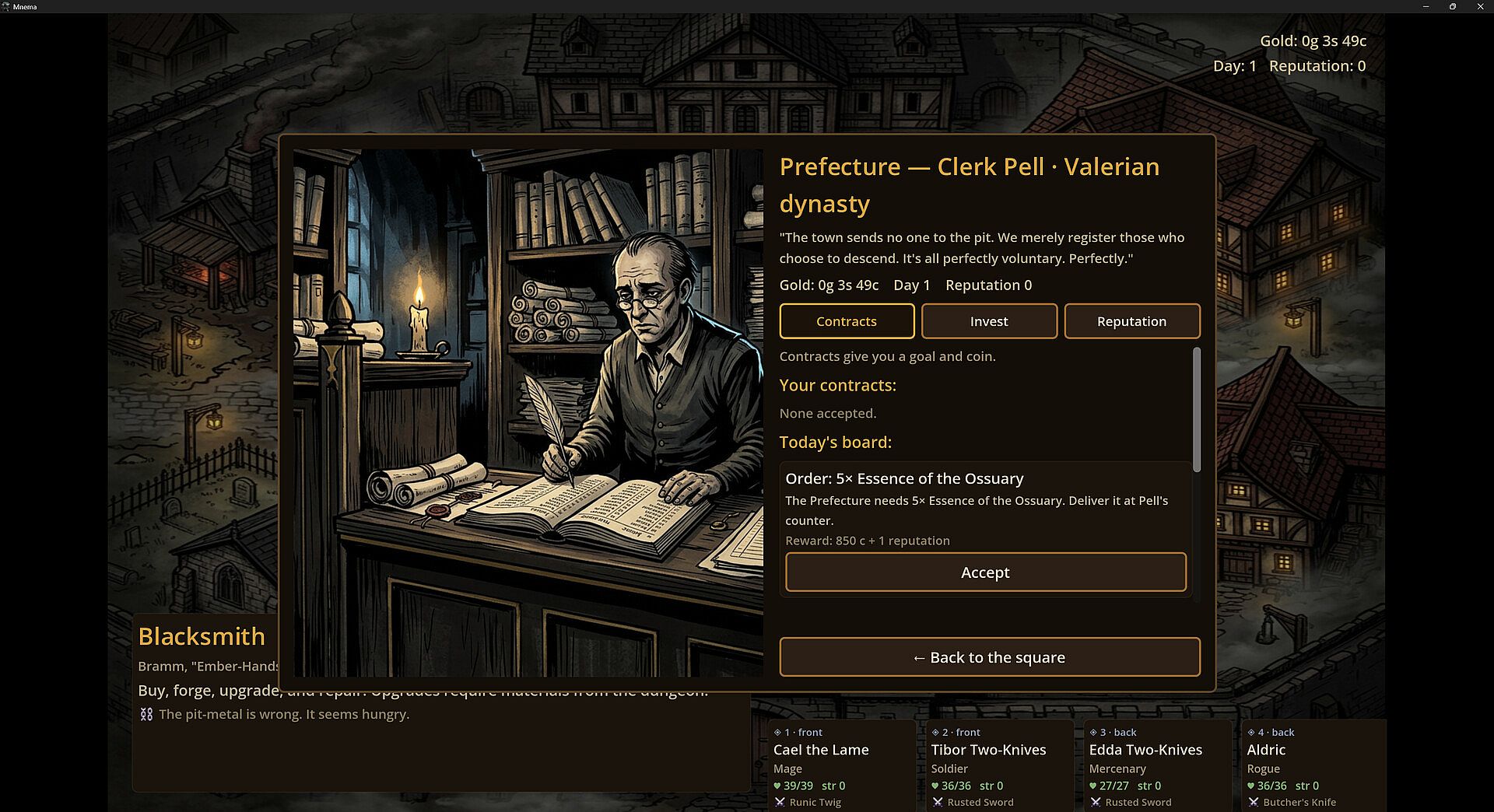
The experience remains strictly single-player with no multiplayer components. All activity occurs through the town hub that serves as a staging area for repeated descents. Each run follows the same structure of recruitment, equipping, and descent, yet outcomes vary based on party composition, formation choices, and decisions made in the absence of any external rules or rescue options.
Exploration and combat blend into one continuous loop without separate campaign or skirmish modes. The dungeon itself enforces the rule that events below stay below, turning every corridor encounter into a potential test of loyalty or survival instinct. No additional modes alter this core loop or introduce cooperative or competitive elements.
Story and Atmosphere
The narrative unfolds through what NPCs choose to reveal rather than through cutscenes or direct exposition. The city of Mnema maintains a facade of normalcy while the lists of missing adventurers grow longer each season. Players piece together the larger truth from fragments gathered across multiple runs, with the moral weight of those discoveries shaping the conclusion.
Three distinct endings emerge from the dilemma encountered at the bottom of the pit. Each path reflects the cumulative choices regarding memory, betrayal, and what the player decides to carry back or leave behind. The atmosphere relies on the contrast between the polished surface town and the lawless depths where horror stems as much from companions as from monsters.
Is It Worth Playing?
Mnema: The Fallen Remembered suits players who seek unforgiving tactical RPGs built around permadeath and moral ambiguity. The position-based combat and light management create tension that builds across each descent, while the betrayal mechanics add layers of risk absent from many dungeon crawlers. Those who prefer games where every loss carries permanent consequences and where answers must be earned through observation will find the structure rewarding.
The single-player focus keeps the experience contained and repeatable without external dependencies. Availability in English, Portuguese, and Spanish broadens access for a wider audience interested in grimdark dungeon crawling. The game delivers a complete package centered on its core systems rather than ongoing seasonal content or expansions.