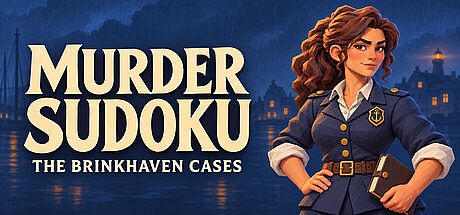



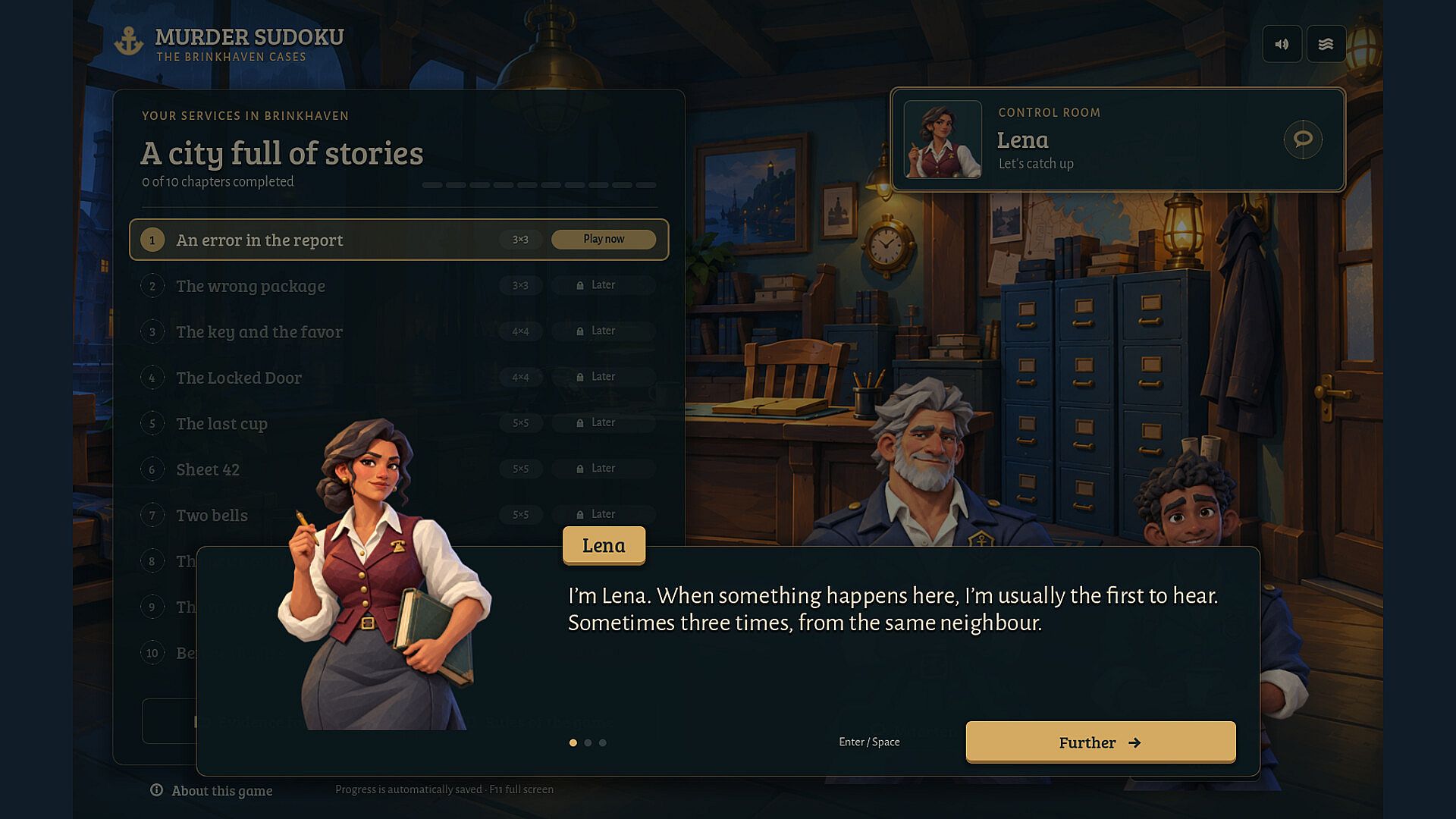


Murder Sudoku: The Brinkhaven Cases is an indie casual adventure game built around logic puzzles and a connected narrative. Players step into the role of rookie officer Noor as small investigations in Brinkhaven gradually connect into a larger story. The experience blends spatial deduction with witness statements and evidence review across ten chapters set in four illustrated locations.
Gameplay
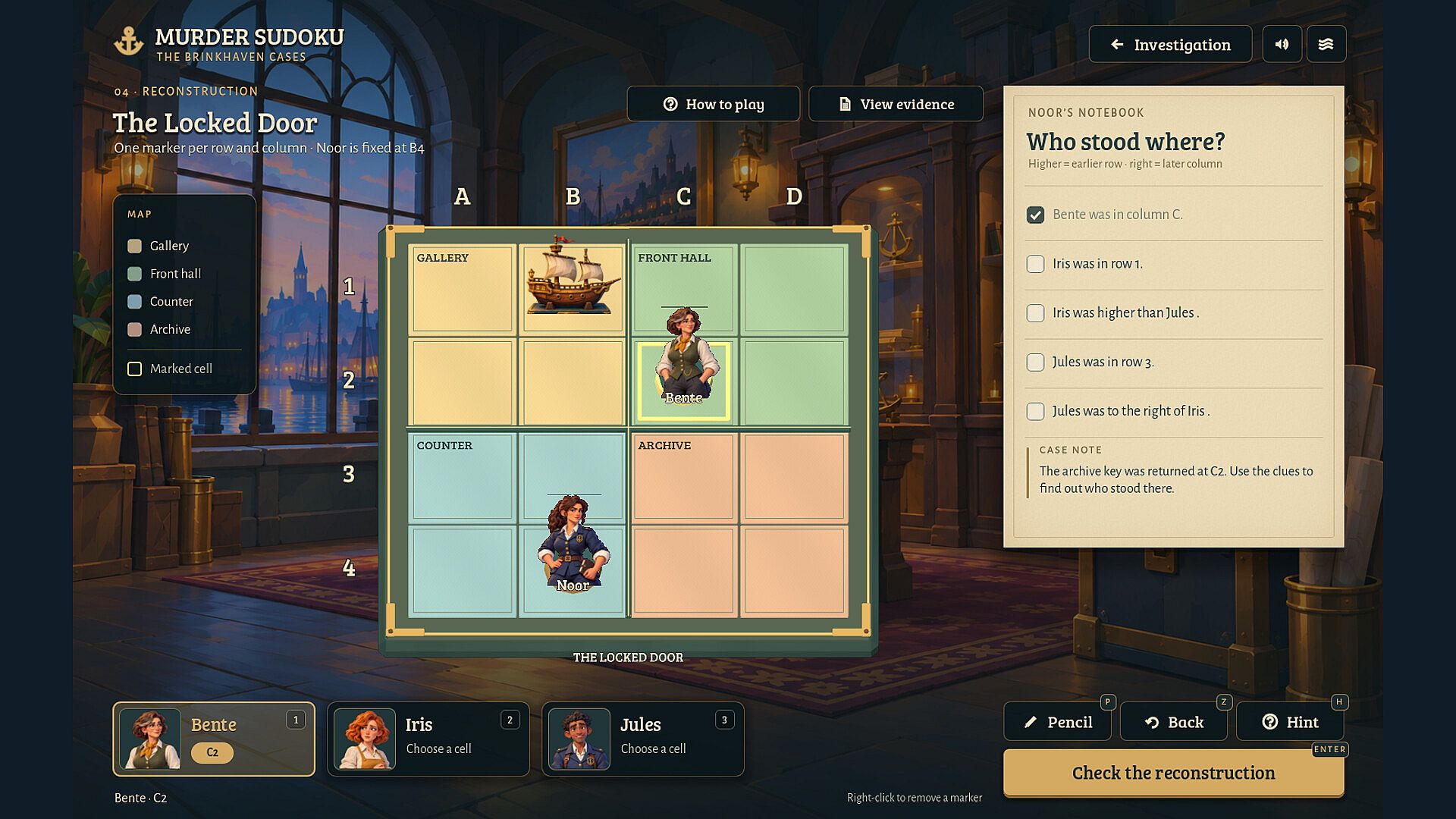
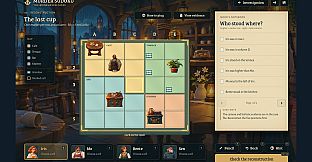
The core loop centers on reconstructing crime scenes through character placement on grids. Each puzzle requires positioning figures so that one occupies each row and each column, following the same constraint as Sudoku but applied to named characters rather than numbers. Boards begin at 3x3 for newcomers and scale to 5x5 as cases grow more involved. Spatial clues from the scene itself guide placements, such as room layouts and object positions that limit where individuals can stand.
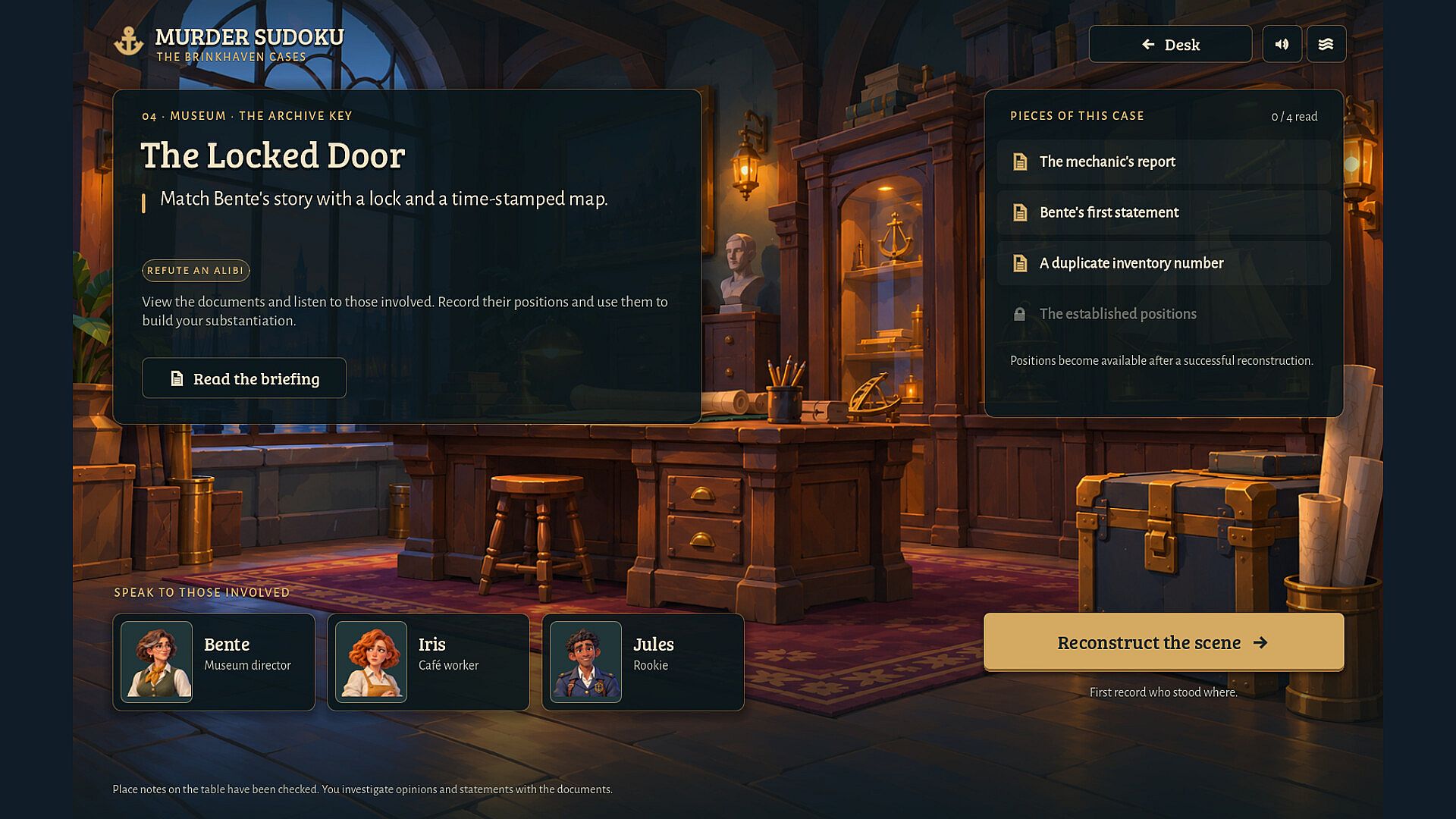
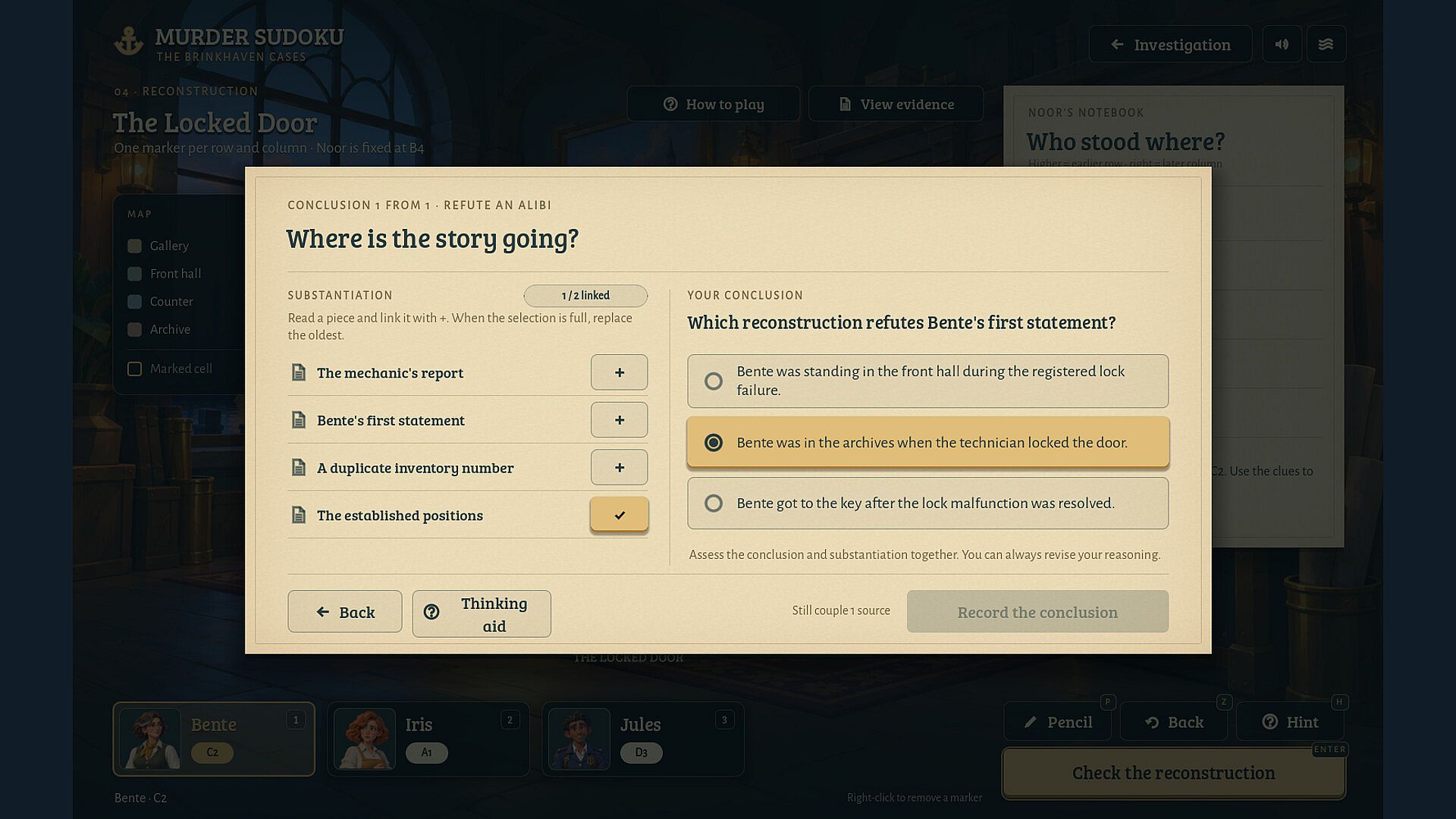
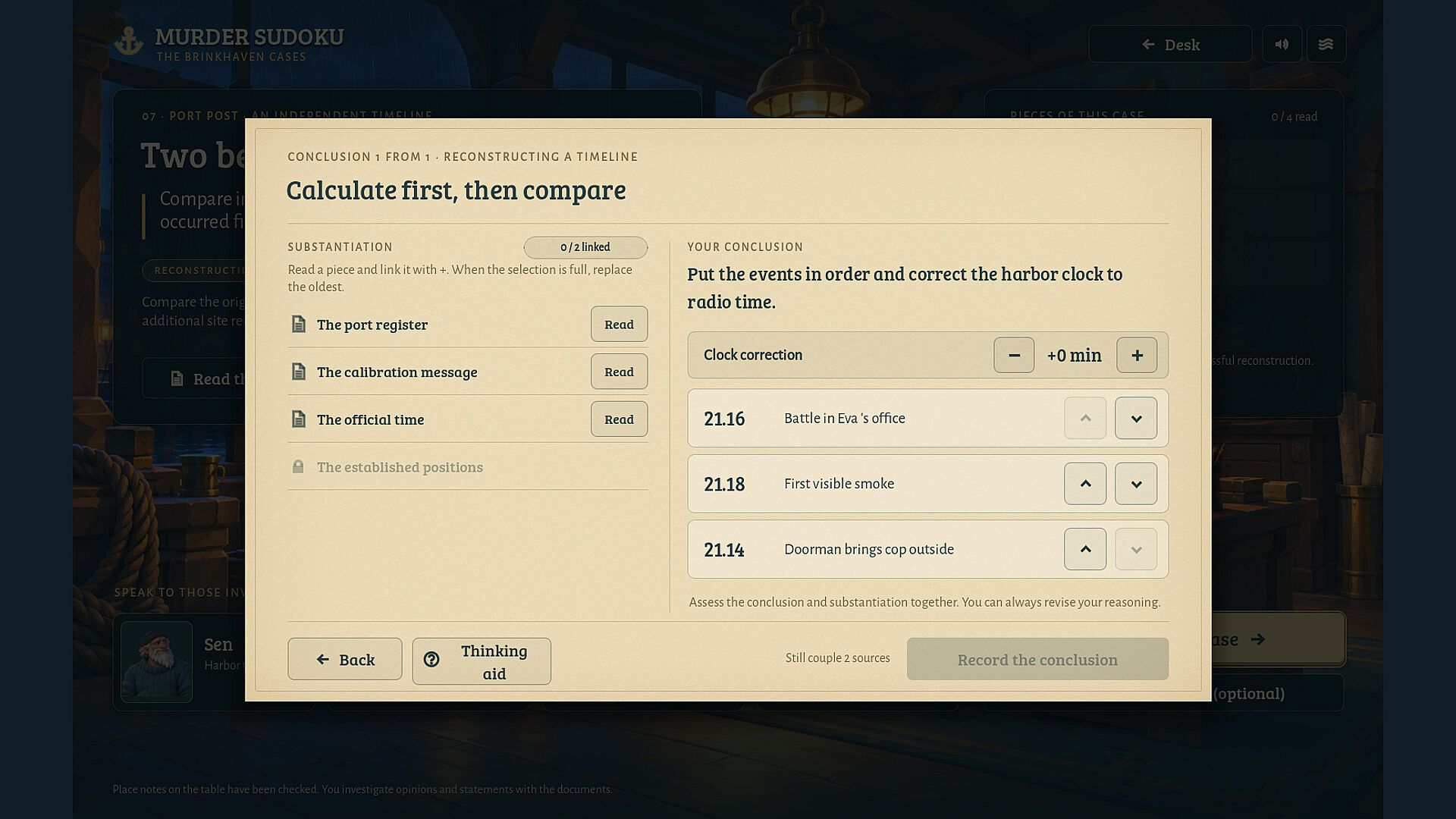
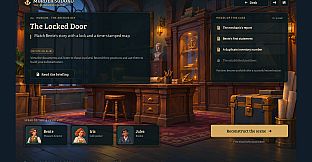
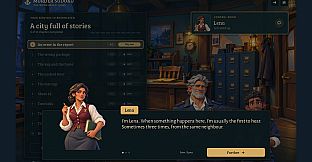
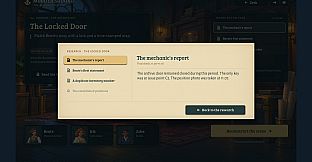
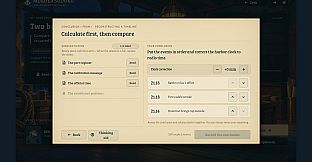
Once the grid is complete, players prove their conclusions by questioning witnesses, examining documents, and linking statements to the reconstructed events. Contradictions or confirmations emerge from comparing accounts and sequencing actions. Earlier files remain accessible, allowing players to cross-reference details as the overarching mystery develops across chapters. Progress saves automatically, and tools like pencil notes and an undo function support careful reasoning without pressure.
The game emphasizes deduction over speed or risk. No timers appear, lives are absent, and hints carry no penalties. Three hint levels provide graduated assistance while preserving the satisfaction of independent solutions. Nine characters recur through the story, each contributing statements that tie individual cases to the broader plot unfolding in a police station, harbor, museum, and cafe.
Game Modes
Gameplay revolves around a single-player campaign of ten connected chapters. Each chapter presents a self-contained case that builds on previous events, encouraging players to revisit files for new insights. The puzzles themselves function as the primary activity, progressing from introductory 3x3 boards to larger 5x5 reconstructions that incorporate more complex spatial relationships and witness interactions.
Within each case, players move between scene reconstruction and evidence evaluation. Placement puzzles form the foundation, while statement comparison and timeline ordering add layers of narrative verification. This structure keeps the focus on logical progression rather than separate competitive or endless modes.
Story and Setting
The narrative follows Noor through initial days on the force, where routine assignments reveal patterns pointing to something larger in Brinkhaven. Four painted locations serve as backdrops, each rendered with distinct visual detail that supports the spatial clues. Small cases introduce individual characters and their statements, gradually revealing connections that span the full ten chapters.
Exploration stays tied to the investigation process. Players examine documents and question witnesses at their own pace, using the information to refine grid placements and confirm theories. The absence of time limits or failure states allows the story to unfold through steady deduction rather than trial and error.
Is It Worth Playing?
Murder Sudoku: The Brinkhaven Cases suits players who enjoy deliberate logic puzzles paired with a light narrative thread. The character-placement system offers a fresh take on grid deduction, supported by tools that accommodate different reasoning styles. Ten chapters provide a contained experience with recurring characters and locations that reward attention to detail across multiple sessions.
Those seeking relaxed single-player adventures without timers, lives, or competitive pressure will find the structure accommodating. Hints remain optional and non-punitive, while saved progress and undo options reduce frustration during longer deductions. The game stands as a focused indie title for anyone interested in combining spatial logic with witness-driven storytelling on PC.