




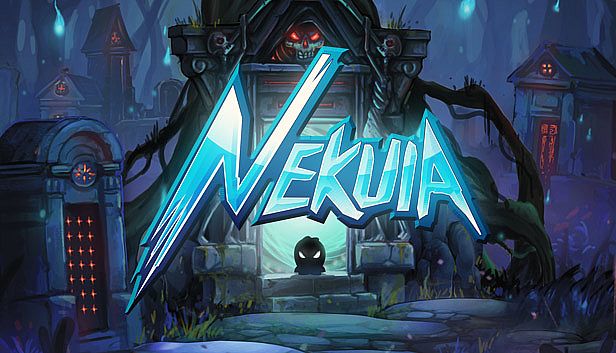



















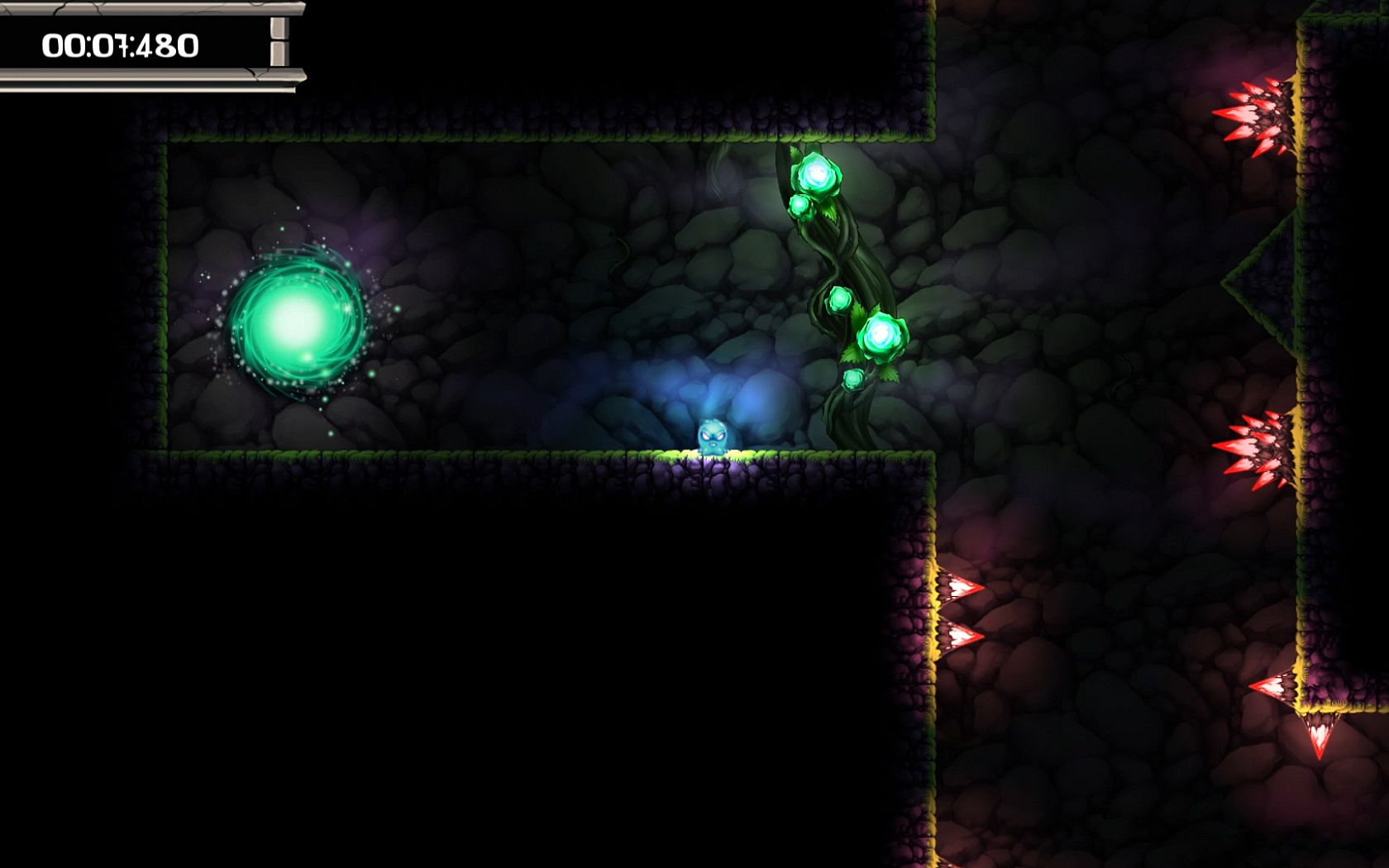
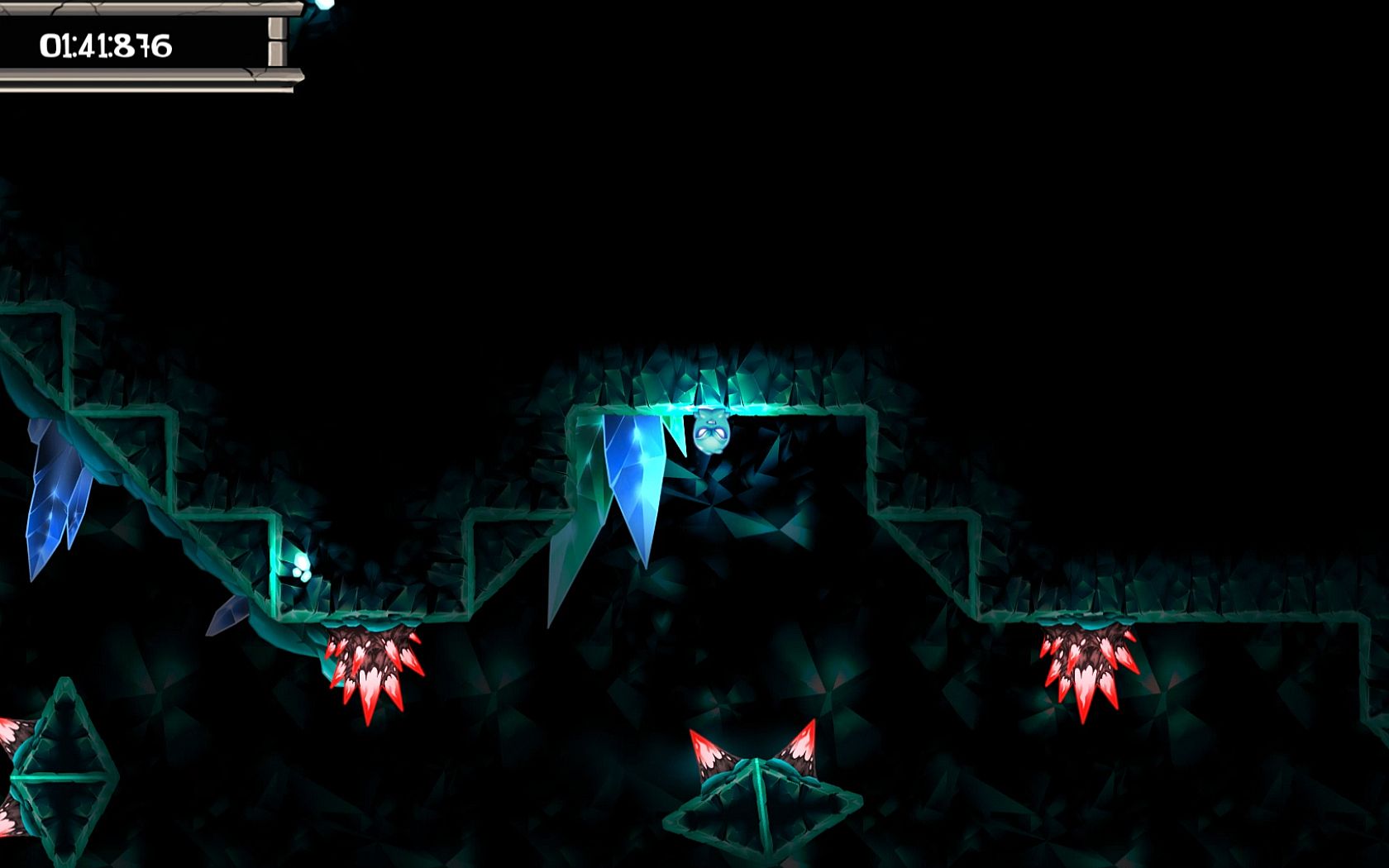
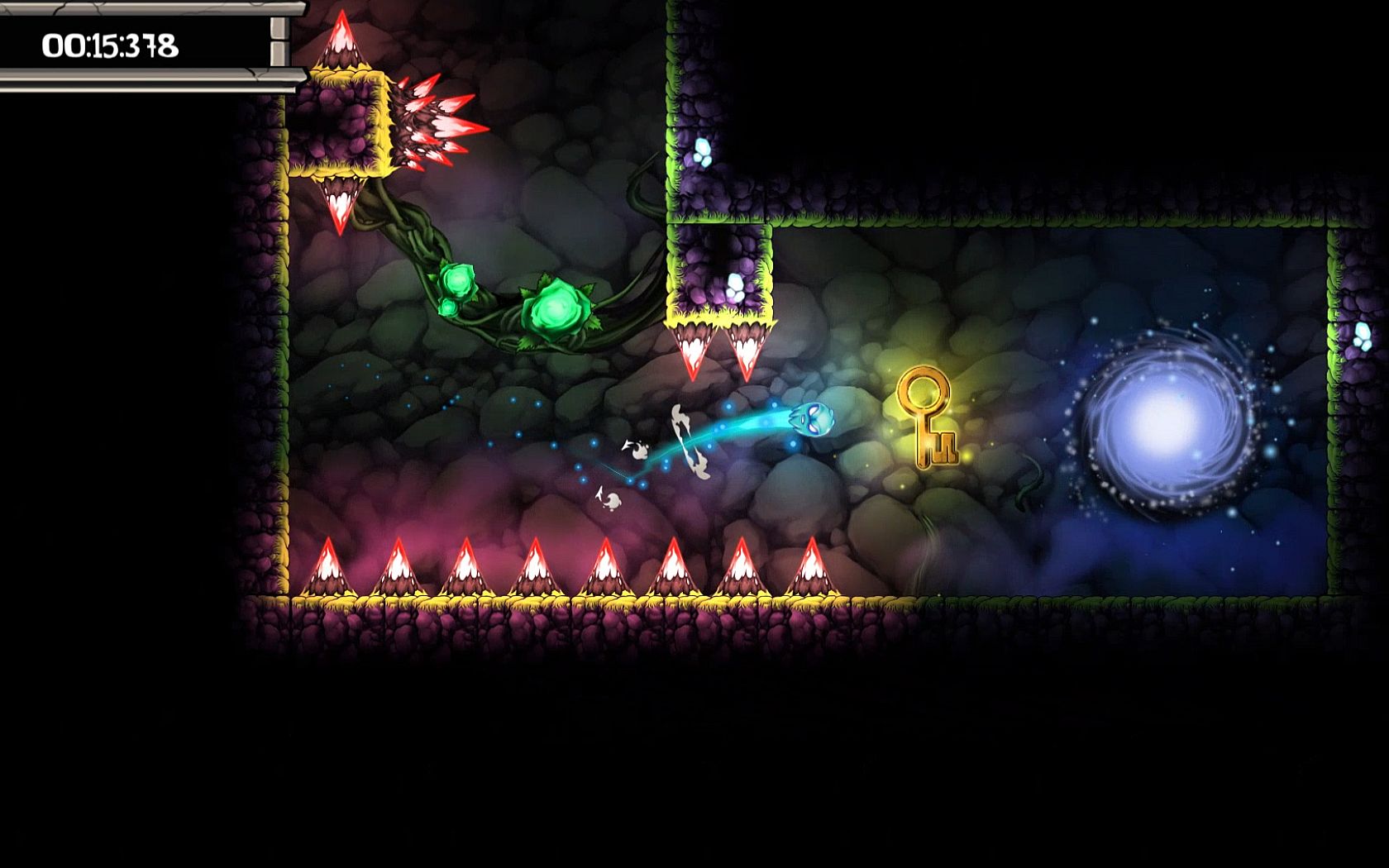
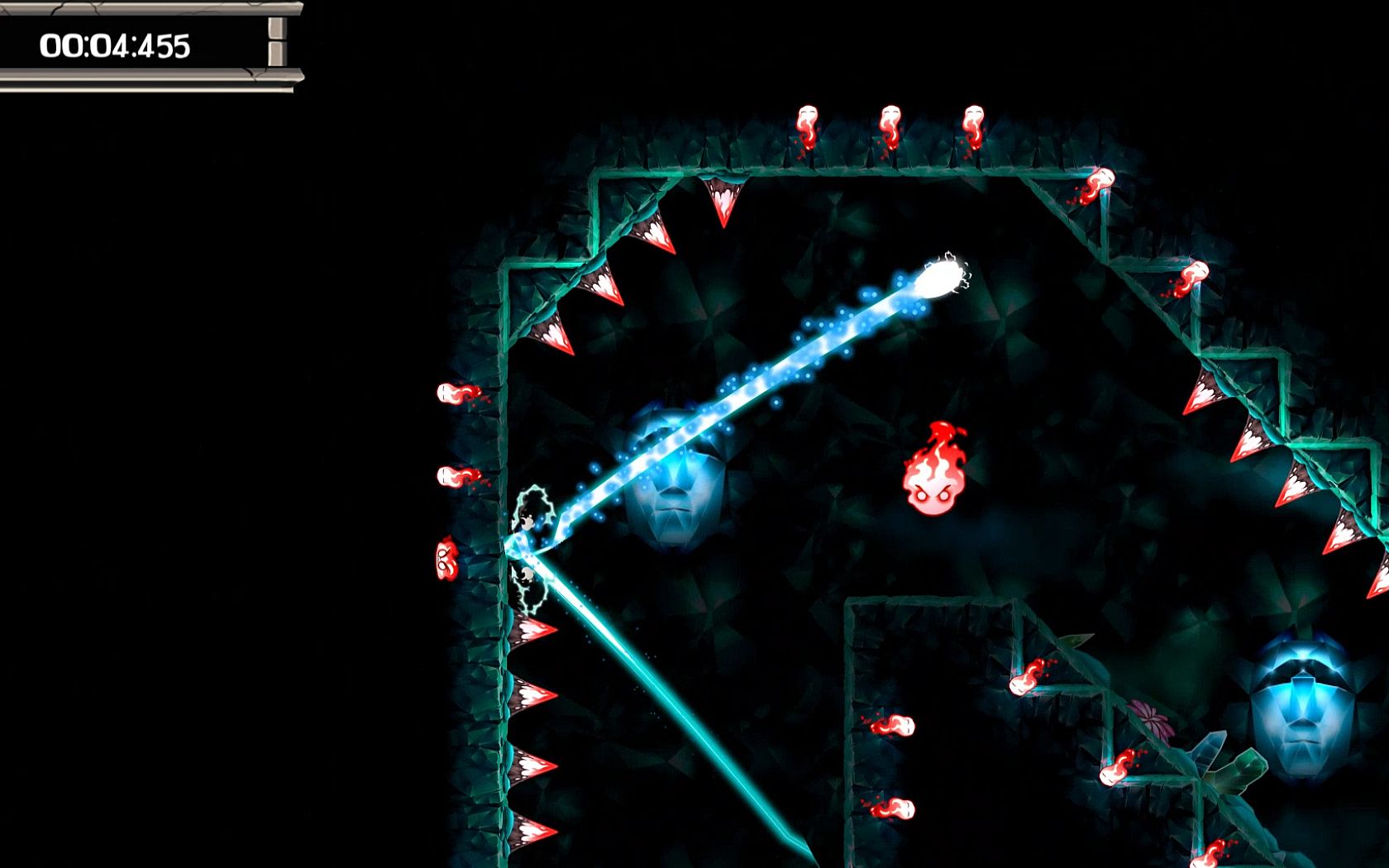
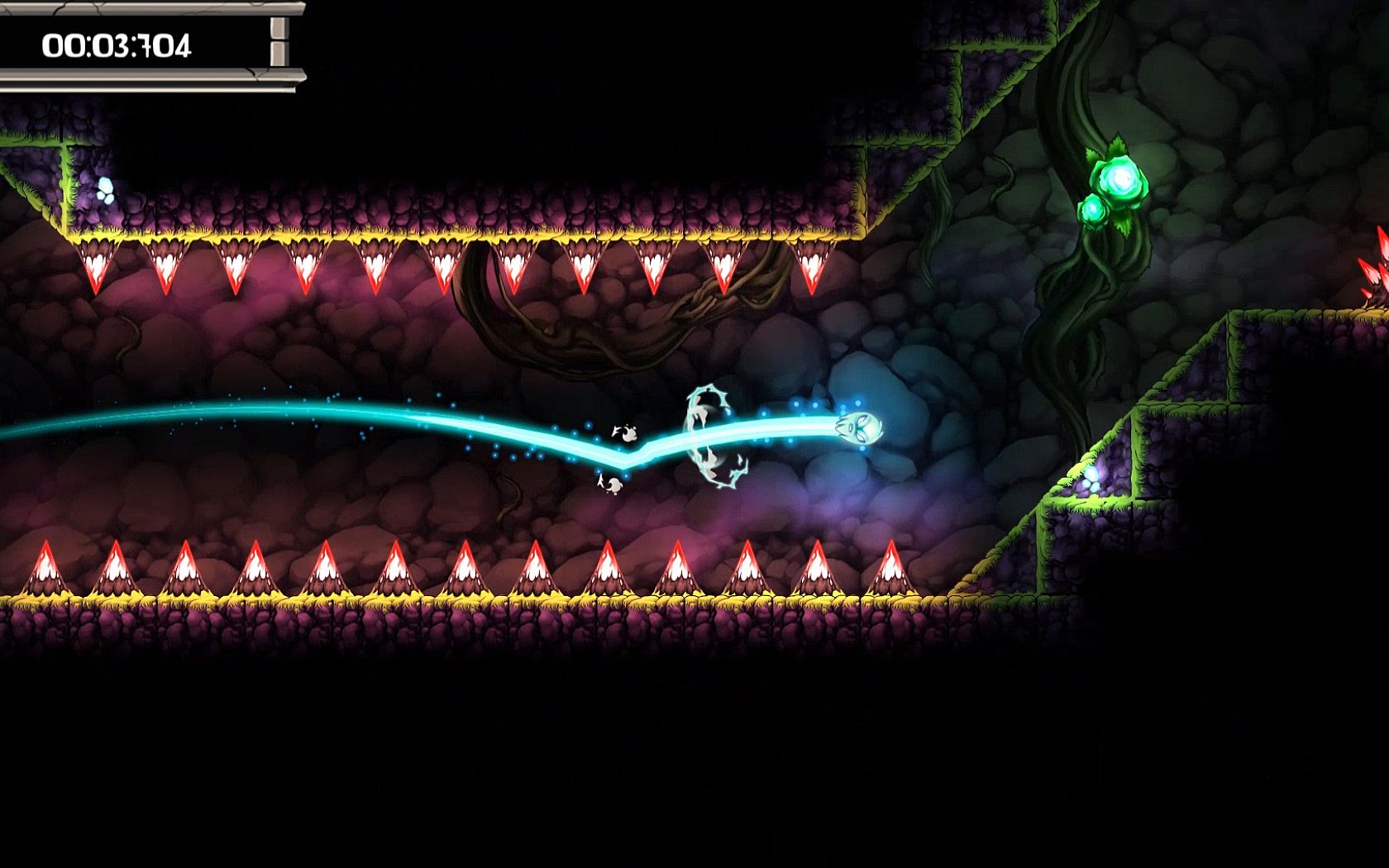
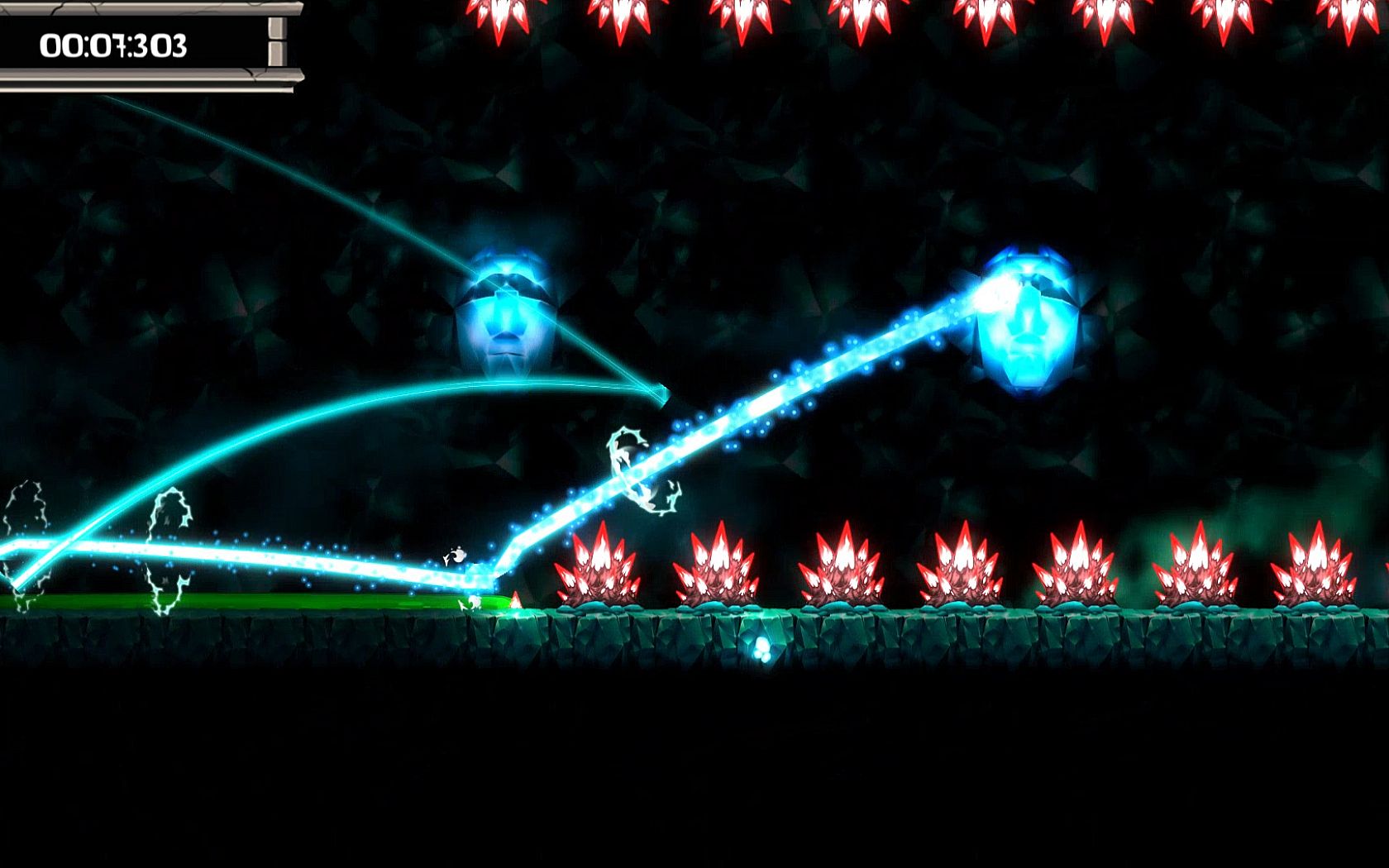
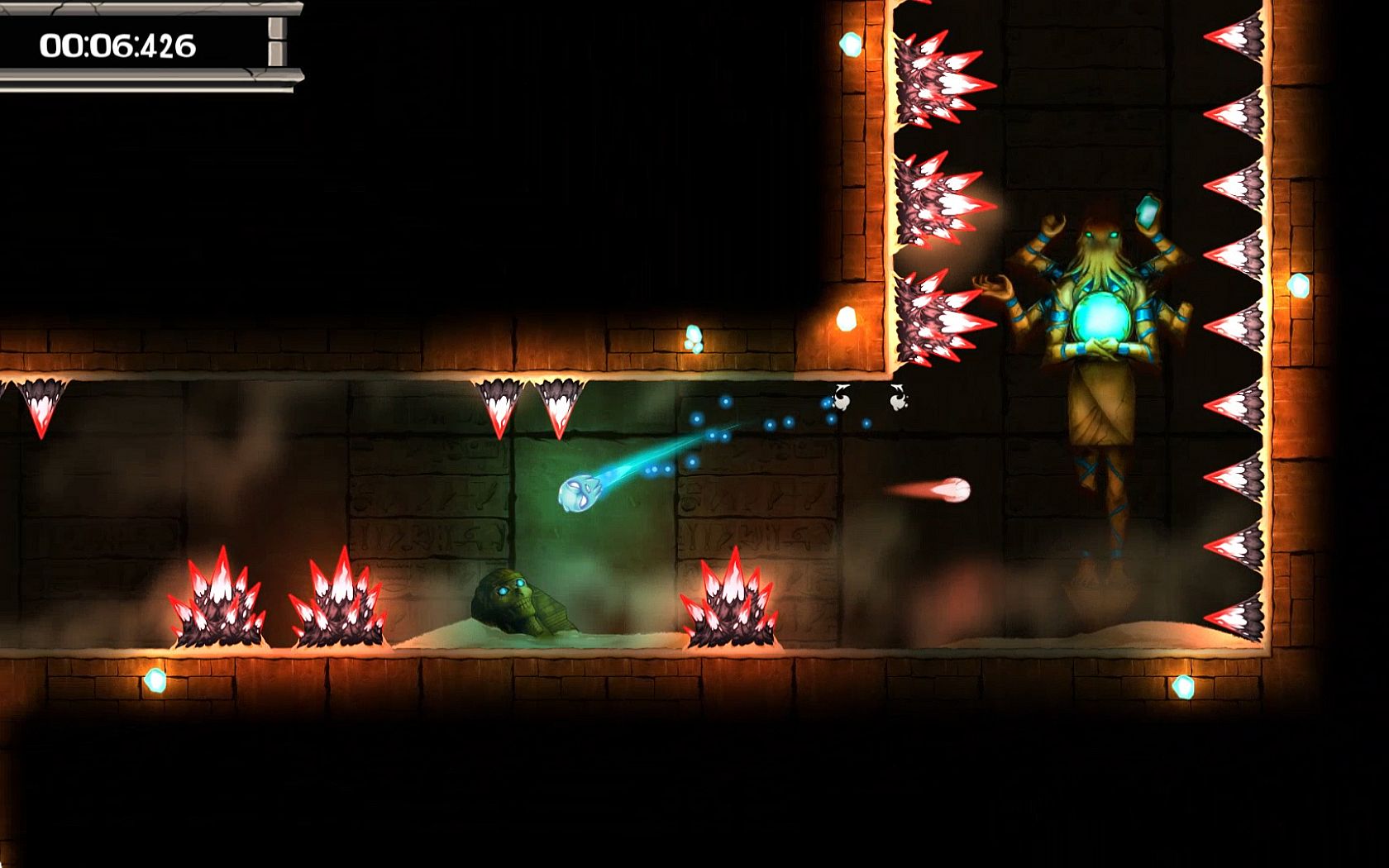
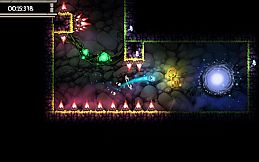
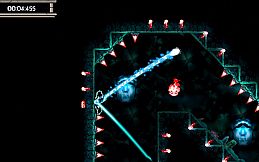
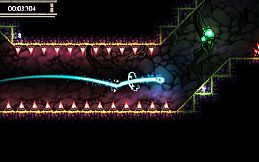
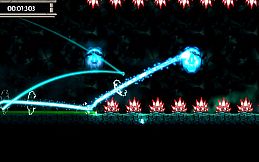
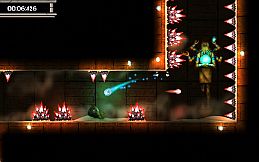
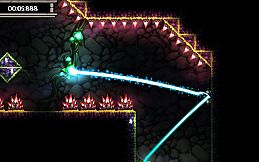
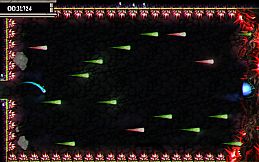
Nekuia is a 2D platformer that centers on precise jumping and building momentum in a side-scrolling environment. Players control a soul navigating layered depths inspired by Hades, where every action hinges on timing and commitment rather than mid-air corrections. The core loop rewards rapid, accurate inputs while punishing hesitation or misjudged leaps, creating a tight focus on reflexes and pathfinding through interconnected stages.
Gameplay
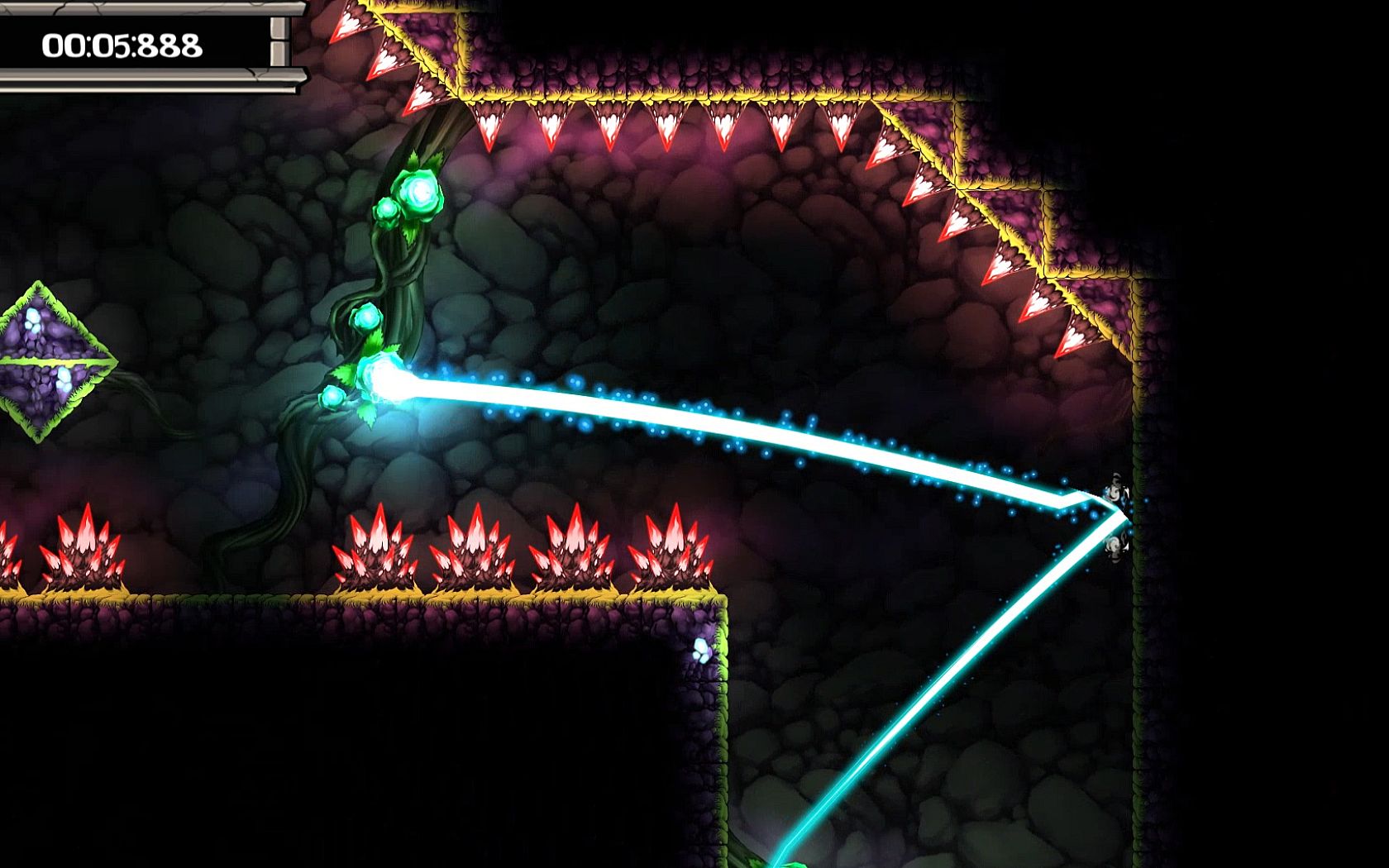
The movement system eliminates trajectory changes once a jump starts, forcing players to plan each launch carefully. A double-jump serves as the main recovery tool when initial timing falls short. Speed directly influences power and risk: sustained fast jumping increases strength but heightens the chance of overshooting platforms or triggering hazards. Level layouts encourage experimentation, with multiple routes that open up or become viable only after mastering higher velocities.
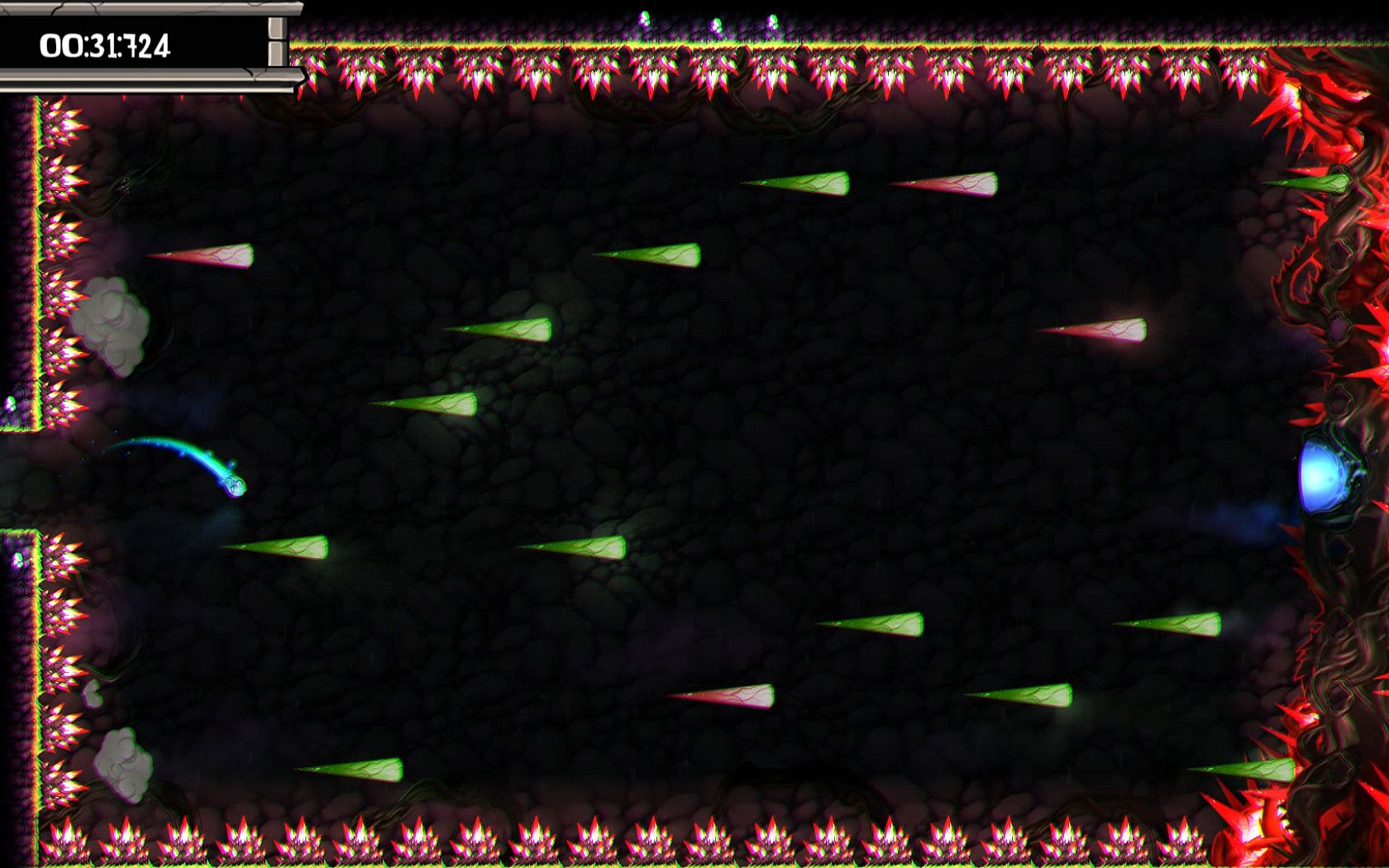
Physics govern every interaction, turning falls, bounces, and wall contacts into opportunities for chaining momentum. Visual and audio layers intensify as pace increases, shifting from subdued tones to sharper, more urgent feedback that mirrors rising tension. Traps scattered throughout demand constant vigilance, while the absence of mid-jump steering keeps attention locked on landing spots and upcoming obstacles.
Exploration integrates into the speed-focused design. Stages contain branching paths and hidden routes that reward thorough searching alongside quick execution. Guardians appear as major set pieces that test accumulated skills through extended sequences of precise jumps and timing windows. Ultimate levels in each world combine elements from prior stages into single, unbroken runs designed for top performers.
Game Modes
Single-player progression forms the main experience, guiding players through strata of the underworld toward answers about the central soul. Completion involves locating viable paths across maze-like areas while overcoming environmental challenges and guardian encounters. The structure supports repeated attempts, with each run building familiarity that leads to faster, more confident navigation.
Online leaderboards track best times across all standard levels, allowing direct comparison with other players. A weekly ephemeral level rotates in as a limited-time challenge, resetting regularly to keep competition fresh and focused on current performance. These time trials emphasize pure speed without altering the underlying jump mechanics or adding external elements.
Exploration and Challenges
Worlds unfold as vertical and horizontal layers that players descend through, each with distinct visual themes and increasing complexity in platform placement. Finding alternate routes often requires backtracking at controlled speeds or using speed-built momentum to reach previously inaccessible ledges. Guardians push the limits of the jump-and-speed system by combining multiple mechanics into prolonged fights that blend evasion with aggressive forward progress.
Ultimate levels serve as capstones, merging every mechanic from a given world into one continuous gauntlet. These demand flawless execution across extended distances, rewarding players who have internalized the physics and learned to read level geometry at high velocities. The die-and-retry loop encourages incremental improvement rather than frustration, as each failure provides immediate data on timing and positioning.
Is It Worth Playing?
Nekuia suits players who enjoy precision platformers built around momentum and commitment. Its narrow focus on jumps and speed creates a distinct rhythm that stands apart from more forgiving entries in the genre. The combination of exploration, boss encounters, and time-trial elements gives structure to repeated play sessions without introducing unrelated systems.
Reception on the platform shows mixed results, with 66 percent positive ratings from a small number of reviews. Those who connect with the mechanics often highlight the satisfying flow that emerges once timing clicks. The game remains available for single-player runs and ongoing leaderboard competition, though activity centers on personal improvement rather than large-scale events.
Anyone drawn to speedrun-style challenges or physics-driven 2D action will find consistent depth in the core systems. The emphasis on skill progression through practice makes it a solid choice for dedicated players seeking a focused experience over broad accessibility.














