





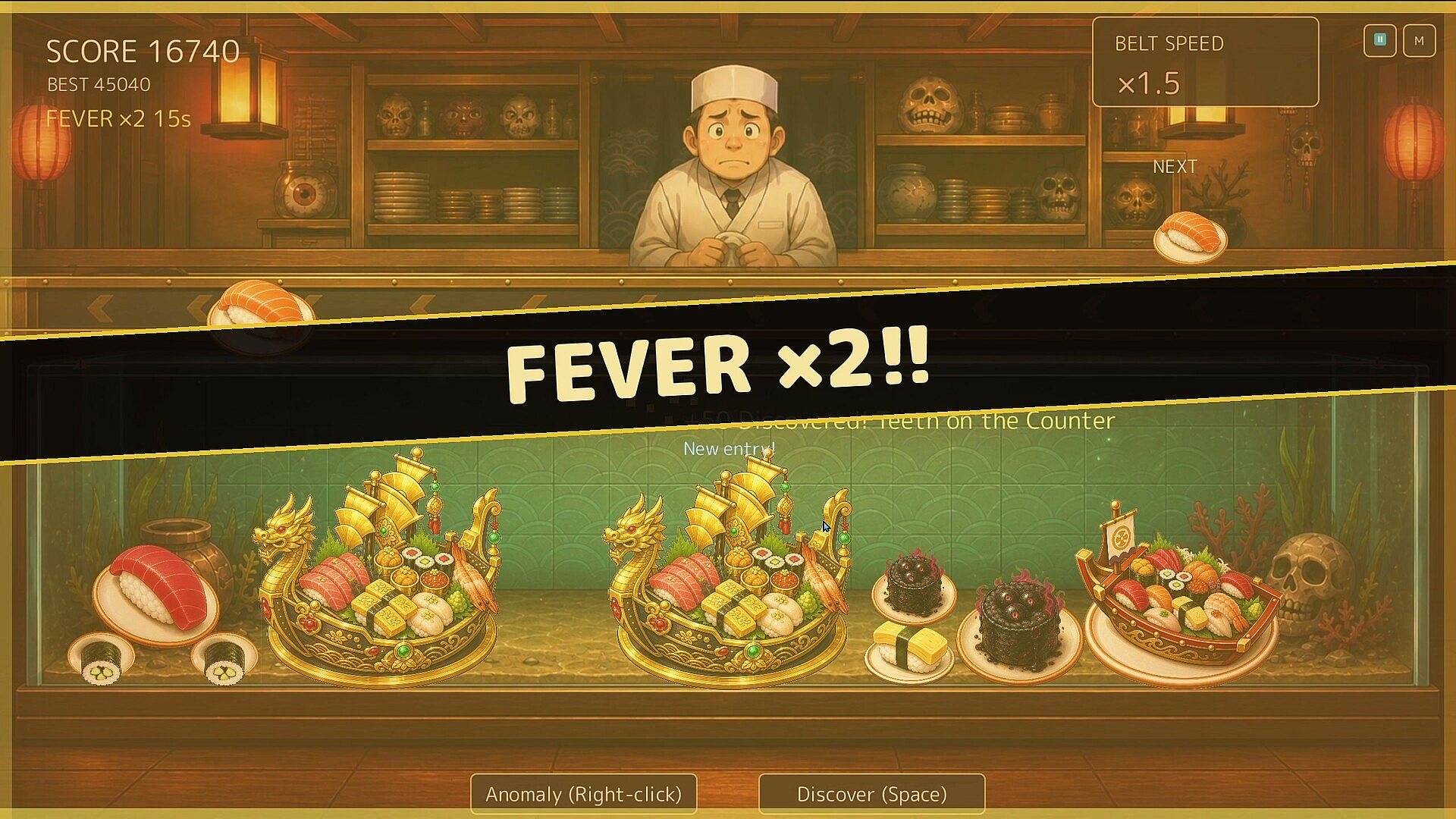
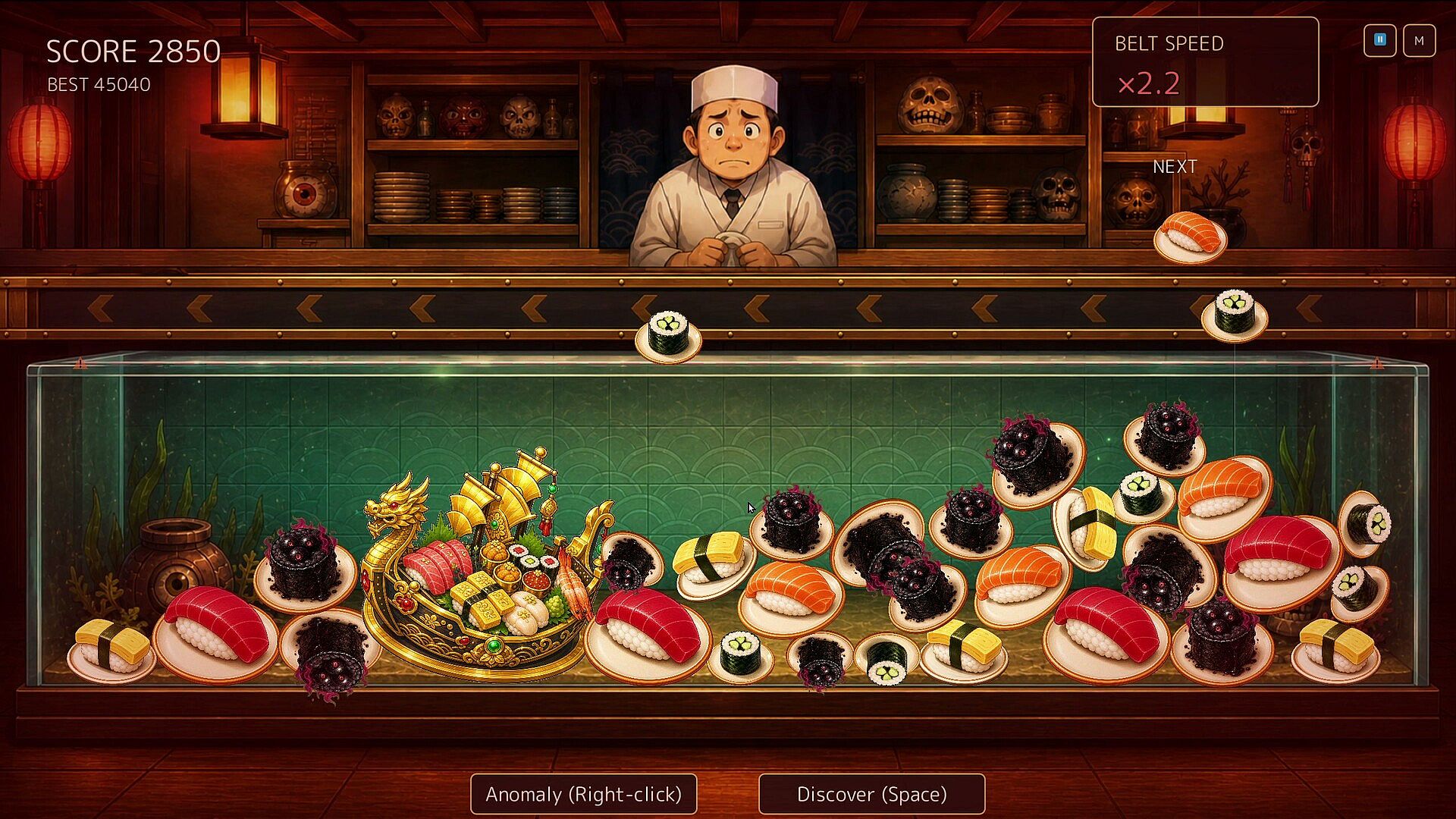






OminouSushi is a casual indie game for PC that combines sushi merging mechanics with careful observation and quick decision making in a single player conveyor belt restaurant setting. Players manage a stream of sushi pieces that arrive on a moving belt, dropping them into a tank where matching ones combine and evolve into larger forms across seven distinct tiers, culminating in a gold ship at the top level. The core loop revolves around timing drops precisely while scanning for anomalies that appear without warning, creating a steady rhythm of stacking and vigilance that rewards both merging efficiency and attention to detail.
Gameplay
The central action involves dropping sushi from the belt into a tank at the right moment so that identical pieces collide and merge into upgraded versions. Physics govern how the pieces interact once in the tank, allowing them to bump and combine naturally as more arrive. Starting from basic items like a cucumber roll, players progress through the tiers by repeated merges until reaching the highest form. The belt continues moving regardless of pauses, forcing constant attention and quick choices about which pieces to send down and which to inspect further.
Anomalies introduce the main layer of tension. These suspicious sushi pieces enter the belt without any countdown or indicator, blending in with regular ones. Some stand out immediately through obvious visual differences, while others require close examination of small details. Players must also scan the broader restaurant scene for additional oddities beyond the belt itself. Dropping a normal piece keeps the merge chain going, but flagging an anomaly before it falls prevents it from clogging the tank and accelerating the belt speed permanently. Incorrect flags deduct points, and missed anomalies add to the board clutter while ramping up the pace.
Certain anomalies activate a temporary Fever Time state that alters scoring and flow. The belt never slows once it speeds up, turning later stages into a faster, more demanding test of reflexes and pattern recognition. All sushi movement follows consistent physics rules, and the seven tier progression remains fixed regardless of play session length.
Game Modes
The game operates as a single player experience centered on one continuous loop of merging and anomaly management. Sessions focus on building high scores through efficient tier progression and accurate anomaly identification, with the belt speed increasing over time as a core challenge element. No separate modes alter the fundamental rules, though the score system tracks the top five results on the title screen for repeated attempts at improvement.
Progression elements include unlocking entries in an Anomaly Dex by discovering all 72 anomalies across play sessions. This collection aspect encourages multiple runs to identify every variation, while the permanent speed increase ensures each attempt builds on the pressure from previous ones. The structure supports offline play without requiring constant connection or external progression systems.
Controls and Accessibility
Input options cover mouse, keyboard, and controller, allowing flexibility based on player preference. The game runs in fullscreen with support for six interface languages and functions entirely offline once installed. These features keep the focus on the core merging and observation loop without added complexity from online requirements or input restrictions.
The Japanese inspired soundtrack adjusts its tempo to match the belt speed, providing audio cues that intensify alongside the visual pace. This integration reinforces the growing urgency without relying on external timers or notifications.
Is It Worth Playing?
OminouSushi suits players who enjoy merging puzzle mechanics combined with light observation and timing challenges in a compact casual package. The single player structure emphasizes personal score chasing and anomaly collection rather than competitive or cooperative elements, making it ideal for short sessions or repeated attempts at higher scores. With a planned release in September 2026 and no user reviews available yet, the experience stands on the described systems of seven tier merges, 72 anomalies, and escalating belt speed.
Those drawn to physics based stacking games or titles that mix simple core actions with hidden details will find the conveyor belt restaurant concept a fresh variation. The permanent speed ramp and point penalties for errors add meaningful stakes to each decision, while the offline support and multiple language options broaden accessibility. Potential buyers can weigh the merging loop and anomaly spotting against their interest in focused, single player casual gameplay before the launch window.