


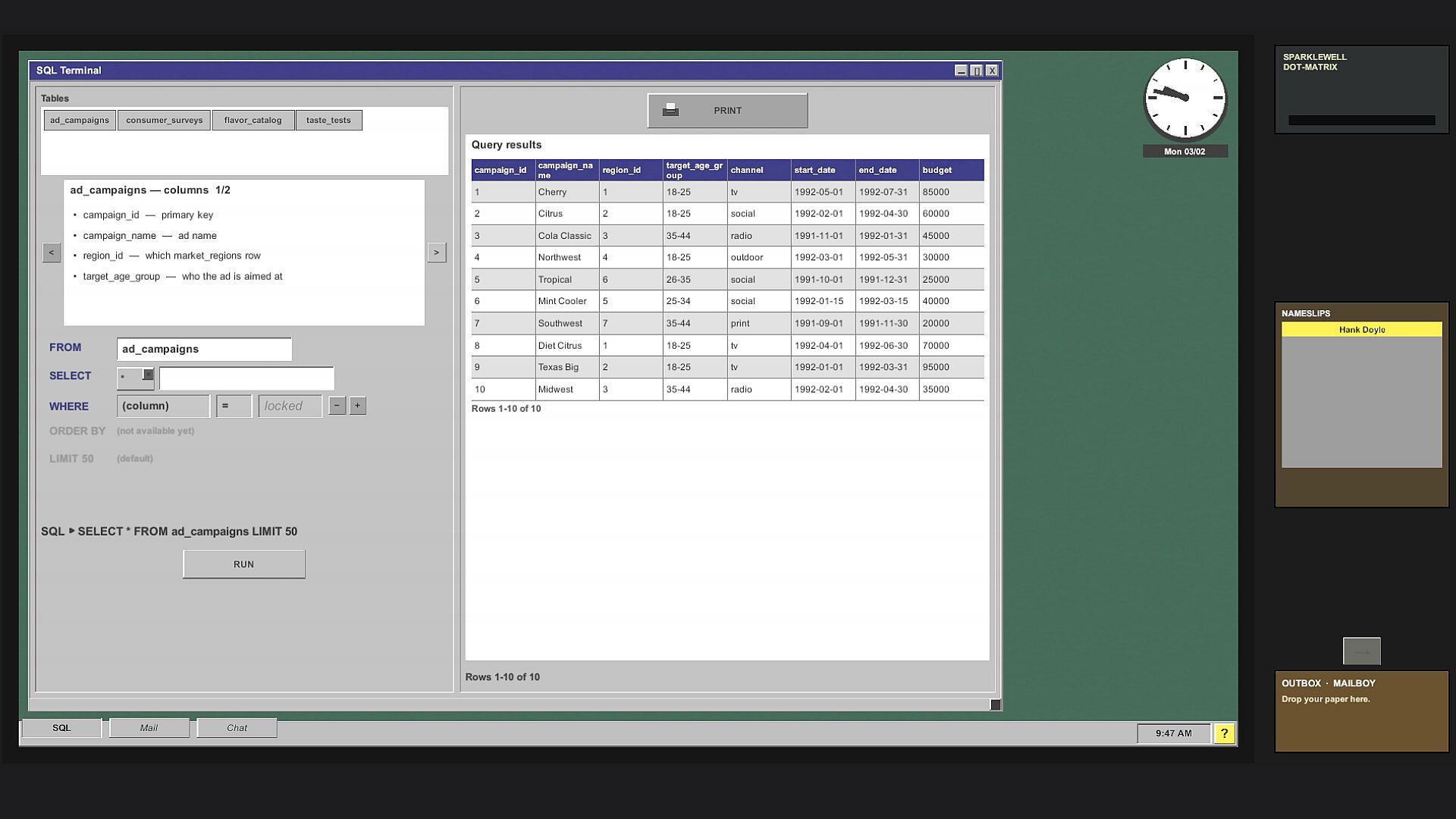
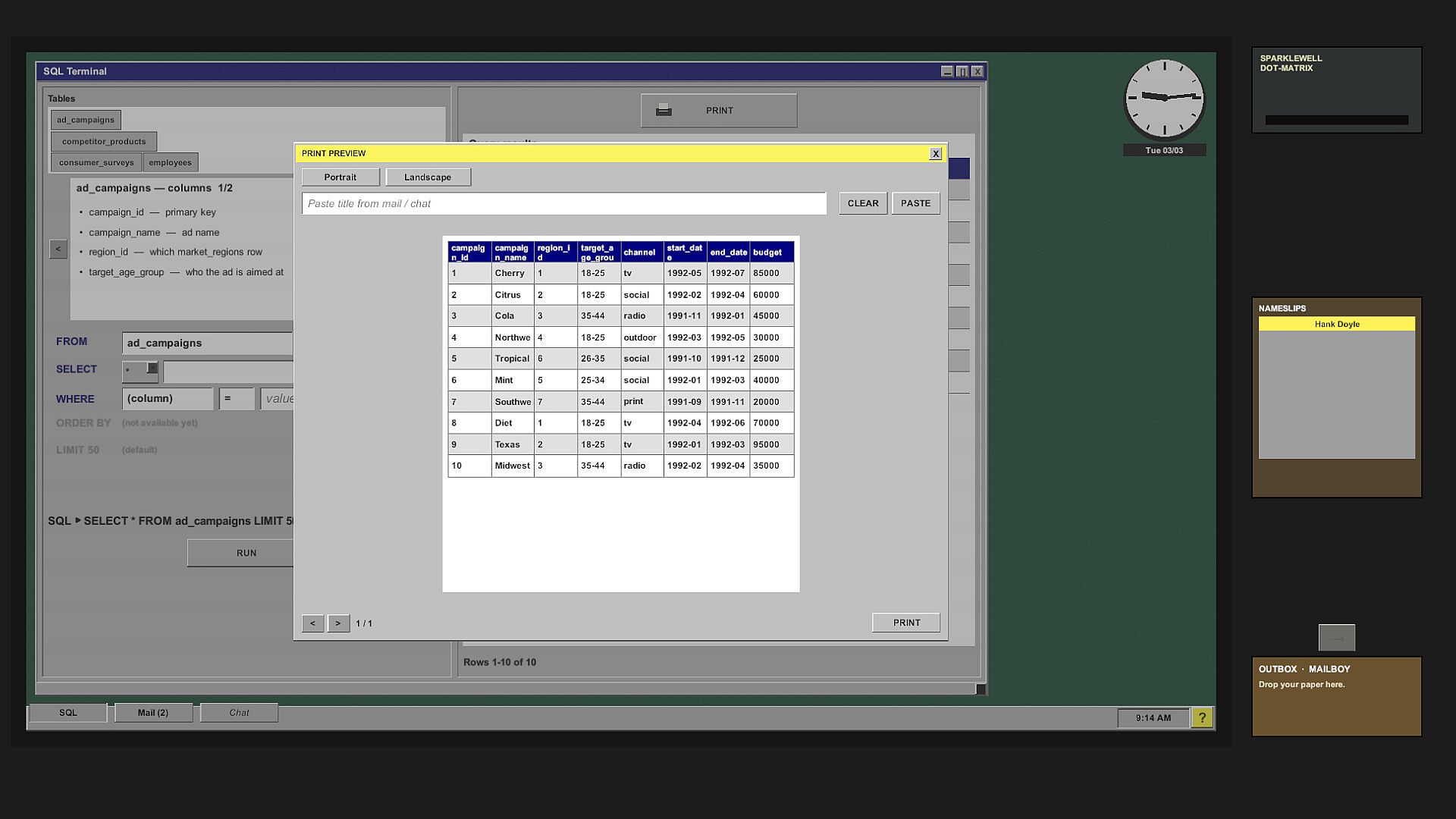
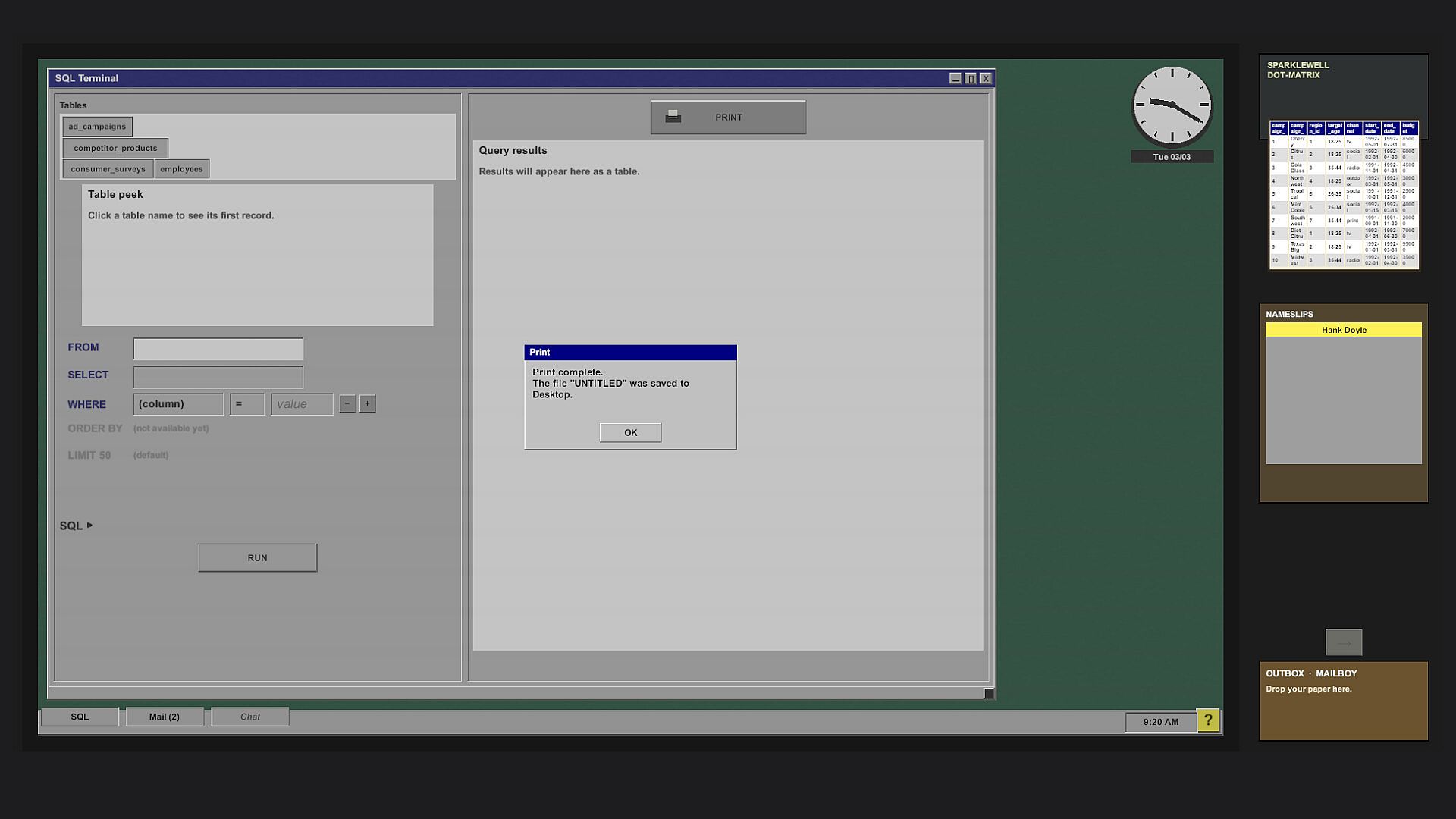
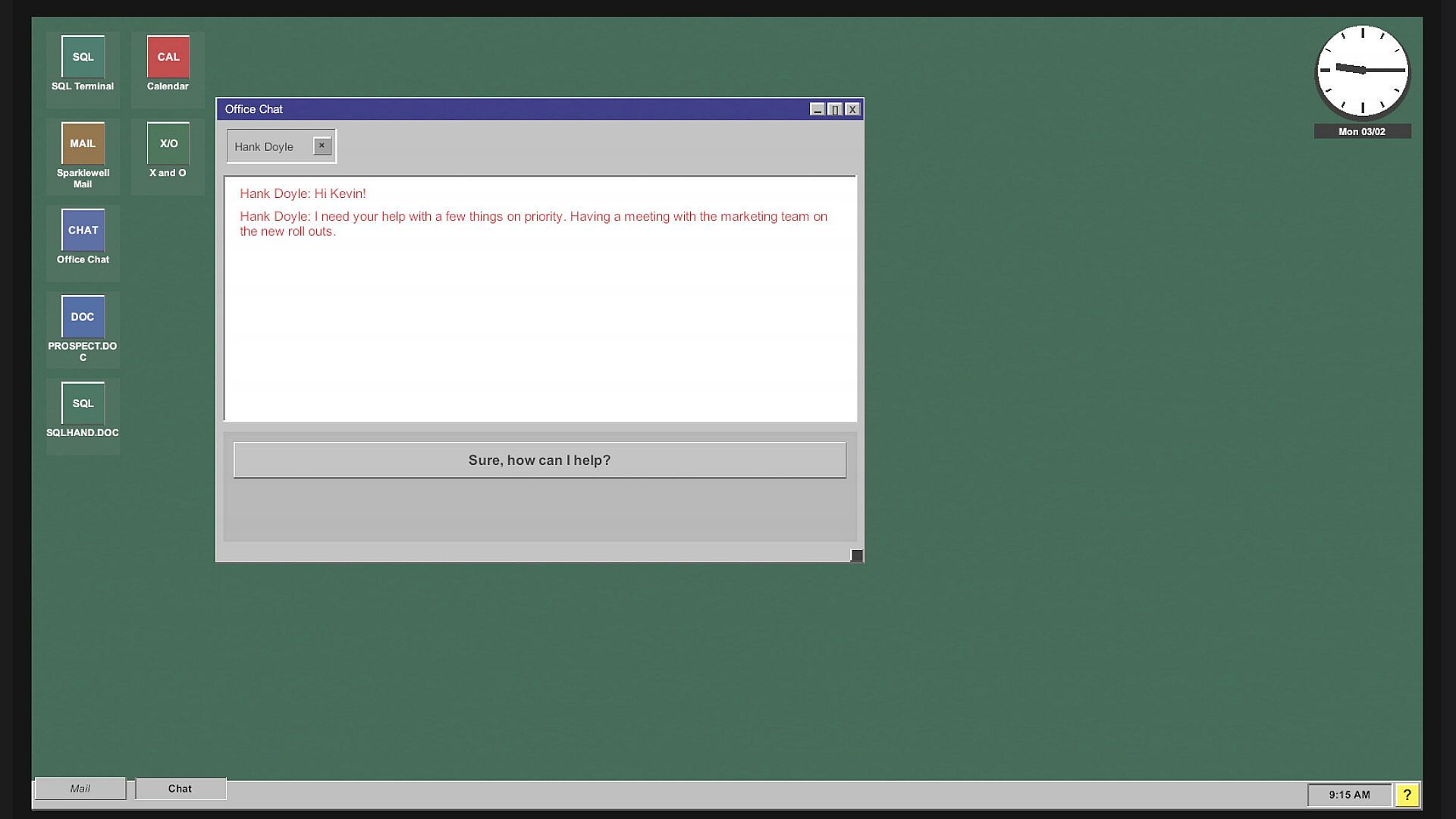
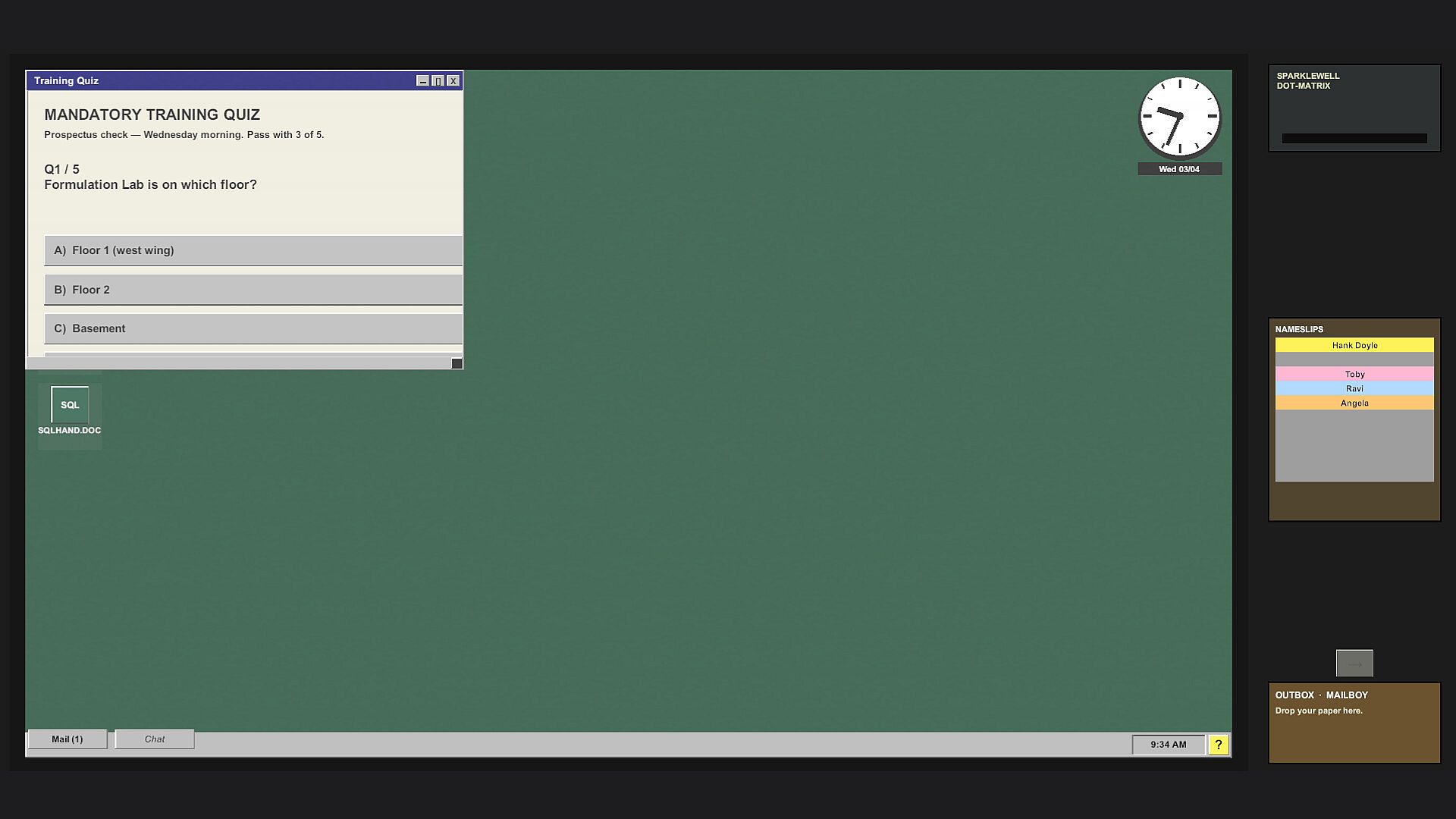
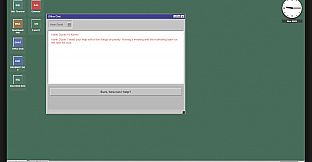
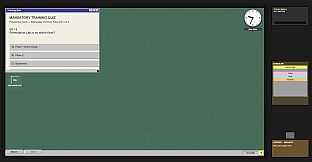
One Query After Another is a single-player indie game for PC that places players in the role of the first data analyst at a regional soft drink company during the 1990s. The experience combines practical SQL instruction with a narrative about office life, corporate secrets, and the challenges of early digital record-keeping. Players work under a demanding manager named Hank while handling daily queries that require digging through company tables for answers.
Gameplay
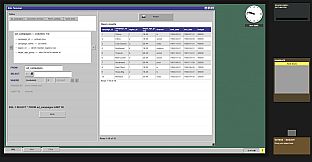
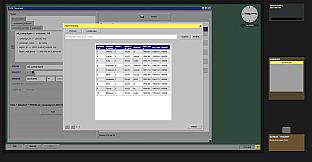
The core loop centers on completing tasks assigned by the manager. Each task involves writing SQL statements to retrieve or analyze data from the company's tables. Early assignments focus on basic comparisons between tables and simple data checks to build familiarity. As the story advances, requirements grow more demanding and introduce additional concepts through real work demands rather than separate tutorials.
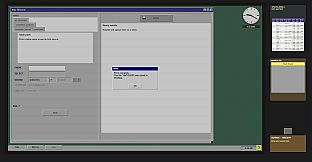
Progress happens through repeated use in context. Players apply SELECT statements to pull records, add conditions with WHERE clauses, combine information across tables using JOINs, organize results with GROUP BY, calculate summaries through aggregate functions, and handle nested logic with subqueries. Mistakes lead to feedback that points out issues, allowing refinement without derailing the workday simulation. The 1990s office atmosphere appears through terminal-style interfaces, memos, and interactions with various departments that each maintain their own records.
Game Modes
The game operates entirely in a single-player format centered on the main narrative progression. There are no separate competitive or cooperative modes. All activity occurs within the sequential daily tasks that advance both the SQL learning curve and the unfolding company story. Players move through the experience at their own pace, with each new assignment building directly on previous ones.
Story and Setting
The narrative unfolds at Copsi Beverage Co., a mid-sized soft drink firm navigating its transition to computers in the 1990s. Half the staff remains skeptical of the new systems while the other half barely notices the new hire. Players encounter a range of characters across departments, each contributing tables filled with operational details and occasional hints of larger issues within the organization. The setting emphasizes period details such as green-screen terminals and interoffice communication to reinforce the time period.
Success at the job keeps the player employed while also revealing connections between different records. The manager's expectations increase steadily, creating pressure that mirrors real workplace demands. This structure keeps the focus on practical application rather than abstract exercises.
Learning Experience
No prior programming knowledge is needed. The game introduces concepts gradually through the tasks themselves, starting with straightforward comparisons and moving toward complex multi-table investigations. Players learn by solving actual problems that the manager presents, which encourages experimentation and creative application of new tools as situations change.
The approach treats SQL as a workplace skill rather than a standalone subject. Features include a story-driven structure that reaches advanced query techniques, situations that require adapting learned commands to new contexts, and a cast of characters whose records tie into the central mysteries. The experience suits anyone curious about databases who prefers learning through applied work over traditional lessons.
Is It Worth Playing?
One Query After Another targets players interested in acquiring SQL skills through a focused, narrative-driven single-player experience on PC. The progressive task structure provides a clear path from basic queries to more involved investigations without requiring outside study. Those who enjoy puzzle-like problem solving combined with light story elements will find the office setting and character interactions engaging. Because the game remains in development with no released version yet, its value will depend on how well the final implementation delivers on the described progression and atmosphere. It offers a distinct alternative to conventional tutorials for anyone seeking practical database practice in an unconventional format.