

















Paradise Romance is a simulation game set on PC that places players in the role of an Asian youth participating in a cultural exchange program. The experience unfolds through first-person POV as the protagonist shares an apartment with five distinct young women after the program ends. Each character brings her own personality and background, from the quiet illustrator Xiaolu to the reserved tea ceremony apprentice Haruka, the sharp beauty influencer Soo-ji, the passionate dance student Susu, and the considerate Vietnamese international student Mai. Daily life involves ordinary moments that gradually reveal deeper emotions through subtle gestures such as a warm bowl of red bean soup or a handwritten note.
Gameplay
The core loop centers on responding to the girls during limited-time decision points that arise in everyday apartment interactions. Players choose how to react to offered feelings, whether through comfort, trust, or direct engagement, and these responses directly influence each character's affection level. Trust builds or erodes based on sincerity, leading to shifts in future scenes and relationship directions. Memory fragments appear in the form of sketches, lunchboxes, milk tea cups, clothing items, notes, and photographs. Collecting and interpreting these pieces helps uncover unspoken emotions without relying on overt declarations. The first-person perspective keeps the focus on personal perspective, making each choice feel immediate and consequential within the shared living space.
Game Modes
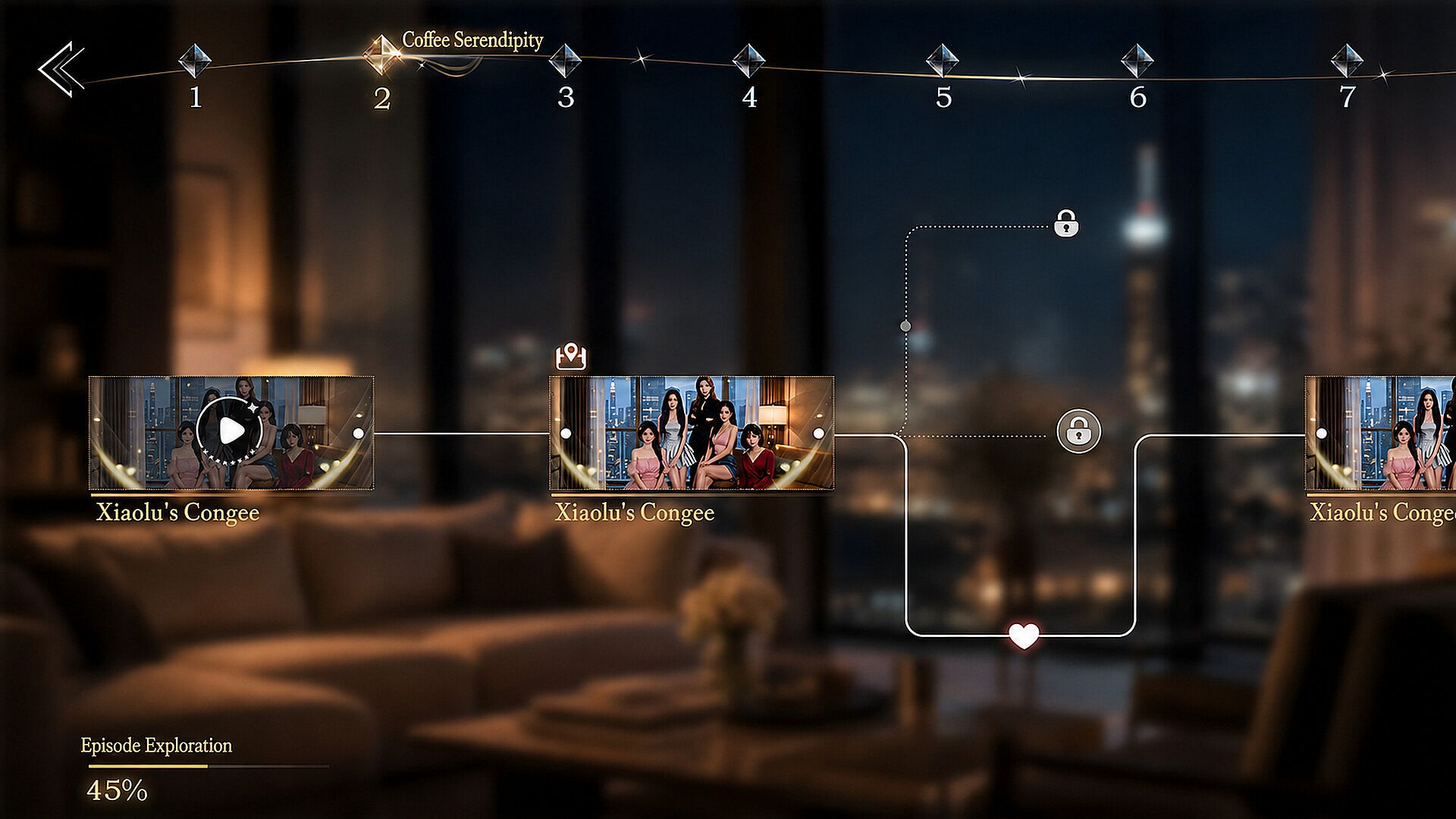
Progression follows five distinct romantic routes, one tied to each of the five characters. Choices steer the narrative toward a unique ending with a specific girl or toward paths marked by regret and quieter forms of companionship when hesitation or silence prevails. Replay value comes from exploring alternate routes to reveal additional character monologues, hidden clues, and previously inaccessible memories. The structure encourages multiple playthroughs to piece together the full picture of events in the apartment, with no single route exhausting all available details.
Character Routes and Relationships
Xiaolu expresses herself through her sketchbook, often hiding intentions behind drawings that hint at waiting for connection. Haruka maintains politeness rooted in her tea ceremony studies, revealing tenderness only through small actions like prepared meals or hesitant requests. Soo-ji masks vulnerability behind critical comments on appearance and style, seeking acceptance of her imperfections. Susu brings energy through dance and music but requires support for balancing personal ambitions with emotional needs. Mai offers quiet care through small comforts like milk tea while concealing her own concerns. Each route develops at its own pace, shaped by consistent attention to these individual traits rather than grand events.
Is It Worth Playing?
Paradise Romance suits players who enjoy choice-driven simulation experiences focused on emotional nuance and relationship building in a contained setting. The emphasis on ordinary moments turning meaningful through player input provides depth for those interested in exploring multiple outcomes across repeated sessions. Limited decision windows add tension without overwhelming complexity, and the five routes offer clear variety for completionists. Availability on PC makes it accessible for those seeking a focused single-player narrative centered on personal connections rather than action or competition. The game rewards sincere engagement with its characters and attention to subtle details scattered throughout the apartment life.