

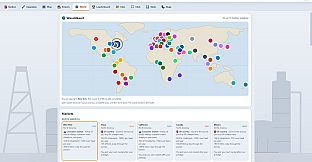
Petrol Empire is a free to play idle tycoon simulation and strategy game set on PC. Players build a fuel trading business starting from a single petrol station and expand backward through the entire supply chain to control oil fields.
Gameplay
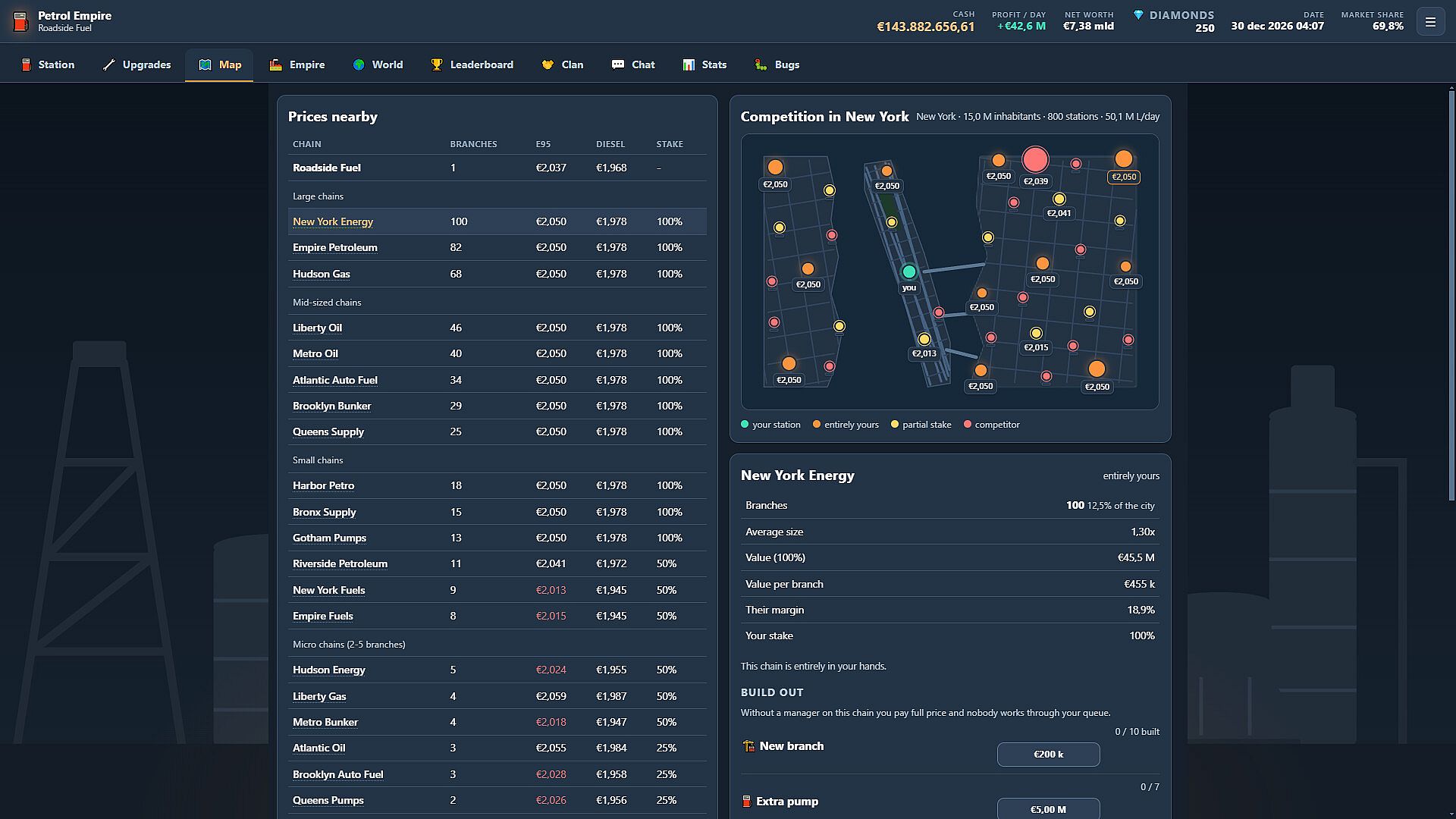
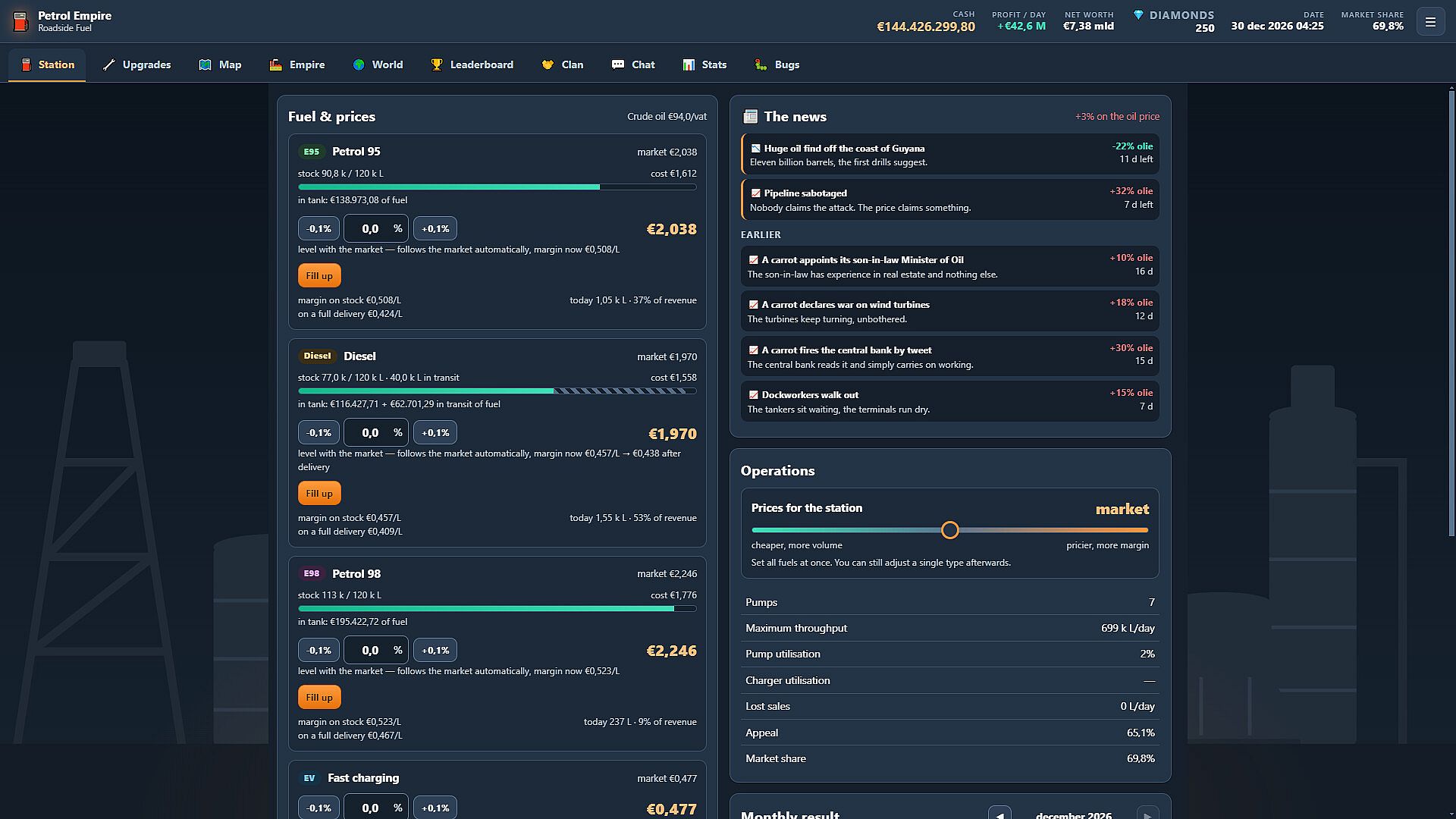
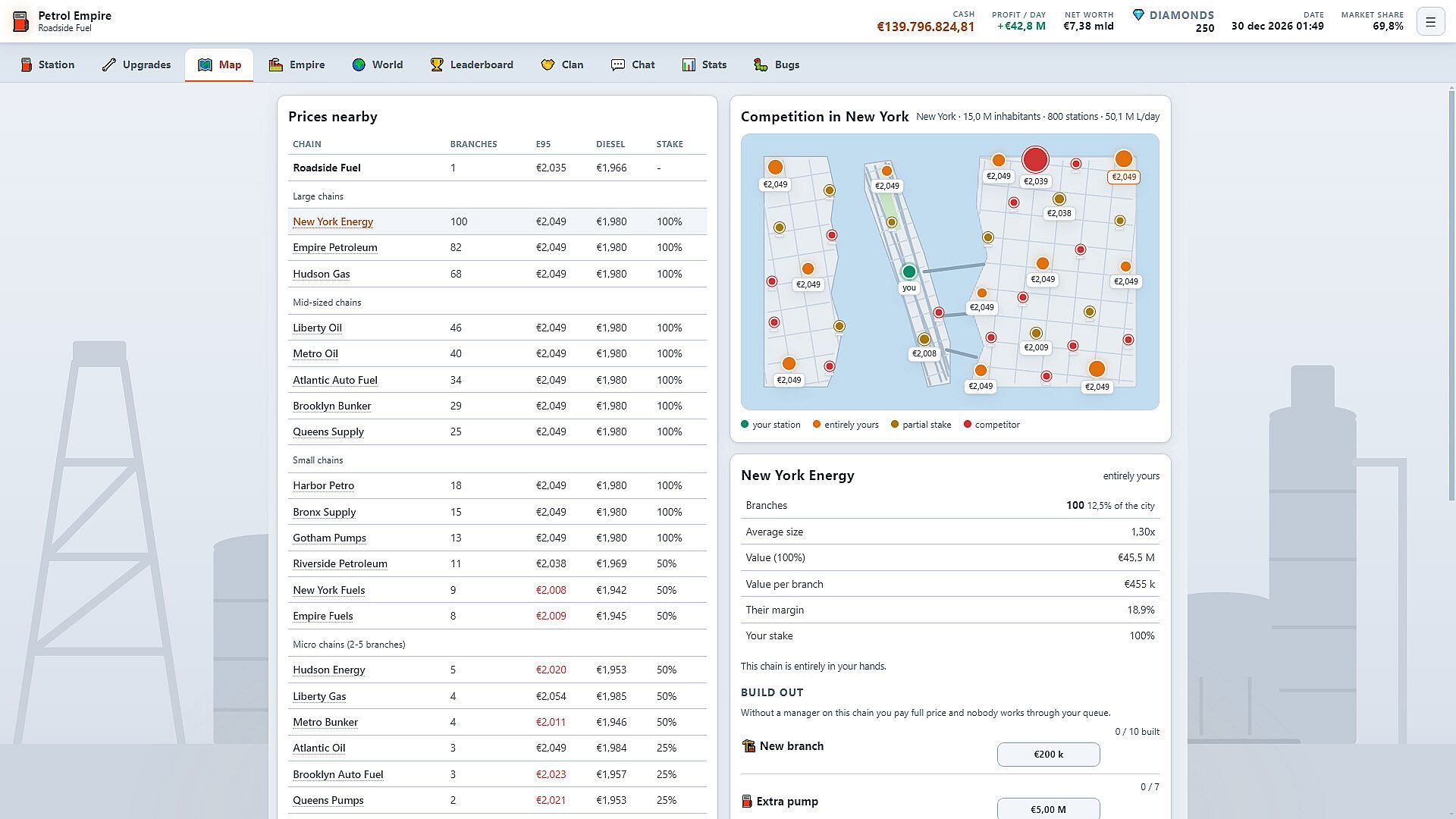
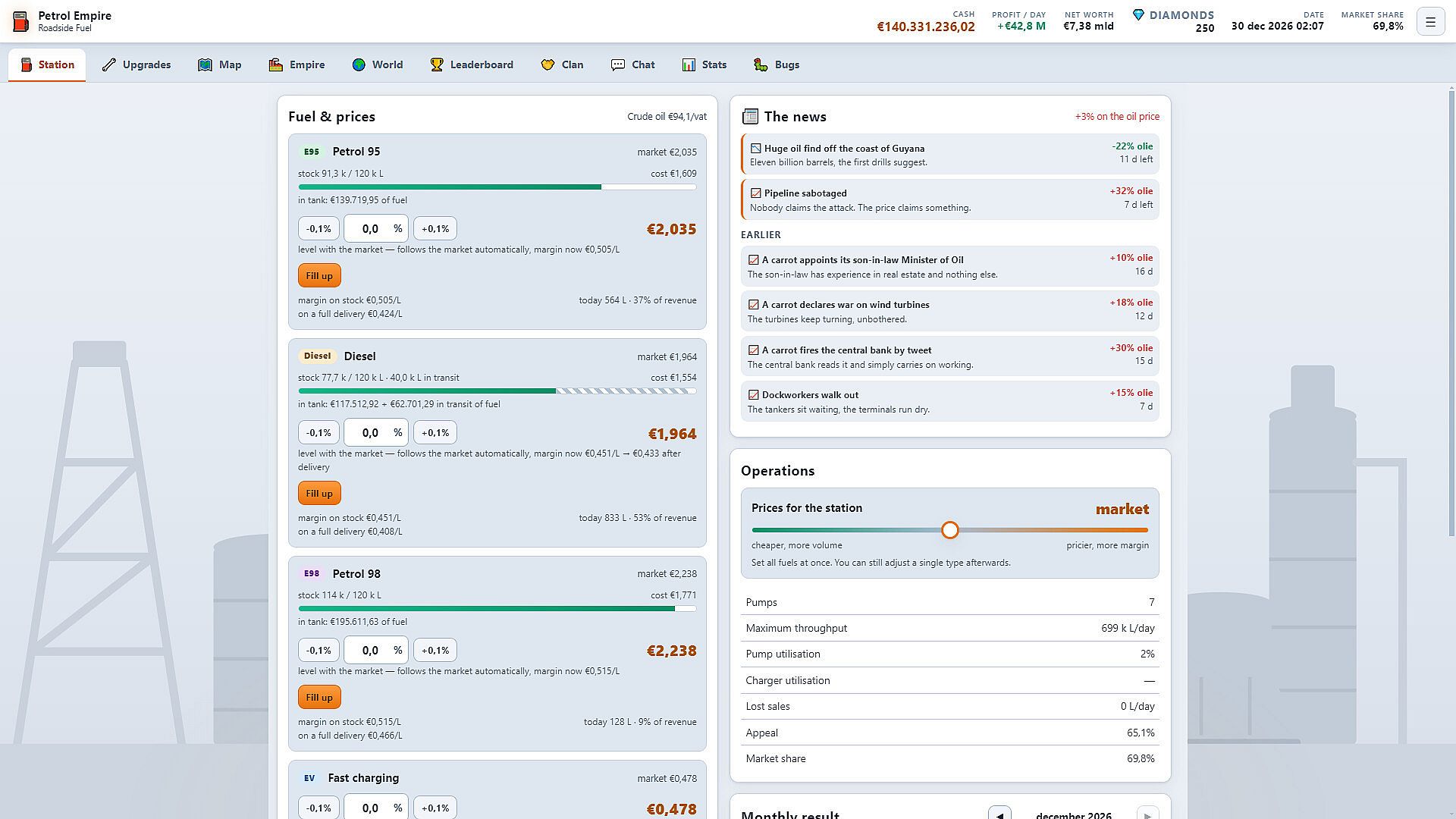
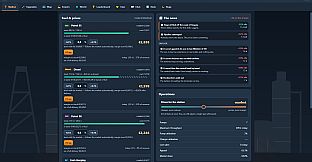
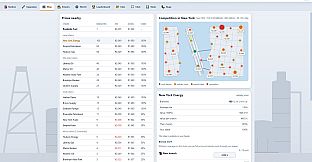
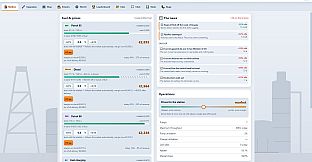
The core loop centers on pricing fuel at three decimal places while monitoring nearby competitors. Customers shift between stations based on price differences, with sharper reactions in areas offering more choices. Four fuel types serve distinct customer groups and margins: Euro 95, diesel, Euro 98, and fast charging for electric vehicles. Purchase prices fluctuate with an independent world market that introduces variability through external pressures.
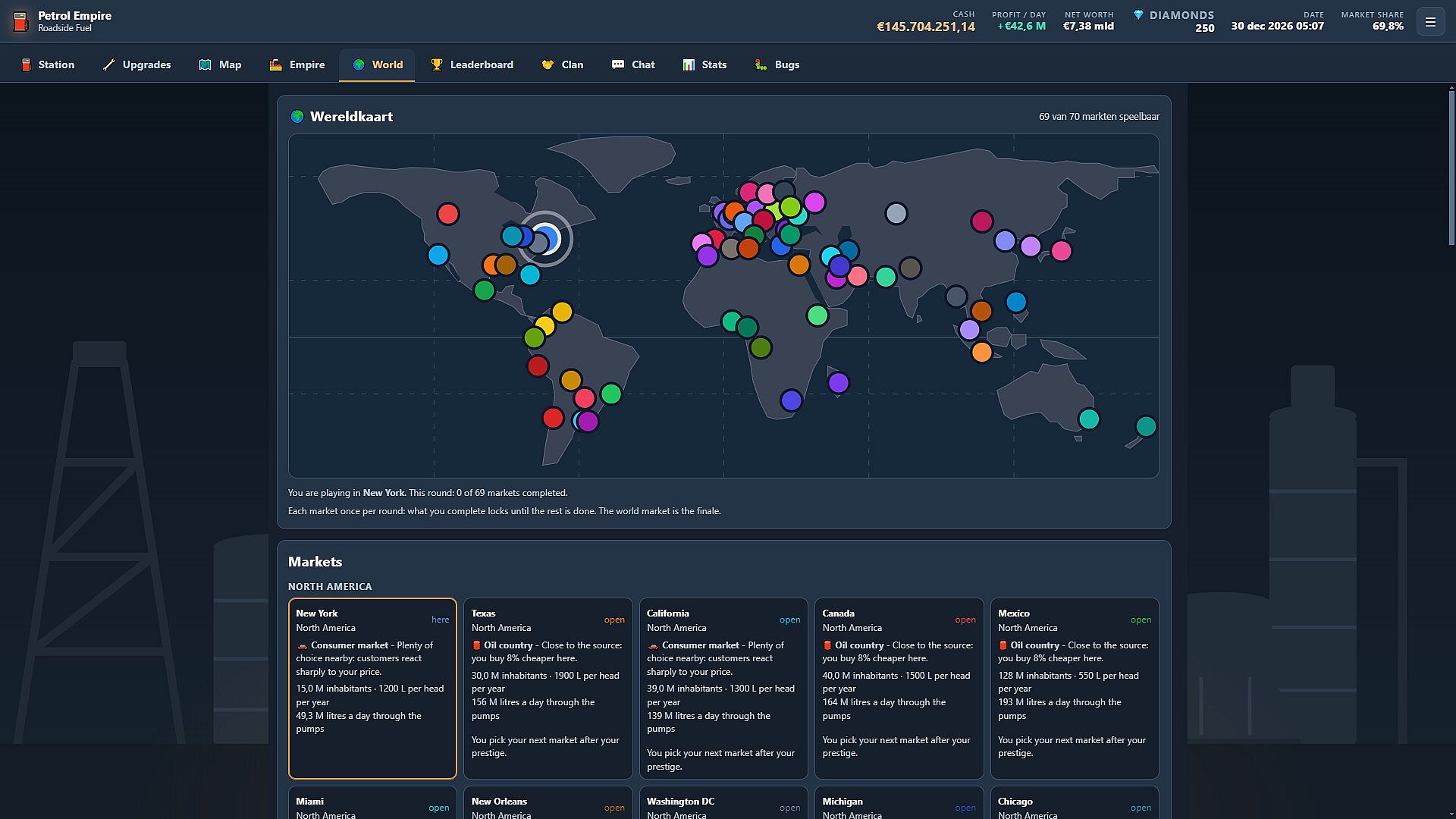
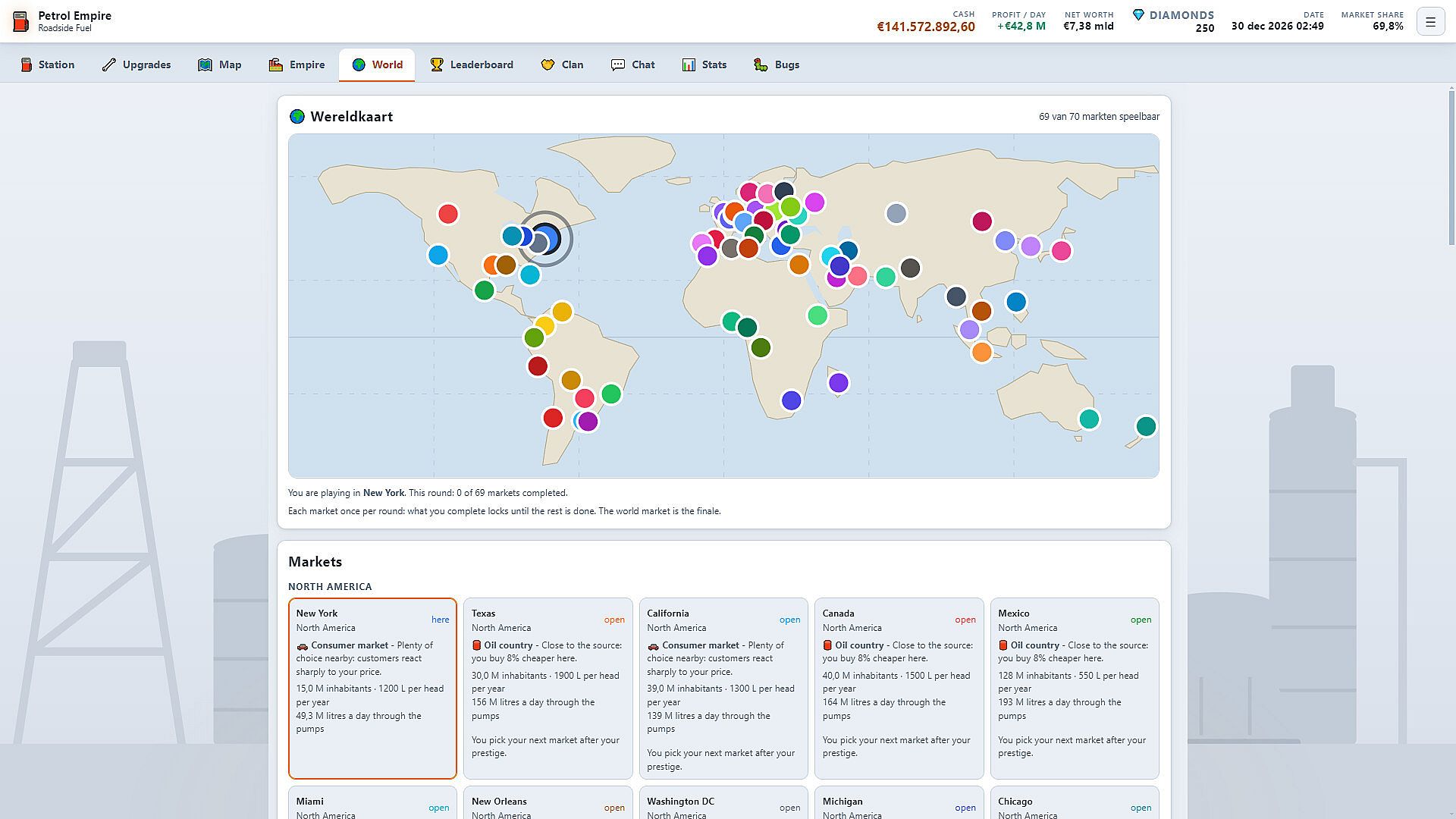
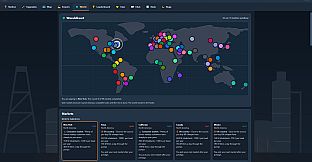
Progression moves across seventy distinct regions, each featuring unique layouts such as rivers, coastlines, bays, deltas, islands, or fully inland settings. Competitors in each area carry regional names and behaviors that alter strategy, from cheaper sourcing near production sites to price-sensitive retail zones. Success in one market unlocks the next only after completing the full set, with the world market serving as the final challenge.
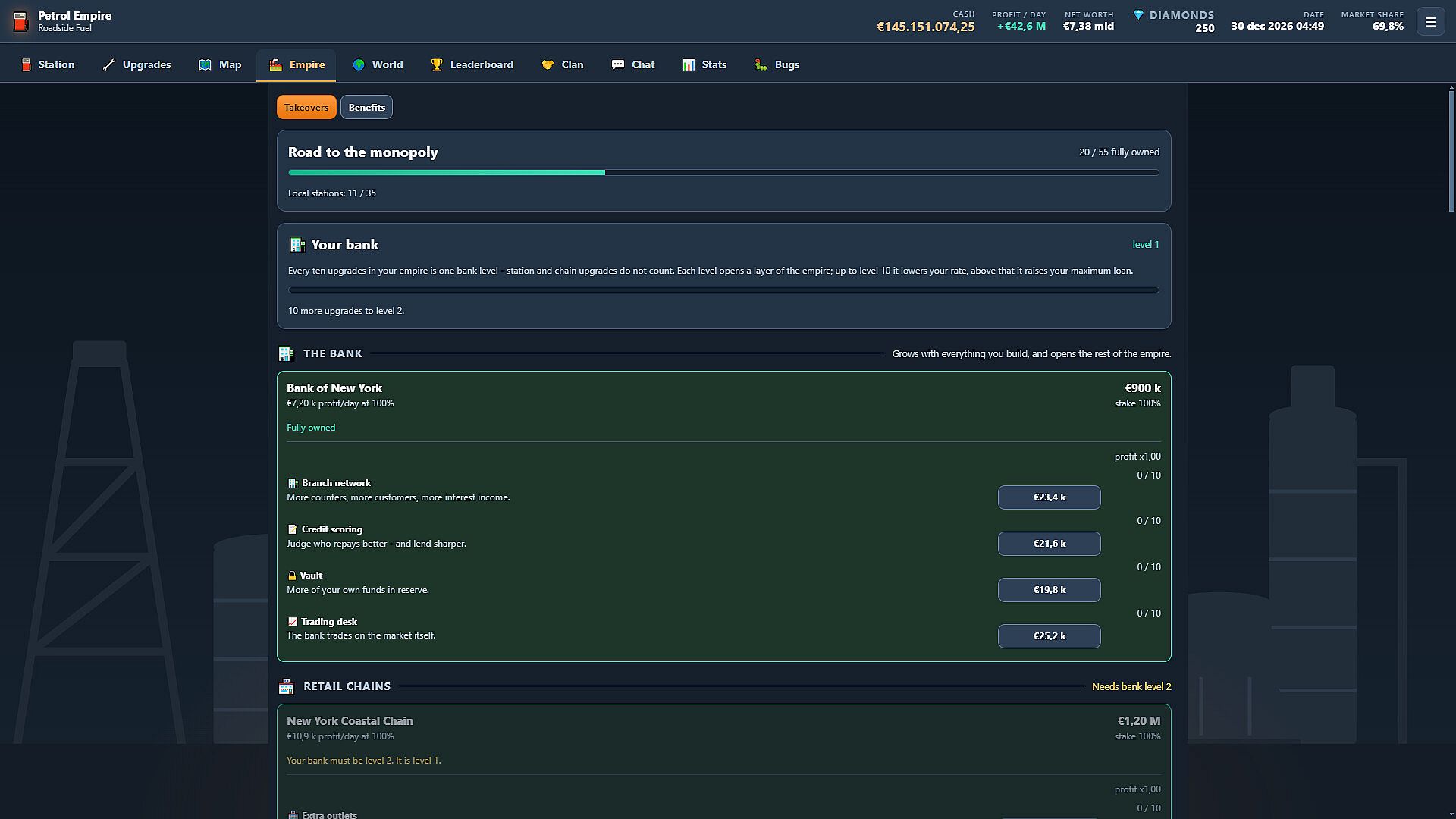
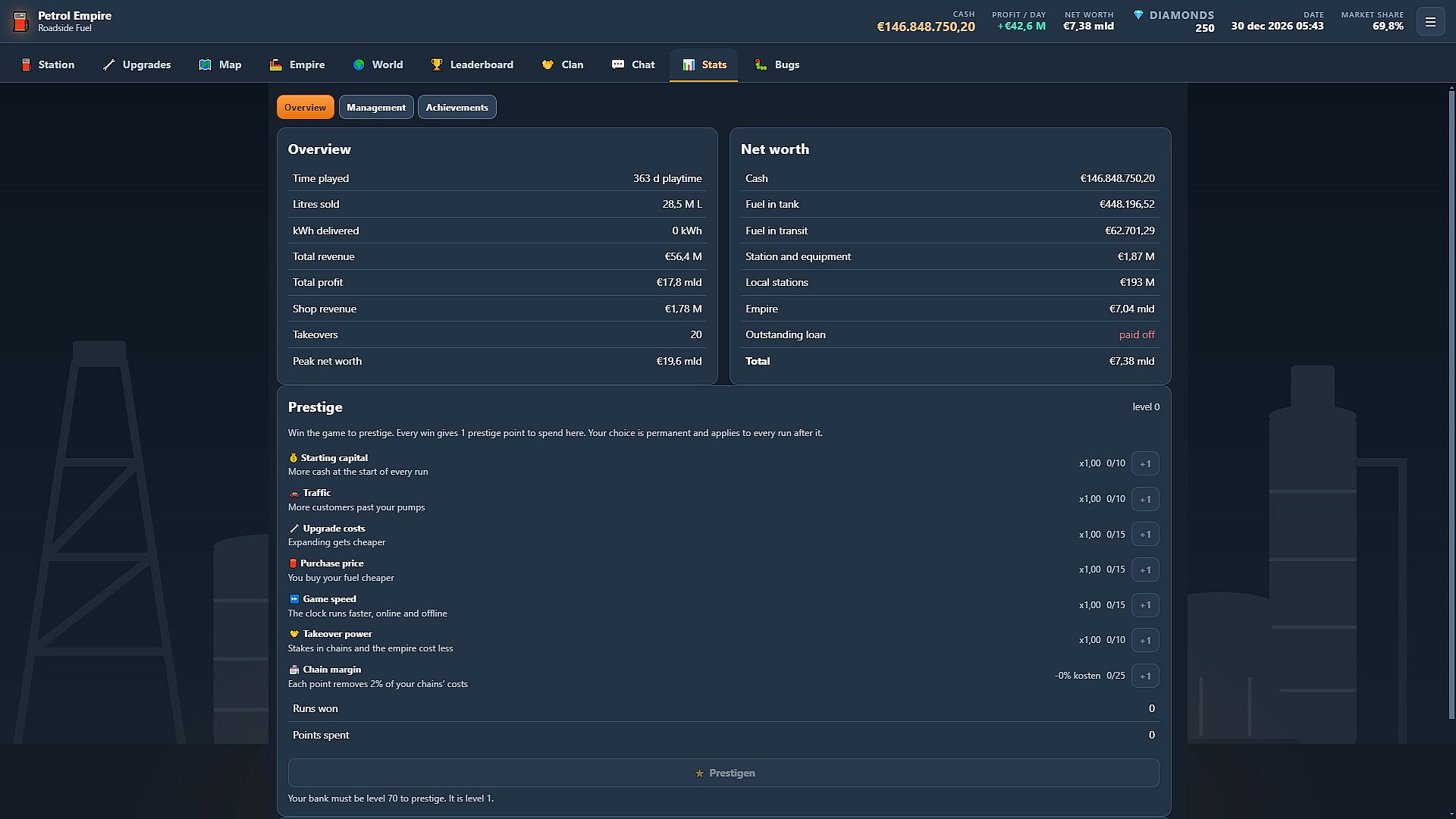
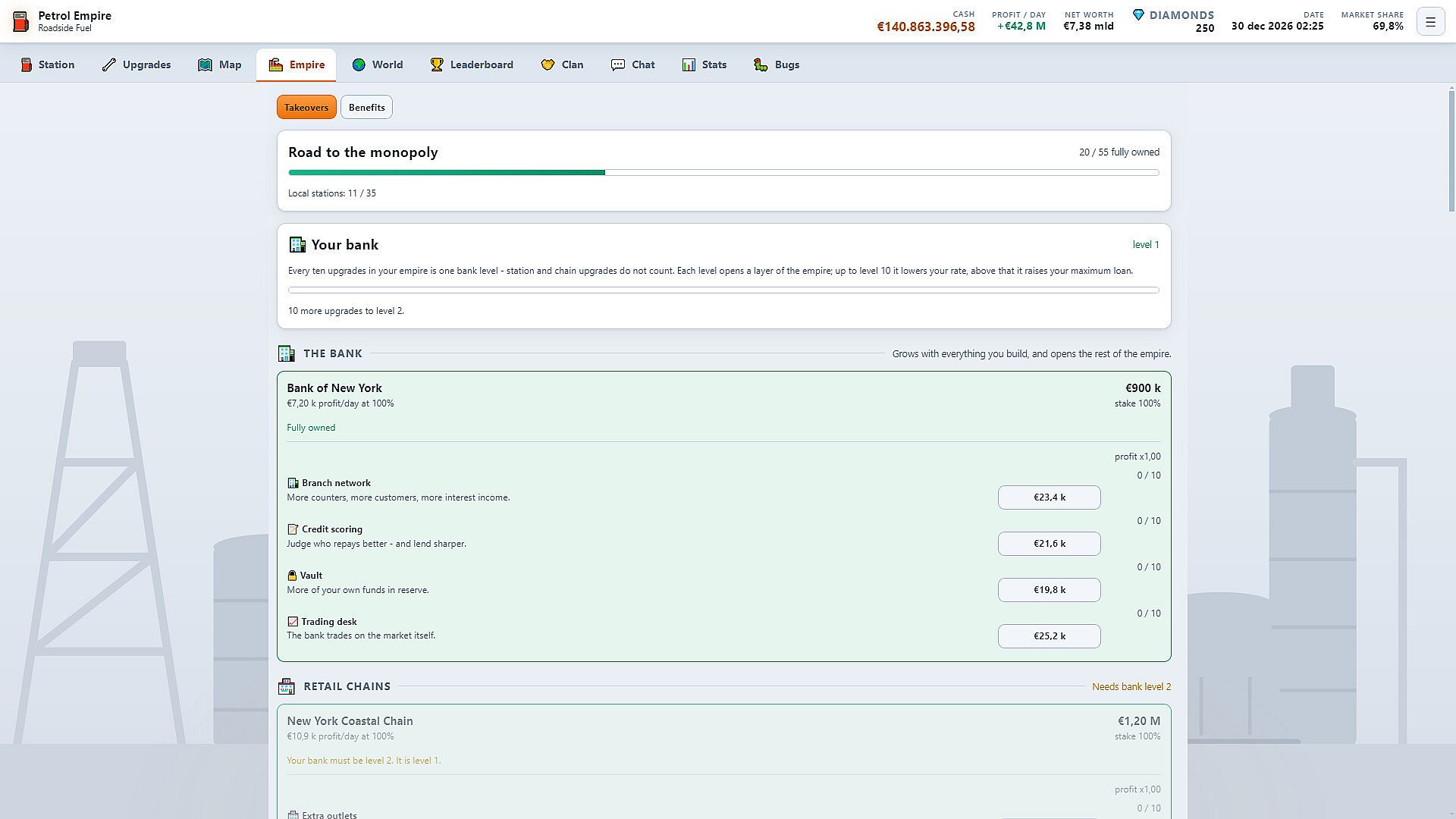
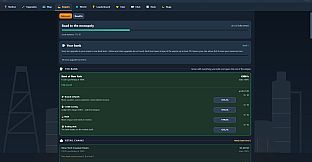
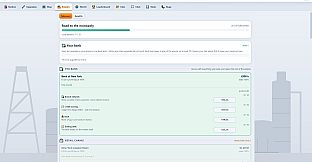
Empire growth spans six layers and twenty businesses. The path runs from an initial bank purchase through retail chains, logistics fleets and pipelines, refining operations, upstream drilling including offshore and shale sites, and downstream activities like petrochemicals, aviation fuel, bunkering, and trading. Each business offers targeted upgrades that increase overall bank level, opening further layers at milestones such as level seventy.
Idle mechanics allow stations and chains to generate revenue without constant input. Managers handle daily operations, while hiring a CEO, CFO, and COO enables fully automated upgrades, interest management, and credit handling. Up to fifty six managers operate across all regions played.
Game Modes
The primary experience follows a single player campaign of market conquest and empire layering. Each region presents a self contained challenge with its own map and competitor set, encouraging repeated playthroughs as knowledge from prior markets carries forward.
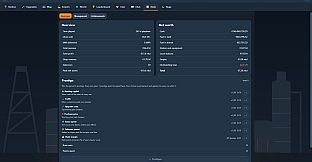
Social features integrate directly into the core loop. Leaderboards track prestige, net worth, litres sold, and world points. Clans provide chat and weekly tournaments, while friends, private messages, and a world chat support cross language communication. One hundred and thirty achievements reward specific milestones in pricing, expansion, and management.
Cloud saves tied to a single account enable seamless shifts between PC, mobile, and browser sessions. The game supports thirty one languages and thirty eight currencies, with progression and purchases preserved across platforms.
Progression and Management Systems
World events number twenty six and affect oil prices through decisions like OPEC actions, sanctions, or weather disruptions. Local incidents include eleven types such as tank leaks, power cuts, roadworks, and strikes. Maintenance choices balance revenue loss against the risk of pump downtime.
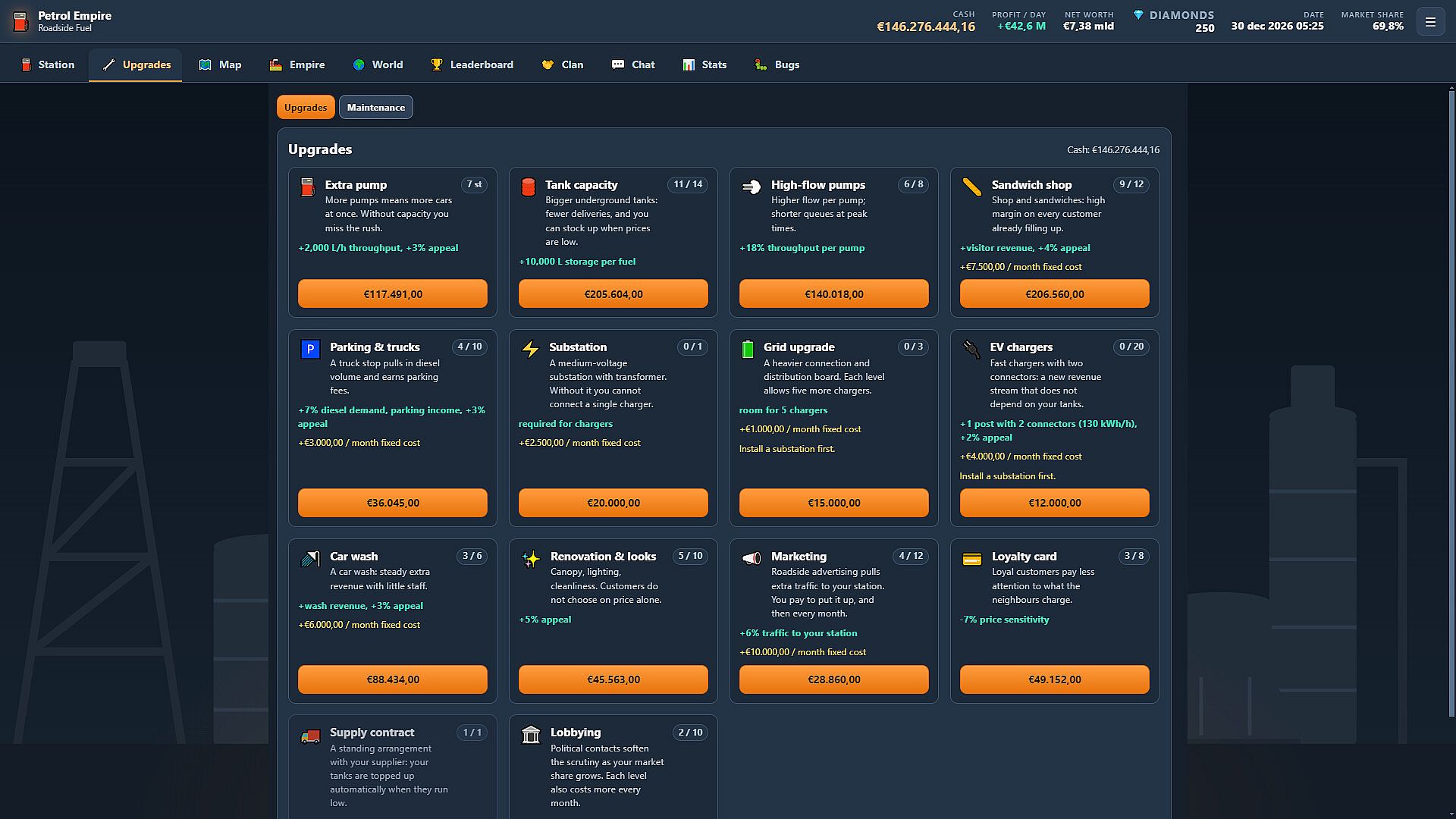
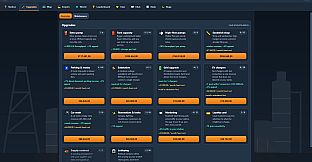
Fourteen upgrades apply to the initial station, with twelve additional options per acquired chain. Managers and executives automate routine tasks, freeing focus for strategic pricing and expansion decisions. The system rewards careful observation of market reactions and supply chain timing.
Is It Worth Playing?
Petrol Empire suits players who enjoy idle tycoon simulations with deep economic layers and incremental empire building. The price war mechanics and supply chain reversal create ongoing decision points without requiring constant attention. Social elements add competition through leaderboards and clans for those seeking community interaction.
As a free to play title with cloud saves and broad language support, it lowers barriers for casual and dedicated strategy fans alike. The upcoming release means early players can shape the experience through feedback on the core systems of pricing, expansion, and automation. Those drawn to simulation games centered on resource management and long term progression will find a focused match in its structure.