




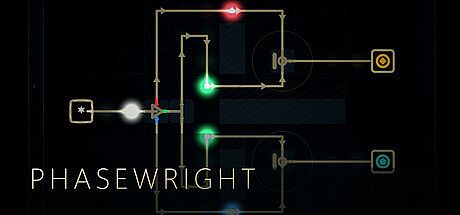


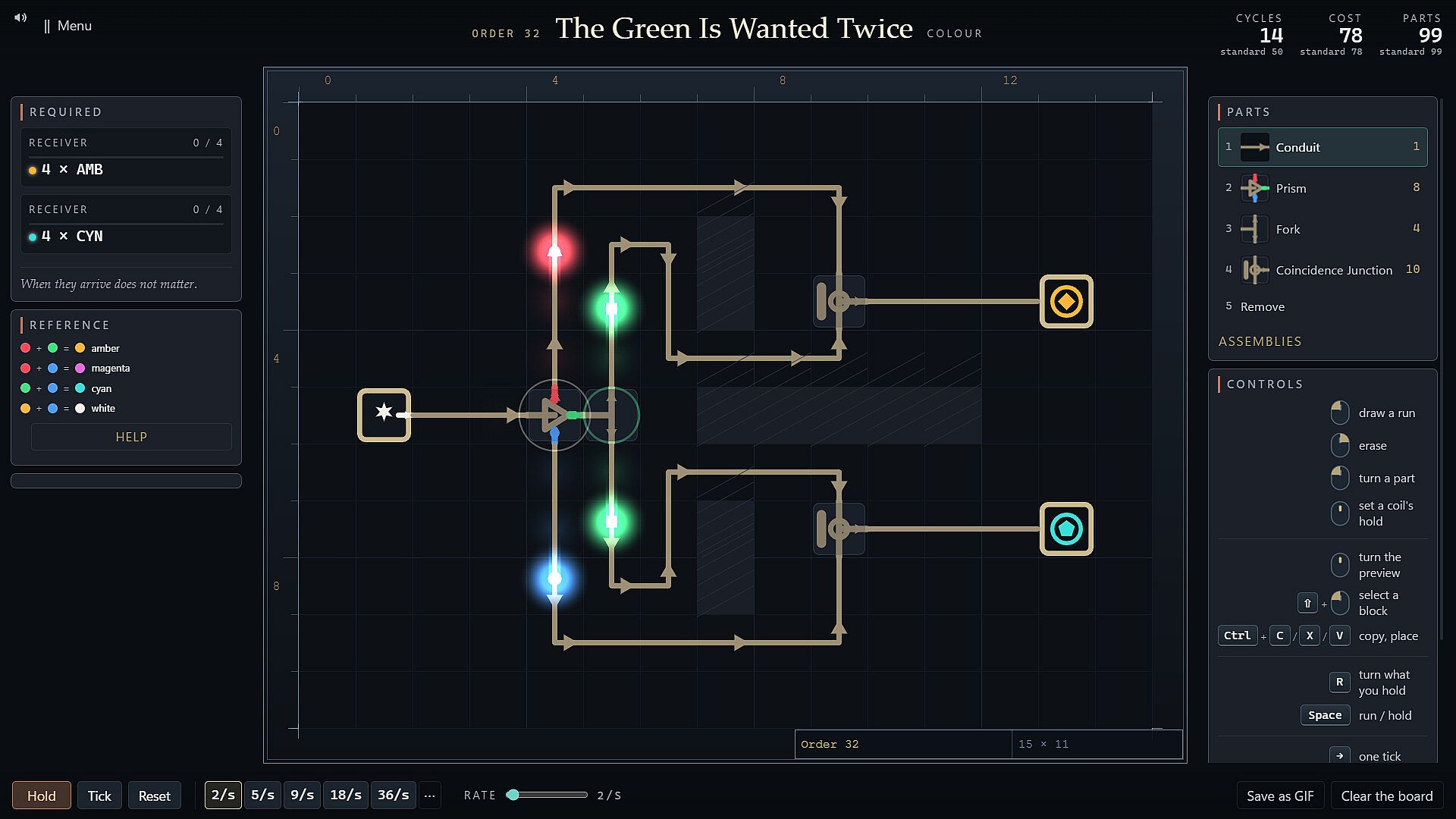


Phasewright is a free to play strategy and simulation game for PC that centers on building and optimizing pulse driven machines. Pulses travel exactly one cell per tick, which creates strict timing constraints that shape every design choice. The core loop involves laying out conduits and assembling components to route signals efficiently across grids of varying complexity.
Gameplay
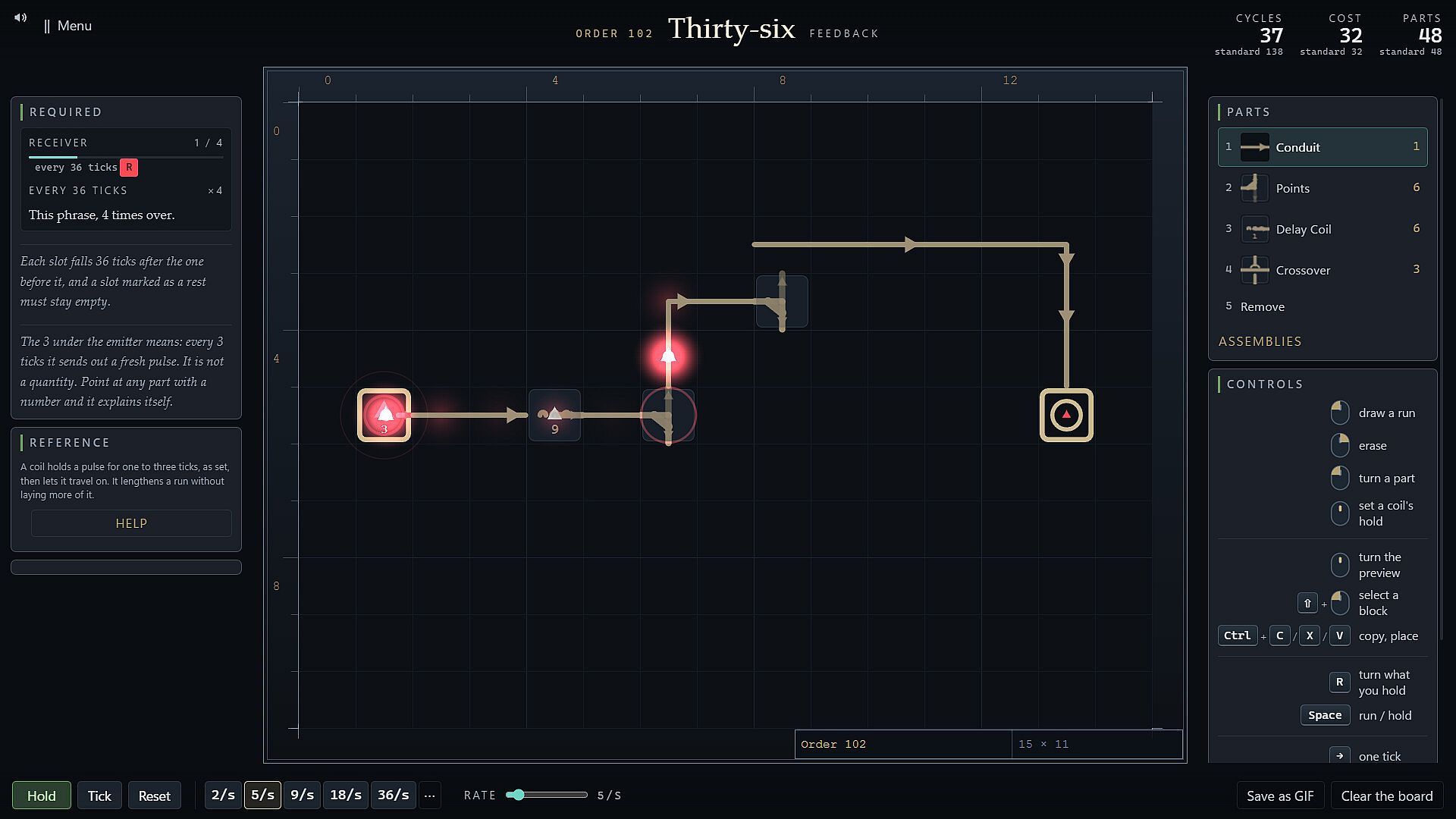
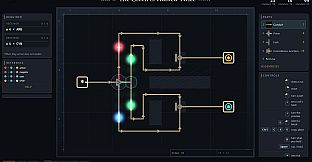
The fundamental rule limits pulse speed to one cell per tick, so longer paths or detours introduce measurable delays. Players draw conduits as straight lines and incorporate functional parts such as forks for splitting signals, coils for storage, prisms for redirection, and switches for conditional routing. These elements combine into larger structures where timing, resource cost, and cell usage must align.
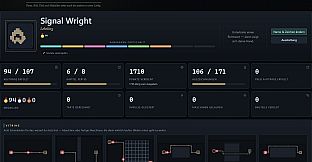
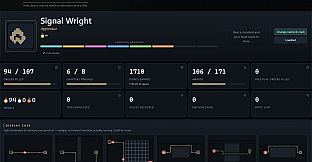
Optimization forms the main challenge. Three metrics track performance on every build: total ticks required for completion, overall construction cost, and total cells occupied. Designs often improve in one area while worsening another, forcing repeated refinement. Rings maintain independent timing cycles once activated, allowing persistent signal patterns that continue until interrupted.
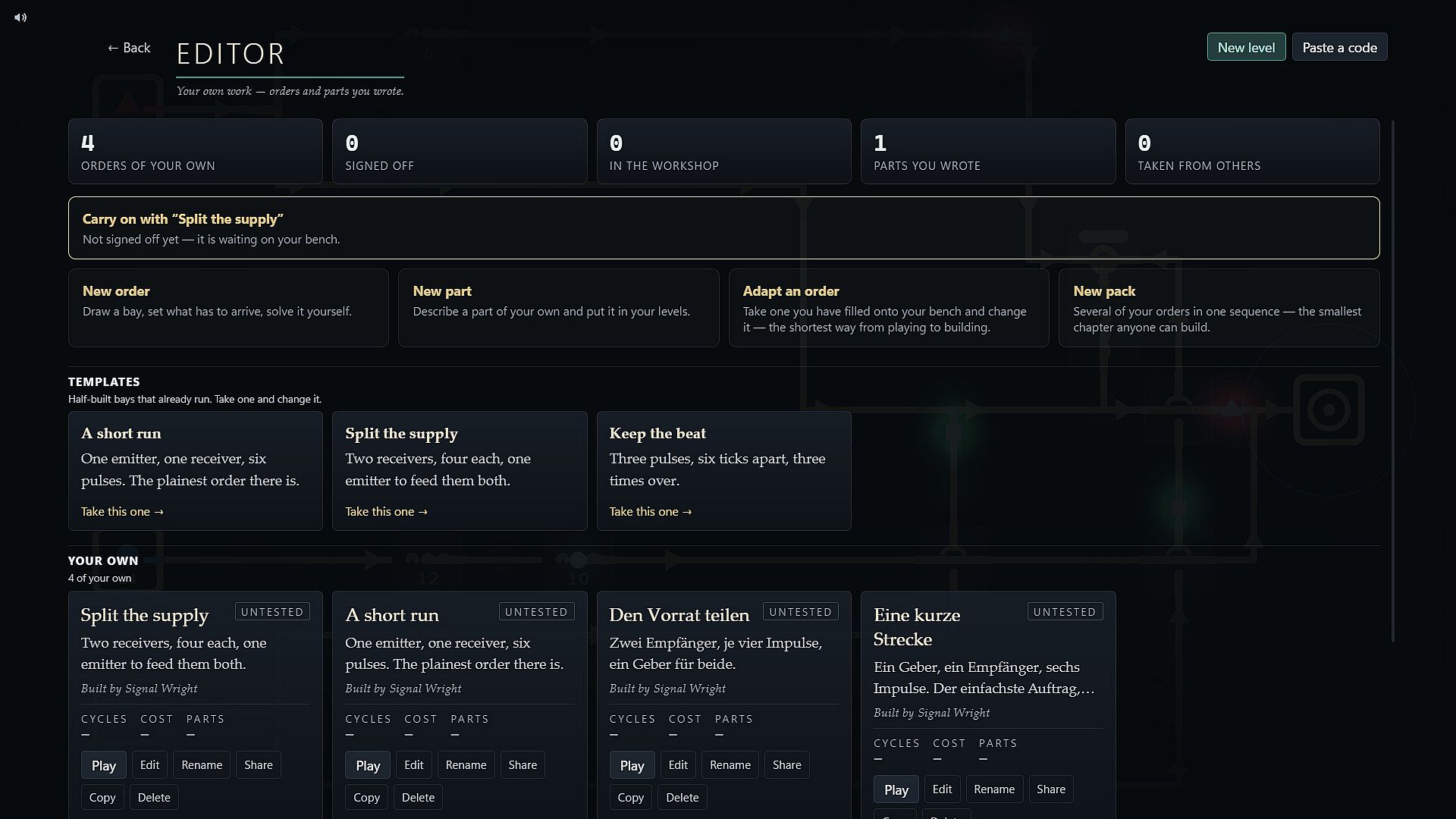
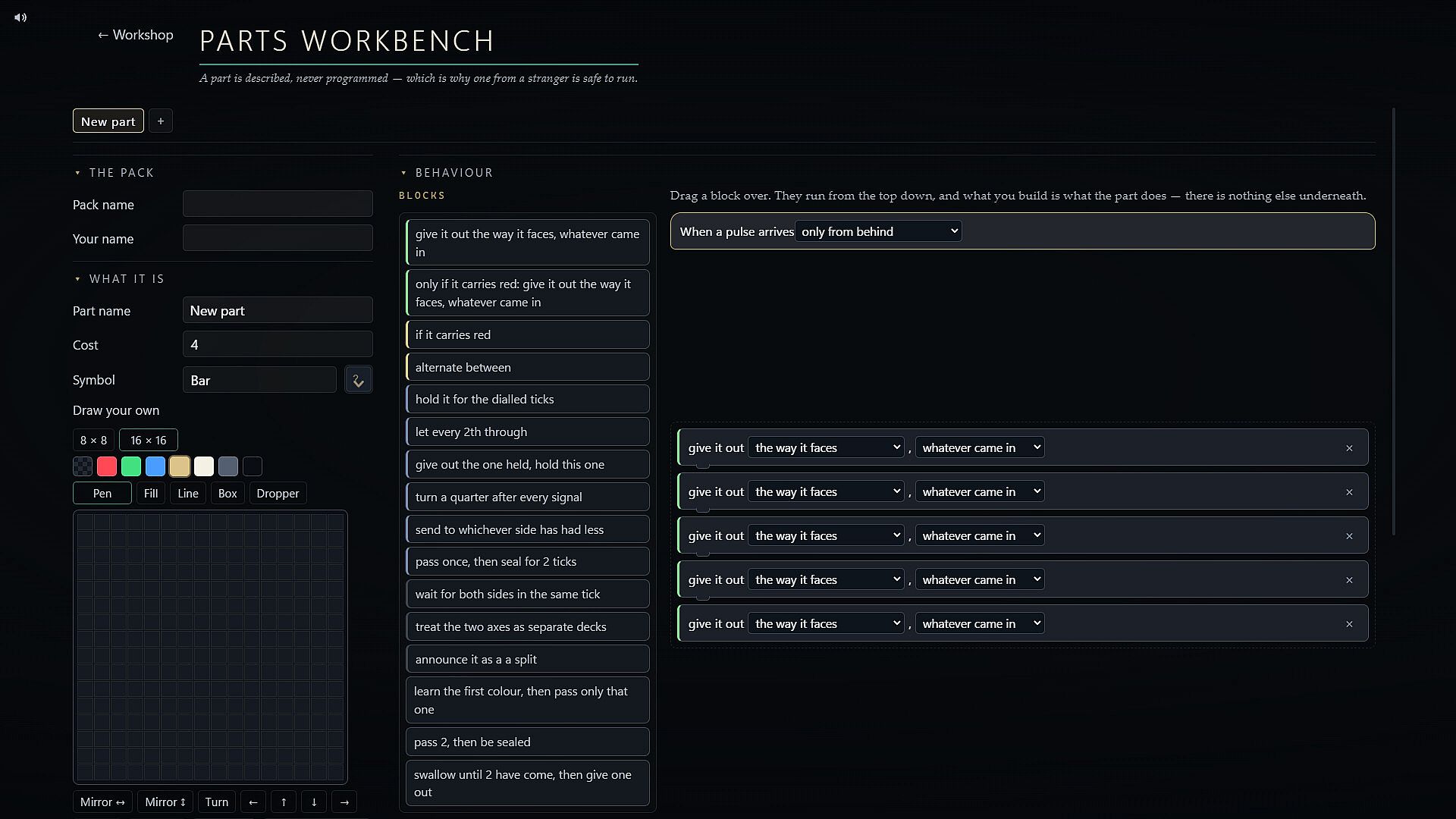
Custom creation extends the system further. Players design original parts, construct new levels, and assemble full chapters that can be shared with others. This user driven content sits alongside the official campaign without requiring external tools.
Game Modes
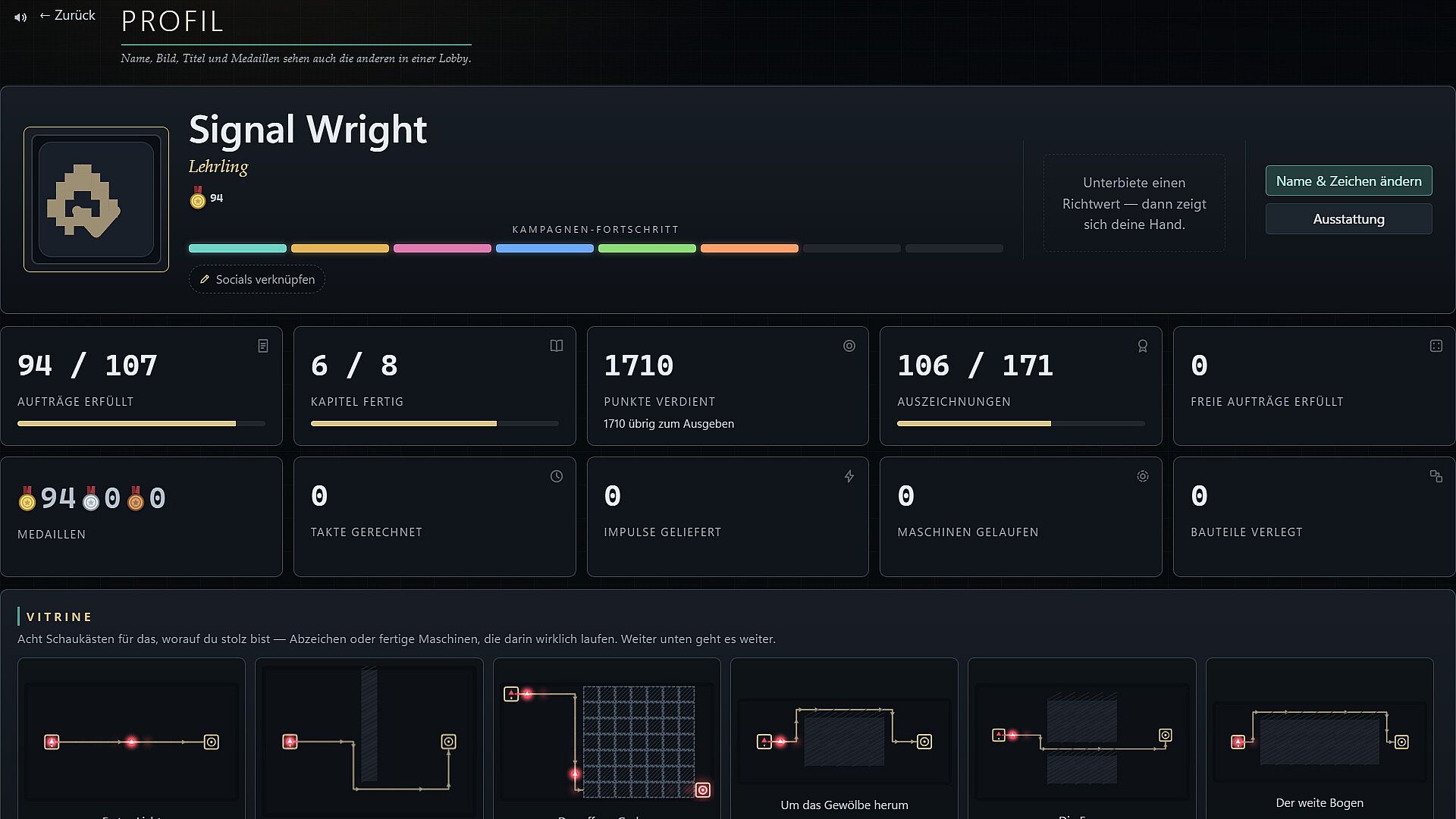
The campaign delivers more than 99 levels spread across eight chapters. Each chapter introduces new constraints and part combinations while building on the pulse timing foundation. Progression emphasizes mastery of signal routing and efficiency trade offs.
Free play offers unlimited access to the editor and grid for open ended experimentation. A daily challenge provides one curated puzzle available to all players each day. Co op and duel modes place two participants on the identical board, where one player might focus on construction while the other manages timing or interference.
These modes support both solitary puzzle solving and direct competition or collaboration through the built in multiplayer features.
Level Design and Progression
Official levels scale in complexity across the eight chapters. Early stages focus on basic conduit layouts and single pulse paths. Later chapters incorporate multiple simultaneous signals, timing rings, and dense component interactions that demand precise planning. The fixed pulse speed ensures that spatial decisions carry direct temporal consequences.
Player created content expands variety beyond the core campaign. Shared levels and chapters introduce fresh mechanics and themes while preserving the same underlying ruleset. This system encourages experimentation with custom parts that alter signal behavior in novel ways.
Is It Worth Playing?
Phasewright suits players who enjoy precise optimization puzzles and grid based construction. The free to play model removes any purchase barrier, and the daily challenge plus endless free play provide ongoing reasons to return. Co op and duel options add social layers for those who prefer shared problem solving or head to head timing contests.
The emphasis on measurable trade offs between ticks, cost, and cells rewards iterative improvement and creative routing solutions. Because the game was developed with AI assistance, the entire experience remains accessible without cost. Those drawn to strategy simulations that reward careful observation of timing and spatial efficiency will find consistent depth in both the campaign and user generated content.











