









Photoncytosis is an indie casual simulation game for PC in which a single cell evolves into a complex organism that inhabits and interacts with the player's desktop environment. The experience centers on light absorption, energy management, and adaptive growth shaped by screen colors and user activity.
Gameplay
The core loop begins with one cell that expands across the desktop as it seeks bright pixels for energy. Each cell maintains its own reserve that drains over time, with energy transferring through living connections to neighboring cells. Red light promotes activity and movement, green supports biomass and growth, blue aids perception, and white light delivers a balanced mix. The organism adapts its development based on the colors it encounters while running alongside normal computer use.
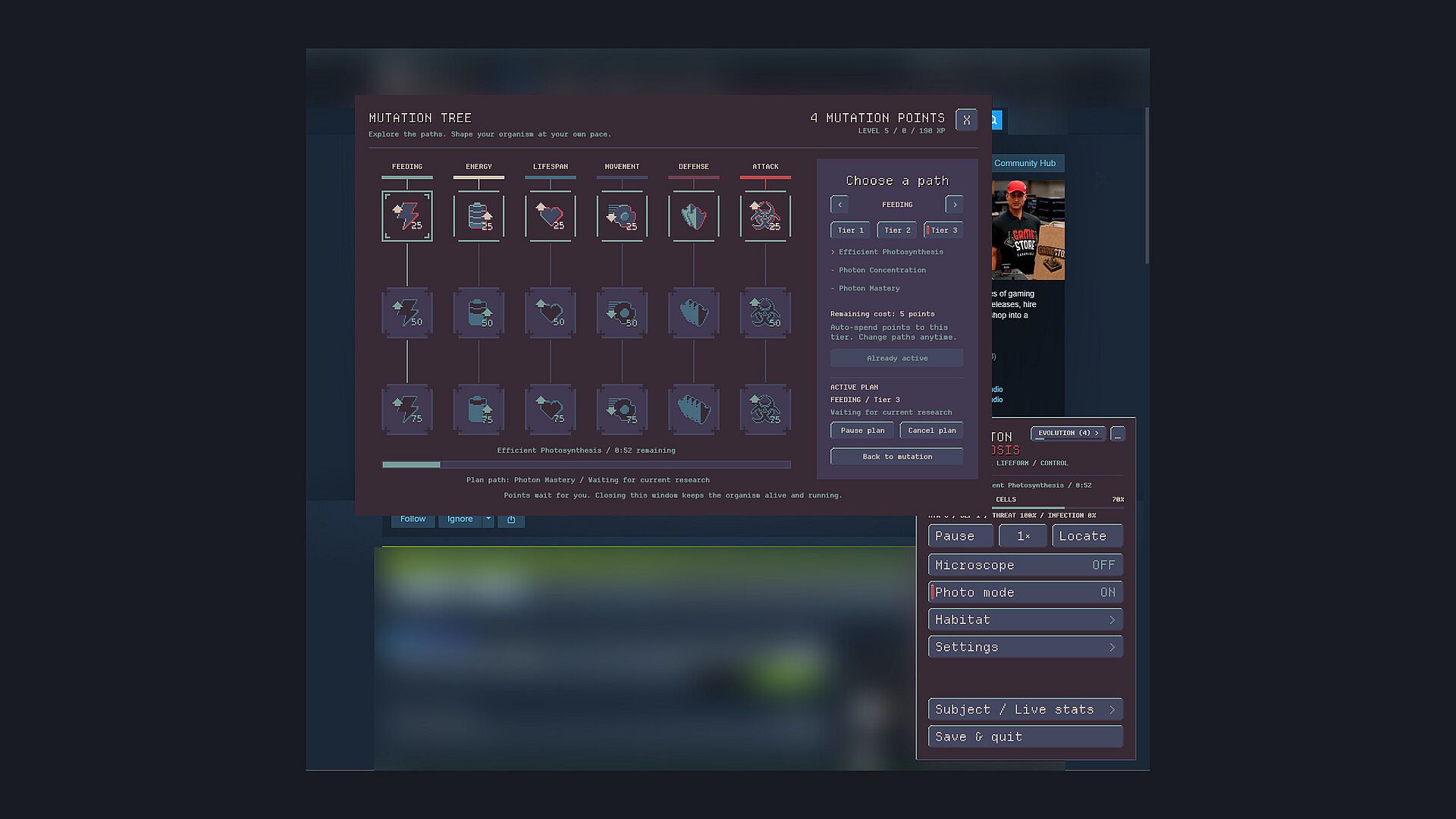
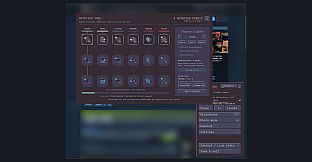
Players can intervene by dragging creatures toward brighter areas or positioning them within specific application windows. Bodies may split into independent fragments that retain separate energy stores, and compatible fragments can later rejoin into a single organism. Specialized cells emerge through research choices in a mutation tree, including feeders for harvesting, sensors for perception, motors for movement, batteries for storage, collectors, repair units, and muscle cells for distinct structural roles.
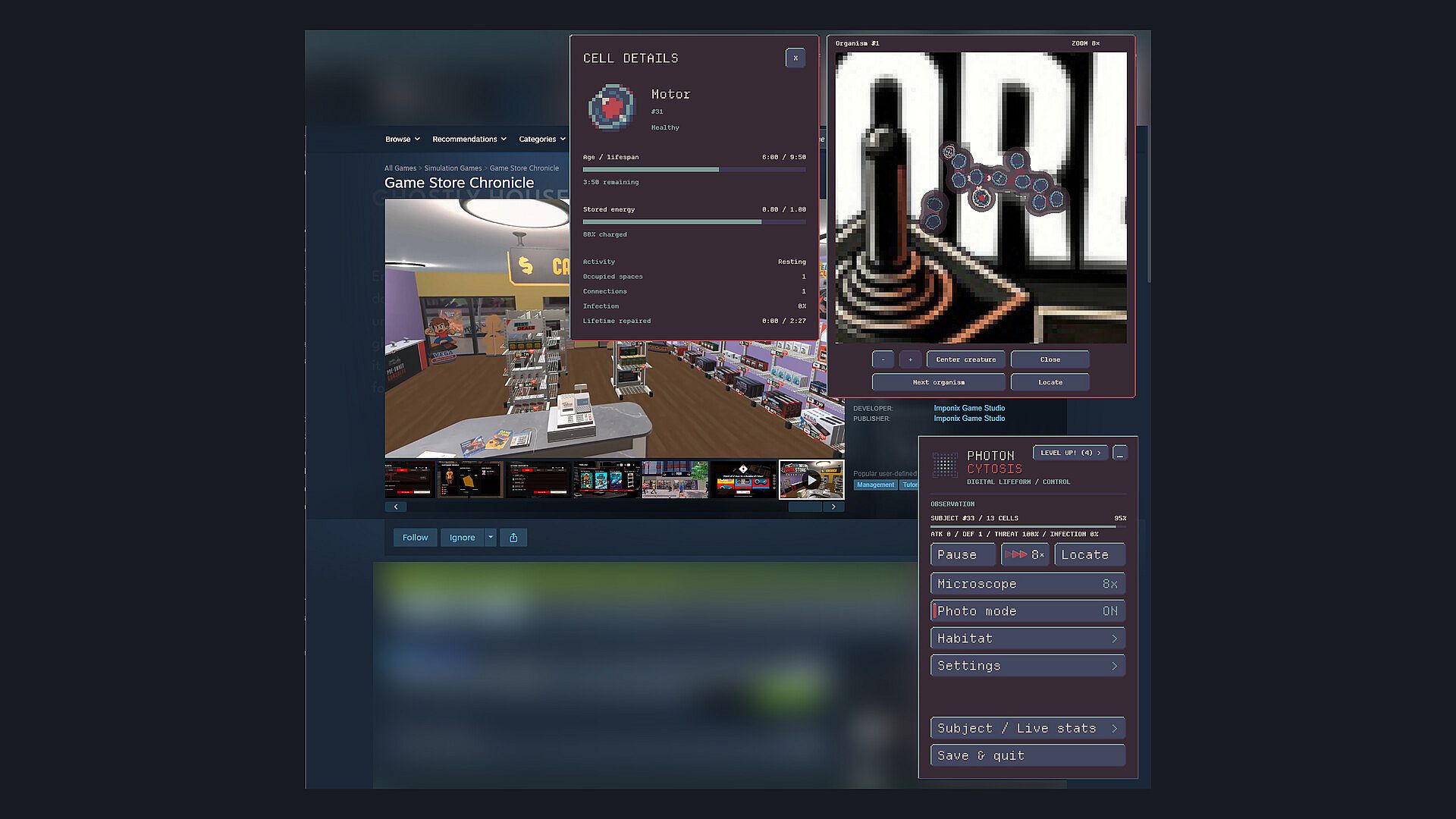
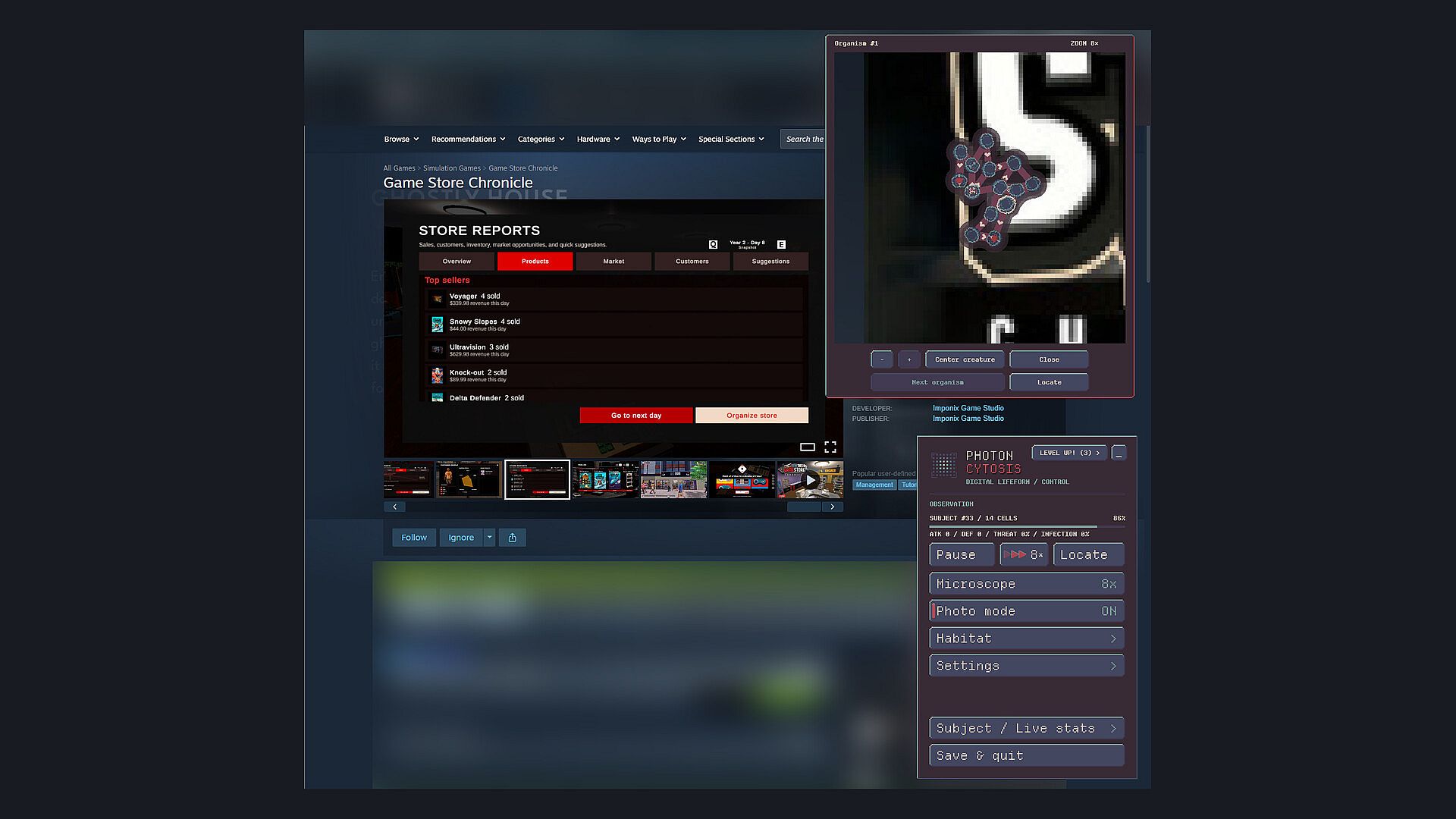
The microscope view reveals individual cells, flexible membranes, and internal connections in detail. Selecting a cell displays its current role, charge level, age, and absorbed color compounds. The view supports panning to track bodies as they stretch, move, reproduce, and evolve over extended sessions.
Game Modes
Photoncytosis operates as a continuous single-player simulation without separate named modes. The organism persists on the desktop even when the player focuses on other tasks, responding autonomously to available light and environmental changes. Encounters with other organisms introduce competition for light sources, where attack, defense, infection, retreat, and recovery mechanics affect colony survival.
Guidance comes through timed research selections in the mutation tree and direct manipulation of creature positions. A "Since you last checked" report appears upon return, logging cell births and losses, new specializations, completed research, cures, and reclaimed cells from the unattended period. Tutorials and a cell guide provide ongoing reference for observed behaviors.
Is It Worth Playing?
The game suits players who enjoy low-pressure simulation experiences that run in the background and reward occasional check-ins rather than constant attention. Its desktop integration creates a unique ambient presence, with light and color mechanics driving visible biological changes without requiring dedicated play sessions. Features such as the microscope for close inspection, the mutation tree for directed evolution, and support for multiple interacting organisms add layers of observation and experimentation.
Photo Mode enables capture of screenshots and recordings of both the desktop view and microscope details. Save functionality allows experiments to resume across launches. The combination of autonomous growth and optional intervention appeals to those interested in casual biology-themed simulations that adapt to real-world screen conditions.
Controls and Presentation
Mouse and keyboard inputs handle navigation, cell selection, dragging, and research choices on the Windows desktop. The system emphasizes observation over rapid inputs, with the organism continuing its processes during periods of inactivity. This setup supports extended experiments that unfold gradually alongside everyday computer use.