

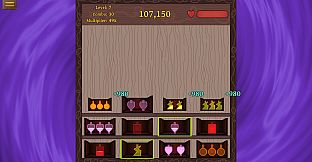
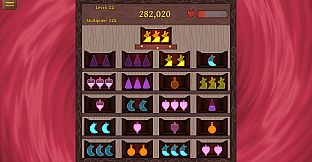
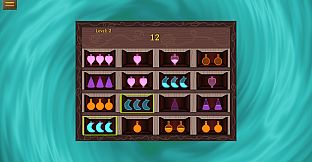
Potion Drop is an indie casual arcade puzzle game developed for PC. Players match sets of crates filled with colorful potion bottles in a fast-paced environment that challenges both speed and pattern recognition. The core loop revolves around clearing groups before the board fills up, with increasing difficulty as levels progress.
Gameplay
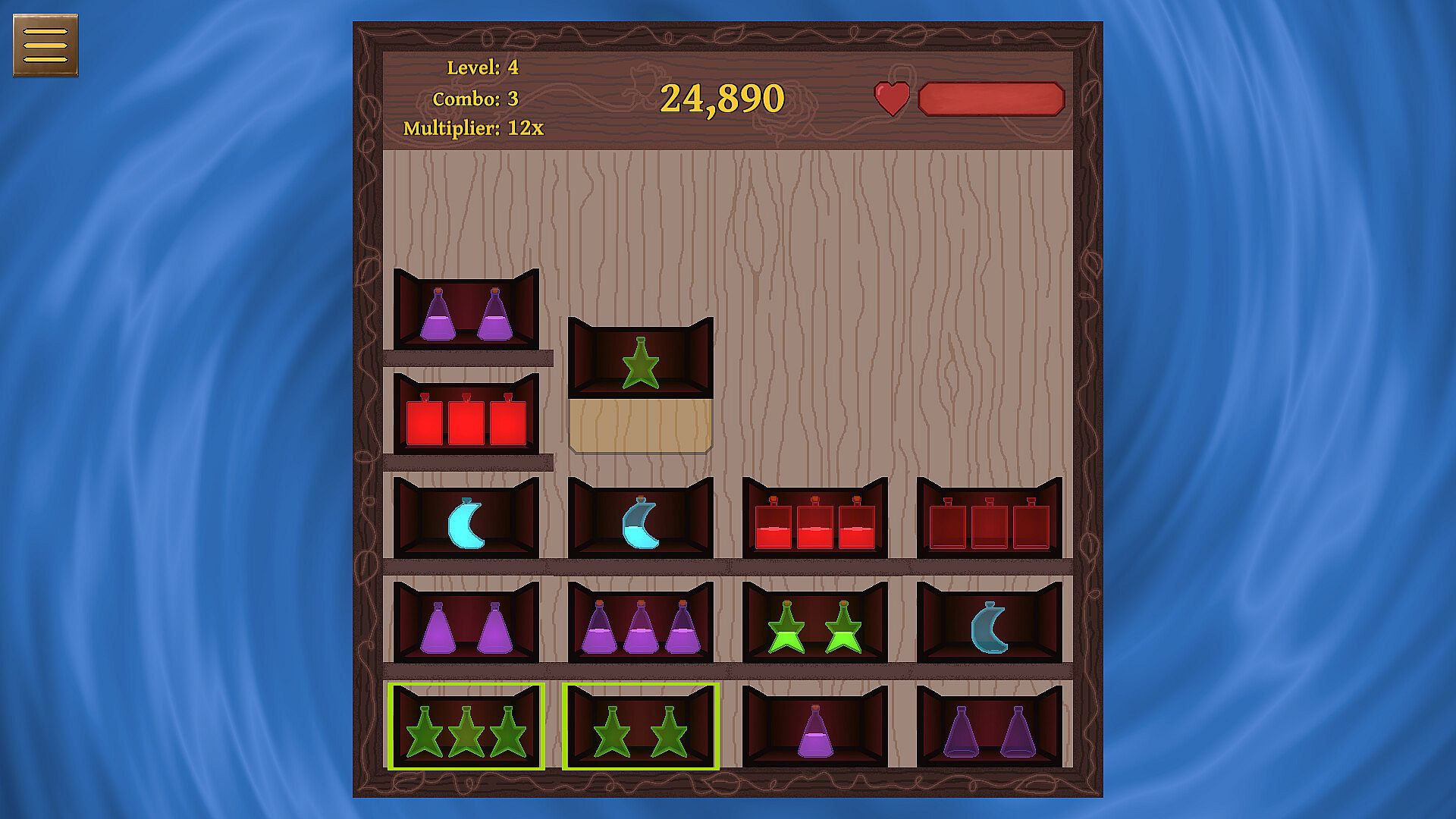
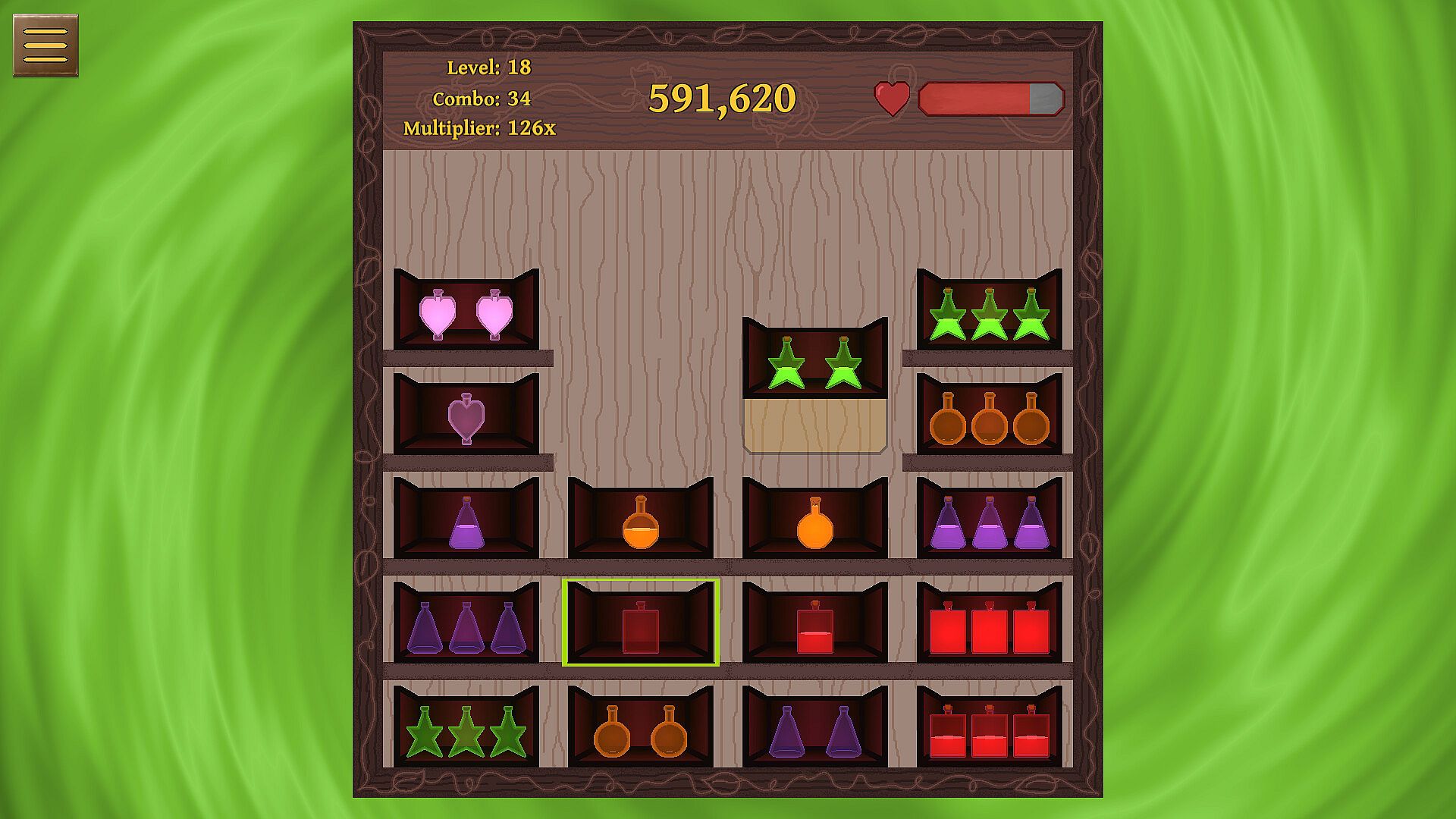
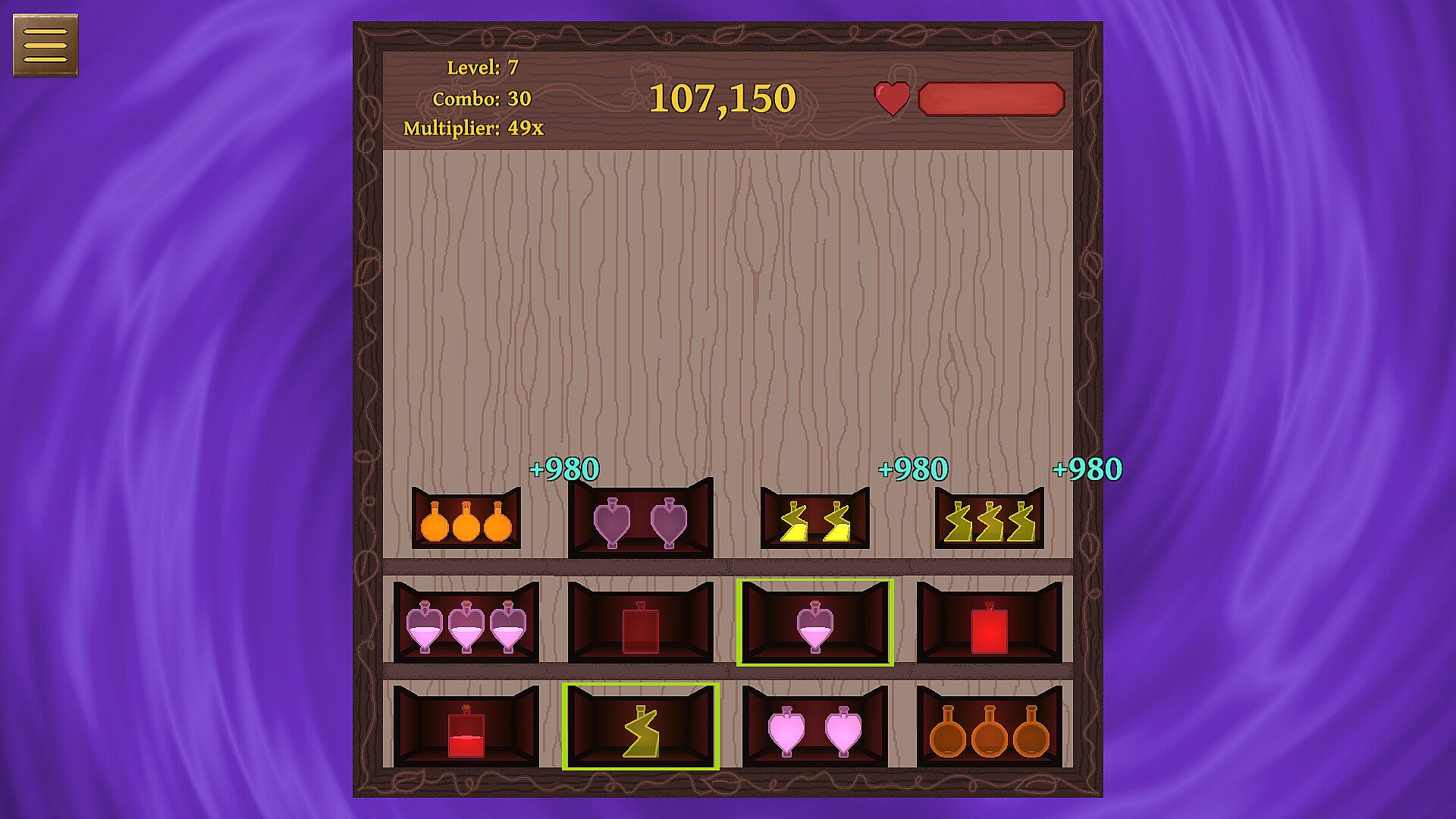
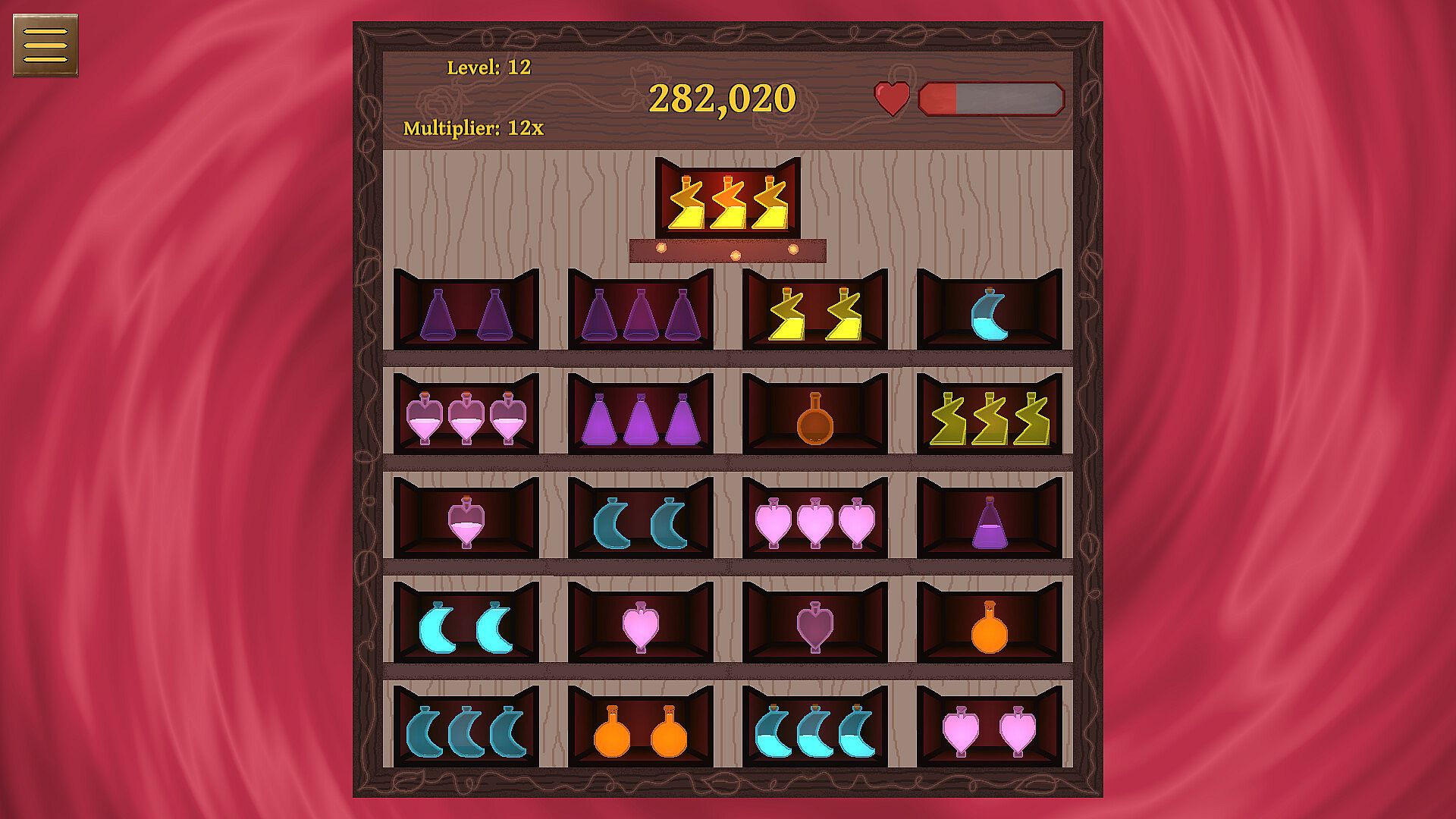
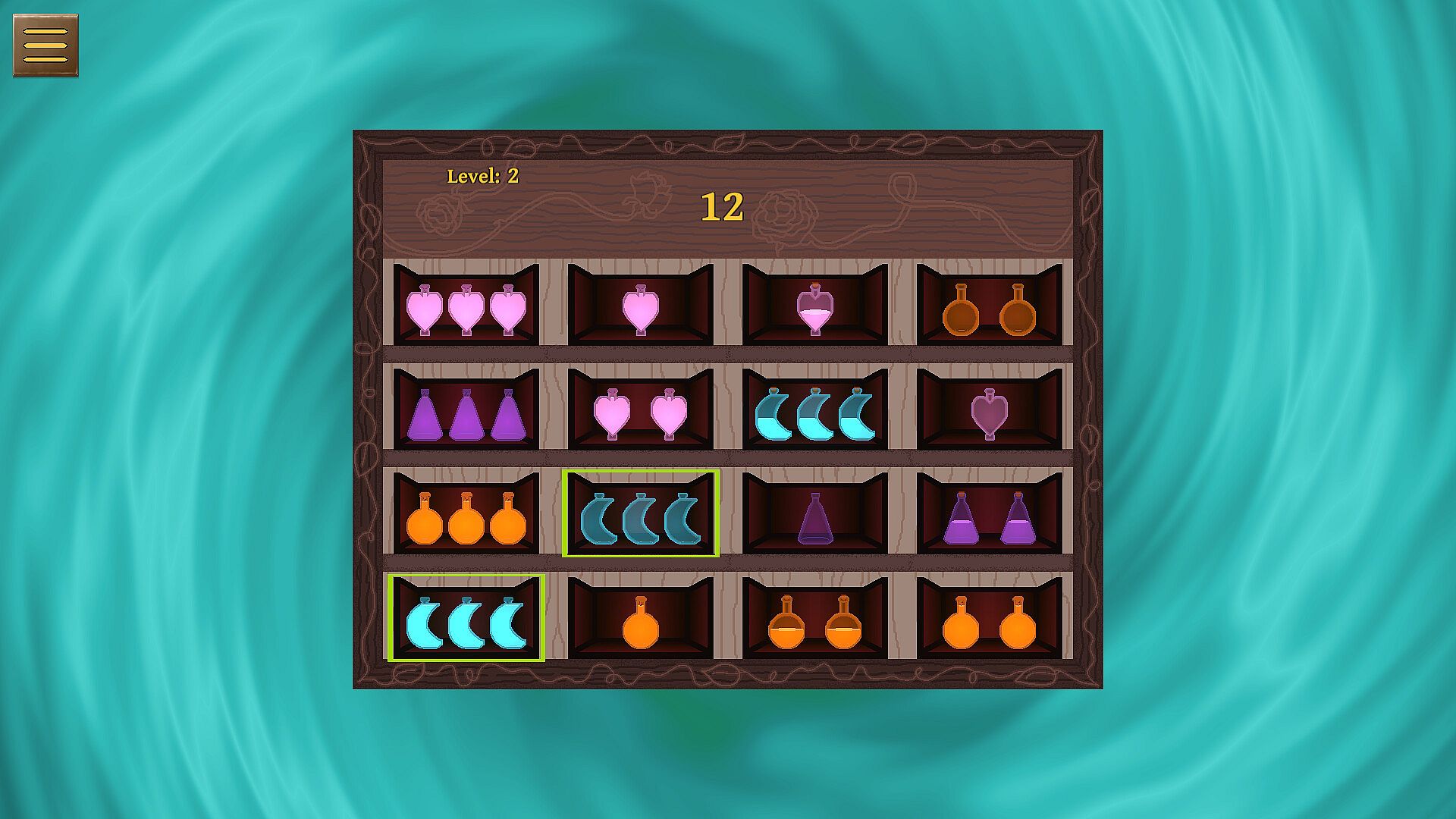
The matching system introduces a distinct variation on traditional match three mechanics. Matches form when three crates share consistent traits across specific attributes. Crates can differ in fill levels, the number of bottles inside, or the shape of the potion containers. A valid set requires alignment on these details without an outlier. For example, if two crates hold full bottles, the third must match that fullness exactly. The same rule applies to bottle shapes like triangles. Combinations work as long as no single crate breaks the pattern established by the others.
Progression ties directly to level advancement. Higher levels boost a score multiplier while shortening the interval before the next crate drops onto the board. This creates pressure to maintain momentum and clear matches efficiently. Overflow ends the run, so timing and quick decisions determine how far a session extends. The visual focus stays on the crates and their potion contents, keeping attention on the matching criteria rather than complex boards or additional elements.
Game Modes
Arcade mode delivers the high-intensity version of the experience. Matches happen under constant time pressure, and a leaderboard tracks high scores for competitive play. Sessions emphasize chaining clears rapidly to climb levels and maximize the multiplier before the board becomes unmanageable.
Zen mode removes the timer and leaderboard focus. Players match at a comfortable pace without external pressure, allowing time to study crate attributes and experiment with different combinations. Both modes use the same core matching rules but cater to different preferences for intensity and relaxation.
The Match 3 Twist
Standard match three games often rely on identical items in a row or group. Potion Drop shifts the criteria to sets defined by shared or complementary attributes across multiple variables. This opens more possible matches on any given board because crates do not need to be identical. The system rewards observation of subtle differences in fill, quantity, and bottle type while penalizing mismatches that introduce an odd one out. The result is a puzzle layer that stays accessible yet requires attention to detail as crates accumulate.
Is It Worth Playing?
Potion Drop suits players who enjoy casual puzzle games with an arcade edge or those seeking a relaxed matching experience. The two modes provide clear options for different moods, and the attribute-based matching adds variety without overwhelming complexity. Sessions can be short or extended depending on the chosen mode, making it easy to fit into varied play schedules. The game emphasizes straightforward mechanics built around crate attributes and level-based pressure, delivering focused puzzle action on PC without additional layers or requirements. Those drawn to indie casual titles that reward pattern spotting and quick reactions will find the core loop consistent and engaging throughout.