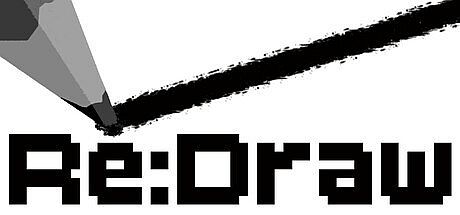


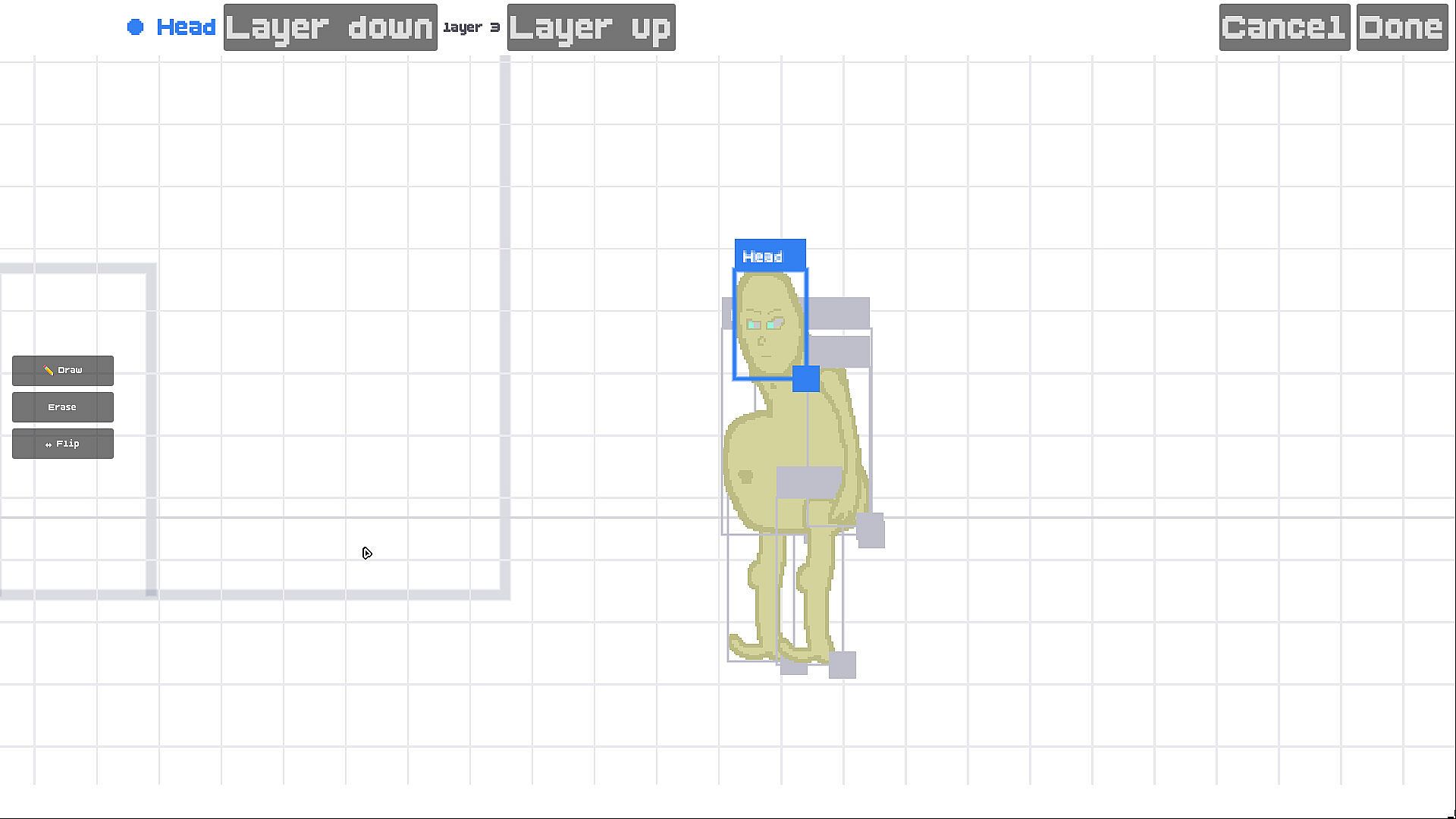
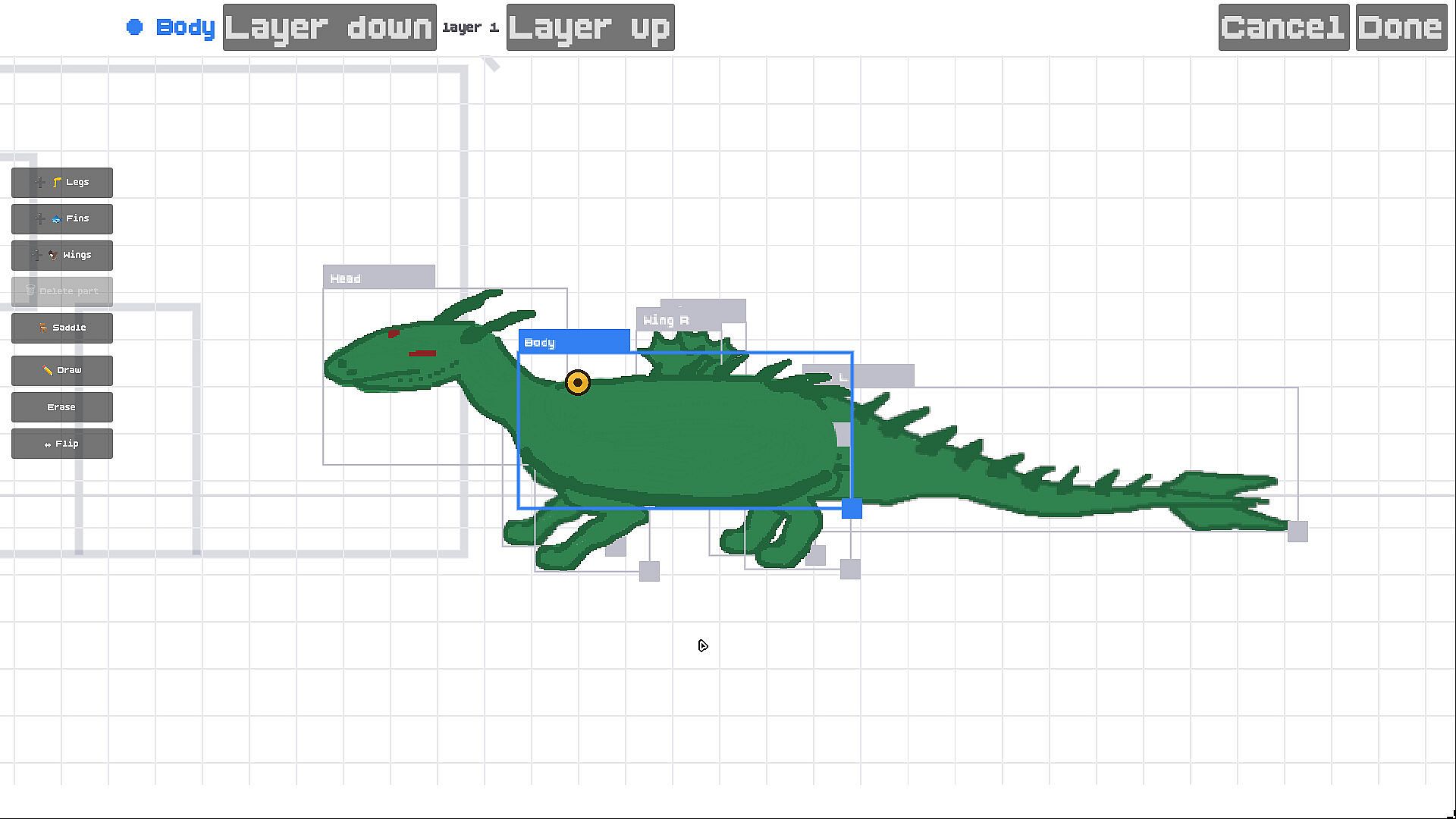
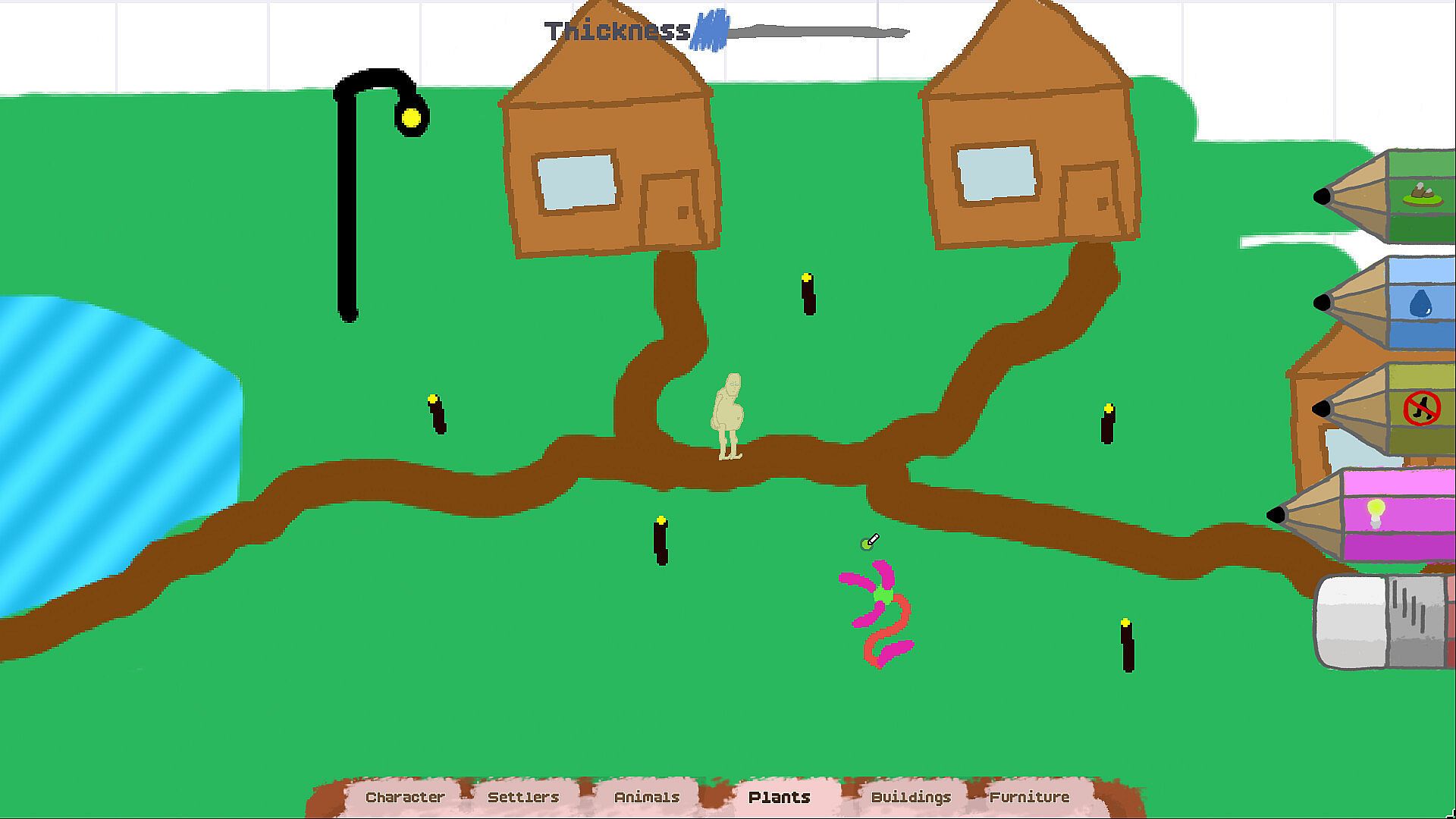
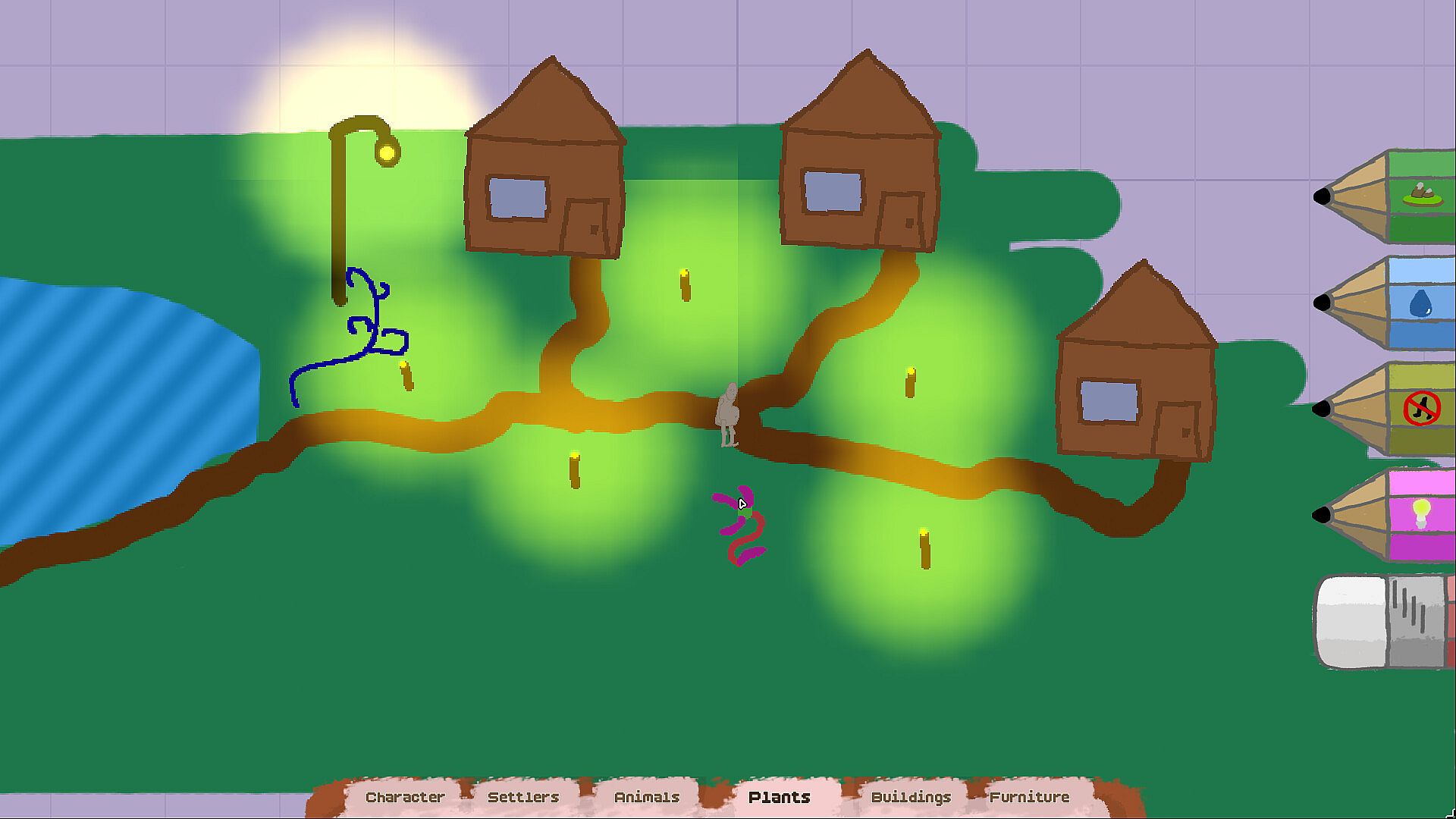
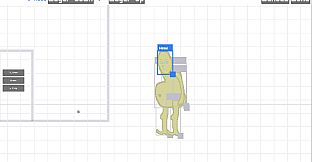
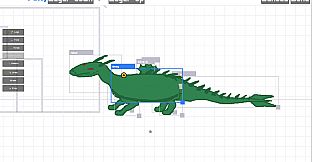
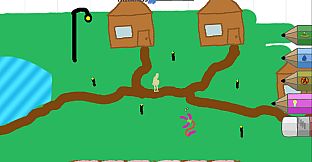
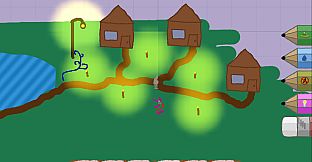
Re:Draw is a casual simulation game for PC that places drawing at the center of world building. Players begin with a blank sheet and use a pencil to restore color, terrain, and life to an erased landscape. Every element from trees and bridges to animals and settlers starts as a hand drawn stroke rather than a selected menu option.
Gameplay
The core loop revolves around freehand drawing that directly shapes the environment. A single line of grass can expand into fields through natural growth processes. Animals appear when conditions support them and interact with the plants and terrain created by the player. Predators emerge to hunt, while wind and creatures spread seeds across the map. This creates an autonomous ecosystem that continues evolving even when the player focuses elsewhere on the sheet.
Settlers drawn into the world follow their own routines. They select paths, gather resources, construct homes, and form relationships without player direction on placement or scheduling. Over time these individuals pair up, raise families, and pass traits or stories to the next generation. Dynasties develop across extended play sessions as the population grows and adapts to the drawn landscape.
Organic movement replaces any grid system. Creatures and people navigate based on the shapes and connections the player has sketched rather than fixed routes. This allows settlements to form naturally around rivers, forests, or clearings that the player has outlined on different parts of the page.
Game Modes
Re:Draw operates as a single player sandbox experience with no separate competitive or cooperative modes listed. The emphasis stays on continuous expansion of one persistent world. Players can focus on specific regions while the rest of the sheet develops independently through the ecosystem rules. Progress carries forward across sessions as the drawn elements remain saved and continue their cycles.
The absence of structured levels or timed challenges keeps the pace relaxed. Attention shifts between sketching new areas and observing how existing drawings influence distant parts of the map through animal migration or plant spread.
Creation and Persistence
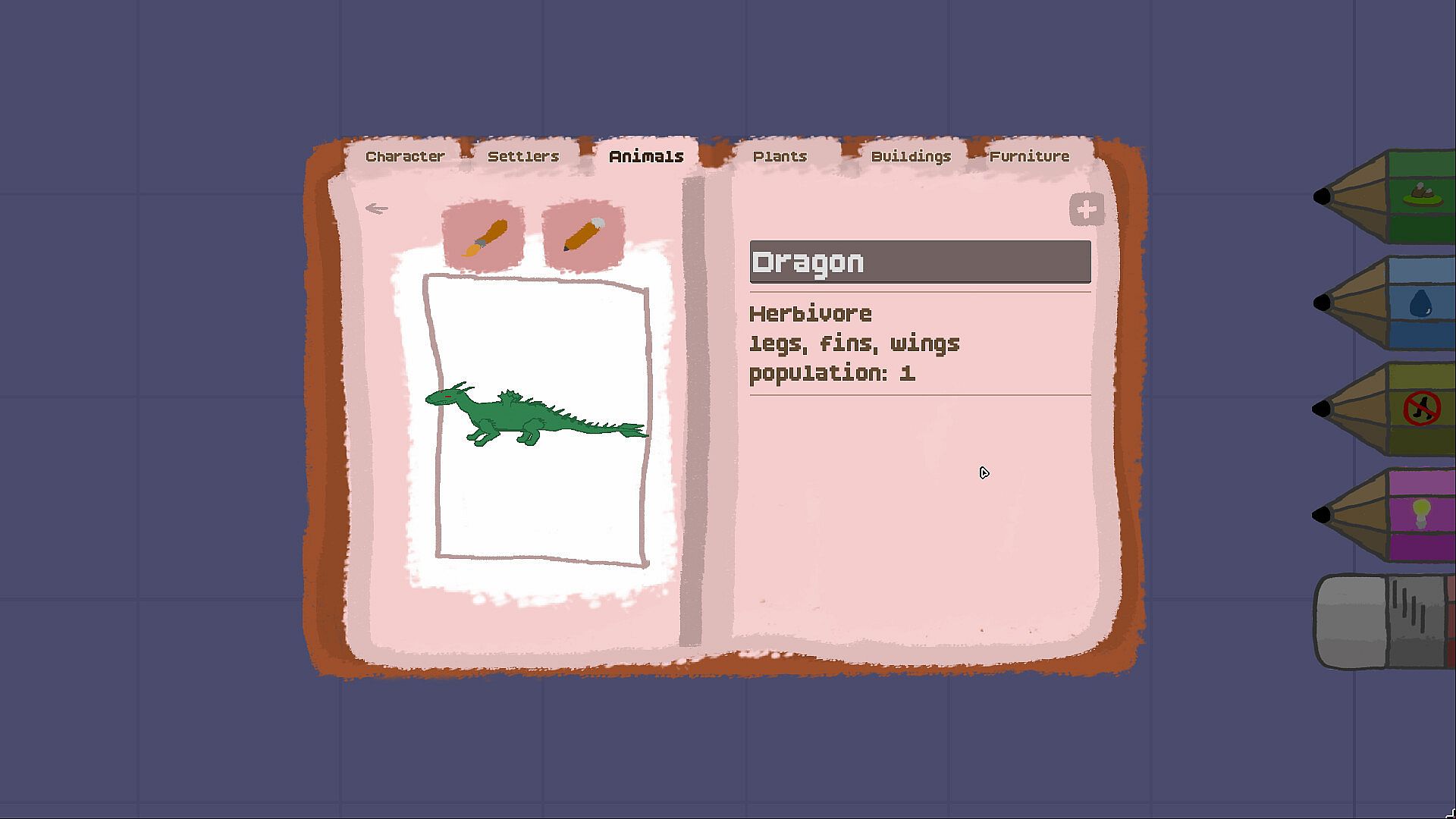
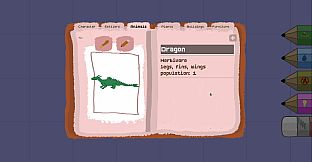
Every drawing receives its own entry in an in game notebook. Plants, animals, and settlers each gain a dedicated page that records the original stroke, an assigned name, and a brief account of their role in the world. This collection grows alongside the simulation and serves as a permanent record of the player's contributions.
Because each stroke comes directly from the player, no two playthroughs produce identical results. The same basic tools yield different forests, villages, and wildlife patterns depending on line placement, density, and connections. The sandbox supports ongoing expansion without artificial borders, allowing the erased world to extend as far as the player chooses to draw.
Is It Worth Playing?
Re:Draw suits players who enjoy creative simulation titles focused on emergence rather than direct control. The drawing mechanic replaces traditional building interfaces, which appeals to those who prefer expressive input over selection from presets. The autonomous systems provide ongoing activity without constant intervention, making it suitable for relaxed sessions that can last many hours.
Those interested in watching generational stories unfold or experimenting with organic layouts will find the core systems rewarding. The game remains in active development with the described features forming the foundation of its sandbox. Availability on PC makes it accessible for anyone with a mouse or tablet who values hand crafted worlds over prebuilt assets.