



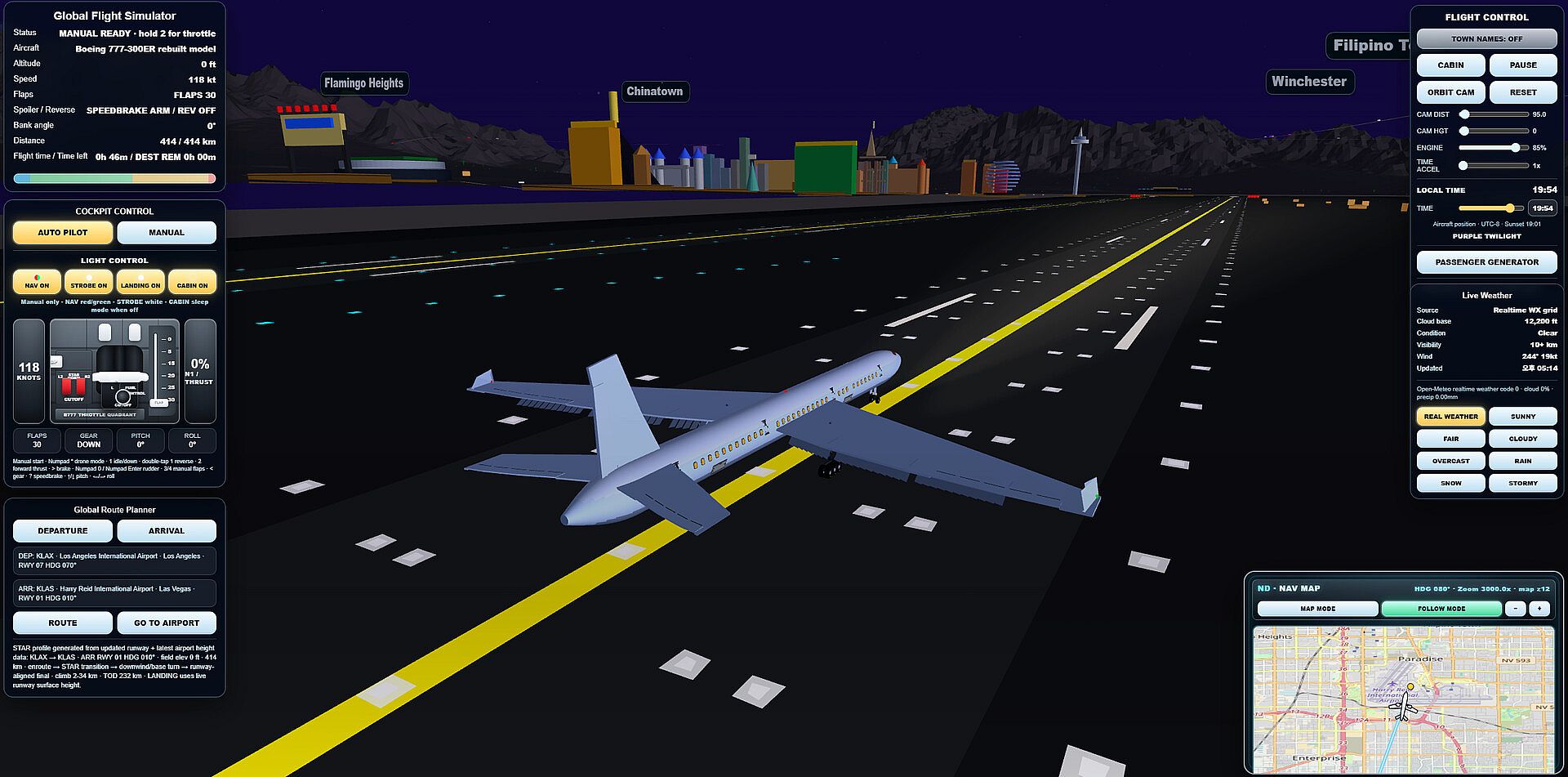
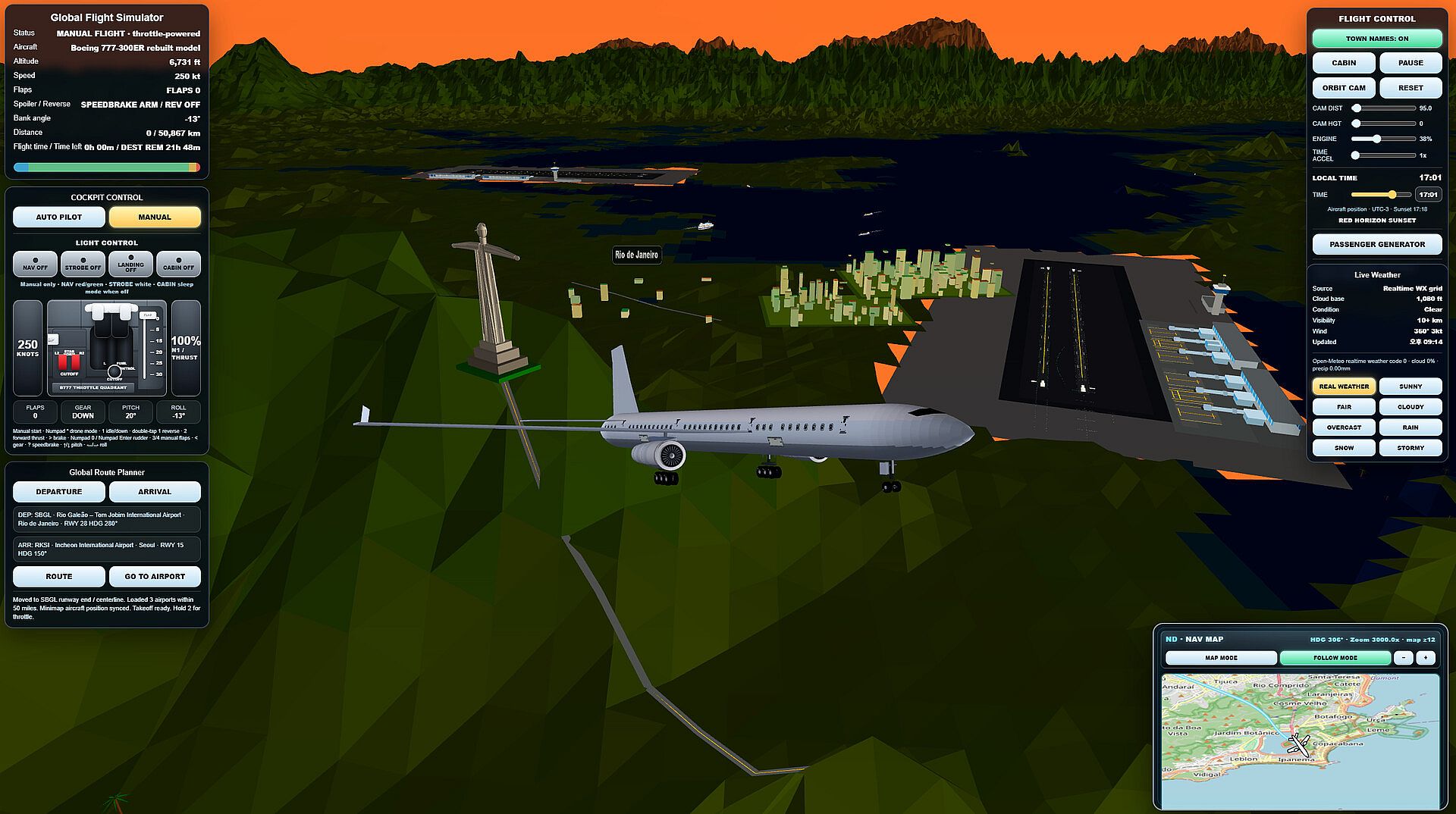
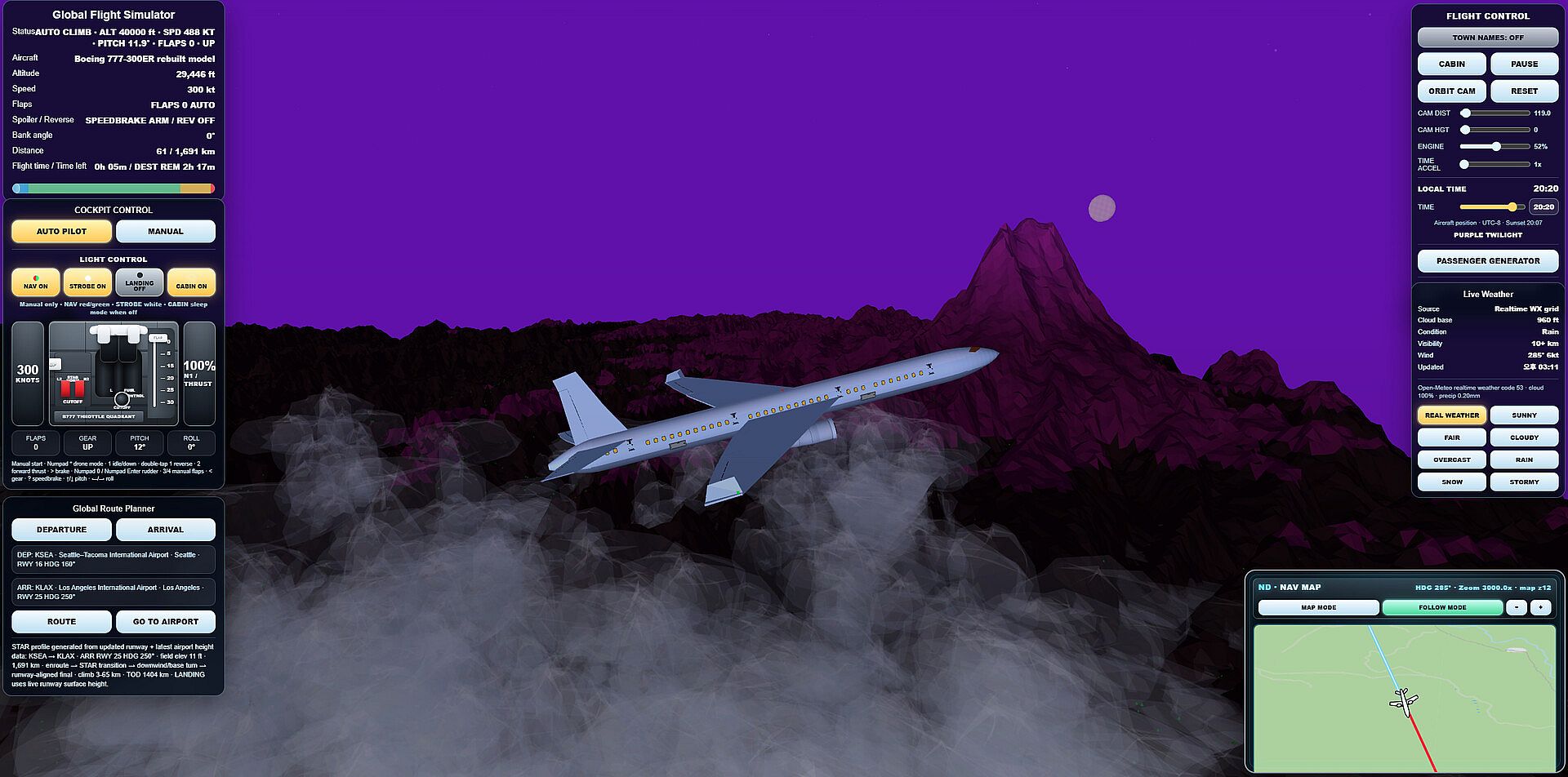
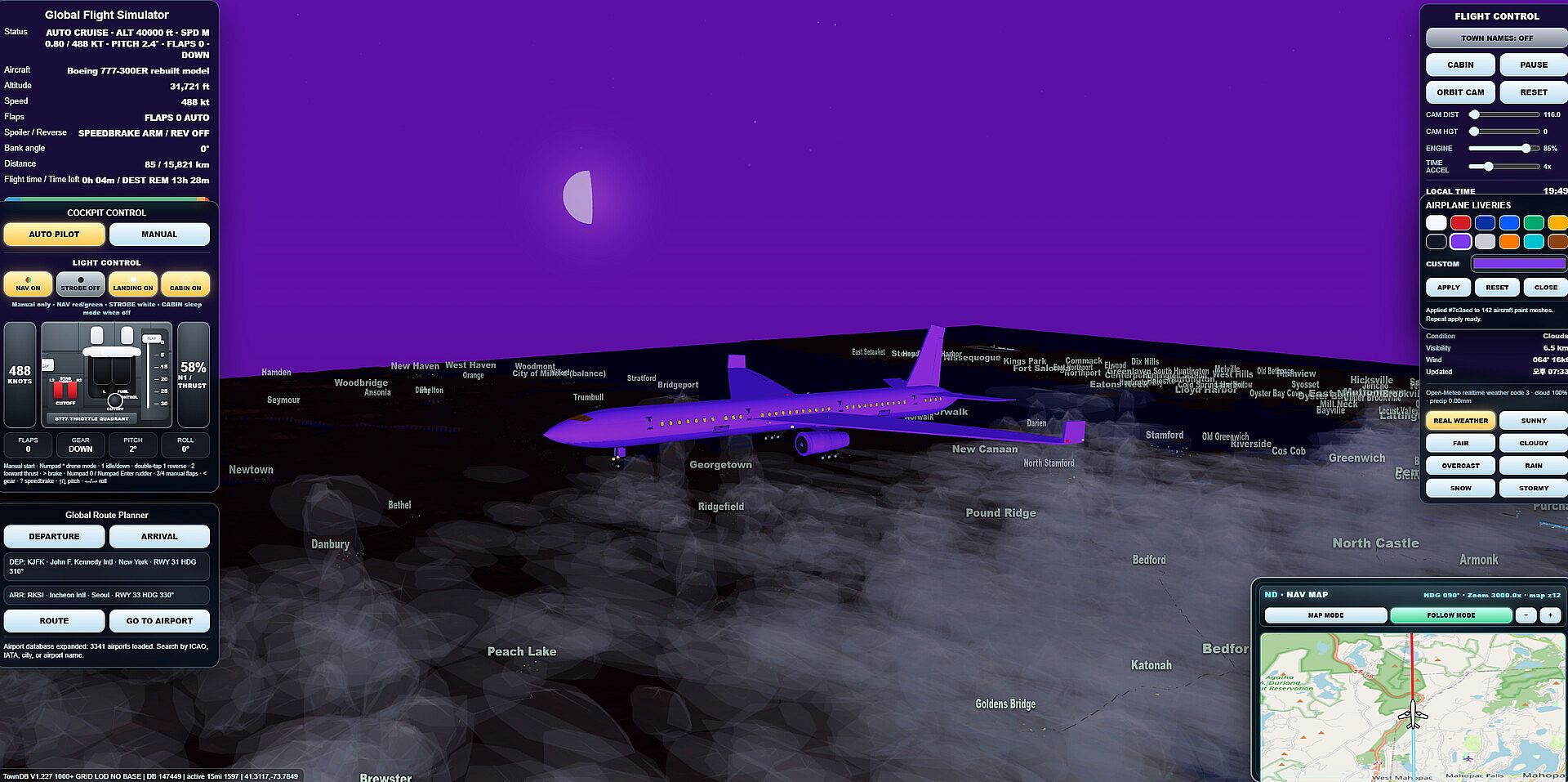
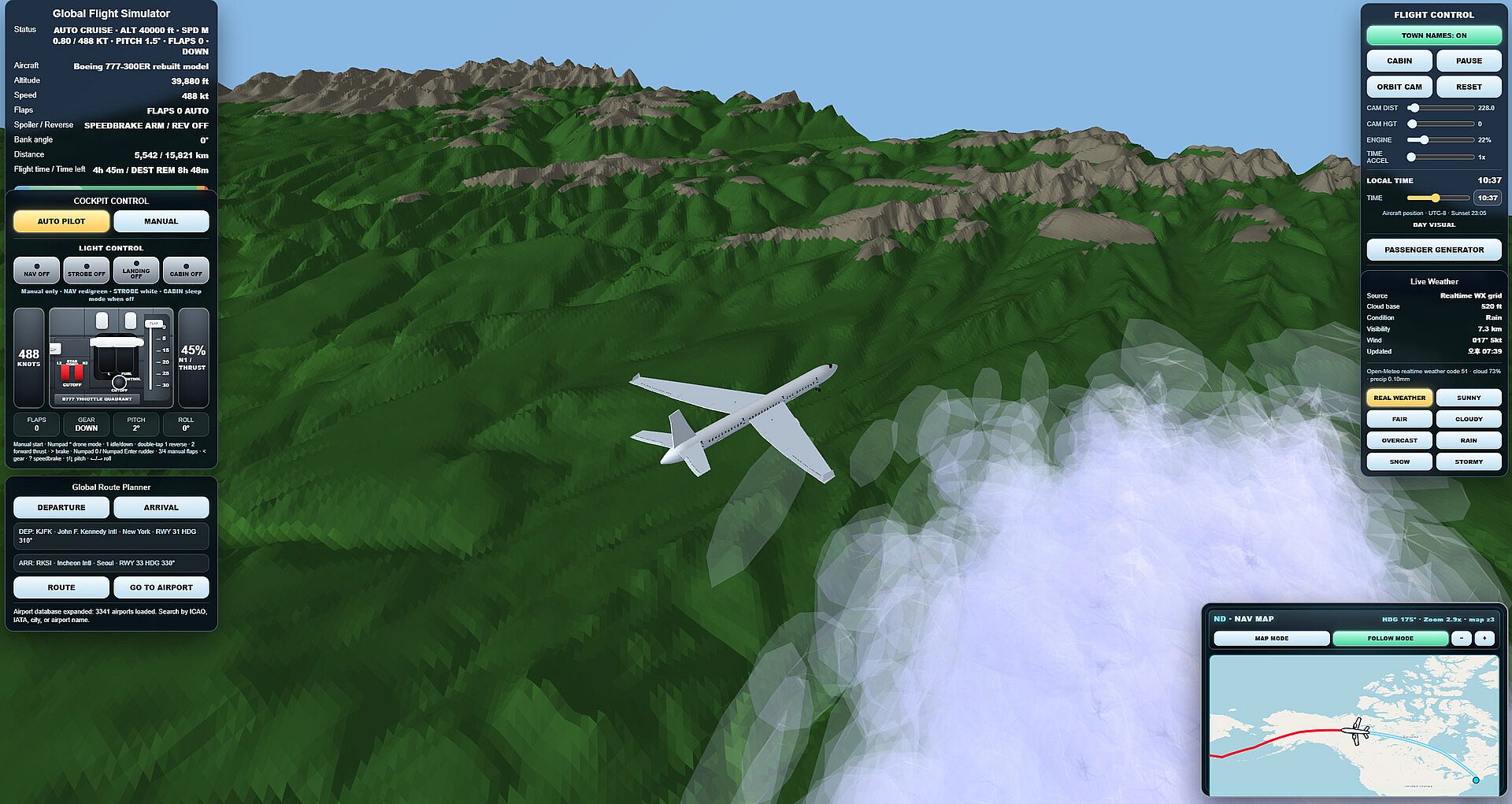
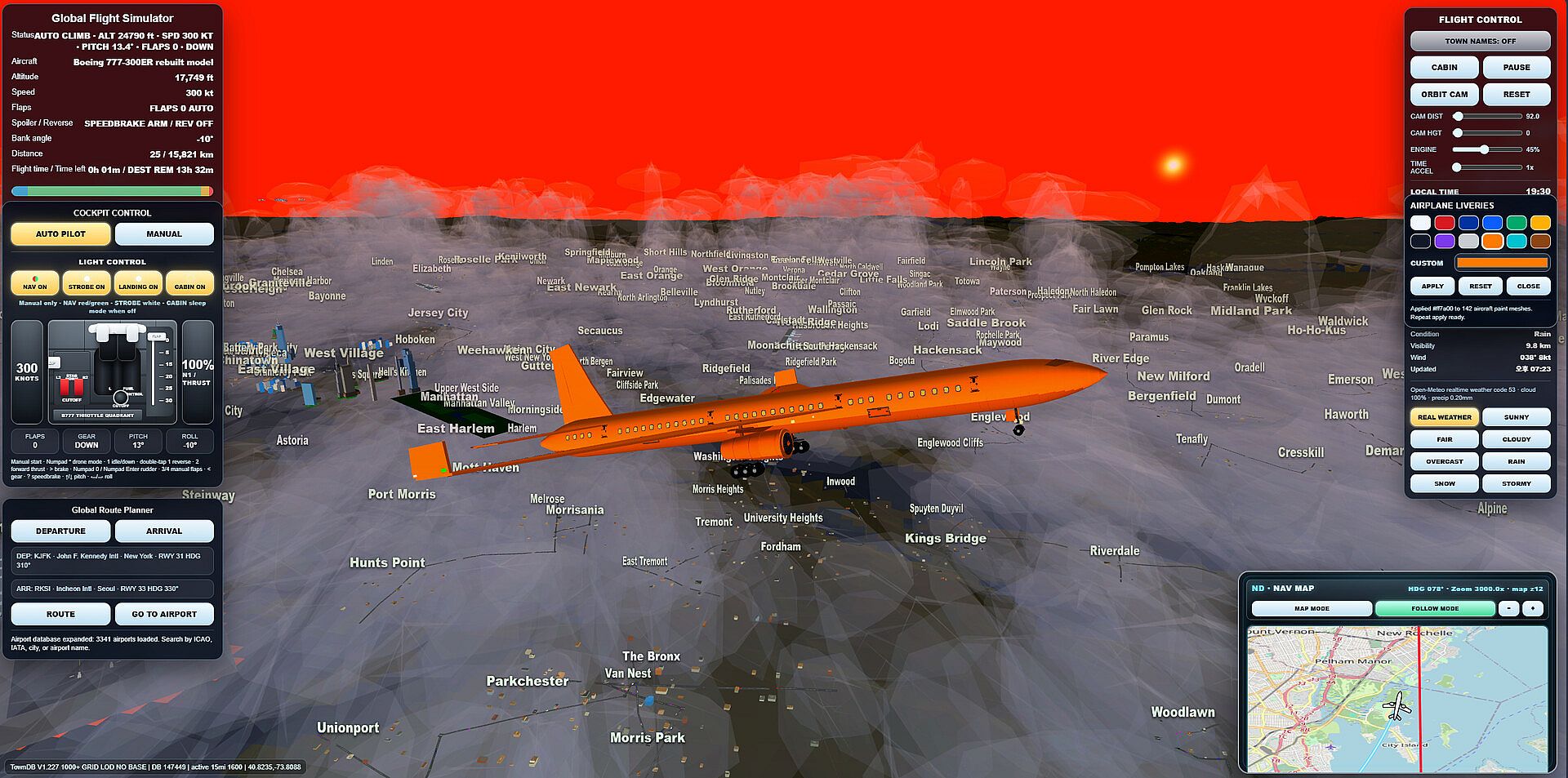
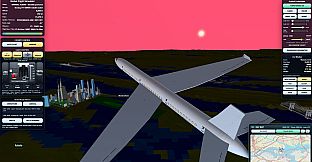
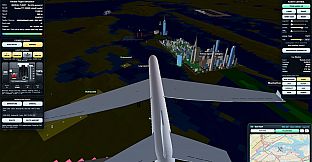
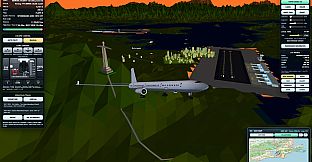
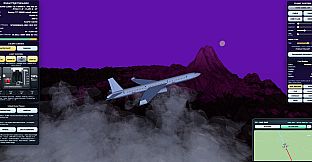
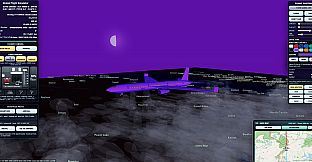
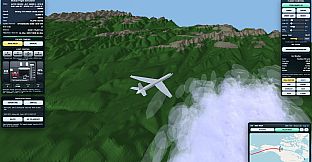
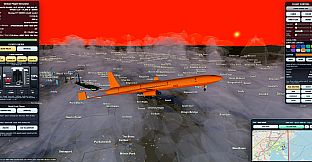
Retro Flight Simulator 2026 is a single-player simulation game built around passenger jet flights across a retro-styled 3D world. Players select departure and destination airports, generate routes, and handle every stage of a journey from takeoff through landing. The experience emphasizes accessible exploration over intricate professional procedures, with support for both autopilot assistance and full manual control on PC.
Gameplay
The core loop centers on route planning and execution. Users pick airports from a global selection, let the built-in planner create a path, and then manage the aircraft through climb, cruise, descent, approach, and landing. Long-distance flights follow structured stages that keep the journey engaging without overwhelming complexity. At any point, control can shift from autopilot to manual inputs for pitch, roll, rudder, throttle, flaps, landing gear, speed brakes, and reverse thrust.
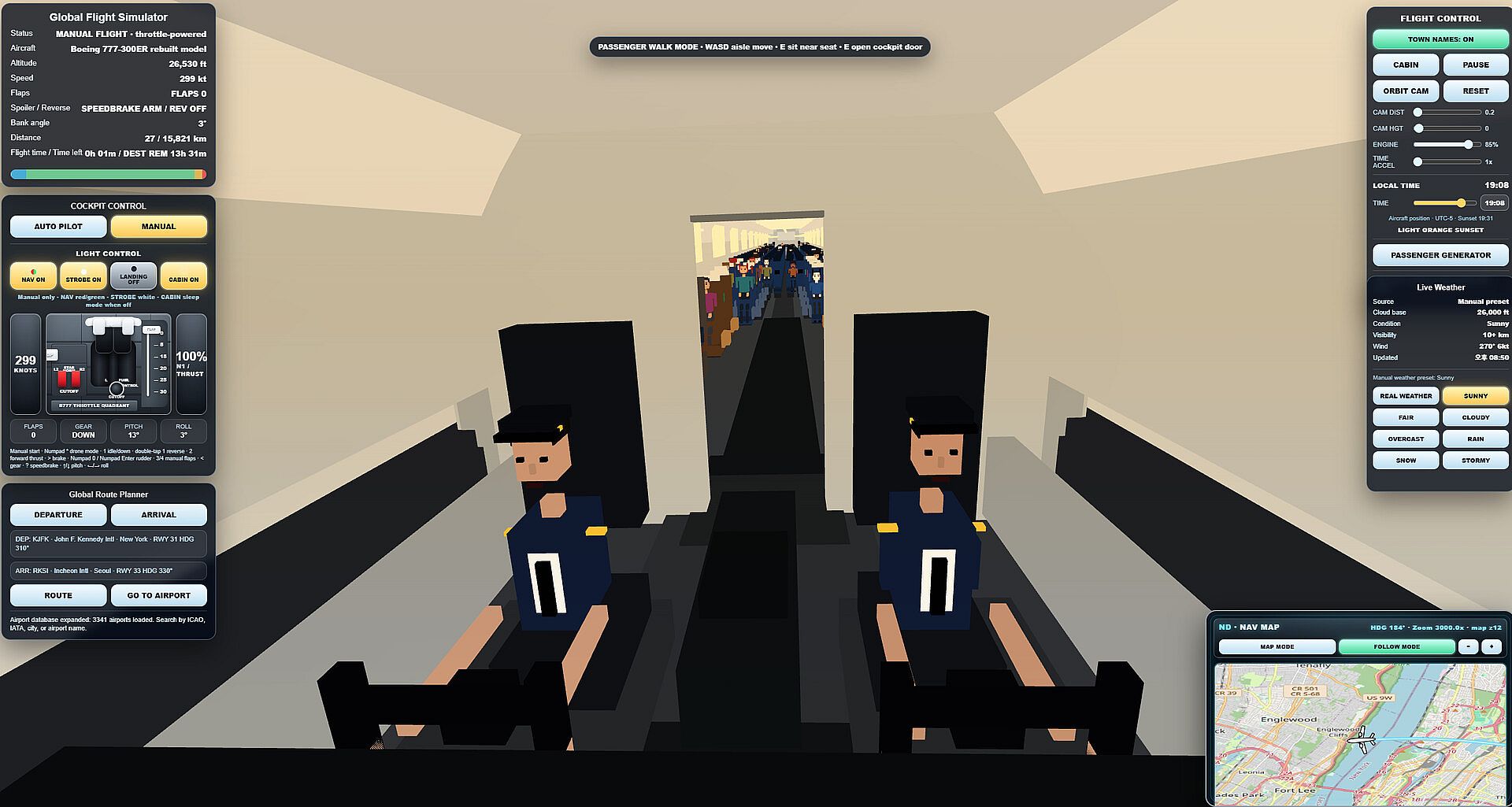
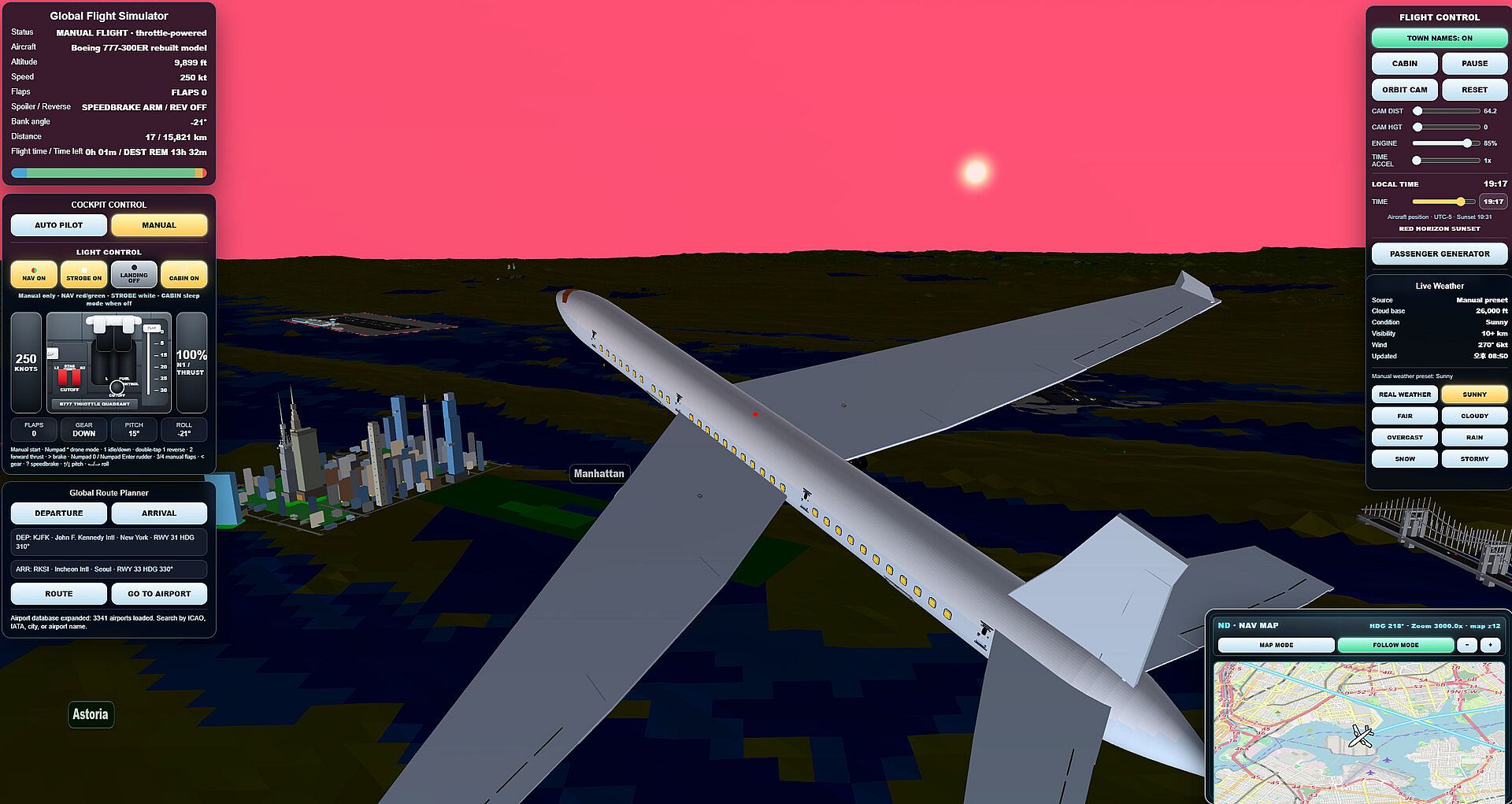
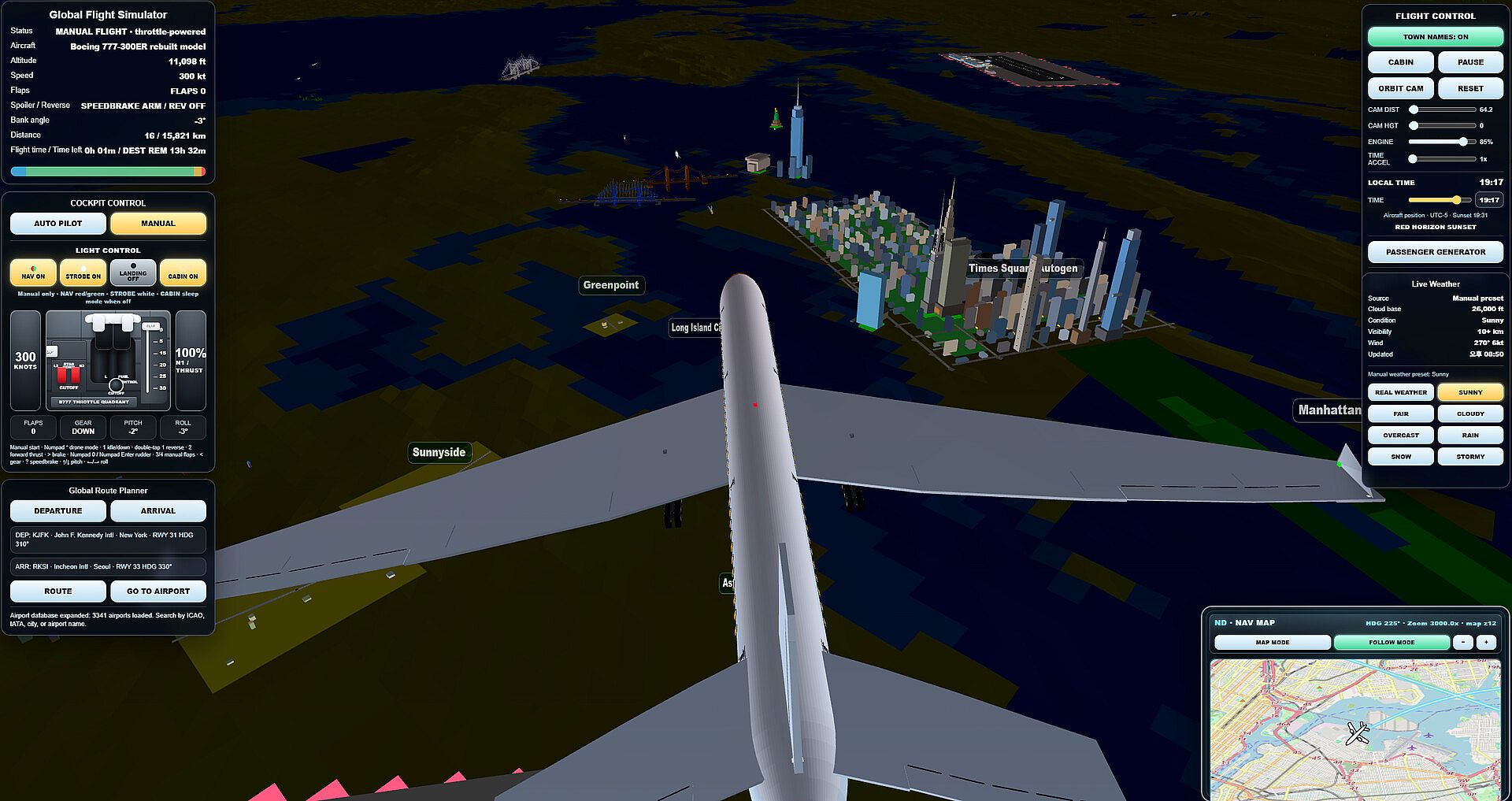
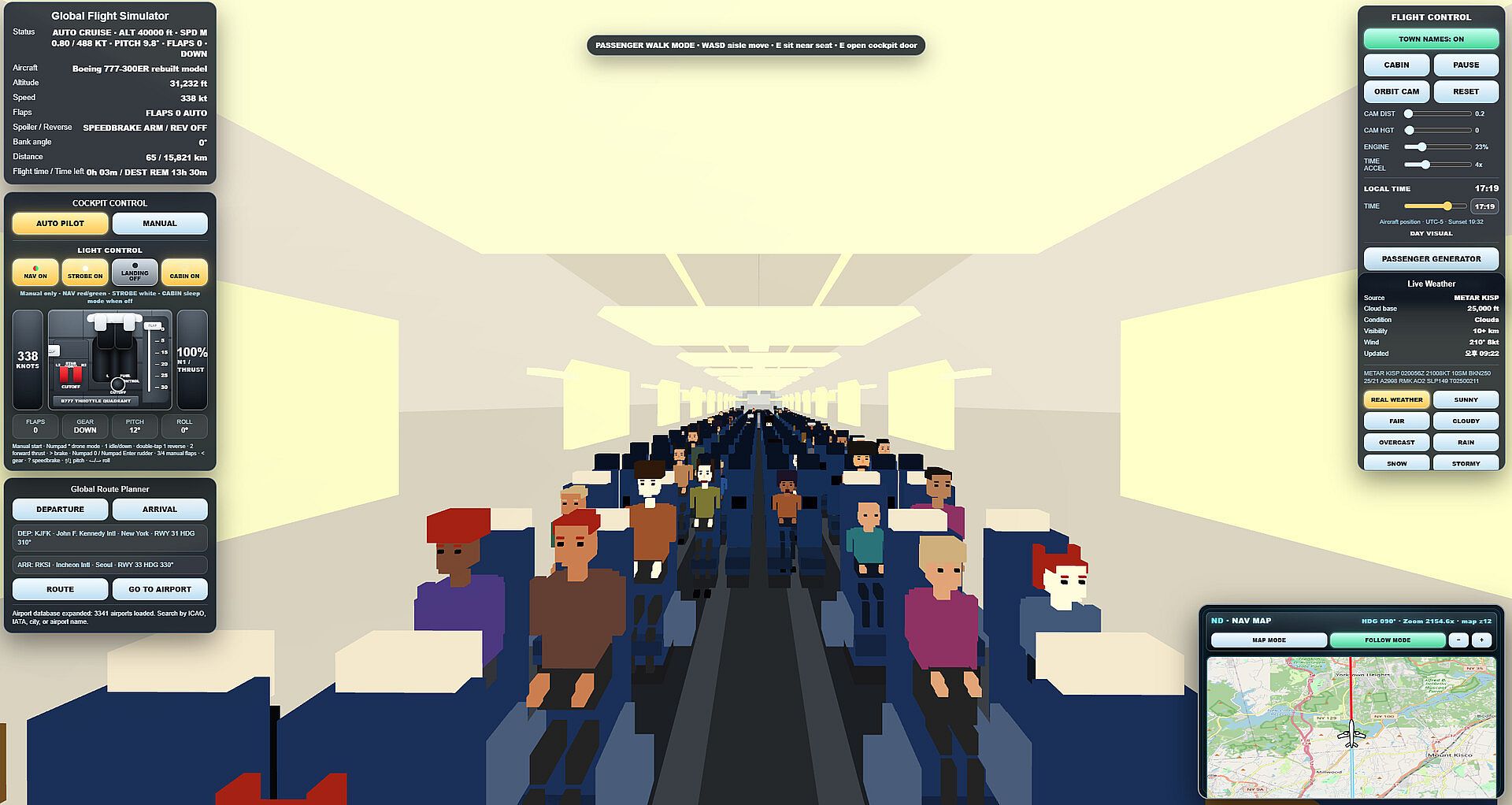
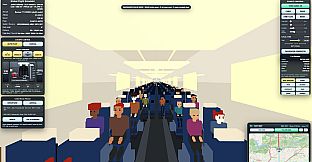
Visuals feature 3D terrain, cities, coastlines, mountains, roads, water, and landmarks drawn from real-world regions across North America, Europe, Asia, and beyond. Lighting changes support day, night, sunrise, and sunset conditions, while aircraft systems include functional lights, gear, flaps, spoilers, and thrust reversers. Camera options cover cockpit, passenger cabin, and external views, with an additional drone camera for free movement around the aircraft.
Progress saves and loads allow players to pause long flights and resume later. The retro-inspired art style prioritizes smooth performance on a range of hardware rather than photorealistic detail.
Game Modes
The game operates entirely in single-player. No multiplayer options exist. All activity revolves around planning and flying individual routes between chosen airports, with the option to switch between automated assistance and direct control at will. This setup suits focused sessions of world exploration or repeated practice on specific legs of a journey.
World Exploration
Flight paths cross varied environments including open terrain, urban areas, coastal stretches, and mountain ranges. Recognizable landmarks appear along routes, encouraging players to observe the passing scenery during cruise segments. The global airport network supports travel between continents, though the emphasis remains on the flying experience itself rather than exhaustive mapping or discovery mechanics.
Environments adapt to time-of-day cycles, altering visibility and atmosphere during extended flights. This adds variety to repeated routes without altering core systems.
Controls and Accessibility
Keyboard inputs handle all primary functions, from throttle and flight surfaces to camera switching and pause menu access. A dedicated drone camera mode offers independent positioning with its own movement and speed adjustments. Passenger mode permits walking through the cabin using standard movement keys and interacting with seats.
- Throttle and flight surface controls respond directly to key presses.
- Autopilot integration simplifies long segments while preserving manual override.
- Camera views and environmental lighting support different perspectives on the same flight.
Is It Worth Playing?
Retro Flight Simulator 2026 targets players who want straightforward long-distance flying and visual exploration without the steep learning curve of full professional simulators. Its lightweight design and retro presentation make it approachable for casual sessions or repeated short-to-medium flights. The single-player focus and route-based structure deliver consistent enjoyment for those interested in the journey itself rather than advanced systems or competitive elements. Availability on PC keeps the barrier low for anyone seeking this style of accessible simulation.