






Review Responder is a strategy, indie, RPG, and simulation game for PC that places players in the role of a customer service manager at an e-commerce store. The experience centers on handling negative reviews through careful decision making that affects the store's long-term viability. Every choice carries trade-offs across multiple performance areas, creating a focused loop of analysis and response in a single-player format.
Gameplay
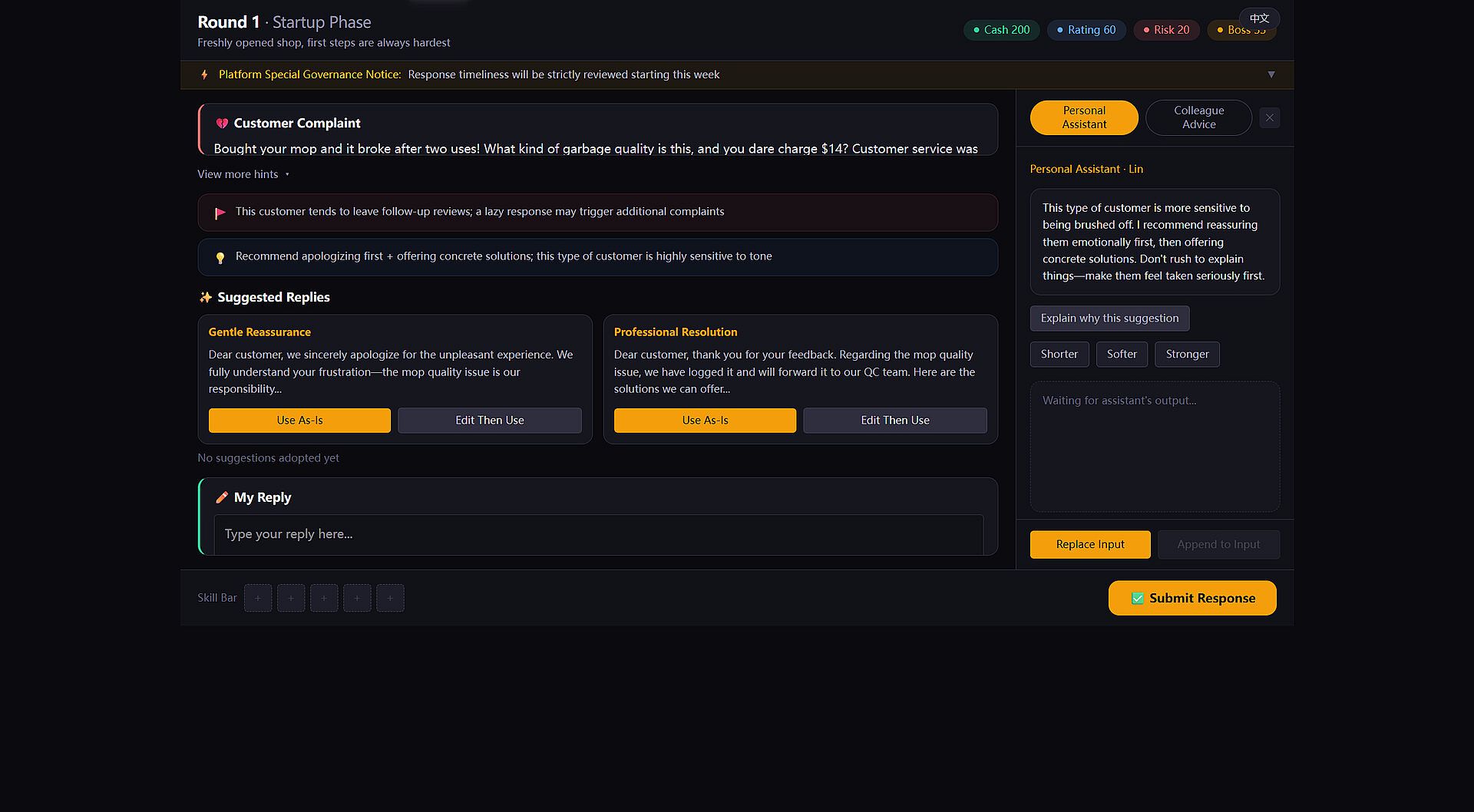
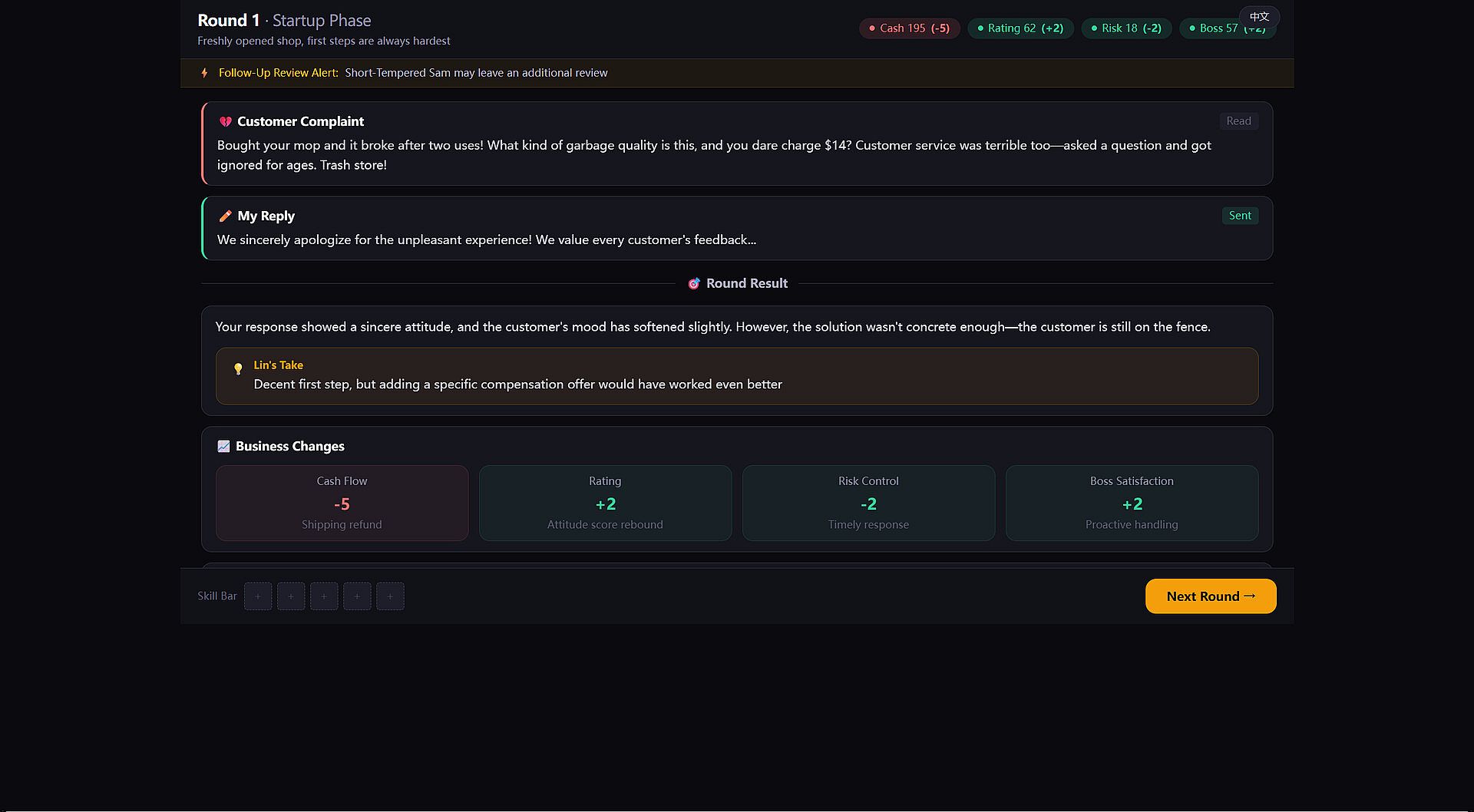
The core loop revolves around turn-based decision making. Each turn presents a new negative review that must be read and evaluated for the customer's emotions and specific demands. Players select from suggested responses, craft a custom reply, or skip the response entirely and accept the resulting effects. This system emphasizes thoughtful replies rather than quick reactions.
Decisions influence five key metrics that track the store's health. Cash Flow controls resources for refunds and promotions. Rating shapes customer traffic and conversion rates. Risk Control reflects platform tolerance for operations. Growth Stage sets objectives and event difficulty. Boss Satisfaction determines the level of support or added pressure received. Balancing these elements requires ongoing attention because changes in one area often ripple into others.
Special actions appear occasionally and provide temporary options such as requesting platform intervention, attaching quality records, seeking more evidence from the customer, issuing personal responses from management, offering limited compensation, or creating marketing opportunities. These tools add variety to the response process without replacing the core choice of how to address each review.
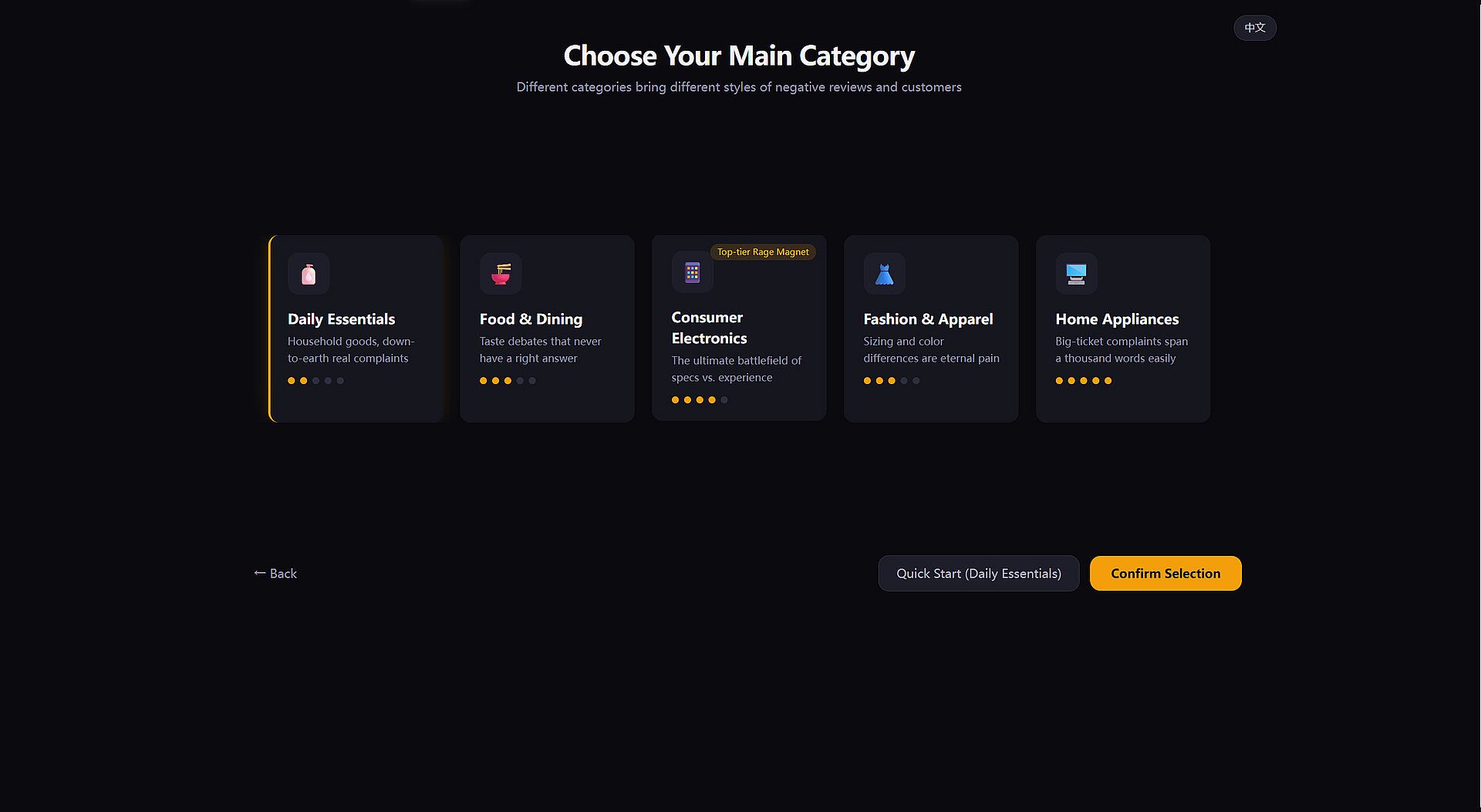
Content generation draws from multiple product categories including daily necessities, electronics, apparel, and food, along with varied customer personas and platform rules. The result is a steady stream of distinct complaints that keep each session fresh through procedural creation.
Game Modes
Three difficulty settings shape the experience. Easy mode supplies clear risk warnings and response suggestions to guide newer players. Standard mode delivers the intended balance of information and challenge. Hard mode removes visible risk indicators, requiring stronger independent judgment to manage the metrics effectively.
Multiple endings emerge from consistent management patterns. Outcomes range from steady growth through careful control to more volatile paths involving rapid attention with potential backlash, outright collapse under pressure, or shifts in the manager's approach and persona. These endings reward different styles of balancing the core metrics over repeated turns.
Strategic Elements and Content Variety
The game highlights authentic customer service scenarios drawn from real e-commerce situations. Reviews reflect diverse complaints and expectations, forcing players to weigh short-term fixes against longer-term stability. No single response is universally correct; success depends on how well the chosen action aligns with current metric priorities and upcoming goals.
Dynamic generation ensures that reviews and events differ across playthroughs. This procedural approach combines with fixed platform rules to produce varied sequences without repeating the same patterns. Product categories and customer types further expand the range of situations encountered during a session.
Strategic depth comes from the need to protect rating and cash flow while controlling risk and satisfying growth targets. Players learn to anticipate how a reply might affect boss satisfaction or trigger new events, turning each turn into a calculated step rather than an isolated action.
Is It Worth Playing?
Review Responder suits players who enjoy simulation and strategy titles built around resource management and consequence-driven choices. The turn-based structure and metric system reward careful reading and deliberate decisions over fast reflexes. Those interested in indie experiences that simulate professional roles will find the customer service focus distinctive.
The game offers three difficulty levels that scale the amount of guidance provided, allowing different levels of challenge. Multiple endings tied to management style encourage replay to explore alternative approaches. Content variety across product types and customer personas supports repeated sessions without immediate repetition.
Players seeking a focused single-player experience centered on trade-offs and long-term store performance will find the mechanics align closely with that preference. The absence of multiplayer elements keeps attention on personal decision quality and metric outcomes throughout each playthrough.