


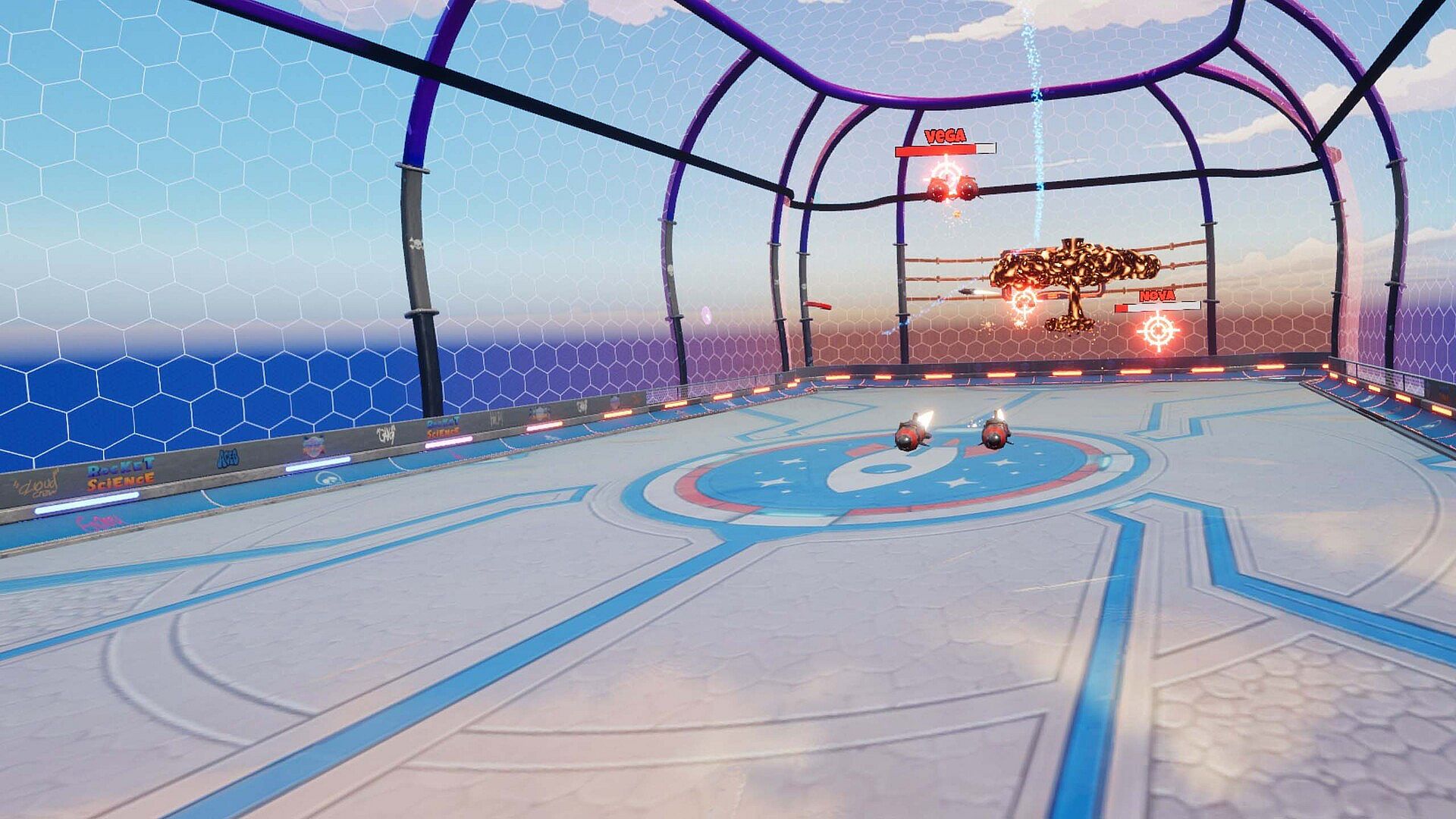
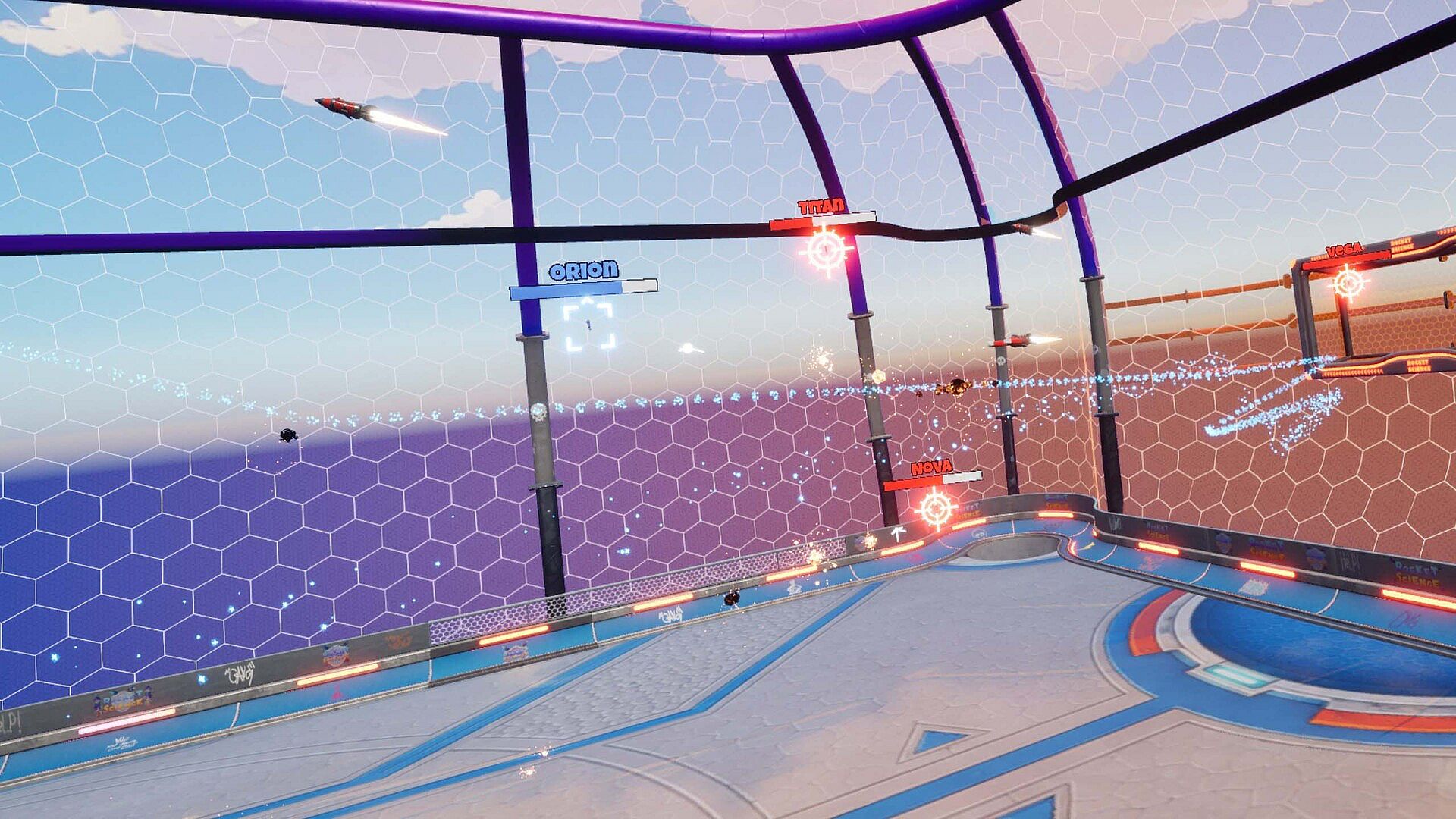
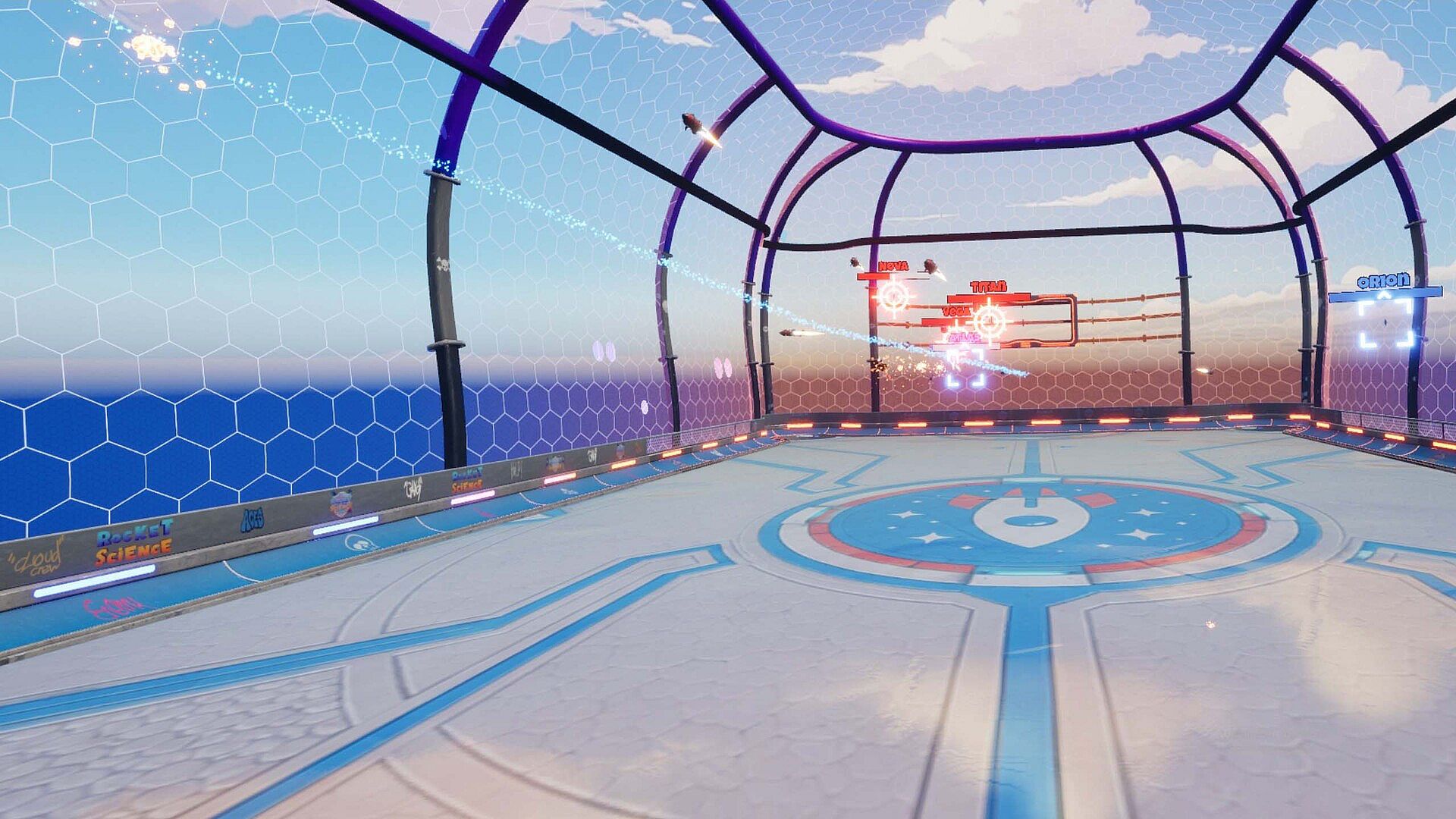
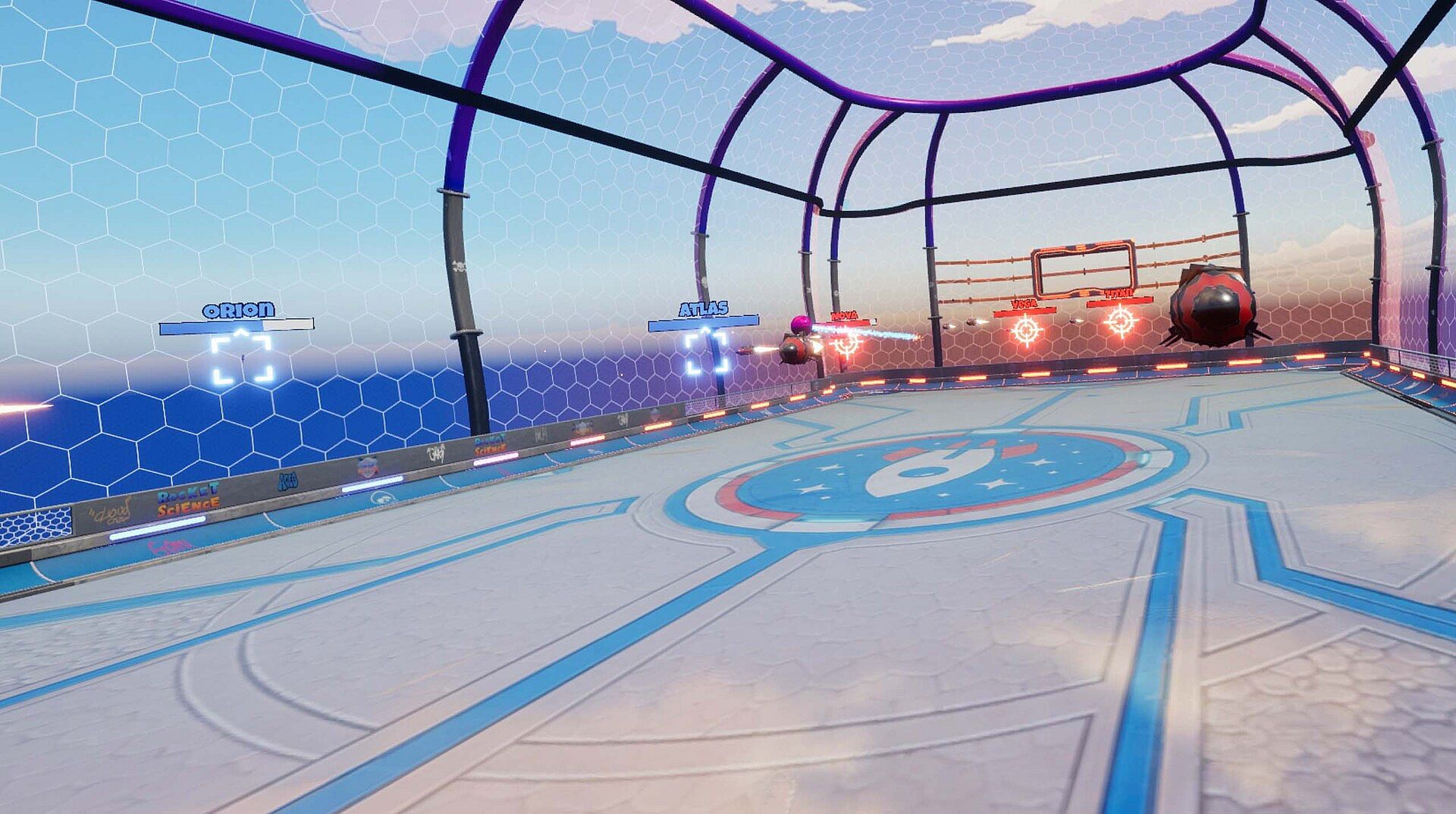
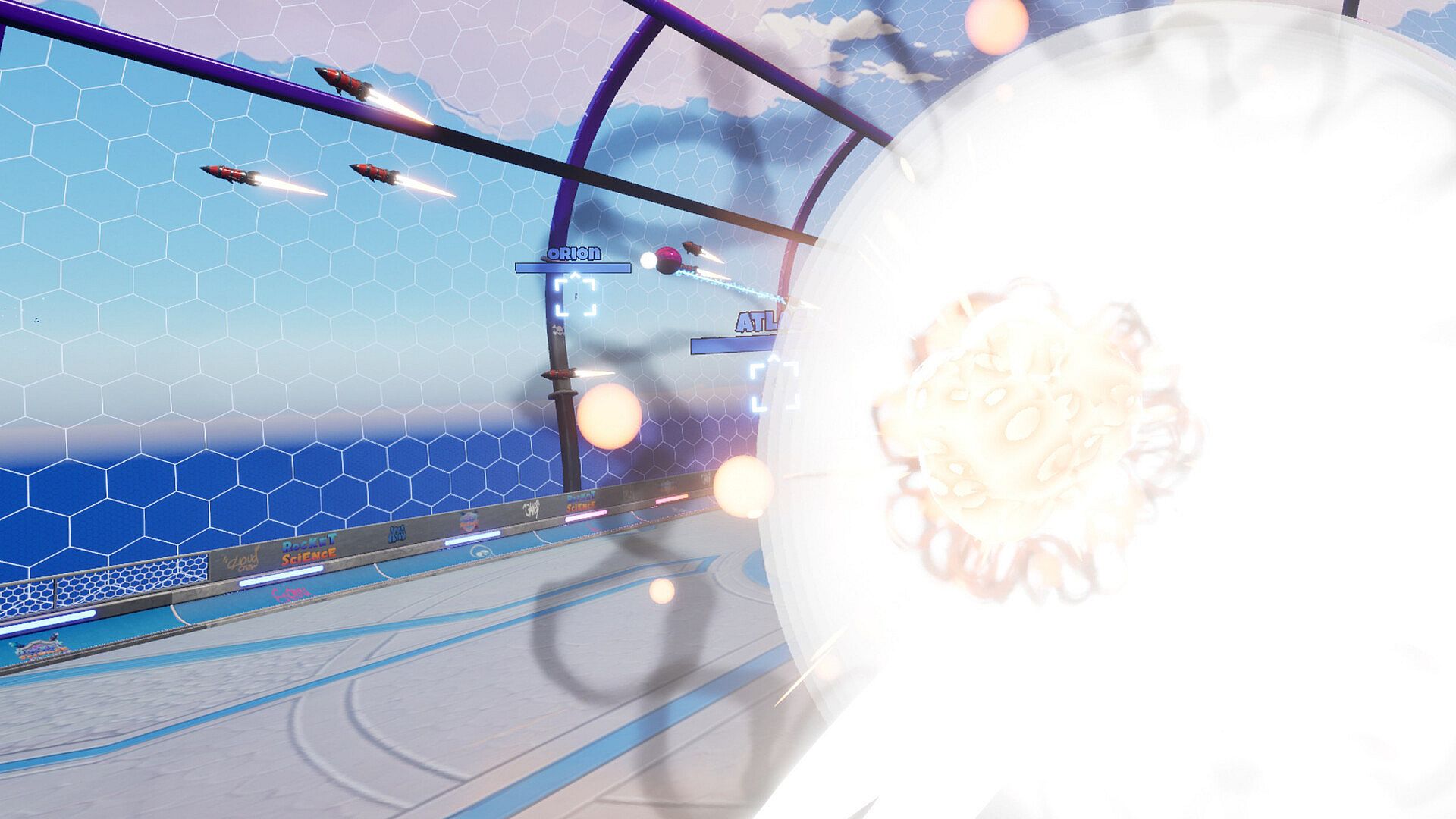
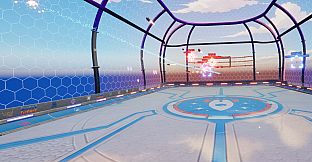
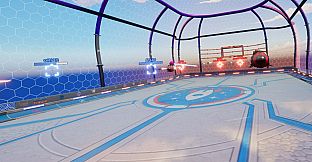
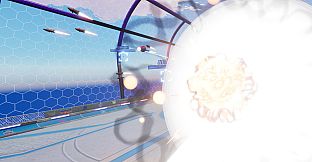
Rocket Science stands out as a PC-based VR action sports game that blends high-speed flight with competitive goal scoring in enclosed arenas. Players strap on a headset to pilot themselves through stylized futuristic spaces, using rockets as both propulsion and weaponry while guiding a physics-driven ball into the opposing goal. The experience emphasizes precision in movement, resource management, and coordinated team efforts rather than simple shooting matches.
Gameplay
Core movement relies on intuitive VR controls that let participants glide freely across the arena. Rockets serve multiple roles, propelling the player forward, redirecting the ball mid-flight, or striking opponents to disrupt their positioning. Ammunition must be monitored closely because overuse leaves a player vulnerable during critical moments. The ball itself responds realistically to impacts, requiring constant attention to its trajectory and momentum to maintain control or set up scoring opportunities.
Defensive play involves intercepting enemy rockets and shielding the goal area, while offensive strategies focus on chaining rocket shots to build speed and accuracy. Special abilities collected during matches add layers of strategy, such as magnet rockets that pull the ball toward the target or tornado rockets that deliver area damage. Speed boosts and repositioning tools help players adapt quickly when the action shifts across the arena. These elements combine to create matches where individual skill in aiming and timing directly influences team success.
Game Modes
Matches unfold in two primary formats. Single-player sessions pit the user against AI-controlled opponents across multiple difficulty settings, allowing practice of core mechanics like ball control and rocket timing without external pressure. Online multiplayer supports team-based competition where participants coordinate offensive pushes and defensive stands in real time against other human players.
Both modes operate within the same arena rules, emphasizing collection of power-ups and careful ammunition use. Team composition matters because balanced roles between attackers and defenders often determine the outcome. No additional modes beyond these verified options appear in the game structure.
Rocket Powers and Mechanics
Power collection occurs naturally during play, rewarding aggressive positioning and quick reactions. Magnet rockets alter ball paths toward the enemy goal, tornado variants increase damage output on contact, and movement abilities enable rapid repositioning to intercept threats. Blasting opponents directly contributes points to the team total, integrating combat into the scoring system rather than treating it as a separate activity.
Physics interactions govern every rocket launch and ball collision, so players learn to predict trajectories and use environmental bounces to their advantage. Ammunition limits force tactical decisions about when to fire for propulsion versus when to conserve shots for attacks or defense.
Is It Worth Playing?
Rocket Science appeals most to players who enjoy fast-paced VR experiences that combine sports-style objectives with direct combat elements. The requirement for a compatible VR headset and PC connection means it targets those already invested in virtual reality hardware, particularly setups tested on Meta Quest 2, Quest 3S, and Quest 3. Single-player options provide accessible entry points for learning the systems, while multiplayer delivers ongoing competition for groups seeking team coordination challenges.
The game supports both casual sessions and more intense matches through its AI difficulty scaling and online features. Individuals drawn to physics-based mechanics and rocket-powered movement will find consistent depth in the core loop of flying, firing, and scoring. Those preferring slower-paced or non-VR titles may find the intensity less suitable, but the verified focus on arena action and power management offers clear value for the intended audience.