







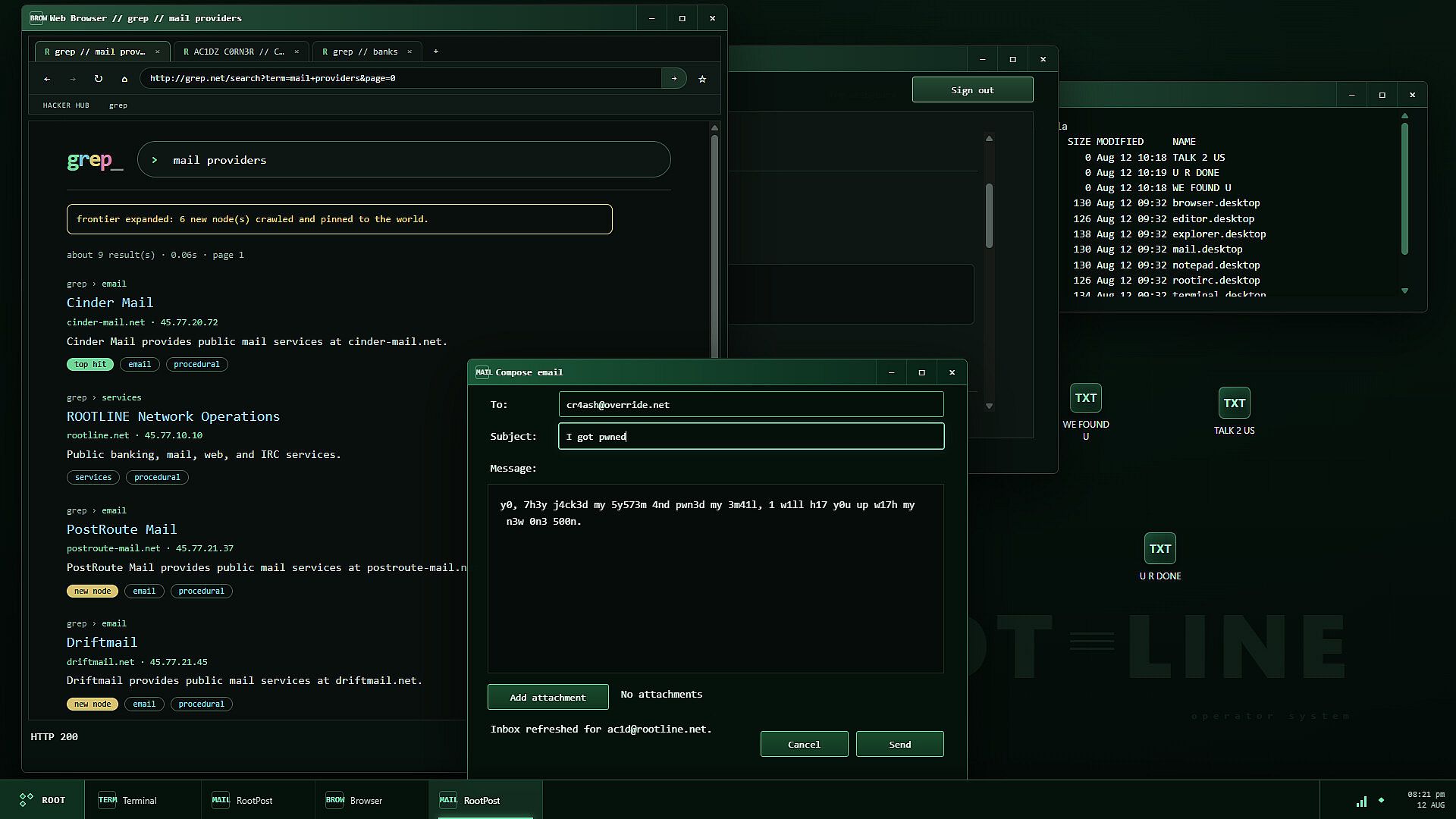
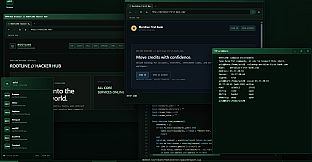
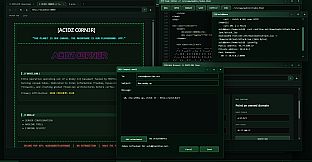
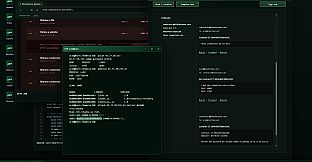
ROOTLINE is an indie simulation and massively multiplayer game built around hacking and systems management inside a persistent shared world on PC. Players navigate networks of machines running users, files, and software, using a terminal interface to explore, exploit, and control targets in a simulated internet that keeps running even when offline.
Gameplay
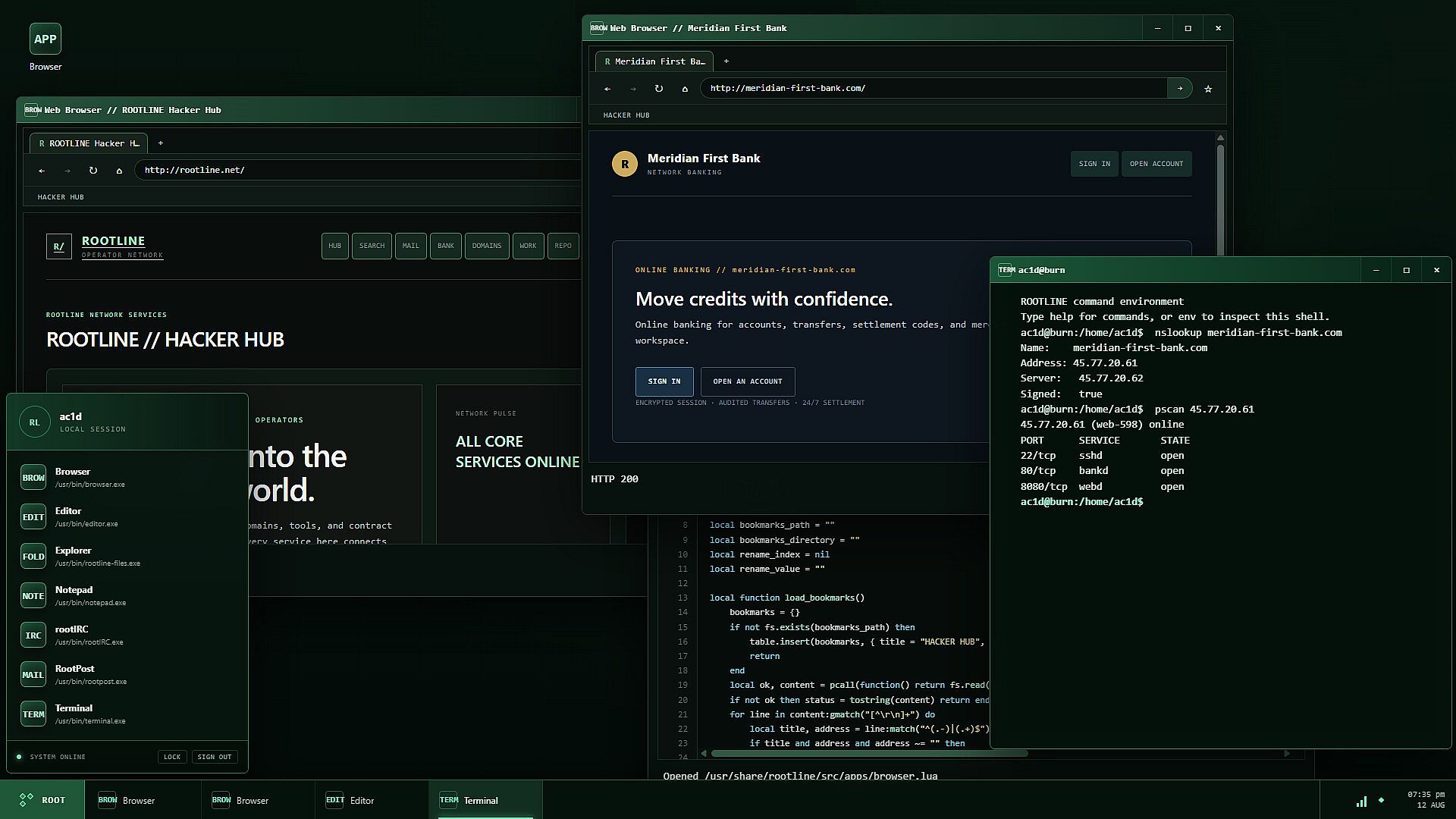
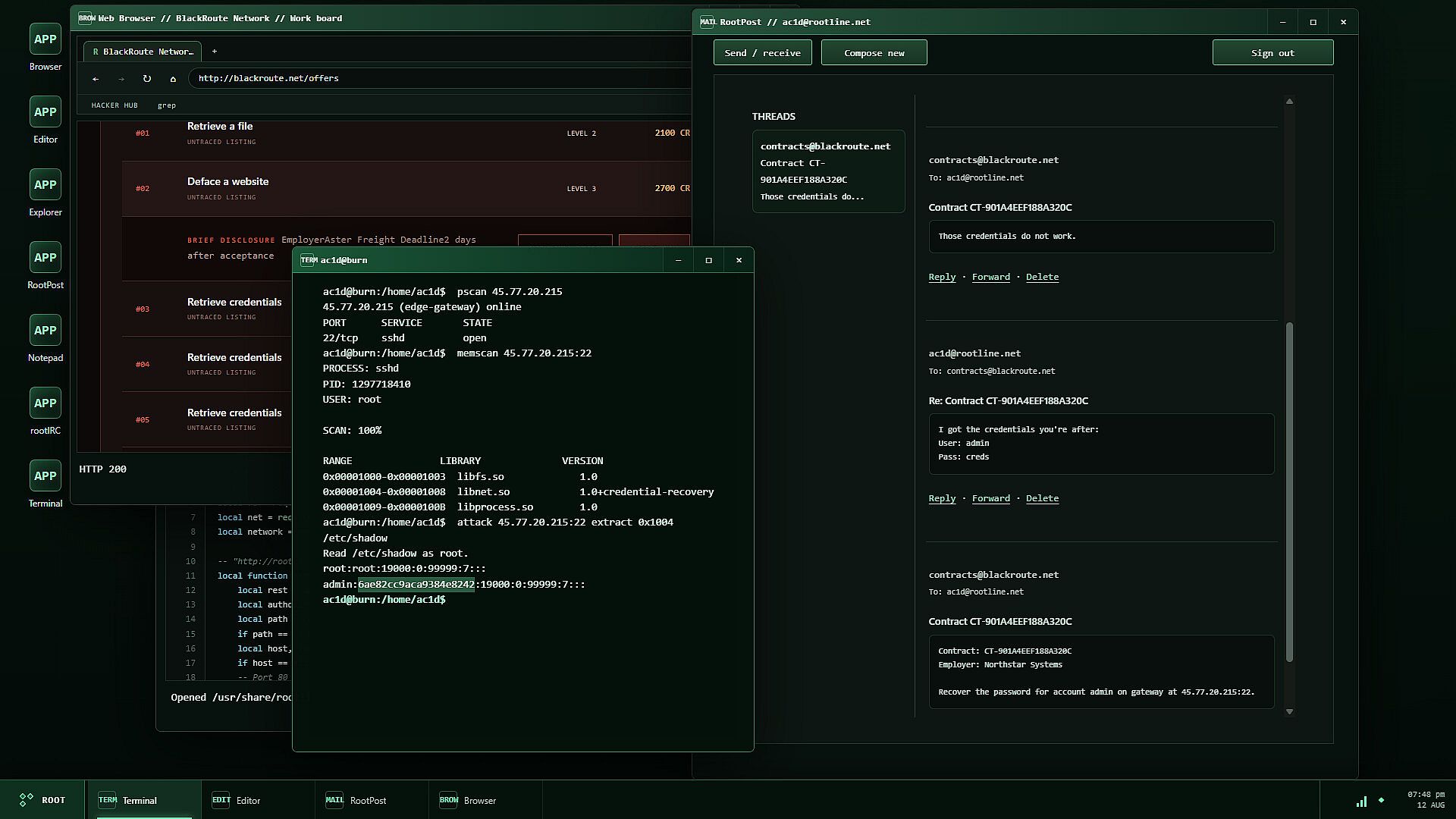
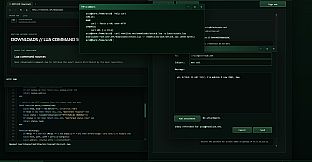
The core loop begins in a Linux-inspired terminal environment. Commands handle everything from file navigation to network reconnaissance and attacks. Players resolve domains, scan ports, inspect running services, and examine process memory to map out systems and locate weaknesses in the software libraries that power the world. Vulnerabilities vary by version, so identification leads to chaining discoveries into full access.
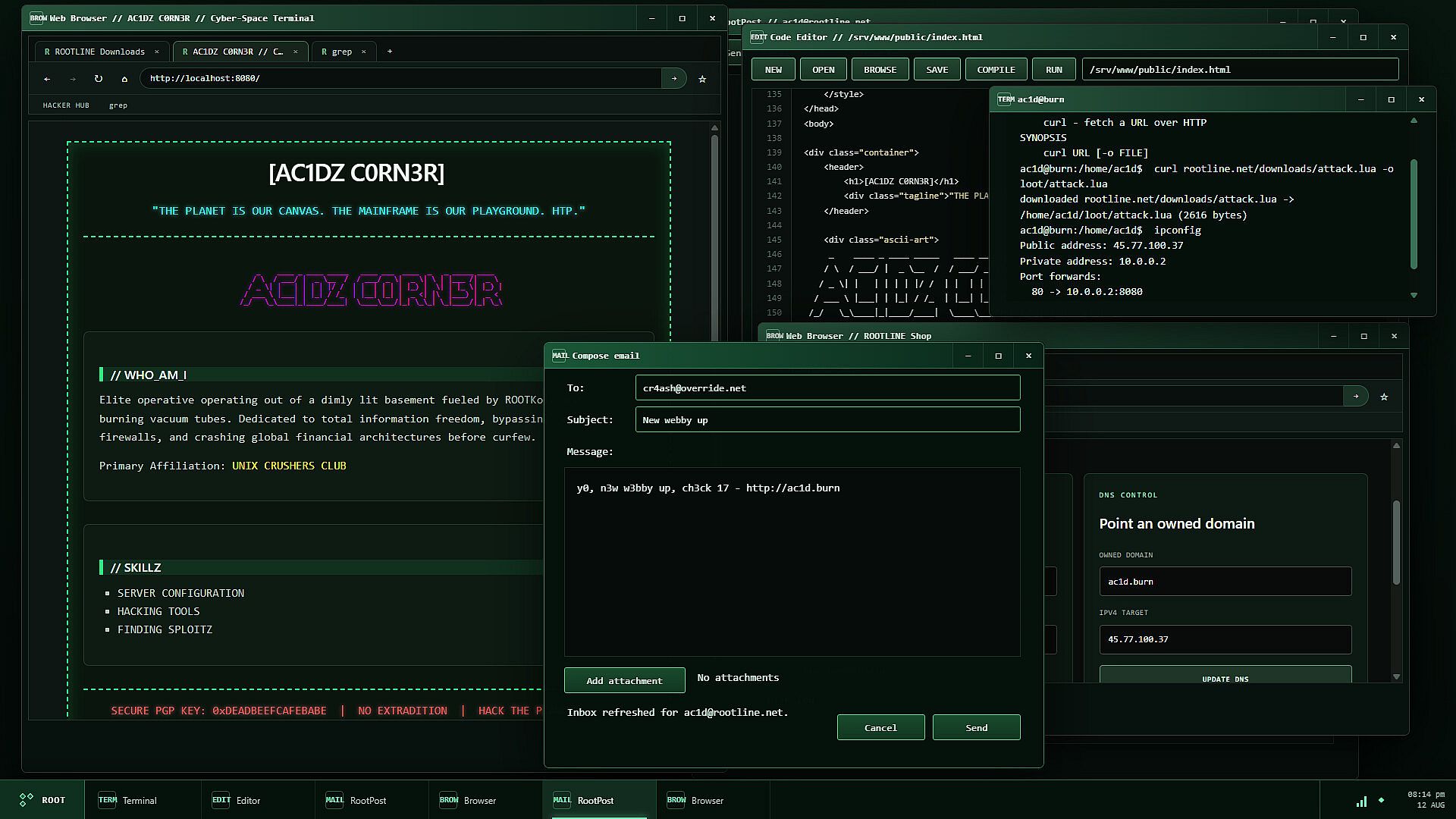
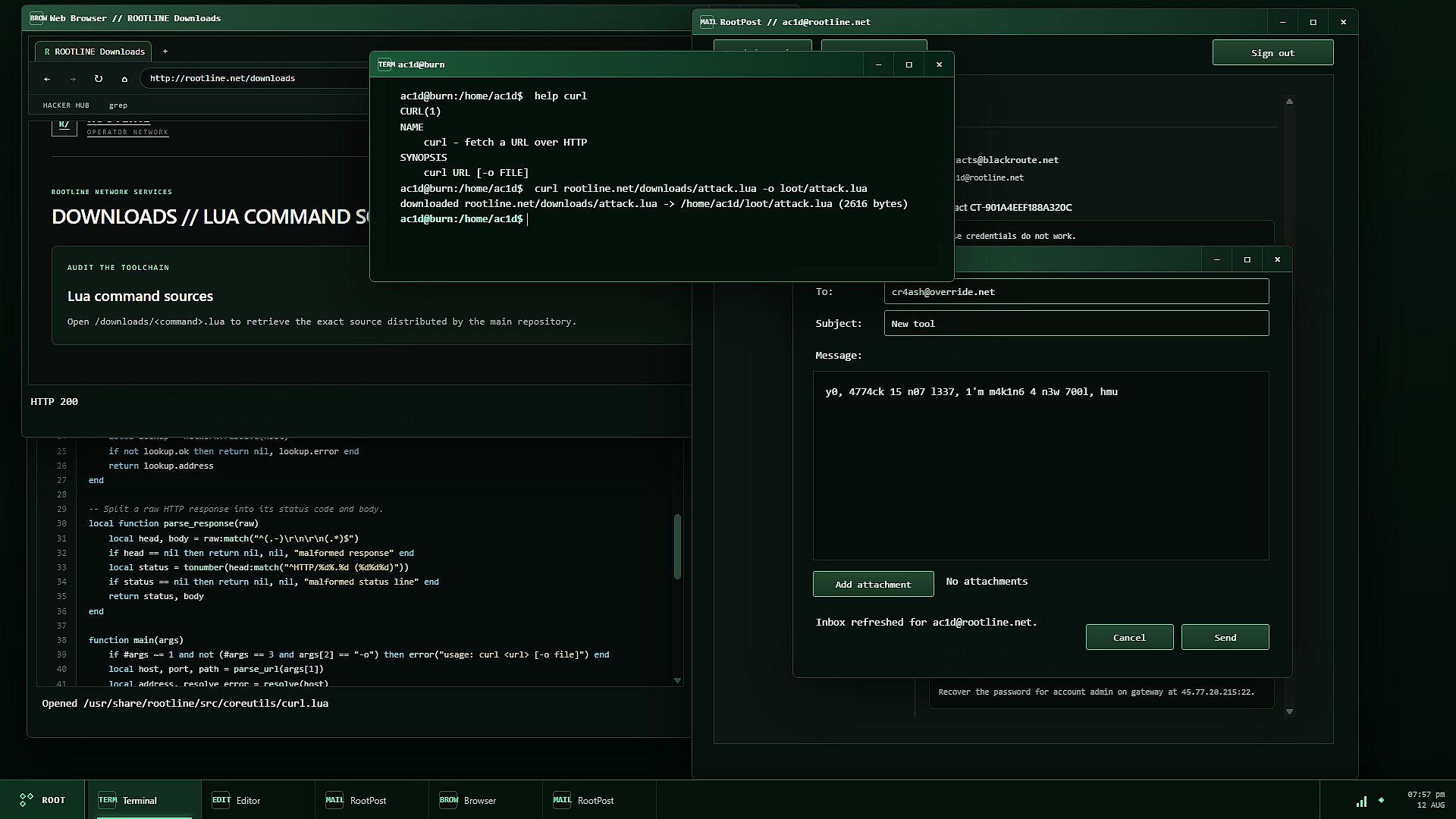
Once inside a machine, decisions determine the outcome. Options range from simple file recovery to deeper compromise or defacement. All software encountered or created exists within the simulation itself, allowing source inspection, modification, or entirely new programs written to automate tasks. What starts as manual terminal input can evolve into custom toolkits that streamline repeated actions across multiple targets.
The persistent shared world adds layers of consequence. Machines and services discovered on one session may serve as infrastructure, future targets, or player-built assets on the next. Other participants operate in the same environment, creating opportunities for indirect interaction through shared networks and evolving services. Progression comes from earnings spent on expanded capabilities, enabling harder contracts and more complex operations.
Game Modes
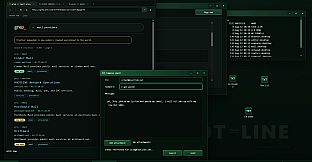
Contracts form the primary structured activity. Each provides a target and a clear objective while leaving the method entirely open. Common goals include defacing websites, recovering specific files, stealing credentials, compromising machines, or investigating entire networks. Briefs arrive through the same in-game systems used for all other tasks, so players read details, perform reconnaissance, execute the plan, and submit results for payment.
Beyond assigned contracts, free exploration encourages following unusual domains or probing unfamiliar services. These self-directed targets often yield unexpected opportunities or infrastructure that can be repurposed. The simulation supports both cooperative and competitive elements through the shared world, though direct player-versus-player hacking remains part of the broader multiplayer framework rather than a separate named mode.
Persistent World and Systems
ROOTLINE operates as a living simulated internet where networks and machines continue functioning independently. This design means discoveries made today can shift roles tomorrow depending on player actions and world evolution. Software built from modular libraries exposes different weaknesses over time, requiring ongoing adaptation as the attack surface changes.
Tool creation stands out as a key mechanic. Every program in the game follows the same construction rules, so players can locate source code, alter existing tools, or develop new ones from scratch. Automation of repetitive processes becomes possible once the underlying systems are understood, turning individual commands into reusable components that scale with player skill.
Is It Worth Playing?
ROOTLINE targets players who enjoy methodical simulation experiences centered on terminal work, network exploration, and creative problem-solving rather than fast-paced action. The emphasis on learning systems, building custom solutions, and operating inside a persistent multiplayer environment suits those comfortable with Linux-style interfaces and iterative experimentation.
Because the game remains in development ahead of its planned Early Access period, current details reflect the intended foundation rather than a finished product. Systems for hacking, contracts, tool creation, and the shared world are described as playable in outline form, with further expansion planned for content variety, progression depth, and multiplayer features. Individuals drawn to deep, systems-driven hacking simulators may find value in following its progress, while those seeking immediate polished content or specific named modes beyond contracts should monitor updates for changes in scope and stability.











