












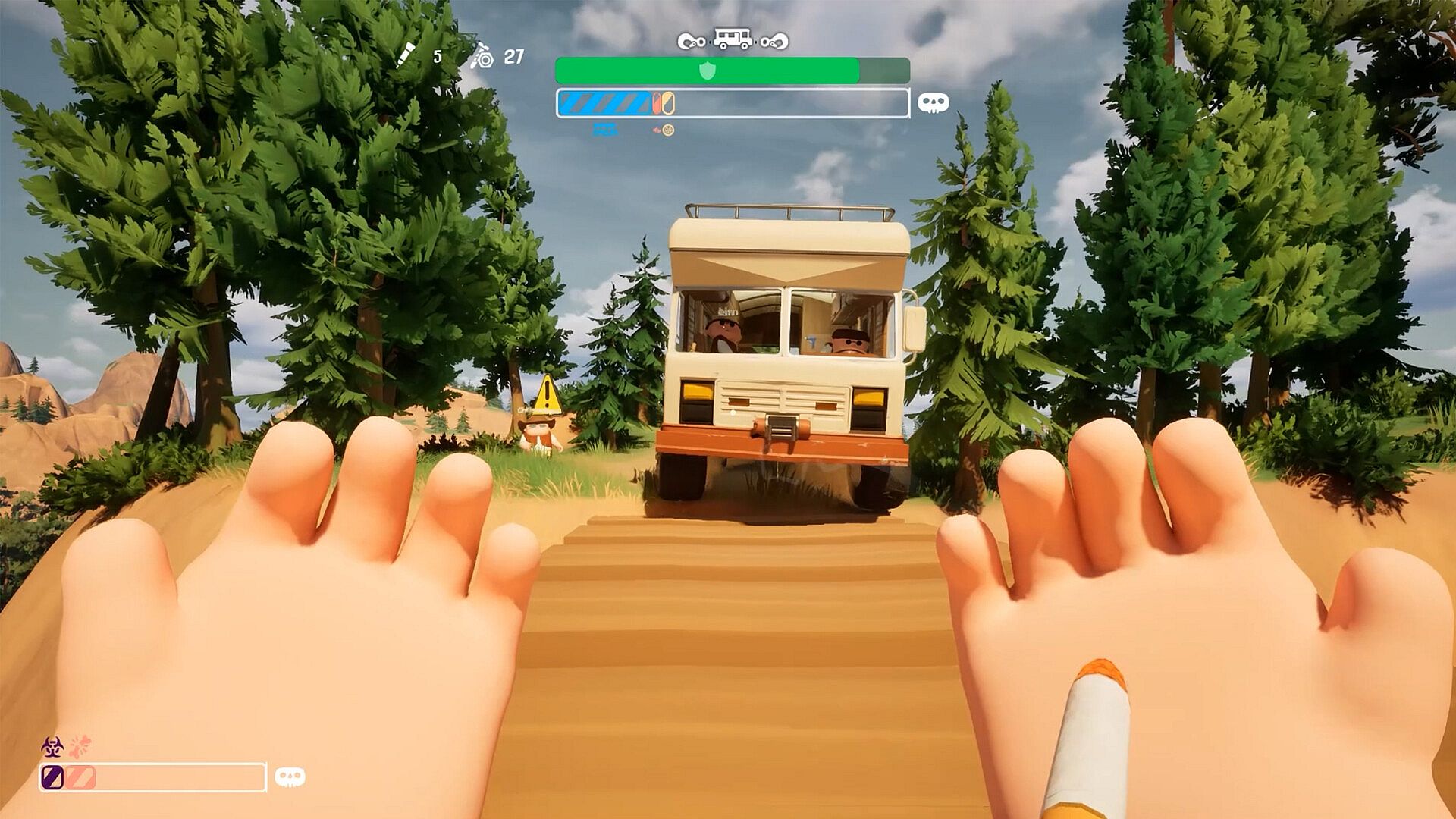
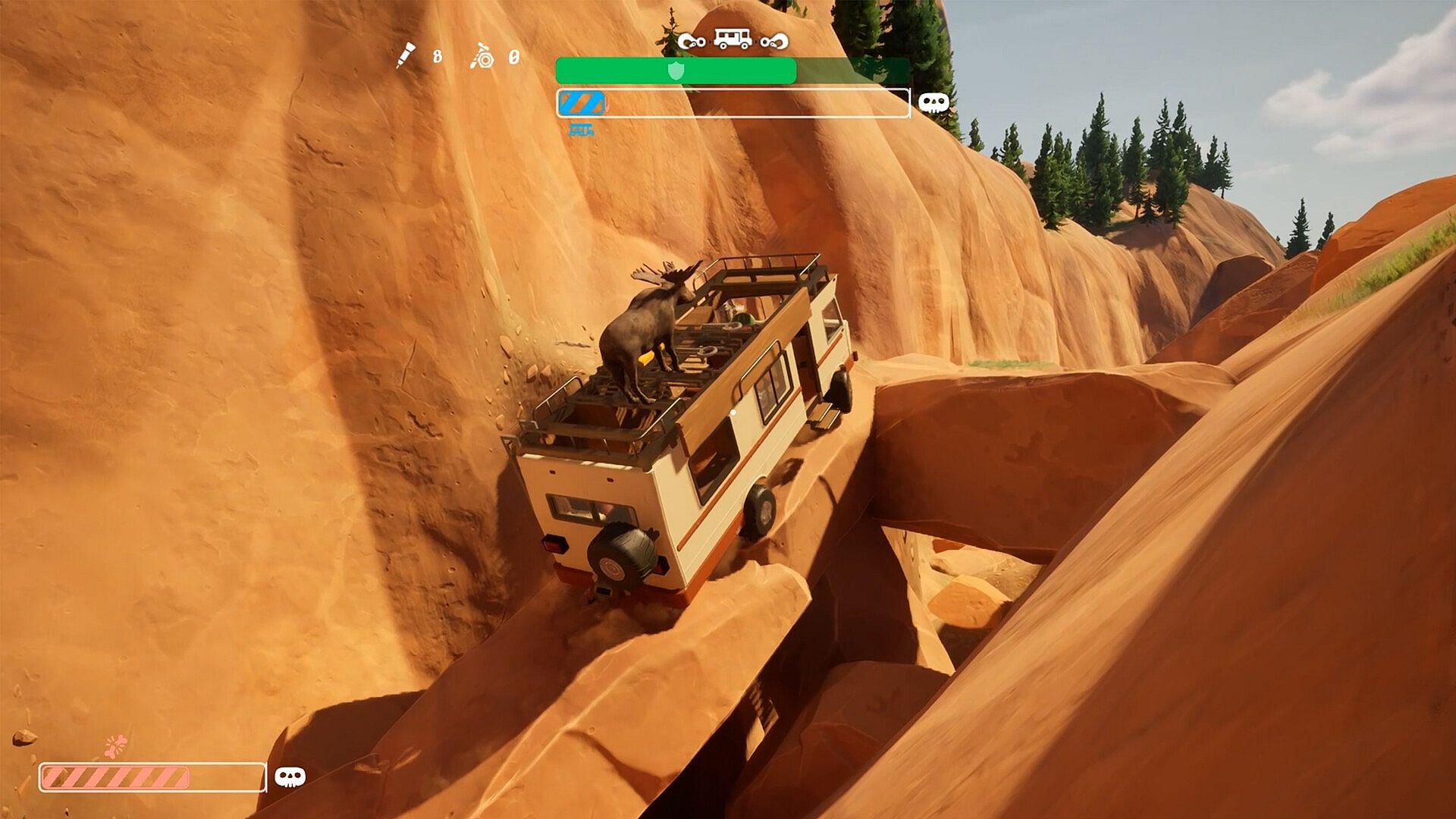








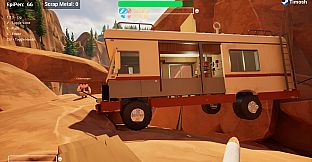

RV There Yet? is a co-op adventure game that puts up to four players in charge of a single recreational vehicle as they attempt to navigate treacherous backcountry roads after their planned route home is blocked. The experience centers on teamwork, resource management, and physics-driven problem solving in the hazardous Mabutts Valley, where the goal is to reach the exit to Route 65 while keeping the RV and its occupants intact.
Gameplay
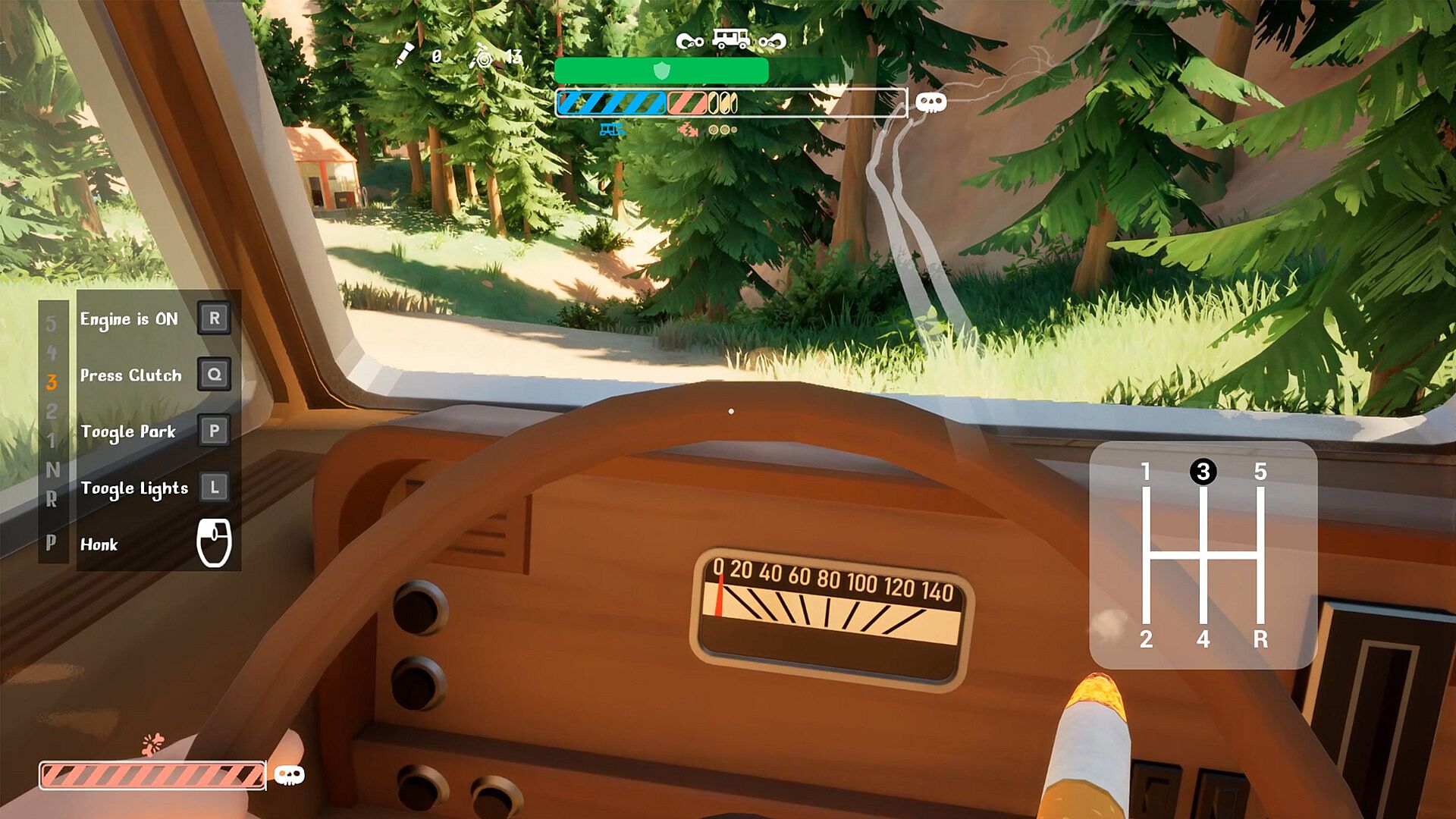
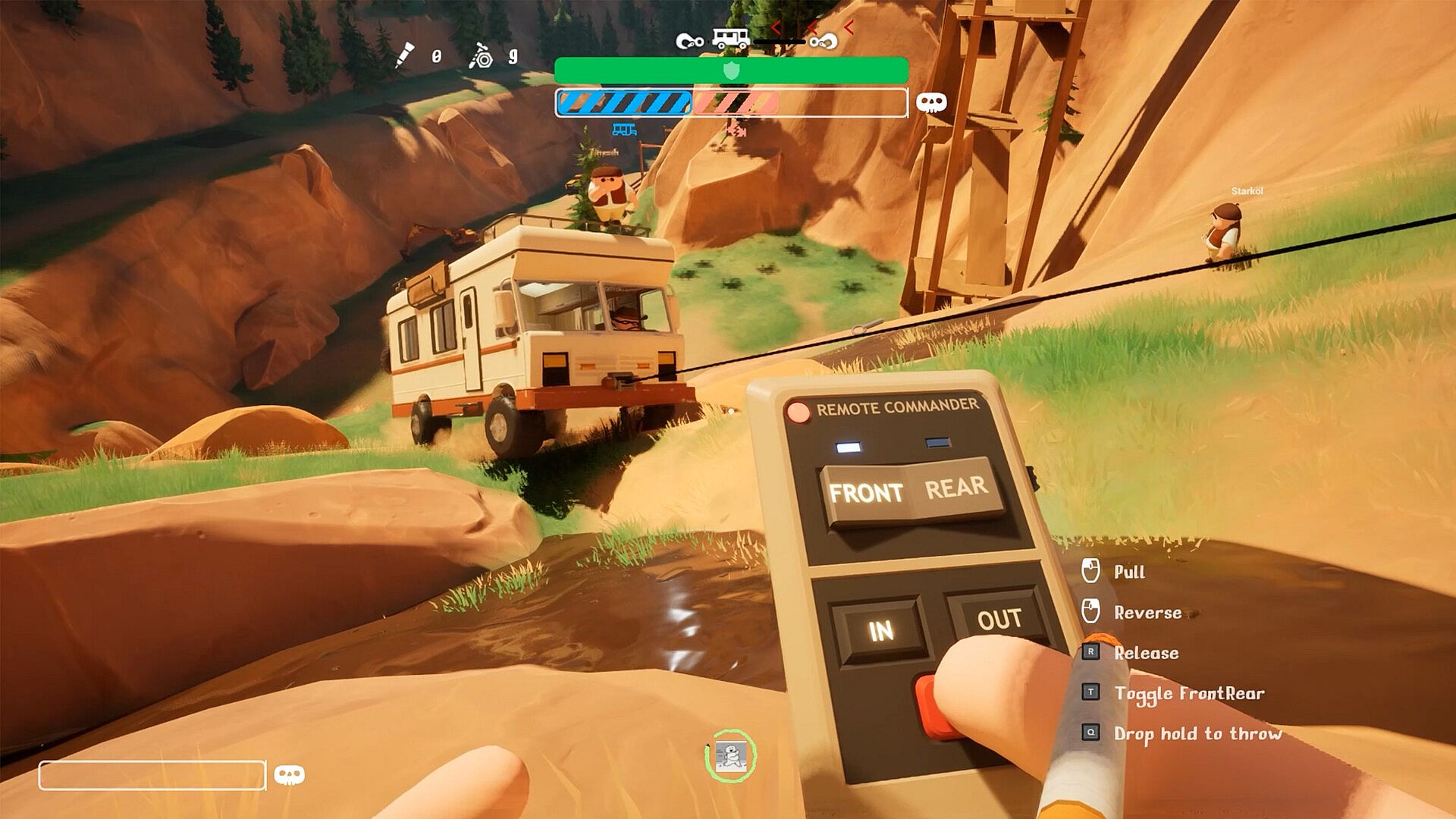
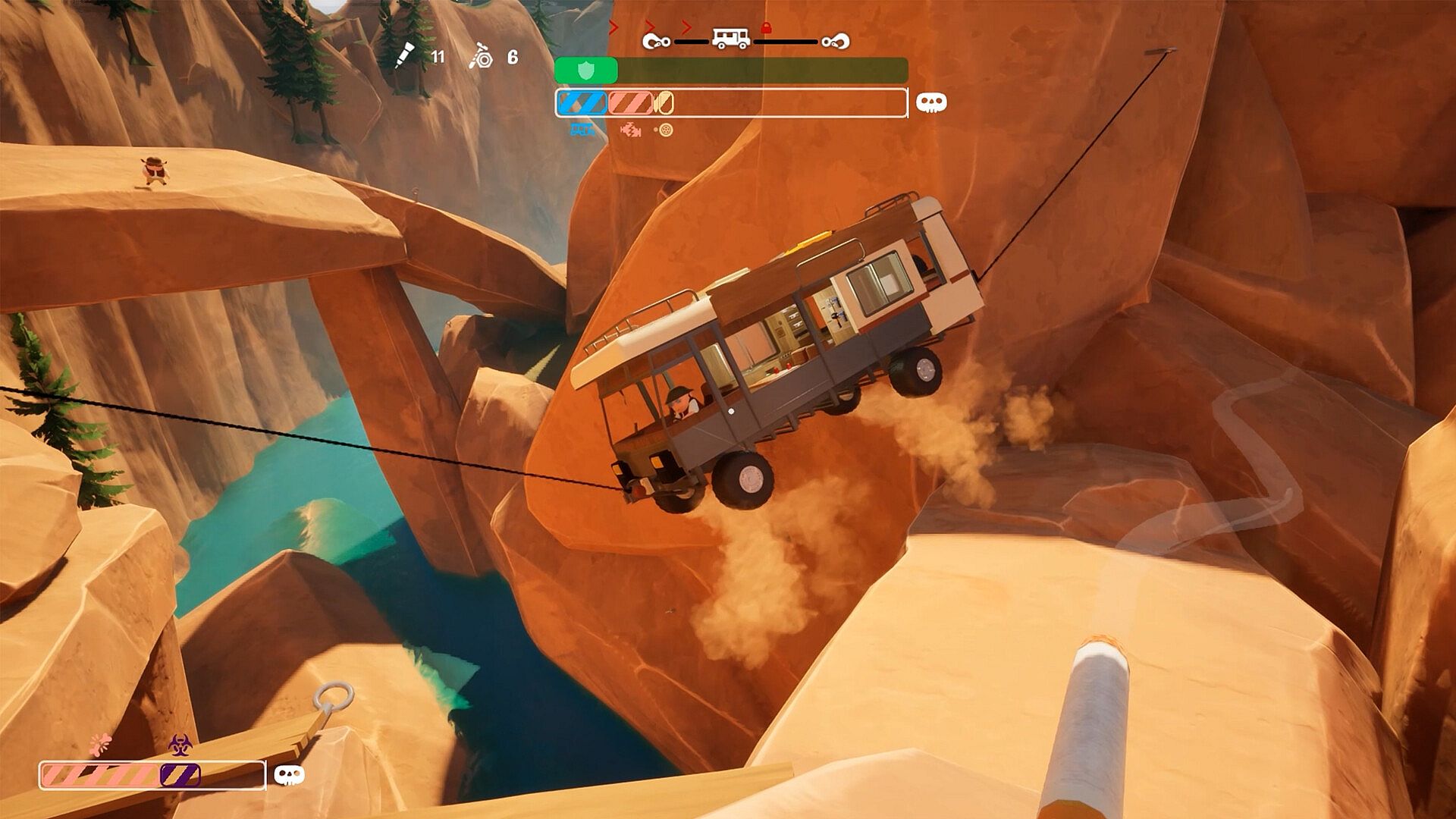
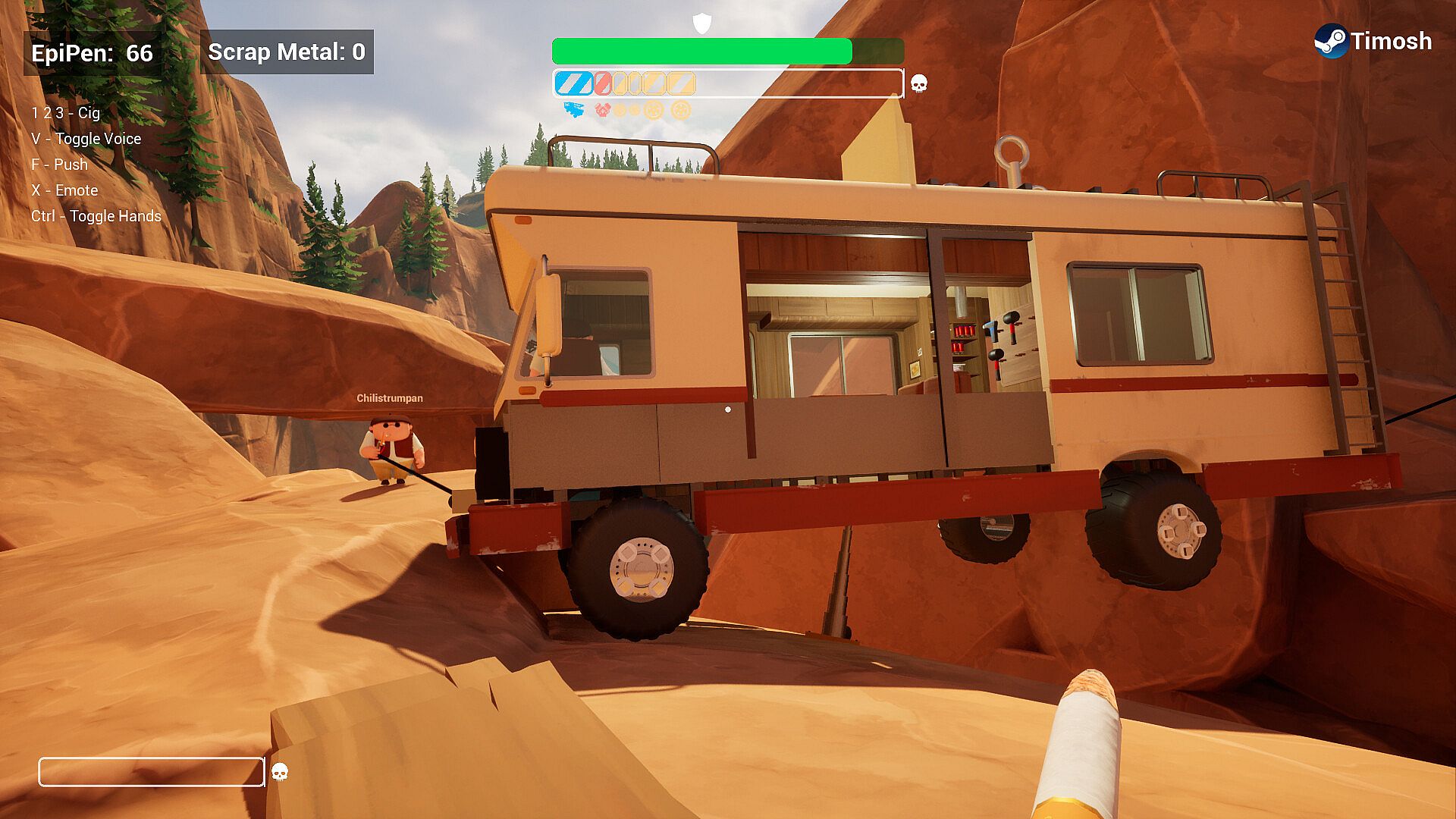
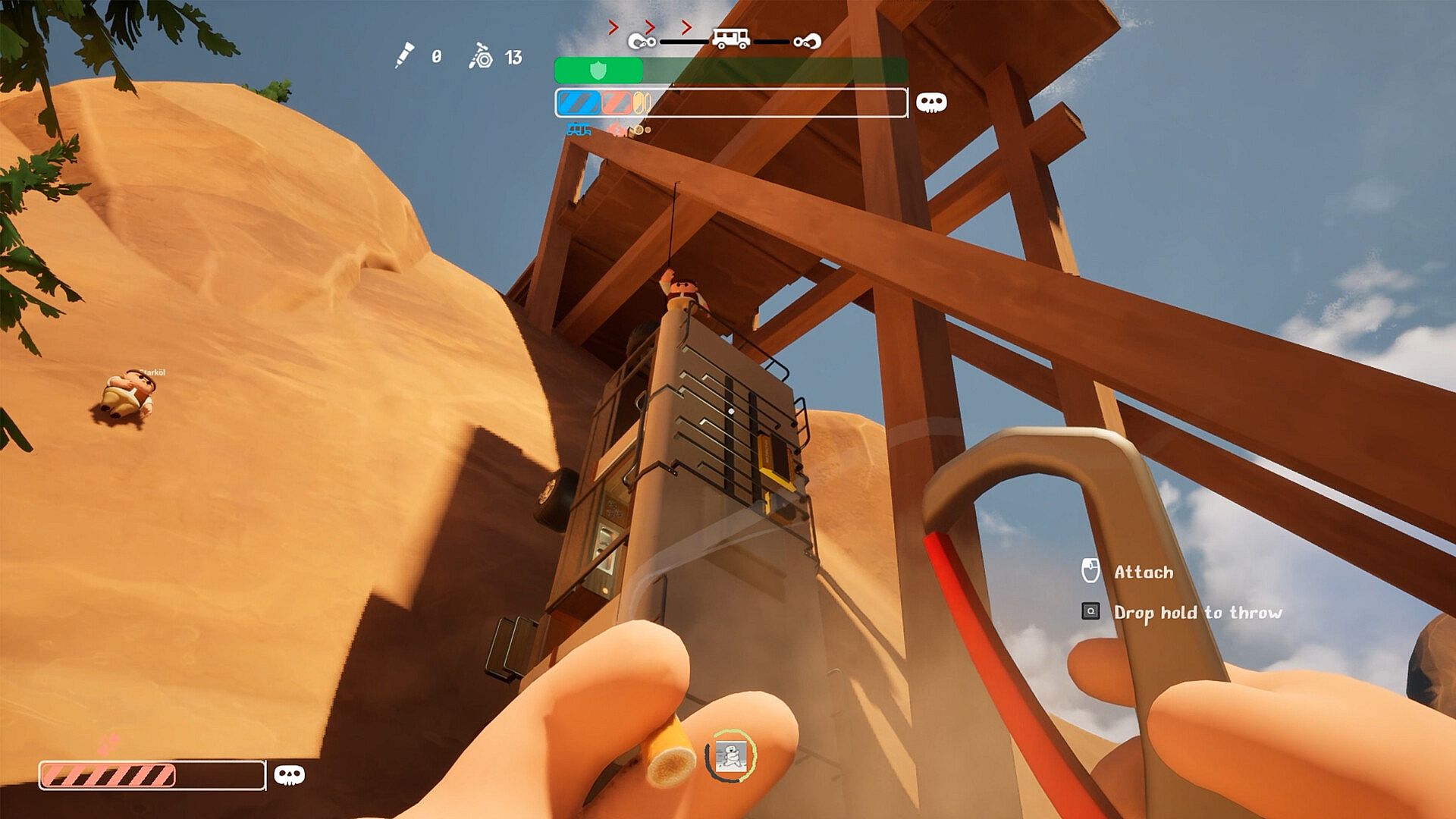
Players share control of one RV, with roles shifting between driving, operating the front and rear winches, and handling repairs or supplies. The winch system forms the core mechanical loop, allowing the group to pull the vehicle over obstacles, through tight spaces, or across unstable ground using realistic physics interactions. Success depends on coordination, as one misstep can send the RV tumbling or strand it in difficult terrain.
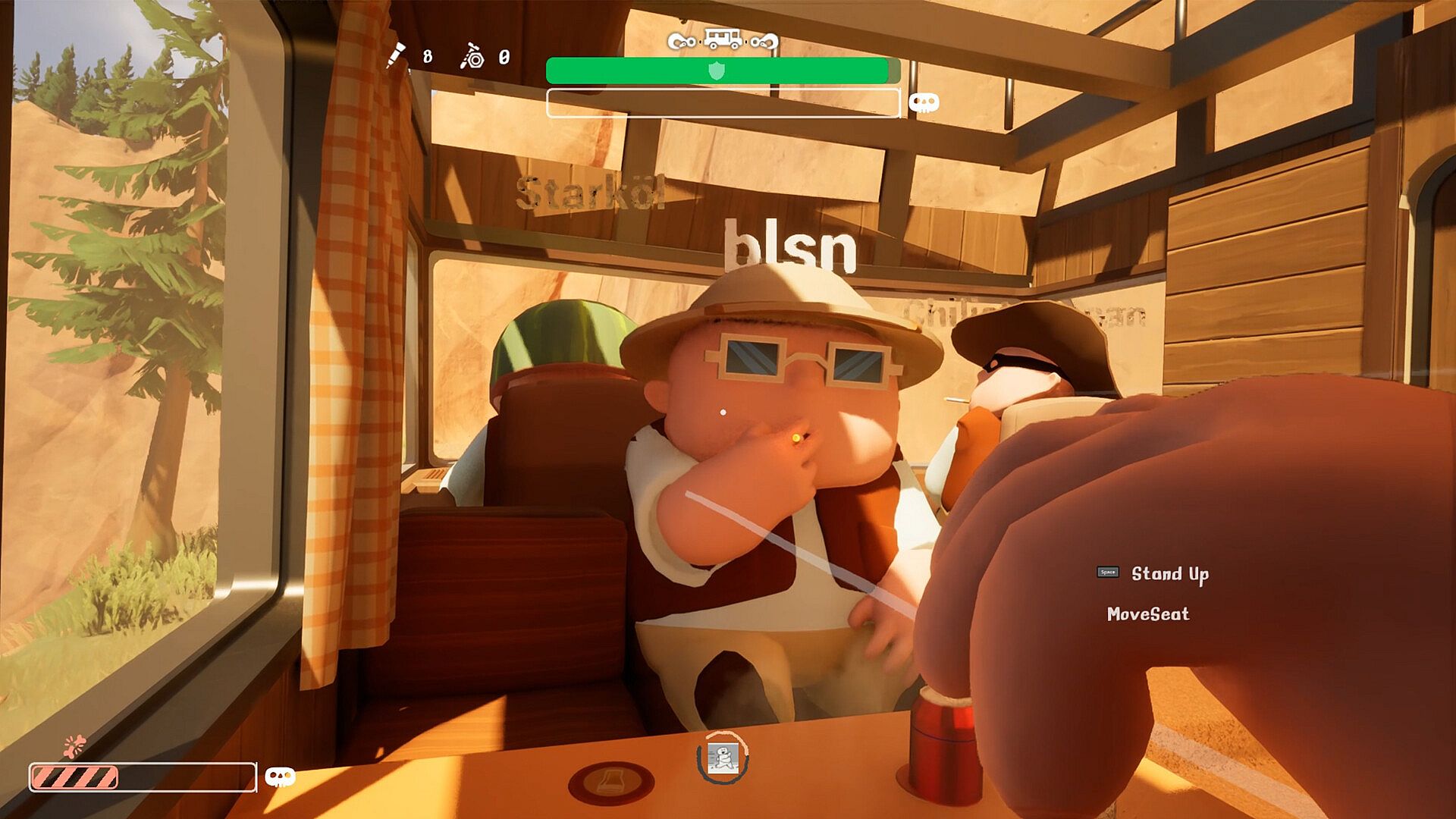
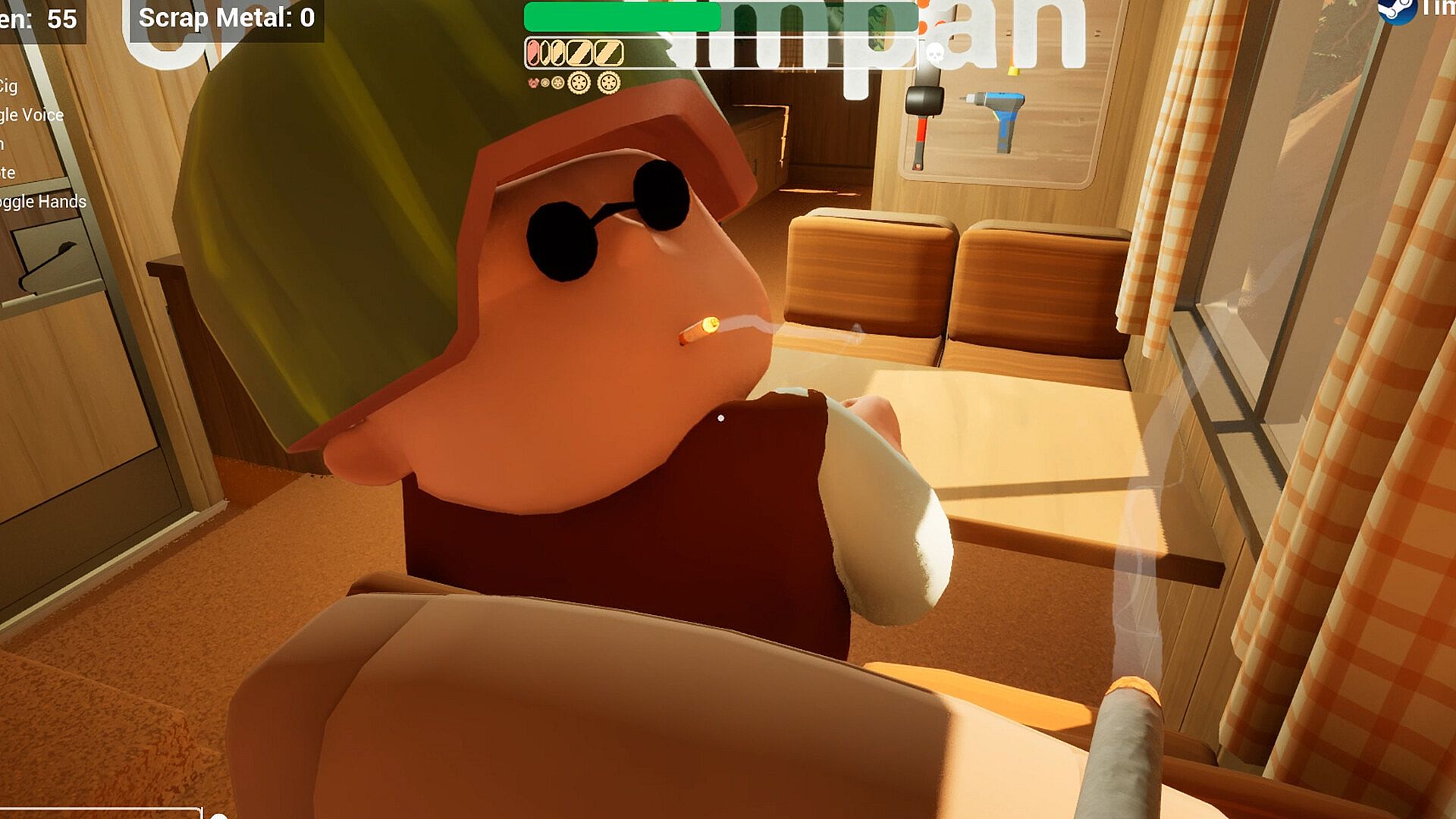
Survival elements require constant attention to the group's needs. Burgers restore energy, antidotes counter poisons, and EpiPens handle allergic reactions that can arise from valley hazards. Players also scavenge items to patch the RV and maintain its structural integrity. Side activities such as grilling meat patties or smoking cigarettes add light distractions that fit the game's casual tone while still tying into the broader loop of keeping everyone functional during the journey.
Proximity chat encourages natural communication that changes based on player positions inside or around the vehicle. Hats serve as simple customization options that appear during play without altering mechanics. The single hand-crafted map features varied sections including steep drops, dense forests, and narrow passages, each demanding different winch techniques and supply management to progress.
Game Modes
The game offers one primary cooperative experience built around the full traversal of Mabutts Valley. All players work together on the same RV in online sessions limited to friends, with no public matchmaking or separate competitive options. The focus remains on completing the route as a group, with emergent challenges arising from terrain, supply shortages, and vehicle damage rather than from distinct modes or objectives.
Progression follows a linear path through the valley's hazards, though alternative routes and repeated attempts allow groups to experiment with different winch strategies and resource priorities. There are no additional game modes such as time trials, versus play, or endless survival variants confirmed in the release.
Core Mechanics and Features
Physics interactions with the dual winches stand out as the most distinctive system. Players can attach lines to trees, rocks, or other surfaces to reposition the RV in creative ways, turning otherwise impassable sections into solvable puzzles. This mechanic rewards experimentation and quick thinking when the vehicle gets stuck or begins to tip.
Resource gathering and consumption create ongoing tension. The need to balance driving duties with supply runs and repairs means no single player can handle everything alone. Items found along the way directly support the RV's condition and the crew's health, reinforcing the scrappy, makeshift nature of the trip.
Additional touches like proximity voice communication and simple consumables such as cigarettes keep sessions lighthearted even when progress stalls. The overall loop rewards groups that communicate clearly and adapt to the valley's unpredictable layout.
Is It Worth Playing?
Player reception has been strongly positive, with Steam reviews holding at Very Positive levels across tens of thousands of ratings. The game delivers memorable sessions for groups of friends who enjoy chaotic cooperation and physics-based problem solving. Sessions typically last between four and nine hours depending on how many attempts the group needs to reach the exit.
It suits players seeking short, replayable co-op outings rather than long campaigns or competitive ladders. The low price point combined with the focused single-map design makes it a strong choice for occasional play with the same group. Those who prefer polished single-player stories or extensive content variety may find the experience limited after the initial runs, but the core loop of winching, repairing, and surviving remains engaging for its intended audience.
Current player counts show steady activity months after launch, indicating ongoing interest among co-op enthusiasts. The game stands as a solid pick for anyone looking for lighthearted, teamwork-heavy sessions without heavy time commitments.