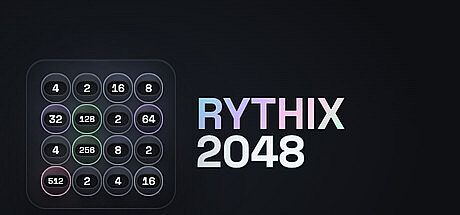


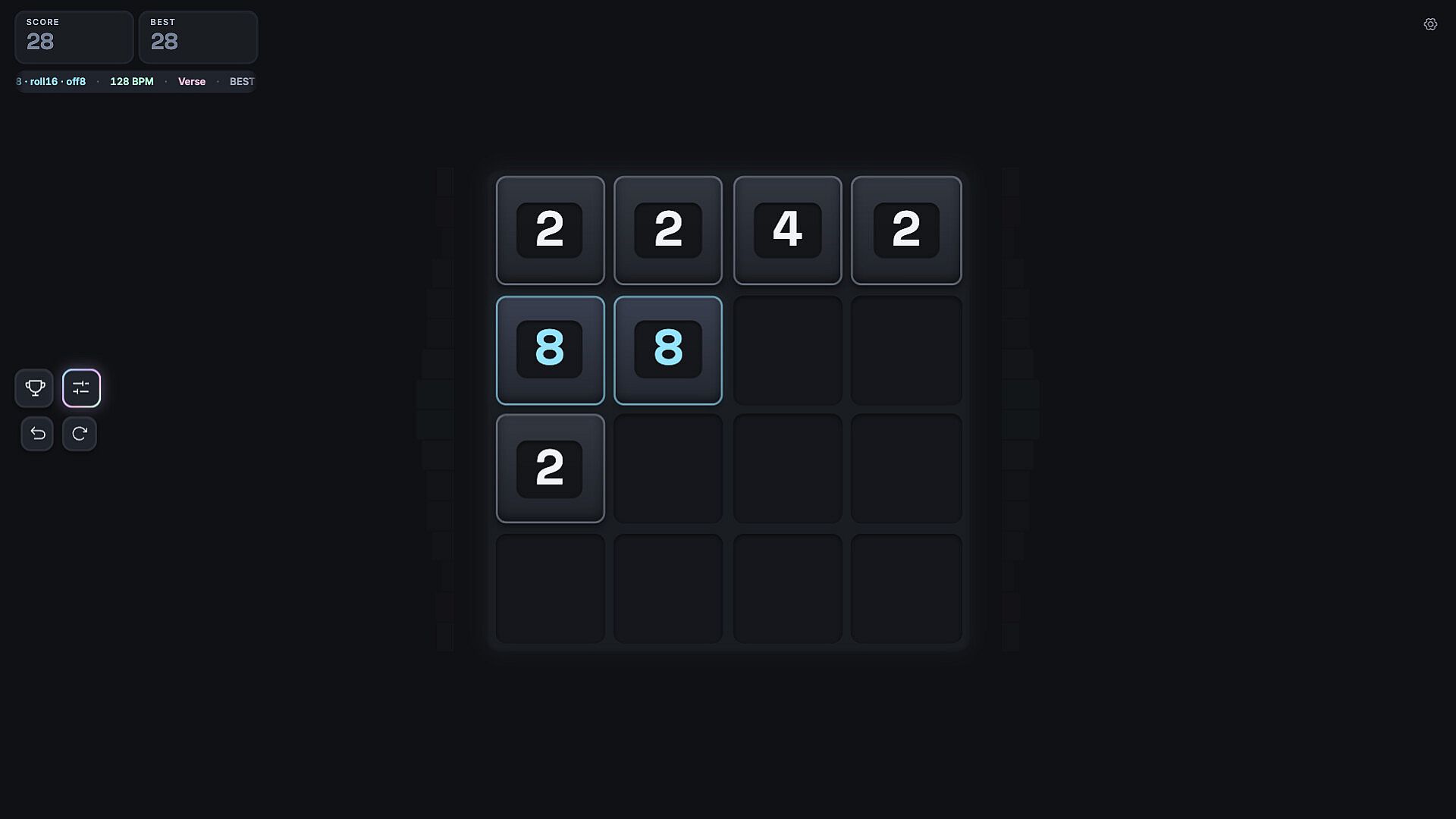
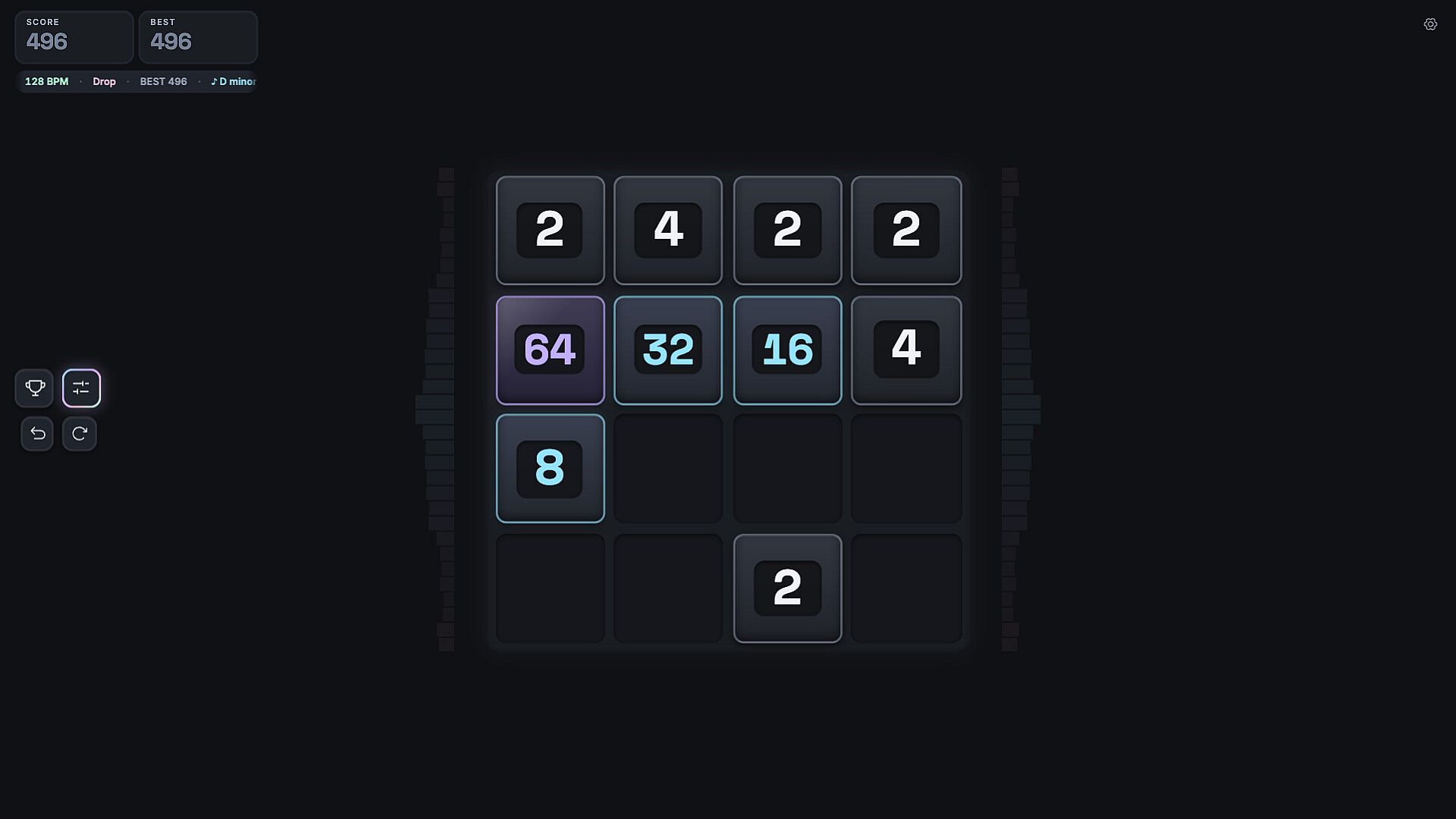

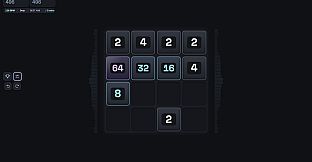

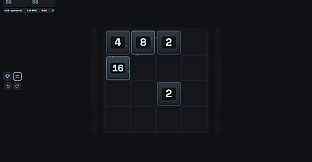

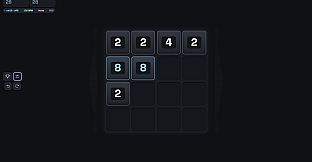
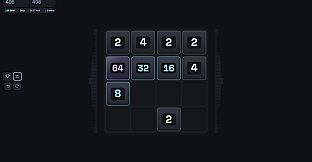
Rythix 2048 is a casual indie puzzle game for PC that fuses the familiar slide-and-merge mechanics of 2048 with real-time procedural electronic music generation. Players slide numbered tiles across a grid, combine matching values to create higher numbers, and watch as each action produces musical notes that build into an original techno track unique to that session. The experience stays entirely local, with all sound synthesis happening on the machine during play rather than relying on pre-recorded loops or external streams.
Gameplay
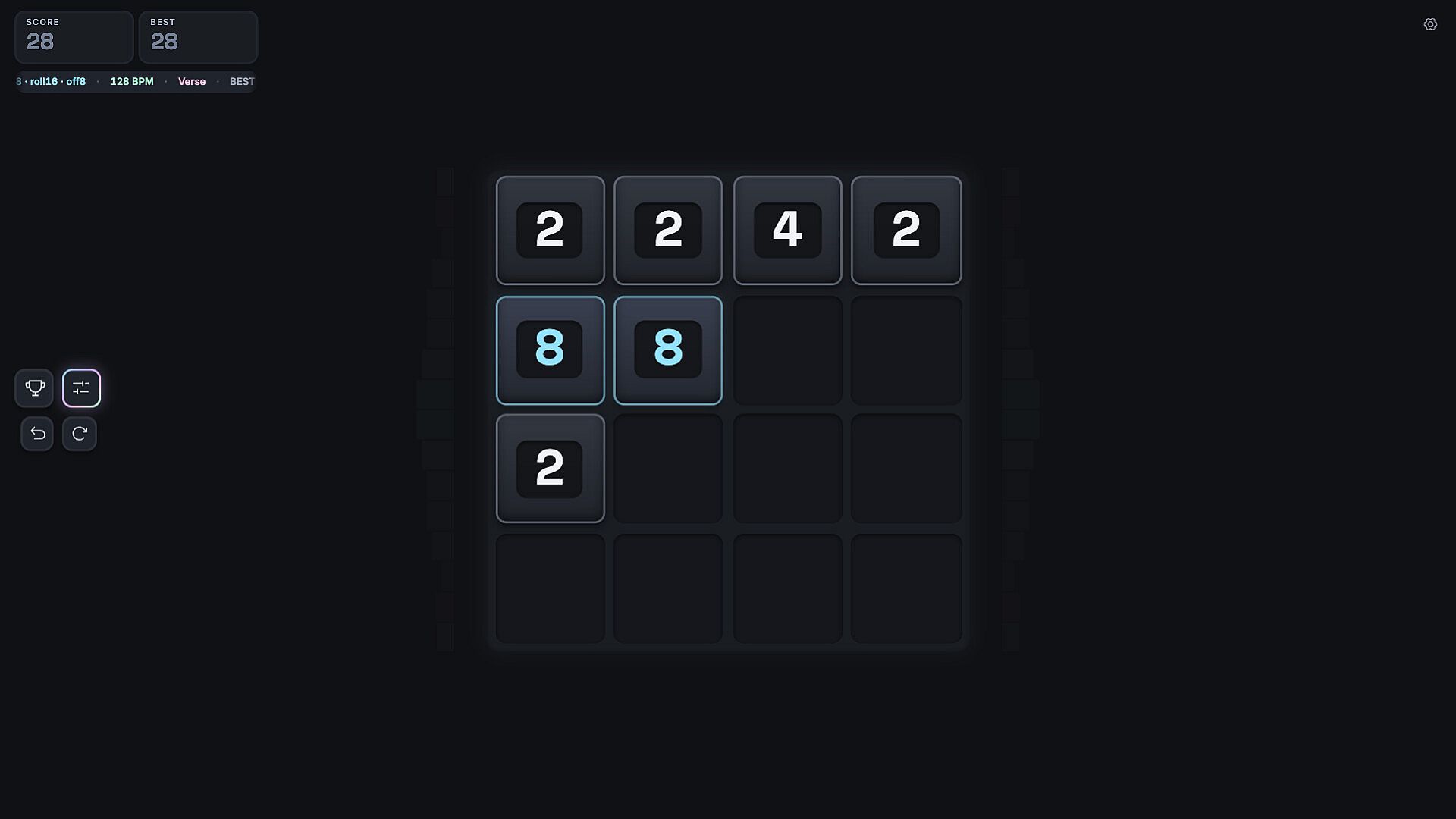
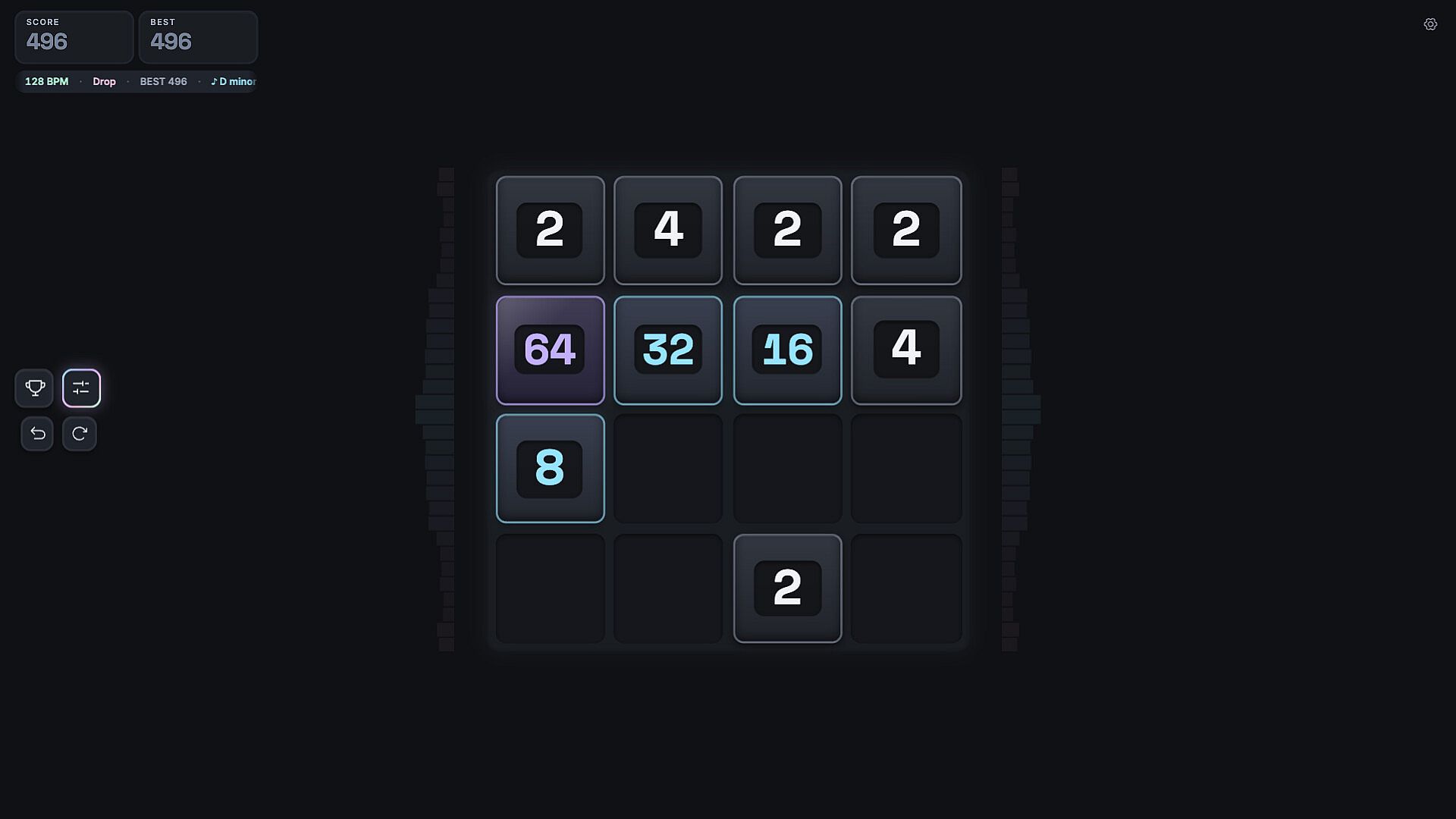
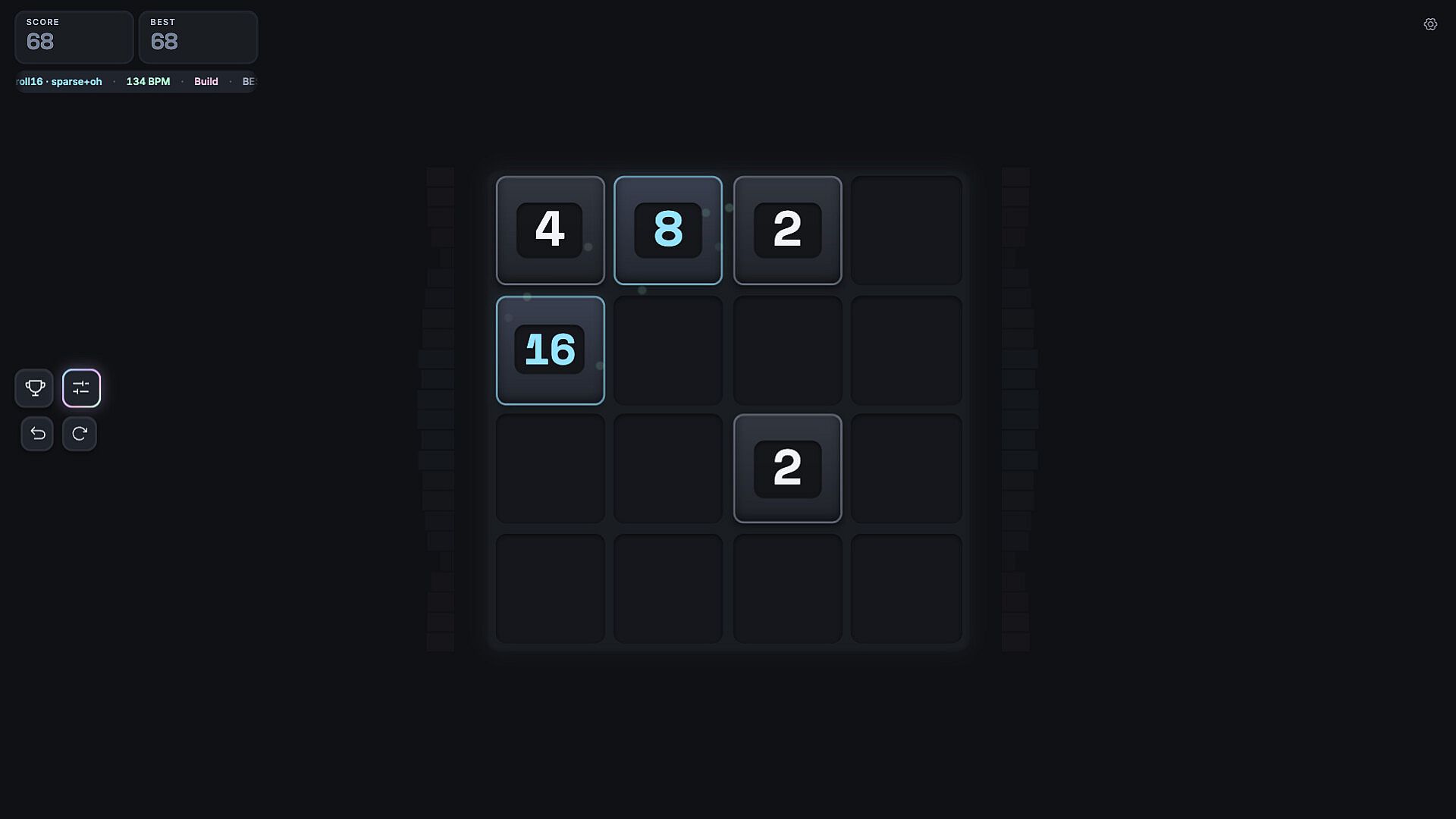
The core loop follows the standard 2048 format of moving tiles in four directions to merge identical numbers and reach progressively higher values. Every successful slide or merge triggers a corresponding musical note or element that layers into the growing composition. Longer sessions allow the track to develop further, with chain reactions and larger merges influencing the intensity and structure of the generated groove. Quiet periods on the board create space in the music, while aggressive play pushes toward more energetic sections. The procedural system ensures no two runs produce identical audio, as tempo, bassline, and key shift based on the specific sequence of moves.
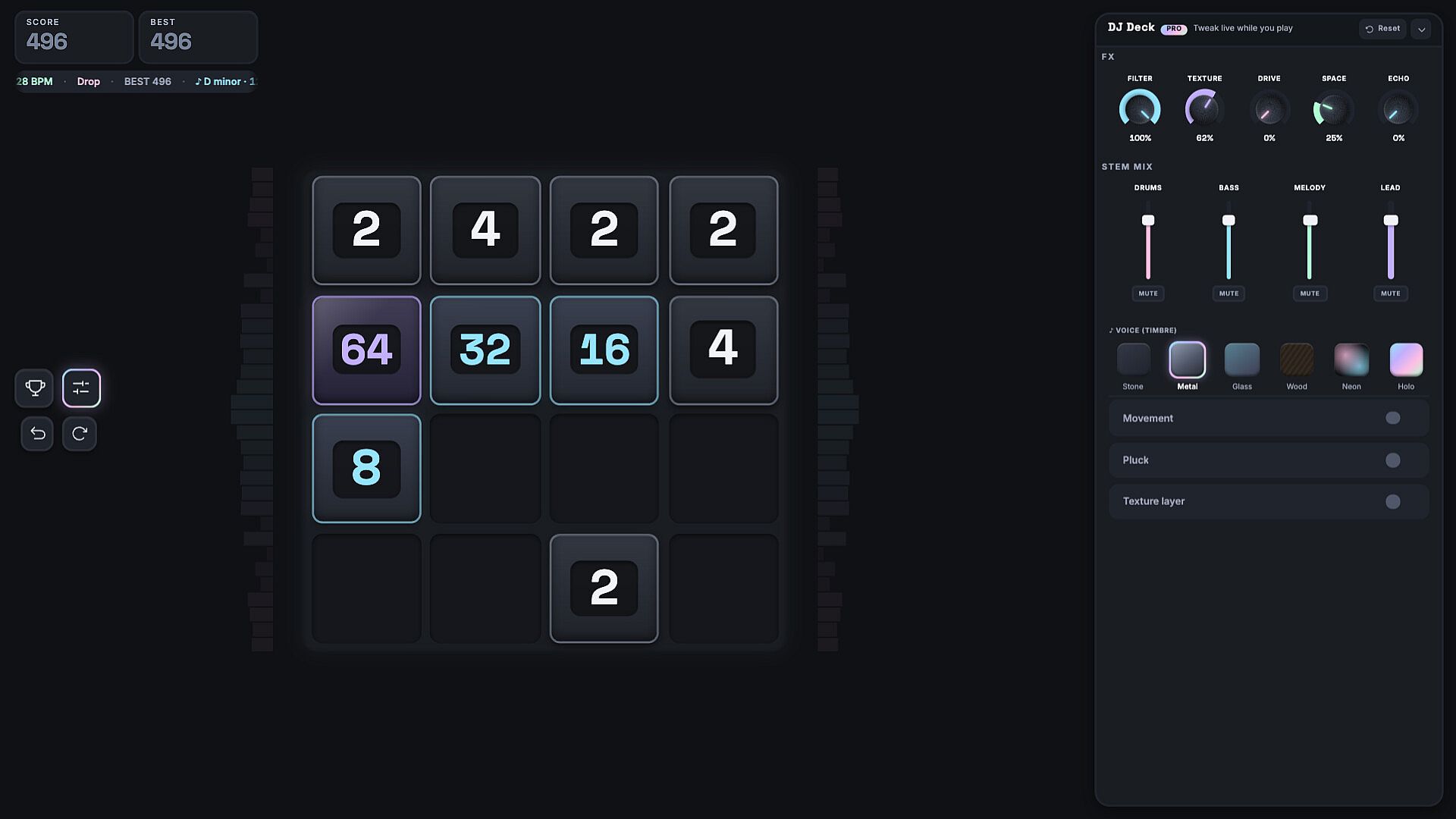
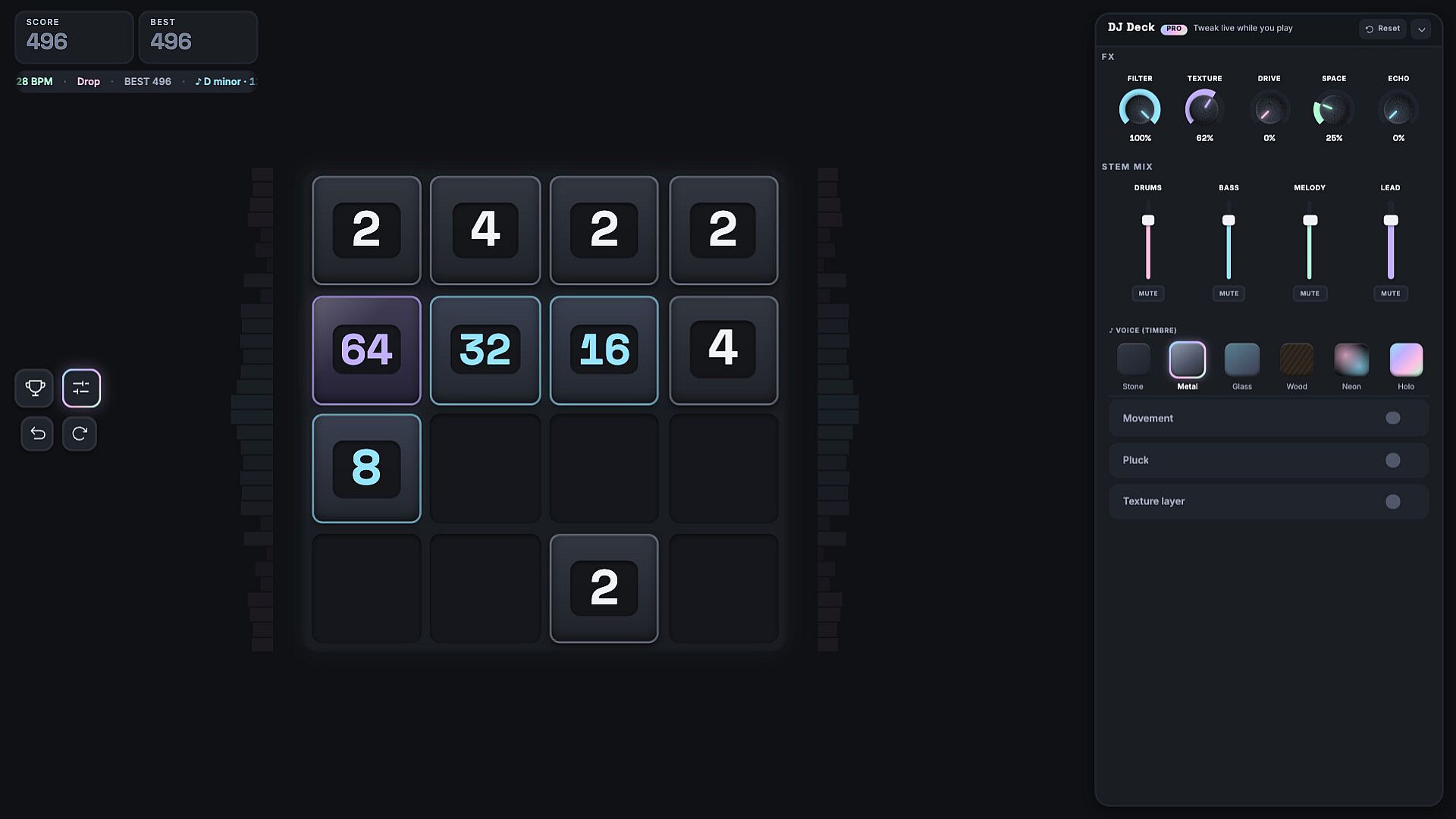
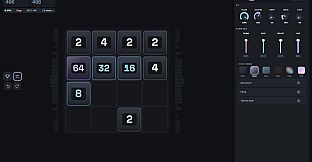
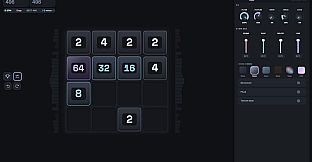
Players maintain control over the emerging sound through an integrated DJ Deck interface. This tool permits live adjustments such as filter sweeps, drive and echo effects, stem muting, and spatial processing without interrupting the puzzle session. The deck operates in real time alongside the grid, turning the act of solving the puzzle into an active performance element where strategic tile placement directly shapes the audible output.
Game Modes
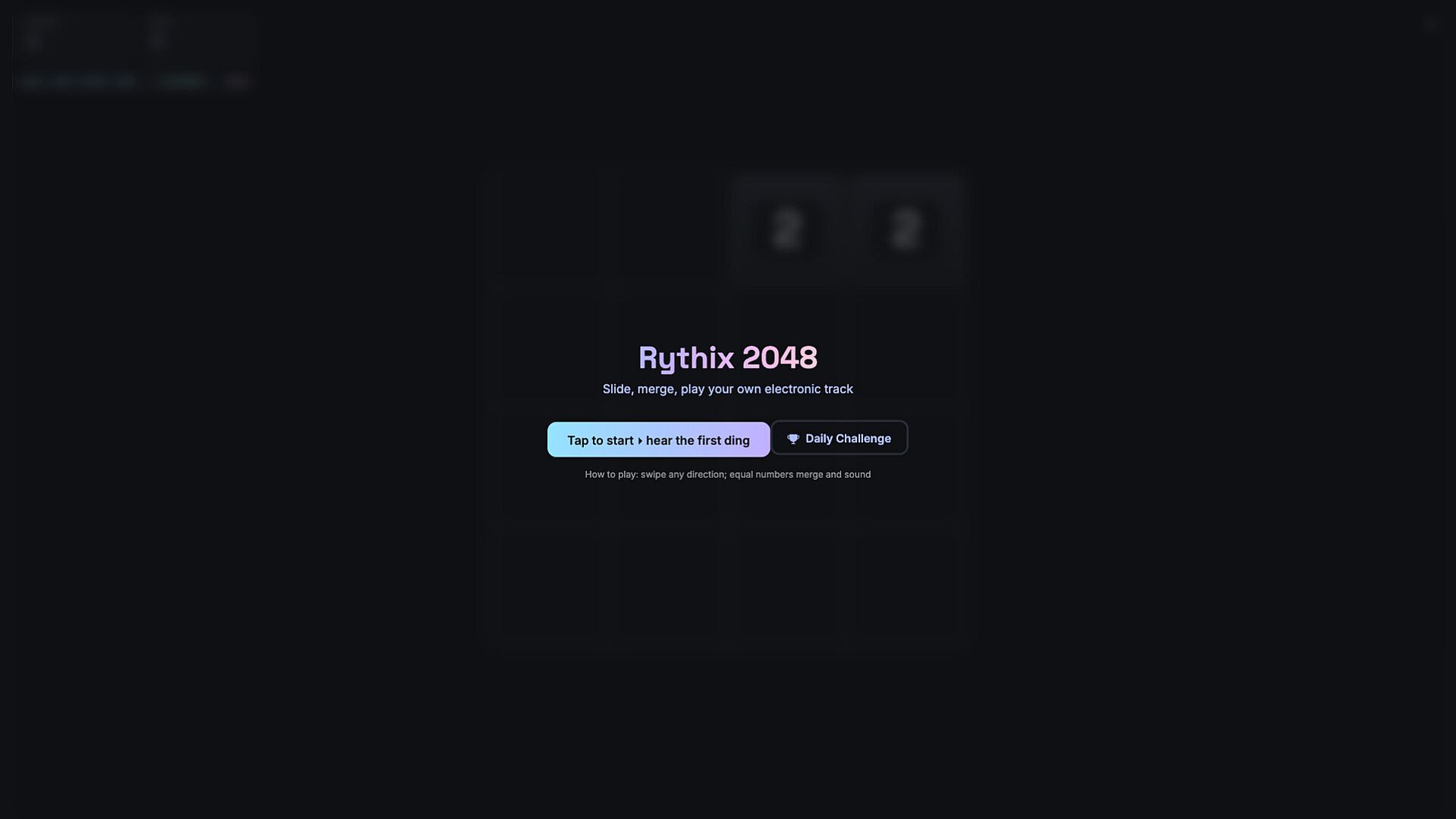
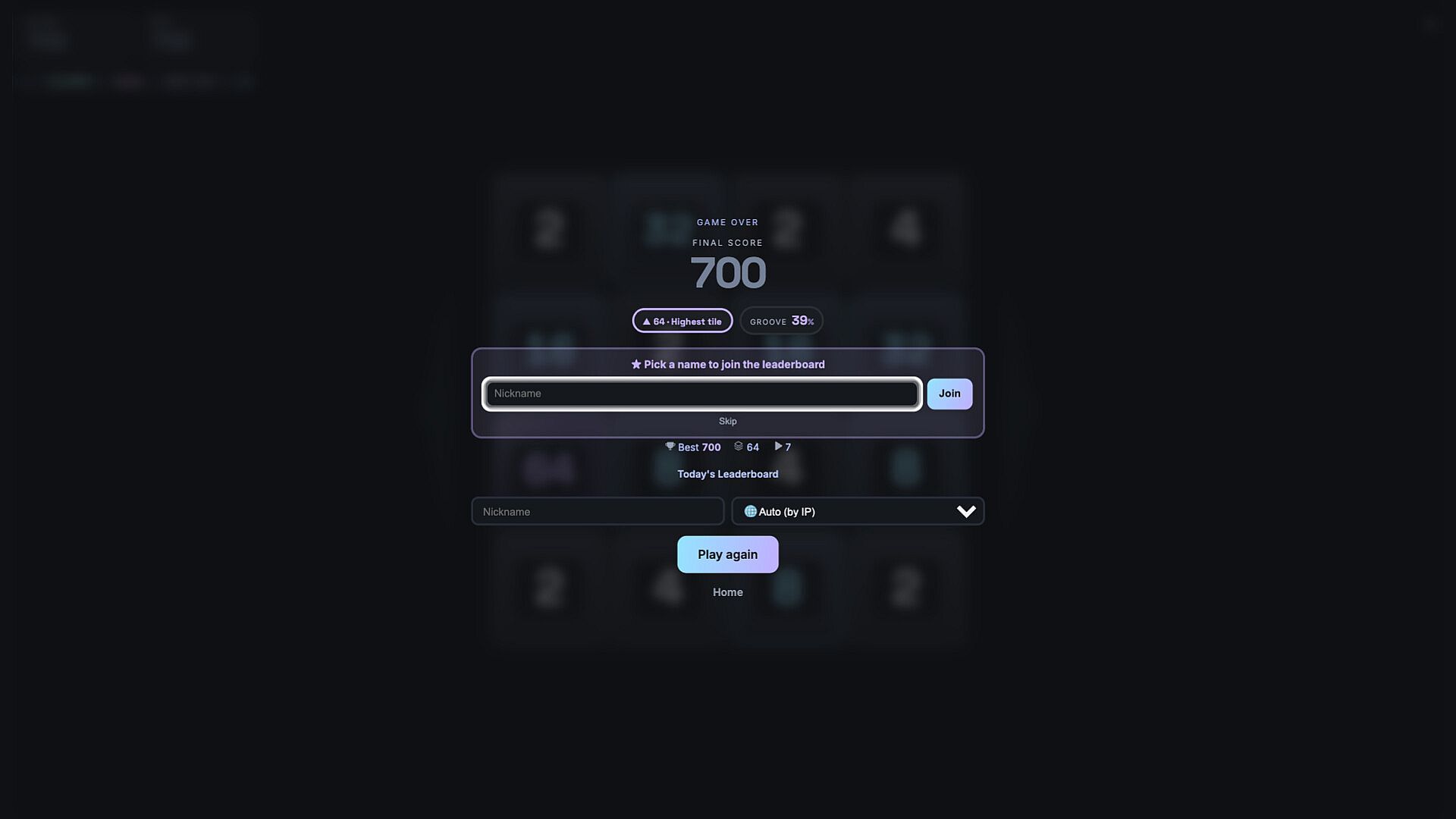
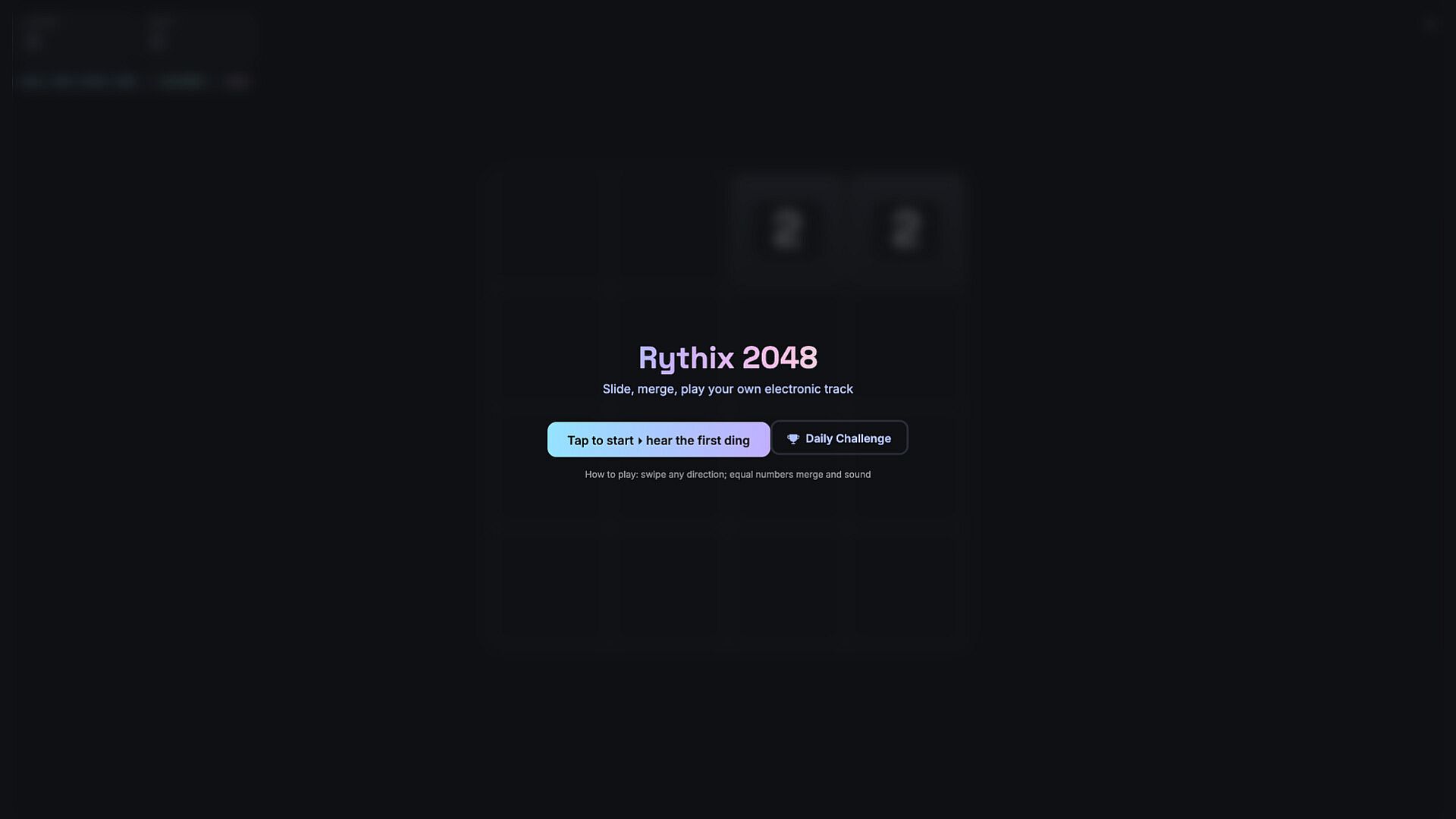
Standard play consists of open-ended sessions where the goal centers on achieving high scores through efficient merges and extended survival on the grid. A Daily Challenge mode provides a shared board layout that remains identical for all participants worldwide on a given day, creating a consistent point of comparison across the player base. Progress in these challenges contributes to a global leaderboard that ranks participants using only a chosen nickname, with no requirement for account creation or login credentials.
The leaderboard system emphasizes skill in both puzzle efficiency and musical shaping, as higher scores often result from longer, more complex runs that allow the generated track to reach fuller development. All modes support immediate entry, with the game launching directly into a session without menus or setup barriers beyond the initial download.
The Music System
Procedural generation forms the foundation of the audio experience, creating fresh electronic compositions that evolve in direct response to board activity. The system builds layers including basslines, rhythmic elements, and melodic lines that adapt to the pace and scale of merges. Big plays accelerate the music toward climactic sections, while sparse board states allow the track to recede and breathe. Because synthesis occurs locally and in real time, the output remains fully original and responsive without any reliance on external audio files or streaming services.
The DJ Deck extends this system by giving players direct manipulation tools during active gameplay. Adjustments to filters, texture, drive, space, and echo occur instantly, and individual stems can be muted or reintroduced on the fly. These controls integrate seamlessly with the puzzle interface, allowing the same actions that advance the score to also refine the sonic character of the session.
Is It Worth Playing?
Rythix 2048 targets players who enjoy classic number puzzles and seek an added layer of creative expression through sound. The combination of familiar 2048 mechanics with live music generation offers a distinctive twist that rewards both strategic tile management and experimentation with the audio tools. The absence of accounts or sign-up requirements lowers the barrier to entry, making short sessions or extended runs equally accessible.
With a release scheduled for August 20, 2026, the game remains in a pre-launch state and currently shows no user reviews on its platform page. Those drawn to minimalist puzzle design paired with generative audio will find the core systems align closely with the described features, including the daily shared challenges and nickname-based rankings. The title suits casual play on Windows, macOS, or Linux systems with modest hardware, as it requires only integrated graphics and runs without dedicated GPU support.
Overall, the game appeals most to individuals interested in puzzle mechanics that double as a music creation tool rather than those seeking competitive multiplayer or narrative-driven content. Its instant-start design and focus on procedural variety provide a self-contained experience that can be sampled quickly to determine personal fit.