

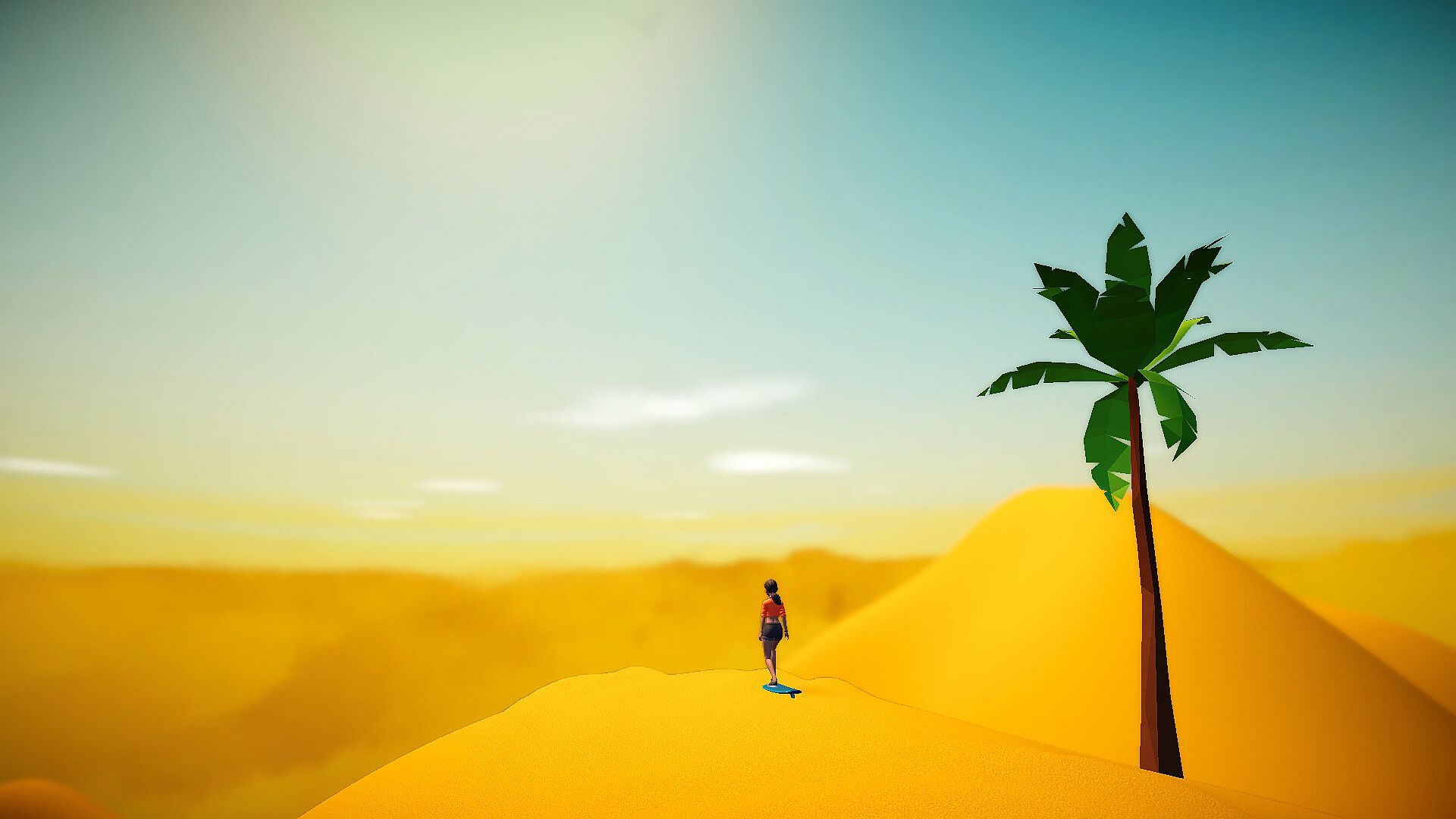

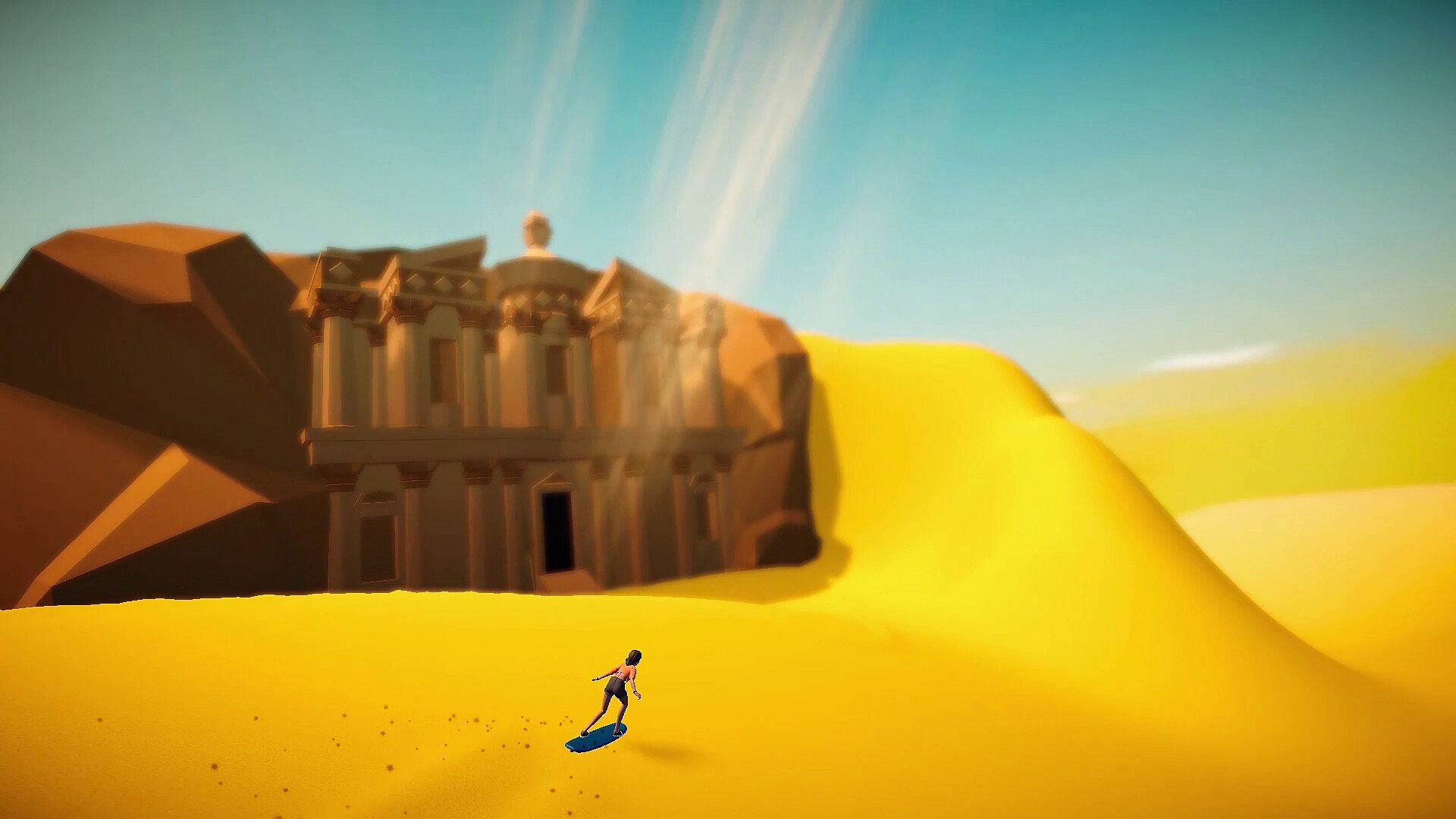
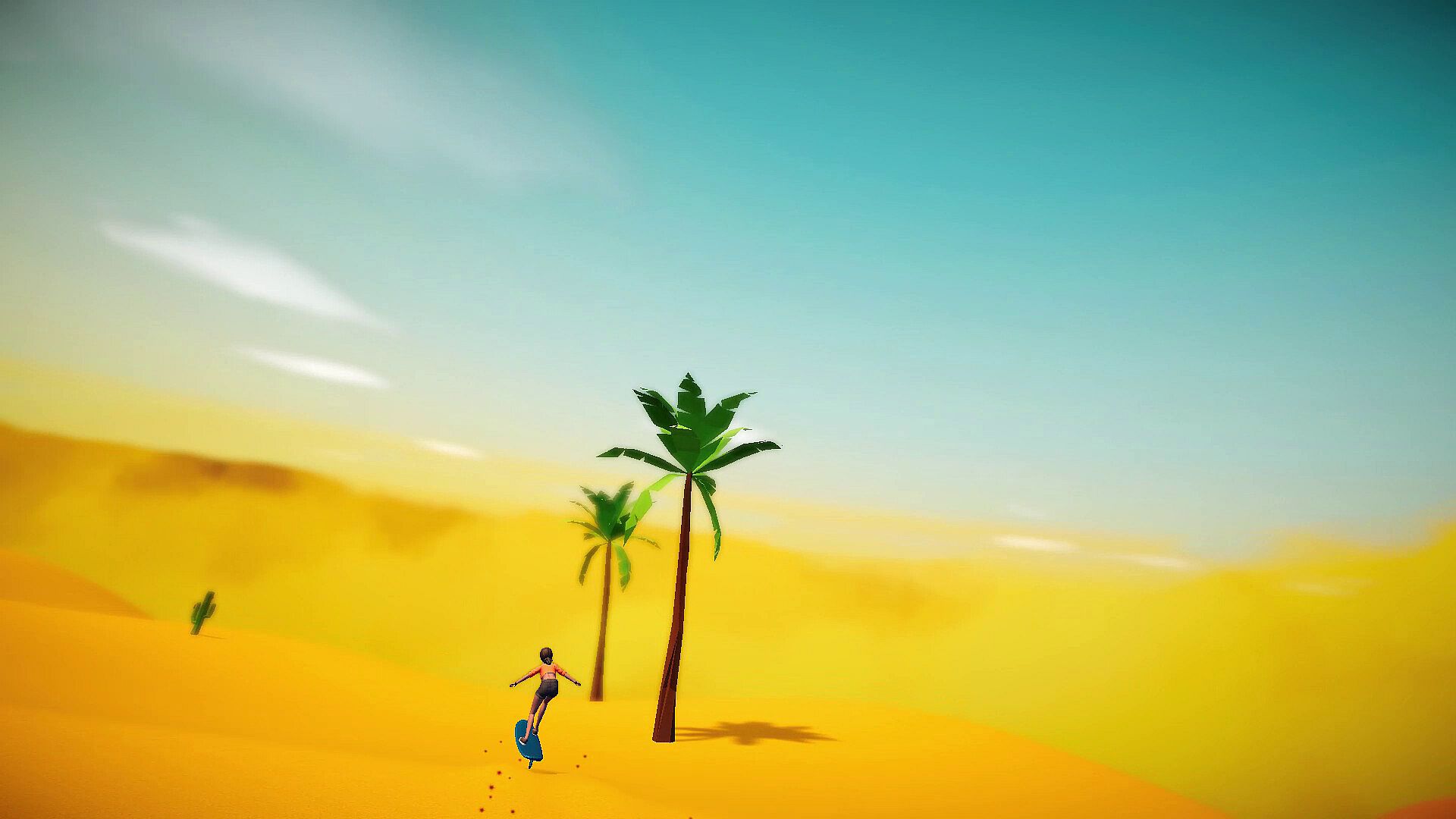
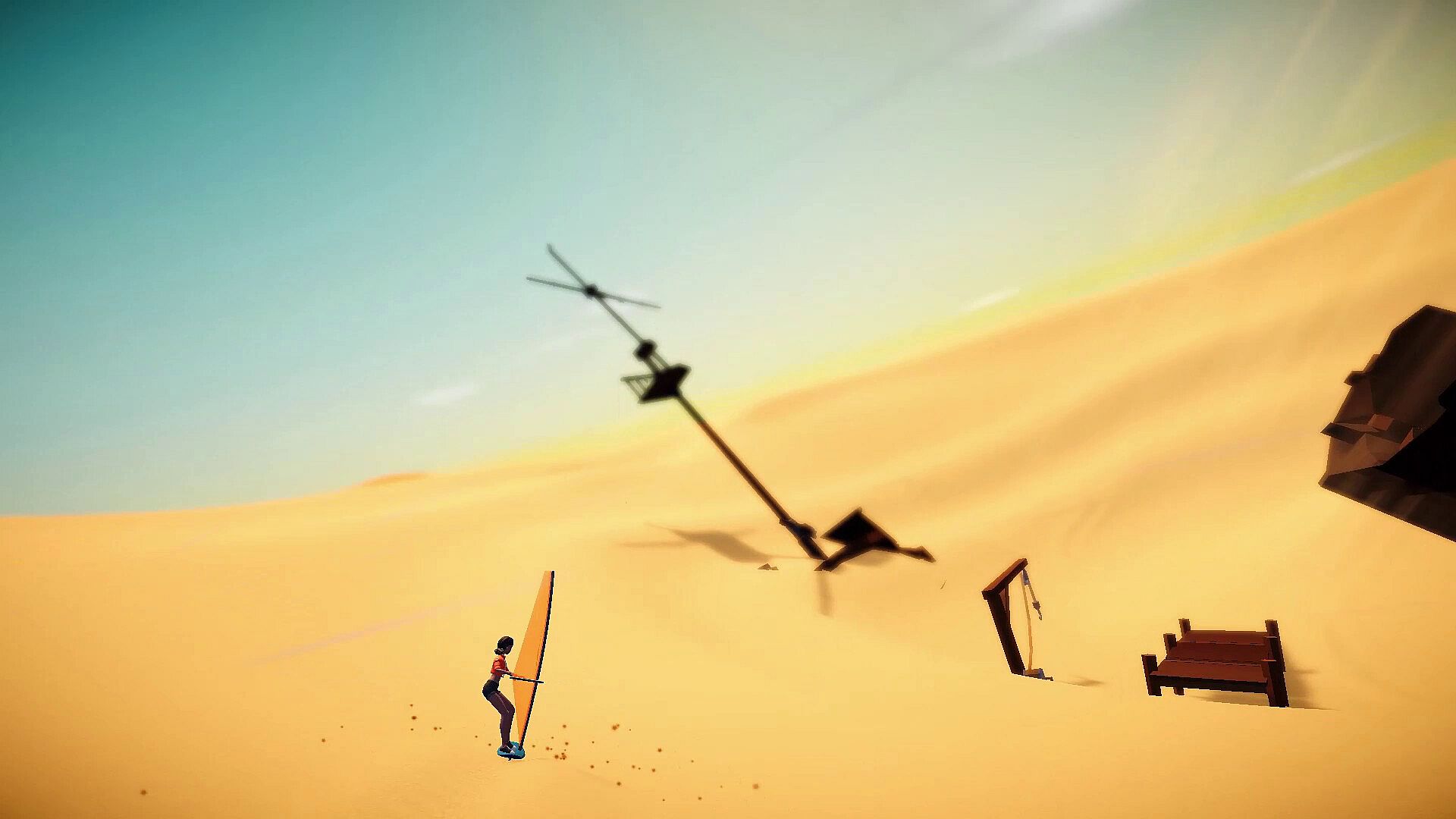
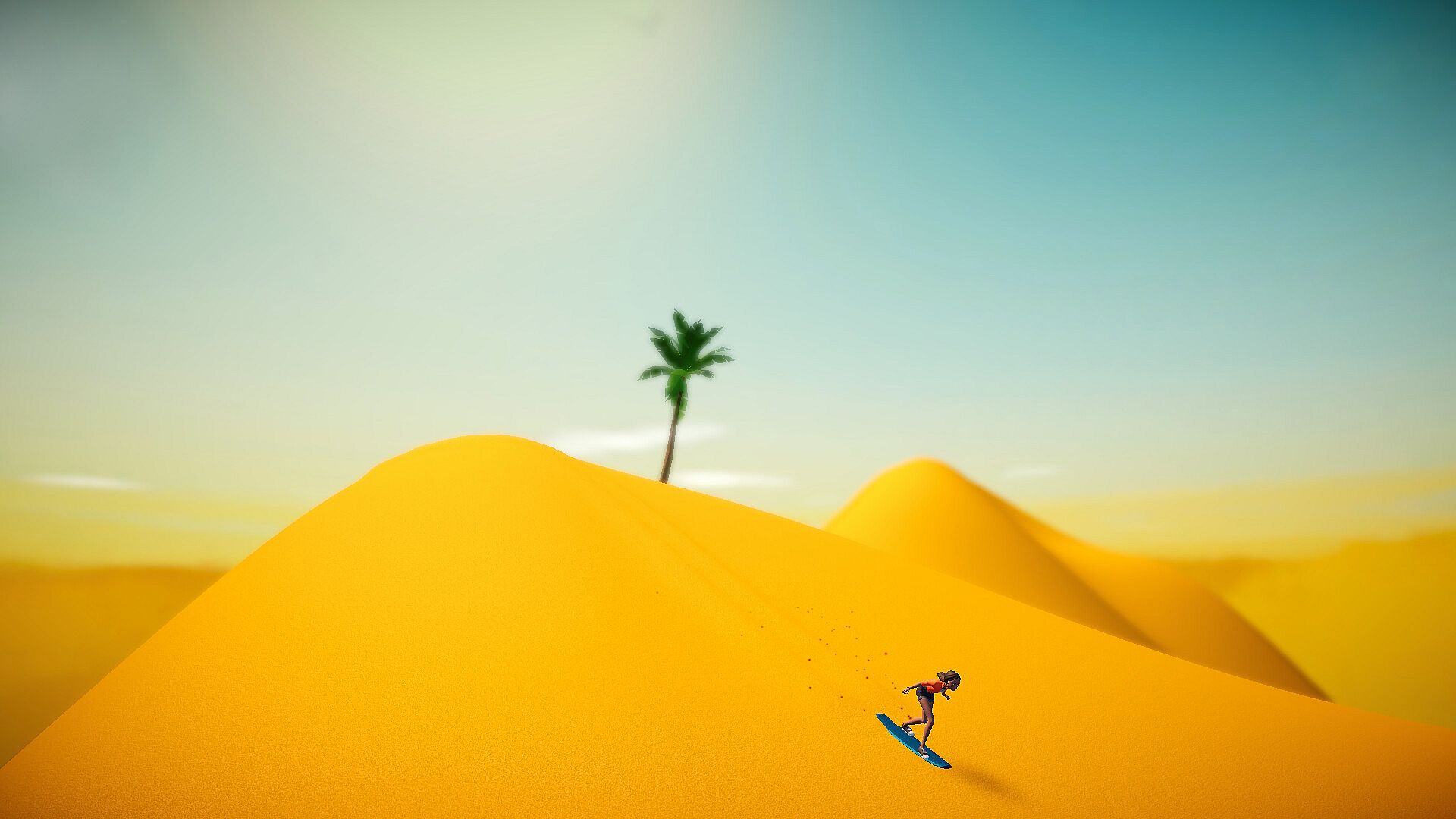
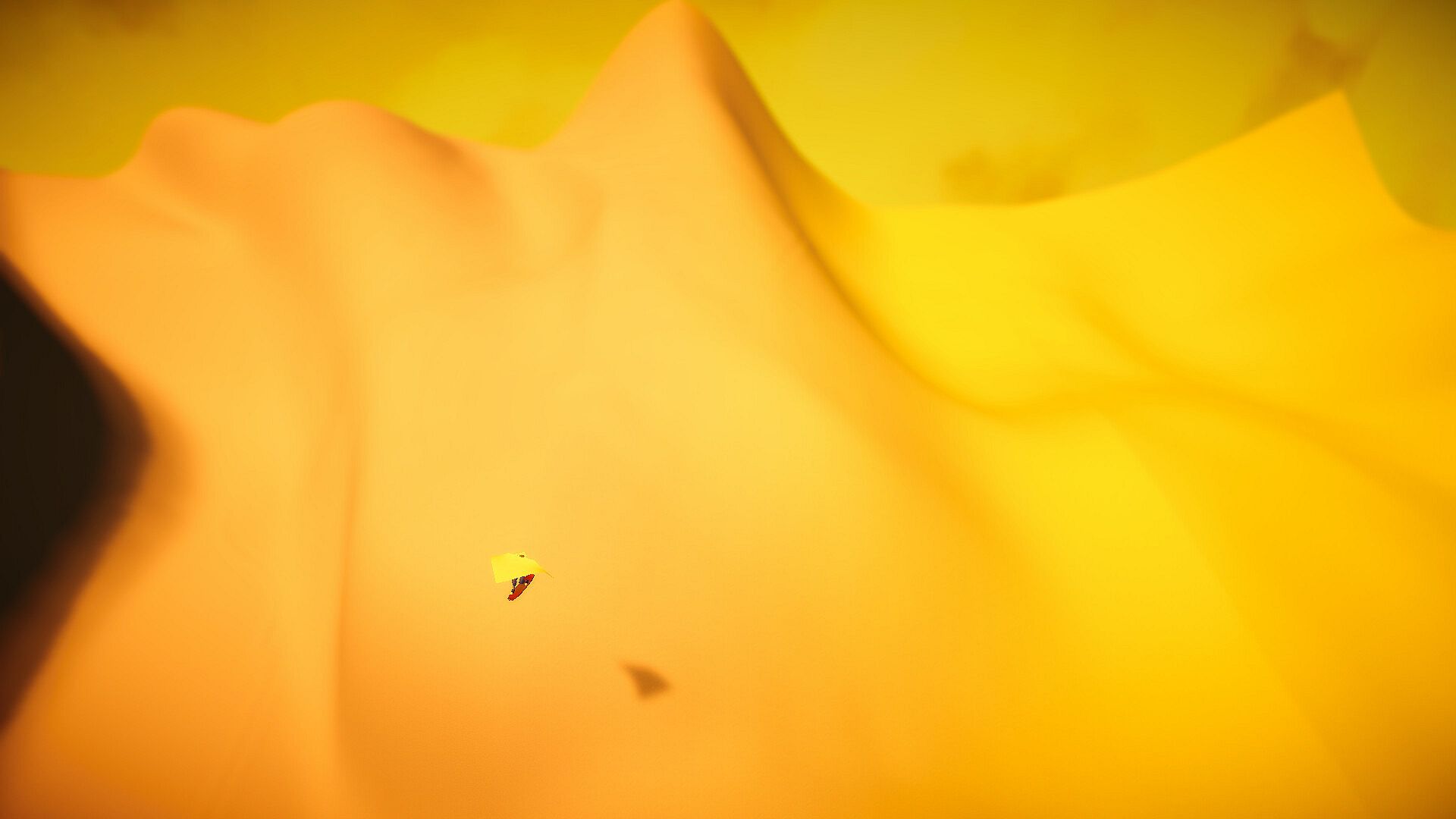
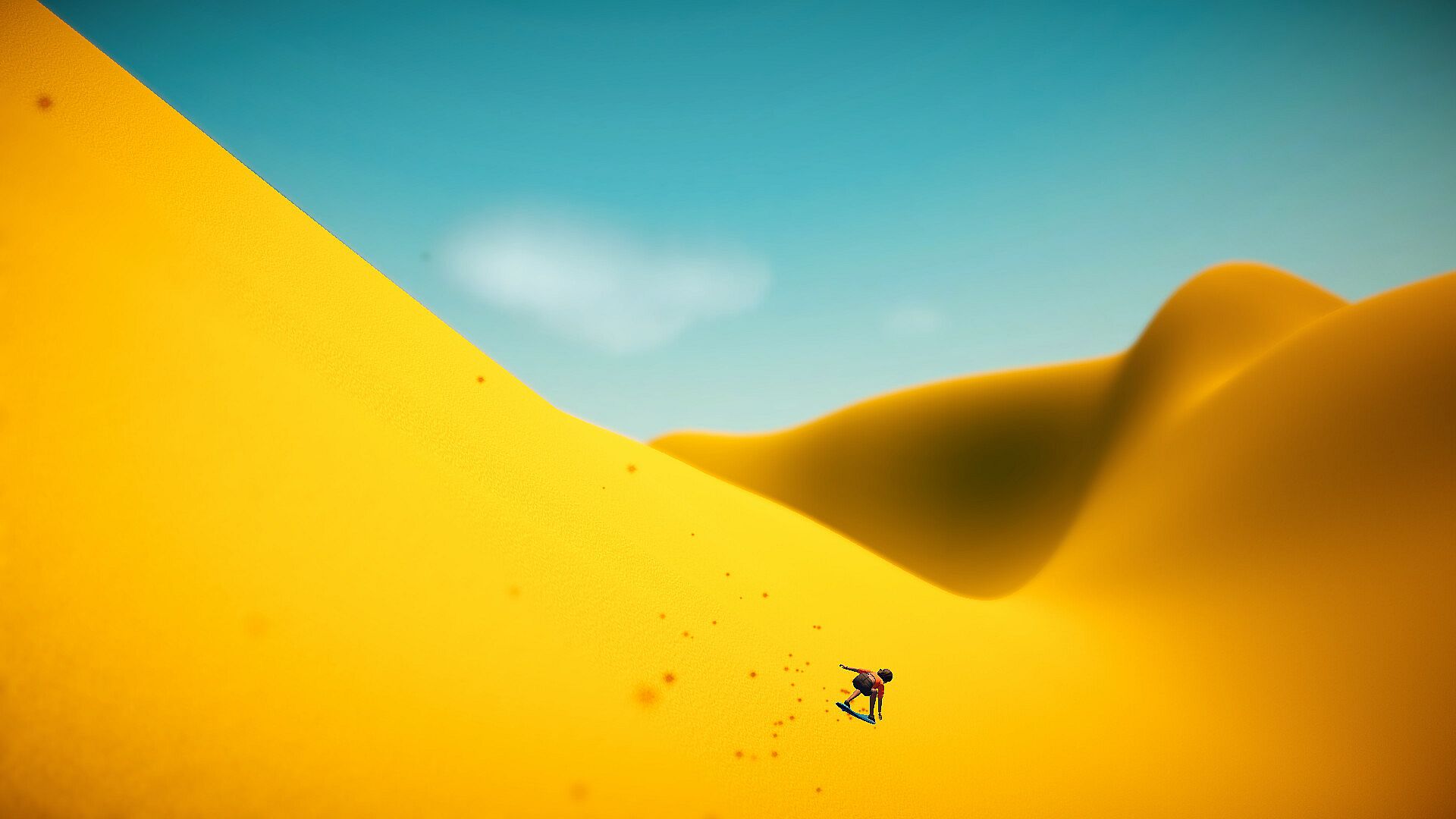
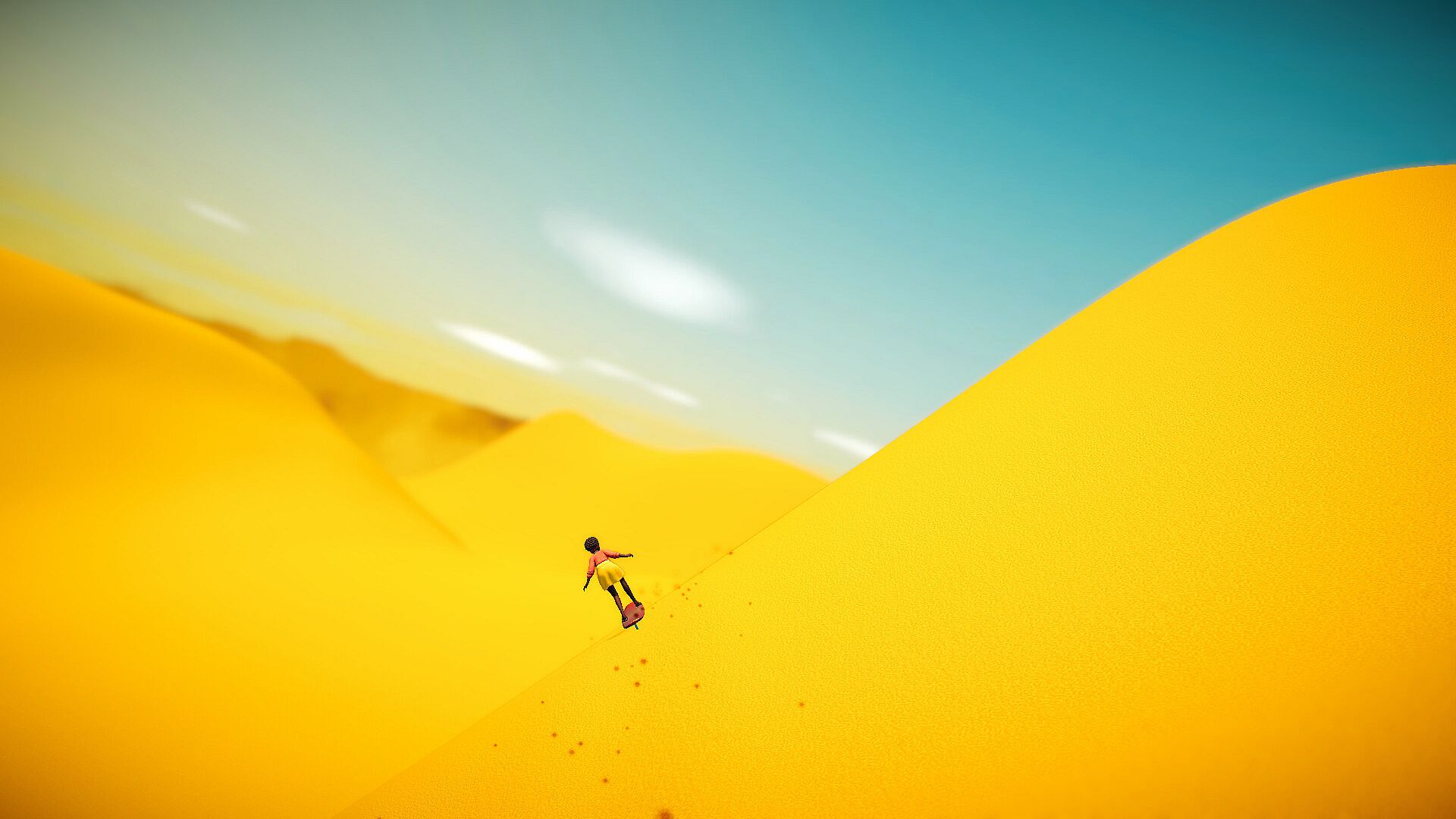


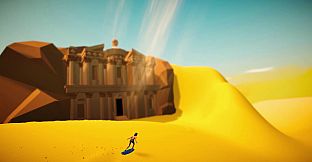

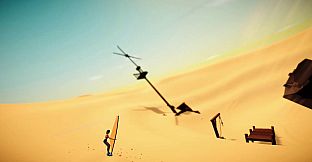


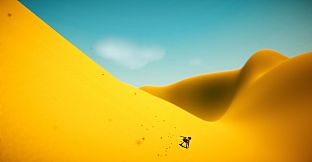

Sandweh is a casual adventure game centered on relaxed sand-surfing through vast procedural deserts on PC. Players control a board to navigate ever-changing dunes, focusing on smooth movement and personal rhythm rather than competition or conflict. The experience emphasizes calm exploration in an open-ended world where the environment responds directly to actions.
Gameplay
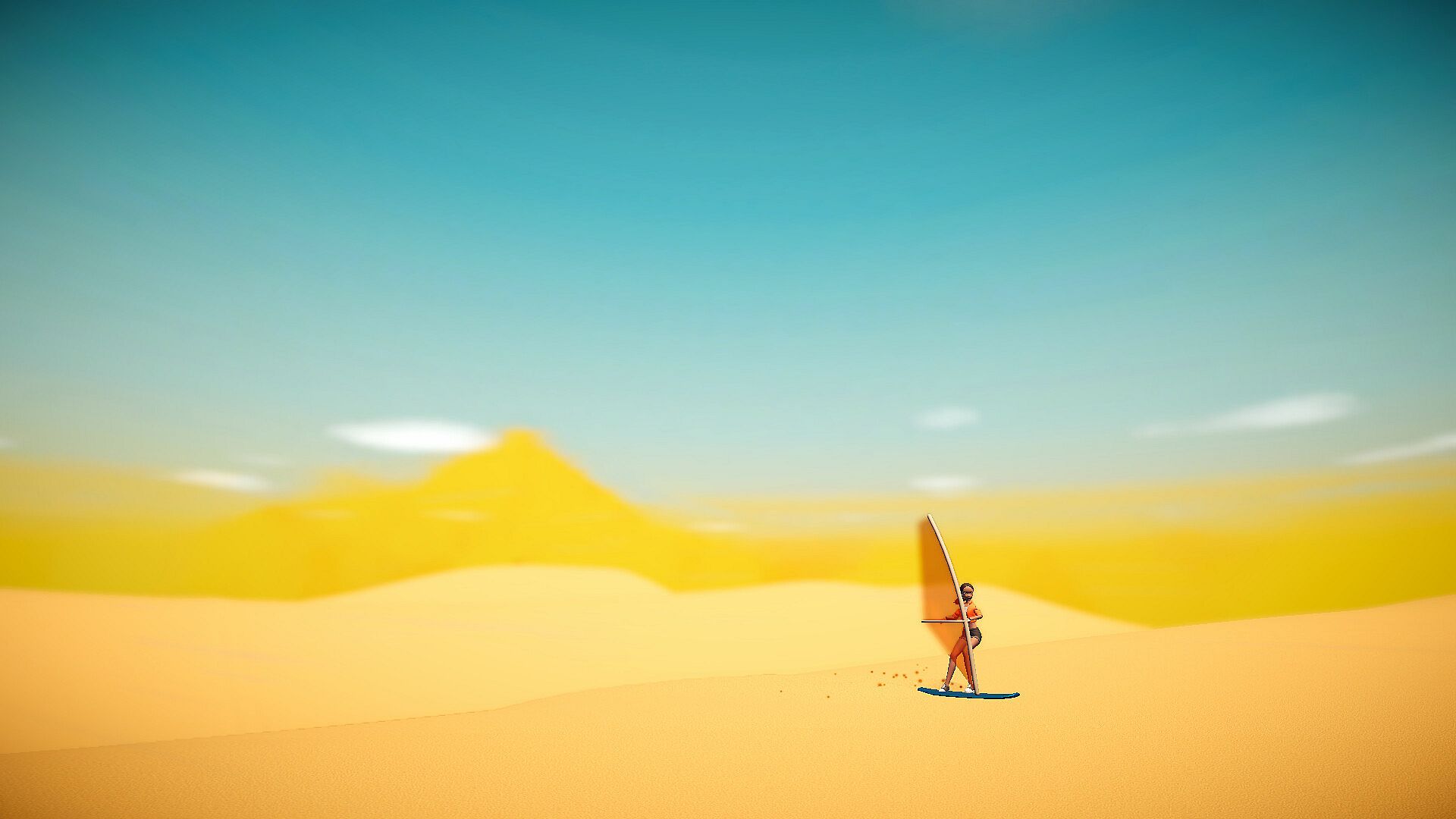
The core loop involves riding across soft slopes, steep drops, and natural ramps that shape the terrain. Flow through valleys, launch from crests, and glide back down to the sand while carving lines to build speed. Jumps, spins, and glides form the main actions, with the board responding fluidly to player input.
The sand itself reacts to movement, leaving visible trails and generating shifting sounds that adapt to speed and surface type. Sessions move from soft rolling dunes to wide salt flats where wind assists forward progress. Procedural generation creates unlimited worlds, each with unique layouts and rare landmarks that appear differently per seed.
Controls support precise carving and aerial maneuvers without any timers, enemies, or external pressures. Adaptive sound design layers ambient elements that change with terrain and actions, enhancing the atmospheric focus on movement alone.
Game Modes
Sandweh offers no traditional races, competitive events, or structured modes. Every session functions as an open-ended journey through the procedural desert, allowing uninterrupted focus on personal flow and exploration. Players start fresh in each generated world and continue until they choose to end the run.
The absence of combat or objectives keeps the emphasis on rhythm and discovery. Cosmetic rewards such as board patterns and character options unlock through continued play, providing visual variety without altering core mechanics.
Is It Worth Playing?
Sandweh suits players who seek calm movement-based experiences in atmospheric worlds. Its procedural dunes and reactive sand create varied sessions that reward repeated play through different seeds and landmark finds. The lack of pressure or conflict makes it accessible for short or extended sessions focused purely on surfing mechanics.
Those who enjoy carving paths, building speed through jumps and spins, and observing environmental responses will find consistent satisfaction in the smooth controls and adaptive audio. The game remains in a stable state with its core systems intact, delivering a consistent singleplayer adventure without additional layers.
Overall, it provides a straightforward option for anyone prioritizing relaxing traversal over action or progression systems. The procedural nature ensures each run feels distinct while maintaining the same core appeal of fluid sand-surfing.