







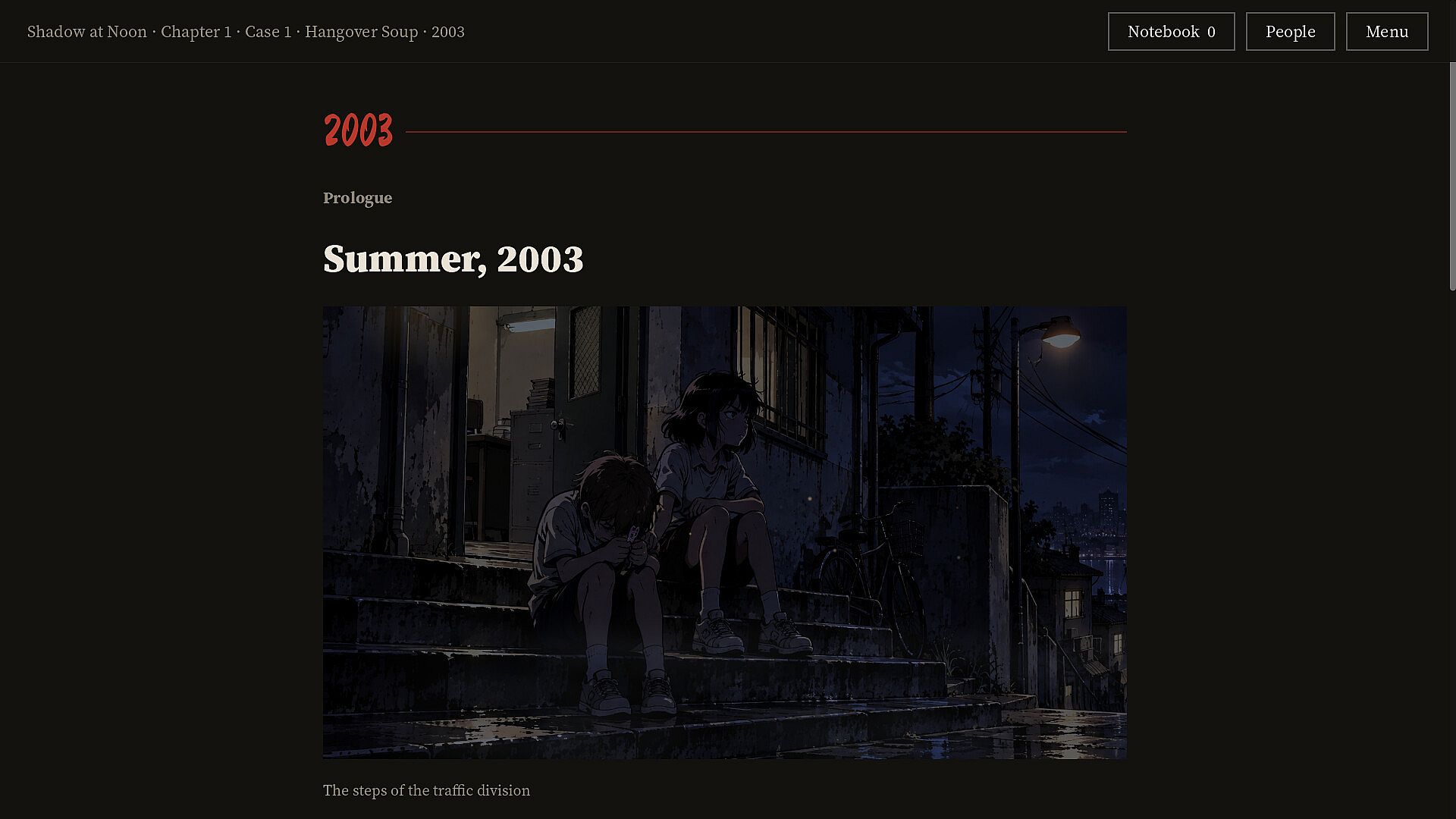
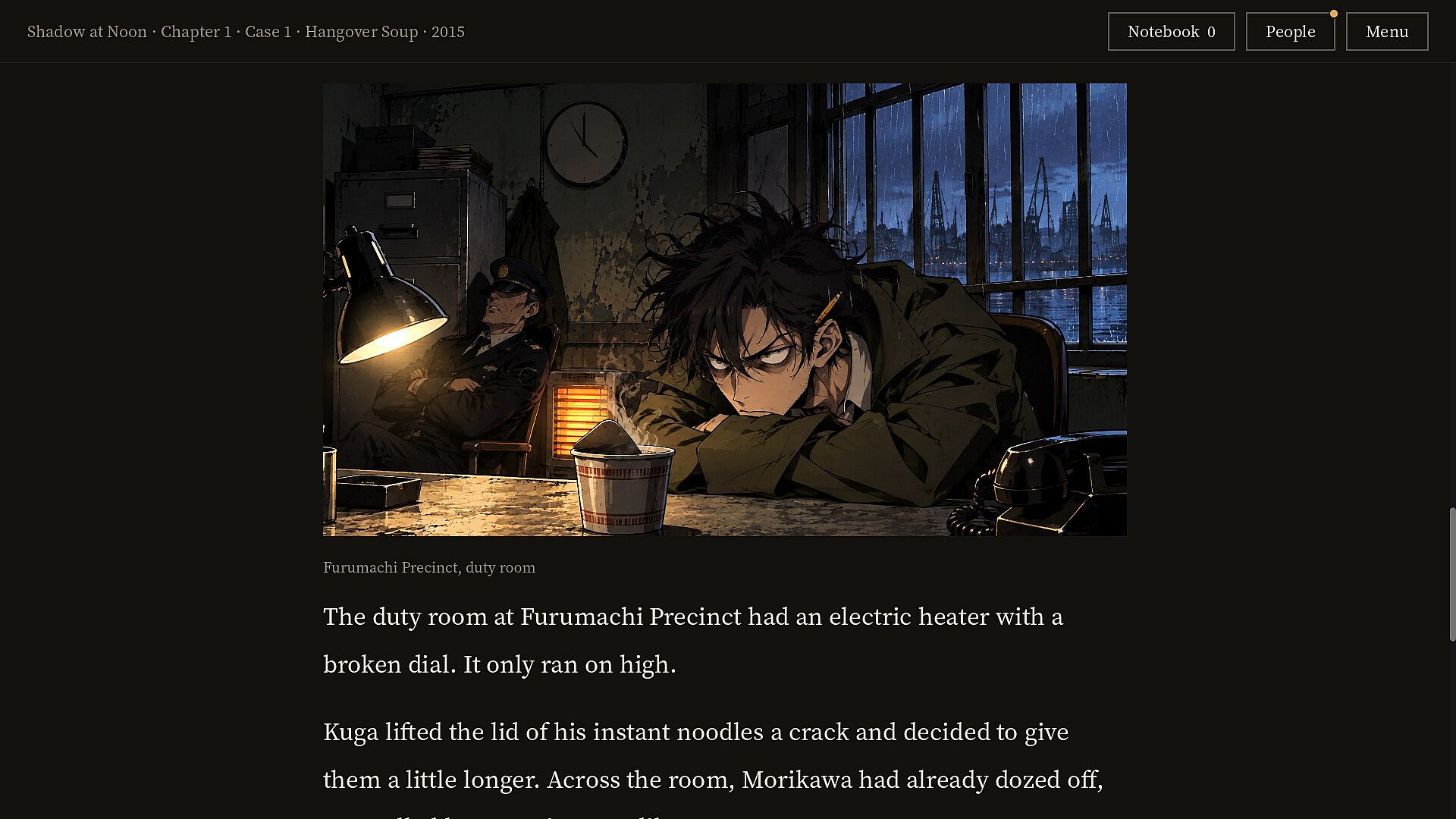

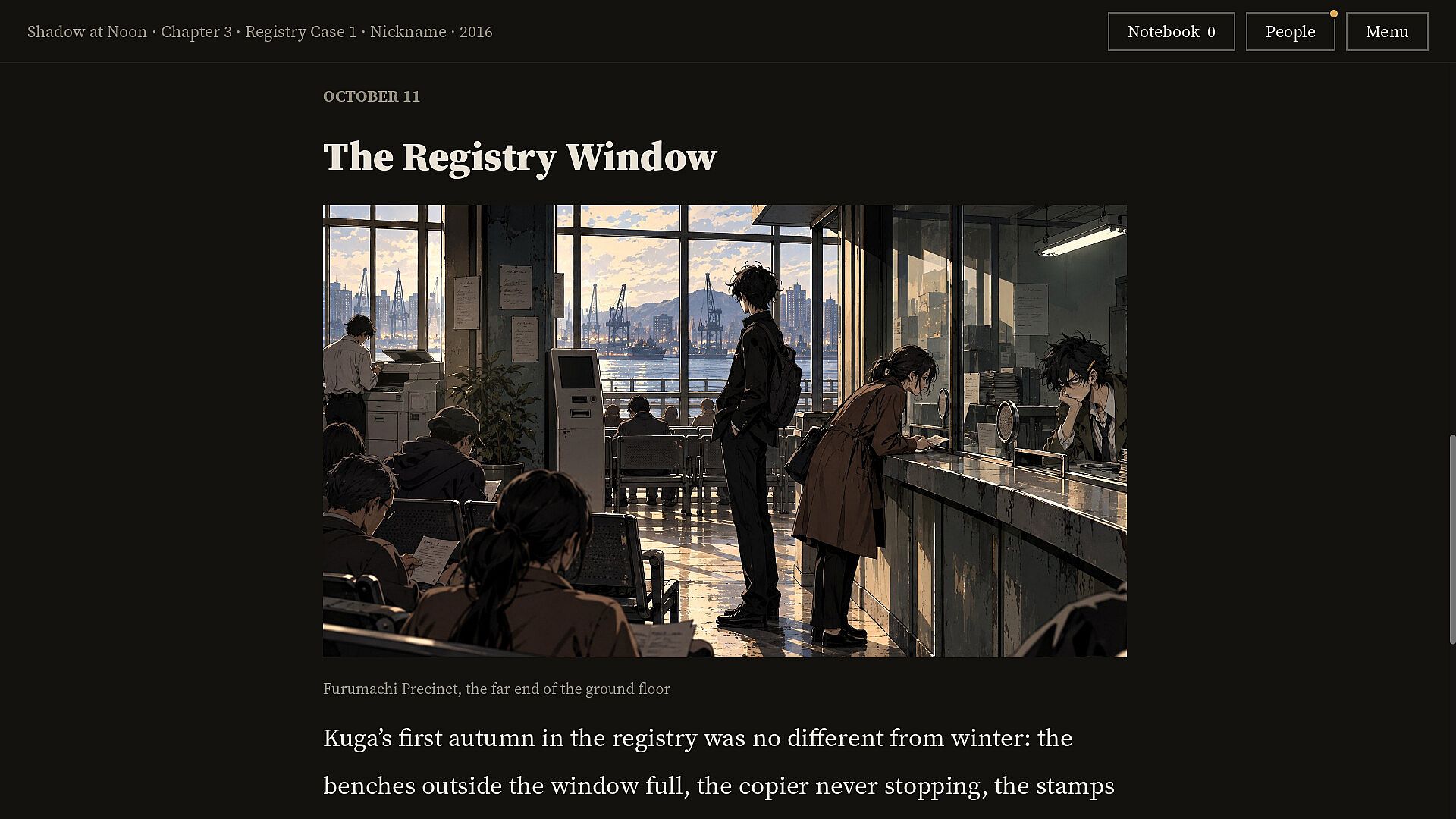
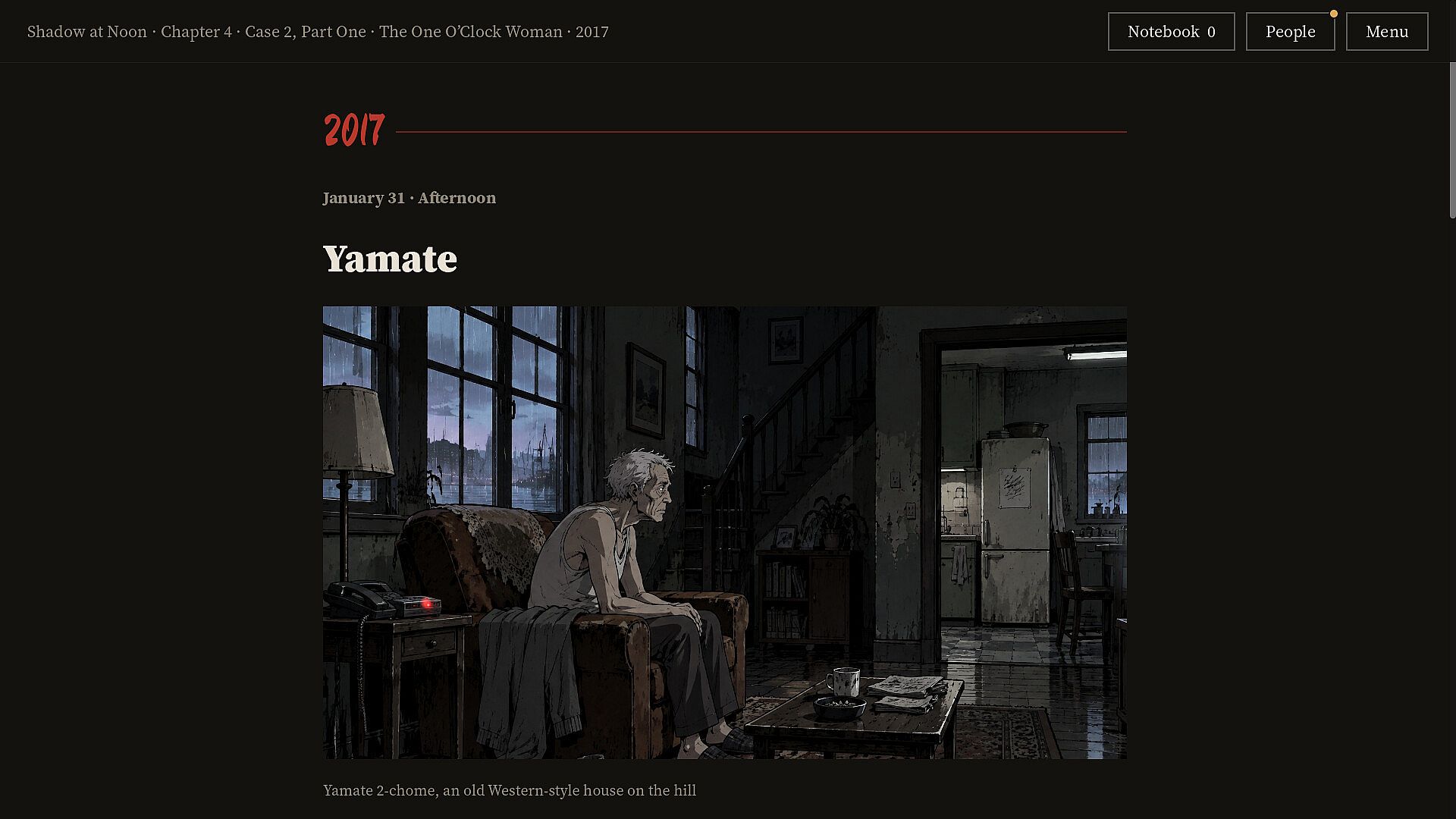


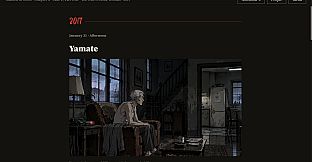
Shadow at Noon is an indie adventure game built as an interactive sound novel centered on fair-play detective fiction. Players step into the role of Makoto Kuga, a patrol officer turned registry clerk who pieces together inconsistencies in official records and confessions across multiple cases set in Amesaka between 2015 and 2024.
Gameplay
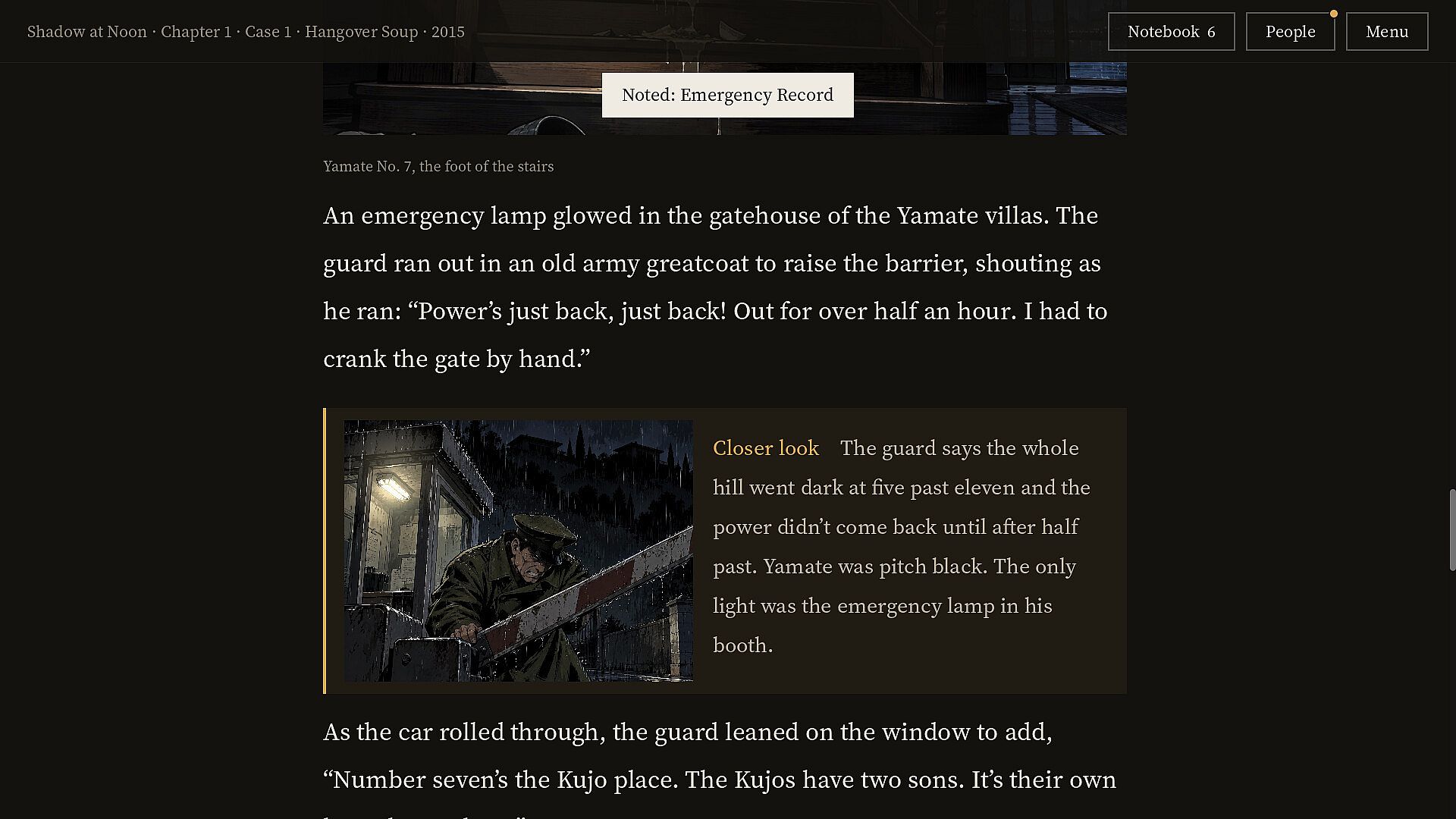
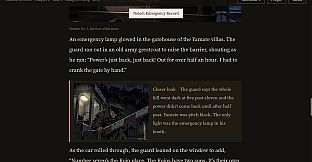
The core loop revolves around careful reading of text passages, note-taking, and direct interrogation of suspects. Every clue appears explicitly on pages already encountered, so progress depends on revisiting earlier sections rather than hidden information. Gold-highlighted words expand into notebook entries for later reference during questioning sessions.
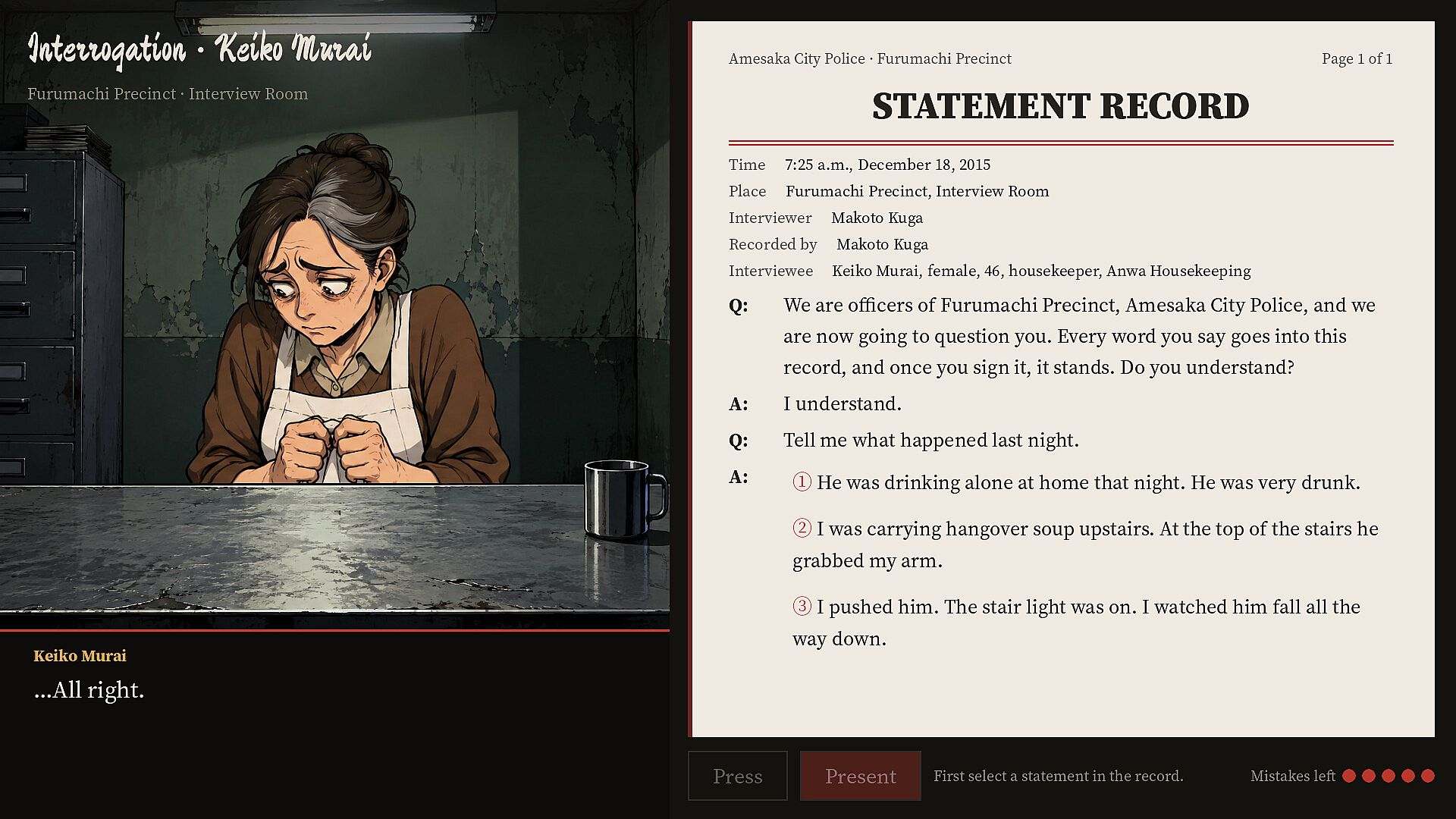
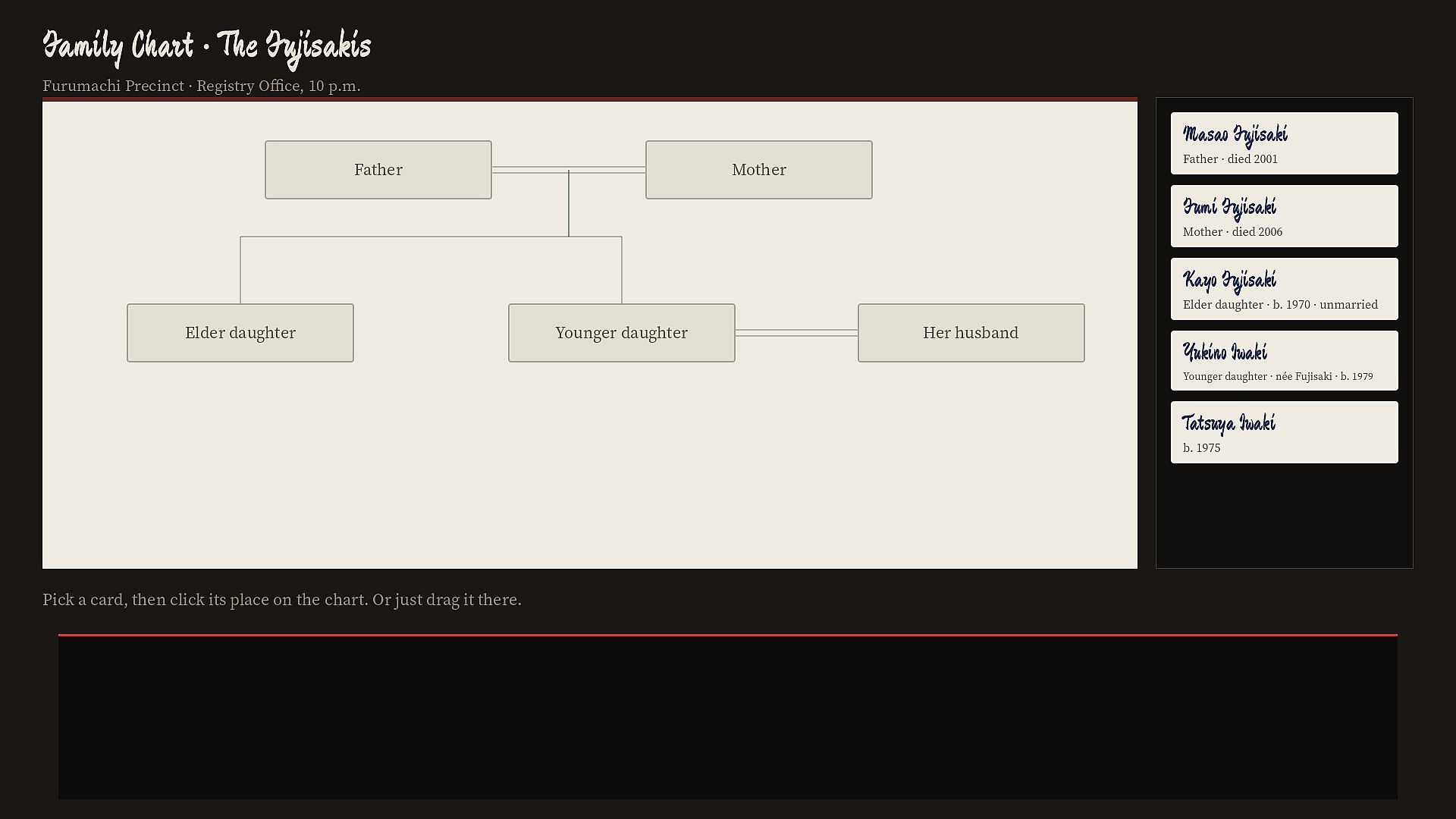
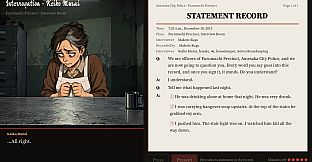
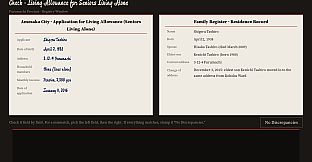
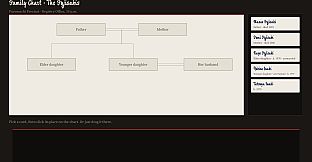
Interrogations present statements line by line. Players press for additional details, present evidence from the case file, or quote prior passages to force revisions. The goal extends beyond spotting falsehoods to understanding the motivations behind each lie. Registry work adds another layer, requiring line-by-line comparison of birth, death, and family records to identify mismatches that open new leads.
Each chapter introduces a distinct interactive mechanic tied to the story, such as rubbing a pencil over a notepad to reveal impressions from a torn page, annotating reports in red ink, tracing individuals across successive registers, or sketching scenes from witness recollections. These activities grow directly from the narrative context rather than serving as generic minigames.
Ambient sound and original music accompany every section, creating a focused atmosphere without voice acting. The experience remains entirely single-player and text-driven, supported by more than 260 illustrations and 100 character portraits.
Game Modes
Shadow at Noon offers a single cohesive narrative experience divided into four main cases plus three smaller registry-focused segments and a finale, totaling twelve chapters. There are no separate multiplayer modes, competitive elements, or branching campaign paths; the structure follows a linear progression through the cases while allowing free navigation back through the case file at any time.
Players advance by completing the interrogation and record-checking sequences within each chapter. The design emphasizes repeated reference to earlier material, so the full playthrough encourages careful documentation and cross-referencing rather than speed or multiple endings within a single case.
Story and Setting
The narrative opens in December 2015 with the death of a wealthy family's eldest son, initially ruled an accident after the housekeeper confesses. Discrepancies noted by Kuga, such as the temperature of uneaten soup, prompt deeper scrutiny. Over the following years, routine registry duties surface connections to later incidents, building a web of personal and bureaucratic details that span nearly a decade.
Honkaku principles guide the mystery design, meaning all necessary information remains visible and fairly presented. The focus stays on the human reasons people withhold or distort truth rather than on elaborate twists or withheld facts.
Is It Worth Playing?
Shadow at Noon suits players who enjoy deliberate, text-heavy detective stories and the intellectual satisfaction of fair-play mysteries. Its 6 to 8 hour first playthrough length fits a focused session or two, and the absence of voice acting or cutscenes keeps attention squarely on the written clues and illustrations.
The game includes written descriptions and illustrations of murder, the death of a child, and suicide, so those sensitive to such content should review the mature content description before purchase. With no user reviews available yet and the title listed as coming soon, prospective players can form expectations directly from the detailed mechanics and structure outlined by the developer.
Those drawn to interactive novels that reward thorough reading and logical deduction will find a self-contained experience here, free of extraneous systems or filler. The registry and interrogation tools provide concrete ways to engage with the material, making the process of uncovering inconsistencies feel tangible and methodical.











