



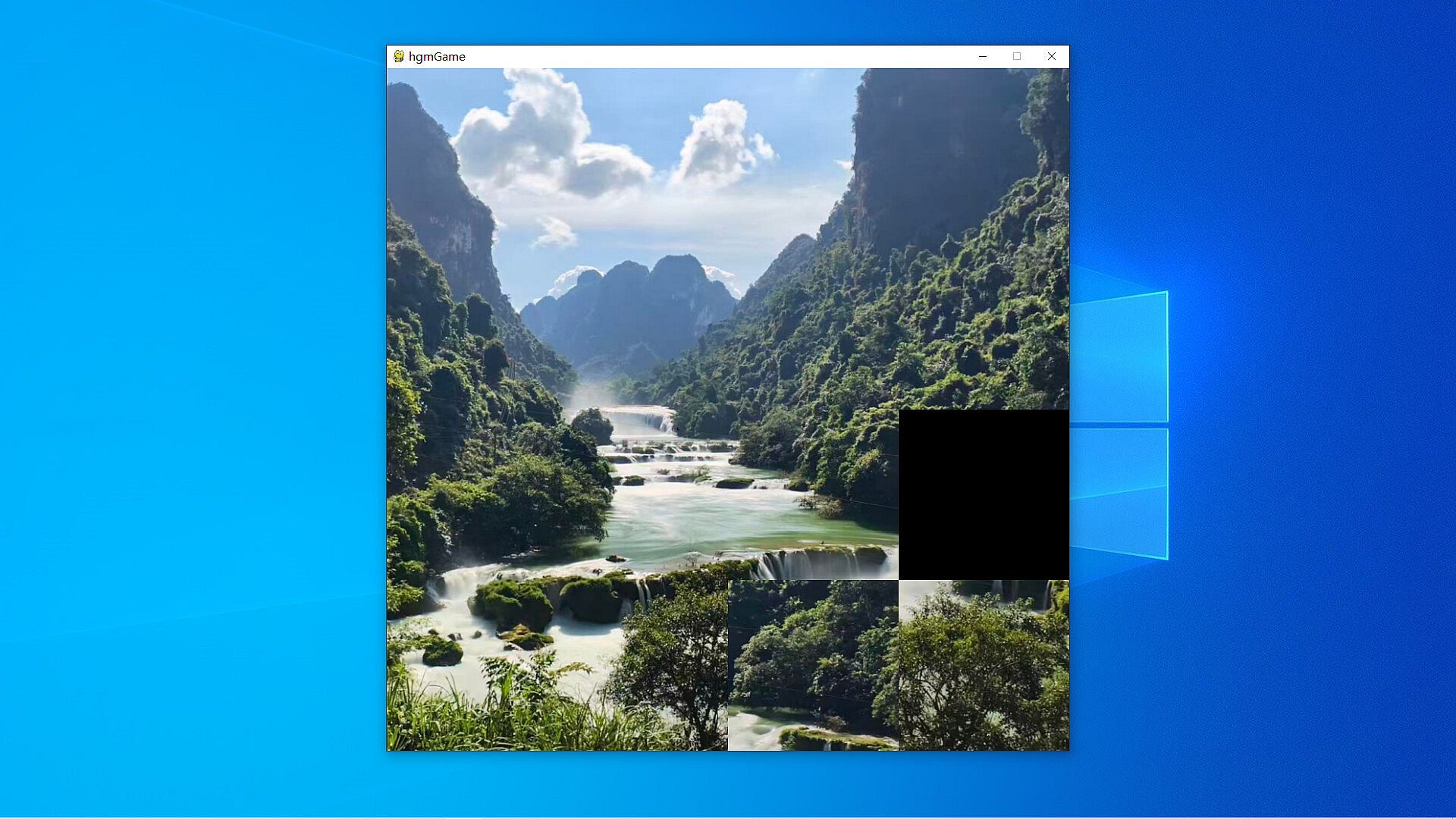
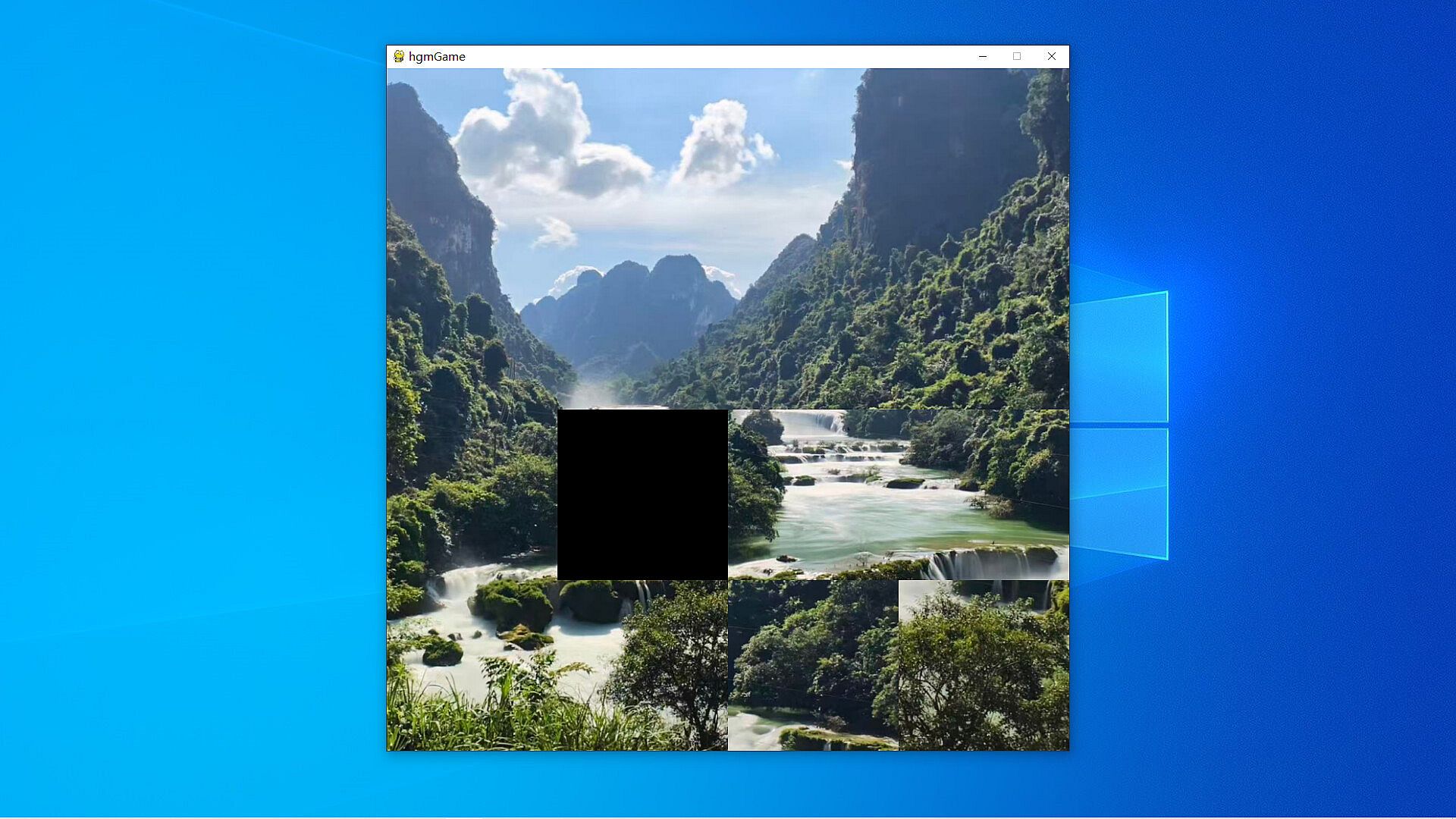
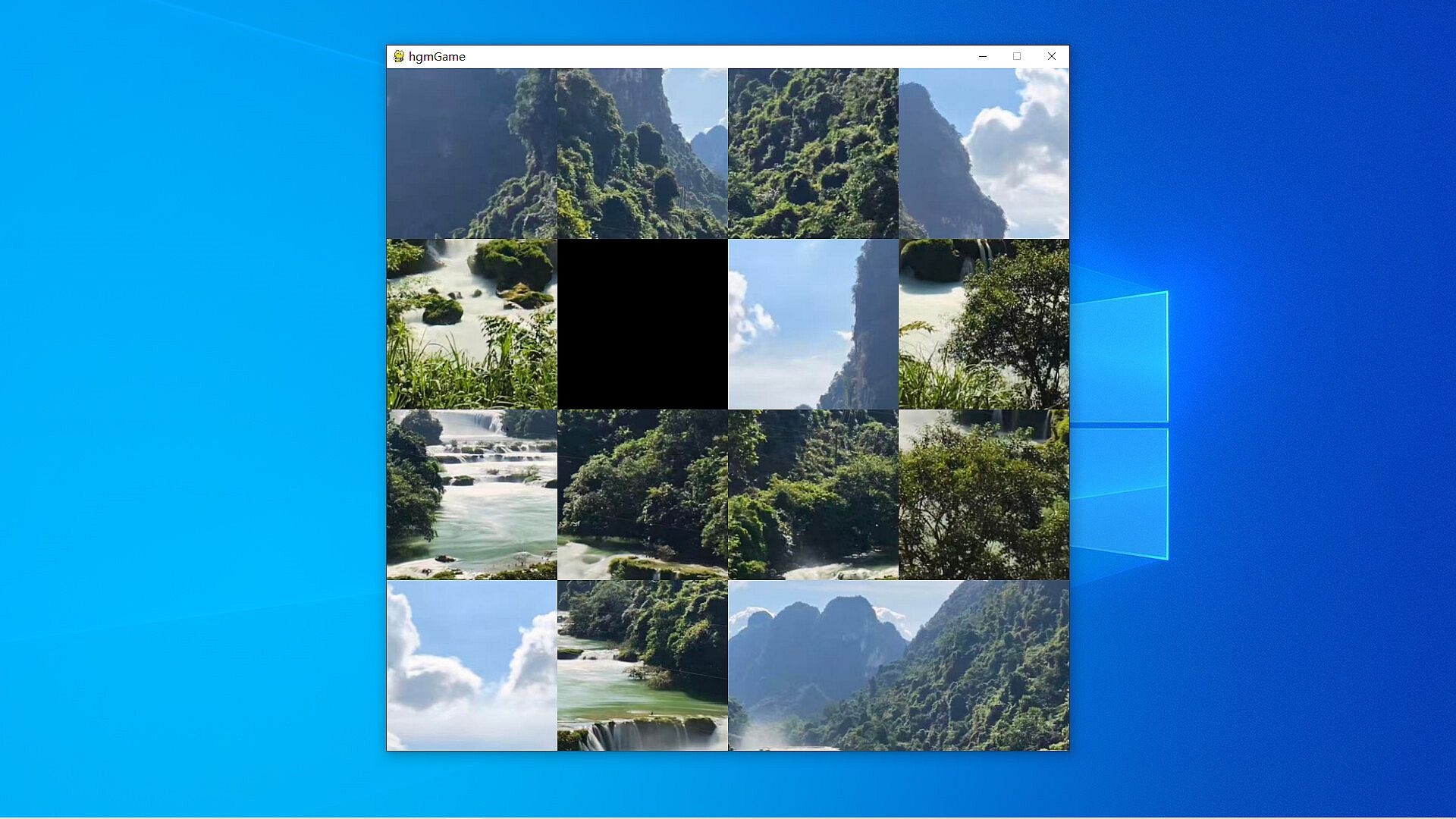
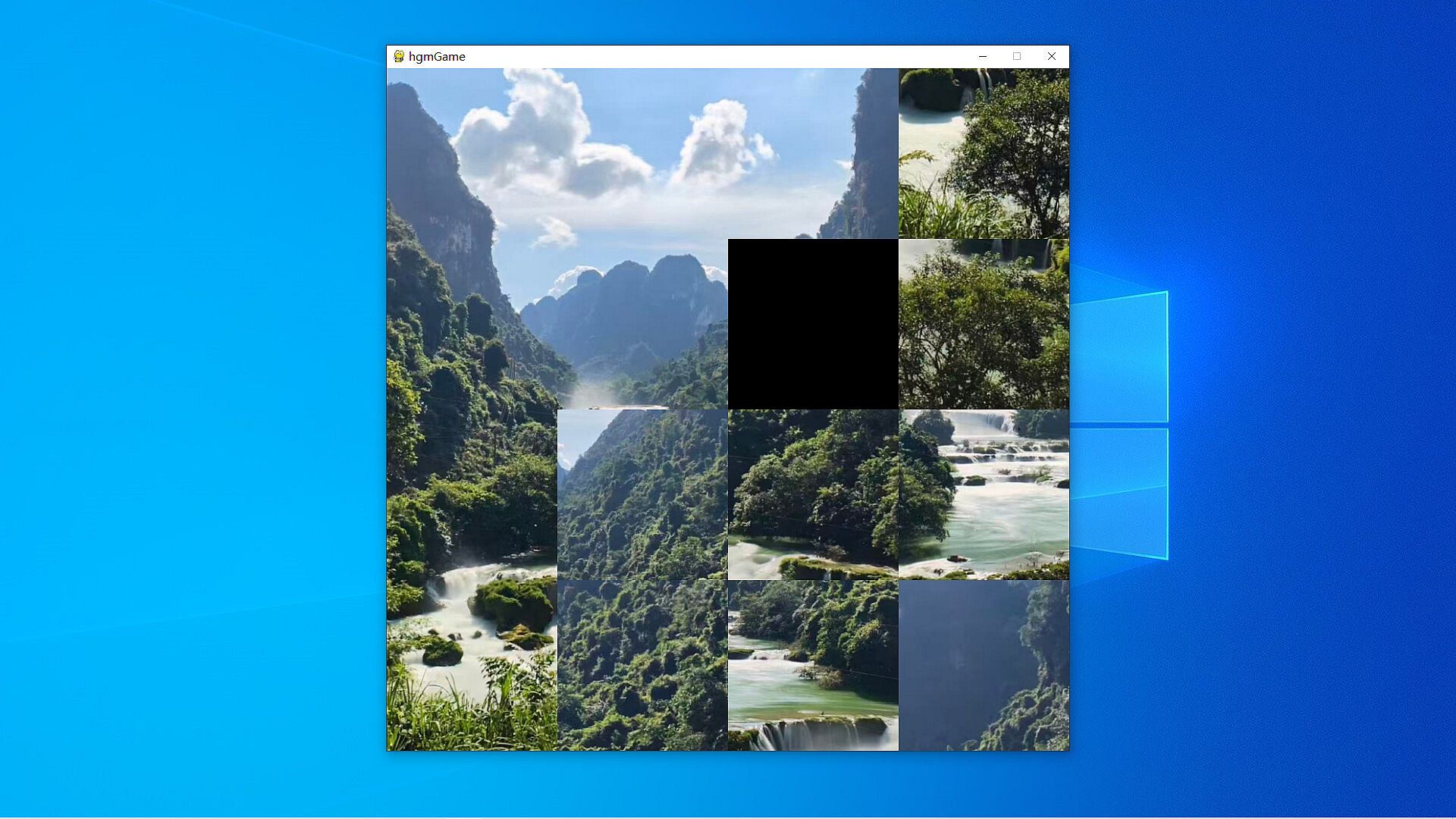
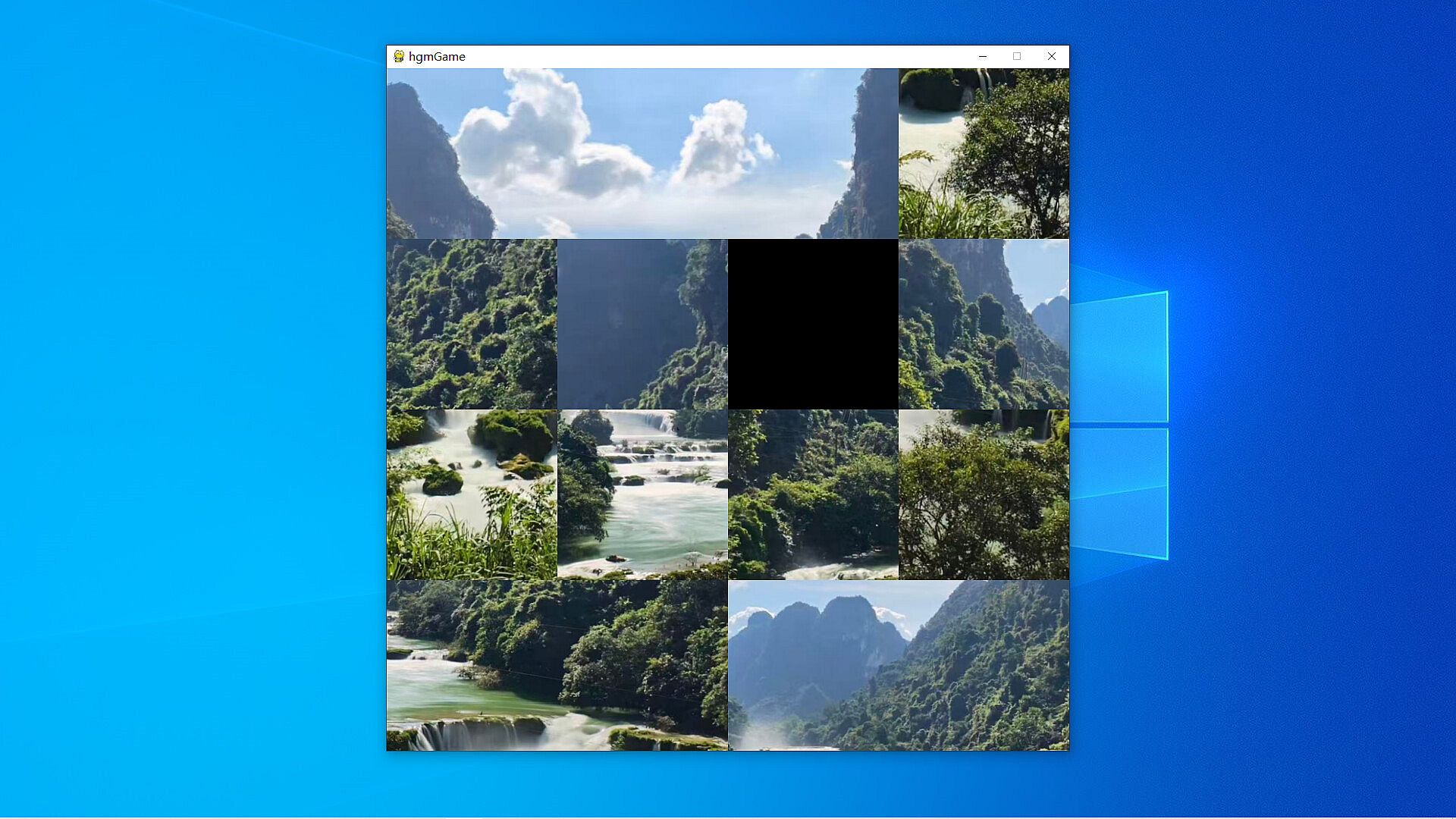
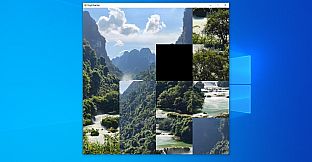
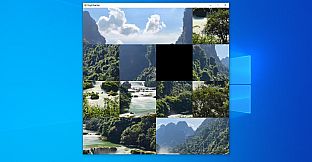
Shatun Waterfall is a casual puzzle game developed for PC. It centers on reassembling a single image that gets randomly divided into a 4 by 4 grid of smaller pieces each time a new session begins.
Gameplay
The core loop revolves around a sliding puzzle mechanic. One image appears broken into sixteen separate tiles arranged in a grid. A single empty space, shown as a black square, sits among them. Players click the left mouse button on any tile adjacent to the black square. That tile slides into the empty space, and the black square takes its former position. This process repeats until every tile sits in its correct spot and the full image forms again. Because the final assembled image must leave room for movement during play, the completed version displays slightly smaller than the original by one sixteenth of its area. Each new attempt shuffles the tiles into fresh random positions, so the arrangement changes every round. The interface remains straightforward with only the grid and the black square visible on screen. No timers, scores, or additional overlays interrupt the focus on rearranging the pieces.
Game Modes
The game offers a single repeatable puzzle experience. Every session follows the same sliding tile rules without variations in rulesets or objectives. Players simply start a new round whenever they wish, and the system generates another random shuffle of the same underlying image. There are no separate campaigns, levels, or competitive formats. The design supports repeated solo attempts in short bursts or longer sessions, depending on how many shuffles a player chooses to solve.
How the Puzzle Progresses
Early stages often look scattered because tiles occupy completely unrelated spots. As swaps continue, groups of tiles begin to align along edges or corners. The process builds gradually until only a few misplaced pieces remain. The black square moves around the grid with each click, allowing tiles to shift one space at a time. This incremental approach mirrors classic sliding puzzles while keeping the visual goal fixed on restoring one complete picture. The low system requirements mean the game runs smoothly on modest hardware without any need for advanced graphics settings.
Who the Game Suits
Anyone looking for a straightforward brain exercise during spare moments will find the format accessible. The absence of complex controls or story elements keeps attention on the spatial reasoning required to solve each shuffle. Sessions can last a few minutes or stretch longer depending on how quickly the player identifies the correct sequence of moves. Because rounds reset automatically with new random layouts, the activity remains fresh across multiple plays without requiring external progression systems.
Is It Worth Playing?
The game delivers exactly what its description promises: repeated sessions of a 4 by 4 sliding image puzzle on PC. With single-player support and family sharing enabled, it functions as a simple, self-contained activity. No user reviews exist yet because the title remains listed as coming soon. For players who already enjoy sliding puzzles or want an undemanding way to pass time while sharpening spatial skills, the mechanics provide consistent value through their direct focus on tile rearrangement. Those seeking deeper systems, multiple modes, or ongoing updates will find the scope intentionally narrow and should consider whether that matches their preferences before trying it.