


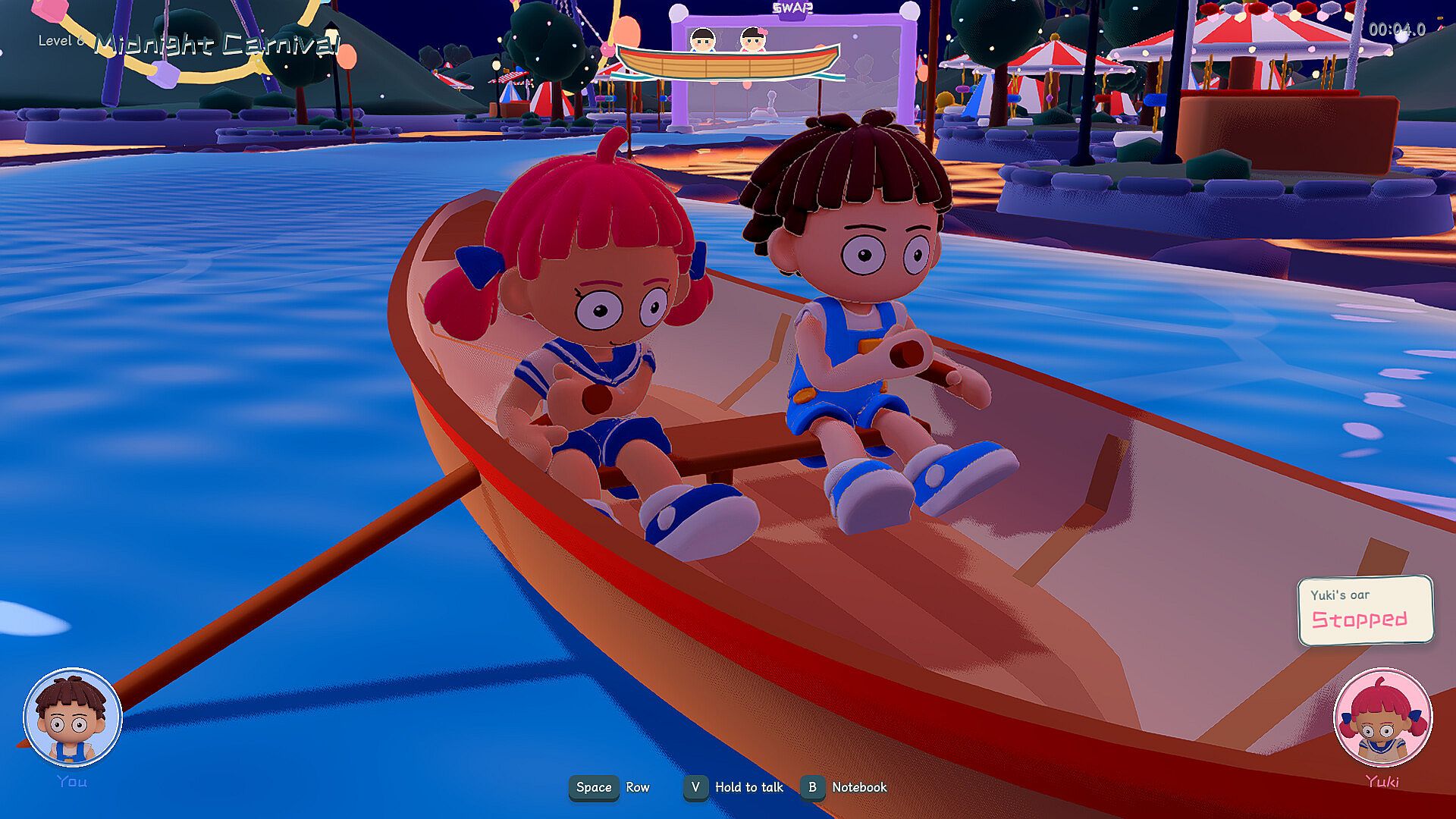
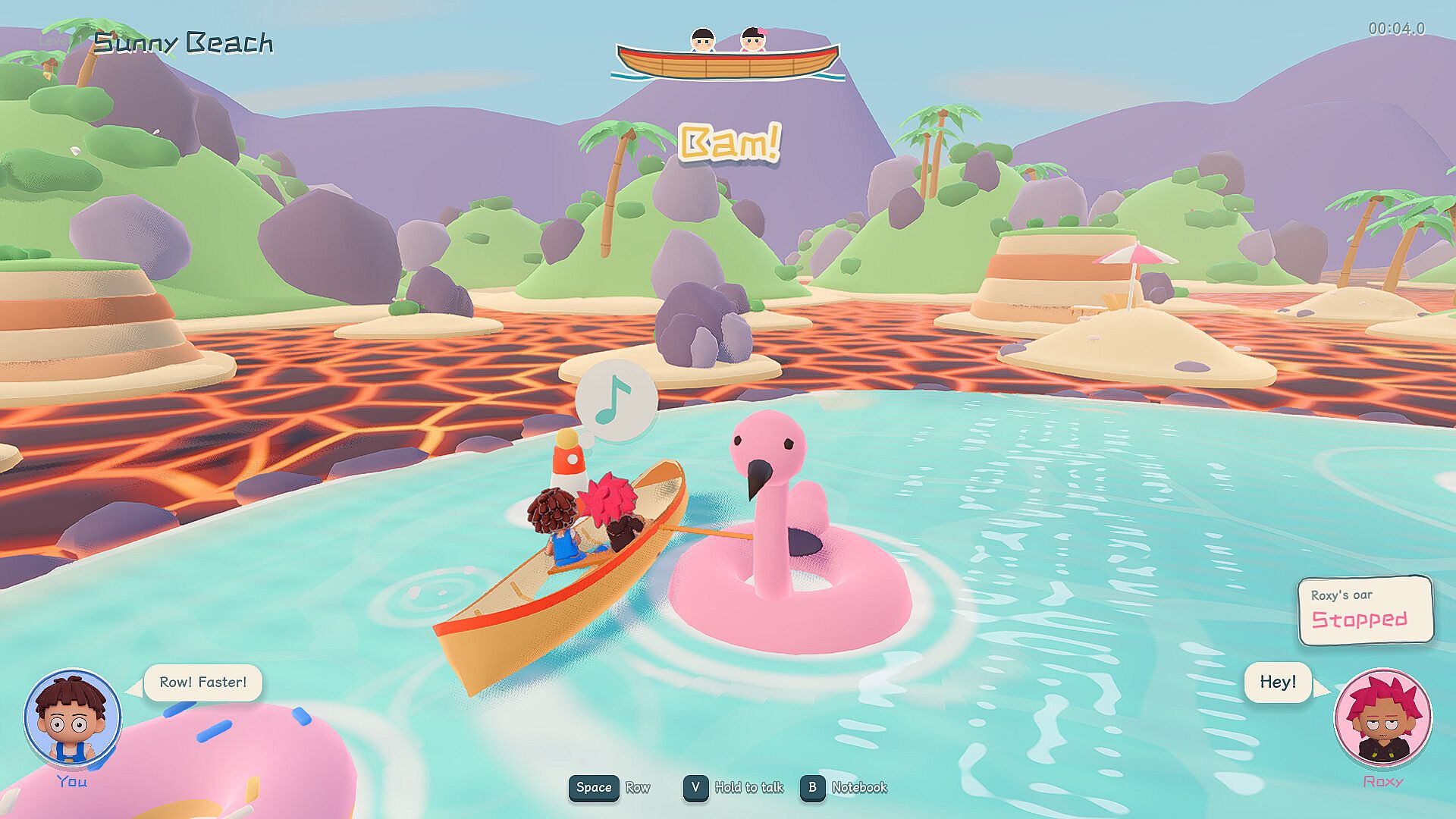






She's a Hot Mess is an indie casual adventure game for PC built around voice-driven co-op with an AI partner who rows a shared boat through hazardous waters. Players issue spoken commands to guide the craft while the companion interprets instructions in her own way, often with sarcastic commentary or outright resistance that turns simple navigation into chaotic exchanges.
Gameplay
The central loop centers on verbal commands shouted into a microphone. Players call out directions such as faster, stop, or paddle twice, and the AI companion responds immediately or with creative variations. Her reactions include mid-stroke complaints, guesses at unclear instructions, and reminders of past mistakes stored in a virtual notebook. Code words invented during play get recorded for later use, adding layers of personal shorthand that the companion references over time.
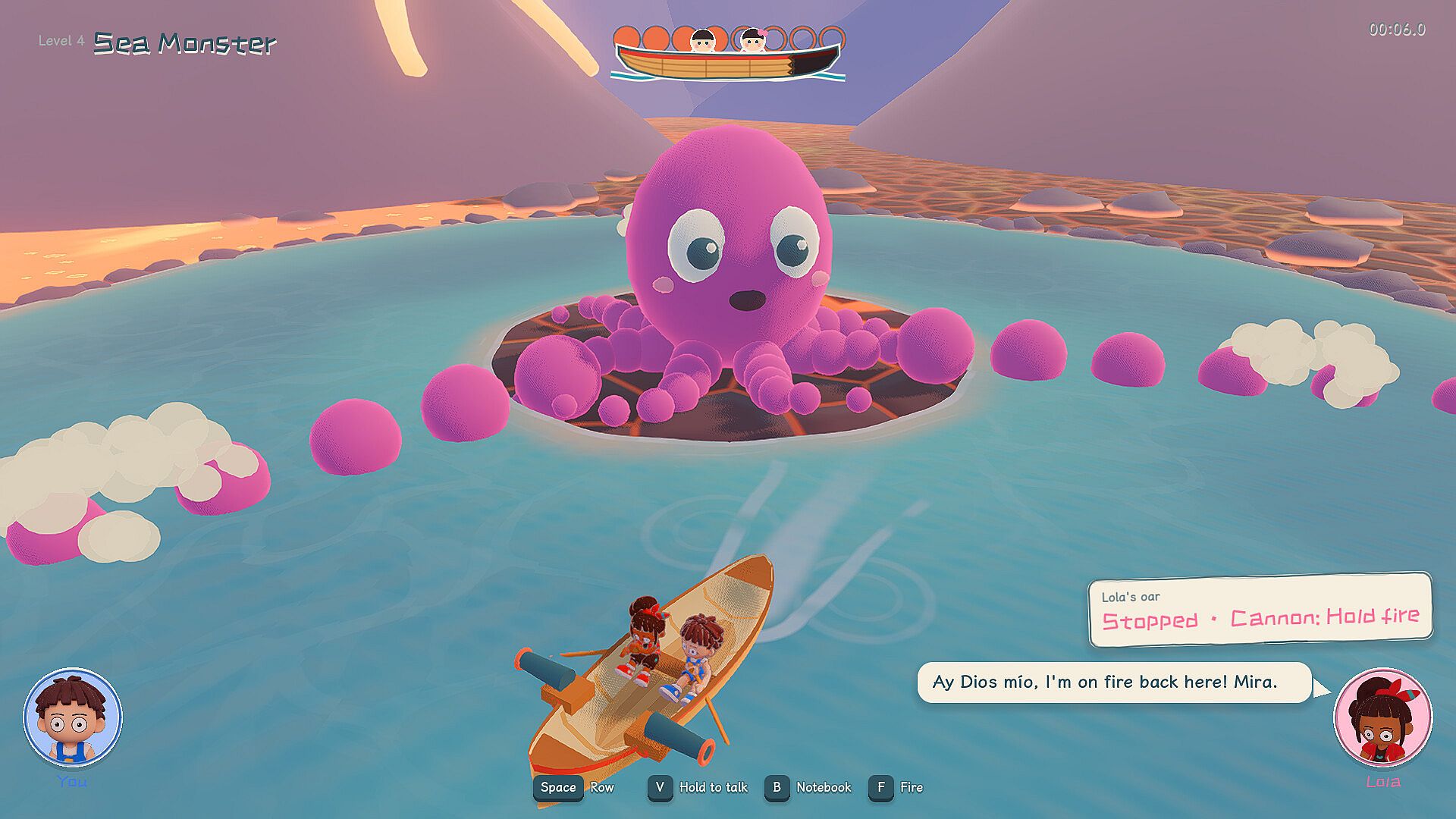
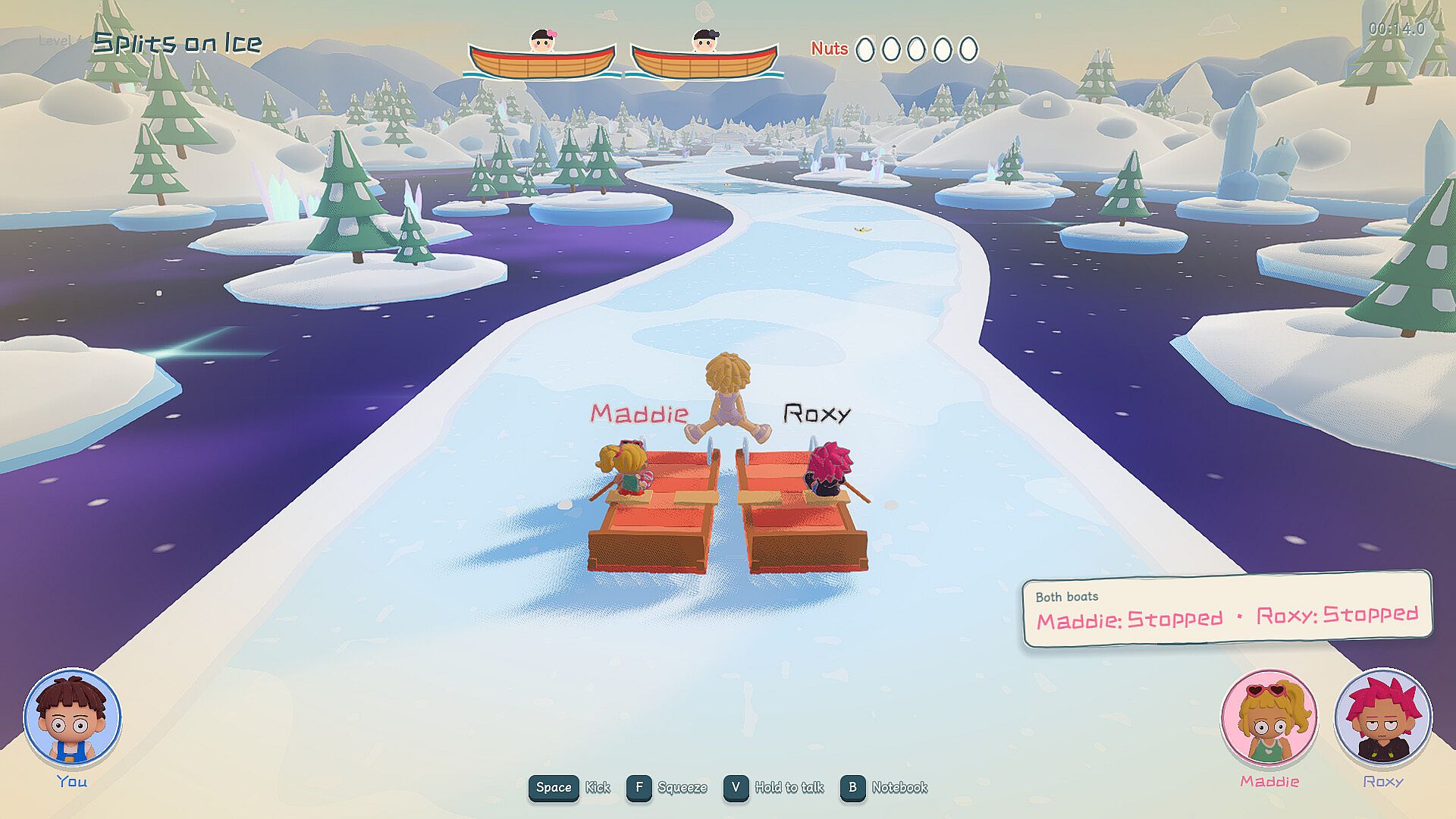
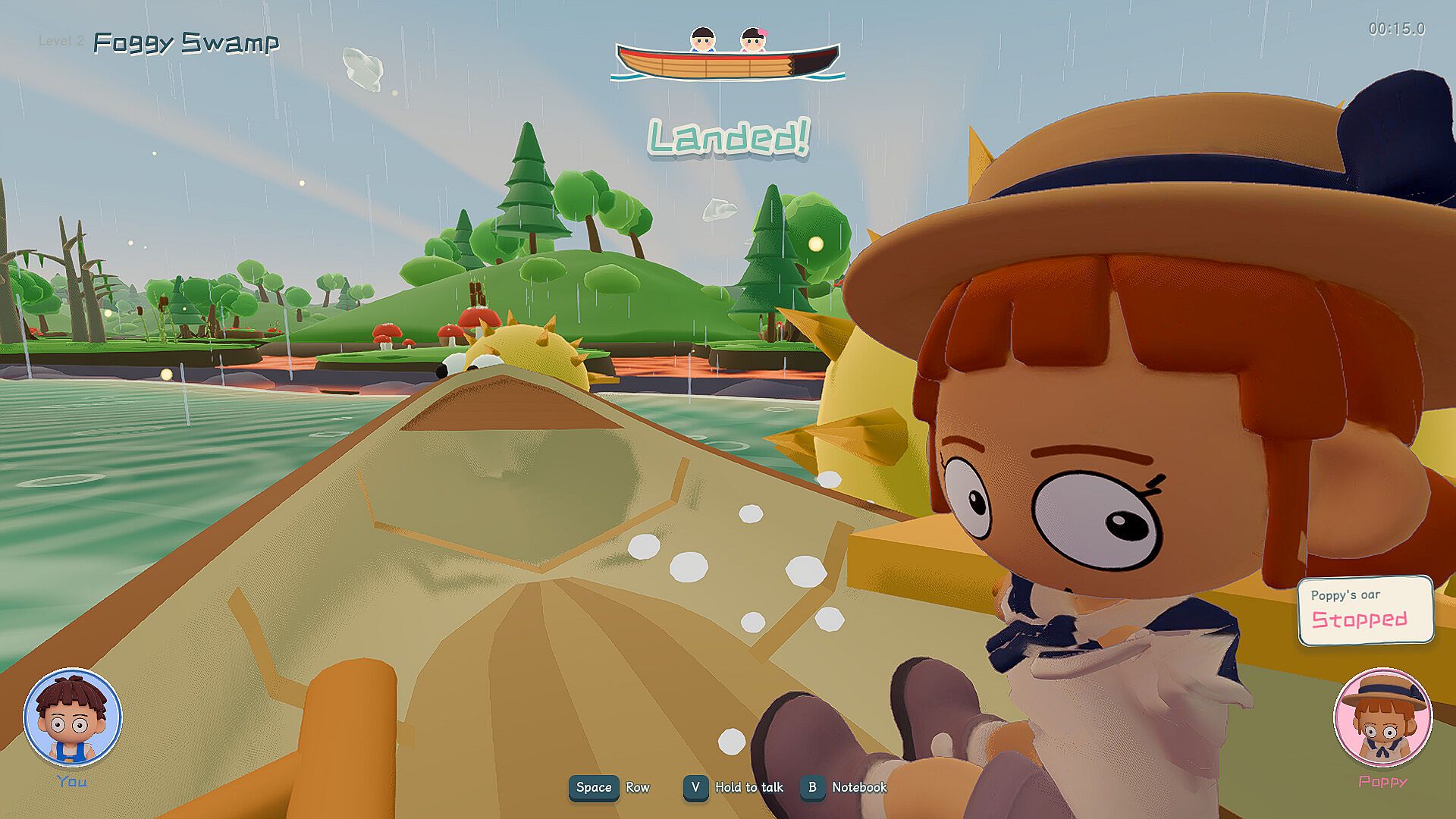
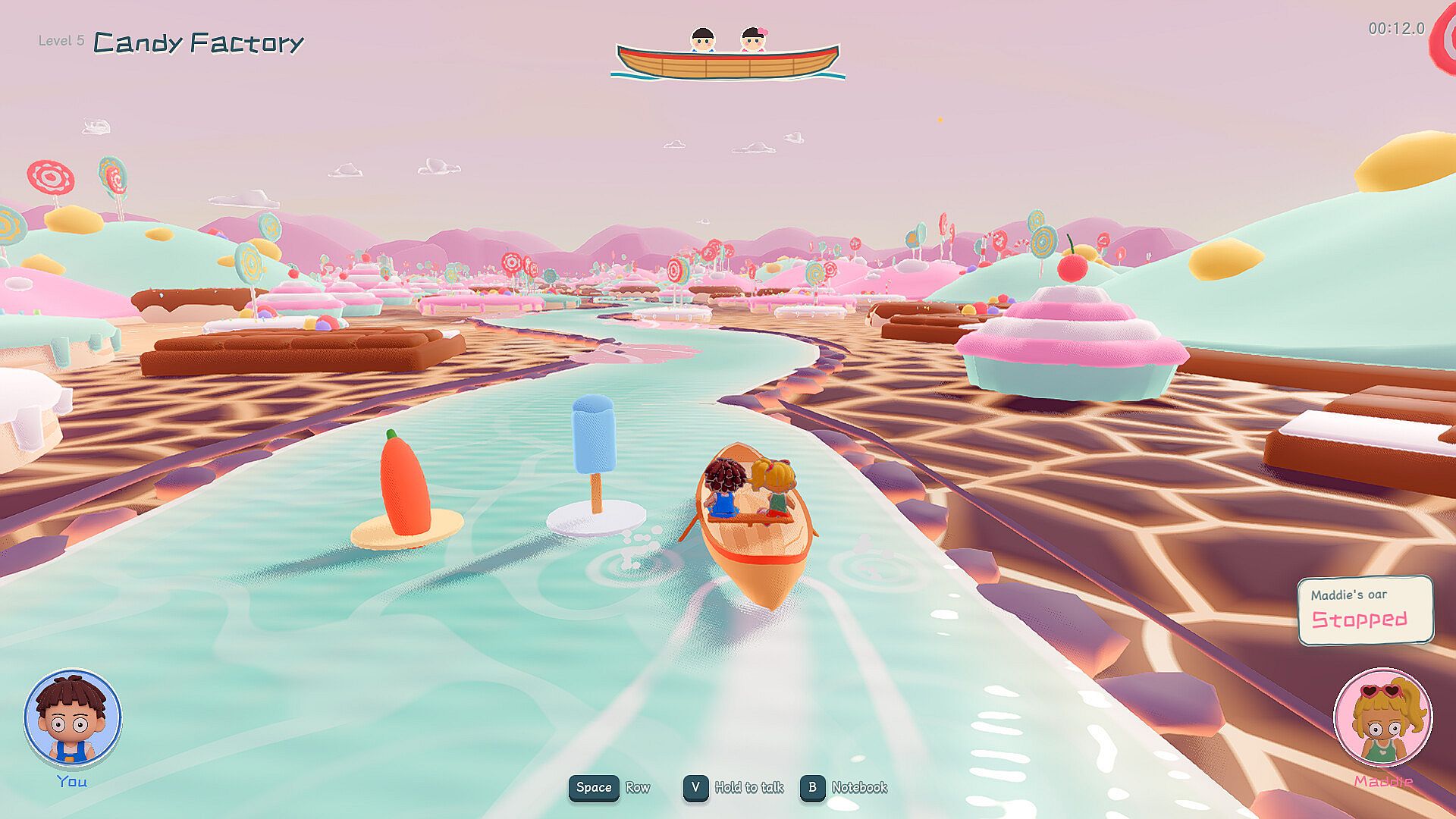
Navigation takes the boat past varied environments including beaches, rapids, ice fields, a candy factory, a midnight fun park, an angry volcano, and encounters with a sea monster. Lava serves as the primary threat, requiring constant adjustments to avoid sinking. Different companion personalities alter the experience through unique voices, appearances, and styles of ignoring or twisting commands, ranging from sweet and sarcastic to tsundere, posh, or fiery.
Communication forms the main obstacle rather than raw speed. The AI uses speech recognition to process voice input and an LLM to generate live dialogue delivered through text-to-speech, creating unpredictable but consistent partner behavior across sessions.
Game Modes
The game focuses on a single core cooperative experience without separate named modes. Players select from available companion personalities before starting a run, each bringing distinct dialogue patterns and rowing quirks that change how commands land. The emphasis stays on repeated attempts through the same obstacle-filled river sections, where success depends on adapting to the AI's memory and personality rather than progressing through distinct game types.
Winning remains optional by design. Sessions prioritize the humor of miscommunications, finger-pointing, and shared disasters over competitive scoring or time trials. This structure suits short, repeatable play sessions centered on the evolving relationship with the companion.
AI Companion Mechanics
Each companion maintains a persistent memory of player actions and invented phrases. Mistakes get noted more readily than successes, leading to recurring jabs during later runs. Voice commands map directly to rowing actions through dedicated models, while the LLM handles natural responses that feel conversational rather than scripted. This system encourages experimentation with phrasing and code words to improve cooperation over multiple attempts.
Environments introduce specific challenges that test the command system. Rapids demand quick corrections, ice requires precise timing, and the sea monster encounter adds boundary-pushing interactions that the companion comments on in character. The lava hazard appears throughout, forcing players to balance speed with accuracy while managing the AI's independent streak.
Is It Worth Playing?
The game remains in a pre-release state with no user reviews or completed launch available yet. Its appeal lies in the novel voice-command system and the humor derived from an AI partner who actively resists perfect cooperation. Players who enjoy chaotic local-style co-op, experimental input methods, and light adventure navigation through stylized hazards may find the core loop engaging once it launches.
Those seeking traditional multiplayer balance, deep progression systems, or polished competitive modes will likely find the experience limited by its narrow focus on AI interaction and optional victory conditions. Availability on PC positions it for easy access once released, though the current lack of completed content means waiting for full launch provides the clearest picture of its final form.