


Ship It! : Indie Studio Simulator is a single-player strategy and simulation game that puts players in the role of an aspiring indie game developer. The experience centers on managing time, resources, and creative decisions while building a studio from a modest bedroom setup with limited savings and a persistent cat companion.
Gameplay
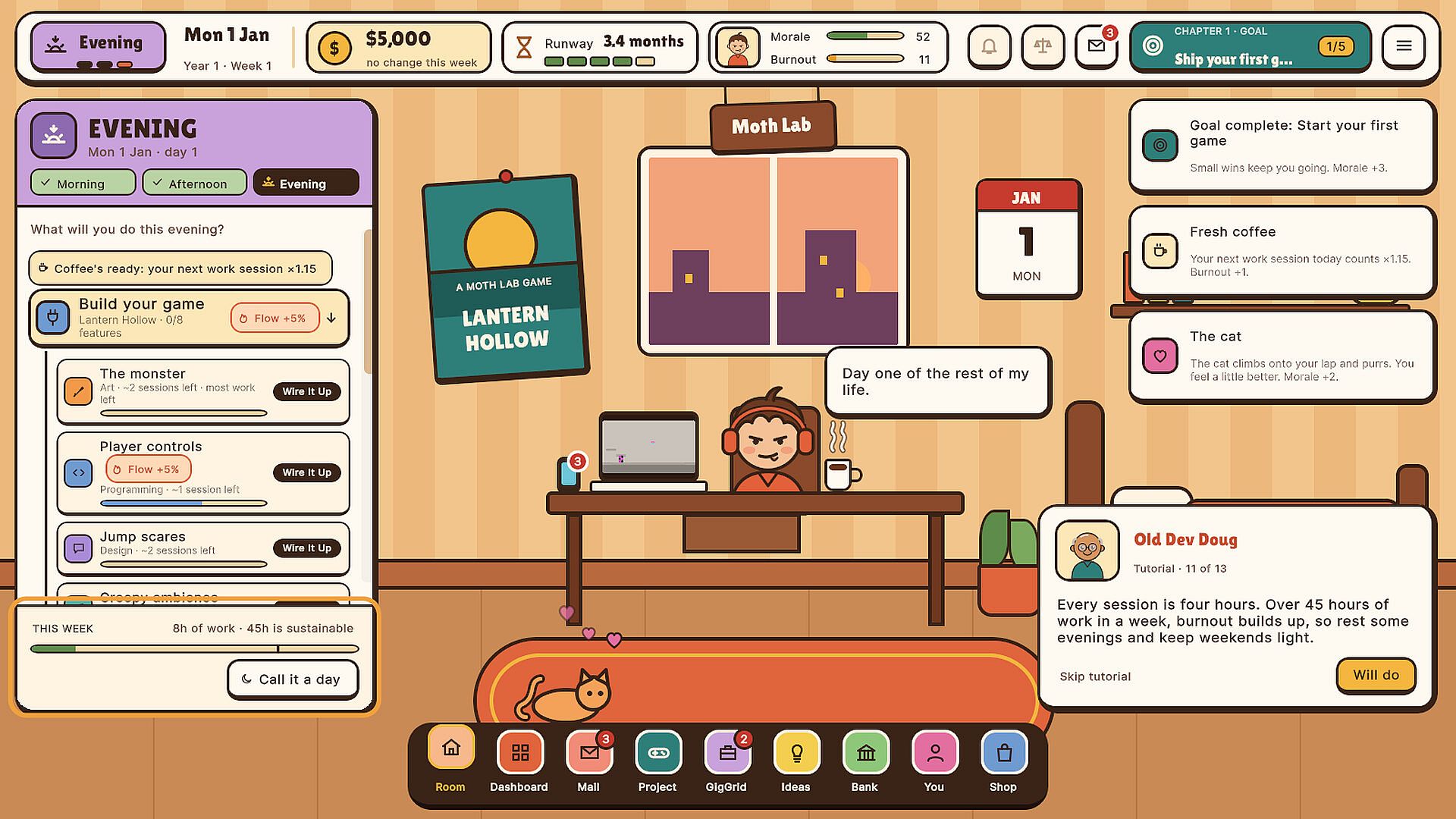
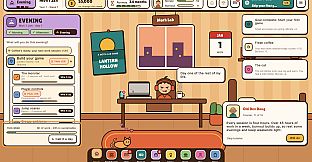
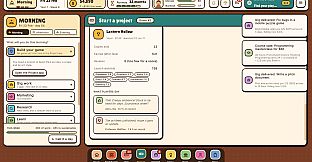
Core gameplay revolves around daily time allocation across morning, afternoon, and evening slots without any automated clock or fast-forward option. Players decide how to spend each block on activities such as developing the main project, accepting freelance work, handling marketing or research tasks, learning new skills, or resting to manage energy levels. Exceeding roughly 45 hours per week triggers burnout mechanics that affect performance.
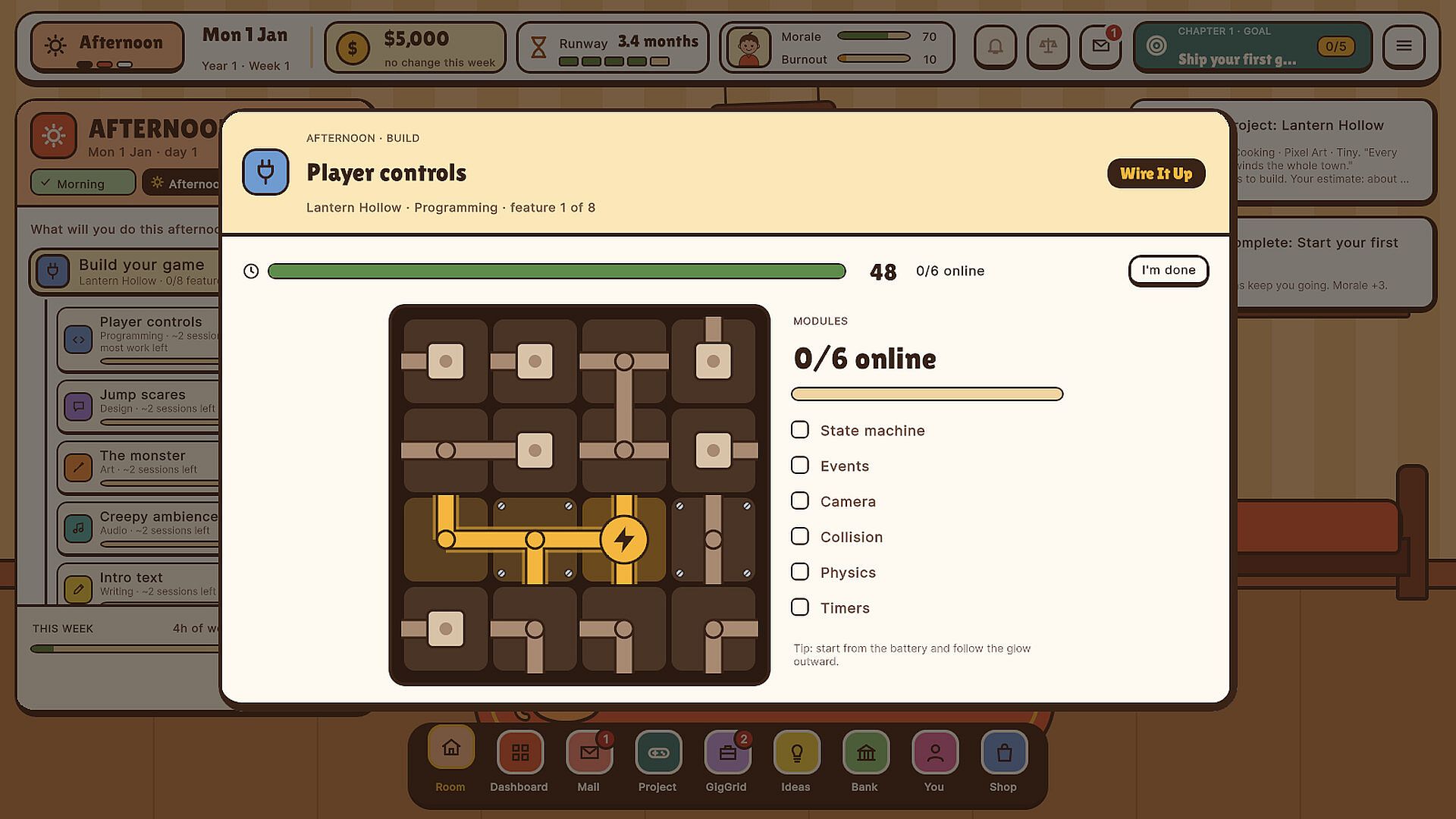
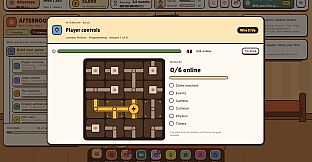
Development work takes the form of hands-on connection puzzles. Features for code, art, audio, design, and writing appear as circuits, paint pipes, patch cables, level paths, and red string on a corkboard. Completing these puzzles advances the game from basic gray boxes and placeholder assets toward polished elements including full art, levels, music, and dialogue. A laptop interface tracks progress visually and allows players to monitor growth in real time.
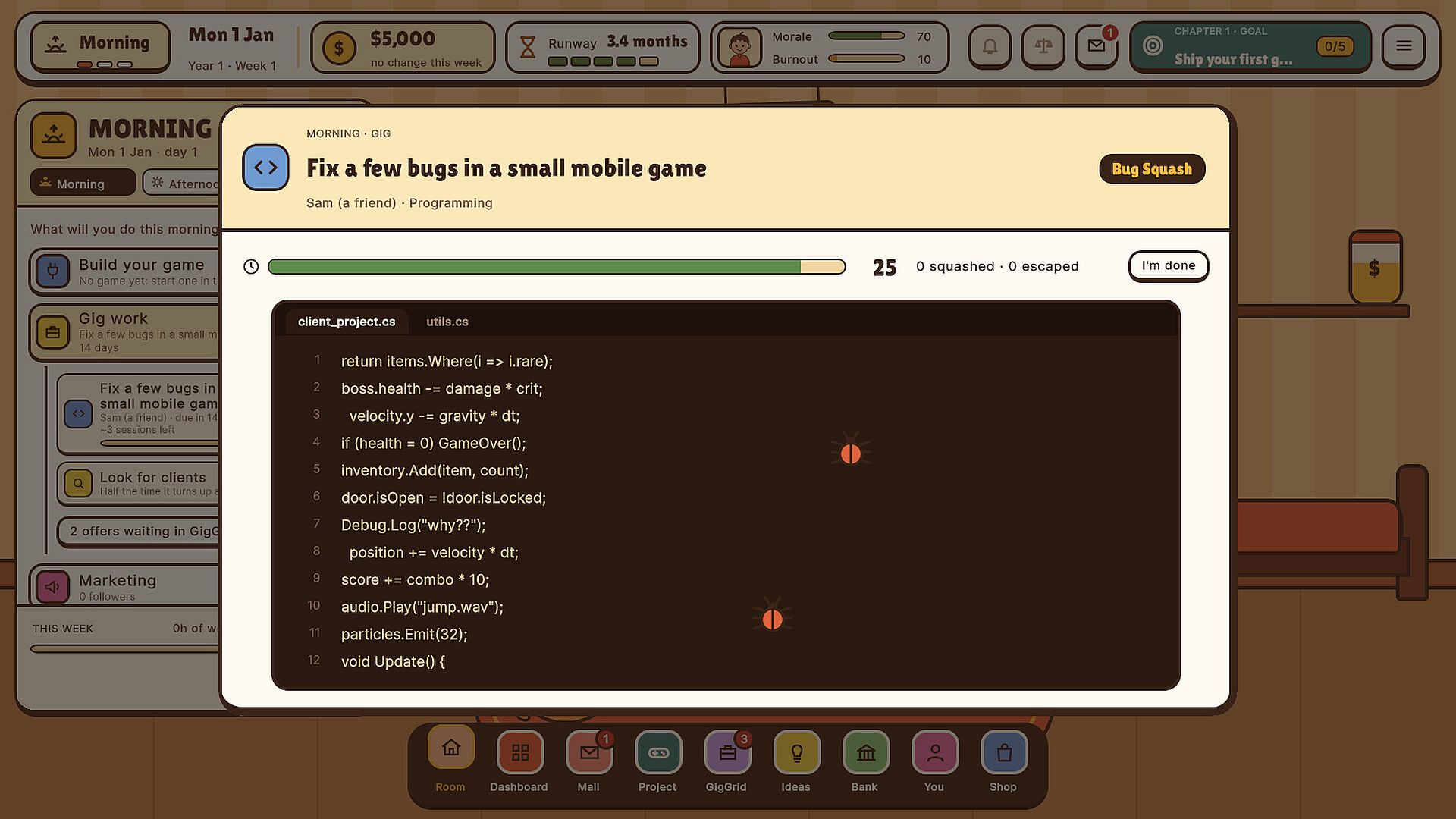
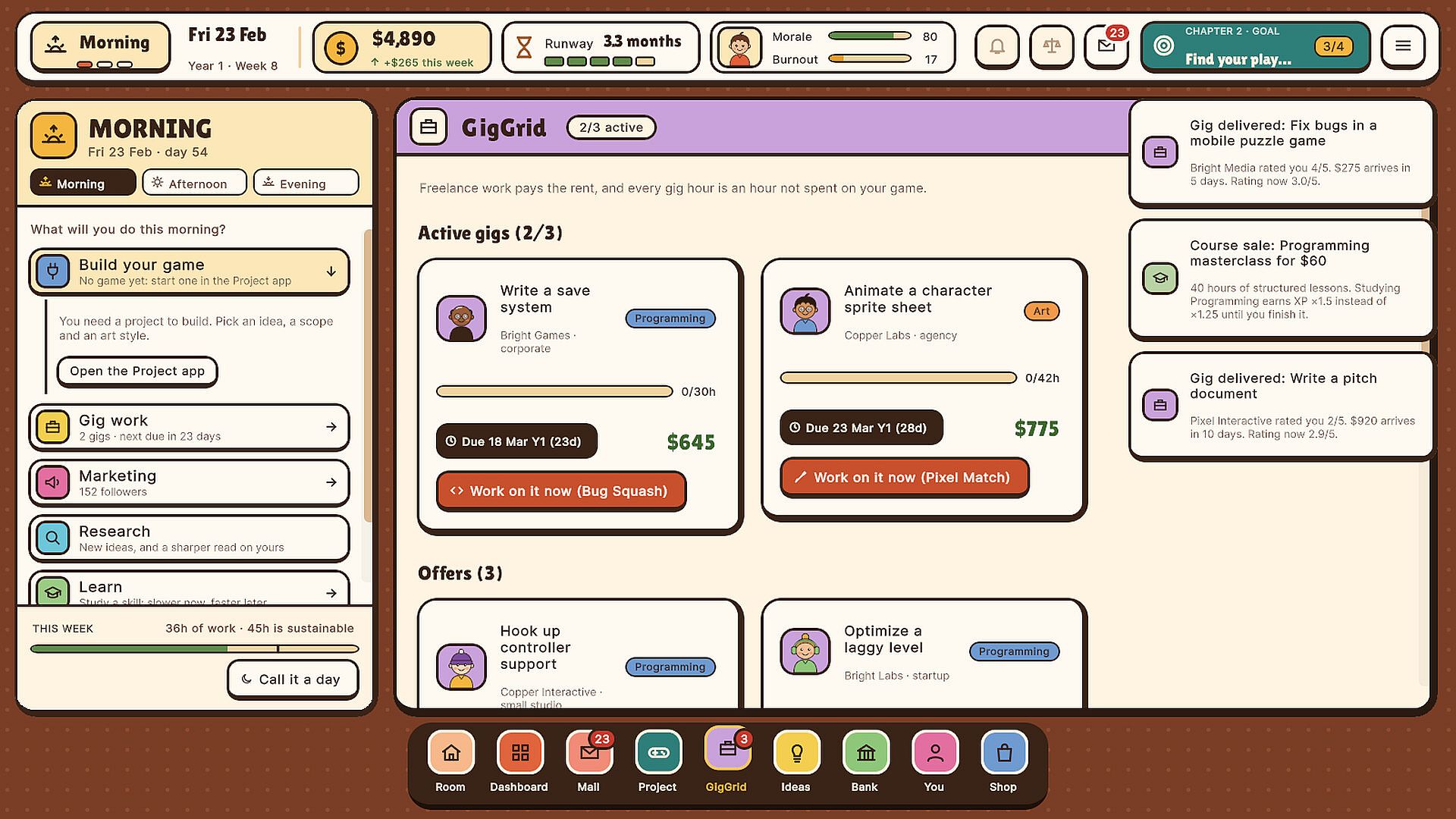
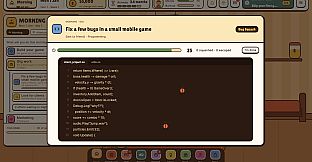
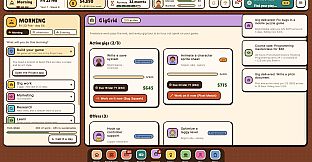
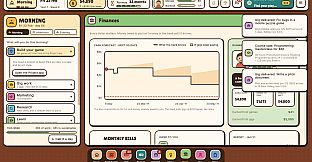
Freelance gigs provide income through short minigames focused on practical tasks like fixing bugs, matching pixels, correcting typos, tuning audio, or organizing feedback. Strong performance in these sessions yields better results and skill improvements. Rent payments, unexpected costs such as laptop repairs, and client issues create ongoing financial pressure that forces choices between steady side work and focused project time.
Game Modes
The game supports a standard pace with active timers for each time slot alongside a relaxed mode that disables timers for players who prefer a slower, more deliberate approach. This flexibility lets individuals tailor the experience to their preferred rhythm without altering core progression systems.
Daily choices emphasize balance between immediate survival needs and long-term goals. Freelance opportunities and potential day-job offers compete directly with time spent on the personal project, making each decision carry visible consequences for both finances and creative output. Rest and small rituals such as brewing coffee or interacting with the studio cat help offset stress and maintain streaks of productive flow.
Studio Management and Progression
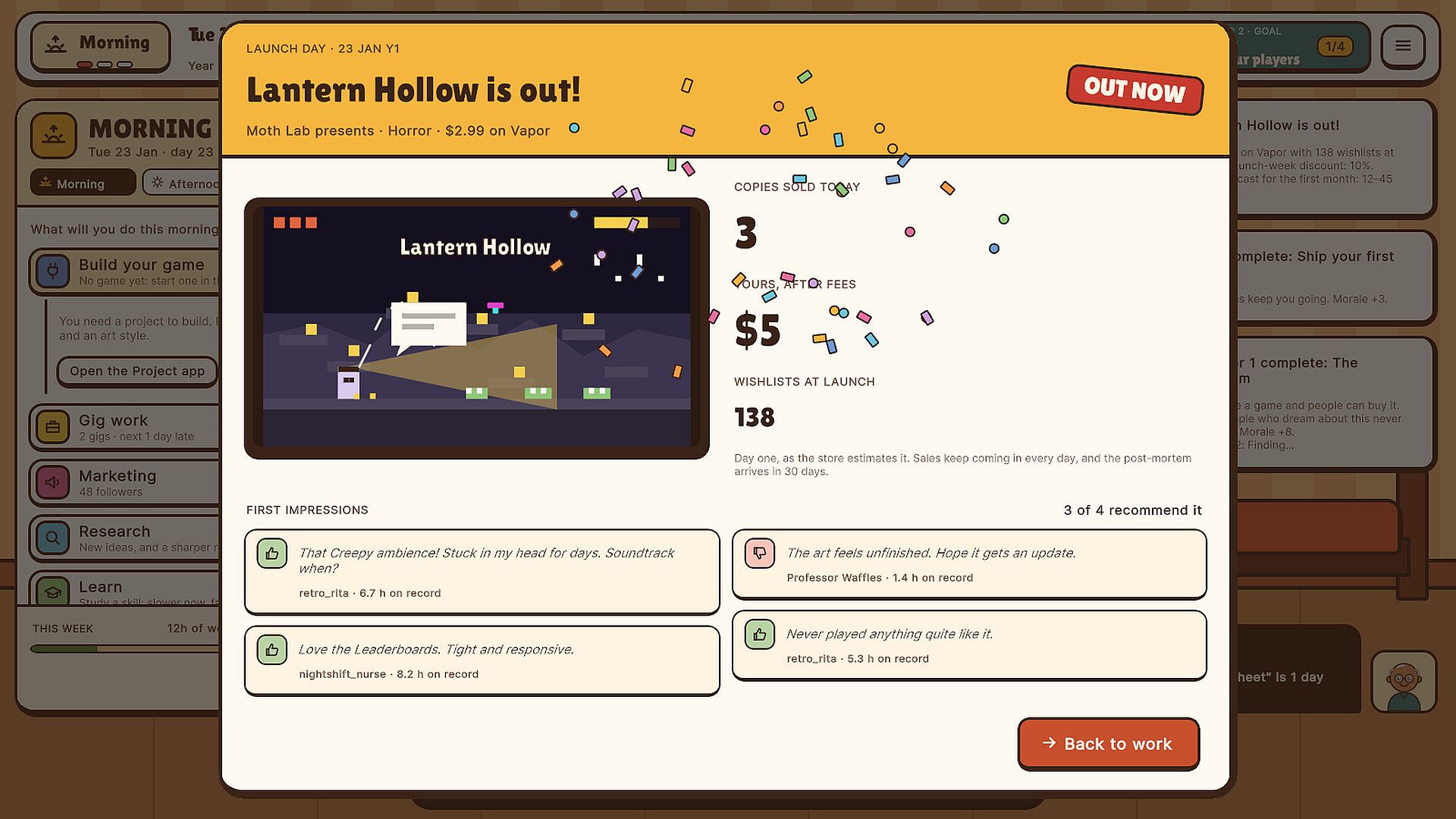
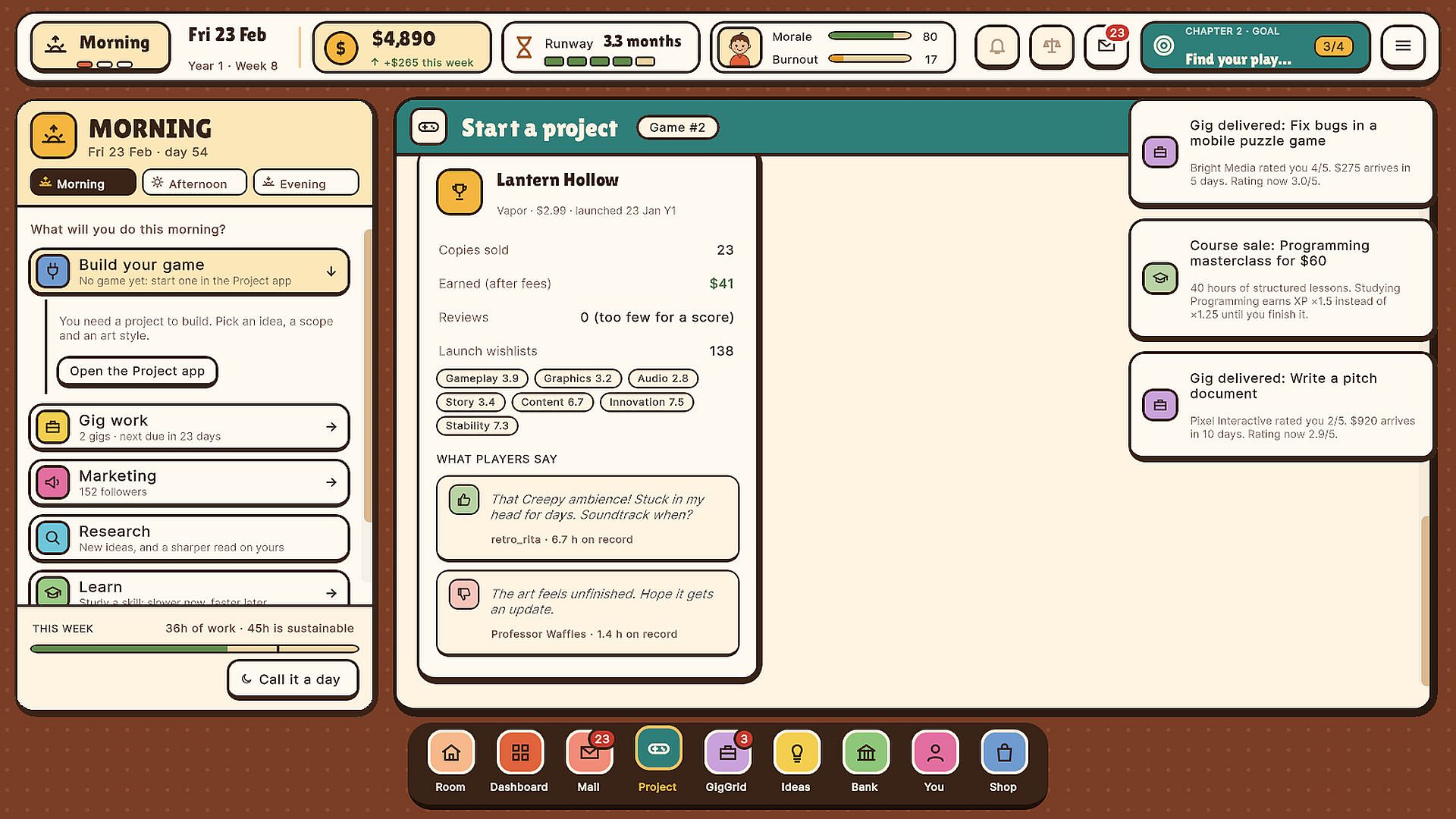
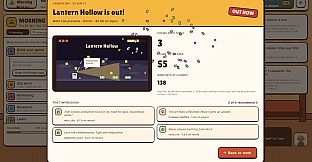
Players begin by naming their studio and selecting an initial game idea along with genre, scope, and art style. The project evolves on-screen as features are completed, culminating in the creation of a store page, wishlist gathering, and a launch sequence that displays live counters and early player reactions tied to the specific elements built.
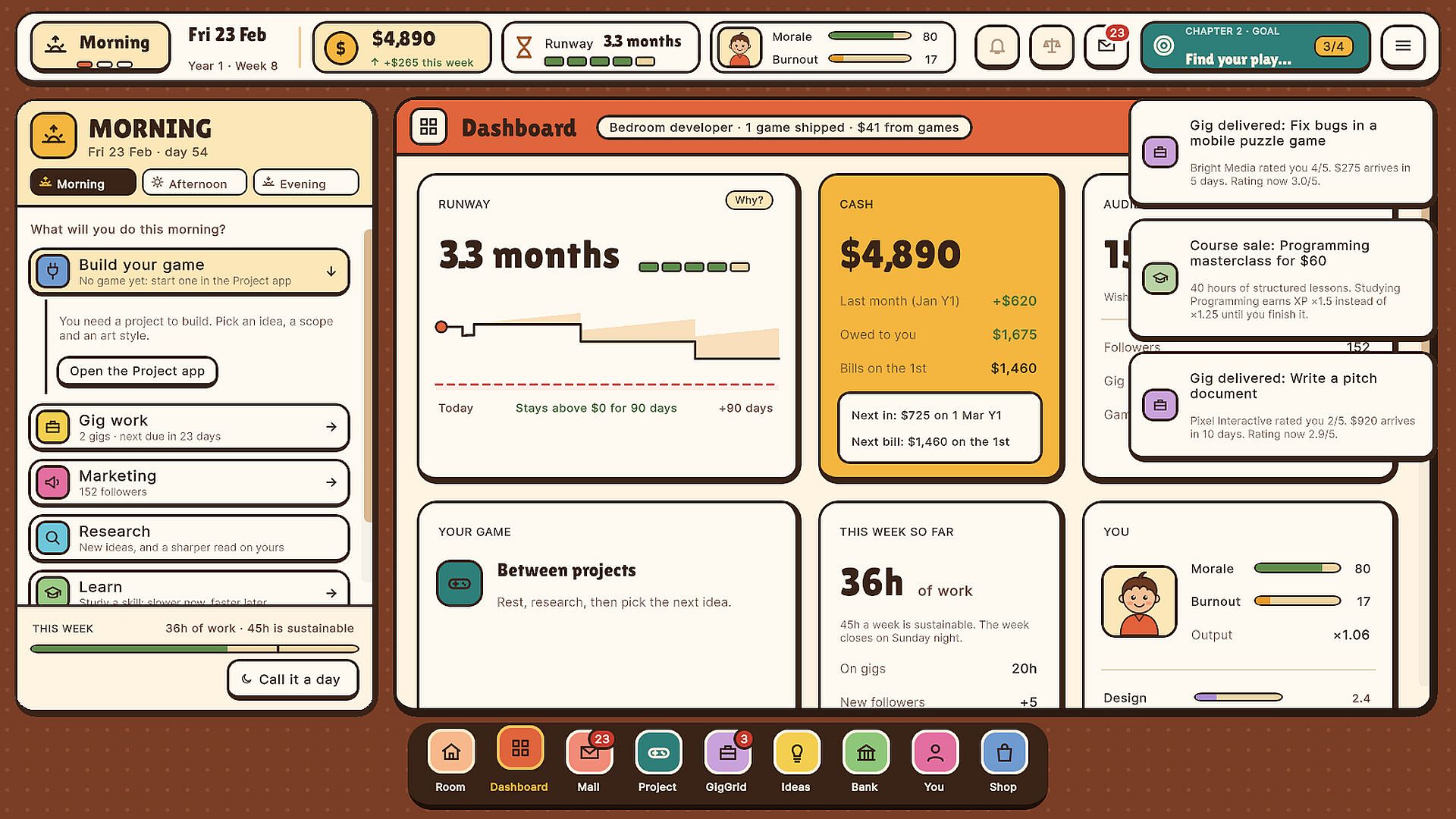
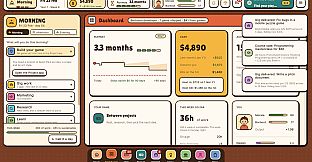
Progress unfolds chapter by chapter with guidance from a character named Old Dev Doug during the opening phase. Subsequent objectives focus on shipping the first title, locating an audience, scaling to larger projects, and eventually sustaining the studio through its own releases. A post-mortem report after 30 days provides breakdowns of what players noticed, allowing lessons to inform future attempts. Every financial or progress metric includes a detailed explanation of contributing factors.
Is It Worth Playing?
This management sim appeals to players who enjoy thoughtful single-player experiences that mirror the realities of independent game development. The honest portrayal of trade-offs between freelance stability and ambitious personal work, combined with tactile puzzle-based creation mechanics, creates a distinctive loop centered on deliberate choices rather than rapid action.
With the game still listed as coming soon and no user reviews available at this stage, its value depends on interest in cozy yet grounded simulation gameplay. Those drawn to time-management systems, creative building through puzzle elements, and narratives about pursuing a creative career will find the structure rewarding. The absence of timers in relaxed mode further broadens accessibility for different play styles.