




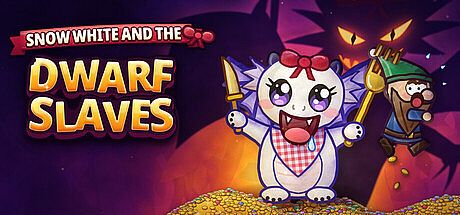


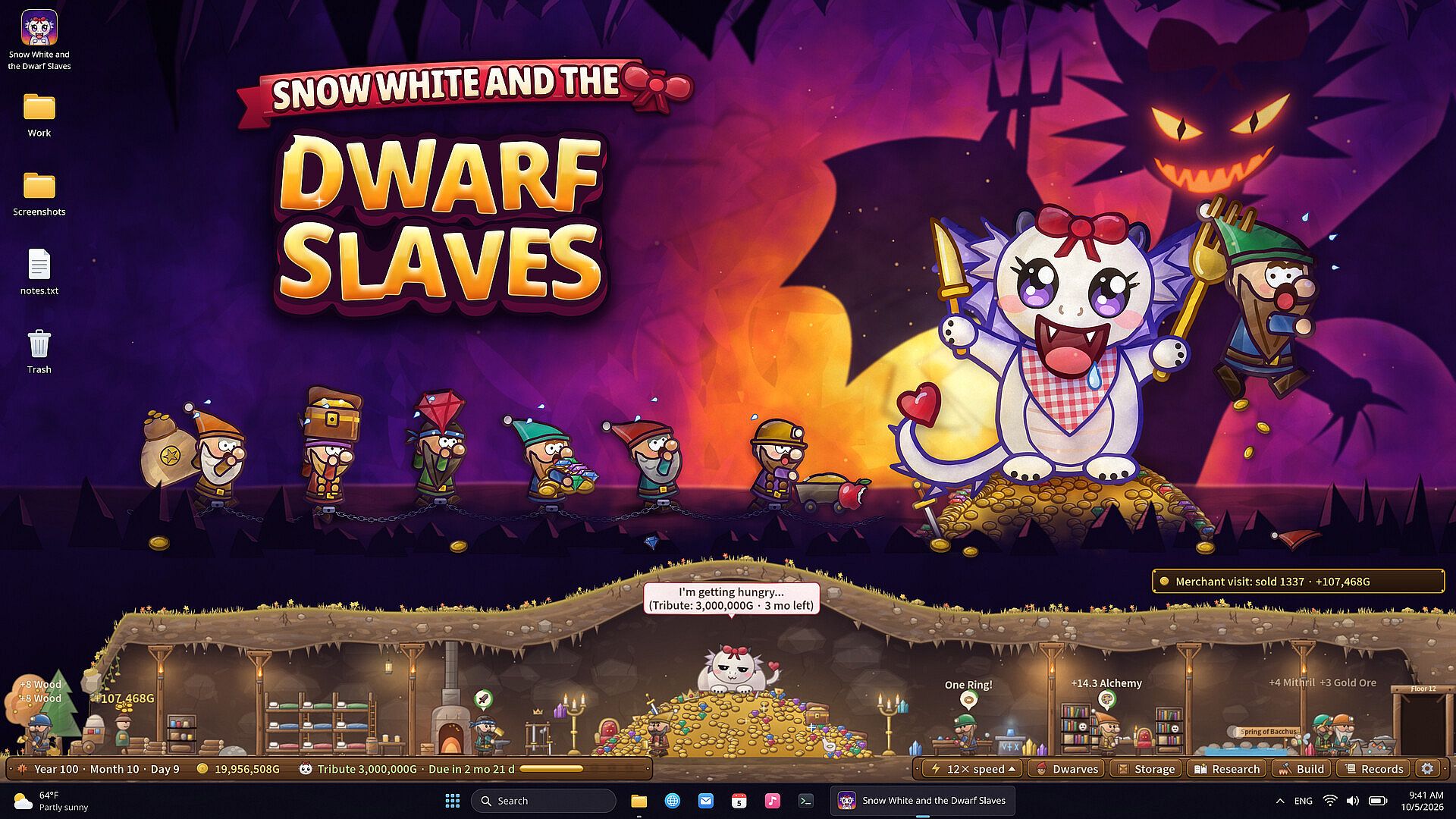
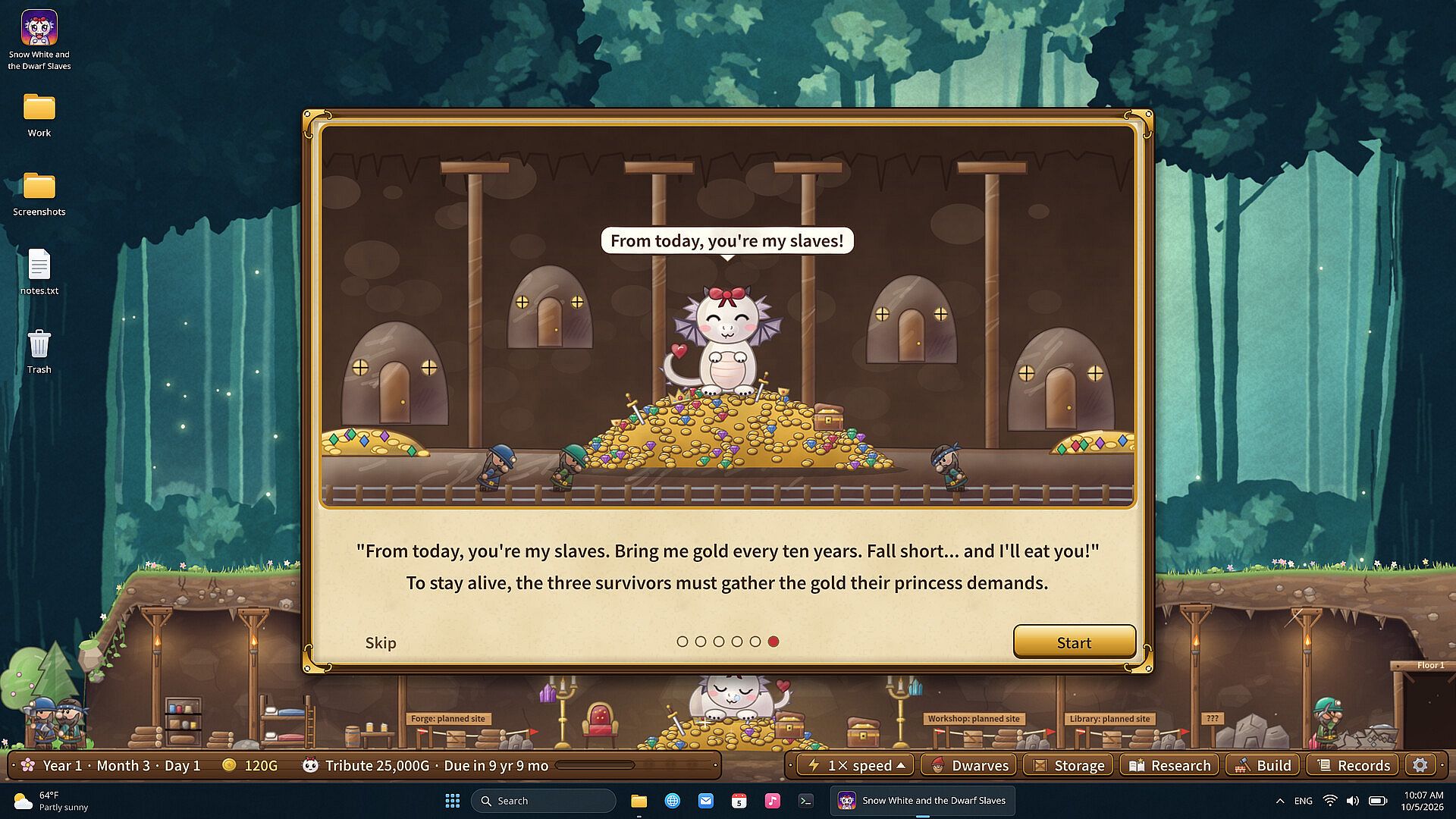
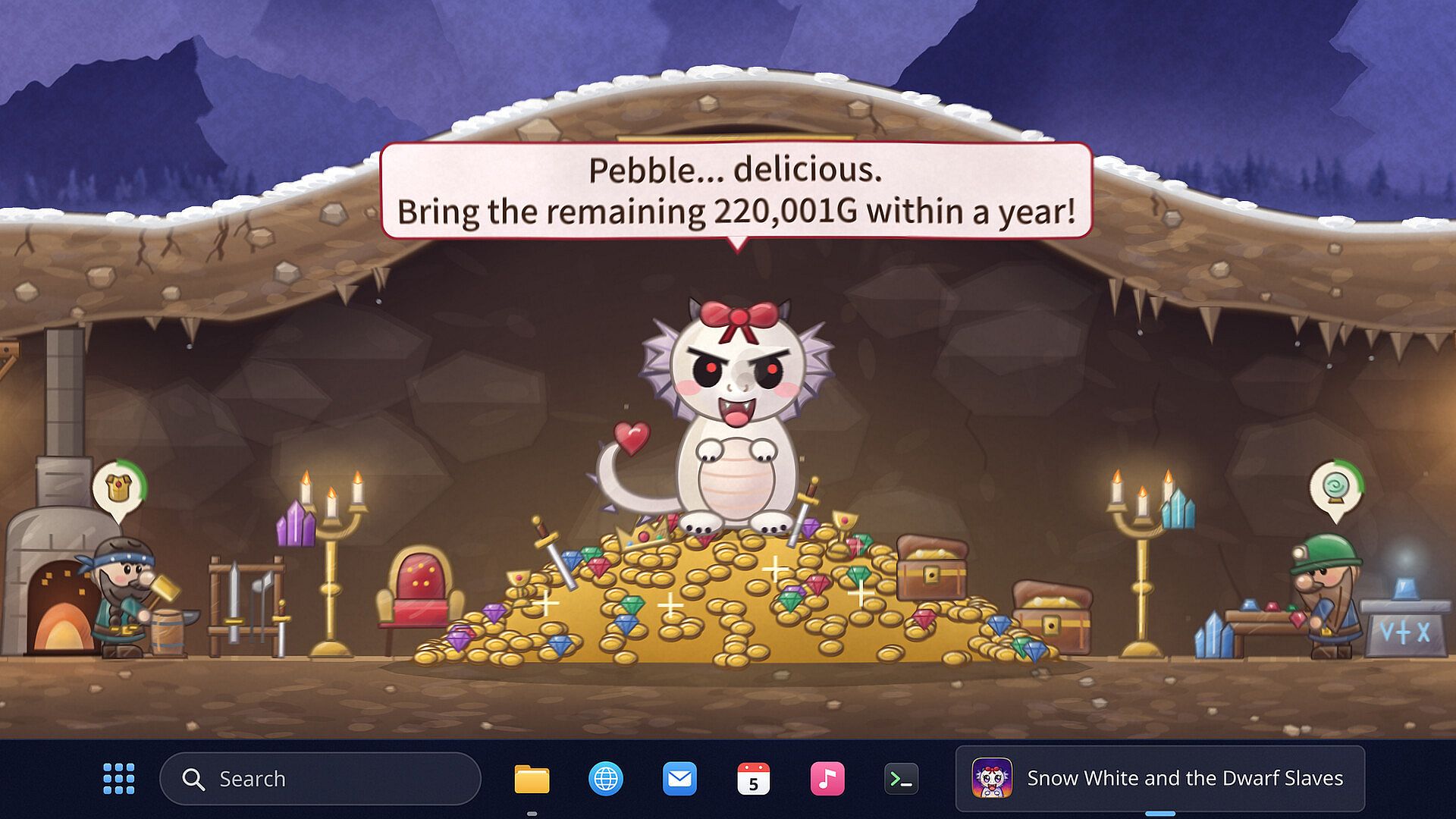
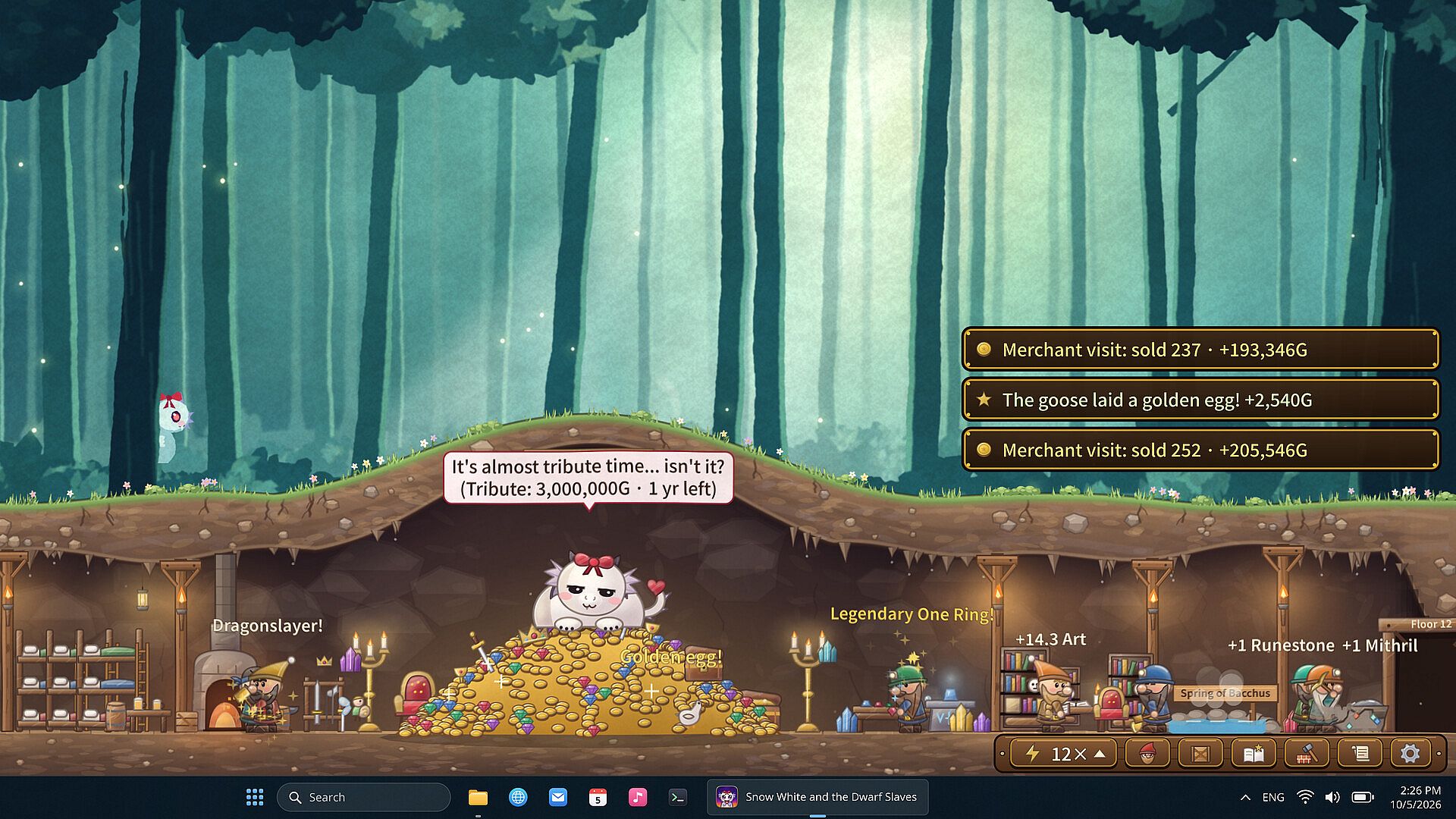
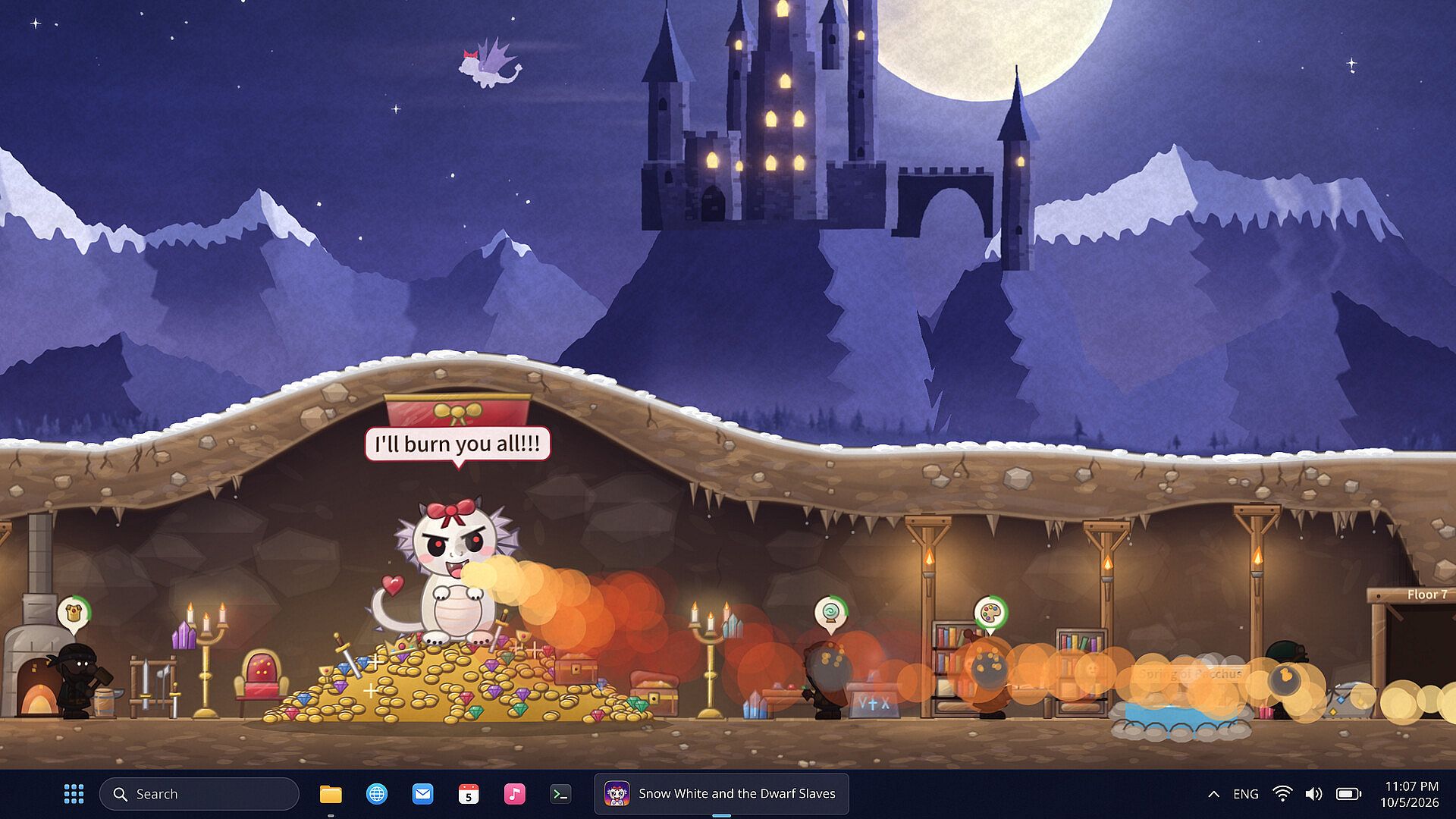
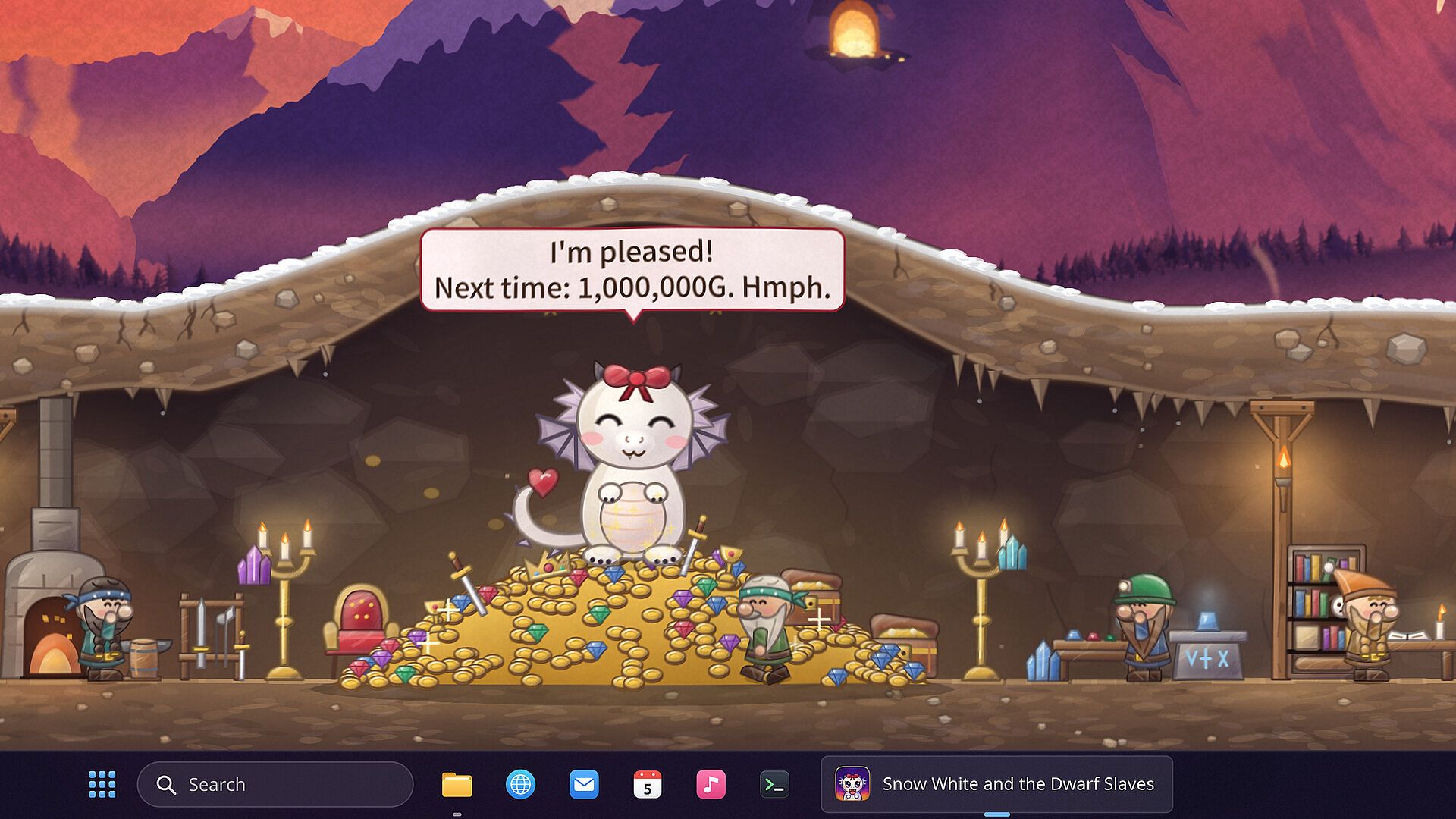
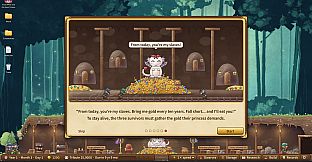
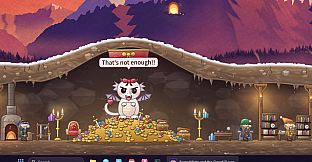
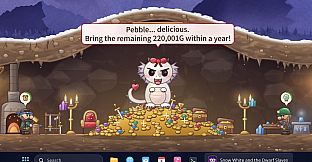
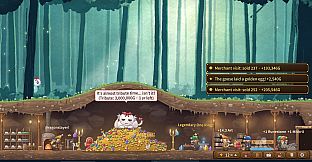
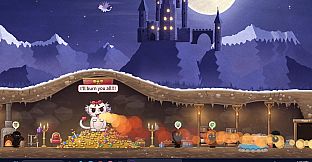
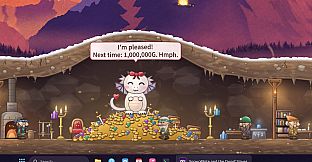
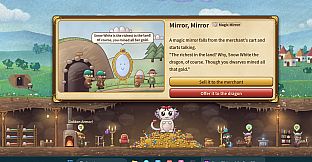
Snow White and the Dwarf Slaves is a strategy indie casual simulation game for PC that places players in charge of a dwarven settlement forced to serve a dragon named Snow White. The core premise involves building and maintaining a village while meeting escalating tribute demands in gold every ten years, all within a transparent desktop window that runs alongside other tasks.
Gameplay
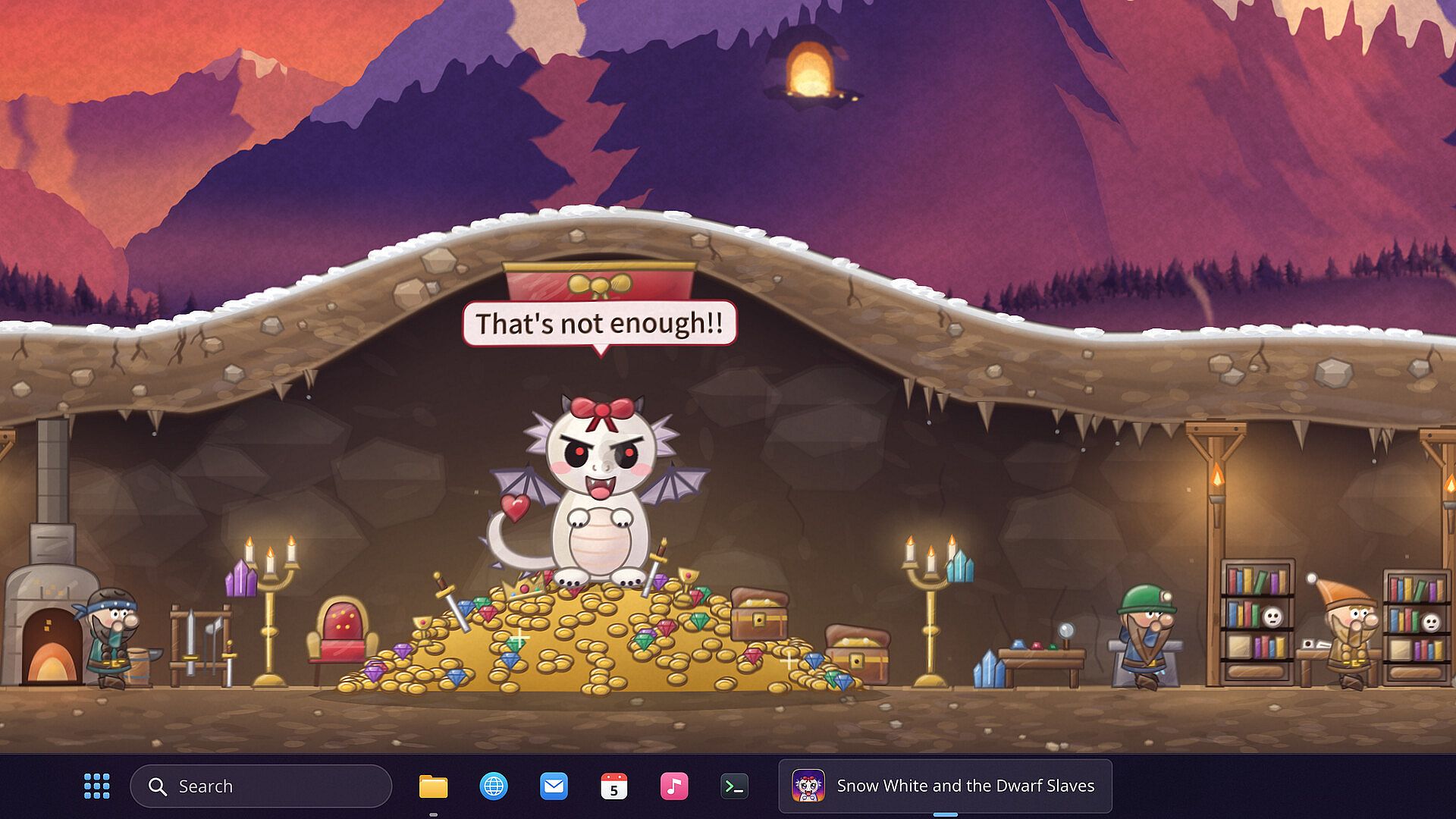
The gameplay centers on resource management and settlement expansion in a persistent single-player environment. Players begin with three dwarves and can recruit up to seven more. Tasks include cutting timber, mining ore, forging equipment, and crafting enchanted goods through workshops that can be built and upgraded. Research unlocks new recipes, while storage and a merchant cart support trading. Workers rest when tired, adding a layer of scheduling to keep production steady. The transparent borderless window sits at the bottom of the screen, allowing size adjustments, monitor selection, and an optional always-on-top setting for seamless multitasking on a PC.
Progress advances only while the game runs, with automatic saving ensuring continuity across sessions. Controls rely on mouse or trackpad input, and all dialogue appears as text without voice acting. Fourteen interface languages support accessibility for a wide audience interested in simulation and strategy titles.
Game Modes
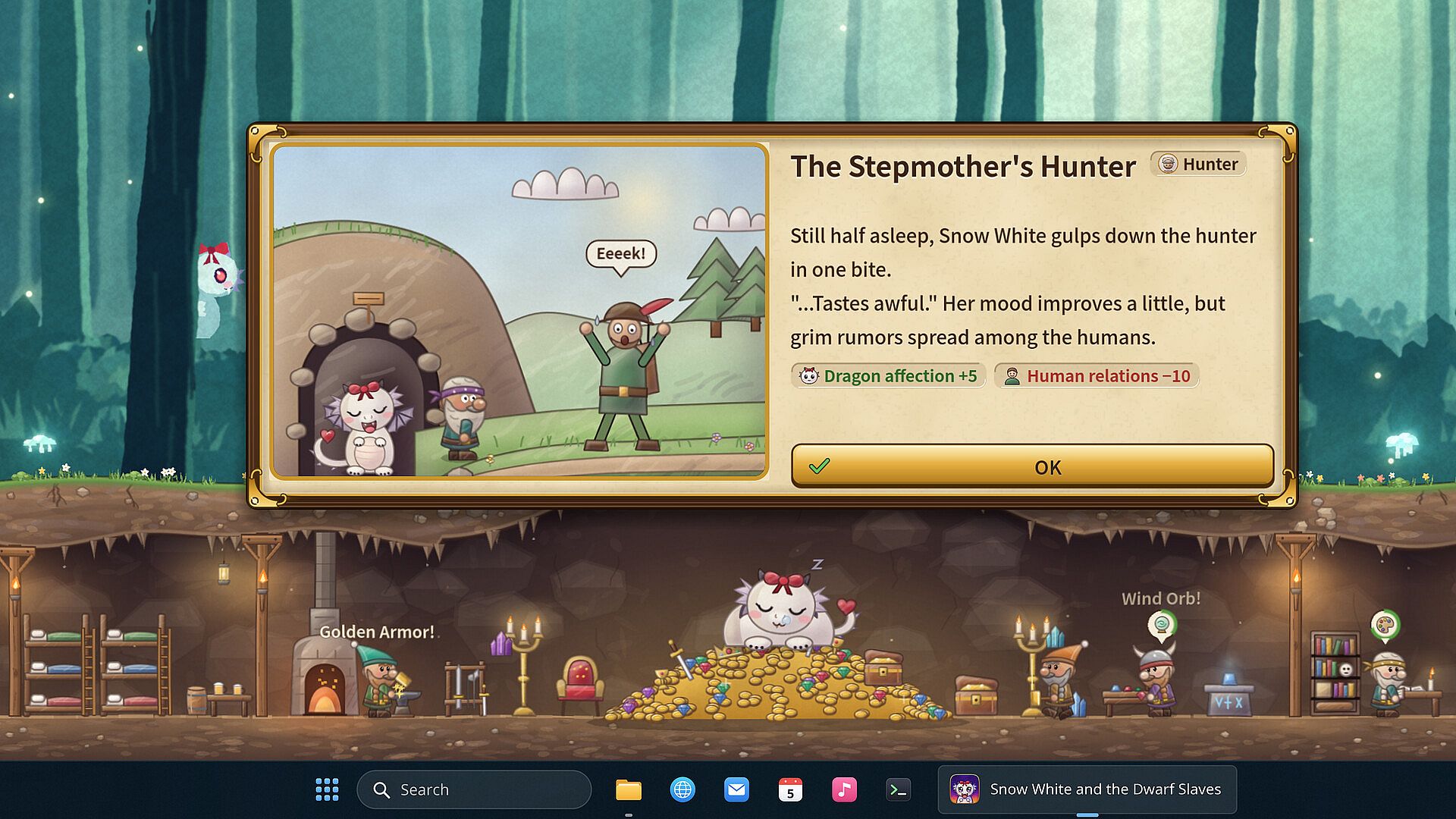
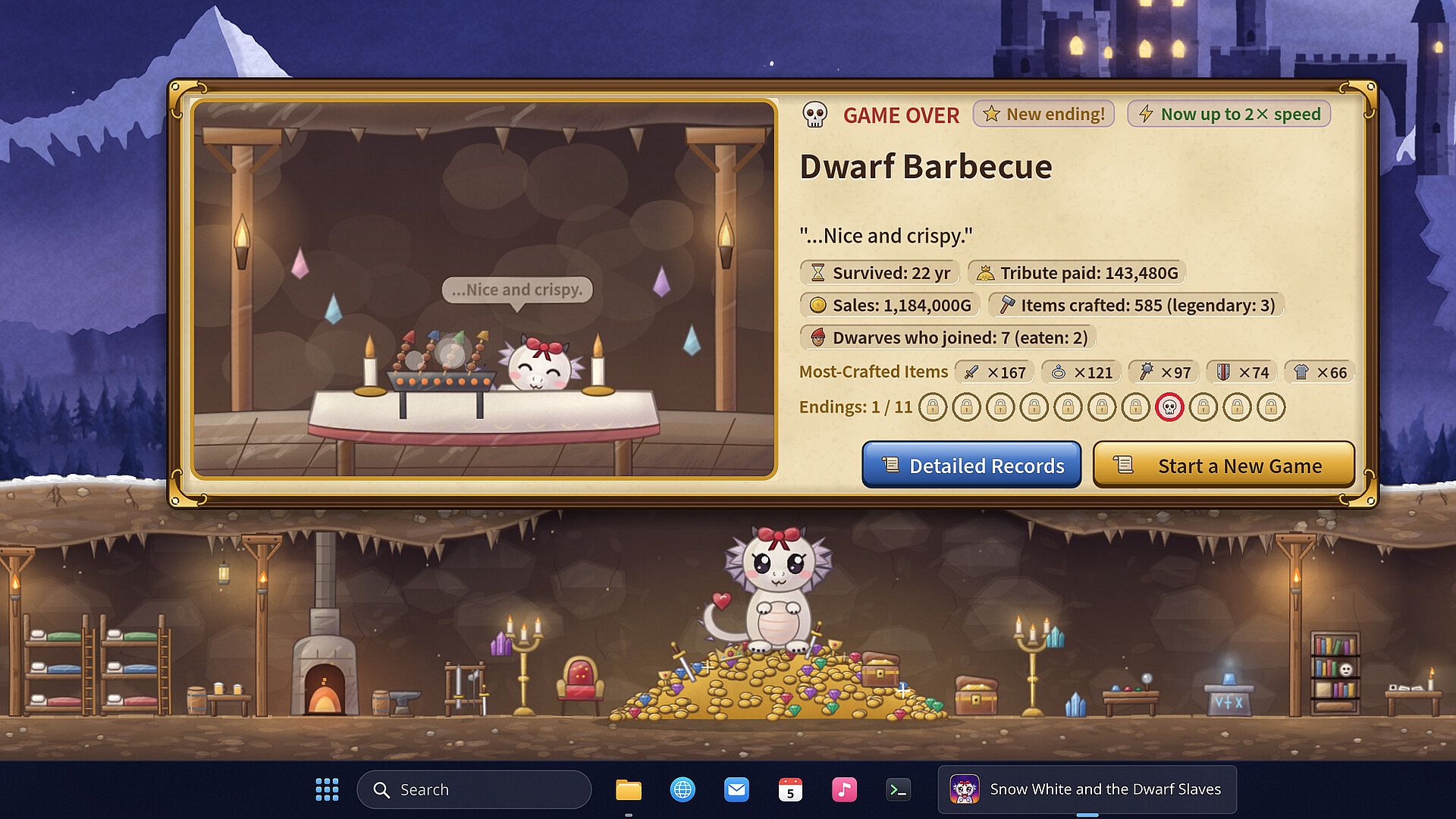
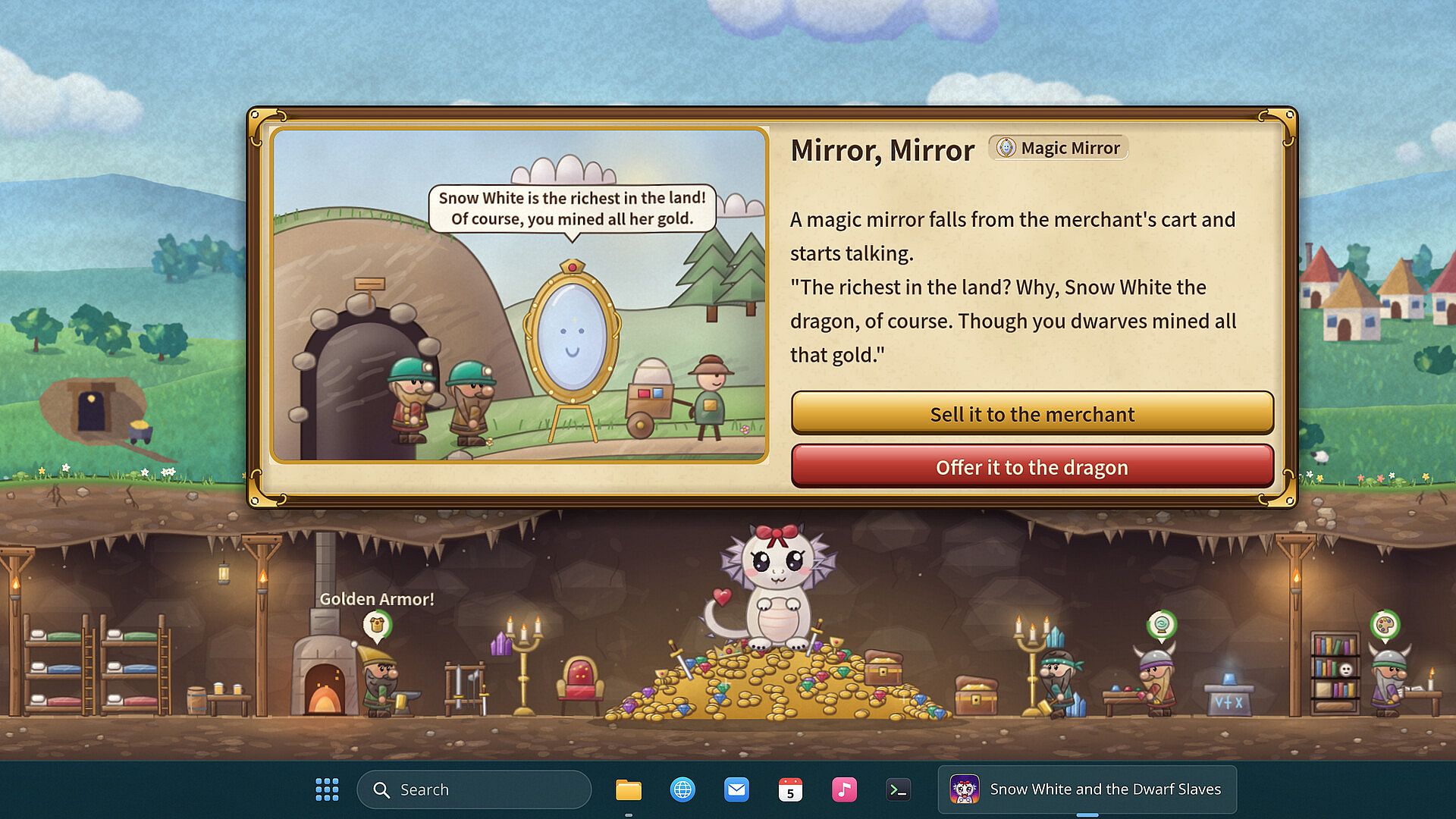
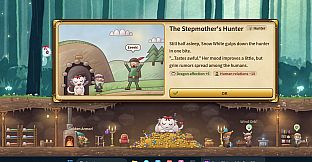
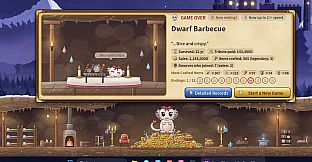
The game operates as a single-player experience focused on long-term survival and decision-making over a hundred-year span. Tribute payments increase over time, and missing a deadline risks losing a dwarf, with repeated failures ending the run. Events and player choices lead to one of eleven possible endings, encouraging multiple playthroughs to collect them all. An ending collection system and detailed records track progress, while discovering endings unlocks faster game speeds for subsequent attempts. No separate multiplayer or competitive modes exist; the emphasis remains on solo management and narrative outcomes shaped by resource allocation and event responses.
Core Mechanics and Progression
Settlement development follows a clear loop of gathering, crafting, and trading to meet tribute obligations. Workshops and storage upgrades expand capacity, while the merchant cart facilitates external exchanges. The desktop integration sets this apart from traditional simulation games, turning routine PC use into an opportunity for incremental progress. Events introduce variability, and decisions influence which of the eleven endings players reach, rewarding careful planning and adaptation. The system supports play at any pace, with no pressure from real-time timers beyond the in-game tribute cycle.
Is It Worth Playing?
This title suits players who enjoy idle management simulations and strategy games that run in the background without demanding constant attention. The desktop window format allows integration into daily workflows on PC, making it practical for those balancing other activities. With its focus on resource chains, worker rest cycles, and branching endings through choices, the game offers depth in a compact package. As an upcoming release with no user reviews available yet, its appeal depends on interest in the unique overlay mechanic and the fairy-tale twist on settlement building. Those drawn to casual indie simulations with long-term progression and multiple outcomes will find the described systems align well with that style.











