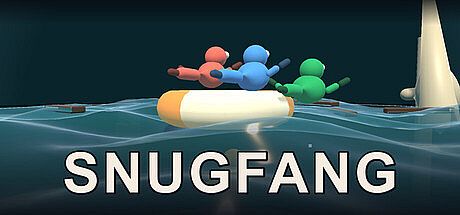


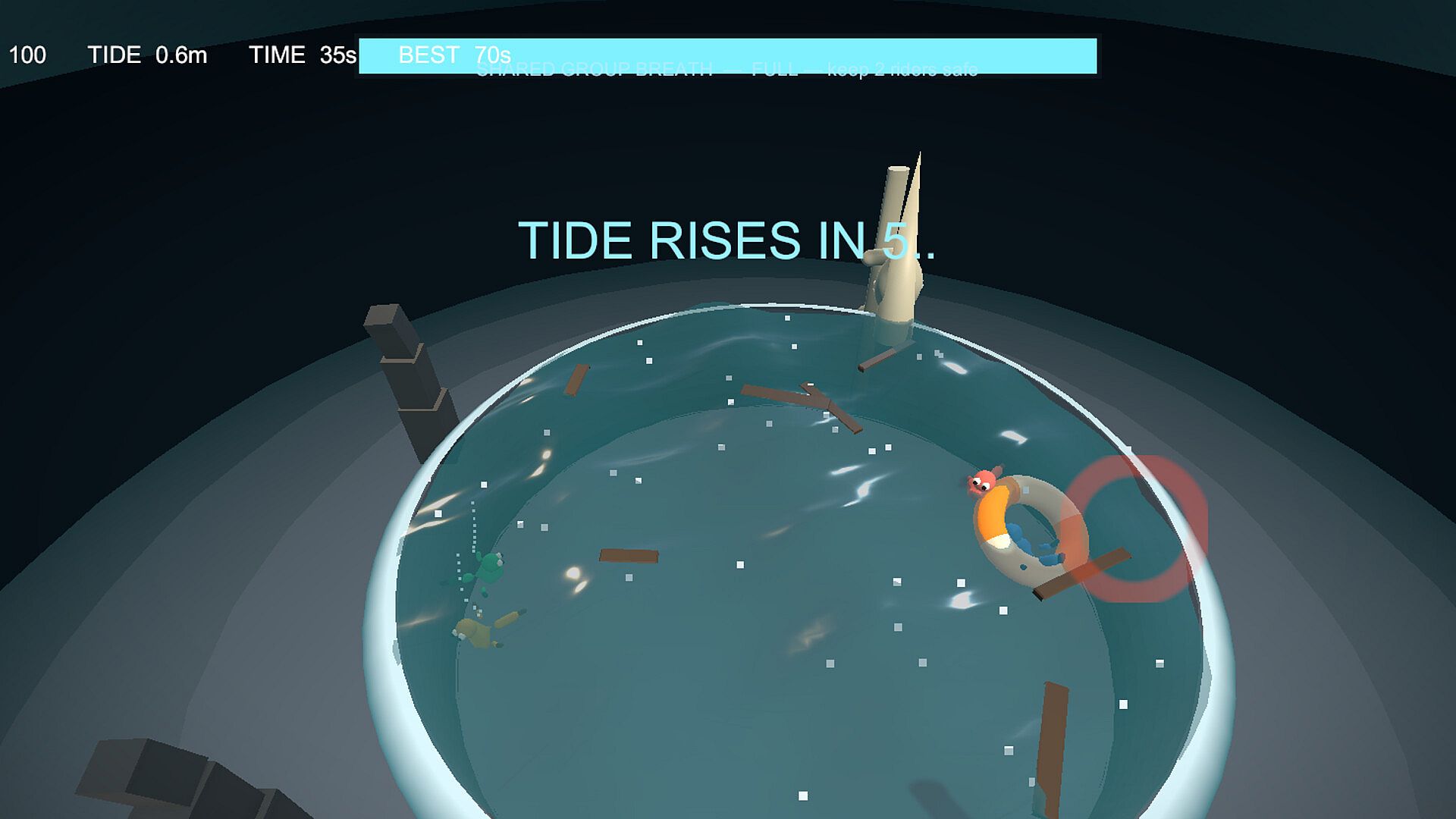
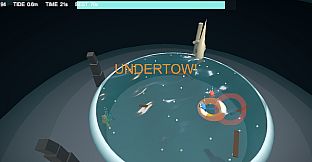
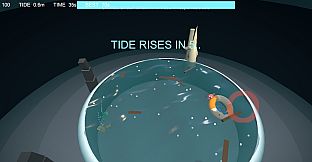
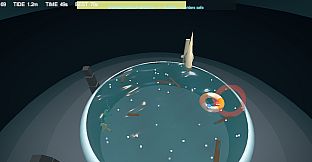
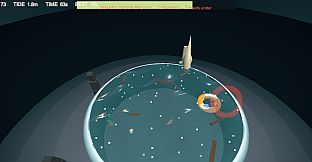
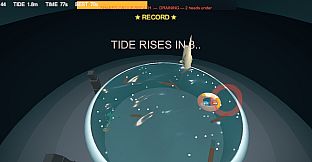
Snugfang is an indie casual physics party game for PC that puts two to four players in control of the Chums, hapless swimmers battling rising water in a confined arena. The central conflict revolves around a single buoy that supports only two riders at once, forcing constant physical competition and shared survival decisions. Built entirely from procedural geometry and synthesized audio, the experience emphasizes readable ragdoll movement and escalating environmental pressure over visual polish.
Gameplay
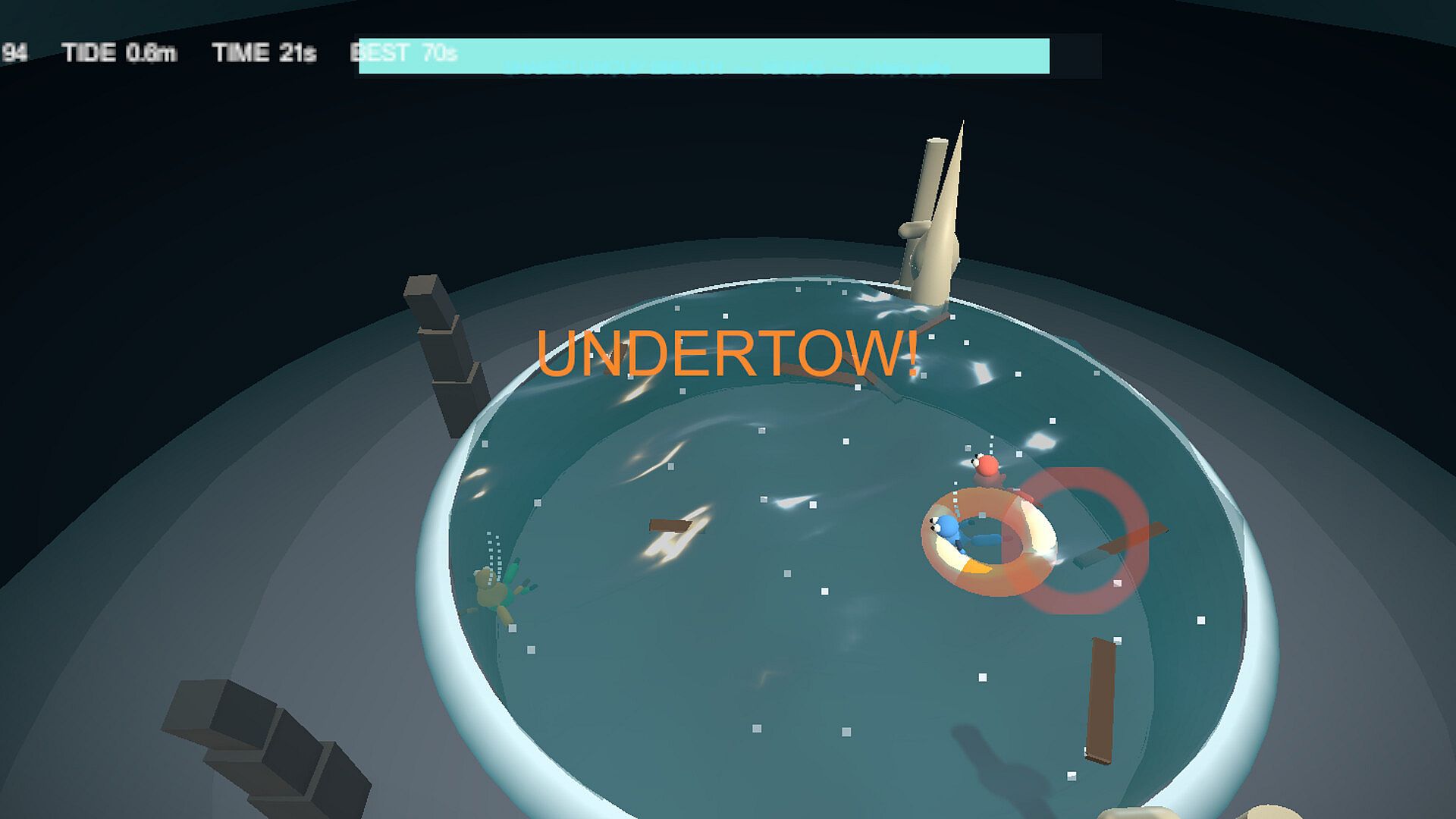
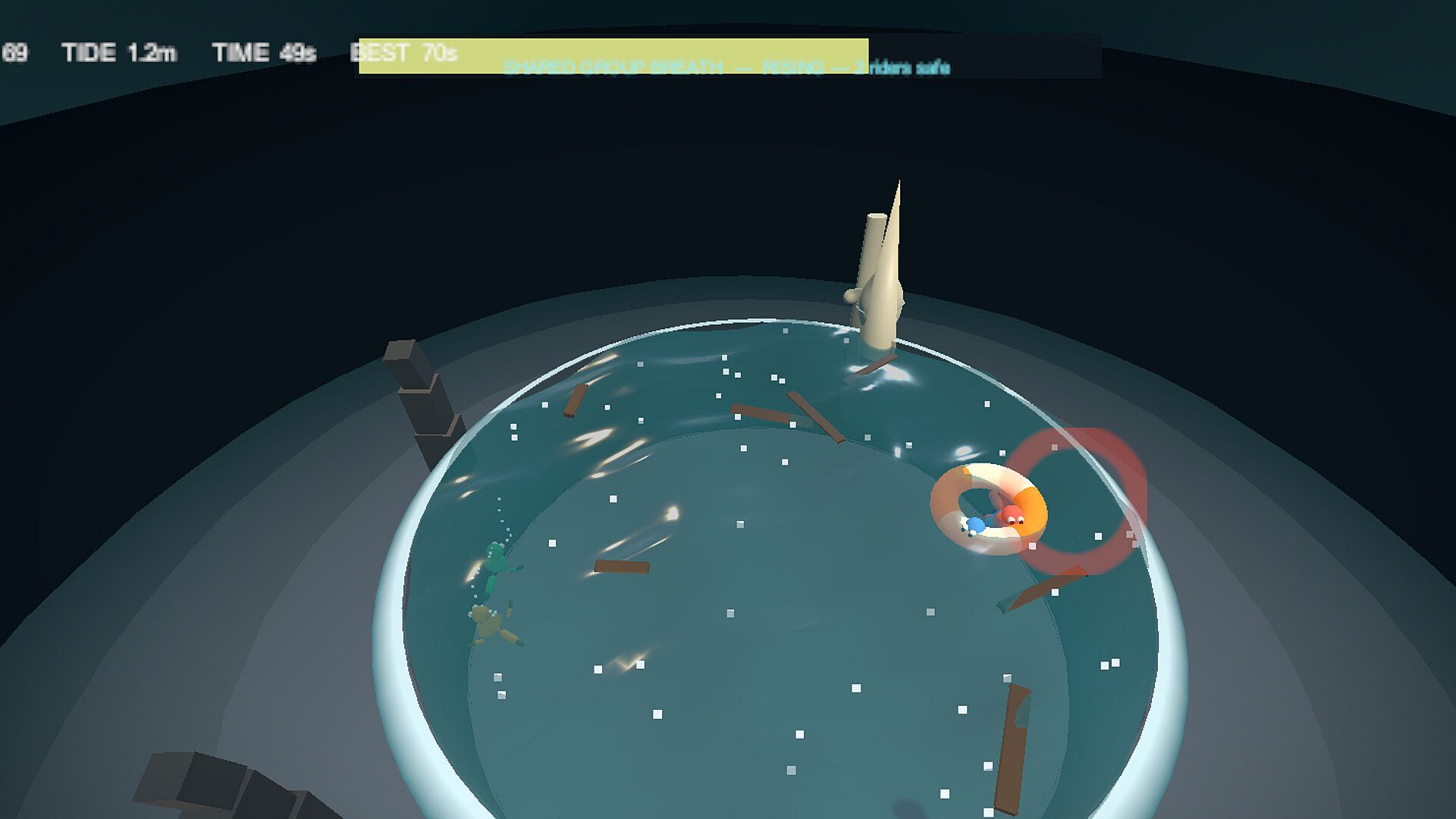
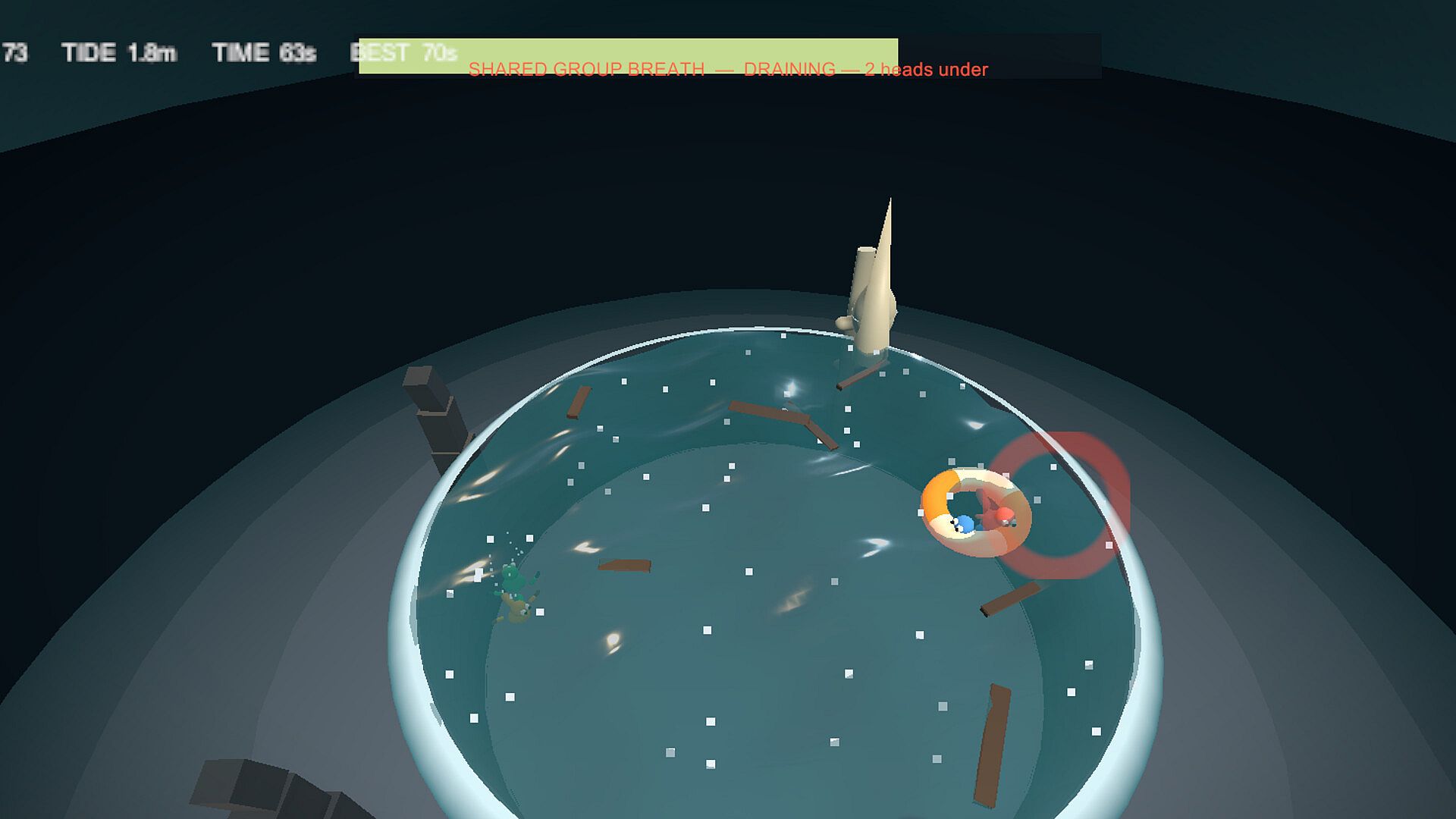
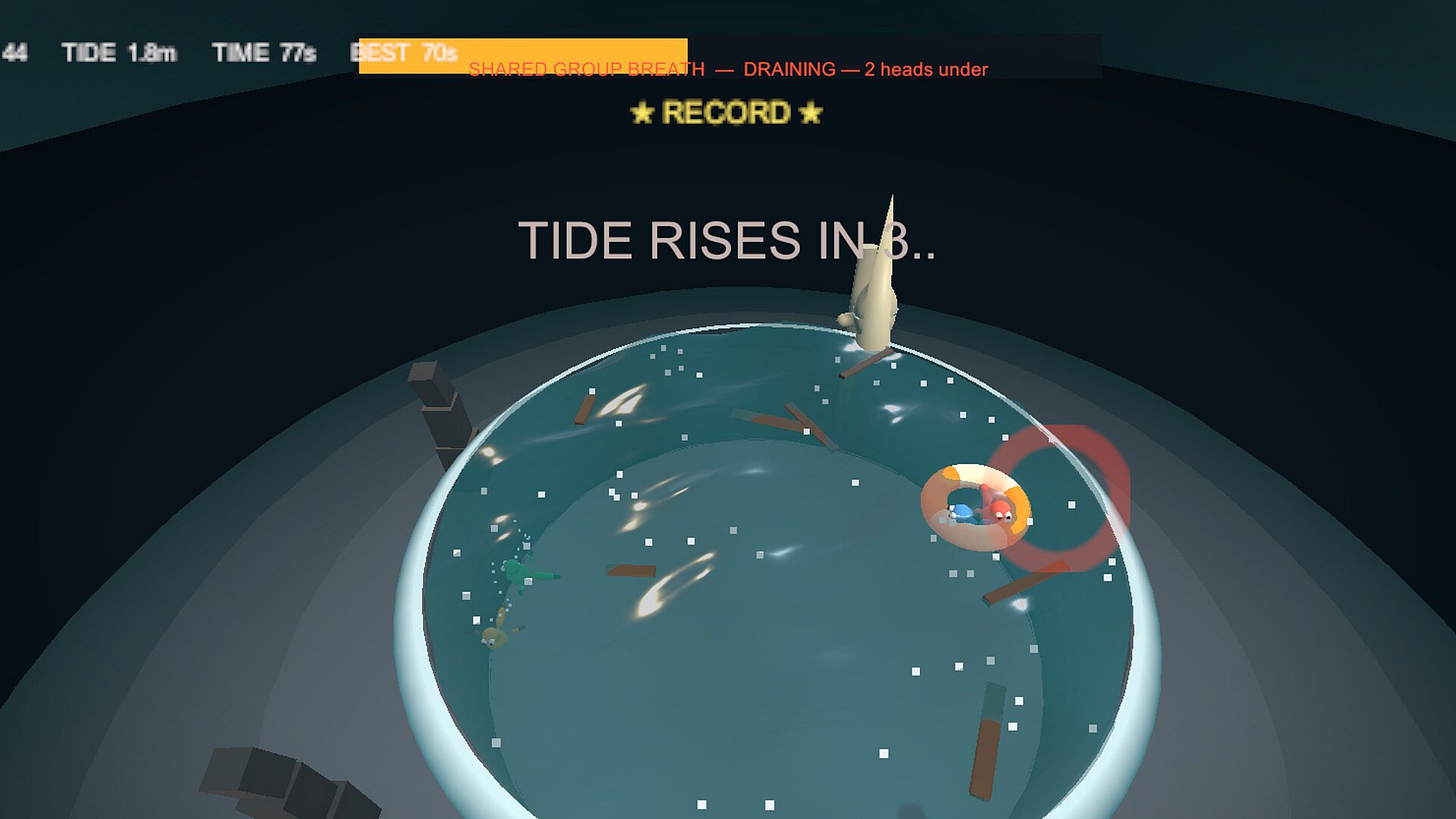
Players navigate a flooding space using simple controls that produce unpredictable ragdoll physics. The buoy serves as the only stable point, but any third climber causes it to sink and dislodge everyone. A shared breath meter ties the group together: each swimmer in the water drains the resource while those safely aboard replenish it. A solo survivor cannot generate enough air to sustain the meter alone, so the mechanics reward coordinated rescues alongside opportunistic betrayals such as pulling a friend clear at a critical moment.
The flood level rises steadily and accelerates across successive rounds, guaranteeing that no crew survives indefinitely. Victory belongs to the last head remaining above water rather than any point total. Procedural waves and heartbeats generated from basic shapes keep every session visually clear and mechanically consistent without relying on pre-made assets.
Game Modes
The core loop consists of repeated rounds within the same flooding arena, with a rotating set of modifiers applied at the start of each one. These modifiers introduce variations such as stronger currents, reduced buoy capacity, or swirling water effects that alter movement and timing. The structure remains consistent across sessions, focusing on the same buoy scramble and breath management while the modifiers ensure fresh physical challenges without introducing entirely separate rule sets.
Support exists for both local couch co-op using shared screen and gamepads or keyboard and online multiplayer for the same player count. No single-player option appears in the design, as the shared meter and buoy mechanics depend on multiple participants.
Procedural Systems and Design
Every element from wave patterns to individual Chum animations and audio cues originates from real-time generation rather than static files. This approach keeps file sizes small and ensures consistent performance across hardware. The minimal visual style prioritizes clarity during chaotic moments, allowing players to track positions and breath status at a glance even when multiple bodies collide around the buoy.
Modifiers reshuffle automatically between rounds, creating replay variety through environmental changes instead of new maps or characters. The result is a compact package that encourages repeated short sessions where the group attempts to extend survival time against the inevitable tide.
Is It Worth Playing?
Snugfang targets groups seeking quick, high-tension multiplayer sessions built around cooperation that can instantly shift into competition. The shared breath system and limited buoy create natural moments of teamwork followed by sudden reversals, producing the kind of memorable outbursts common in physics party games. Because the flood always ends each round, matches stay brief and lead directly into the next attempt.
With its focus on local and online play for two to four participants and a deliberate avoidance of filler content, the game suits players who prefer tight, replayable chaos over expansive campaigns or progression systems. Its upcoming release means the full experience will soon be available for those drawn to minimalist design and group-driven physics interactions.