


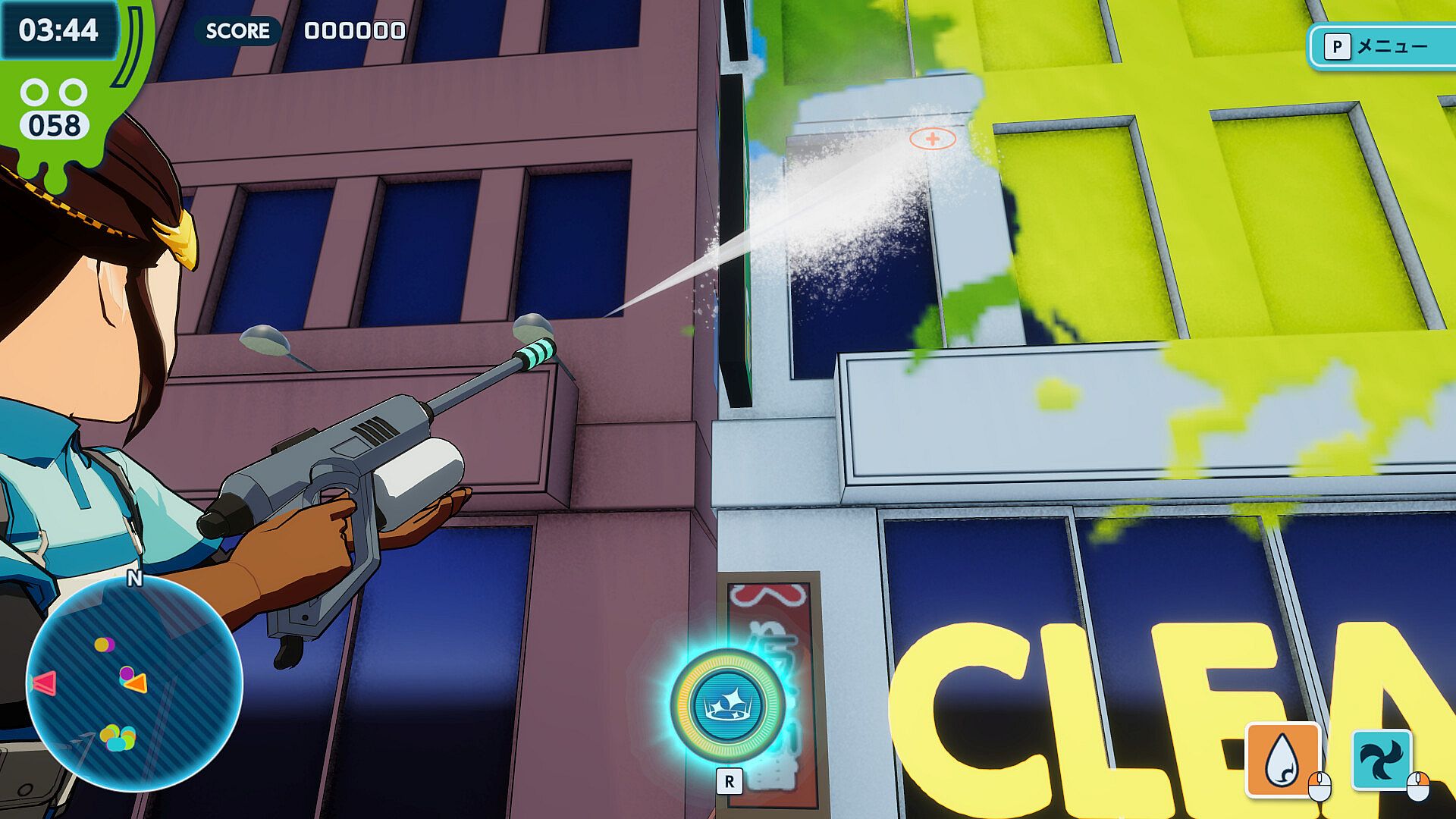

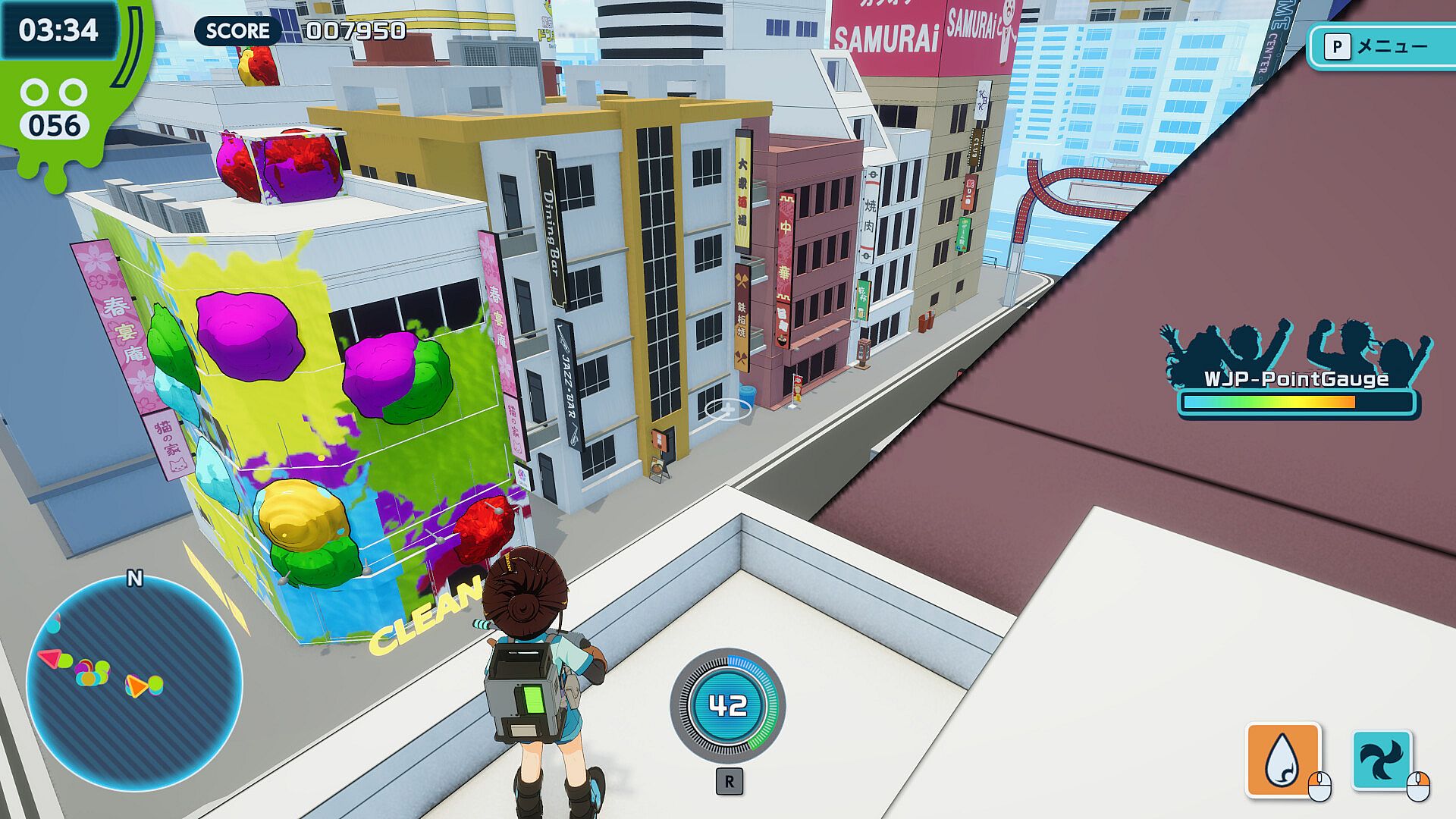

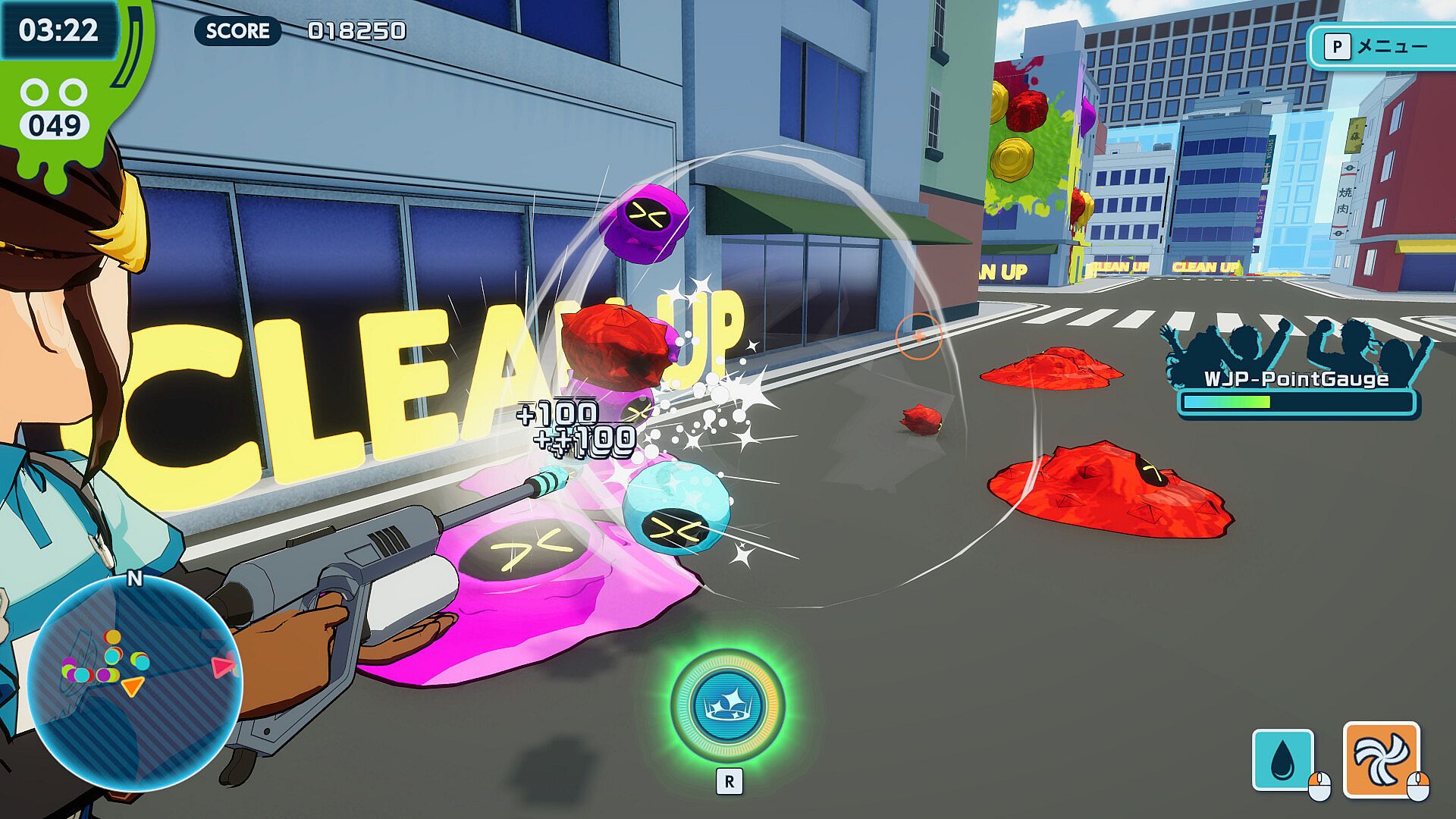





SO-JI Why Why Japanese SHINJUKU is a near-future action game set in a contaminated version of NEO/SHINJUKU. Players take on the role of a cleaner tasked with restoring the neon-lit city after a runaway AI has spread grime and debris across its streets and buildings. The core loop centers on high-pressure washing and vacuuming to remove dirt under strict time limits, with an emphasis on efficient routing and quick decisions rather than narrative depth.
Gameplay
The gameplay revolves around two primary tools that players switch between on the fly. High-pressure water blasts stubborn grime from walls, floors, and surfaces, while the vacuum collects scattered trash and cans in wide sweeps. Combos build when dirt removal happens in rapid succession, and the game rewards visual feedback with on-screen effects for complete cleanings. A minimap tracks the spread of new contamination in real time, forcing constant adjustments to the cleaning path. Cultural mechanics add layers to progression, including collecting invisible roadside trash to build virtue, performing bows for rating boosts, and deciding whether to extend shifts when time expires. These elements create an addictive loop where players experiment with leaving certain stains for later or prioritizing large trash areas to maximize efficiency on each zoned map.
Game Modes
The game operates as a single-player experience focused on timed cleaning sessions across divided city zones. Each session challenges players to restore as much of the area as possible before the clock runs out, with the AI continuing to spread dirt during play. Success depends on spatial awareness, split-second weapon switches, and route planning tailored to the current contamination state. No separate competitive or cooperative modes appear in the available details, keeping the focus on individual mastery of cleaning routes and combo chains within the core time-limited format.
Key Mechanics and Features
Real-time city feedback enhances the sense of impact, with residents such as hosts, office workers, and hostesses gathering to applaud strong performances. The visual contrast between vivid pollutants and restored neon lighting reinforces the cleaning catharsis. Japanese cultural touches, including the virtue system, omotenashi bows, and overtime choices, integrate directly into scoring and strategy without requiring prior knowledge of the setting. Maps support custom route building, and the ever-changing dirt spread demands ongoing minimap checks to adapt plans on the fly. This setup emphasizes personal optimization over fixed solutions, allowing different approaches like combo-focused runs or thorough overtime efforts on the same zone.
Is It Worth Playing?
The game suits players who enjoy action titles built around satisfying, repetitive core loops with strategic depth. Its blend of high-pressure action, vacuum combos, and time-pressure decisions delivers immediate feedback and replay value through route experimentation. Those drawn to unique themes that incorporate Japanese cultural elements may find the virtue and hospitality mechanics particularly engaging. As a new release with no established player base or update history yet, it appeals most to fans of short-session action experiences centered on efficiency and visual payoff rather than long campaigns or multiplayer elements. The straightforward premise and lack of complex story make it accessible for quick play sessions focused purely on mastering the cleaning process.