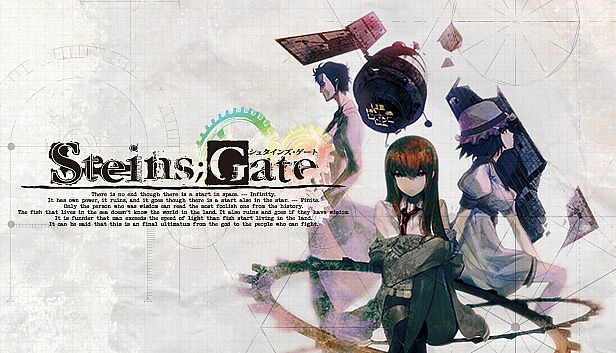








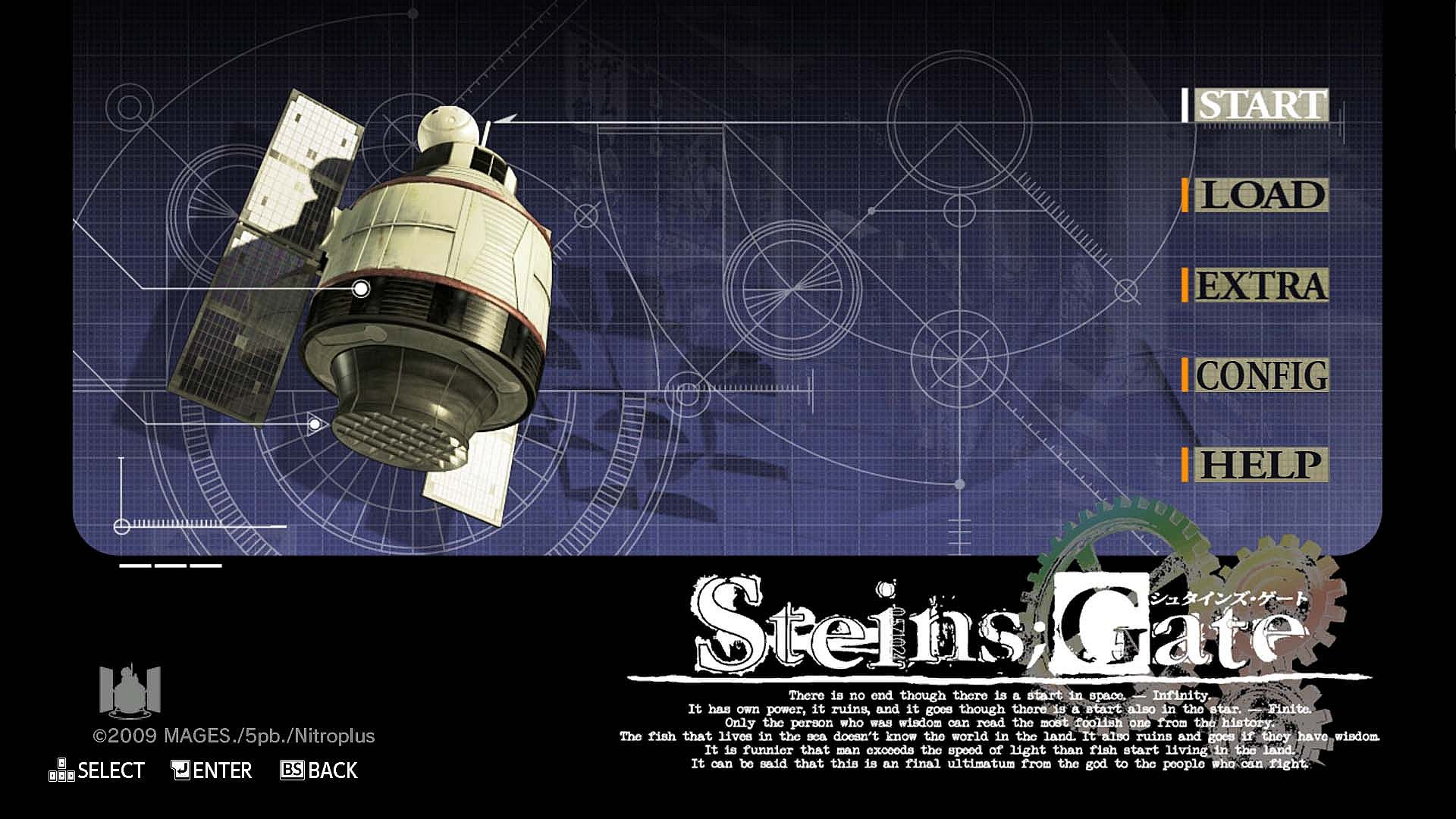
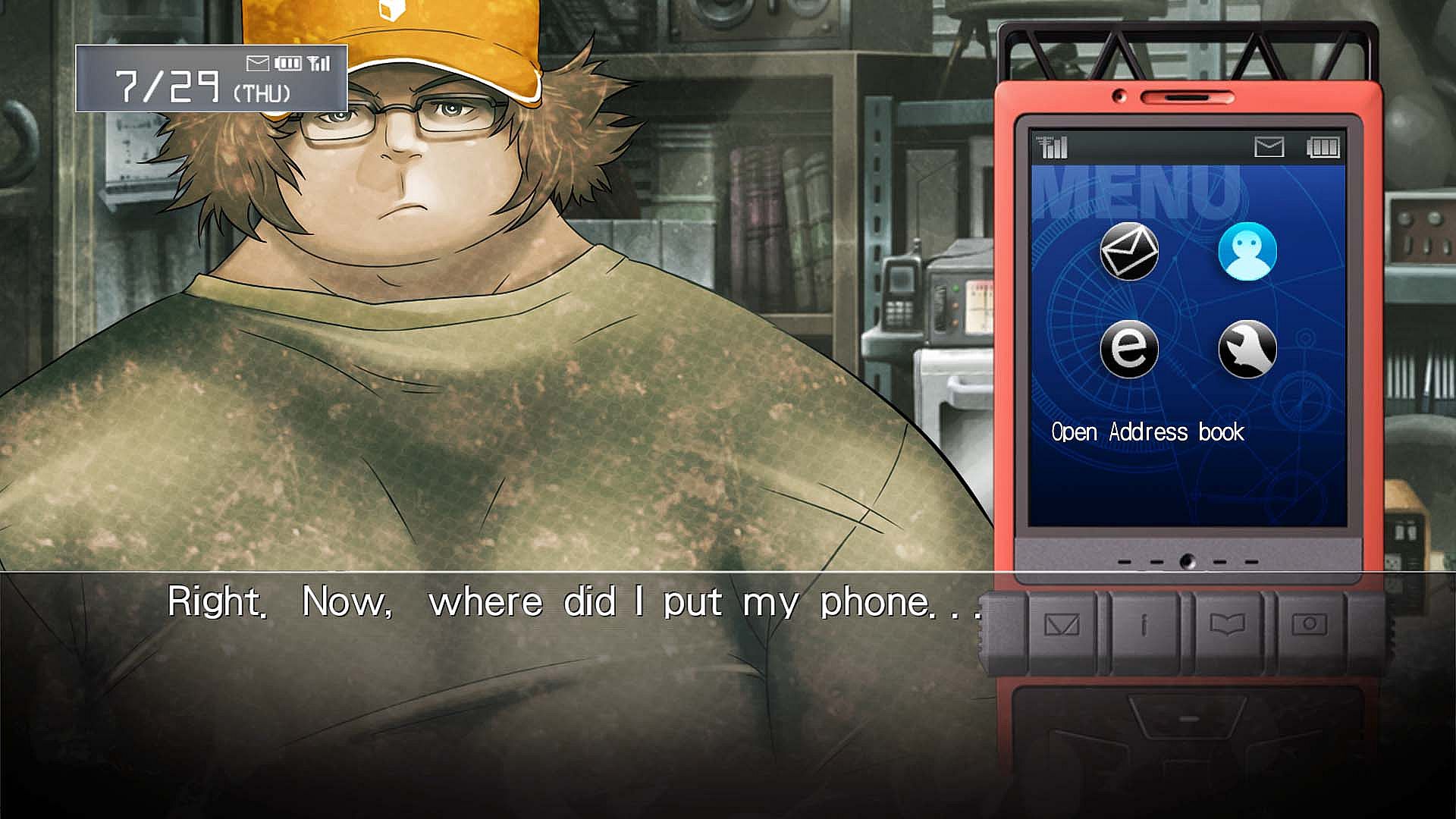








Steins;Gate stands out as a science-fiction visual novel adventure game that blends time travel concepts with deep narrative choices. In this PC title, you follow a group of young inventors in Akihabara who stumble upon a way to alter the past through unconventional means. The story revolves around their experiments with a modified microwave that sends messages back in time, leading to unexpected consequences and a web of conspiracies. With its focus on character-driven plots and branching paths, the game appeals to those who enjoy interactive storytelling over action-packed sequences.
Gameplay
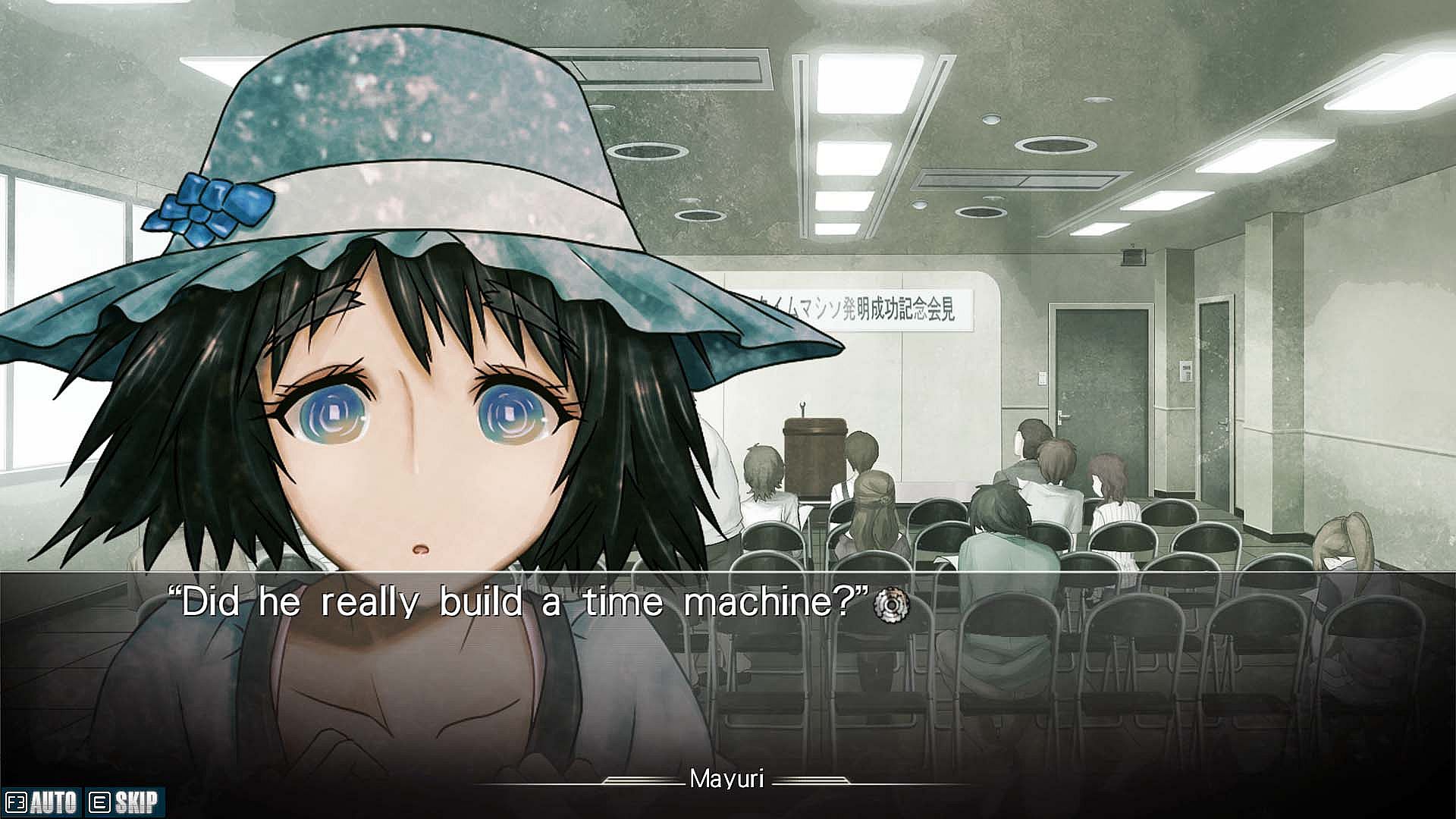
At its core, Steins;Gate involves reading extensive dialogue and inner monologues, with key interactions happening through the phone trigger system. You control Rintaro Okabe, who receives calls and text messages on his phone, and your decisions to answer, ignore, or reply with specific options shape the narrative. These choices influence the timeline, as sending D-Mails - short messages to the past - can change events and lead to different worldlines. The mechanics emphasize causality and the butterfly effect, where small alterations ripple into major shifts, creating a tense atmosphere of experimentation and regret. The game runs for 30 to 50 hours, depending on how thoroughly you explore the branches.
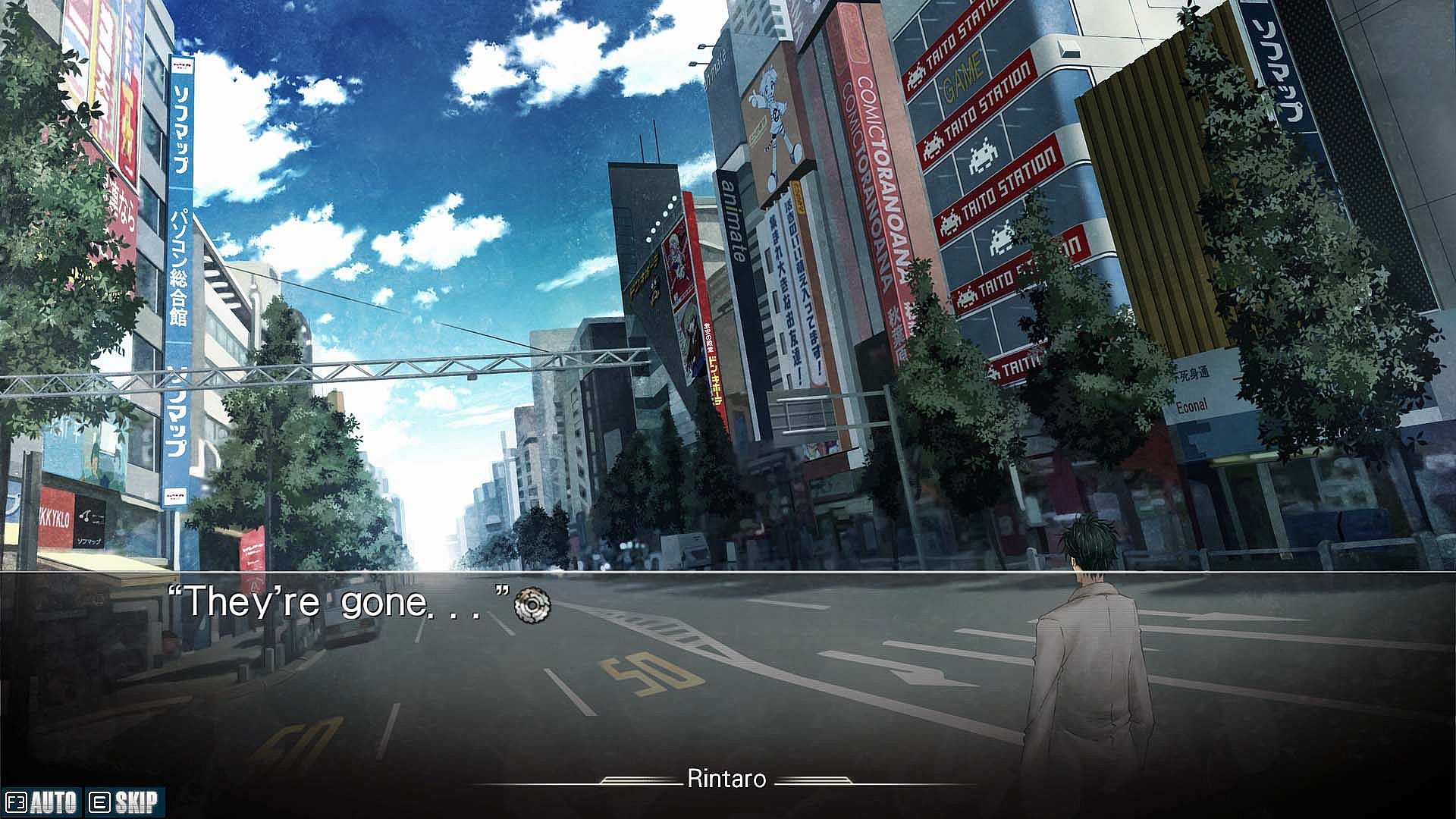
Visuals come in HD 1080p, showcasing detailed illustrations and character designs that enhance the emotional weight of the story. While interaction is limited compared to other genres, the system's simplicity allows for meaningful impact on the plot without overwhelming complexity.
Game Modes
Steins;Gate operates in a single-player format with no traditional multiplayer or competitive modes. Instead, it features branching storylines that culminate in multiple endings based on your decisions throughout the game. These include the True End, where you stabilize the timeline to prevent a dystopian future; the Amane Suzuha Ending, involving endless time-leaping; the Faris NyanNyan Ending, focusing on a life with altered memories; the Urushibara Luka Ending, accepting loss for a new beginning; the Shiina Mayuri Ending, prioritizing one character's survival; and the Makise Kurisu Ending, which explores sacrifice and potential catastrophe.
Each path ties into the central mechanics of time travel and conspiracy, encouraging replays to uncover all possibilities.
Story and Characters
The narrative centers on the Future Gadget Laboratory, a rag-tag group tinkering with gadgets, pitted against SERN, a powerful organization delving into time research. Key figures like John Titor, a supposed time traveler from a bleak future, add layers of intrigue. Characters such as the eccentric Okabe and his friends bring humor and depth, evolving through the story's twists involving dystopian threats and personal stakes.
This setup creates a compelling mix of science fiction and emotional drama, with themes of fate and human connection driving the experience.
Is It Worth Playing?
For fans of narrative-heavy games, Steins;Gate remains a strong choice due to its gripping plot and character development. It has earned high praise, with scores like 8 out of 10, 5 out of 5, and 34 out of 40 from various outlets, highlighting its status as a modern classic in the visual novel space. The game continues to attract players, with over a million copies sold worldwide and ports available across platforms, including a 2019 remake with animated cutscenes.
An upcoming reboot postponed to 2026 suggests ongoing interest, making it suitable for those seeking a thought-provoking single-player adventure. If you prefer stories with real consequences from choices and don't mind extensive reading, it holds up well today.