






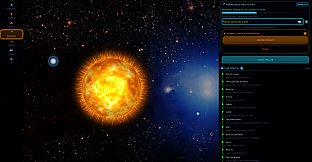

Stellar Forge is an auto battler that blends strategy, simulation, and casual elements on PC. Players forge celestial bodies from raw gas clouds rather than selecting pre-made fighters, then launch them into orbital combat against rivals.
Gameplay
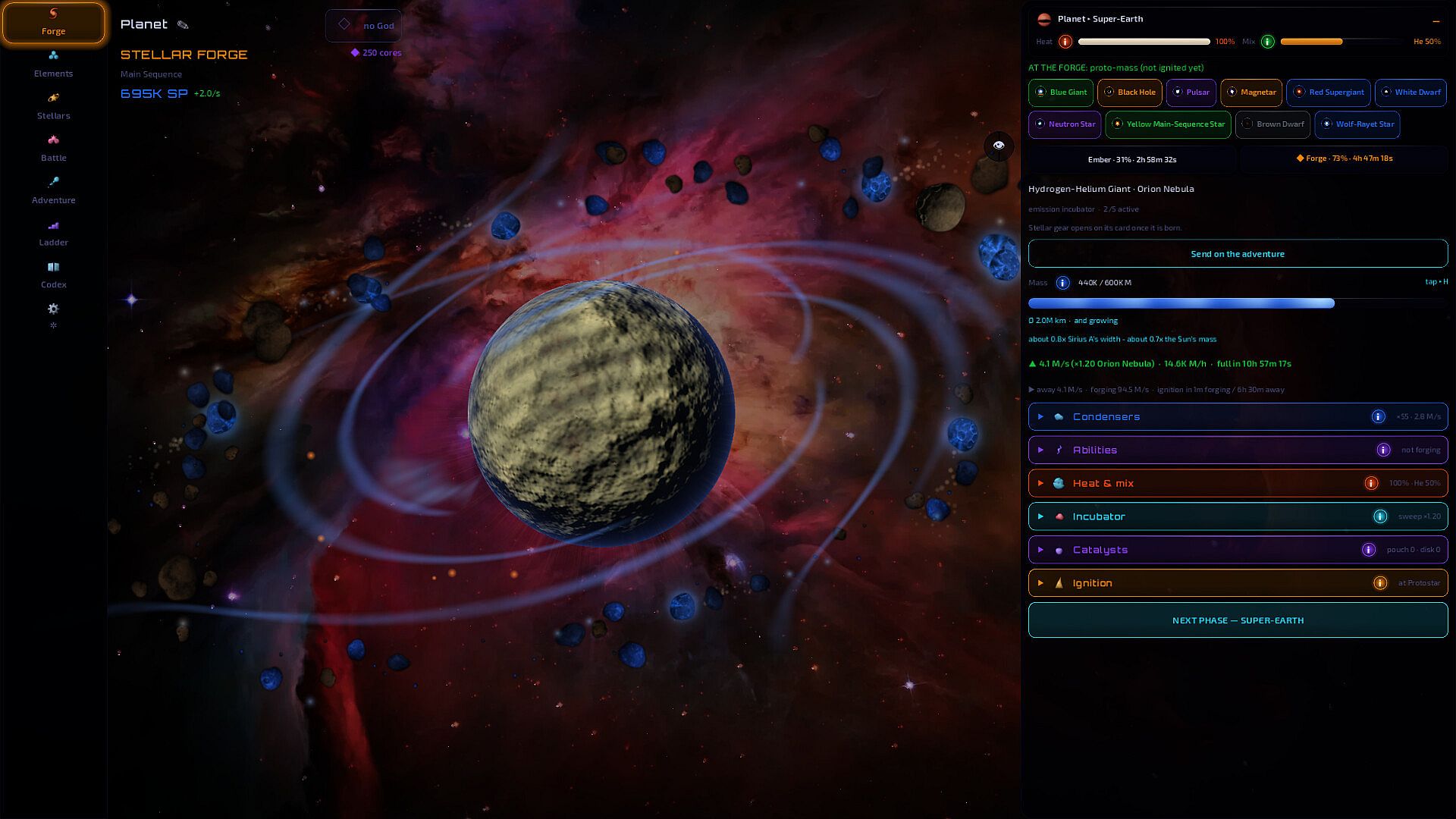
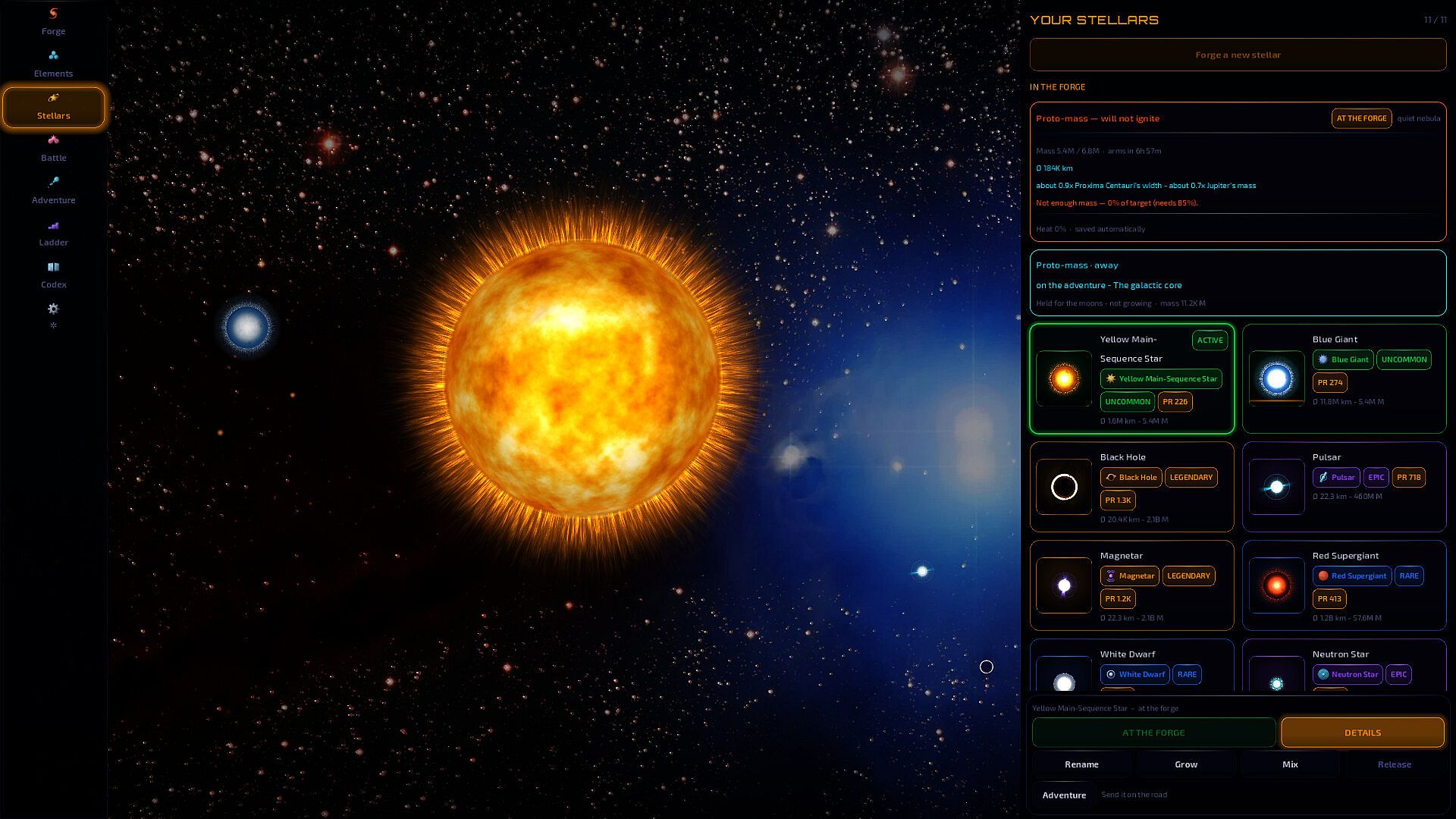
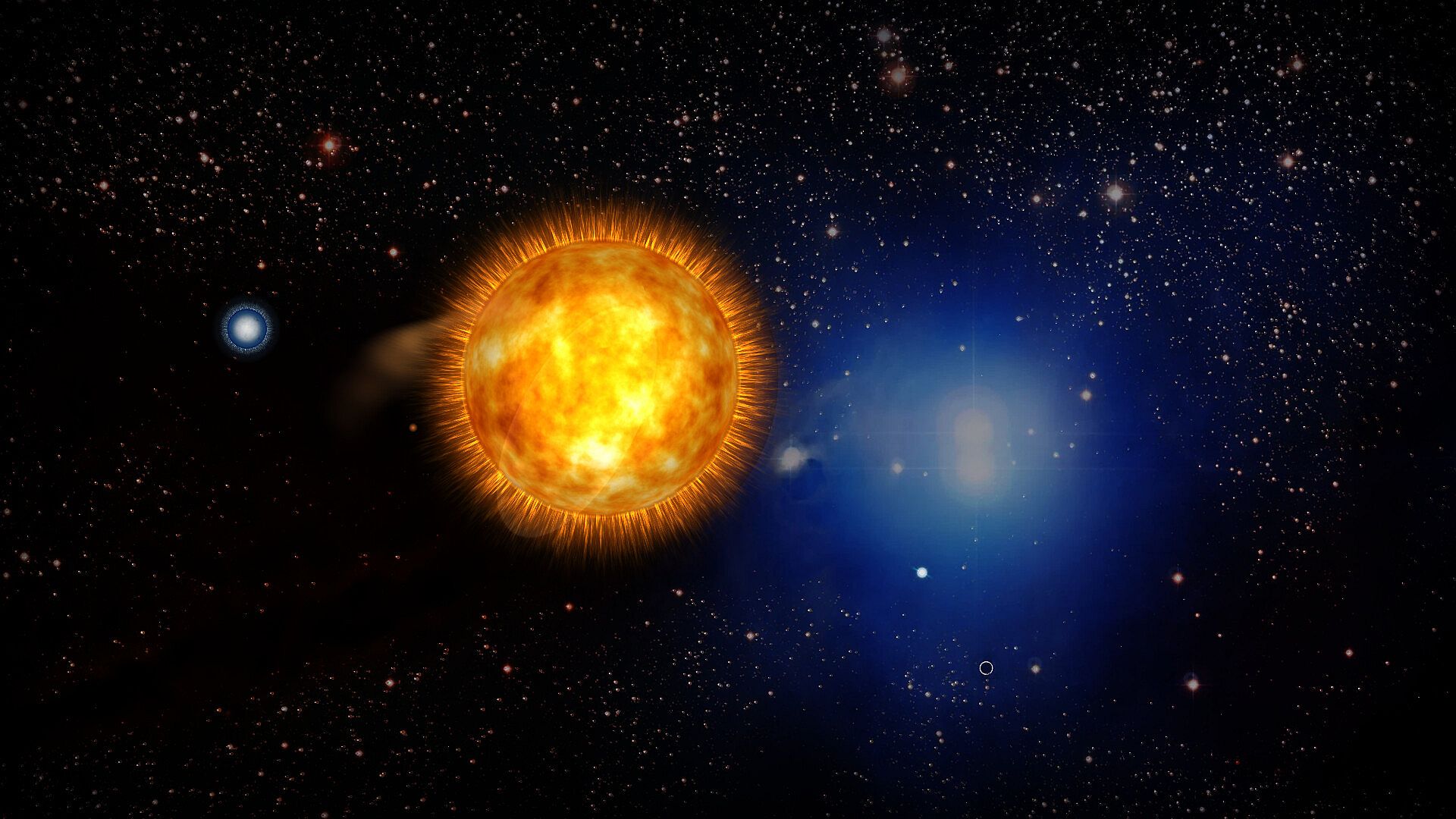
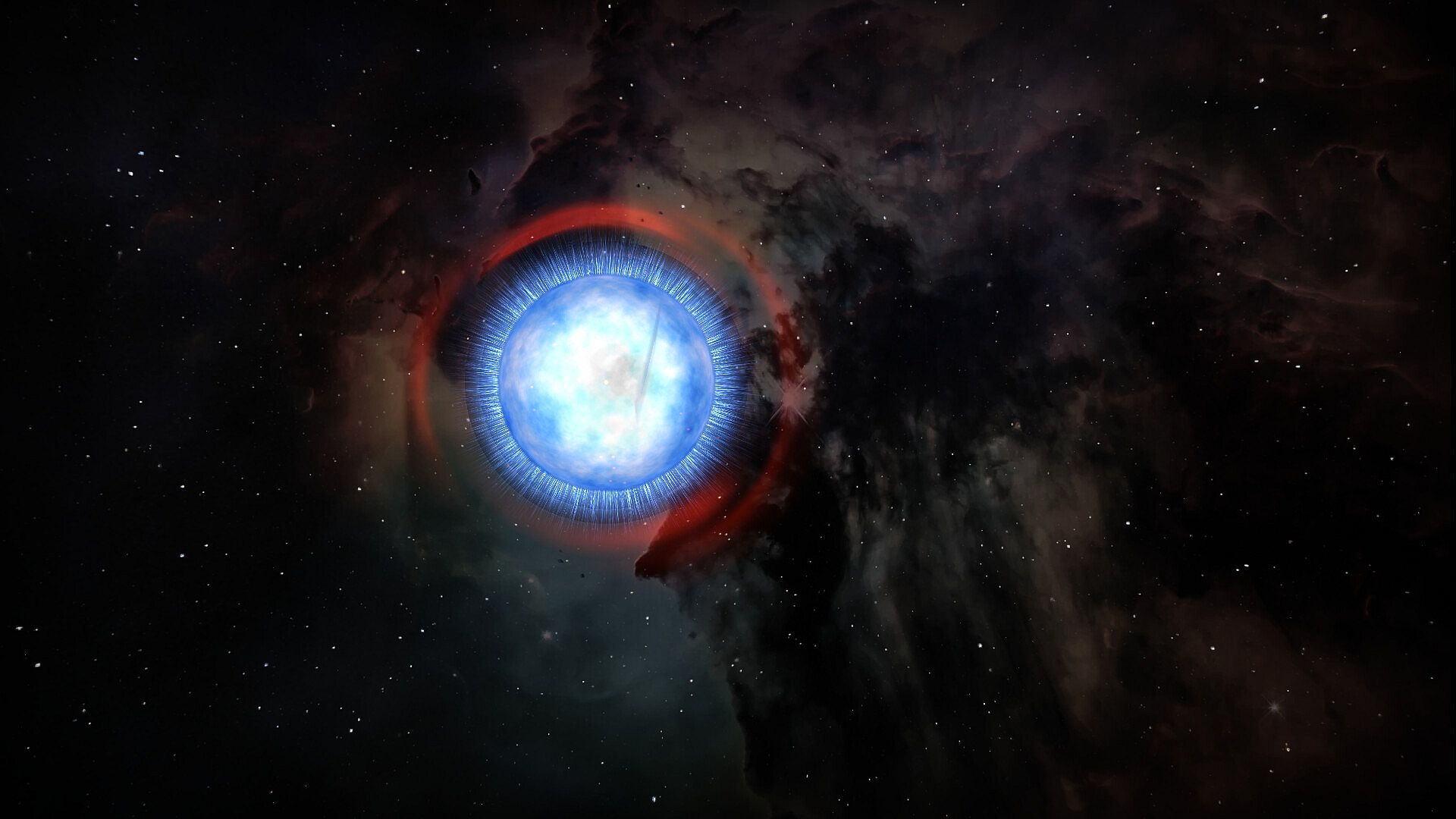
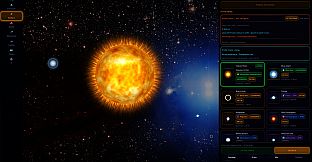
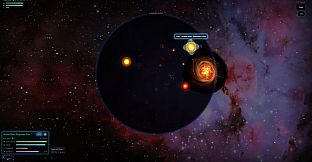
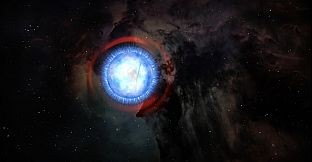
The core loop centers on feeding a central proto-mass with one of 28 elements. Hydrogen produces one set of results while oxygen, iron, or uranium shifts mass, density, and heat to ignite different outcomes. Location matters across 24 incubators, including real nebulae such as Orion, the Crab, and the Horsehead. The resulting body appears with a physically accurate diameter driven by its mass, placing it in one of 21 size categories that include protostars, red supergiants, Wolf-Rayet stars, pulsars, magnetars, strange quark stars, quasar cores, and black holes.
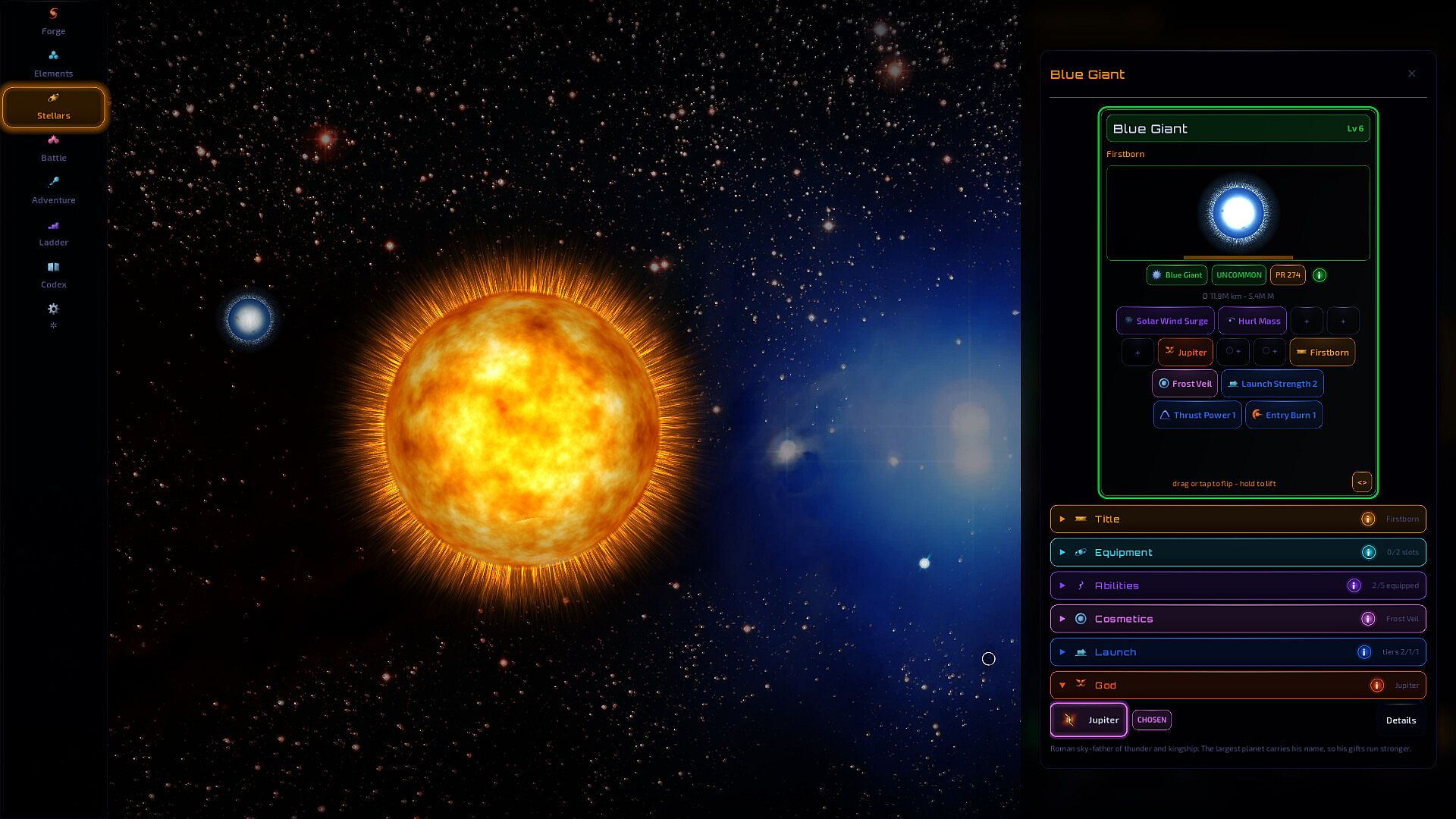
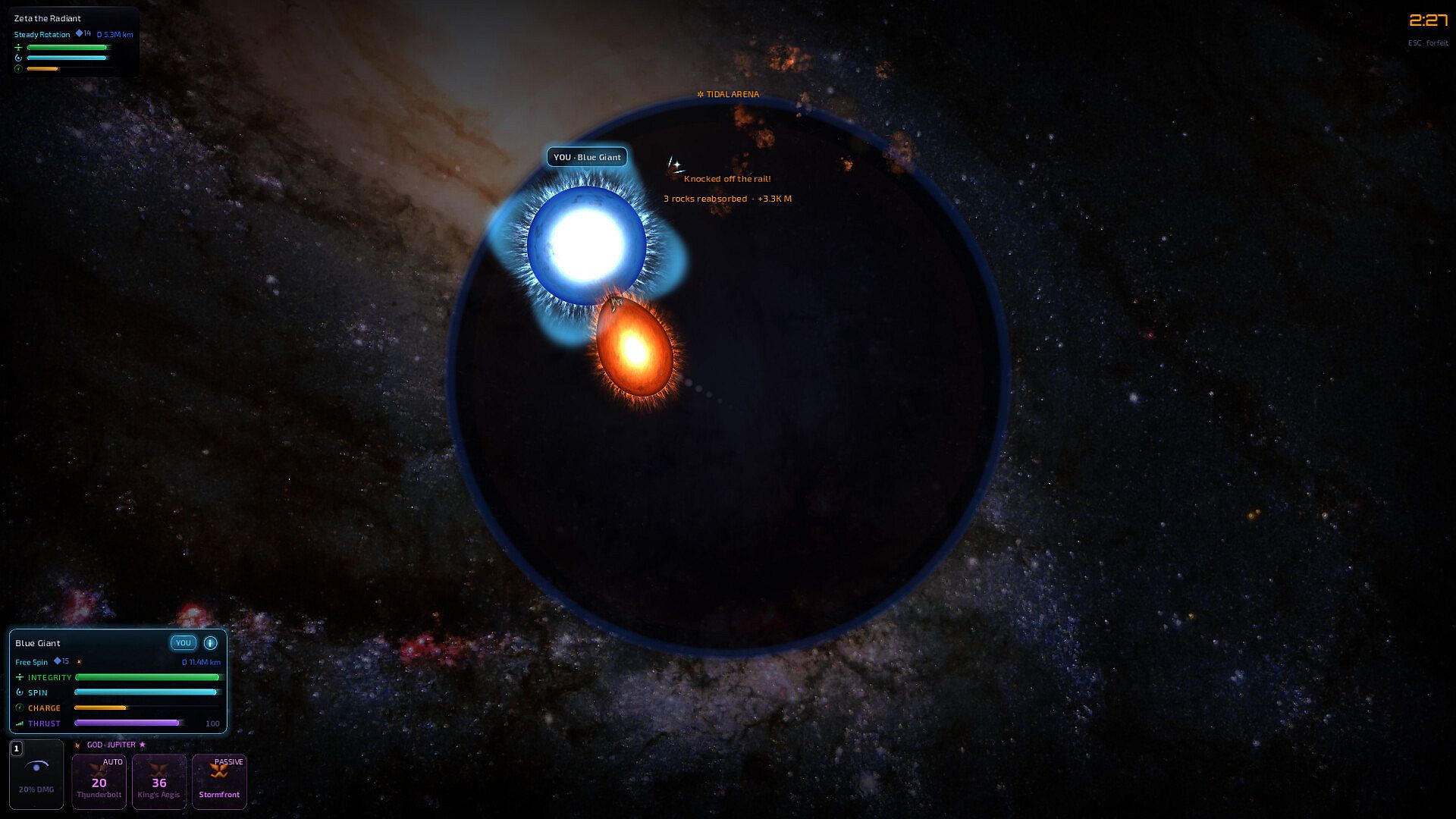
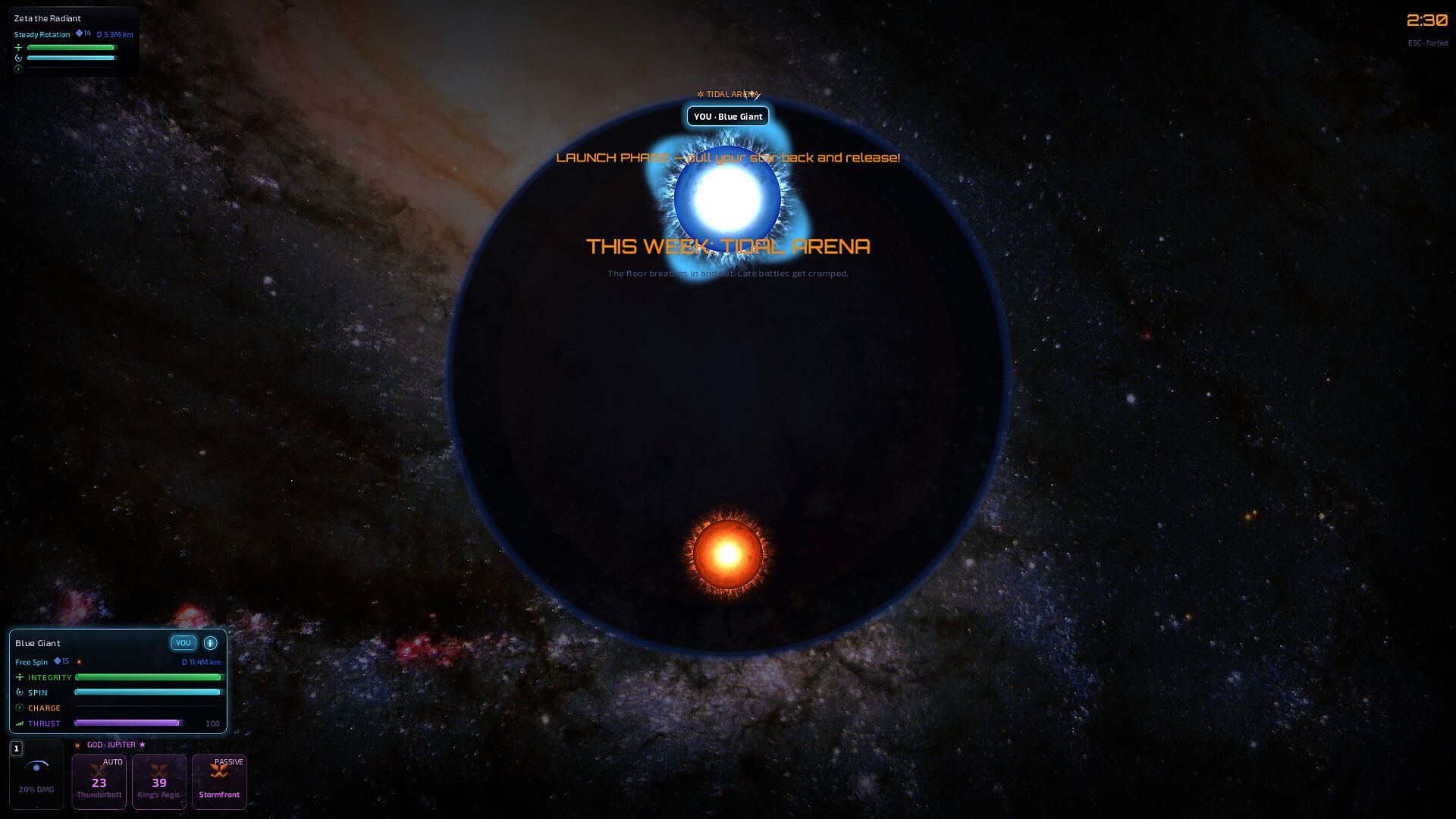
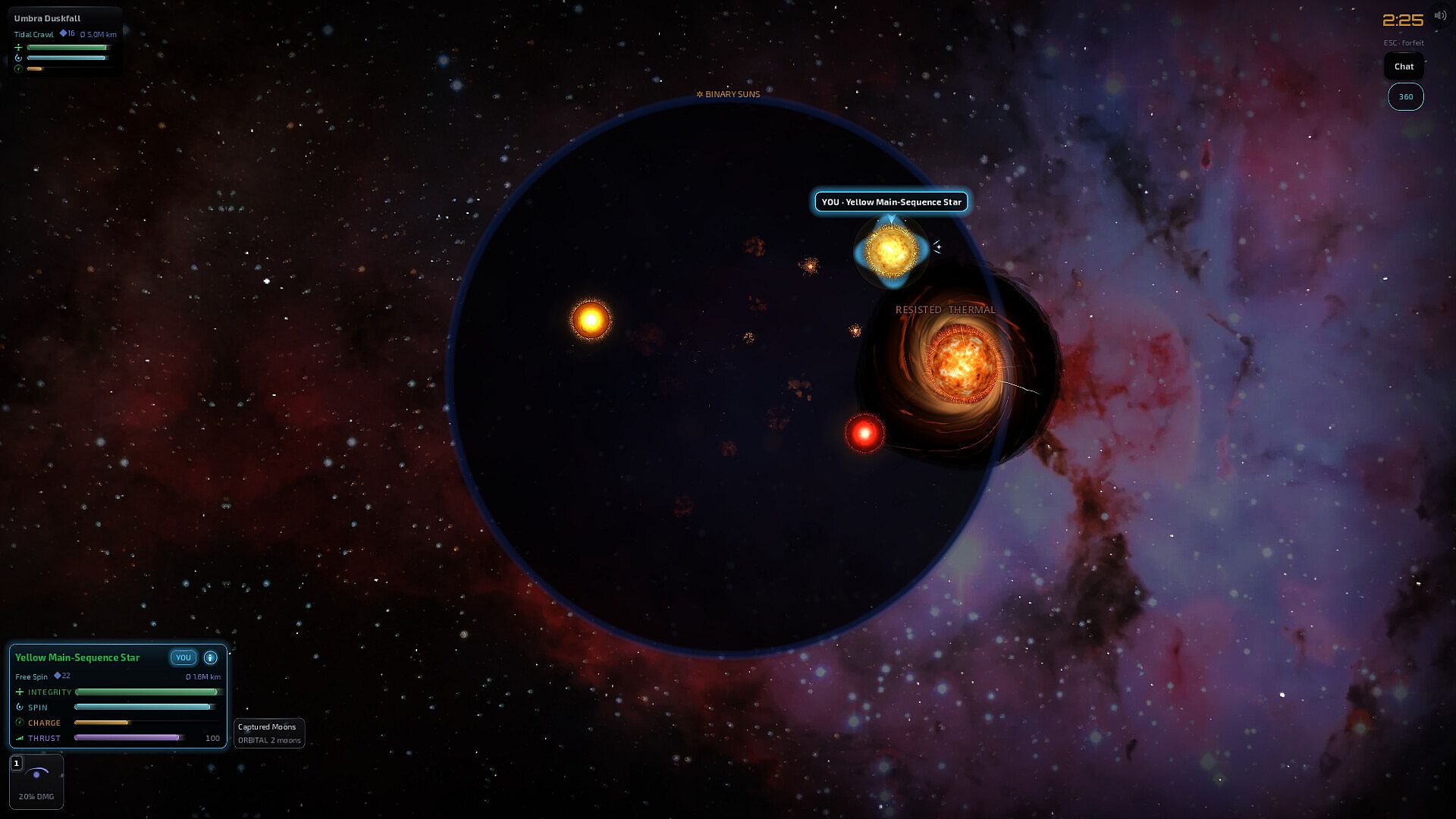
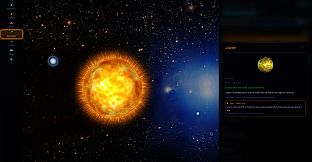
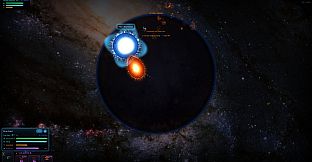
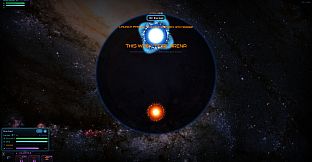
Each created body becomes a roster card. Players can review real-world scientific context for its type or apply titles, cosmetics, and launch upgrades. Combat begins with an aim-and-hold launch mechanic. The body then moves autonomously in the ring for up to three minutes. Mass determines movement priority, density controls matter shedding, and spin influences grinding damage. Surface marks from hits persist through the match. Victory comes from knocking a rival out of the ring or shattering it, after which remaining matter and elements are absorbed.
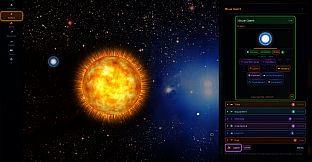
Progression occurs through three routes. Wins grant opponent matter and occasional abilities. Bodies can return to the forge with added mass. Two of a player's own bodies can merge, with stronger gravitational effects producing more dramatic results. A giant reaching its limit triggers a supernova whose remnant can serve as a fresh incubator. Bodies may also carry one of 77 gods drawn from 25 traditions, each supplying one to three cooldown-based abilities. Many gods share names with actual celestial objects and gain extra impact from that connection.
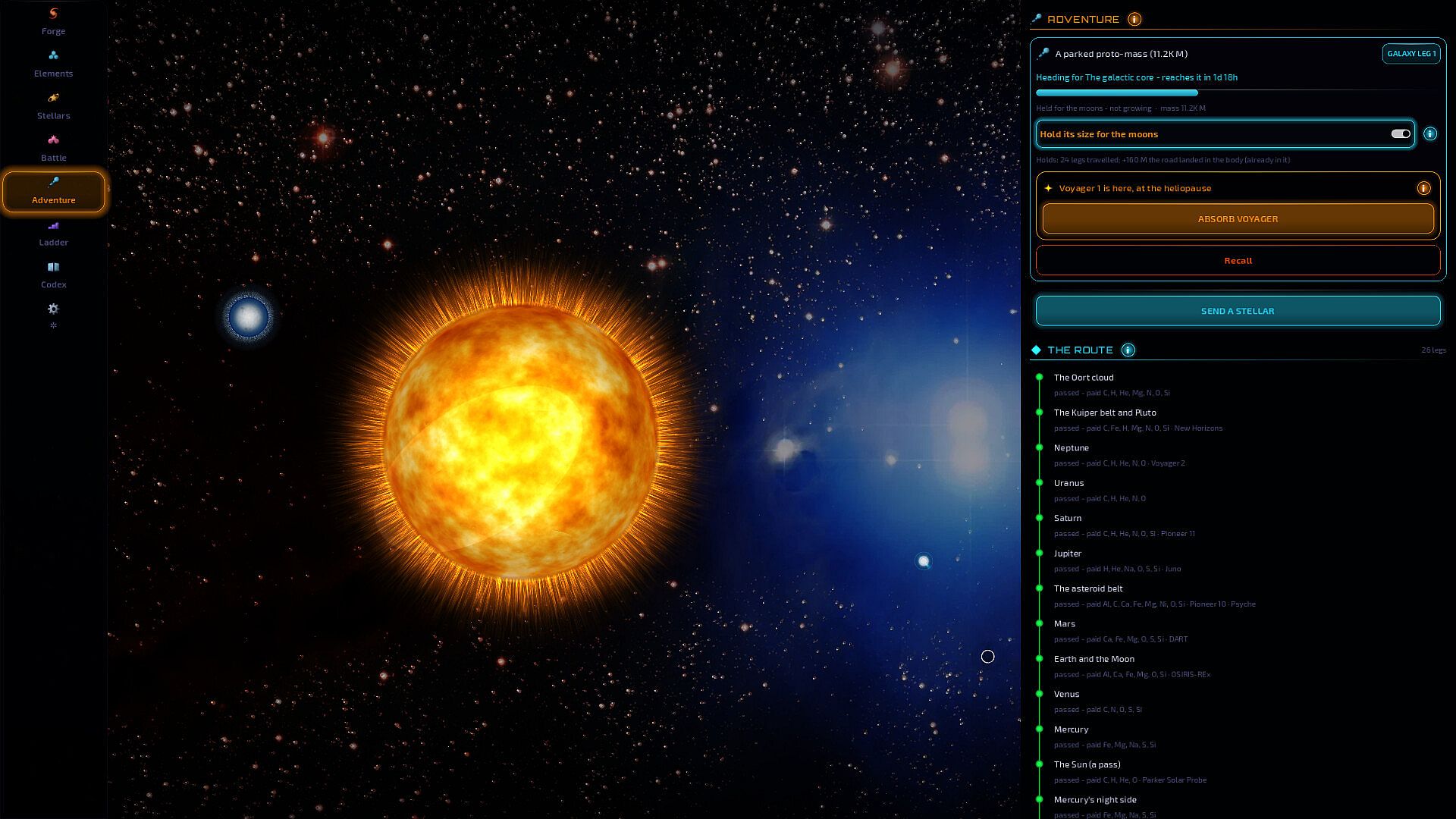
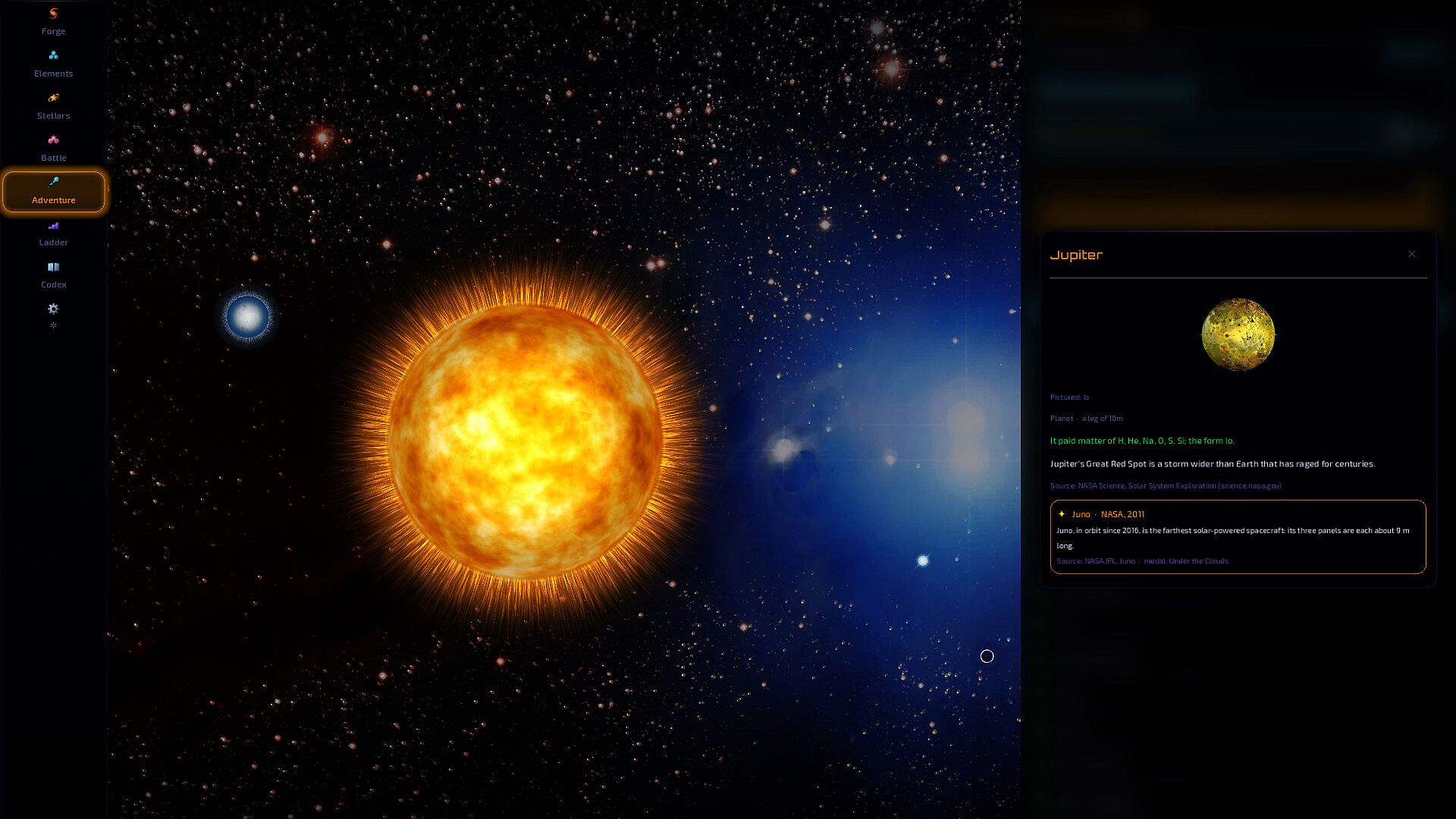
Additional depth comes from solo journeys across the Solar System. A body travels 24 legs from the Oort cloud inward past Pluto, the gas giants, the asteroid belt, and the Sun before heading outward to the heliopause and beyond. Players can steer through debris for extra matter or allow autonomous travel. Named moons and real probes such as Voyager 1 appear as discoverable elements, and correctly sized passages near certain moons can transform a body into an Io-class world.
Game Modes
The experience supports offline single-player progression through the forge, roster building, and Solar System flights. An optional online component allows players to match their bodies against others once the full version releases. Matches undergo server verification before counting toward ratings, and the feature remains inactive unless deliberately opened. Weekly arena mutators such as Binary Suns or Debris Storm alter conditions for variety. The simulation stays fully deterministic, so identical inputs and seeds produce identical outcomes that support exact replays and share codes.
Key Mechanics and Progression
Twenty-one distinct body types occupy unique size bands with corresponding stats and abilities. Elements beyond the initial four arrive through exploration or defeated rivals. Gods surface from forges, supernovae, rival defeats, or shrines on passing rocks. The roster expands from five starting slots to ten through achievements and in-game currency. Battle energy regenerates over time, and every element unlocks through normal play rather than purchases.
The forge continues advancing for two days during offline periods. A continuous zoom view lets players traverse an entire galaxy of created bodies from spiral arms down to individual surfaces. The system records exact fight data for consistent results across sessions.
Is It Worth Playing?
Stellar Forge suits players who enjoy deliberate, physics-informed strategy in an auto battler format. The absence of pay-to-win elements, advertisements, and mandatory online connectivity keeps focus on core systems. Deterministic combat and replay tools reward experimentation with element combinations, incubator choices, and god pairings. Those drawn to simulation depth, real astronomical references, and gradual roster growth will find consistent engagement in both short sessions and longer campaigns. The Early Access phase invites direct feedback through in-game tools, allowing interested players to influence further development while the game remains offline-capable by default.











