




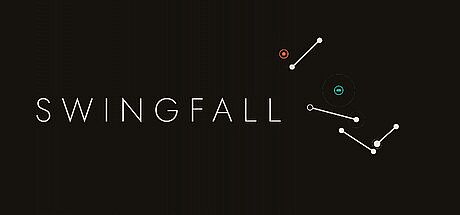


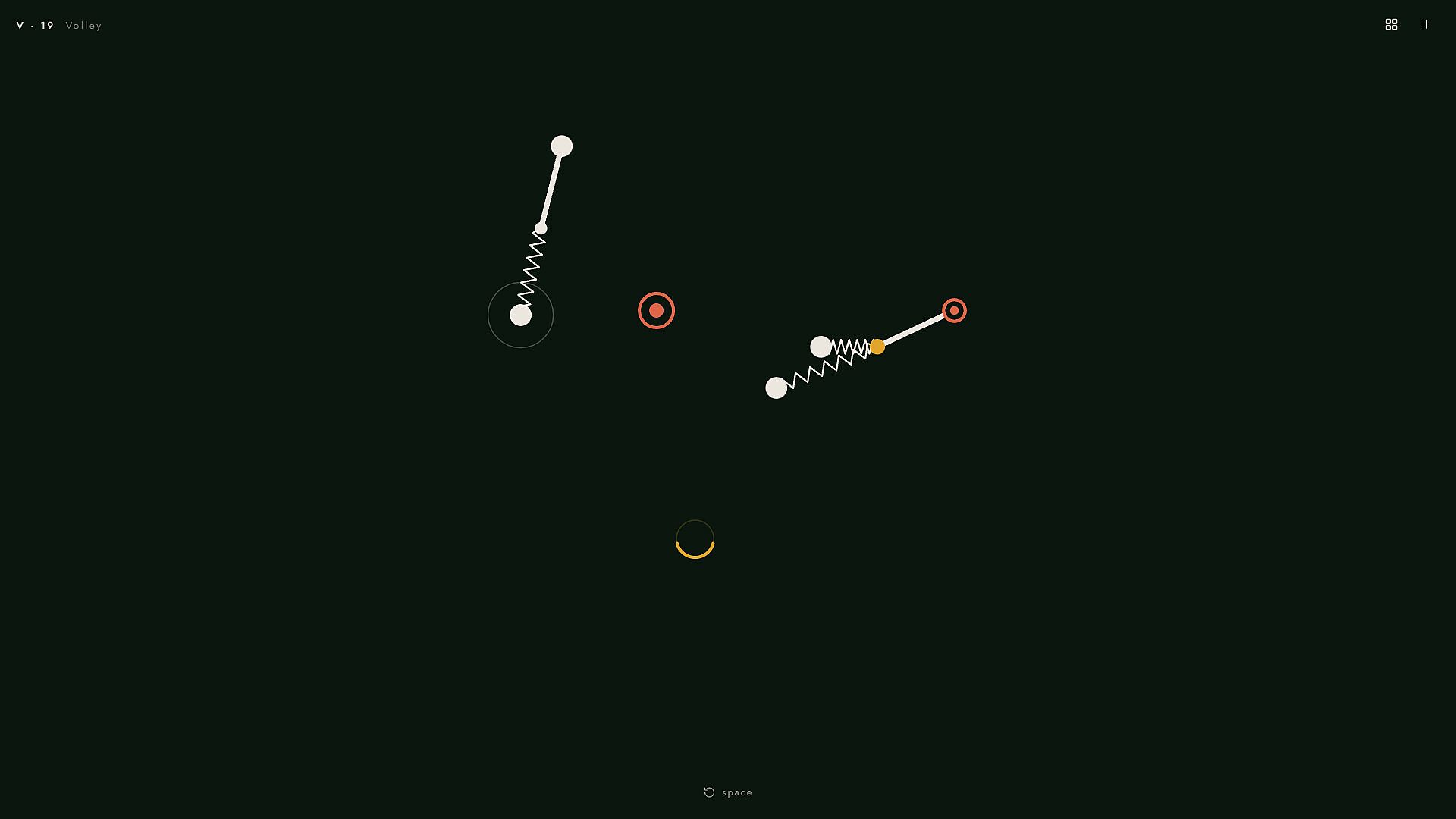
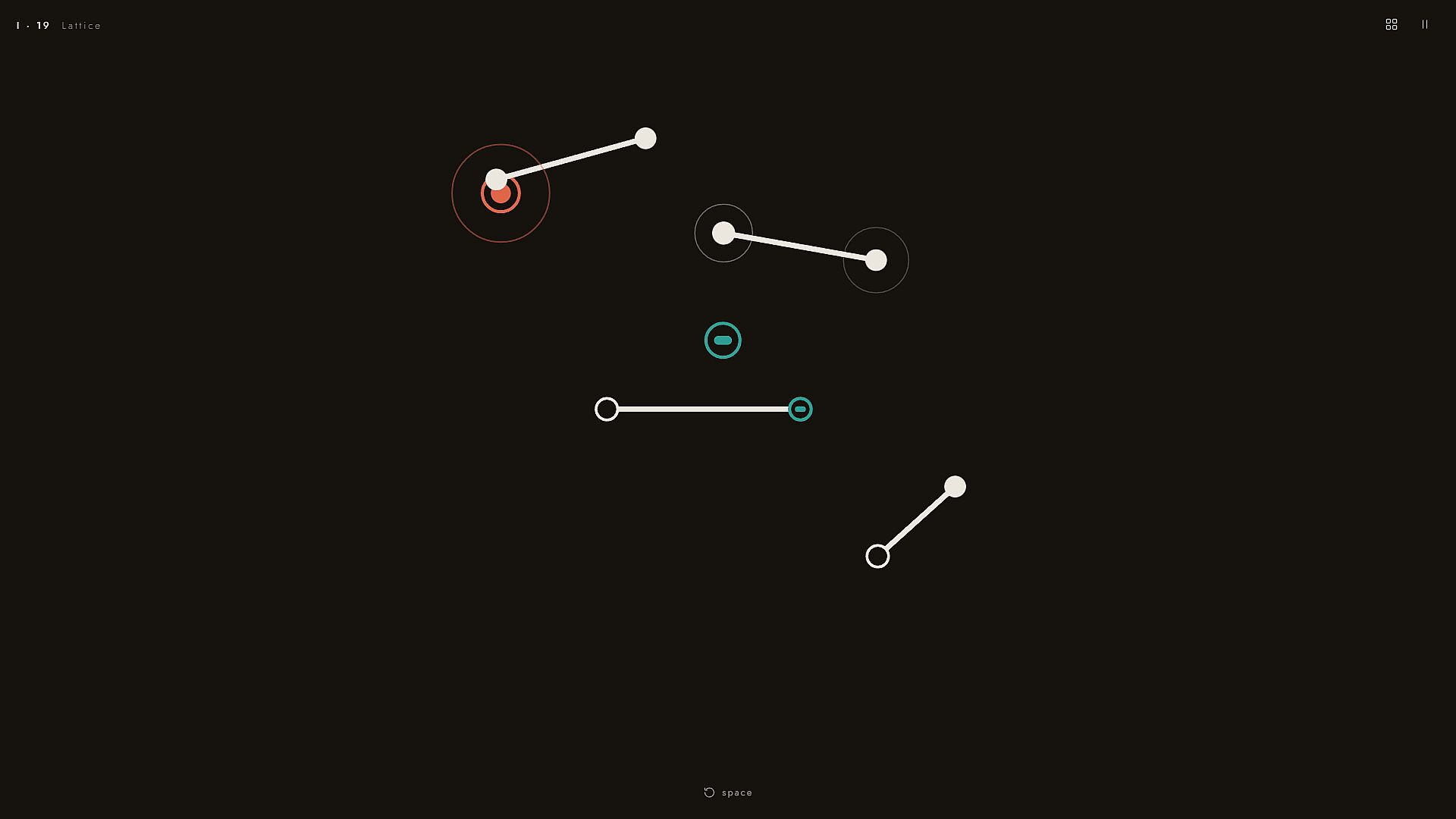
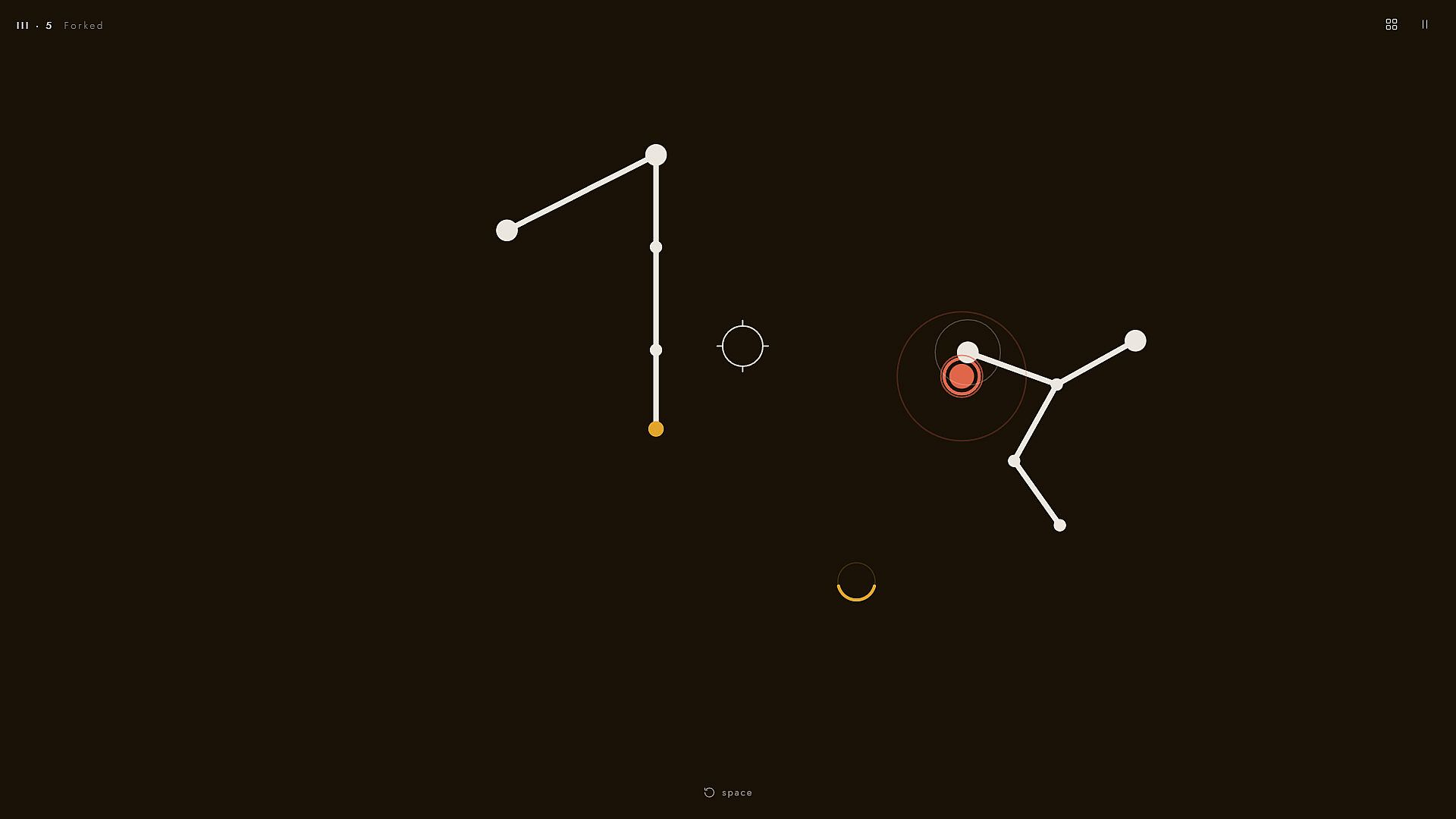
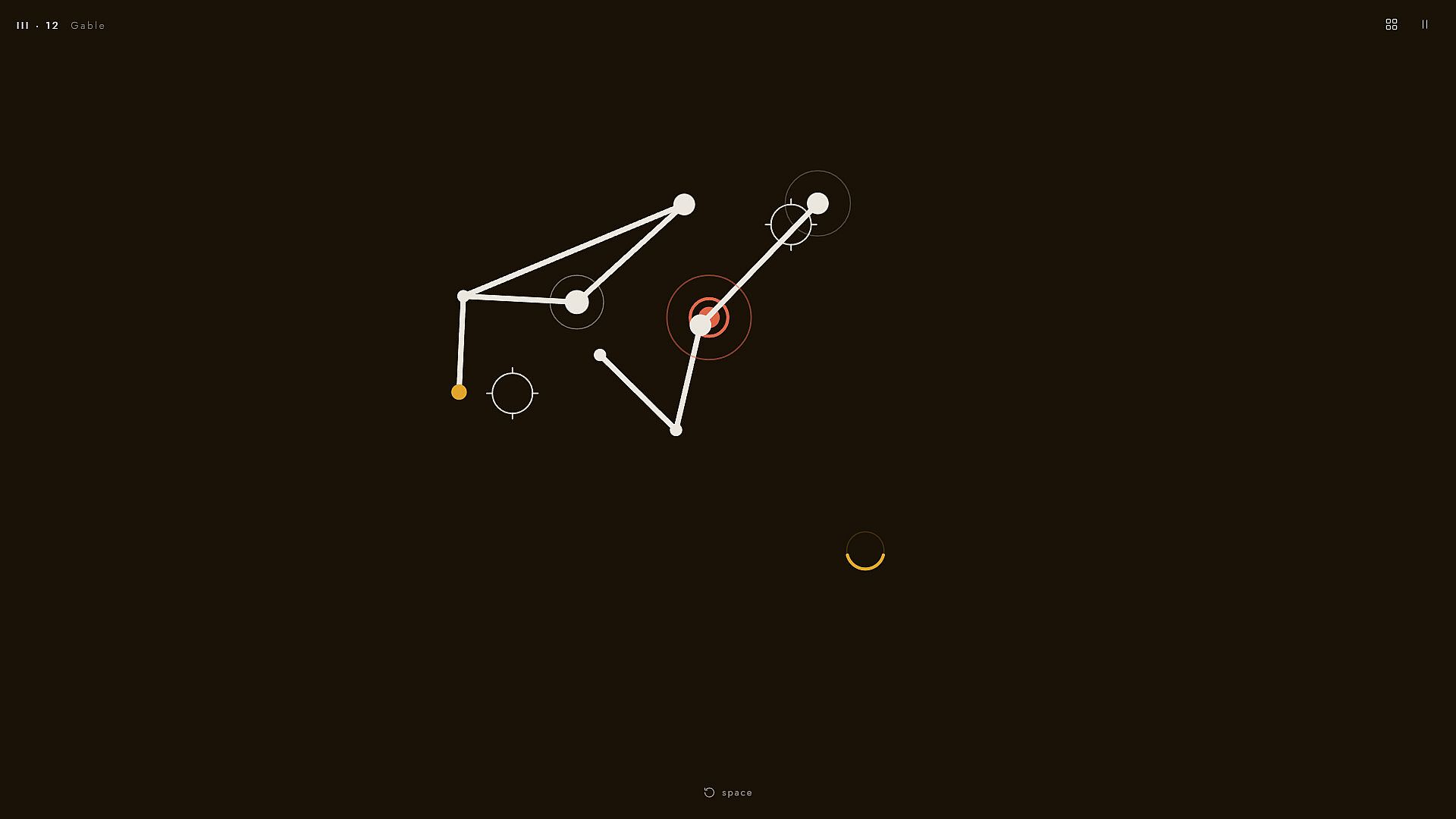
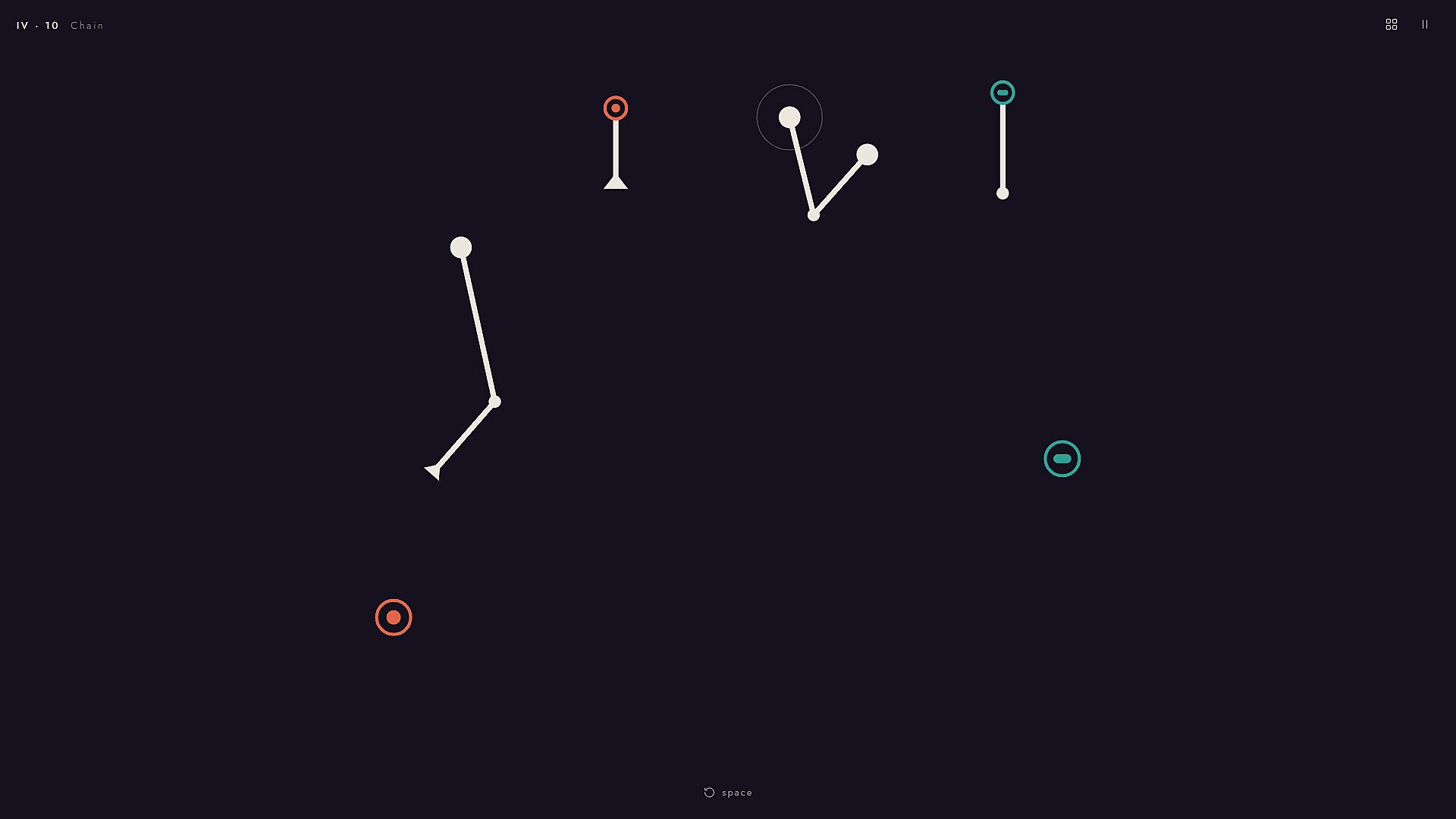
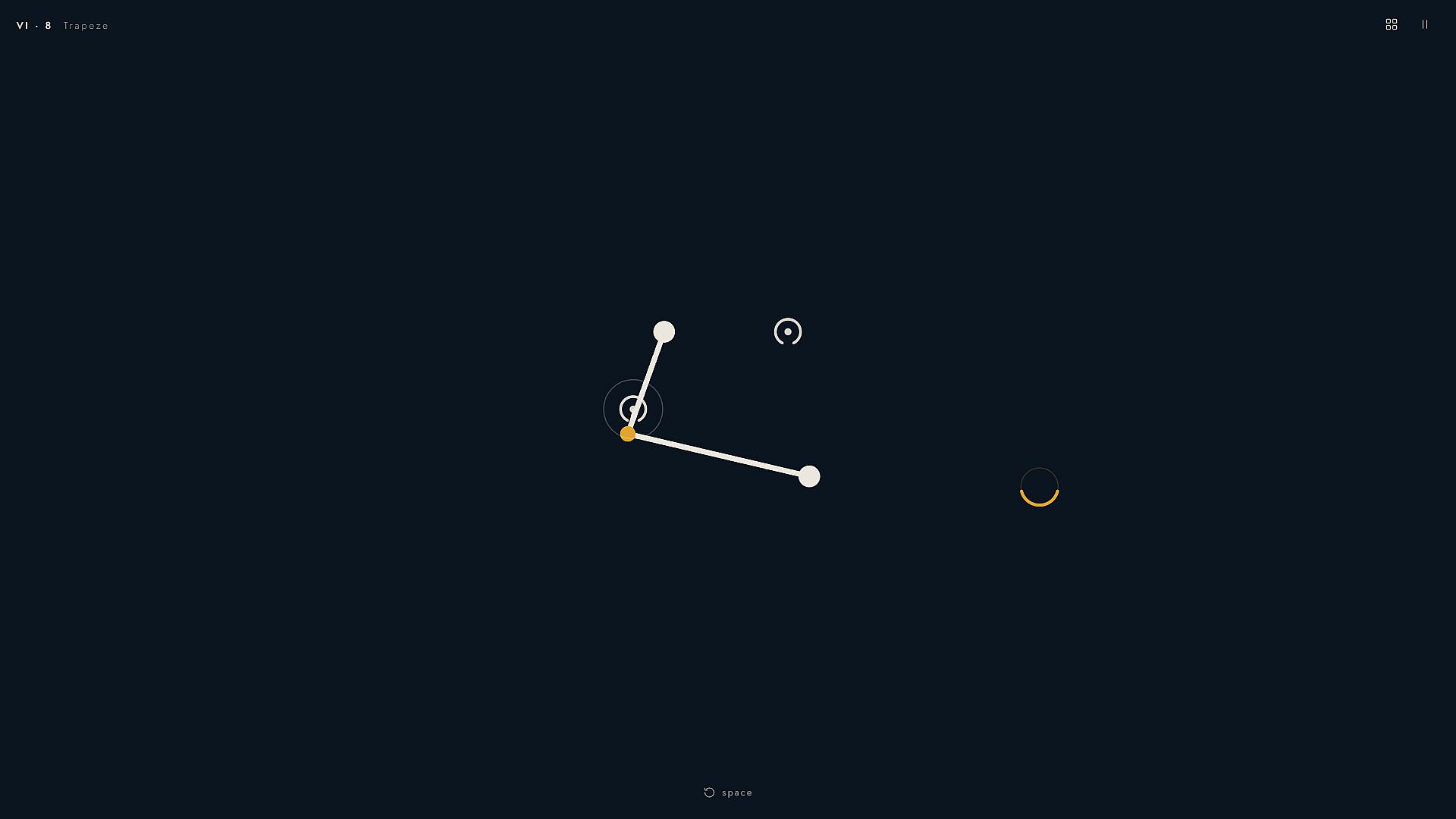
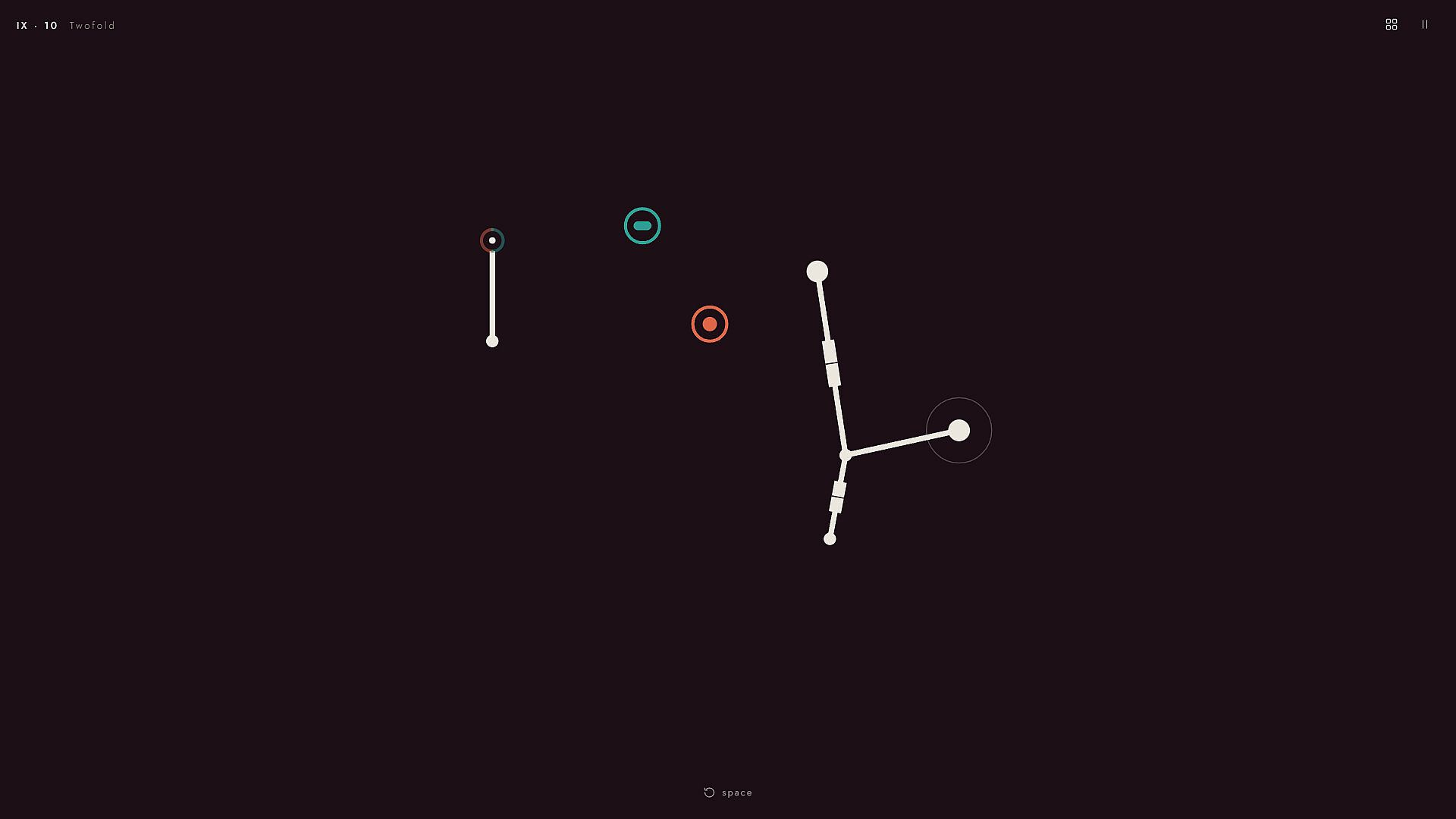
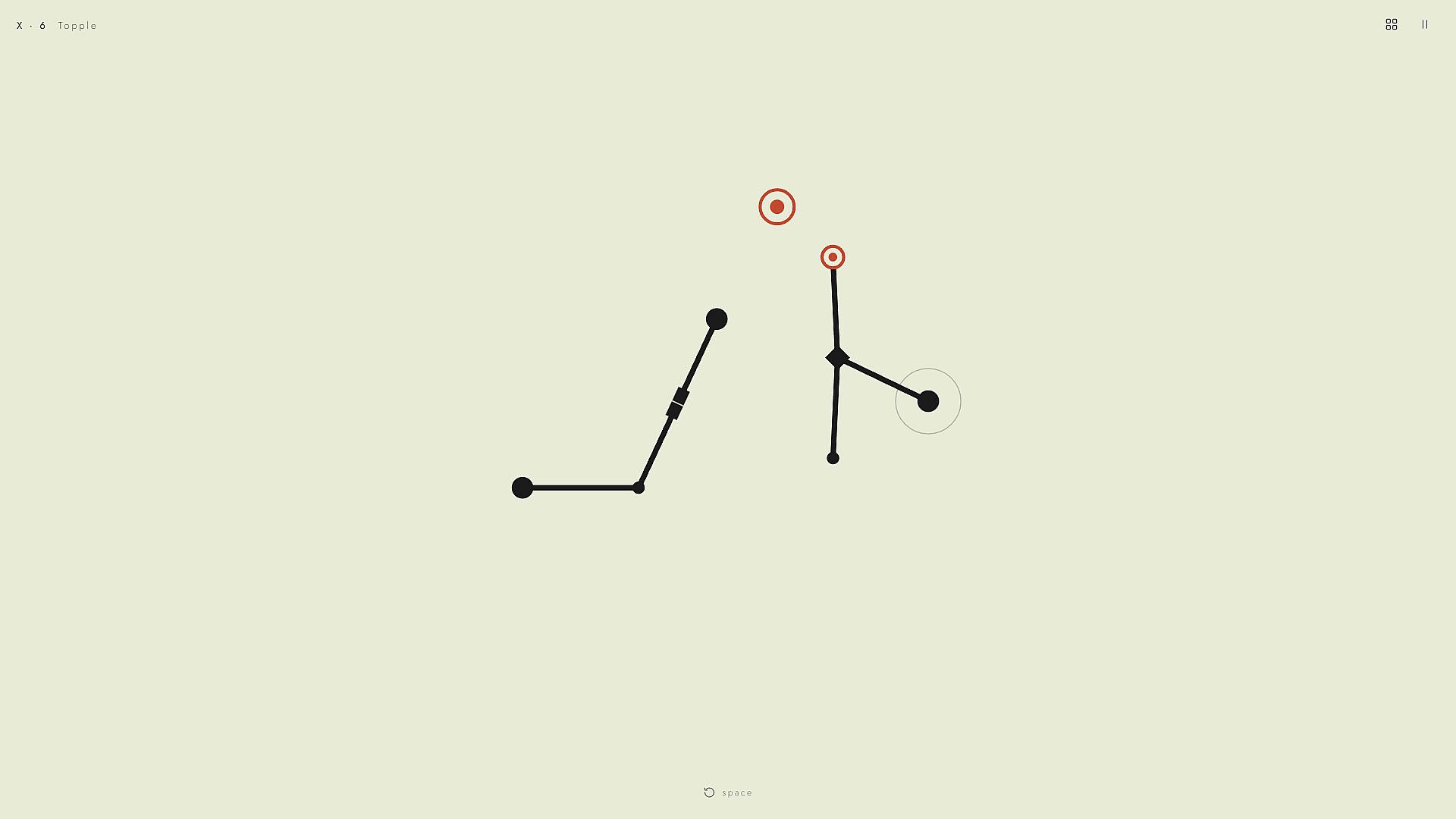
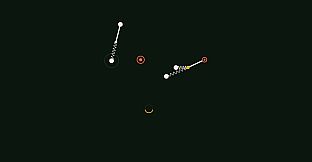
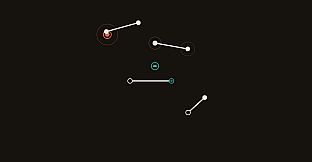
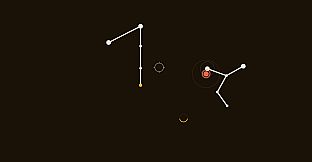
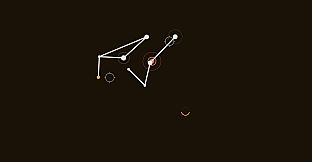
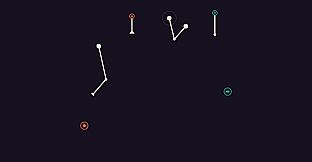
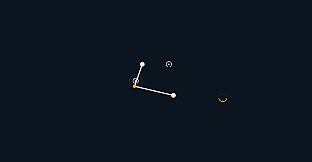
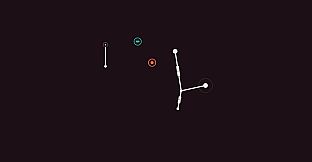
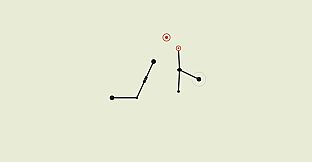
Swingfall is a minimalist physics puzzle game for PC in the indie and casual genres. Players manipulate small constructions made of joints and sticks that hang on the screen. The objective in each level is to click joints at precise moments so that the entire structure falls completely off the screen.
Gameplay
The core loop revolves around timing releases in a physics simulation. Structures behave like pendulums or connected rigid bodies. Releasing a joint at the peak of a swing sends pieces flying across the level, while a later release causes them to drop short. Success depends entirely on when each click occurs rather than on speed or accuracy of aiming.
Levels begin simple, often requiring only one or two clicks. Later stages in each chapter demand dozens of attempts as players coordinate multiple releases across interconnected pieces. There are no timers or point systems, and failure carries no penalty beyond restarting the current puzzle. Pressing the spacebar resets the level instantly so players can experiment without interruption.
Sound plays a central role. Every click, bell ring, catch, or collision generates a synthesized note that aligns with the background key. The result is an evolving soundtrack created in real time by the player's actions. Headphones enhance the experience because the audio directly reflects the rhythm of successful solutions.
Game Modes
Swingfall offers a single continuous campaign divided into ten chapters and 200 hand-tuned levels. Each chapter introduces one new mechanical element that alters how pieces move and interact. Early chapters focus on basic joint releases, while later ones layer on additional rules until the final chapter combines every mechanic introduced so far.
A dedicated teaching level appears at the start of each chapter to demonstrate the new rule in isolation. Players then apply that rule across progressively more complex puzzles. The structure emphasizes mastery of timing and physics over competition or variety in session types.
Mechanics and Progression
New elements arrive one per chapter and include rings that catch passing objects, gold pieces that must land in specific nests, cuttable knots that separate mid-flight, rubber bands that launch items upward, hooks that grab pieces in the air, axles that halt swings, a gravity-reversing switch, and pistons that apply pushes. These additions change trajectories and create new solution paths without altering the fundamental click-to-release input.
Color-blind friendly shapes and both light and dark visual themes support accessibility. The minimalist presentation keeps attention on the physics and timing rather than on decorative elements.
Is It Worth Playing?
Swingfall suits players who enjoy precise, low-pressure physics puzzles and appreciate games that reward observation of momentum and timing. The absence of scores or time limits creates a relaxed atmosphere focused on experimentation and discovery. Instant retries and clear teaching levels lower the barrier for newcomers while the later chapters provide substantial challenge for those who persist.
The synthesized audio that responds to every action adds a unique layer of feedback that many find satisfying during extended sessions. With 200 levels built around a consistent core loop and steadily expanding rules, the game delivers a complete single-player experience without additional modes or ongoing updates required. Those drawn to minimalist design and thoughtful puzzle design will likely find it engaging from start to finish.











