




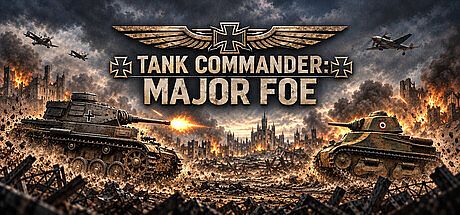



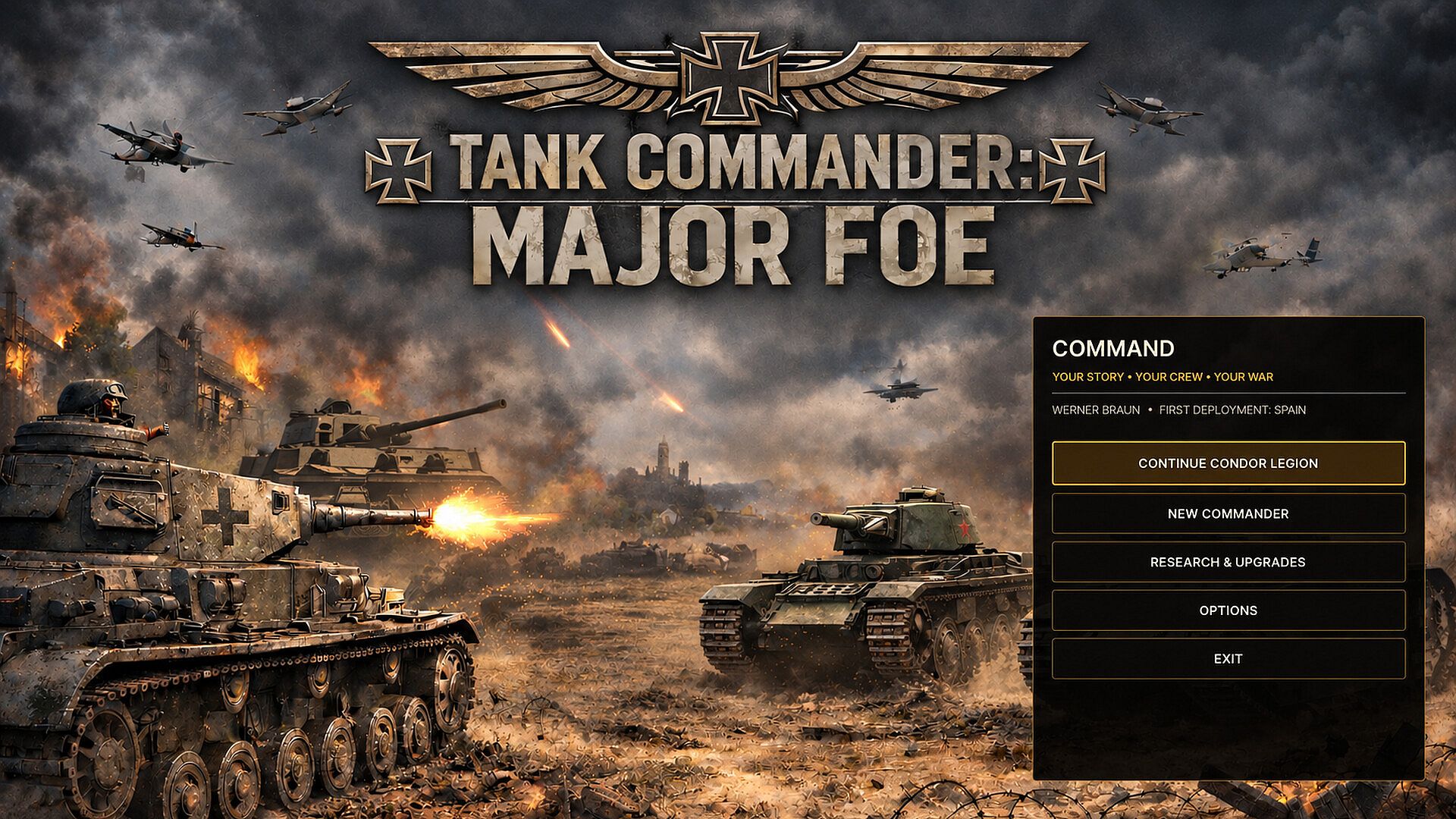
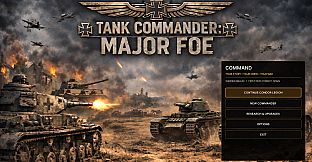
Tank Commander: Major FOE is a turn-based tactical roguelite strategy game with RPG elements available on PC. Players command a German tank crew beginning in the Spanish Civil War and continuing through World War II campaigns, where decisions about crew management, vehicle upgrades, and battlefield tactics carry forward across multiple careers.
Gameplay
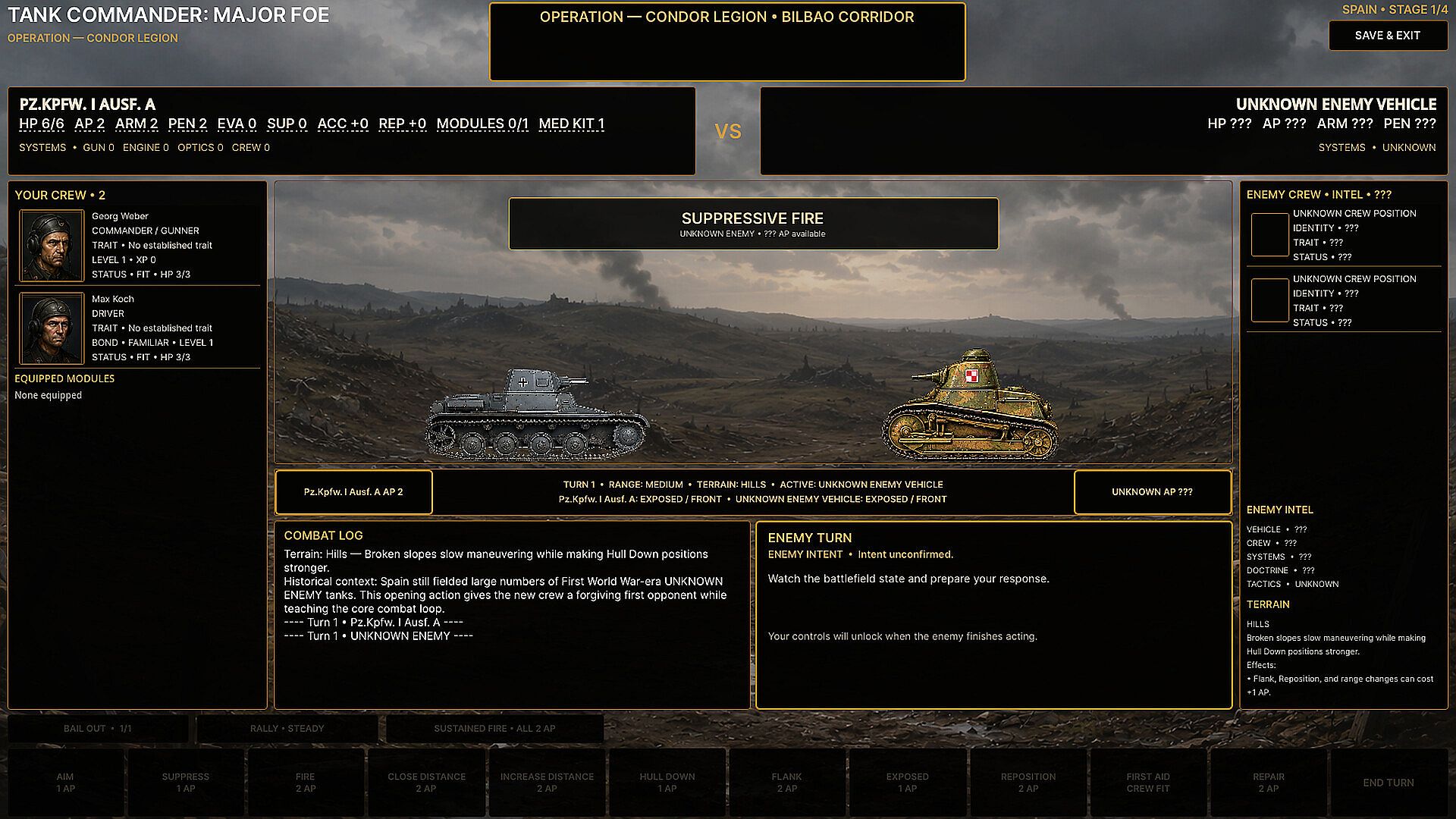
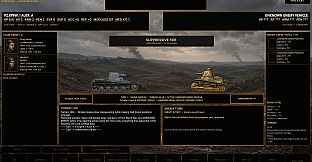
The core loop centers on one-on-one armored engagements that unfold in turns with a limited pool of action points. Each turn requires careful allocation of those points toward aiming, firing, suppressing enemies, rallying crew, repairing systems, or maneuvering for better positioning. Factors such as range, facing, terrain, armor thickness, crew condition, and overall positioning determine outcomes, and a single misstep can expose a flank or leave a critical system damaged.
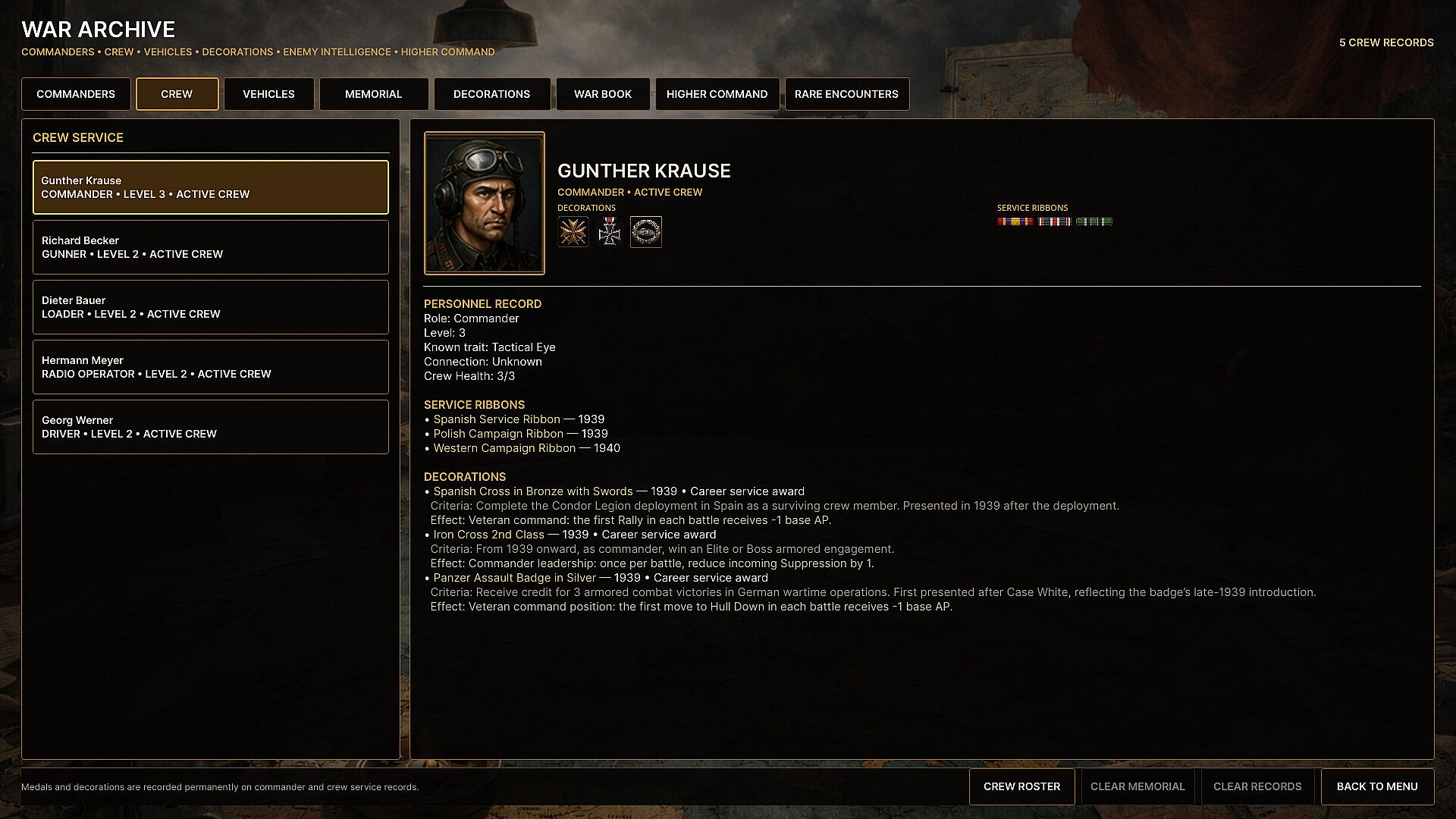
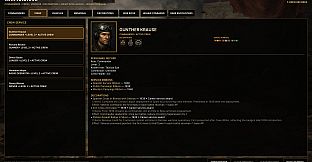
Crew members function as distinct individuals rather than simple numbers. They accumulate experience, unlock skills and traits, suffer wounds that affect performance, earn promotions, and collect medals along with campaign ribbons. Veterans who survive carry their personal history into subsequent operations. The player character, serving as commander, also develops a service record that influences reputation and available options over time. When a tank is destroyed or crew lost, those events become permanent entries in the service history and appear on a memorial wall.
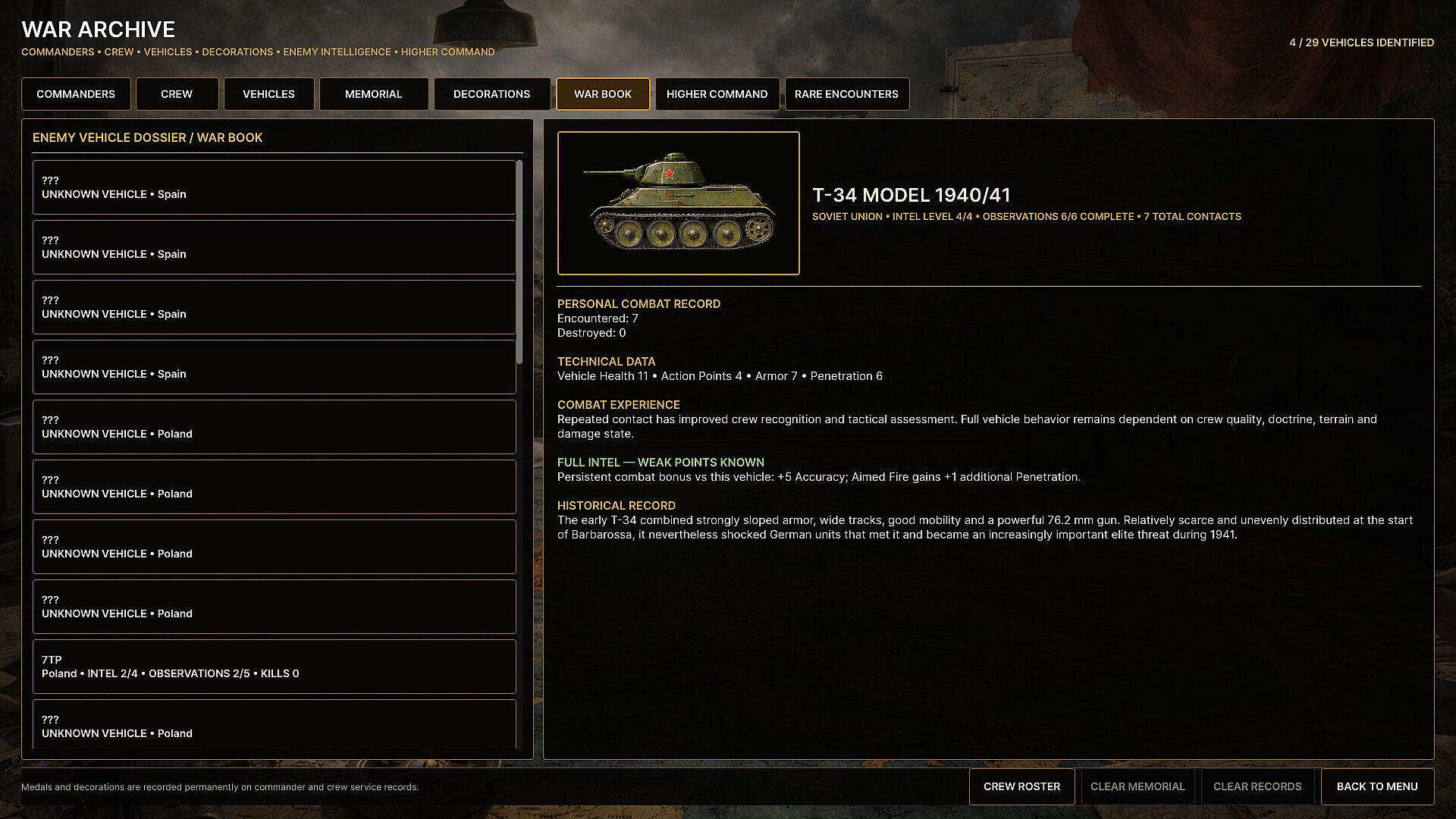
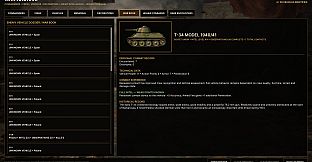
Intelligence gathering adds another layer through the War Book system. Initial contacts appear as unidentified threats with incomplete data. Repeated engagements gradually fill in details on vehicle identity, armor values, crew positions, enemy behavior, and tactical weaknesses. This knowledge carries across careers, so later commanders benefit from discoveries made by earlier crews. Full analysis of an enemy vehicle can grant lasting advantages in future fights.
Game Modes
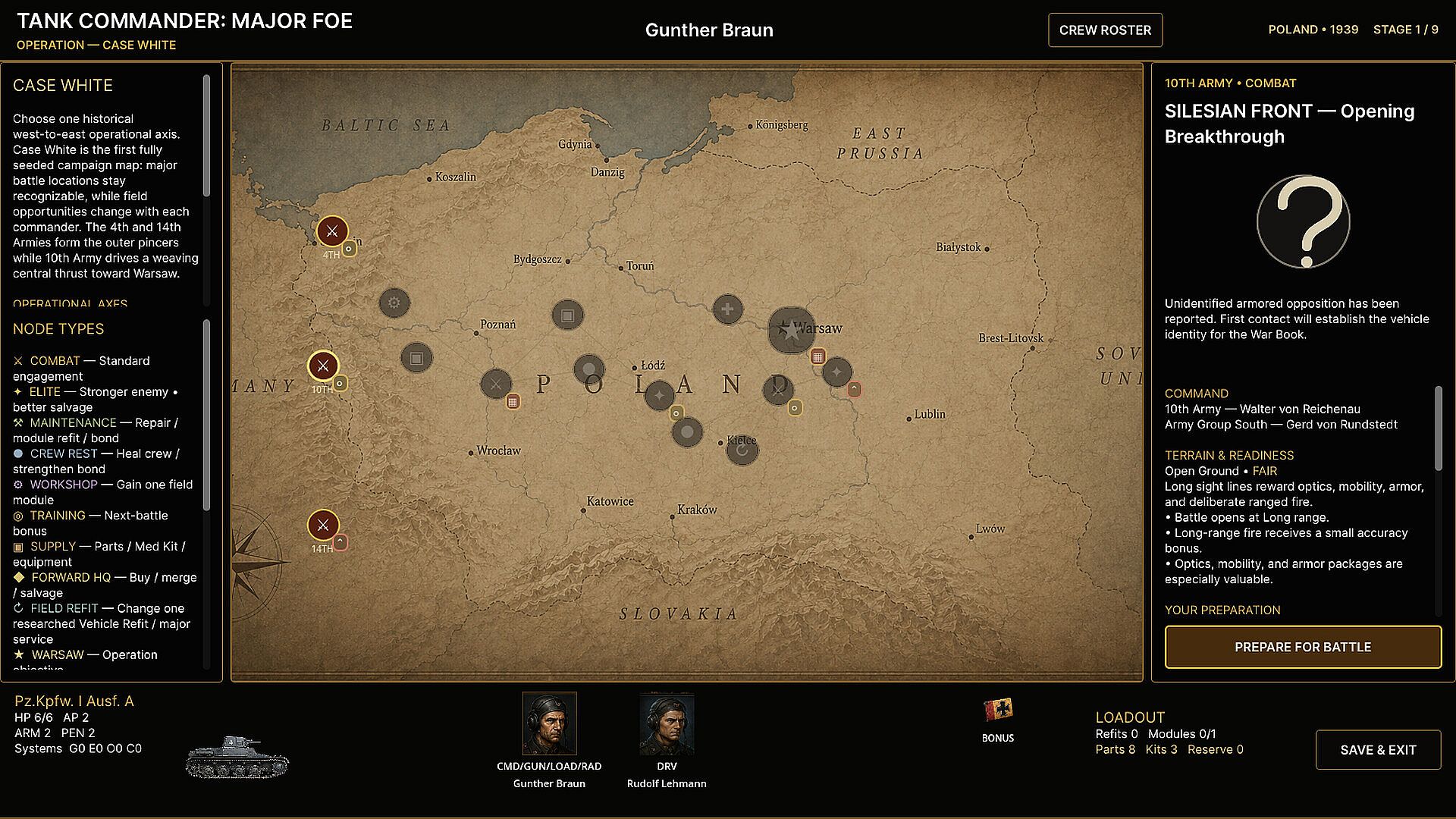
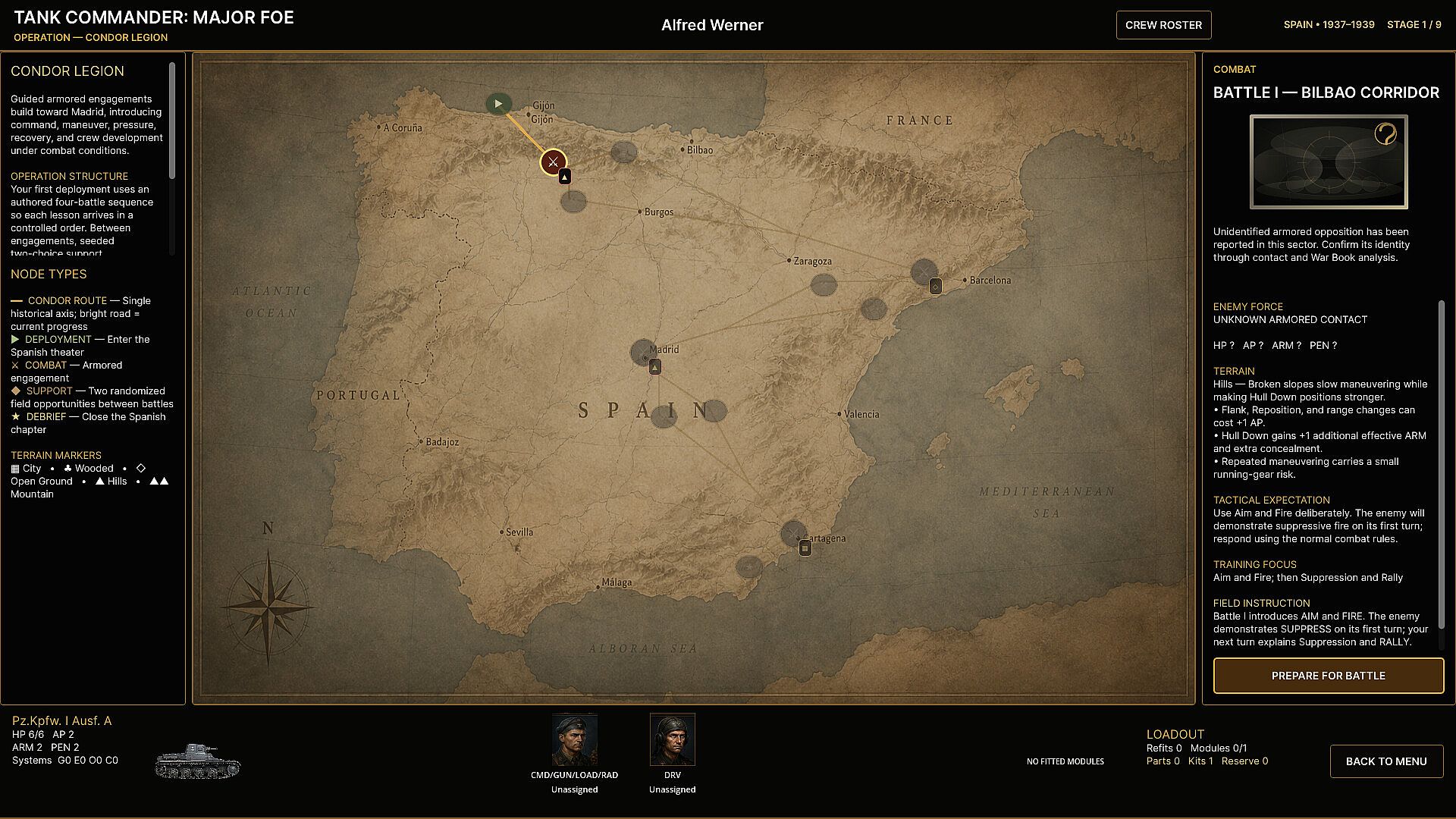
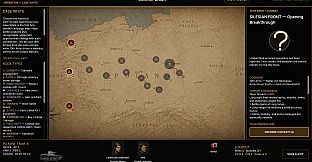
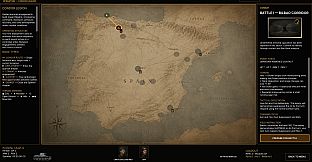
Operations take place on historical campaign maps that feature branching routes, combat encounters, support options, and elite challenges. Player choices influence which battles occur, what support arrives, the condition of the crew, research and equipment access, and relationships with higher command. Not every career follows an identical path, encouraging repeated playthroughs to explore different sequences of events.
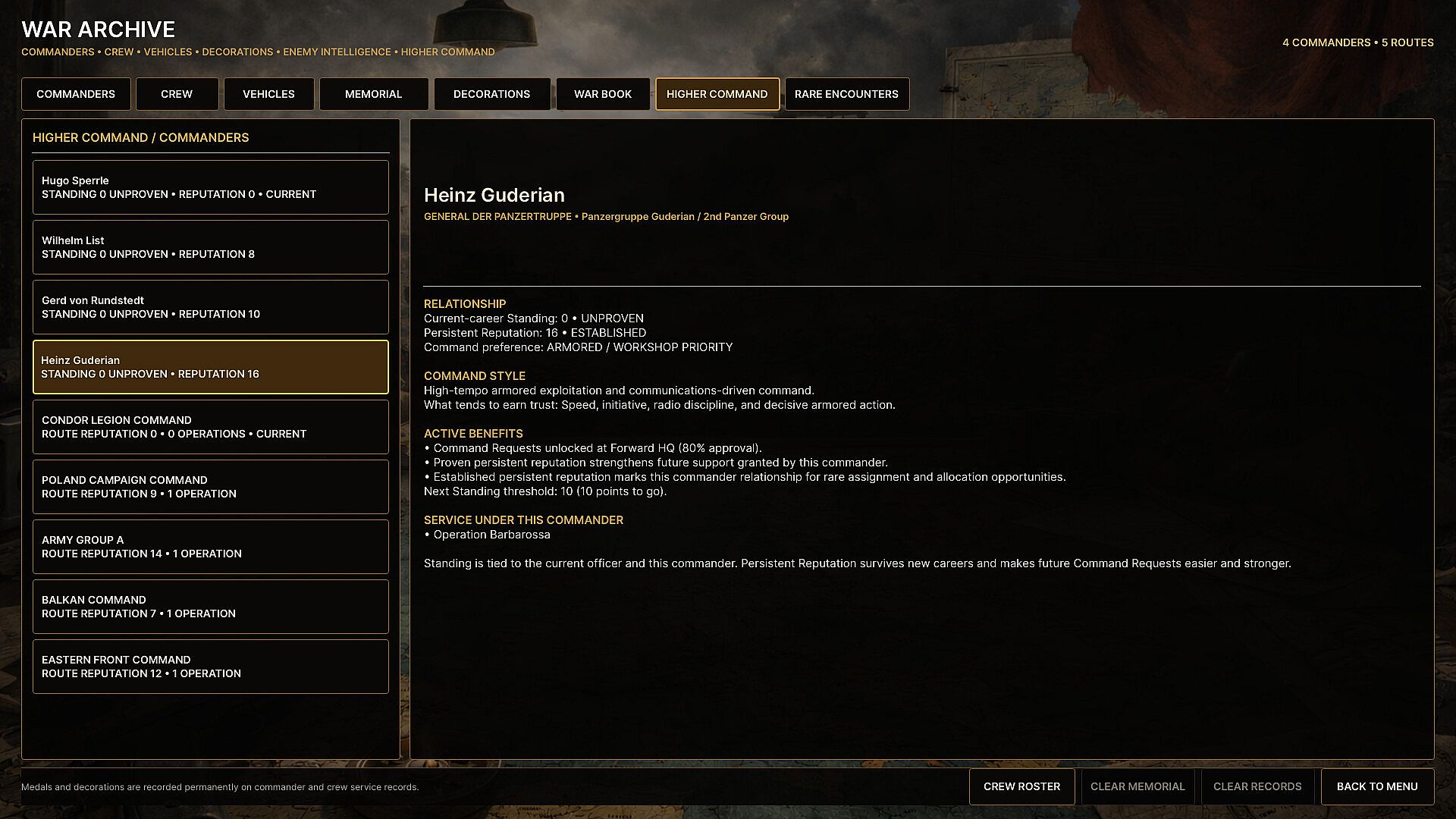
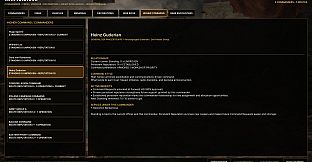
Vehicle progression follows historical German tank lines as the war advances. Research points earned in battle allow installation of modules such as improved optics, field tools, ammunition upgrades, suspension enhancements, radios, and smoke systems. Modules combine for greater value, while research provides long-term upgrades that persist into new careers. Higher command standing grows through actions taken, opening requests, orders, and special assignments that can alter rewards or trigger unique encounters. Some reputations and relationships extend beyond a single commander.
Crew and Career Persistence
Persistence forms the foundation of the experience. Victories and defeats both leave marks, as do crew medals, wounds, promotions, and service records. Studying an enemy today can simplify encounters years later because prior crews survived long enough to document weaknesses. When one career concludes, the next commander inherits accumulated knowledge and opportunities rather than starting from a blank slate. This structure rewards thoughtful risk management and long-term planning over isolated mission success.
Is It Worth Playing?
The game suits players who enjoy deliberate tactical decision-making in armored combat combined with roguelite progression and historical setting. Its emphasis on crew development, persistent intelligence, and branching campaign paths creates meaningful consequences for choices made across multiple runs. Early Access currently covers the 1937 Condor Legion operations in Spain and extends into early World War II campaigns, with ongoing development planned to add operations, vehicles, enemy forces, and career content. Those drawn to strategy titles that blend short-term battlefield tactics with longer-term career management will find the systems align closely with that preference. The single-player focus keeps attention on individual commander decisions and their ripple effects through the war.












