




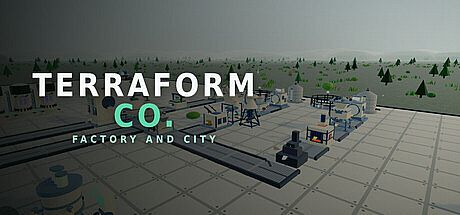


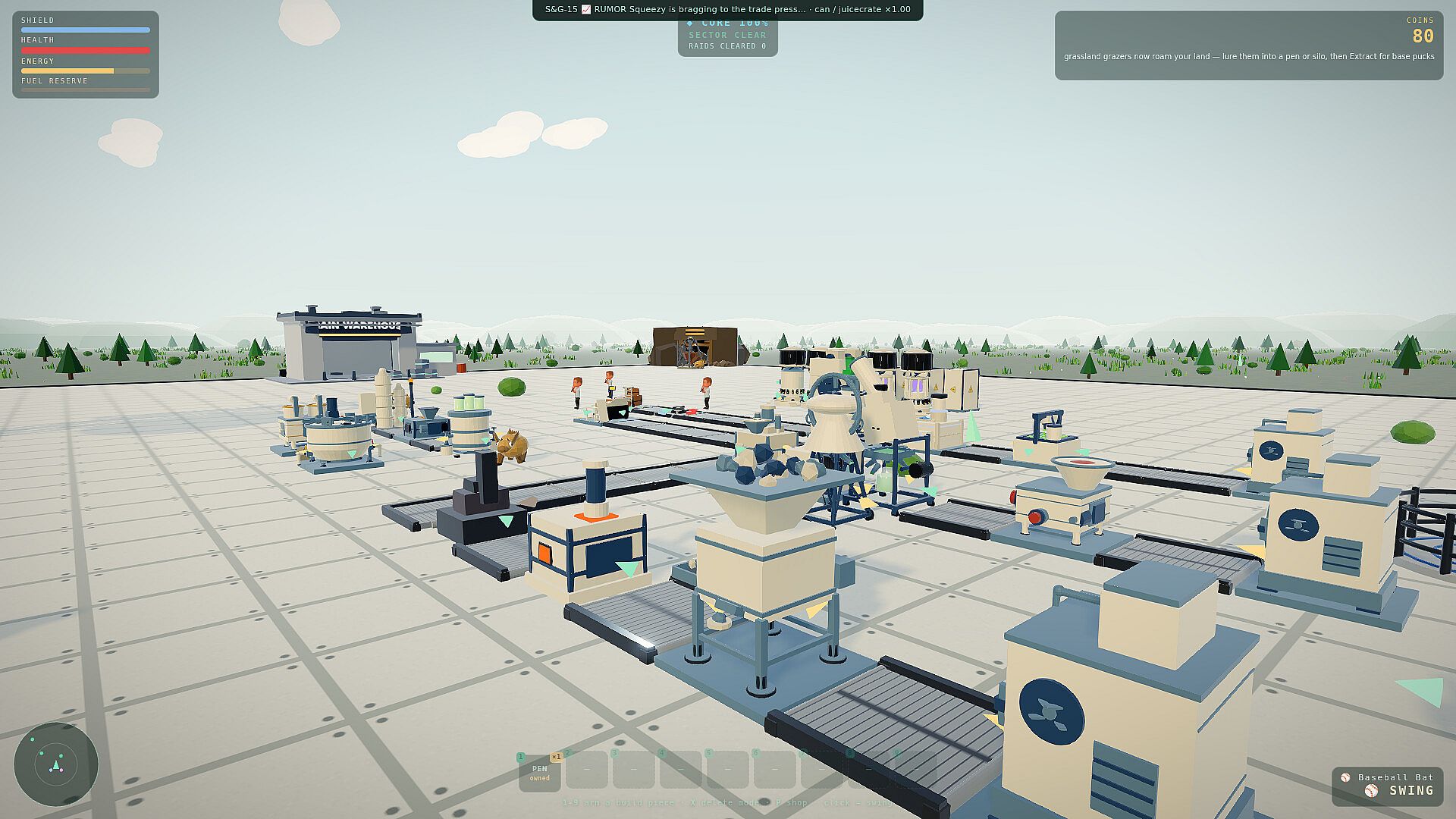
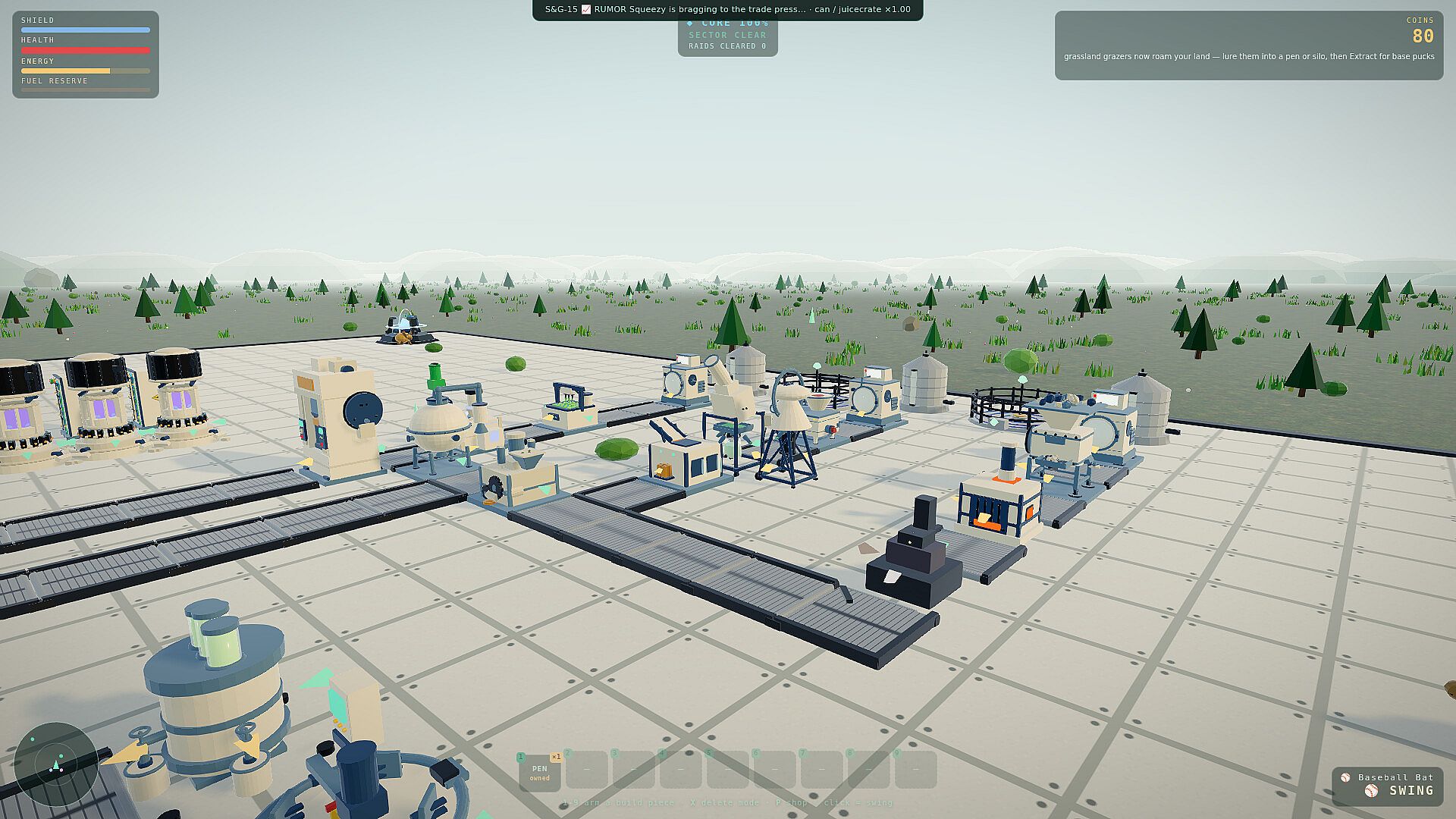
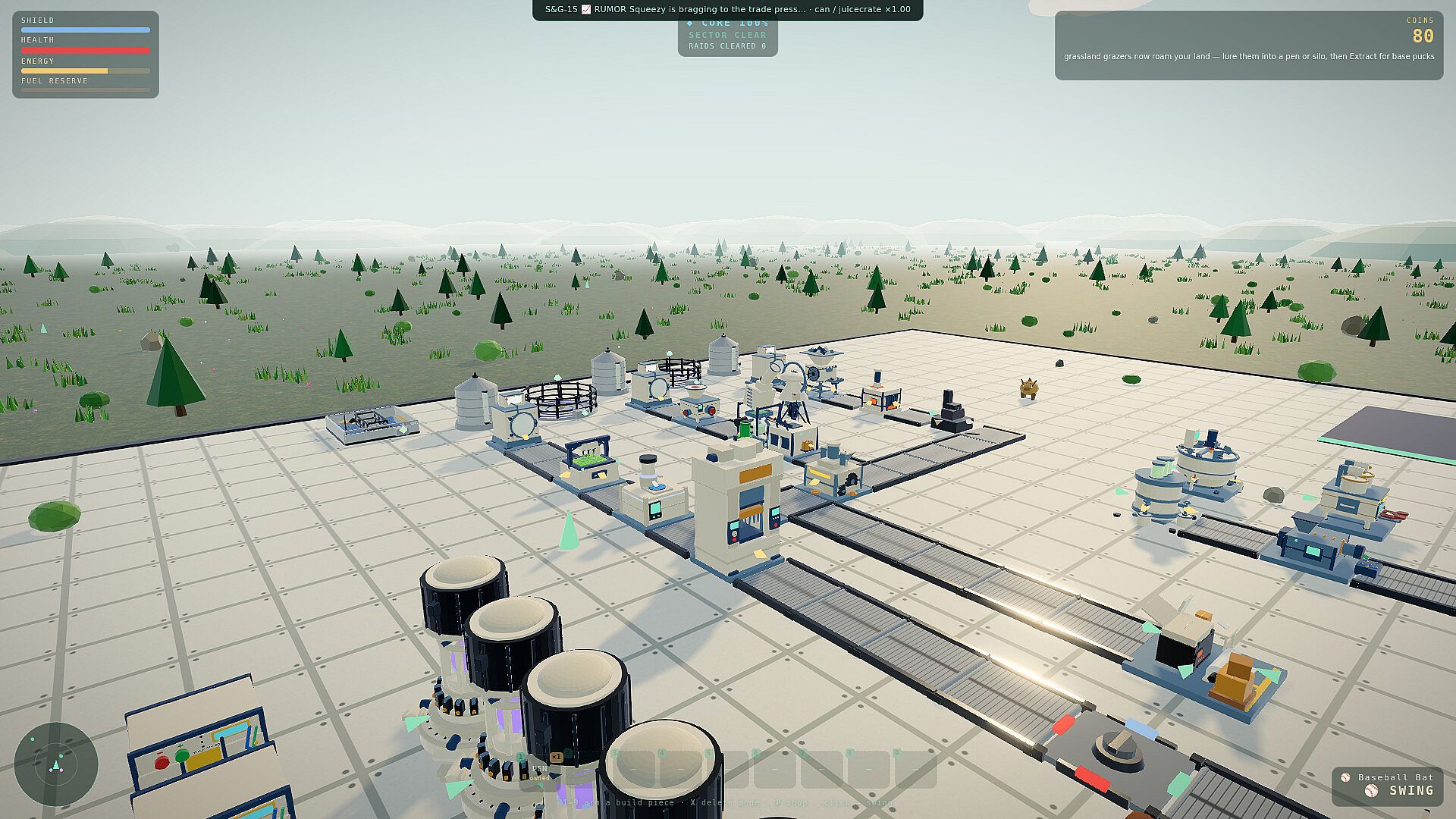
Terraform Co: Factory and City is a strategy simulation game that combines factory automation with city building on an alien world. Players manage resource chains from raw extraction through manufacturing to consumer sales while expanding a settlement that funds further growth. The title sits in early access on PC and centers on a self-sustaining industrial loop where every product feeds the next stage of development.
Gameplay
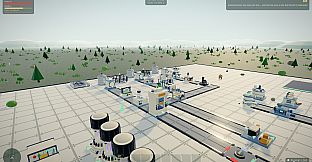
The core loop begins with manual labor on an empty plot. Players clear terrain, capture native grazers for breeding, and process basic materials by hand before automation takes over. Belts transport goods, miners extract ore, and machines handle crushing, smelting, forging, and refinement across five tech tiers unlocked solely by actual production rather than purchased upgrades.
Production chains span multiple sectors. Ore becomes alloy with recyclable byproducts. Premium metals turn into power cells after enrichment. Electronics progress from crystal wafers to microchips, smartphones, and laptops. Food advances from grazers to finished products. Chemicals link organic and mineral lines through vats and processing. Each tier requires prior output, creating a gated progression that rewards steady expansion.
Defense interrupts the routine when alien raiders target the central core. Fixed enemy types appear across raids, with consistent behaviors such as speed or armor that force players to adapt layouts and response rather than rely on escalating stats. The tranq gun and melee tools remain constant tools throughout.
Visual design keeps machinery grounded with matte finishes and accurate proportions. Color highlights only functional elements, and the build menu uses in-game photographs of structures so placement matches expectations exactly.
Game Modes
The experience runs as a continuous campaign built around corporate ranking. Fourteen rival companies hold fixed contract ladders in their sectors. Completing a ladder overtakes one rival, grants a permanent perk from their trade secret, and advances the player's position on the planetary stock index. These contracts have no time limits and form the main progression path.
Timed spot orders provide income between ladder steps. A market terminal displays the index, contract ladders, available orders, price trends, and news that signals upcoming booms or shortages. Players can position production to capitalize on predicted shifts.
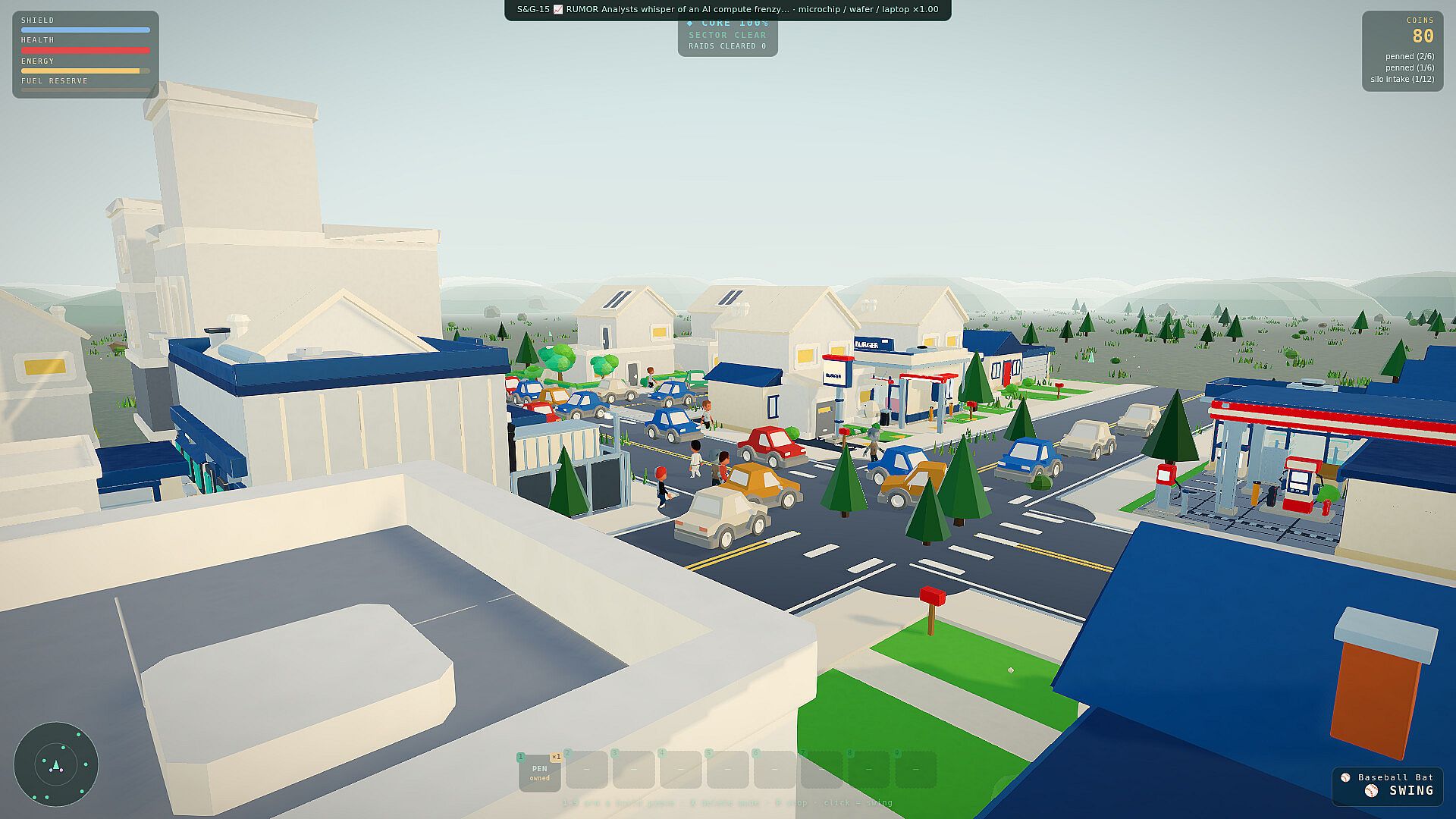
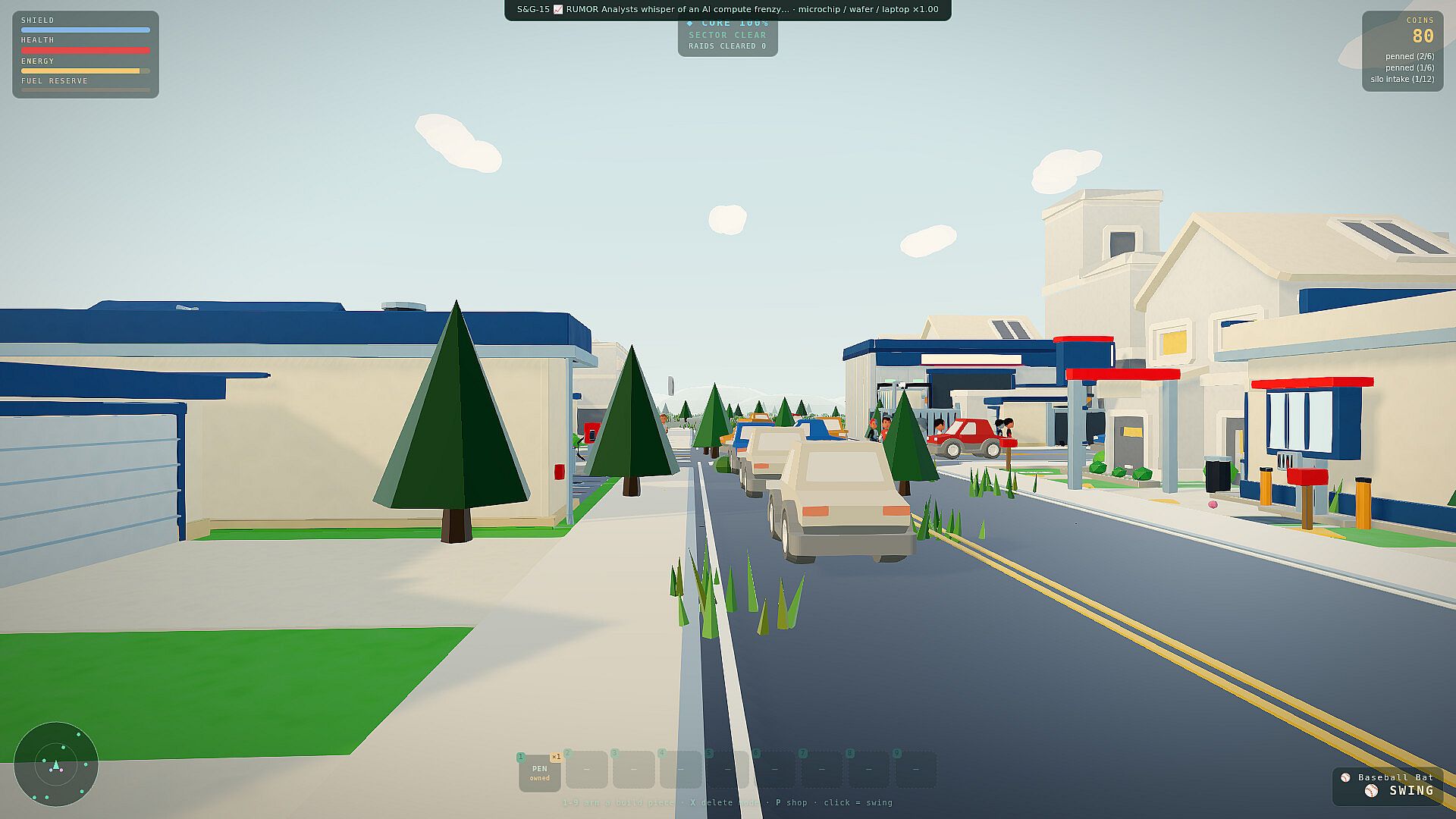
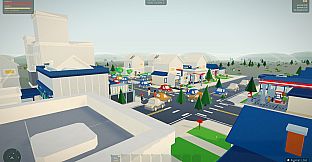
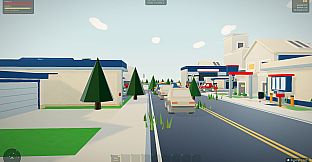
City growth operates as an integrated second layer rather than a separate mode. Roads, houses, shops, and services unlock through factory milestones. Residents consume supplied goods delivered by cargo depots and vans, generating revenue that funds further factory investment. Traffic and pedestrian movement add visible life to the streets without requiring separate management layers.
Factory and City Integration
Goods only generate profit once sold, so the factory must supply the growing town. Cargo depots receive belted products and dispatch vans to matching shops. New building types appear as production milestones are hit, pacing town expansion to factory capability. The result is a stacked economy where city demand drives factory scale and factory output enables city scale.
Raids serve as periodic pressure rather than the central focus. Defending the core while maintaining output requires defensive planning around the main industrial layout.
Is It Worth Playing?
Terraform Co: Factory and City suits players who enjoy detailed automation chains and layered economic systems. The production progression from hand tools to multi-tier manufacturing, combined with the city layer that consumes and funds output, creates a cohesive single-player loop. Early access status means ongoing refinement, but the described systems already deliver a complete campaign through contract ladders and market fluctuations.
Those seeking pure relaxation may find the raid interruptions and need for constant supply balancing too active. Players who prefer factory builders with an additional settlement layer and light defense elements will find the grounded mechanics and milestone-driven growth rewarding. The absence of purchasable shortcuts keeps focus on production and placement decisions throughout.











