






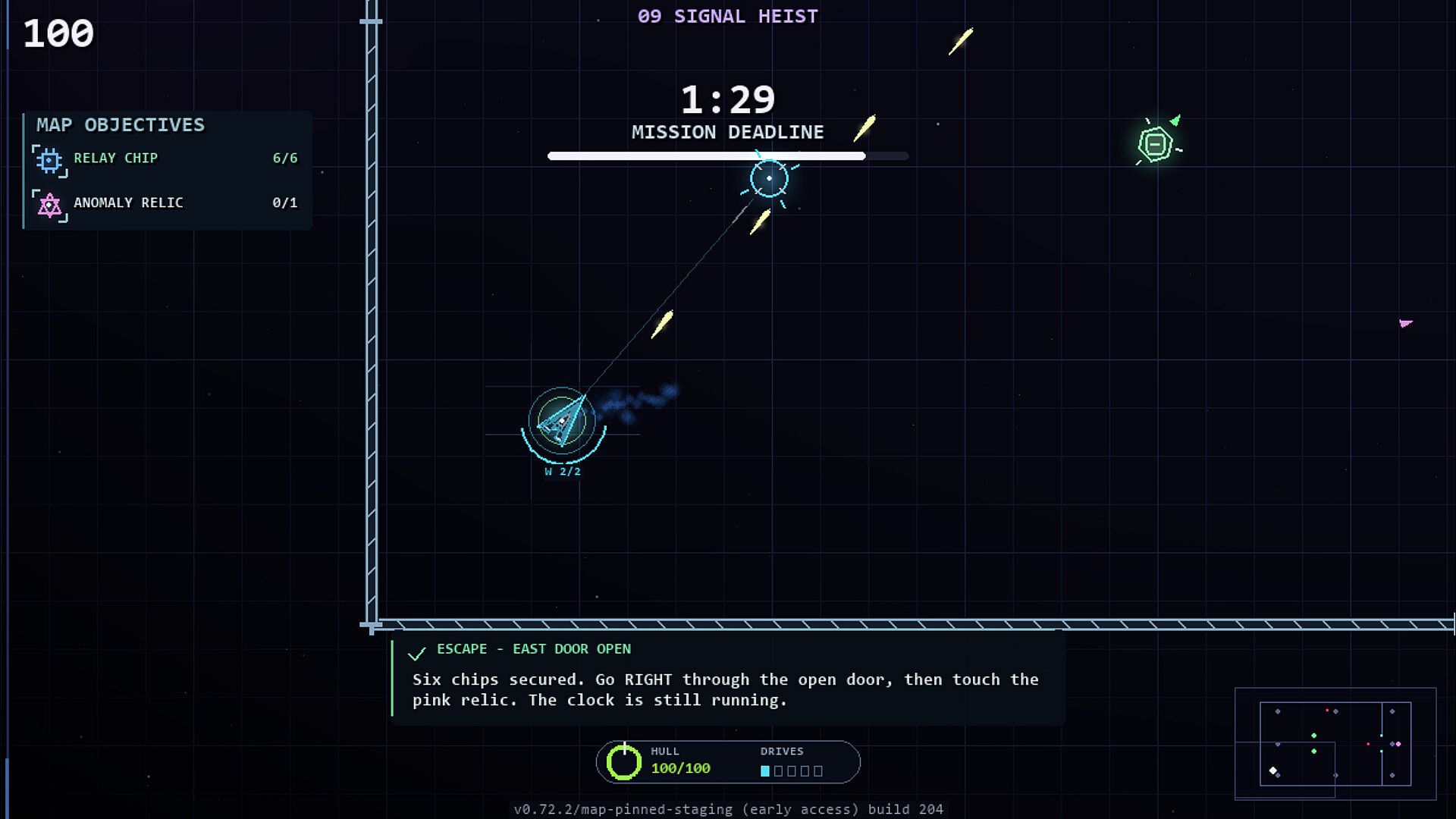
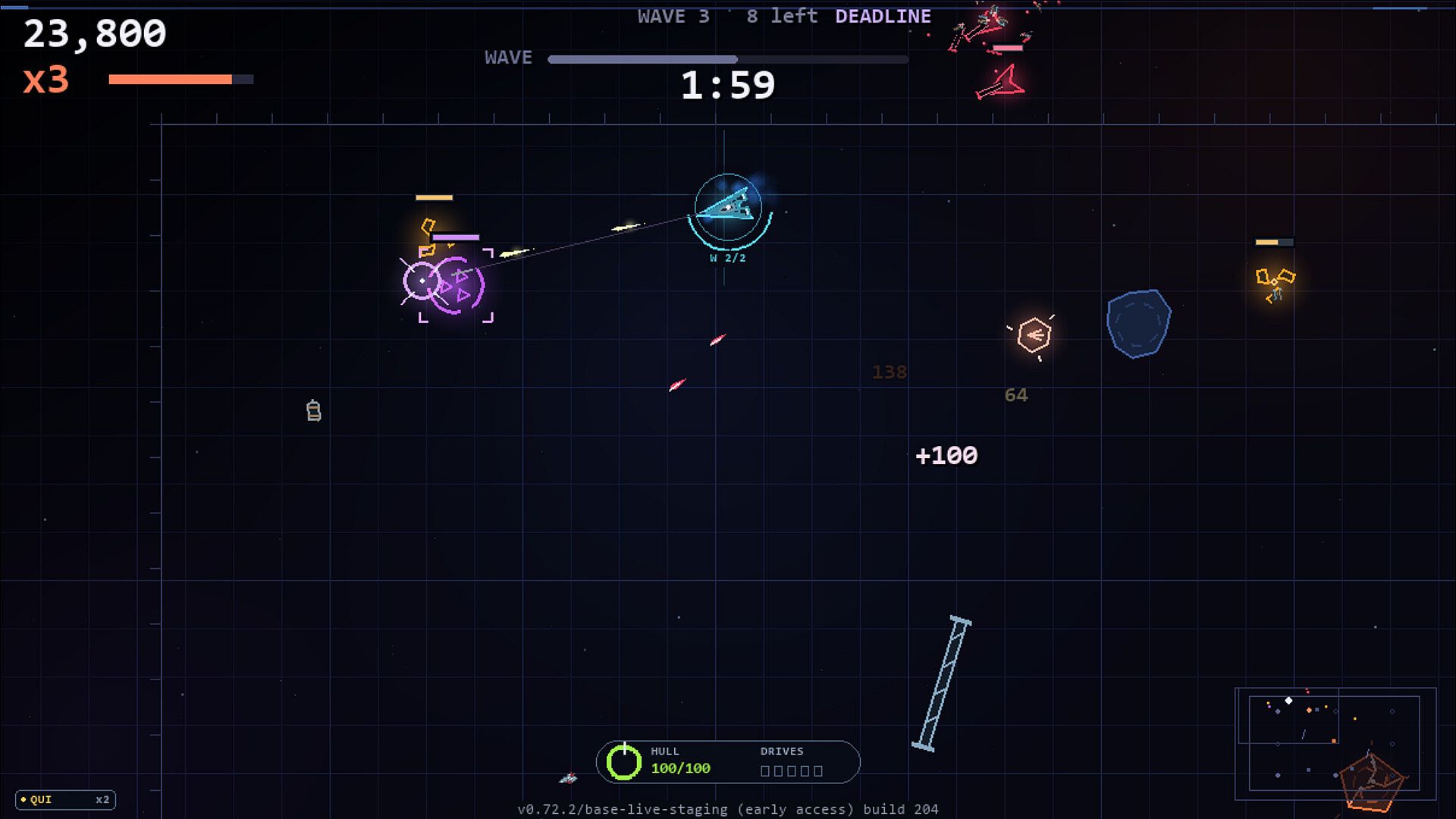
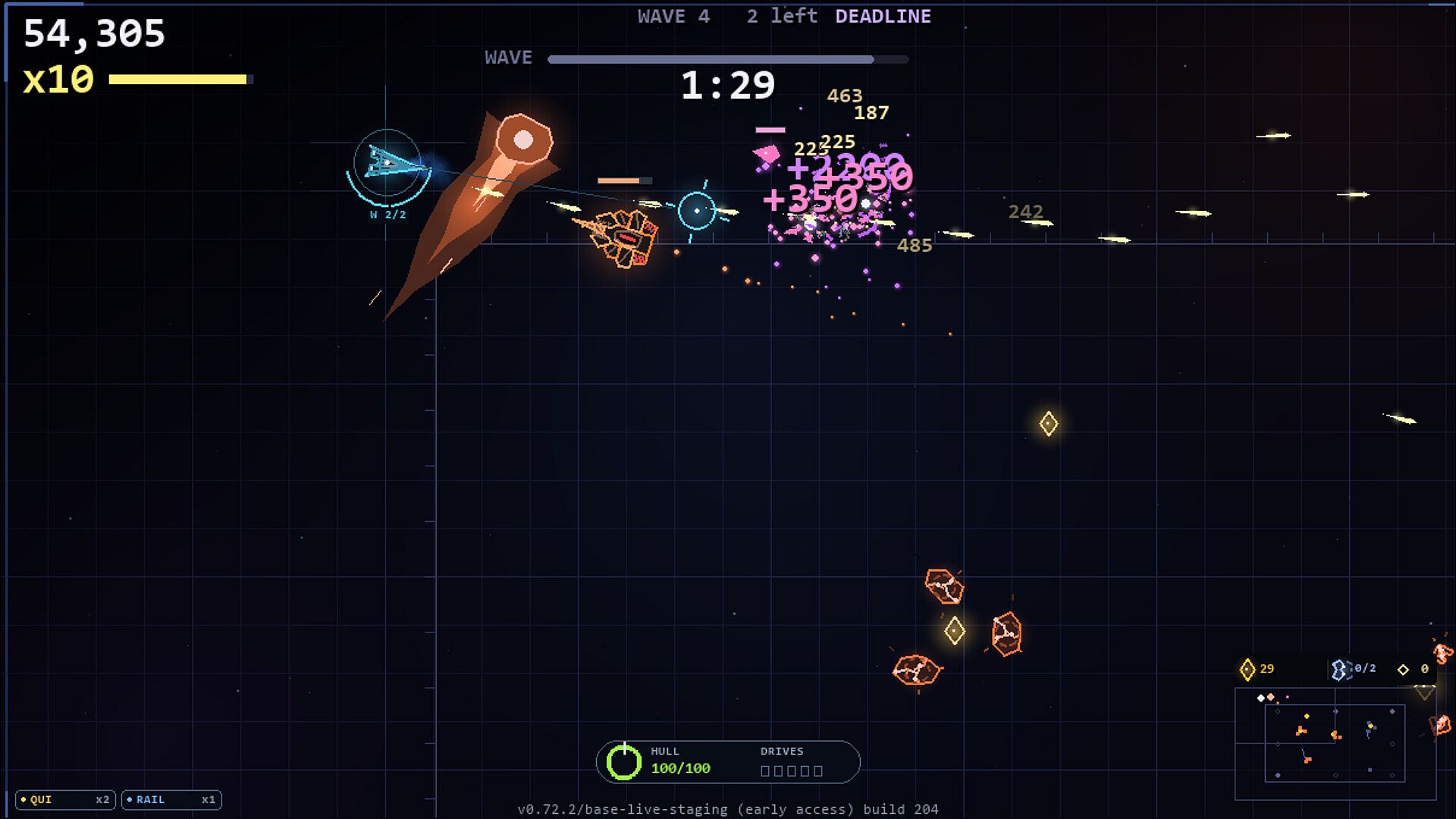
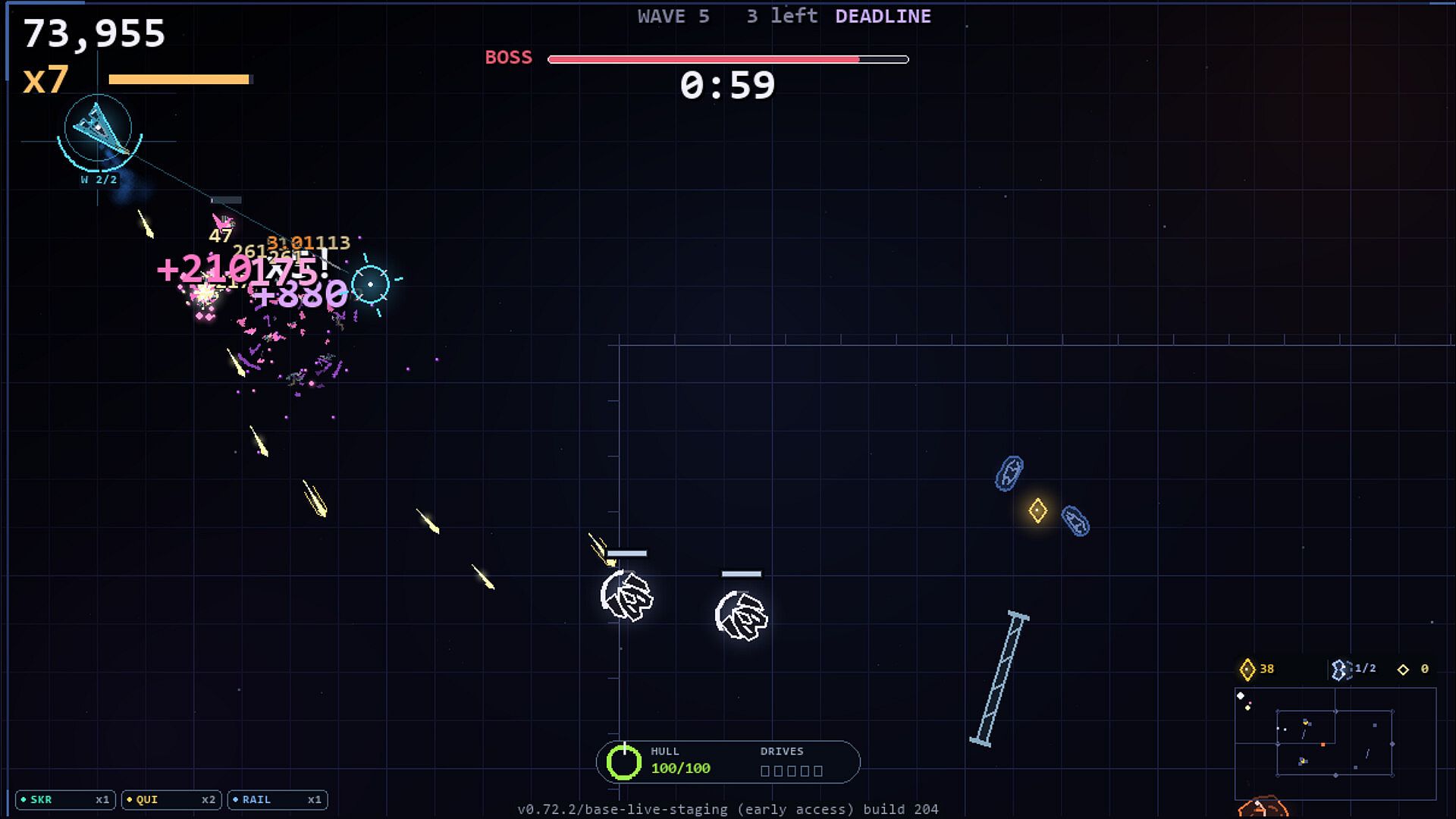
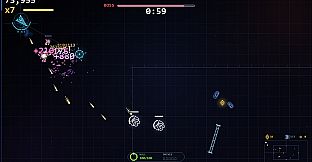
The Anomaly on Mars is a twin-stick arena shooter built around momentum and buildcrafting on PC. Players pilot ships that retain their velocity while dodging telegraphed enemy attacks across neon-lit Martian arenas filled with asteroids, breakable walls, comets, falling rocks, beams, mines, and charging foes. Each wave clears space for a three-card draft that layers upgrades onto the current run, with 45 cards total that include branching lines, rerolls, drops, and ship-specific choices.
Gameplay
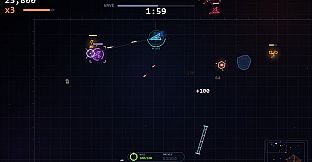
Core movement emphasizes reading the arena and committing to paths because the ship drifts forward after every thrust. Cover from asteroids and destructible walls becomes essential once hazards activate, and every enemy telegraph gives a clear window to reposition or counter. Five distinct ships alter the experience at a fundamental level: VECTOR favors speed, BASTION leans into durability, MOTHERSHIP supports broader positioning, BOOP67 introduces unique drone or bumper mechanics, and the unlockable ECHELON shifts options further once earned through progression.
Builds grow under pressure across runs. A card draft appears after each wave, letting players stack synergies while managing risk as enemy affixes intensify. Three difficulty tiers-Easy, Hard, and Dire-scale enemy density and speed, while optional mutators add further constraints or chaos such as one-life rules or accelerated enemy behavior. Five rotating arenas refresh the visual palette, music, and layout patterns as depth increases.
Game Modes
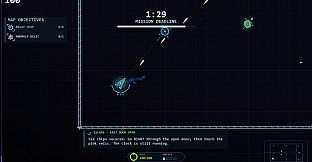
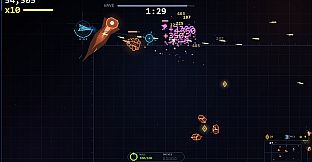
Survival forms the main loop: endless waves with a boss every fifth wave and a card choice after each clear. Deadline compresses the session into three minutes focused purely on score and combo maintenance. Boss Rush strips away regular waves to deliver the five bosses-WARDEN, LANCE, CHORUS, PRISM, and HIVE-back to back, each with multiple phases. Daily runs deliver a shared seeded experience for all players, while Boss Lab provides isolated practice against any chosen boss tier on a clean floor.
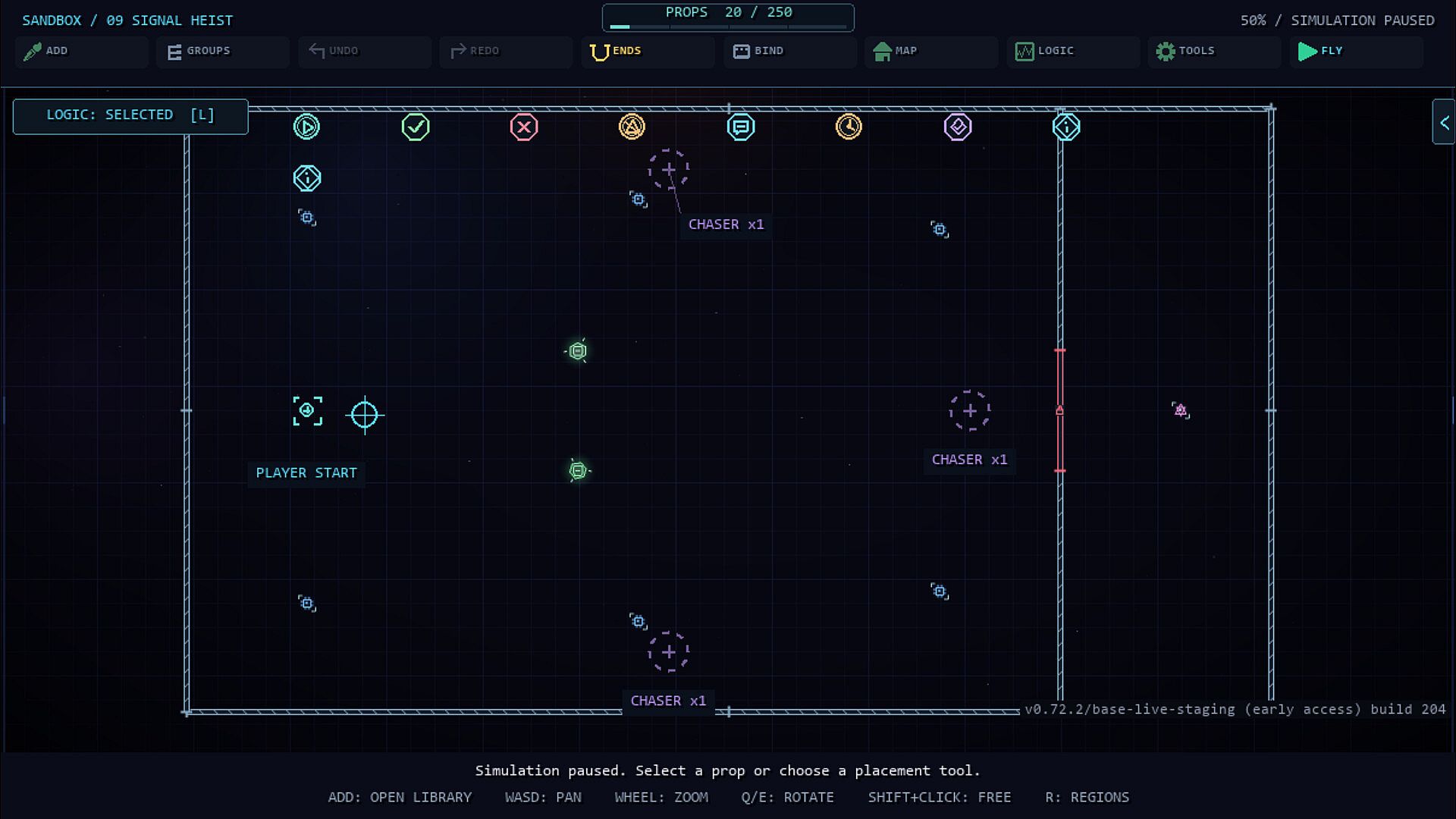
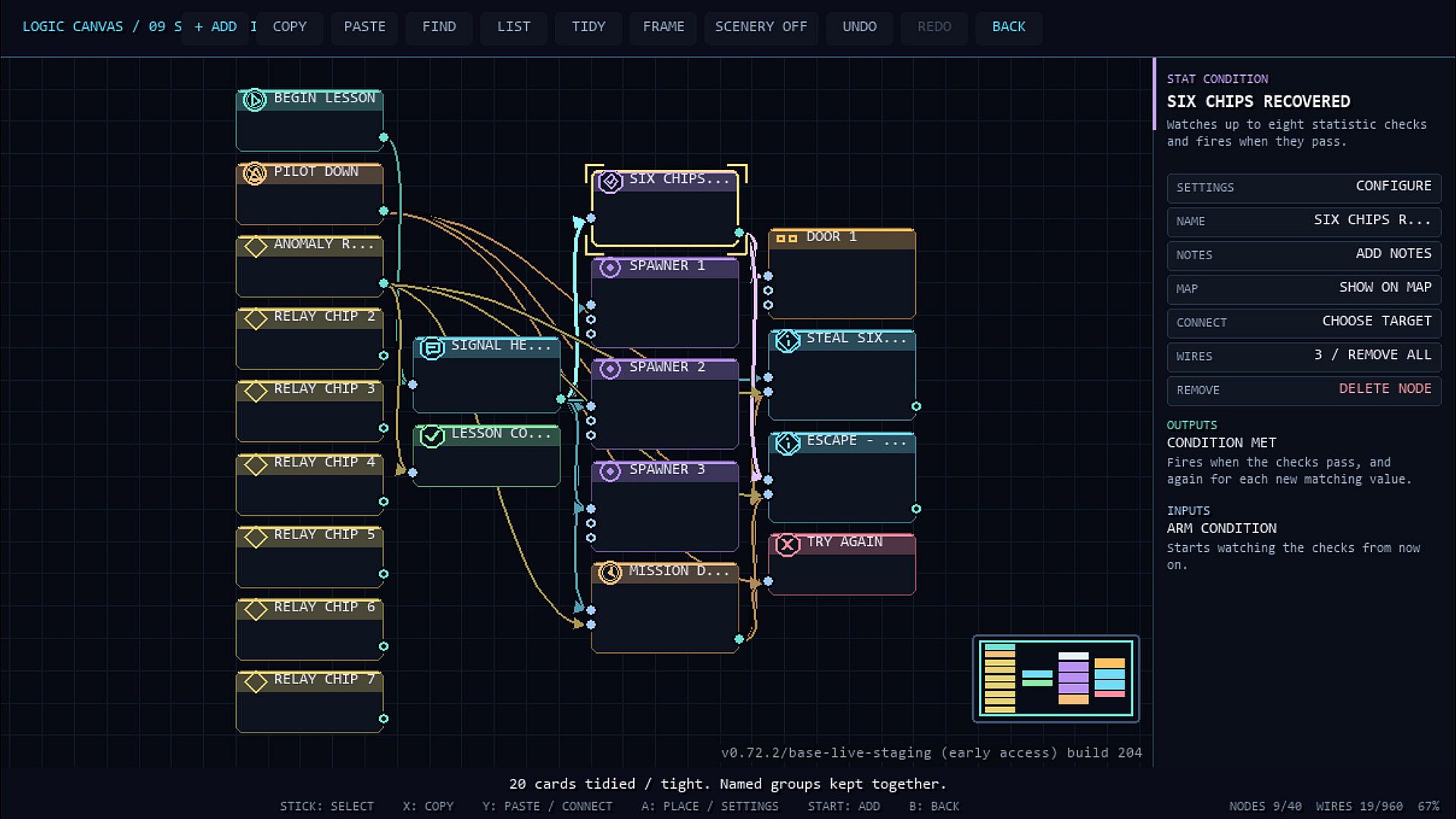
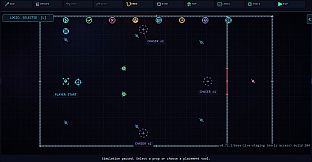
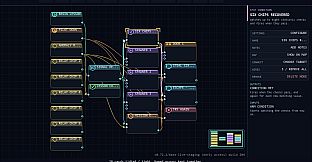
Custom creation sits alongside these preset options. Sandbox tools allow painting terrain and cover, placing enemies and bosses, wiring triggers to objectives, dialogs, doors, and timed events, then tuning cards, stats, and rules. Completed missions can be tested in-game and published through the Map Hub for others to download, requiring only a linked Discord account for sharing.
Progression and Scoring
Local leaderboards track personal bests on each device, while global boards compare runs across difficulties and display the ship used for every entry. Both in-game and web views surface rankings, encouraging repeated attempts at higher scores or cleaner clears. Ship unlocks and card familiarity create long-term progression that carries across modes without resetting core systems.
Mutators further expand replayability by tagging runs so they remain distinct on leaderboards. These toggles sit beside difficulty selection and range from strict limitations like no cards to environmental changes such as increased comet frequency or elite enemy density.
Is It Worth Playing?
The game targets players who enjoy precise twin-stick movement, incremental build decisions, and the satisfaction of mastering telegraphed patterns across escalating waves. Its Early Access state focuses on the five ships, five arenas, five bosses, 45 cards, and full set of modes already present, with plans to refine balance, performance, and Sandbox tools over the coming months based on community input. Sandbox creators receive direct support through map publishing and potential integration of standout work into the base experience.
Those drawn to arena shooters with strong creation tools and score-chasing systems will find immediate depth in the momentum-based combat and card drafting. The absence of user reviews at launch reflects its pre-release status, yet the documented systems provide a clear picture of the intended loop for anyone evaluating fit before the full release window.











