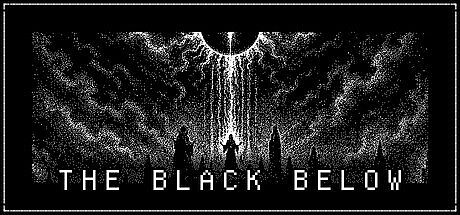


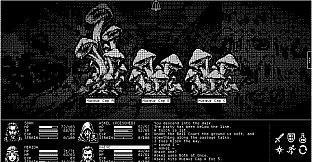
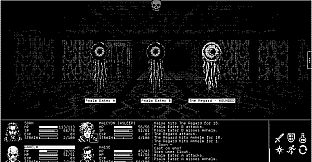
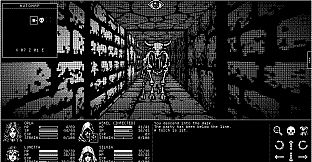
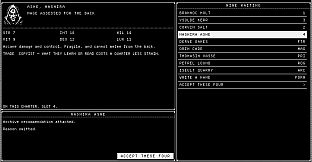
The Black Below is a first-person dungeon crawler RPG for PC that revives the grid-based exploration and deliberate pacing of 1990s classics while updating the presentation and systems for modern play. Players lead an expedition into a massive well beneath a city that depends on whatever resources emerge from its depths. The experience centers on uncovering mysteries across sixteen floors, managing a party under constant strain, and making choices that lead to one of five distinct endings.
Gameplay
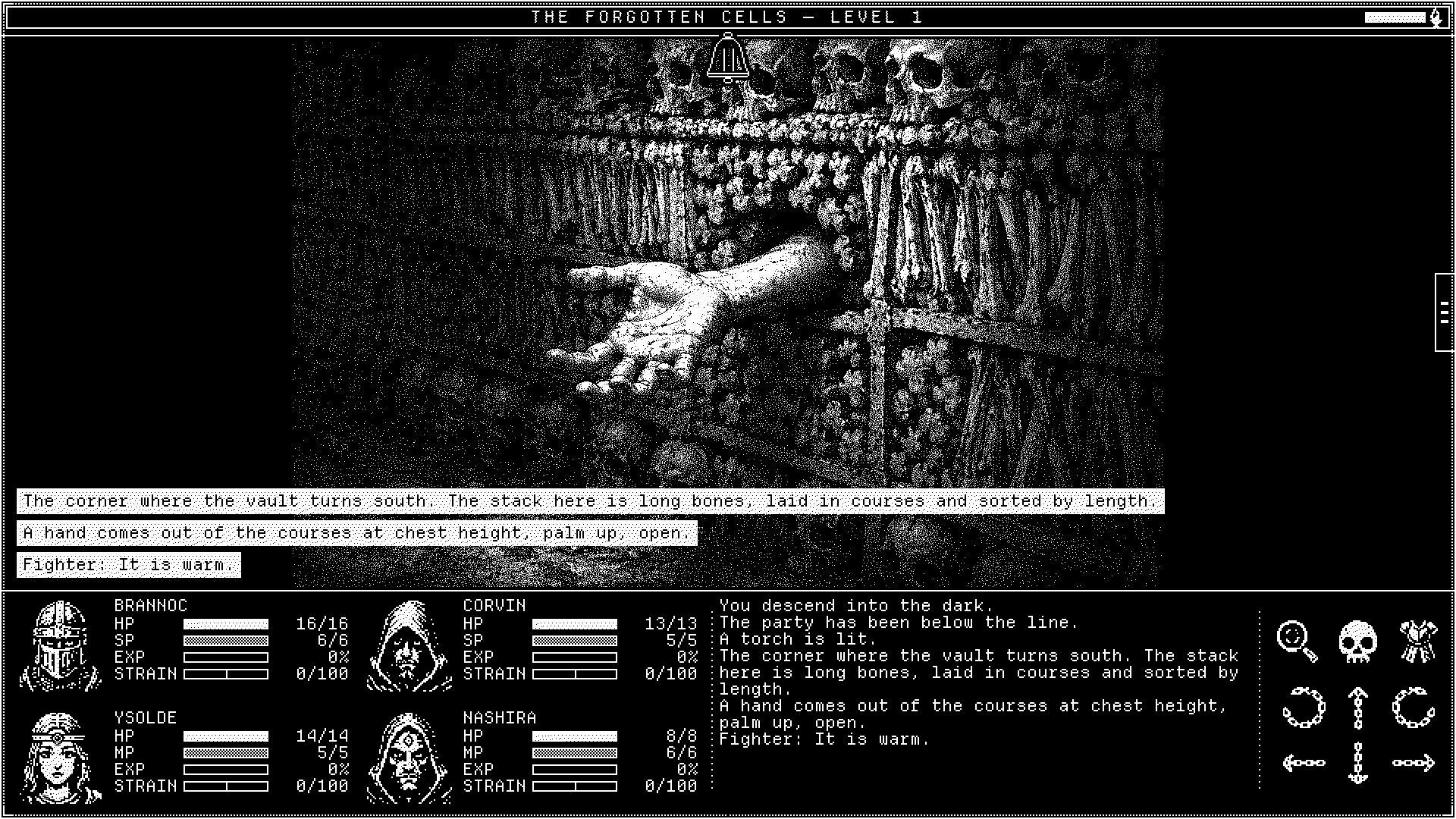
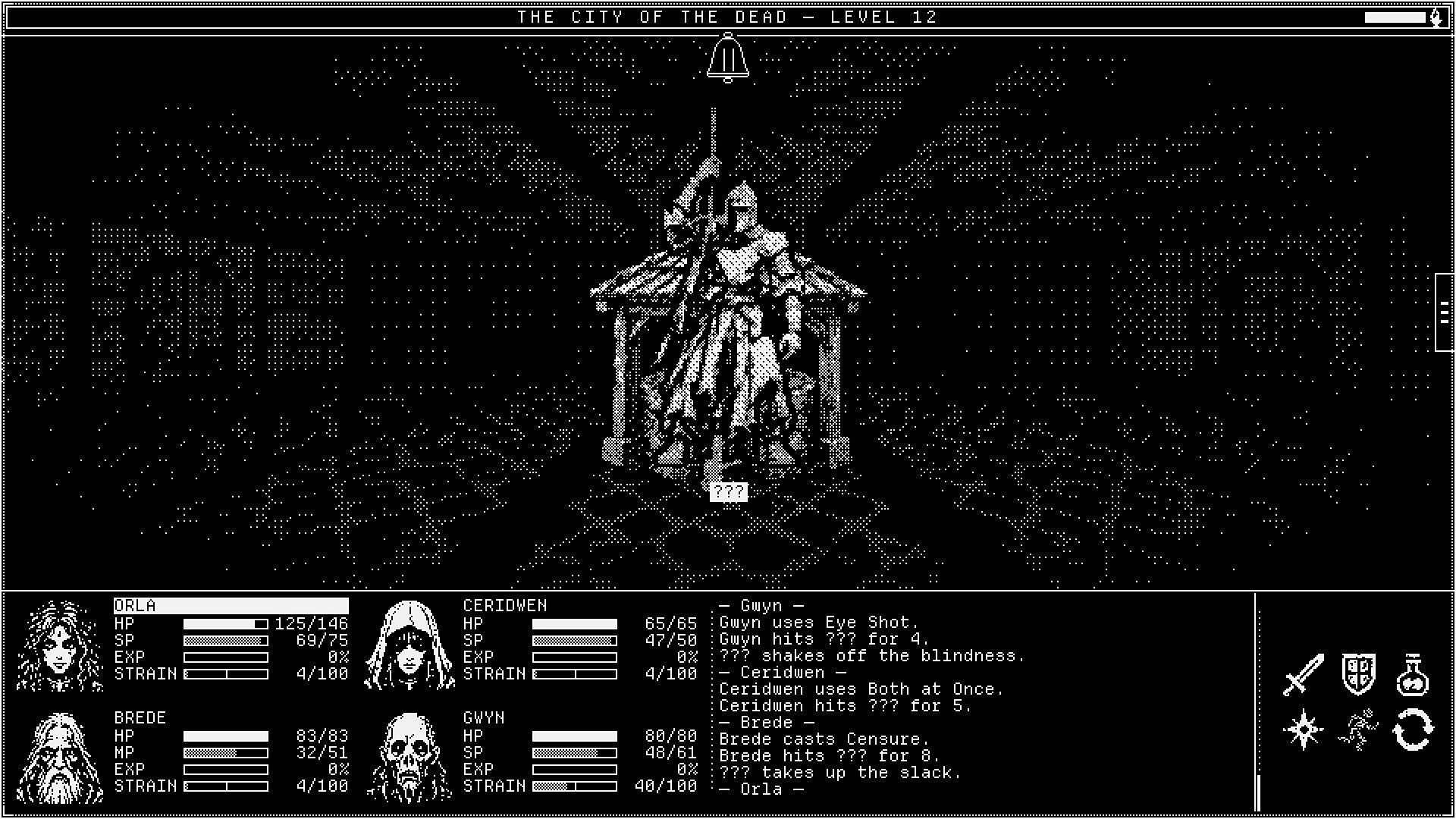
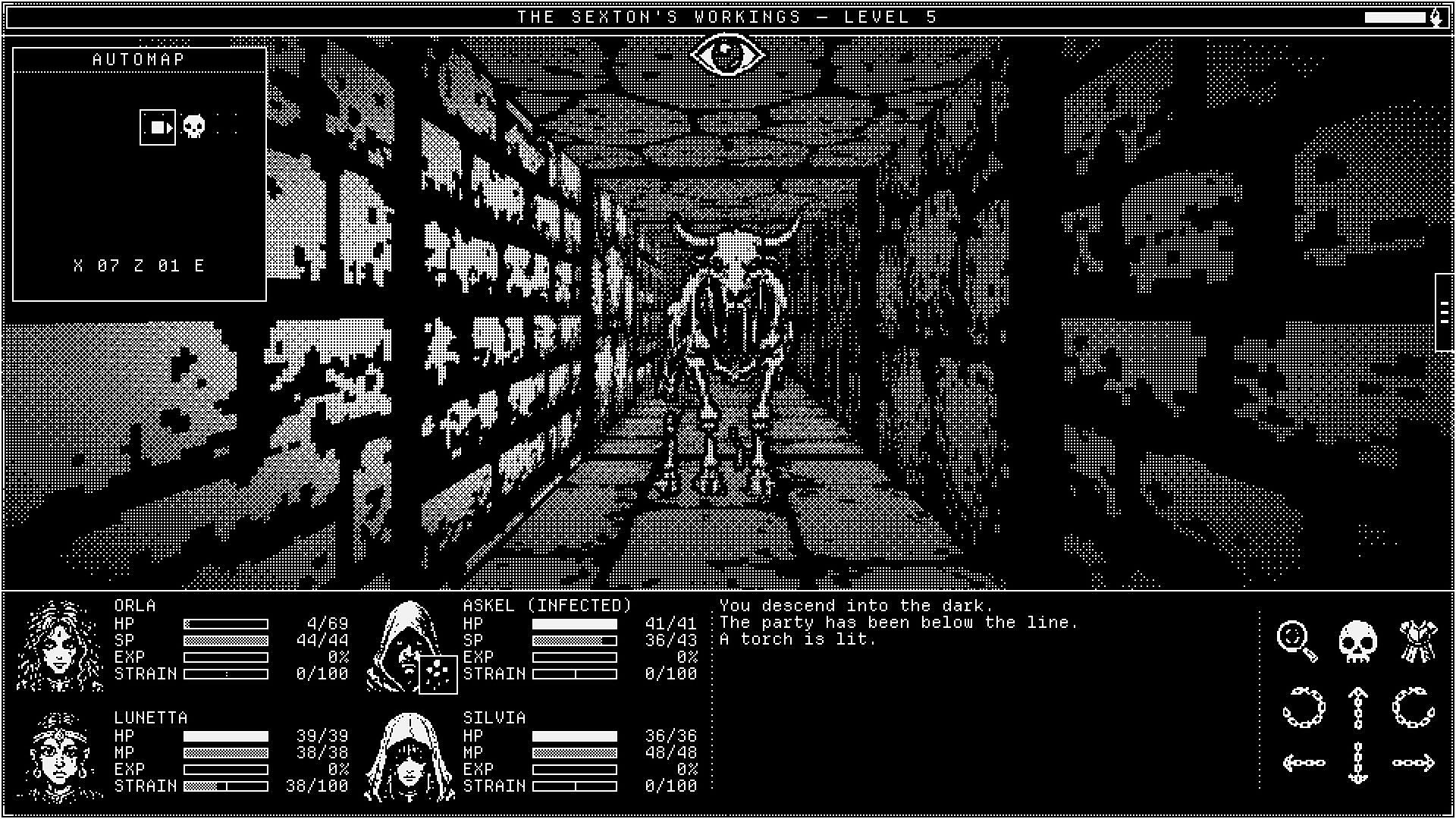
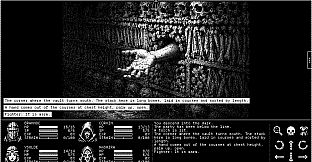
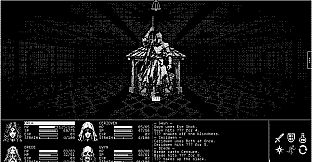
Exploration unfolds in real-time first-person perspective through fully realized 3D environments that receive a strict two-color ink-and-paper rendering pass. Corridors gain depth through lighting and shading, while torches cast actual reach. Movement follows classic grid rules, but the world feels tangible rather than abstract. The automap fills in as the party advances, and a journal tracks bestiary entries, quests, and an archive that updates with new evidence.
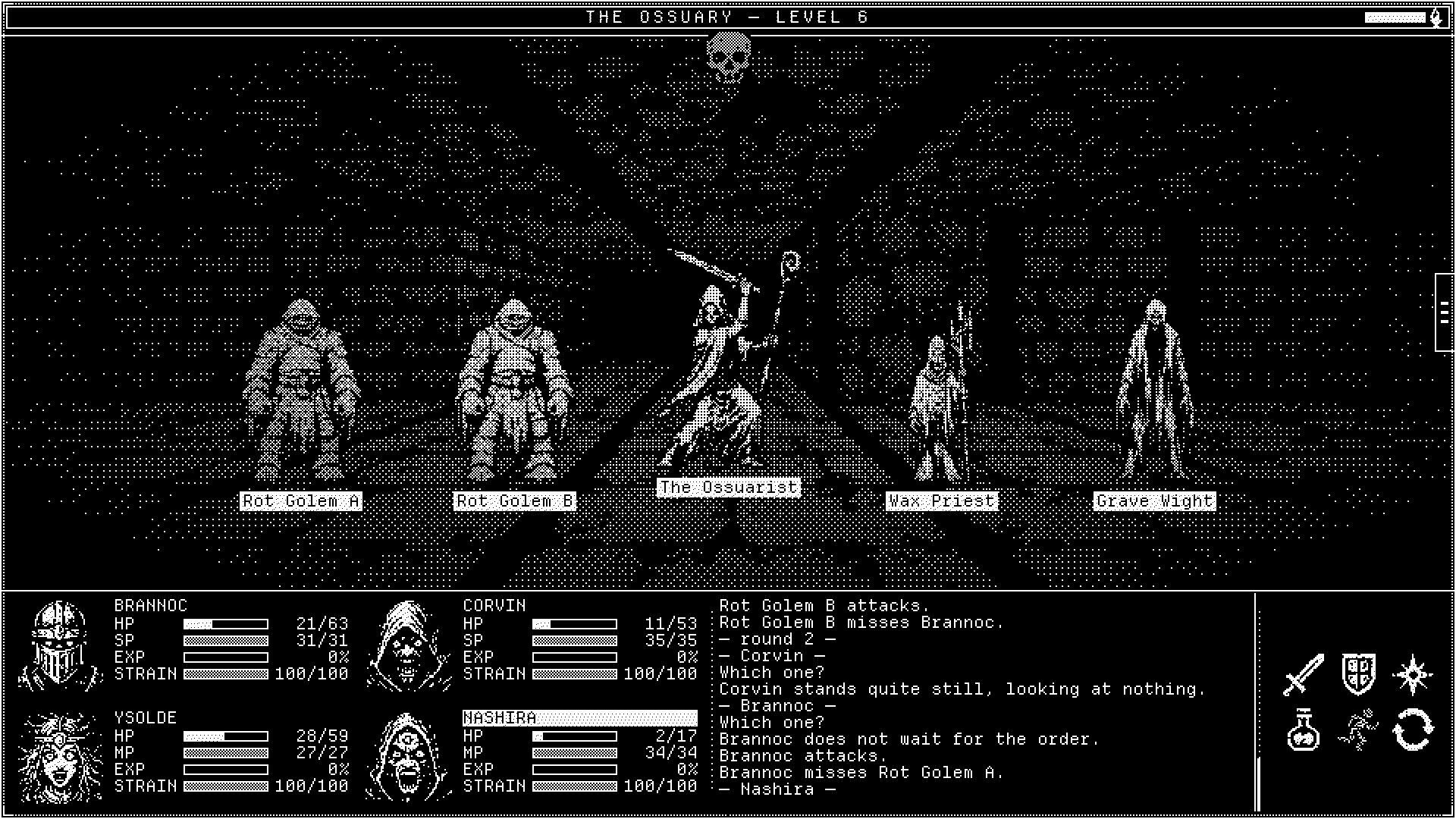
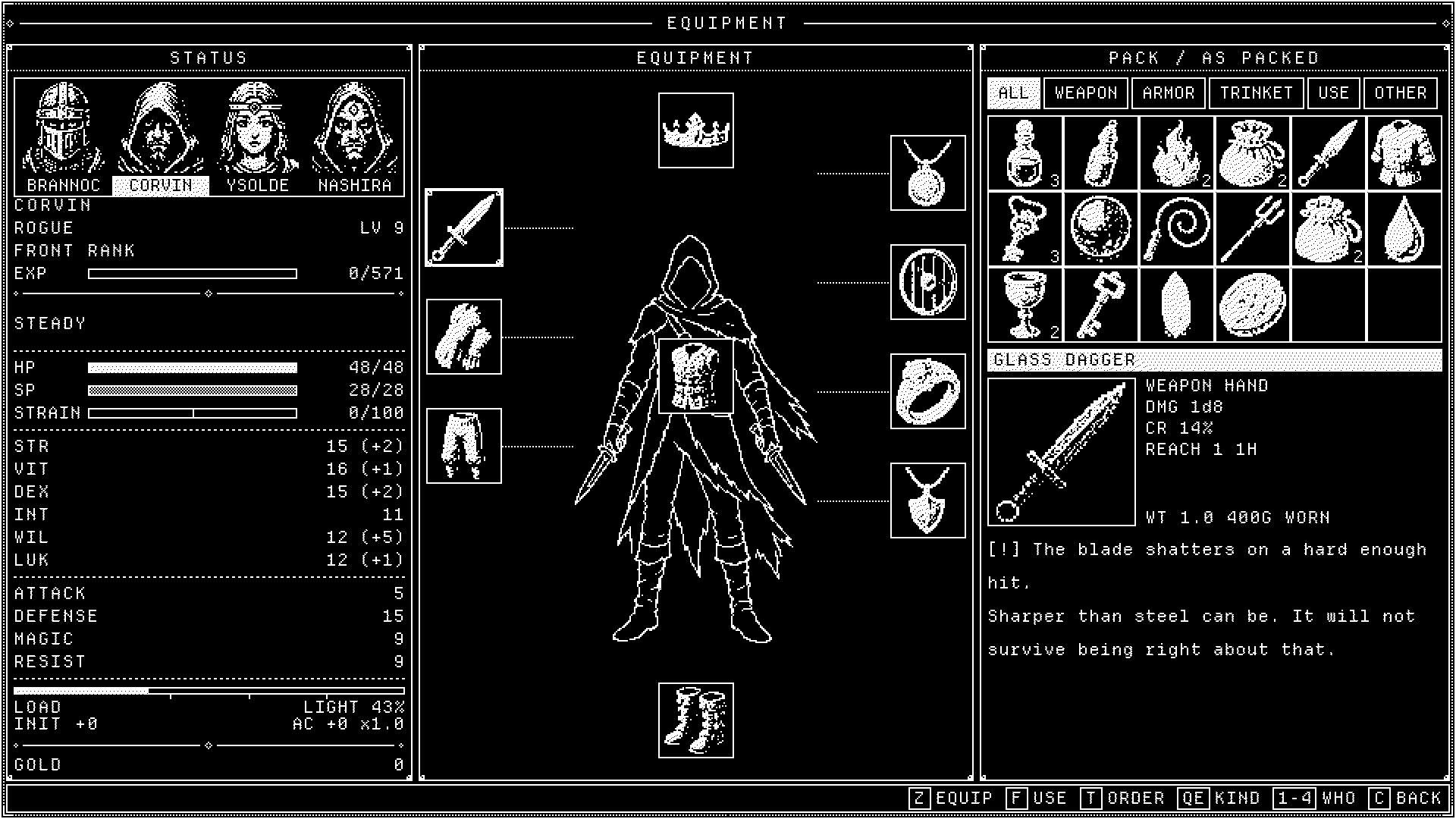
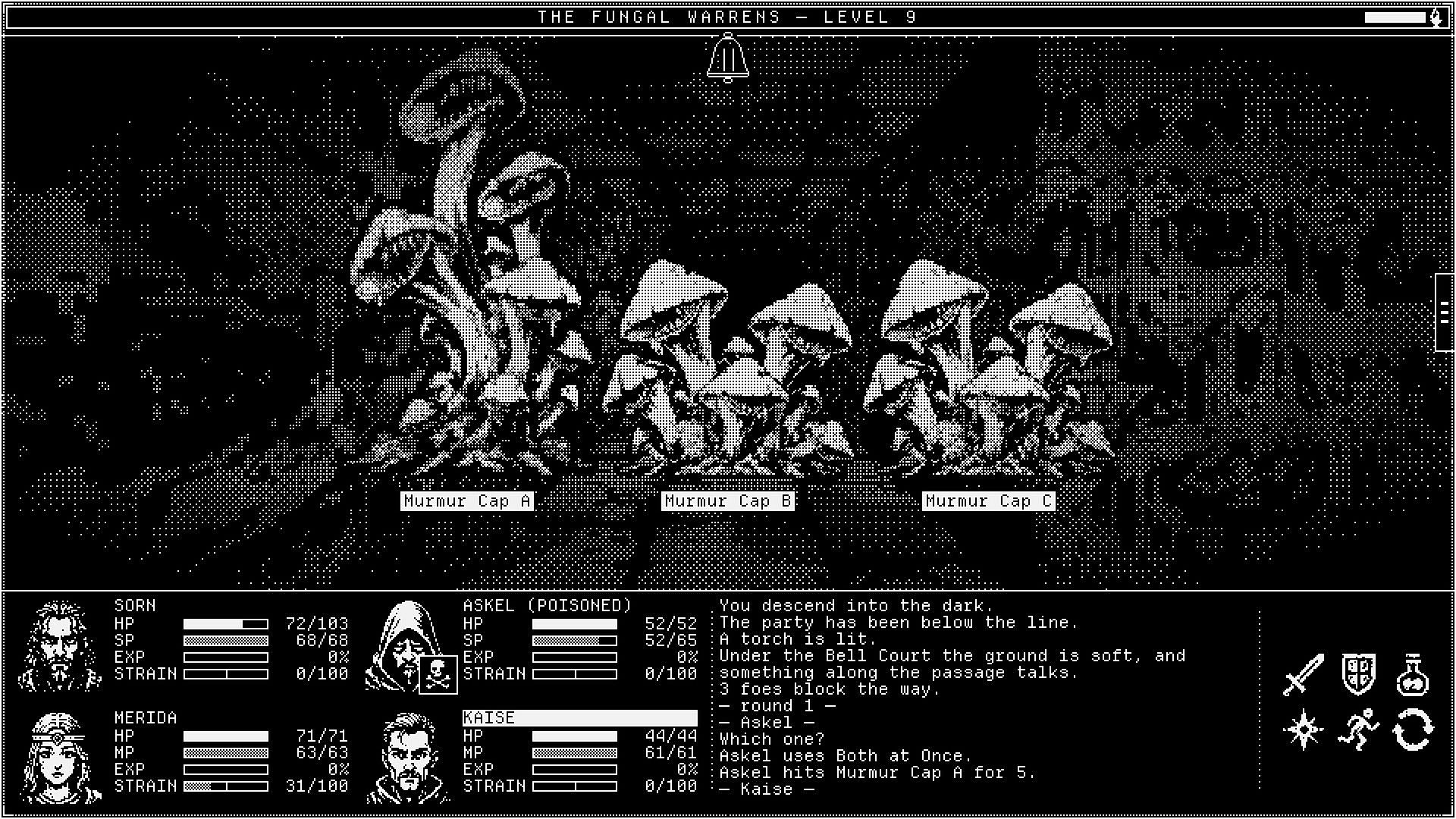
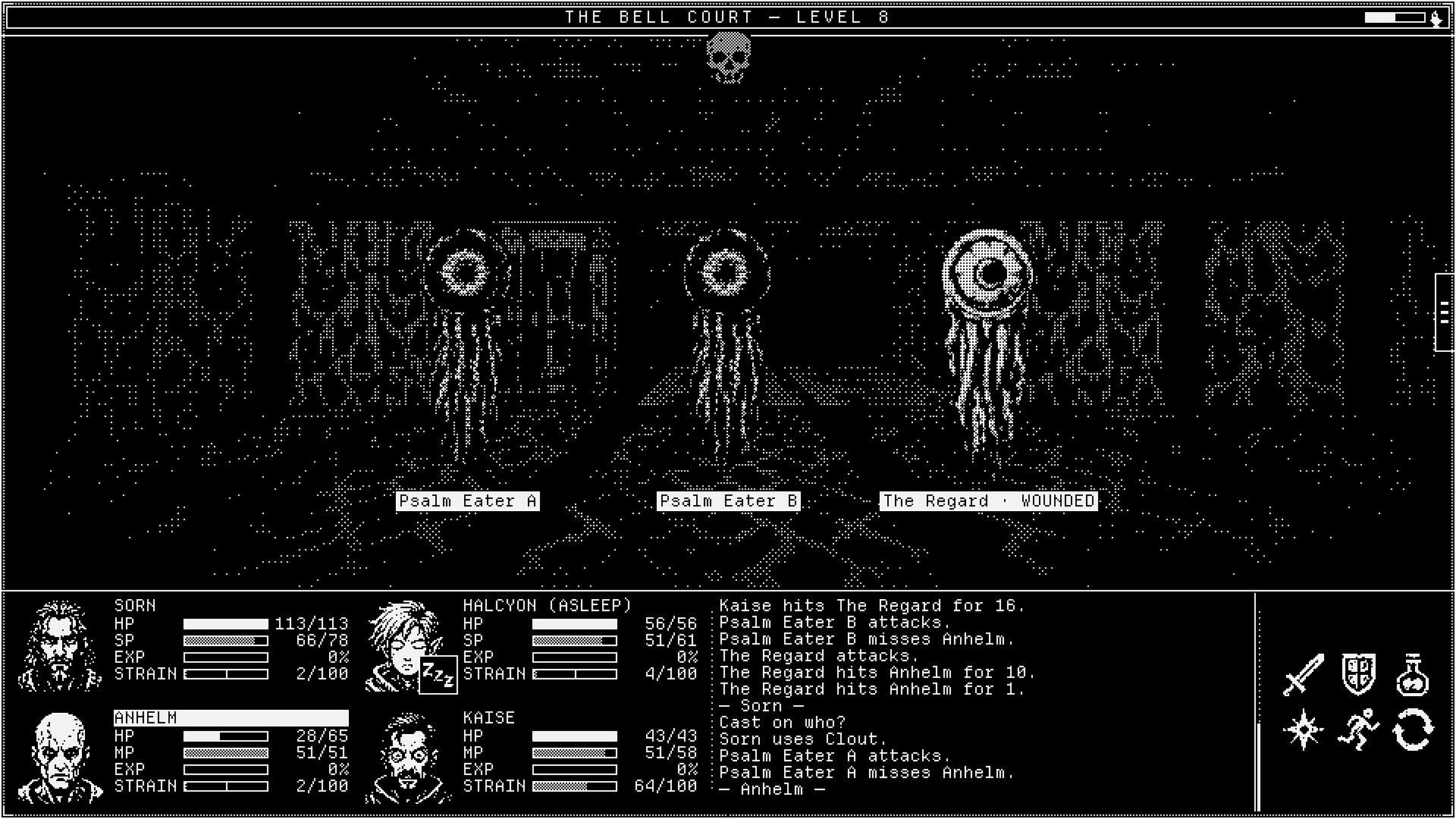
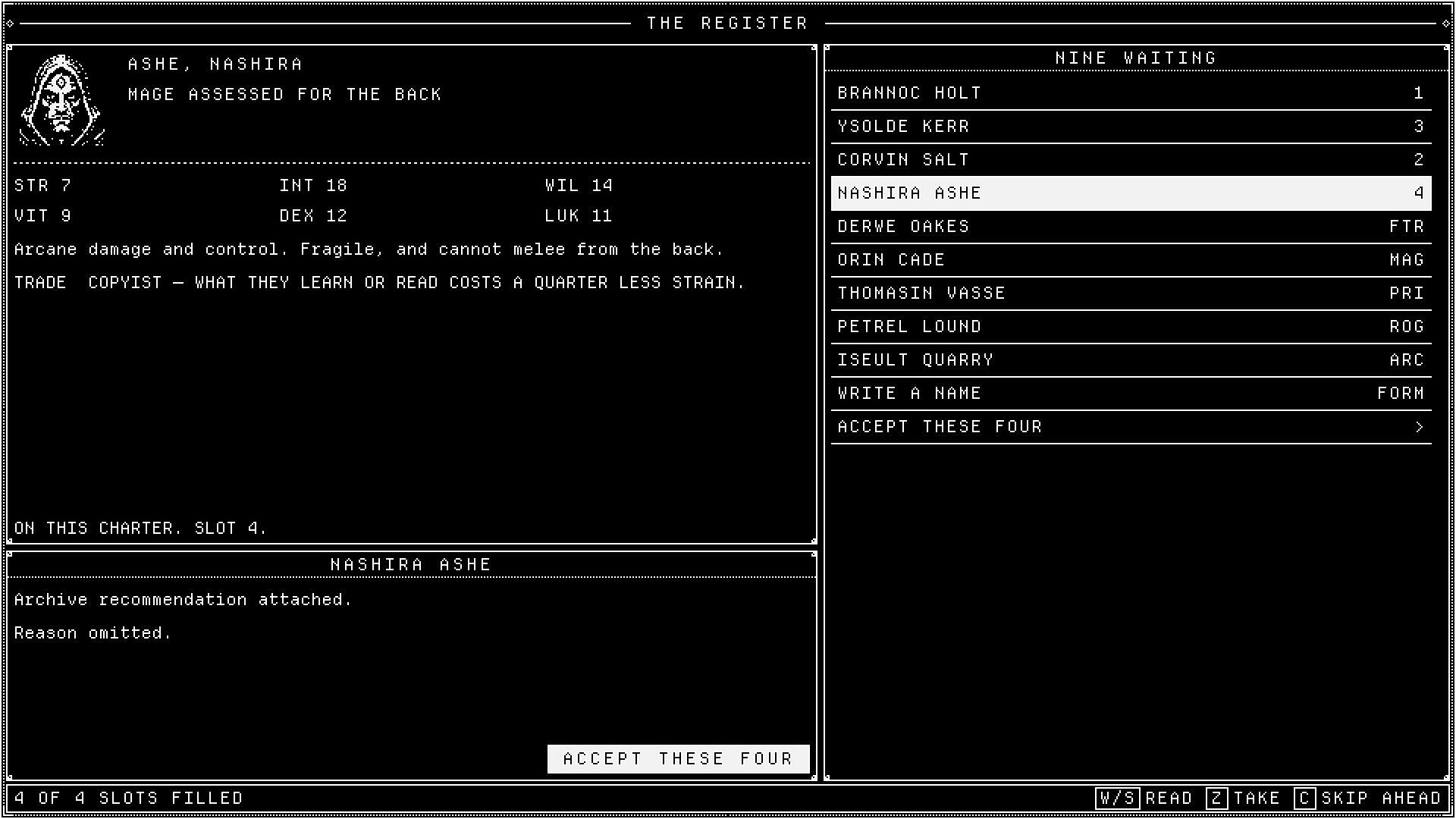
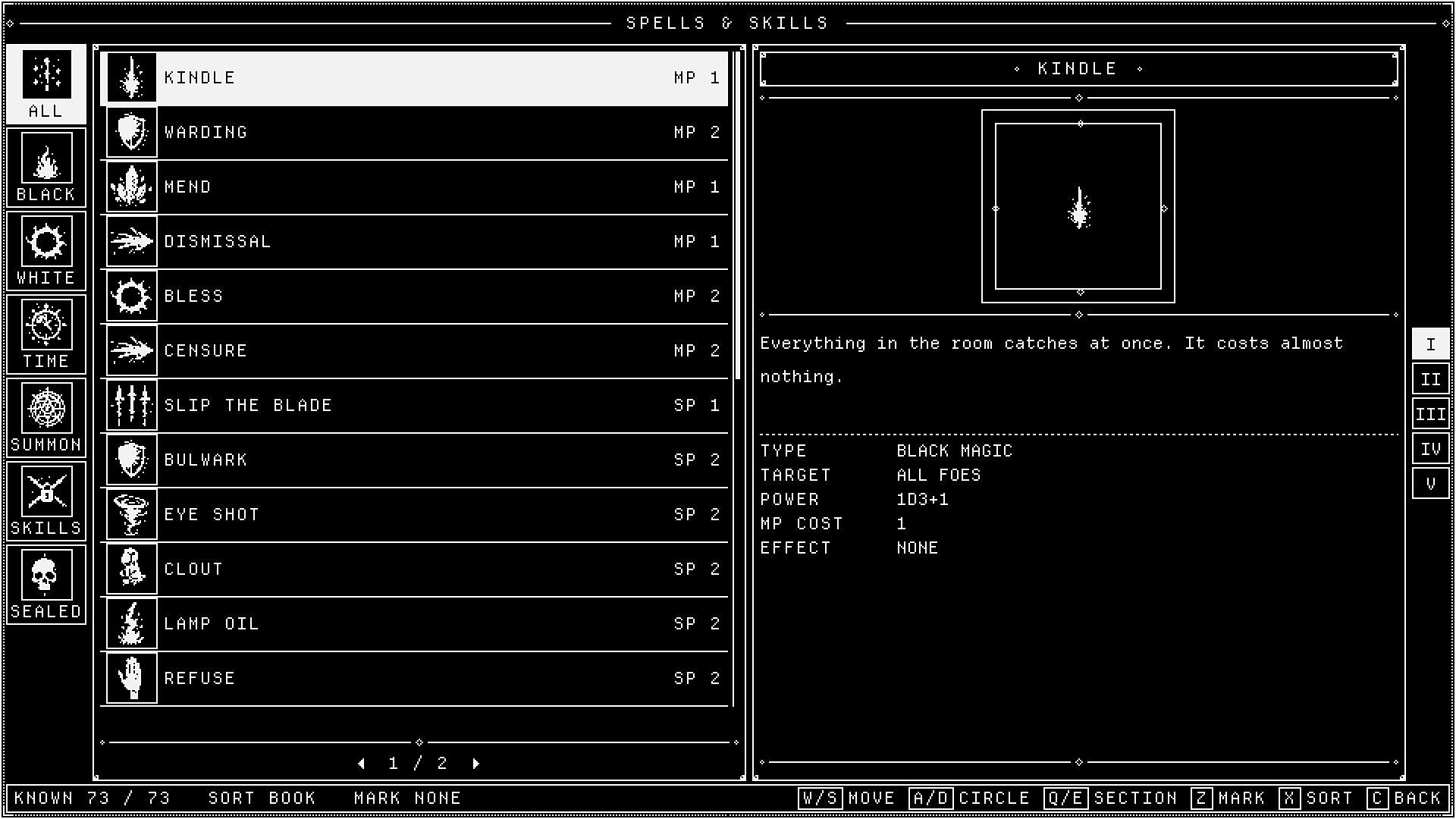
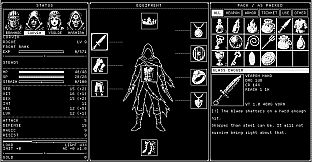
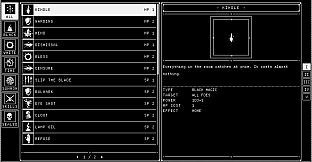
Combat and interaction stay impersonal and precise, with narration describing only what the party can observe. Items carry both benefits and drawbacks, forcing trade-offs rather than straightforward upgrades. Each of the five starting classes features its own skill tree, allowing different builds even within the same class. Procedural sound places every footstep, drip, and bell in accurate distance and direction, layered over a score of more than one hundred dungeon-synth tracks written for specific floors and encounters.
Party management introduces lasting consequences. A fallen character remains in the group as literal weight that must be carried or abandoned, and resurrection carries the risk of permanent change. Every character tracks a strain score that rises toward madness. At higher levels the screen distorts, the automap begins erasing known squares or inventing false doors, and hired characters may reveal hidden class identities over the course of a long run.
Game Modes
The game offers a single continuous campaign structured around repeated expeditions into the well. Each descent builds on prior discoveries, with risk-versus-reward decisions at every turn. There are no separate multiplayer or competitive modes; the focus remains on solo play where the player controls the entire party and interprets the accumulating clues without external guidance.
Progression rewards careful observation and repeated attempts. New evidence revises the archive, sometimes contradicting earlier entries, and the city above continues to operate on resources pulled from below. The structure encourages multiple runs to reach different endings rather than offering branching side modes.
Setting and Atmosphere
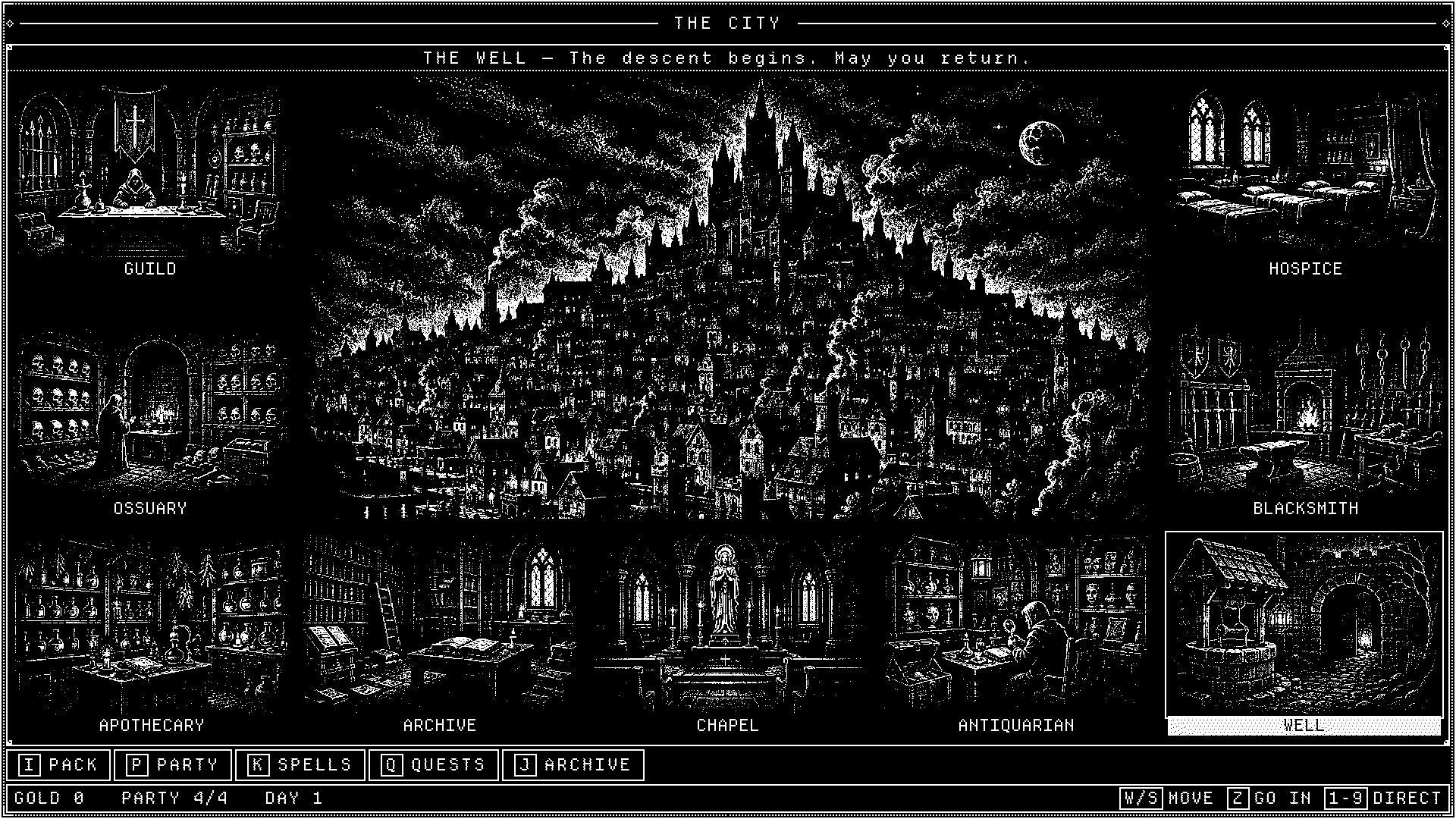
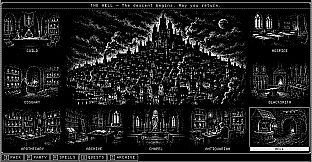
The city exists in symbiosis with the well, treating it as mine, pharmacy, and reliquary. Expeditions operate under guild charters, and the remains of previous parties still lie below. The setting avoids traditional fantasy tropes in favor of postmodern uncertainty: a census that does not add up, a campsite with mismatched bedrolls, and an archive that rewrites itself. These details appear without immediate explanation, leaving interpretation to the player.
Non-photorealistic rendering keeps the entire scene in exactly two colors with no gray values or scaling artifacts. Creatures occasionally break the rules individually, inverting, smearing, or duplicating while the rest of the world adheres to the contract. Sound design follows the same synthesized approach, ensuring every element reacts to position and distance in the dark.
Is It Worth Playing?
The Black Below targets players who enjoy methodical dungeon crawling, persistent consequences, and narrative ambiguity. Its mechanics turn classic frustrations into meaningful systems: death does not reset progress entirely, yet carries forward as burden and potential future threat. Madness effects alter core tools like the automap in ways that force adaptation rather than frustration for its own sake.
Those drawn to 1990s-style first-person RPGs with modern visual and audio polish will find the deliberate pace and layered mysteries rewarding. The game remains in pre-release development with a Steam launch expected soon, so current information rests on the detailed mechanics already confirmed. It suits anyone prepared for repeated expeditions where each attempt reveals more about both the dungeon and the party's changing state.