

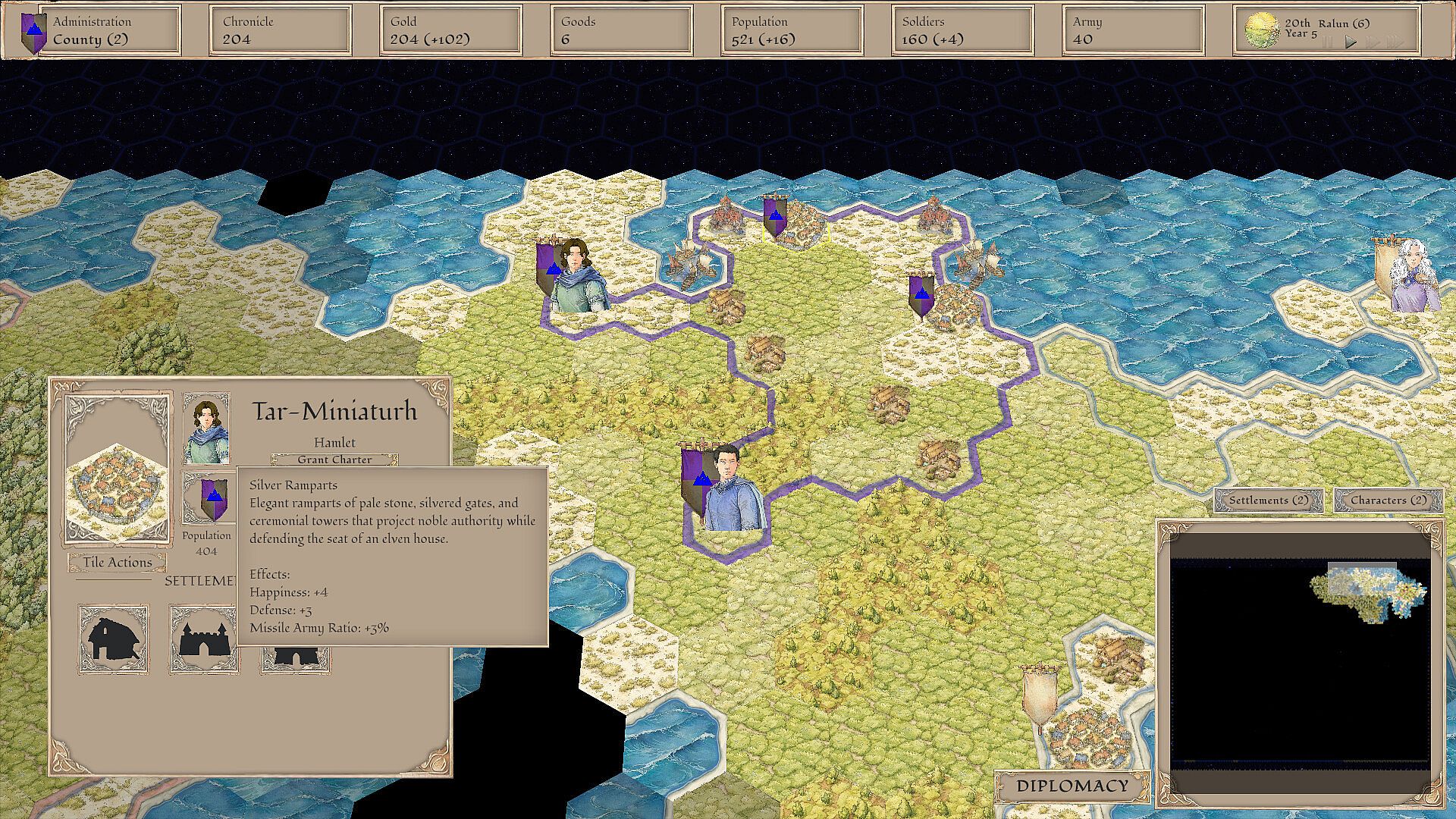
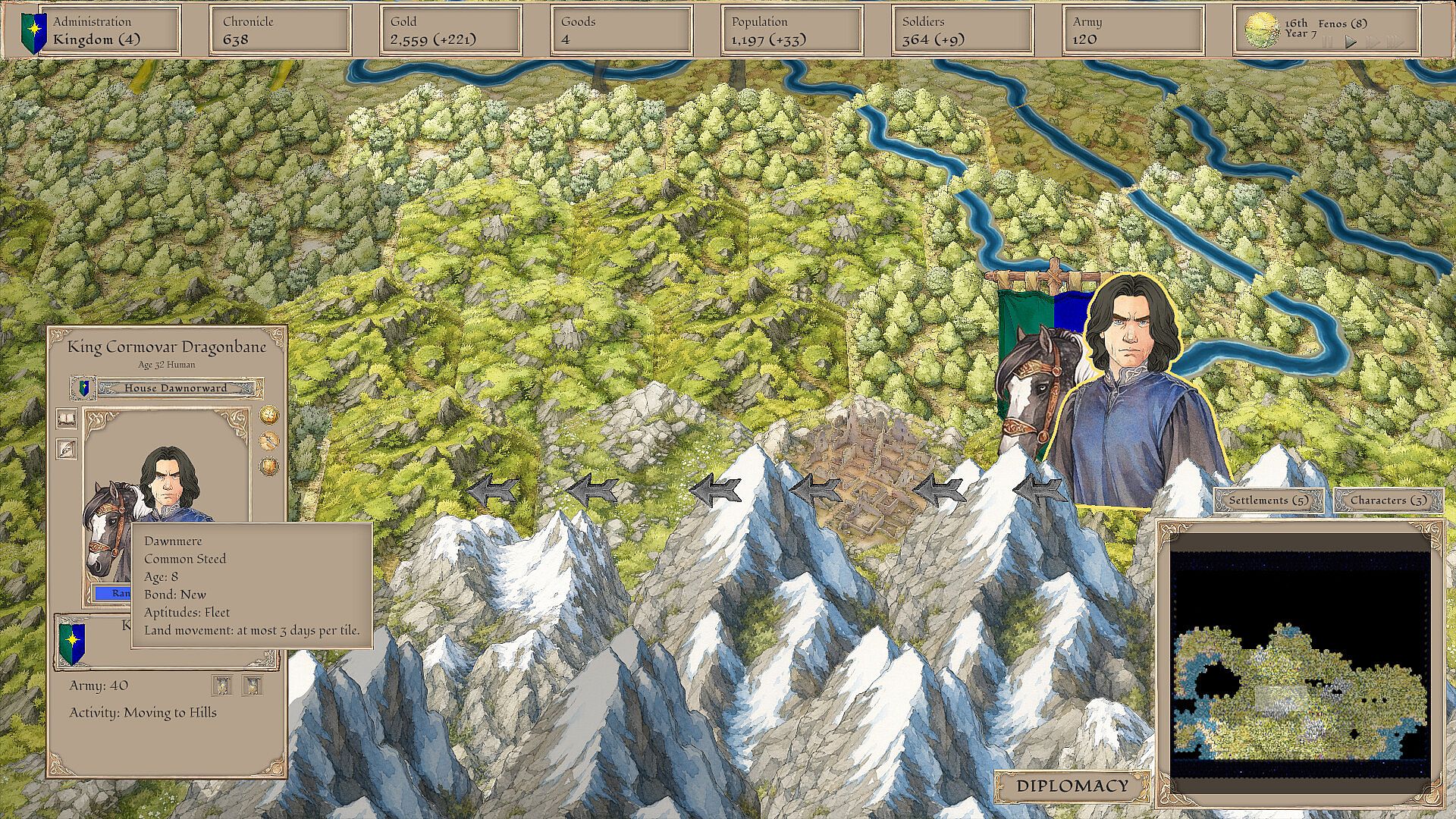
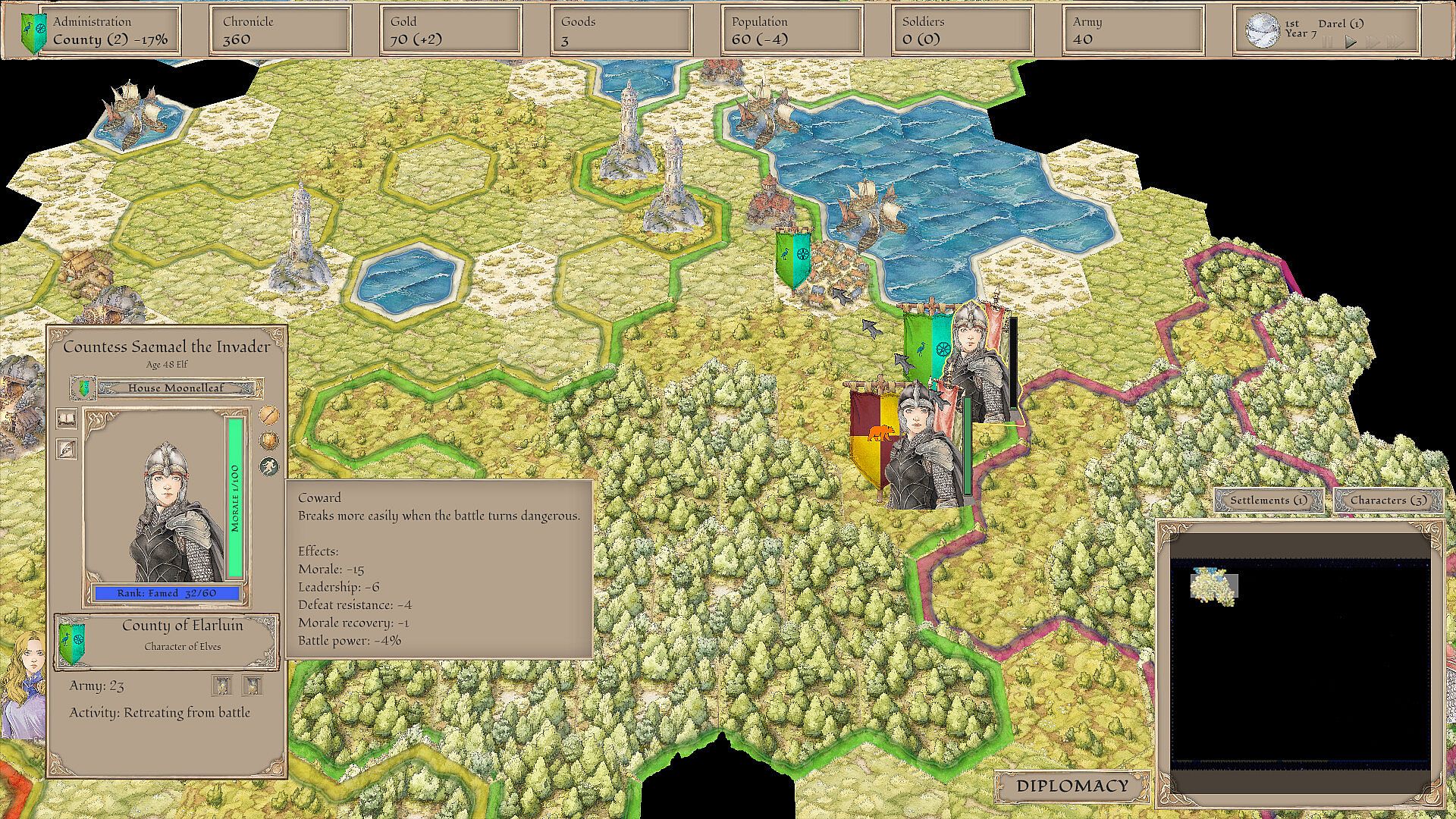
The Fallen Chronicles is a single-player strategy RPG with simulation and adventure elements set on PC. Players take control of a fledgling realm in a procedurally generated fantasy world, where the focus rests on expansion, character development, and long-term decision making that shapes an ongoing chronicle of events.
Gameplay
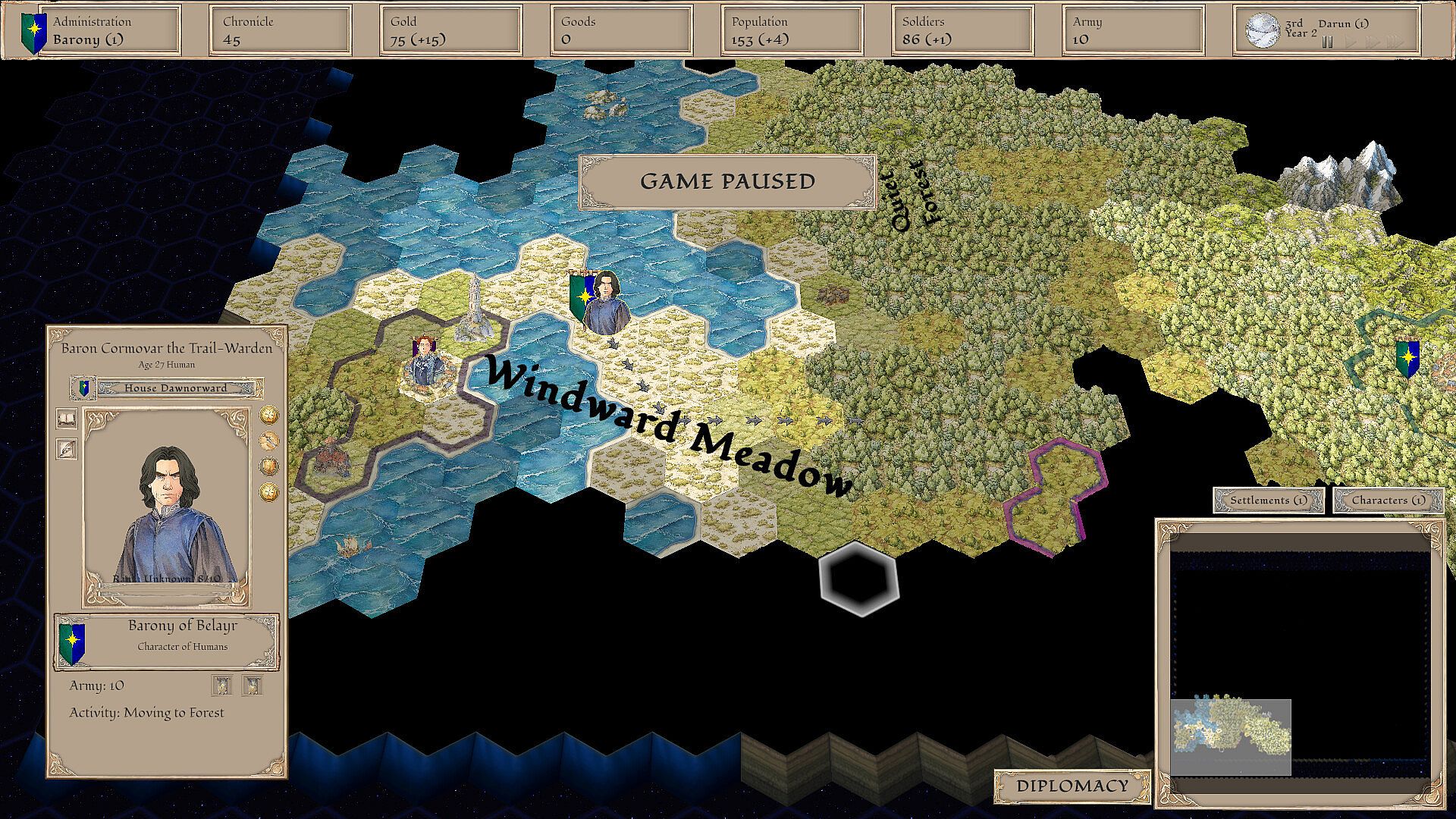
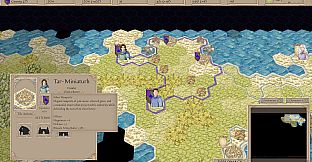
Core play revolves around starting small and scaling a domain through exploration and resource management. Provinces feature varied terrain that influences available resources and building options, requiring careful expansion to avoid overextension. Settlements grow via construction projects, population oversight, and economic balancing of gold and goods, while soldiers are raised to secure borders against emerging threats.
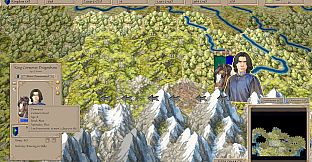
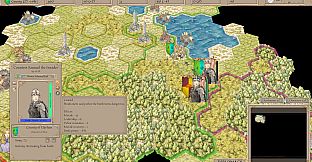
Characters serve as the primary agents of the realm. Rulers, nobles, officers, and adventurers receive assignments to scout new areas, administer provinces, command forces, or pursue investigations. Each individual accumulates personal history through traits, renown, interpersonal ties, injuries, and other outcomes tied directly to choices made during events. These changes persist and affect future performance, creating branching paths for individual stories within the broader realm narrative.
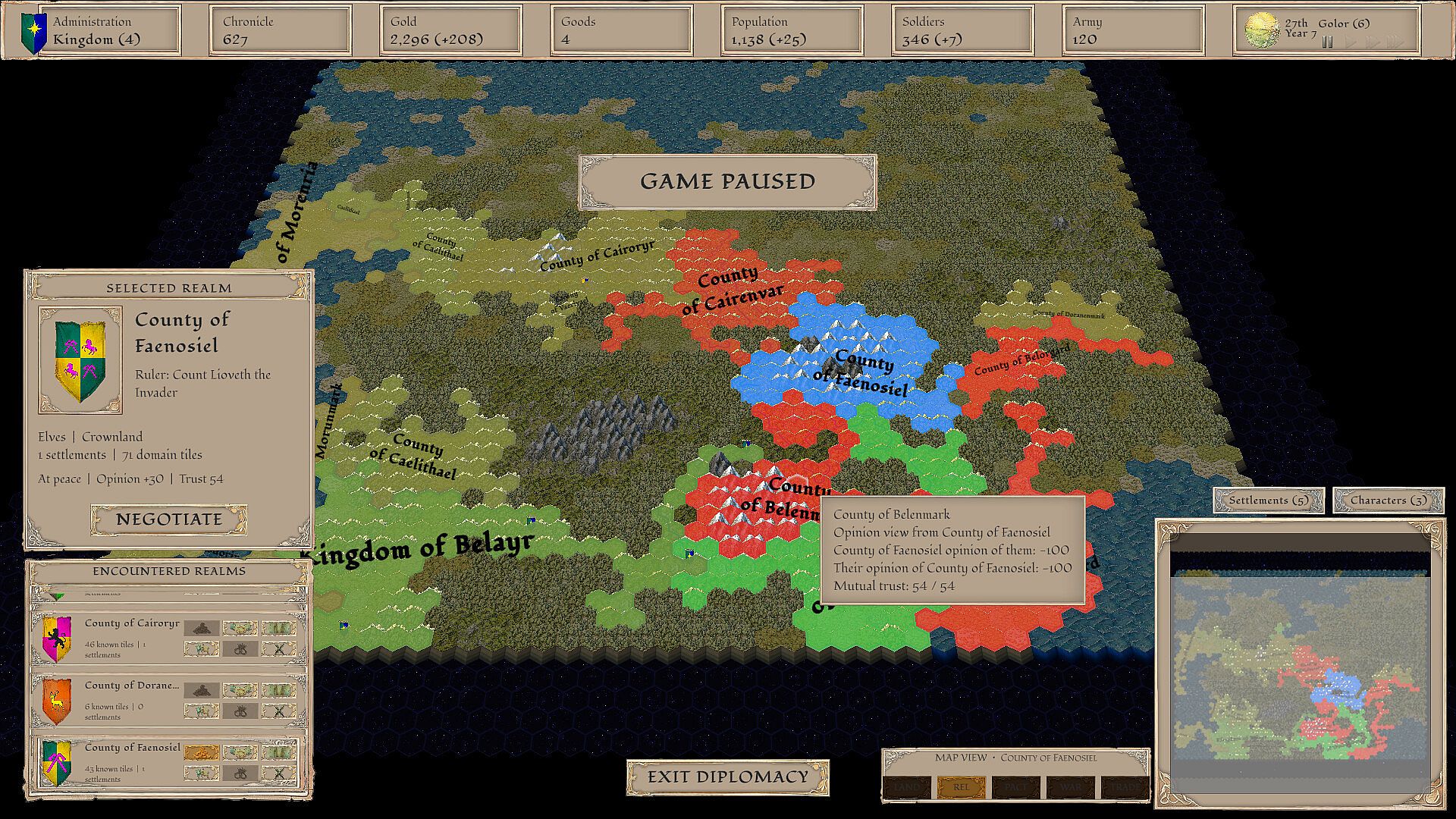
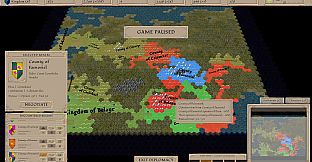
Diplomacy and conflict add layers to realm management. Interactions with neighboring factions range from trade agreements and gift exchanges to treaty negotiations or open warfare. Rival groups follow their own goals, which can lead to shifting relationships that either stabilize or destabilize the region over time.
Game Modes
The experience centers on a continuous single-player campaign without separate competitive or cooperative modes. Progression unfolds across in-game years marked by changing ages, each introducing new opportunities alongside escalating challenges such as monsters or environmental hazards. Players direct the realm through a combination of settlement development, character-led expeditions, and reactive events rather than structured matchmaking or team-based formats.
Quests and random occurrences provide focused objectives that integrate with the larger simulation. These present decision points capable of granting rewards, imposing lasting effects on characters, or redirecting the trajectory of the entire domain. The absence of predefined victory conditions allows for open-ended play focused on prosperity, conquest, or simple endurance across generations of rulers.
World and Systems
The procedurally generated setting ensures each run begins with unique geography and resource distributions. Ancient ruins, towers, and other sites of interest appear scattered across the map, serving as sources for quests that tie into character growth and realm events. As time advances, new ages alter the balance of threats and possibilities, encouraging adaptive strategies rather than static builds.
Population loyalty and happiness function as key metrics alongside military strength. Larger territories demand more sophisticated governance to prevent internal decline, while external pressures from rival factions test defensive and diplomatic capabilities. The interplay between personal character arcs and collective realm outcomes forms the central tension of play.
Is It Worth Playing?
The game remains unreleased with a to-be-announced date and currently carries no user reviews. Its design targets those interested in grand strategy combined with persistent character progression and simulation depth. The single-player structure emphasizes thoughtful pacing over fast action, rewarding players who enjoy managing interconnected systems of economy, diplomacy, exploration, and narrative consequences.
Those drawn to titles where individual decisions compound into dynastic legacies may find the approach compelling once available. The emphasis on procedural worlds and event-driven storytelling supports replayability through varied starting conditions and evolving faction dynamics, though the final balance and scope will depend on post-launch updates from the solo developer.