

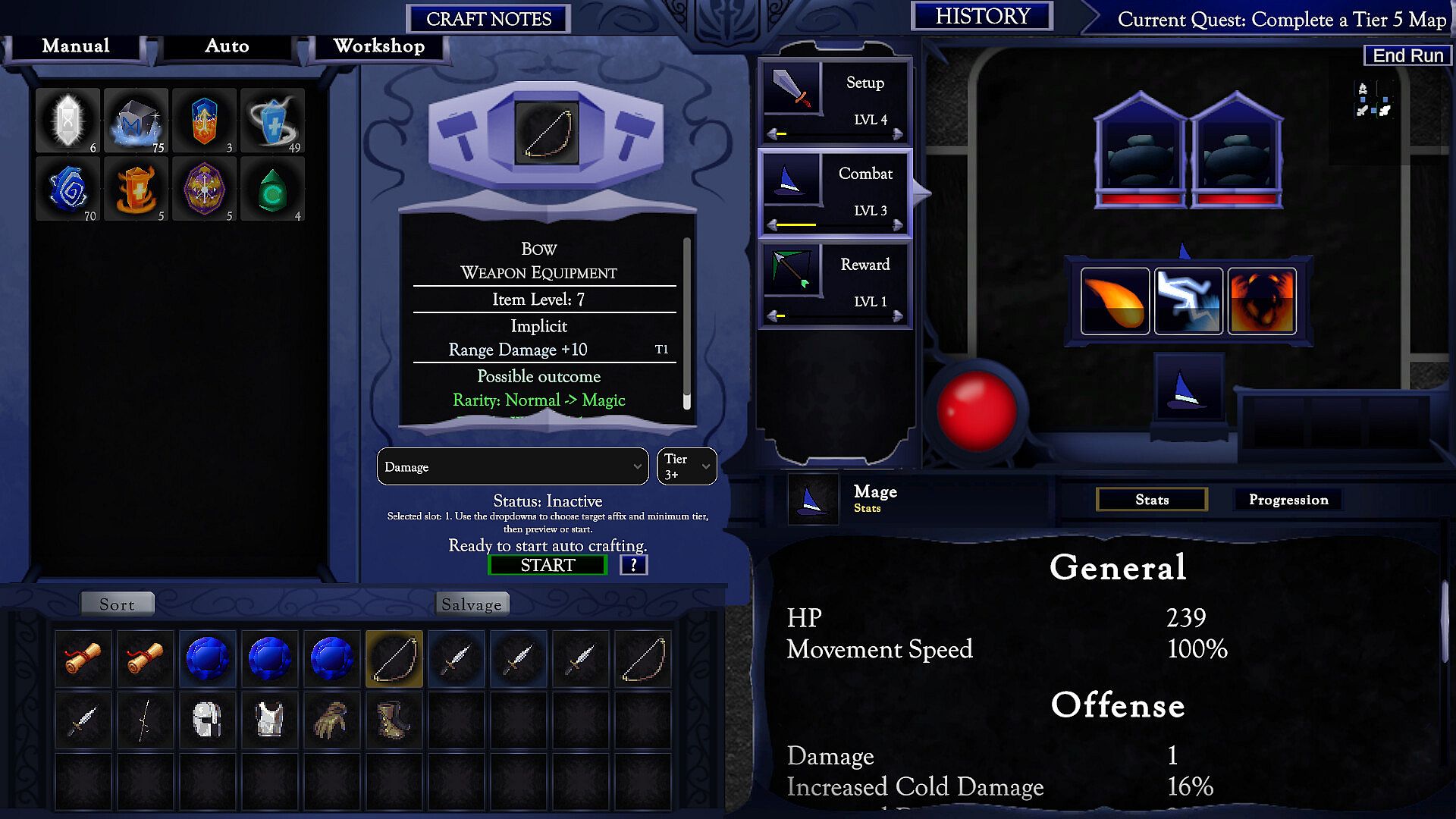
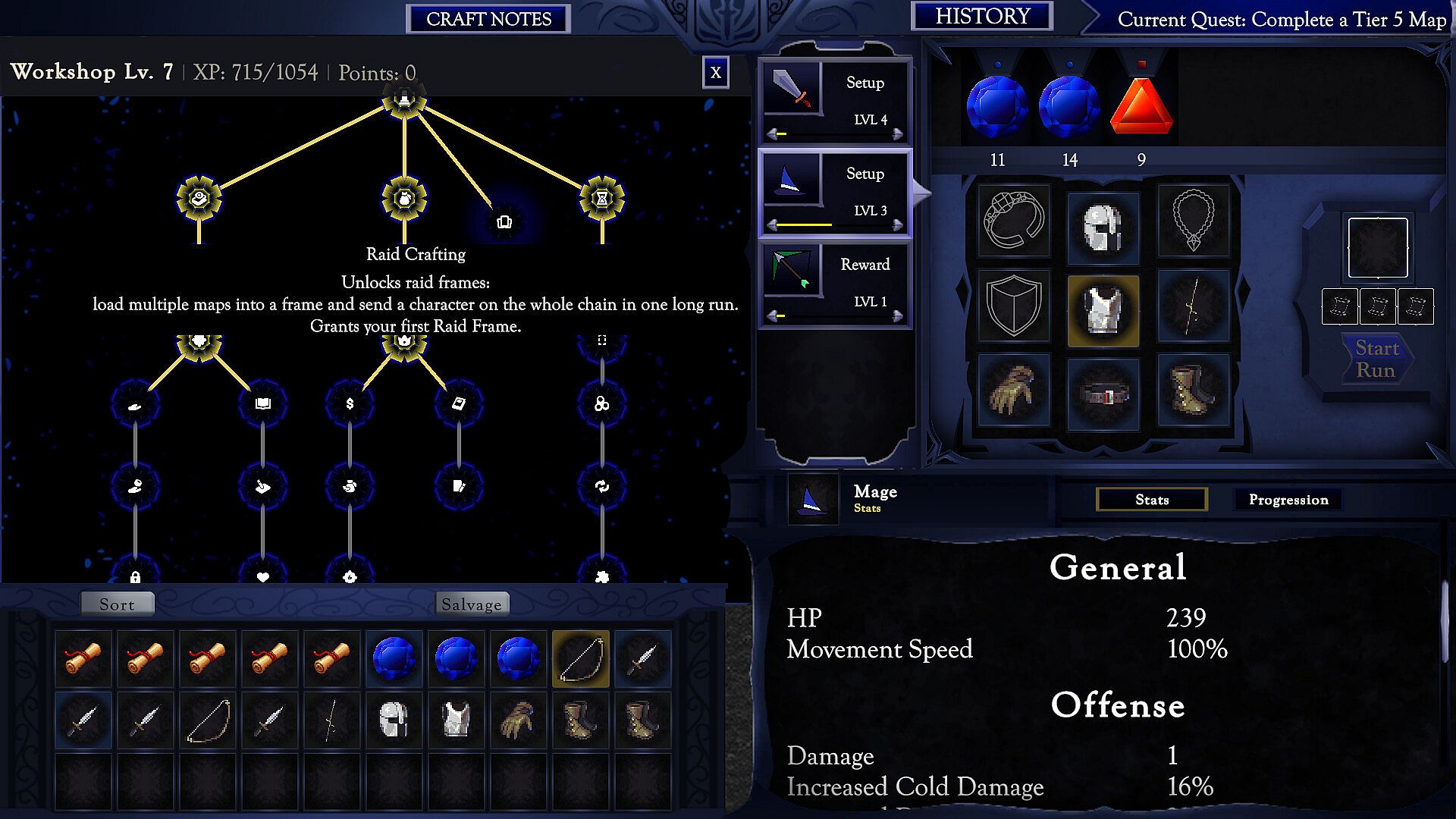
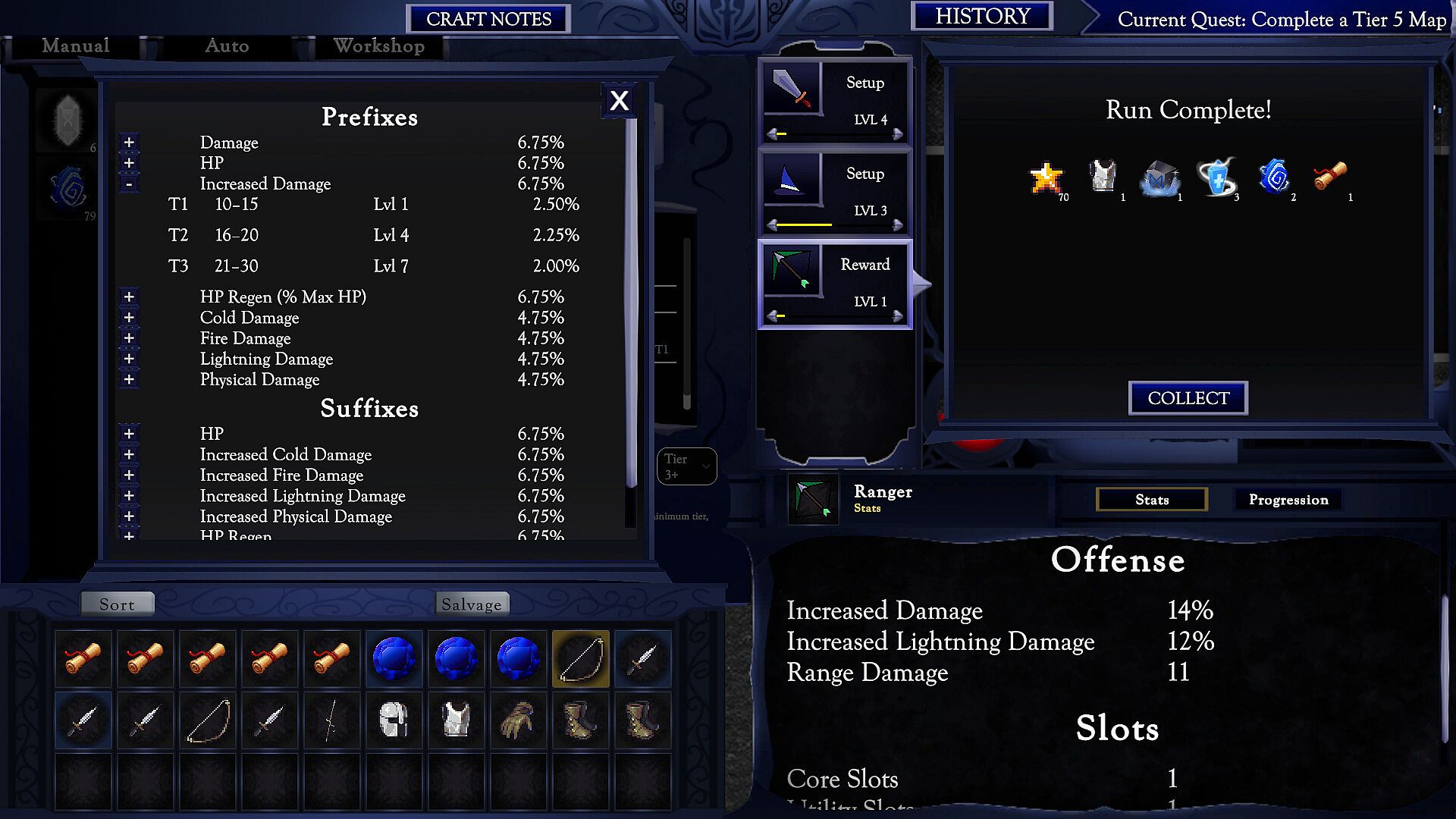
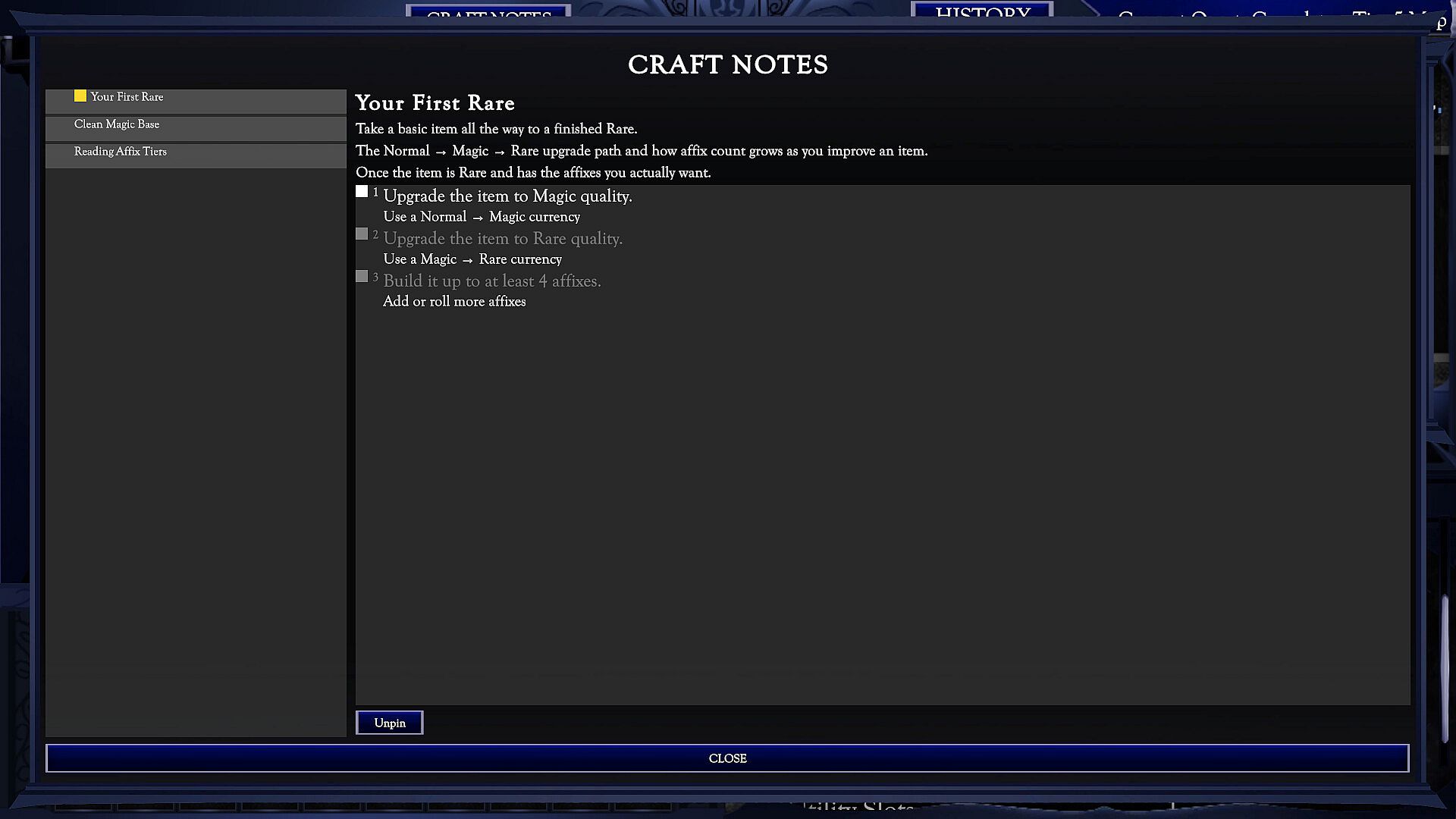
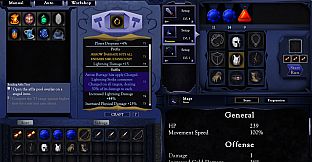
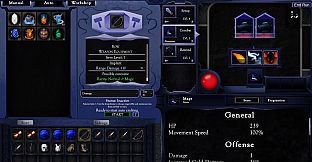
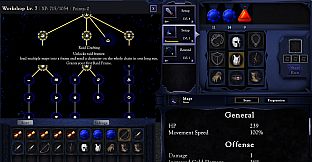
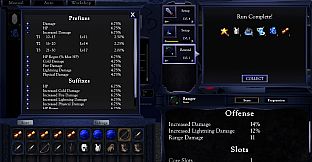
The Last Foundry is a crafting-first auto-ARPG developed for PC. In this role-playing game, players focus entirely on the workbench rather than direct combat. Adventurers handle the fighting in generated maps while the player crafts every piece of gear, skill item, and map modifier that shapes those runs.
Gameplay
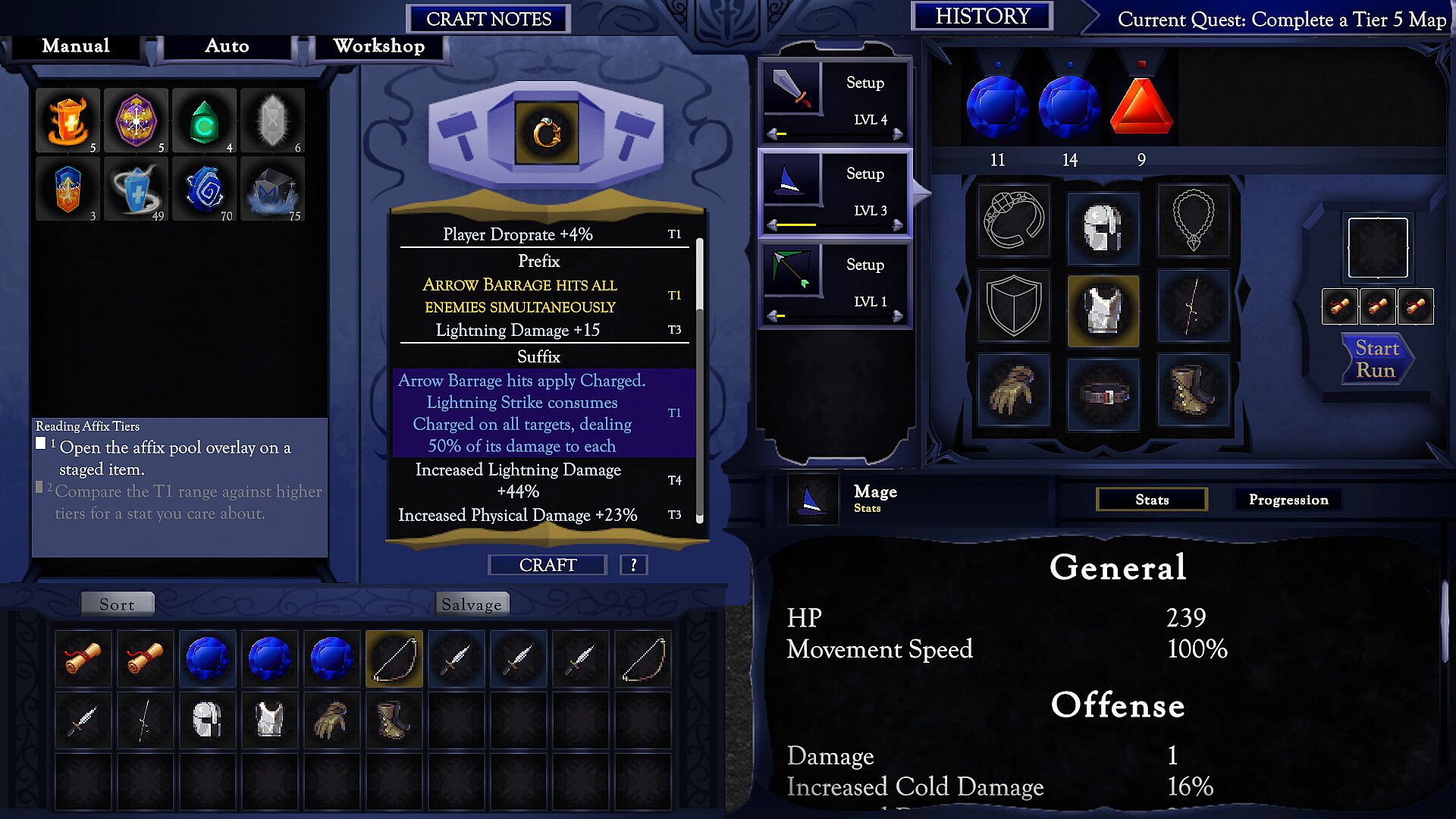
Core play centers on assembling a roster of adventurers and outfitting them through targeted crafting. Each item features implicits along with tiered prefixes and suffixes. Players inspect full affix pools before committing resources, then upgrade rarity step by step to chase precise modifiers. Skill-altering affixes allow the same ability to support entirely different playstyles across the roster.
Workshop progression splits across three paths: Precision improves crafting odds, Fortune boosts luck on rolls, and Automation handles repetitive tasks. These choices define the workshop identity and influence every item produced. Auto-crafting rules let players set target affixes and minimum tiers, stage materials, and run the system while planning the next build. Manual intervention remains available for critical rolls.
Maps themselves are crafted and modified with authored problems. Players prepare the roster for specific challenges or accept higher risk for greater rewards. When runs conclude, loot returns for sorting and staging. The cycle repeats as players refine equipment, skill items, and maps to push higher tiers and better affixes.
Game Modes
The experience revolves around autonomous adventurer runs that generate encounters and collect drops without player input during combat. All decision-making occurs at the crafting stage, where builds are assembled and maps are prepared. This structure removes traditional grinding and places emphasis on strategic item creation and roster configuration.
Progression occurs through repeated loops of sending teams out, processing returns, upgrading gear and maps, then reconfiguring for tougher content. No separate competitive or story-driven modes appear in the current description. The single-player focus stays on iterative crafting and optimization within the core loop.
Crafting Systems
Items carry layered modifiers that players can inspect and pursue deliberately. Prefixes and suffixes roll in tiers, and rarity upgrades open access to stronger options. Skill items receive the same treatment, allowing affixes to reshape ability behavior rather than simply increasing damage output.
Materials are managed through staging and automation rules. Players define what the workshop produces in the background while they focus on high-value manual crafts. This separation keeps the repetitive elements automated without removing control over key decisions.
Is It Worth Playing?
The Last Foundry suits players who enjoy deep crafting systems and build experimentation without performing combat themselves. The autonomous run structure shifts focus to preparation and optimization at the anvil. Because the game remains in active development, visuals, UI elements, and features continue to evolve ahead of release.
Those seeking traditional action-RPG combat or direct control over every encounter may find the hands-off approach less engaging. The emphasis on precise affix hunting and workshop specialization rewards methodical planning and repeated refinement of the roster and maps. Current information positions the title as an early-access style project with ongoing changes expected.