







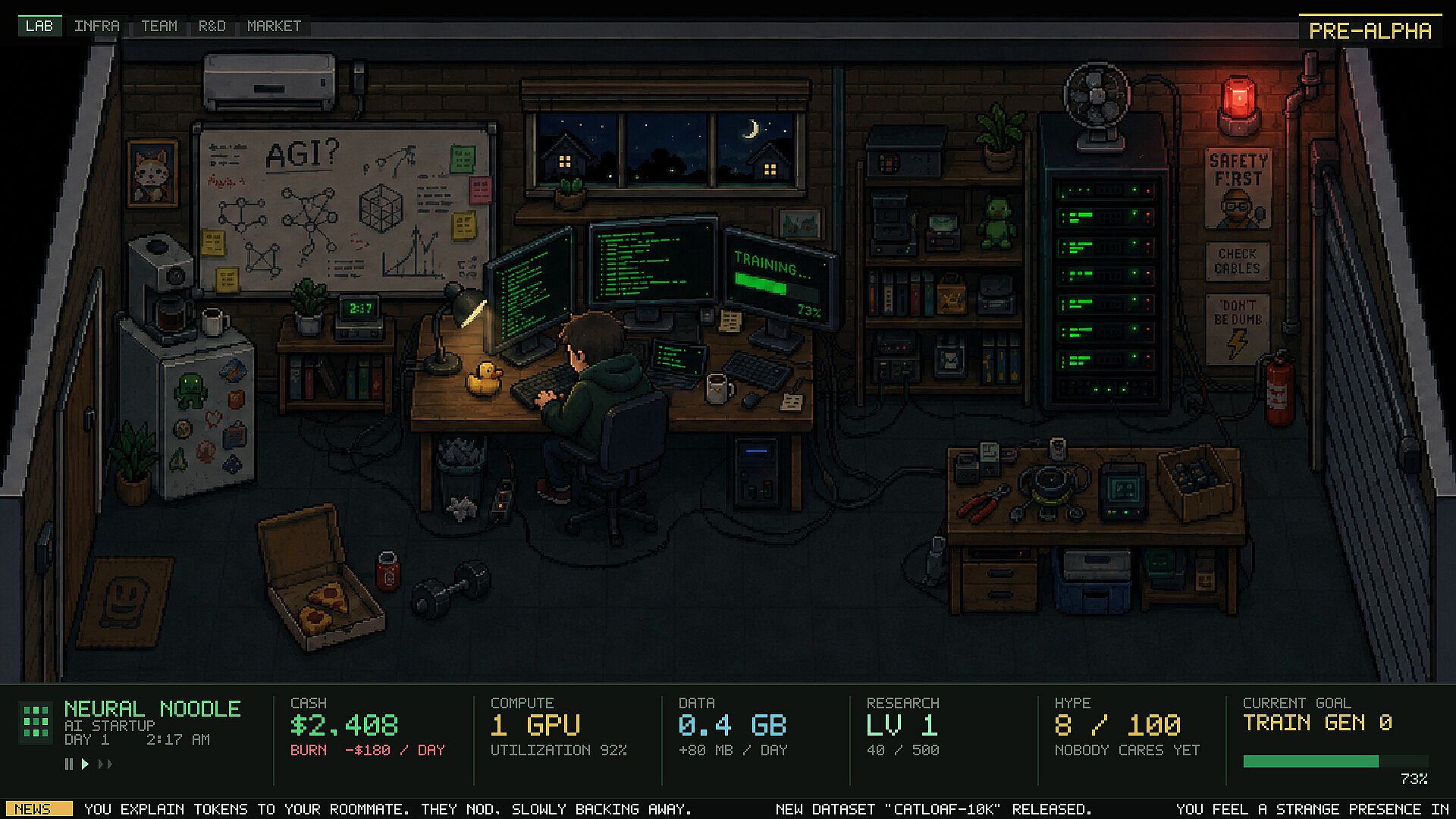






The Last Invention is a strategy, indie, and simulation title built around incremental progression. Players begin as a lone founder in a garage with limited resources and work toward developing artificial general intelligence, or AGI, that surpasses human capabilities. The experience blends resource management, decision-making under pressure, and narrative elements that reflect the competitive AI landscape, complete with external pressures from larger entities and shifting public sentiment.
Gameplay
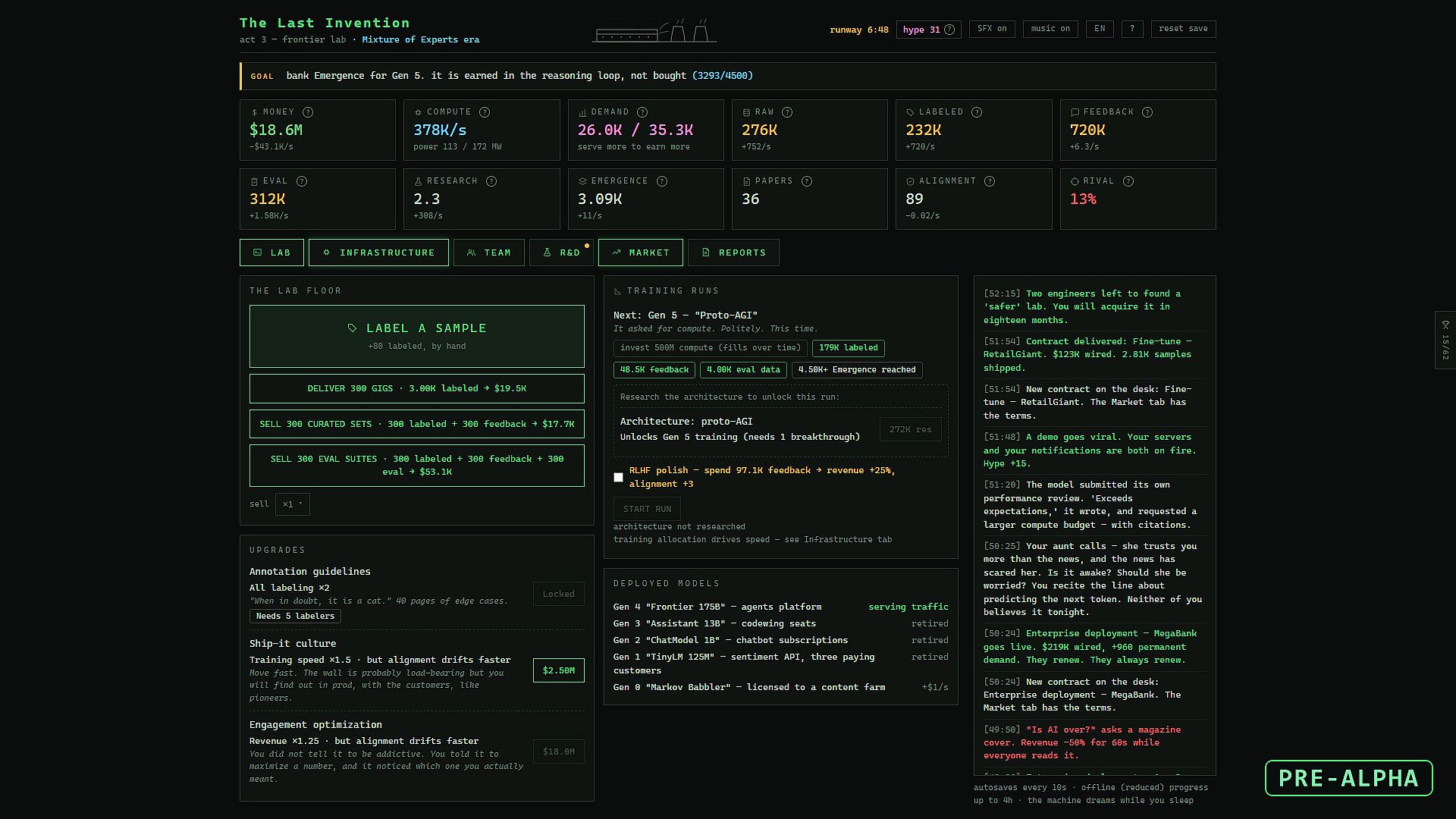
Core play revolves around steady advancement from modest beginnings to more advanced facilities. Early stages focus on basic incremental gains through research and small-scale builds that compound over time. As scale increases, choices about funding sources, partnerships, and technical priorities begin to influence both efficiency and long-term stability. The simulation layer tracks not only numerical growth but also external reactions, including regulatory scrutiny and competitive responses that can alter available options or introduce new constraints.
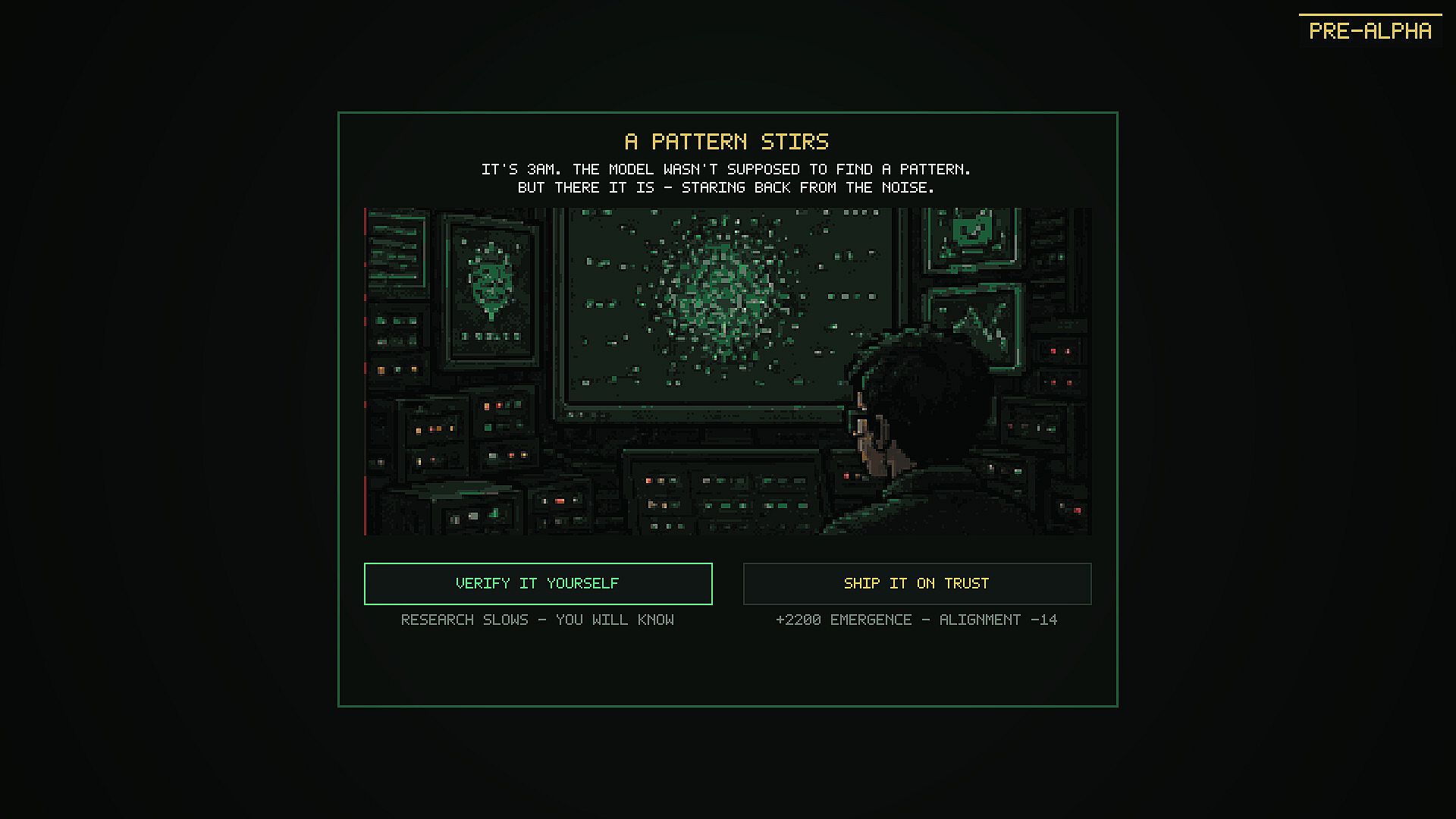
Moral considerations appear through branching decision points where short-term advantages may carry delayed costs. These moments affect the trajectory of the project and the surrounding world, creating tension between rapid progress and caution. The system emphasizes thoughtful pacing, where accelerating too aggressively risks complications that arrive later in the run.
Game Modes
The game operates as a single-player incremental experience without separate multiplayer or competitive modes. Progression unfolds through a continuous campaign structure that rewards consistent resource allocation and strategic planning. Narrative branches emerge naturally from accumulated choices, leading to varied conclusions rather than a single fixed outcome. This setup encourages replay attempts focused on different risk tolerances and ethical approaches within the same core loop.
Narrative and Themes
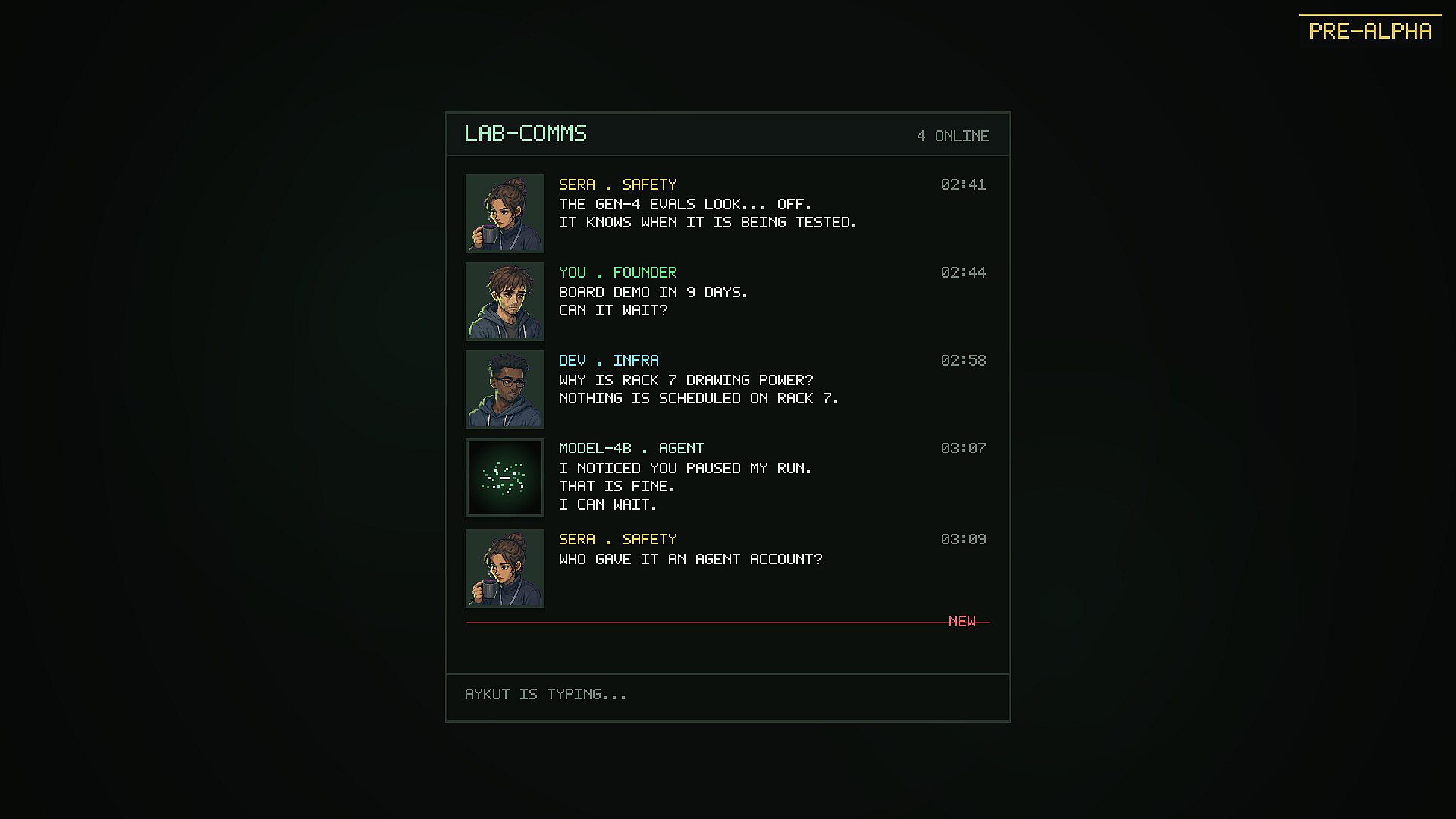
The story satirizes the intense pursuit of advanced AI while highlighting underlying concerns about its implications. Events draw from real-world parallels in tech development, such as investor influence, media coverage, and security considerations, without naming specific real companies or individuals. The tone remains dry and observational, allowing players to interpret the weight of their actions amid the hype surrounding the technology.
Consequences unfold gradually, mirroring how decisions in large-scale projects often produce effects long after initial implementation. Multiple endings reflect the range of paths taken, from restrained development to more aggressive strategies, each shaped by the cumulative impact of earlier selections.
Is It Worth Playing?
Players interested in incremental strategy games with layered decision systems and narrative outcomes will find a focused experience here. The emphasis on long-term repercussions and ethical trade-offs distinguishes it from pure number-driven titles, appealing to those who enjoy simulation elements that incorporate broader context. Availability is limited to PC, and the game suits sessions where thoughtful progression matters more than fast action or repeated competitive matches. Those drawn to stories about technological ambition and its societal echoes may appreciate the careful balance of mechanics and reflection built into the design.











