

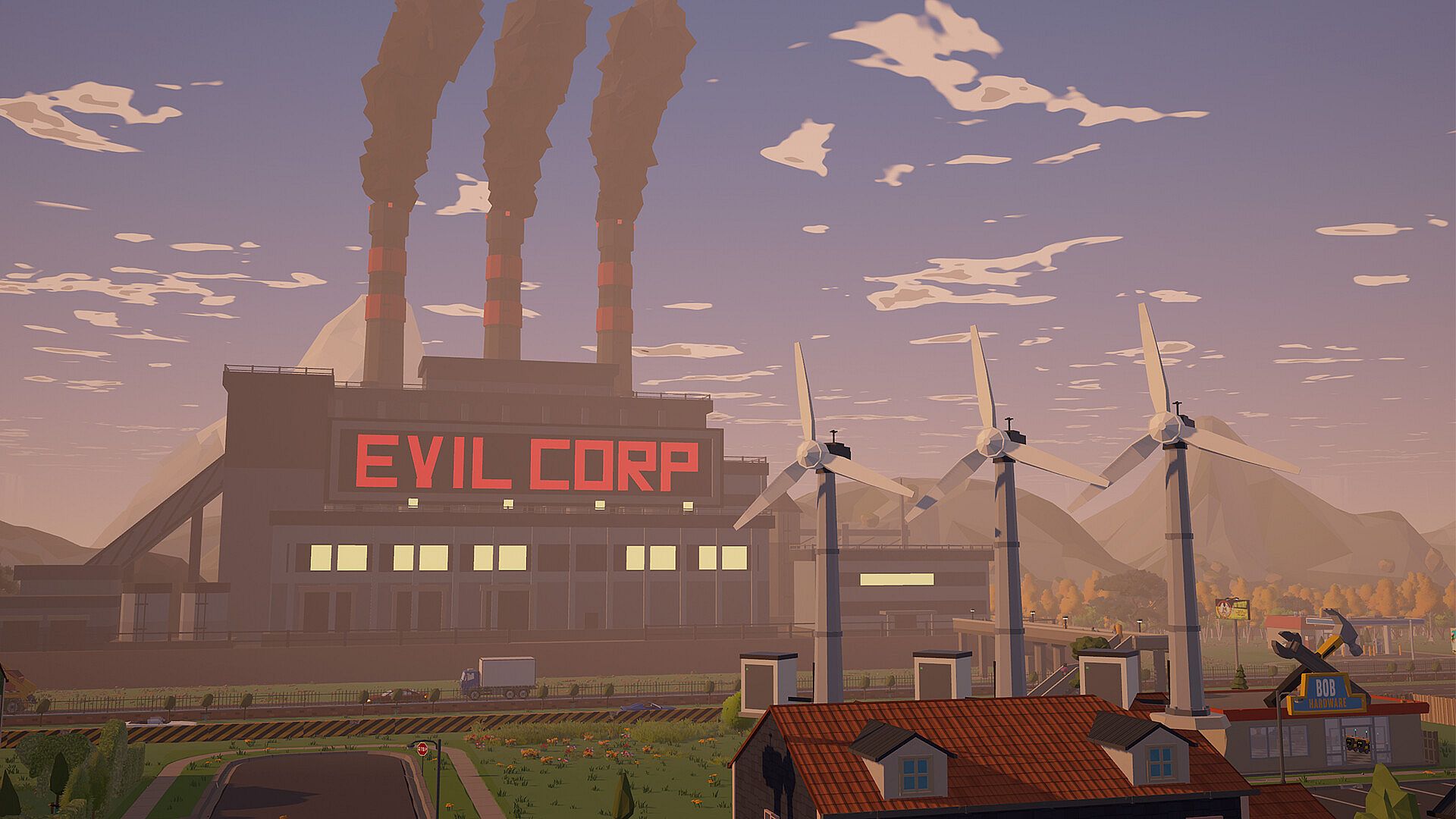
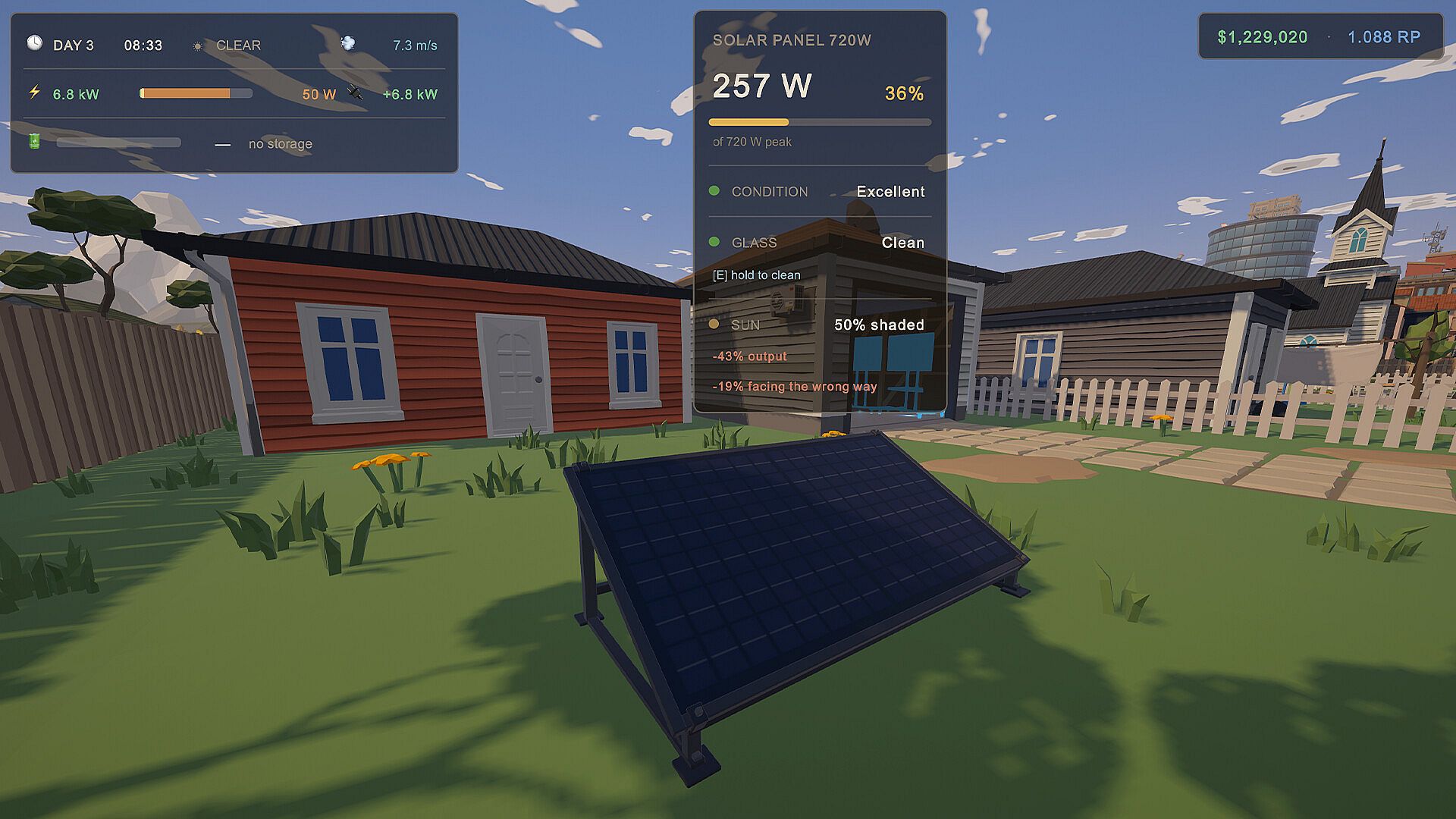
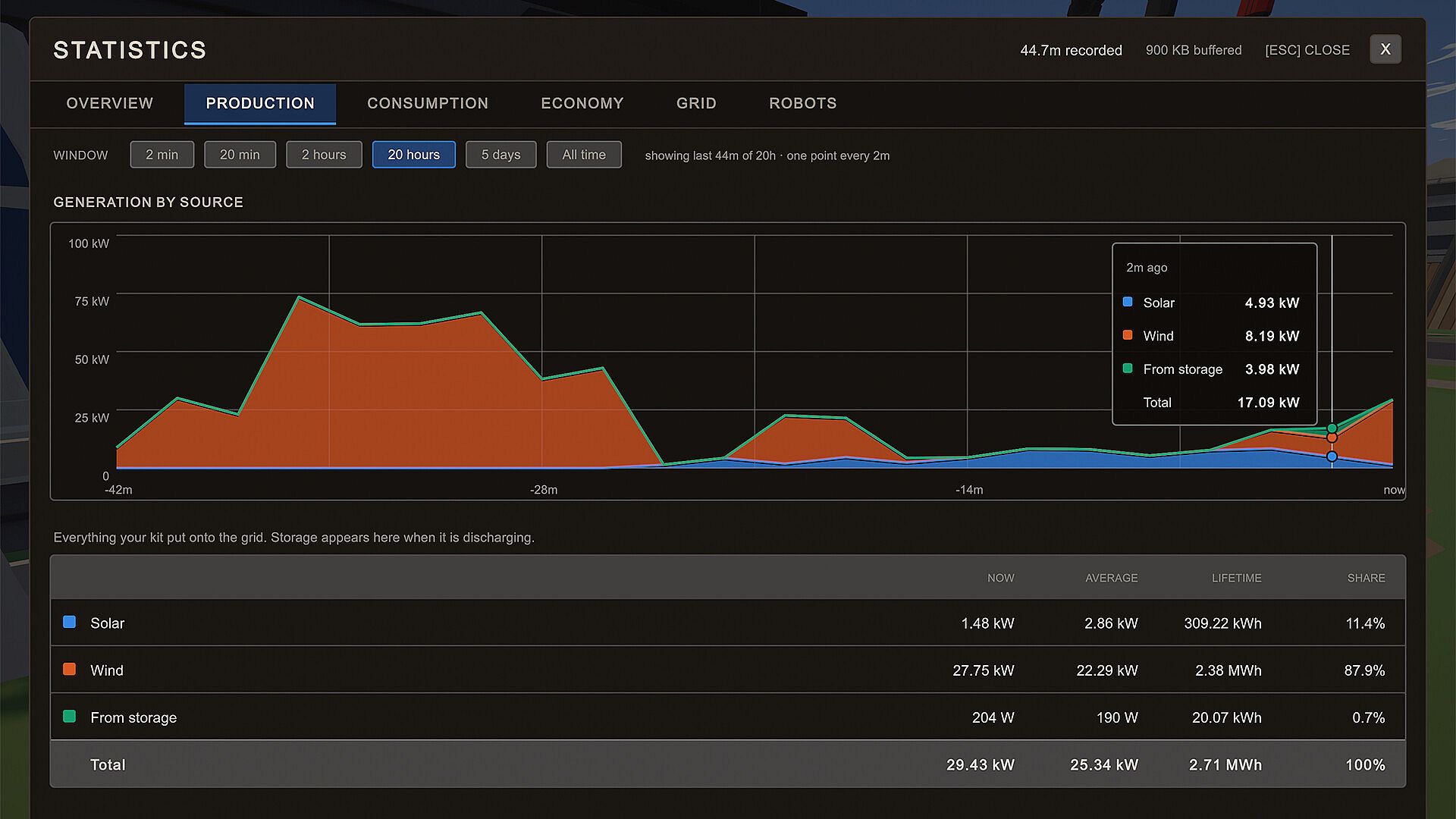
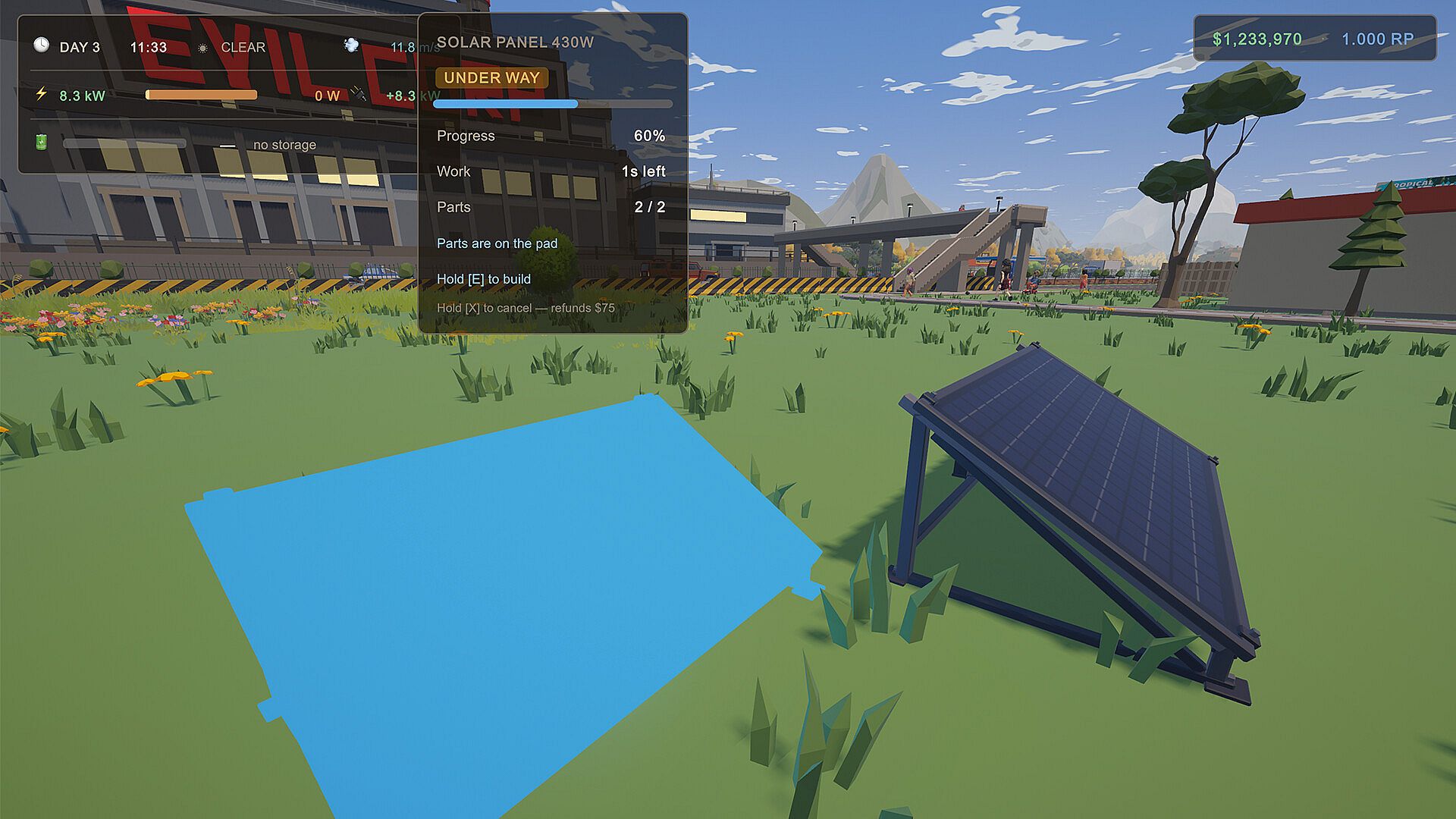
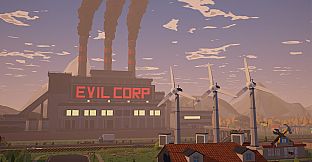
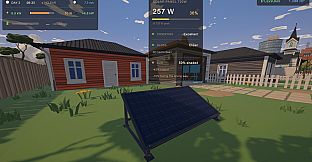
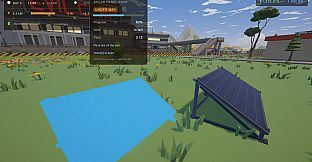
The Last Kilowatt is a single-player simulation game set in a small town where power generation has become a personal business venture. Players start with no resources beyond the ability to collect litter for initial cash and gradually construct a renewable energy operation to challenge the dominant coal plant run by Evil Corp. The core loop involves producing electricity through solar panels and wind turbines, storing it in batteries, routing it via cables and power lines, and securing customers ranging from individual homes to larger businesses and municipal contracts.
Gameplay
Progression begins with basic scavenging and small-scale purchases such as a 50-watt solar panel paired with a car battery. From there, construction expands to include scrap-built turbines, sun-tracking solar arrays, and larger megawatt-scale storage solutions. Real cable connections link generators, storage units, and distribution points, while overhead power lines extend service to additional land plots that can be purchased over time.
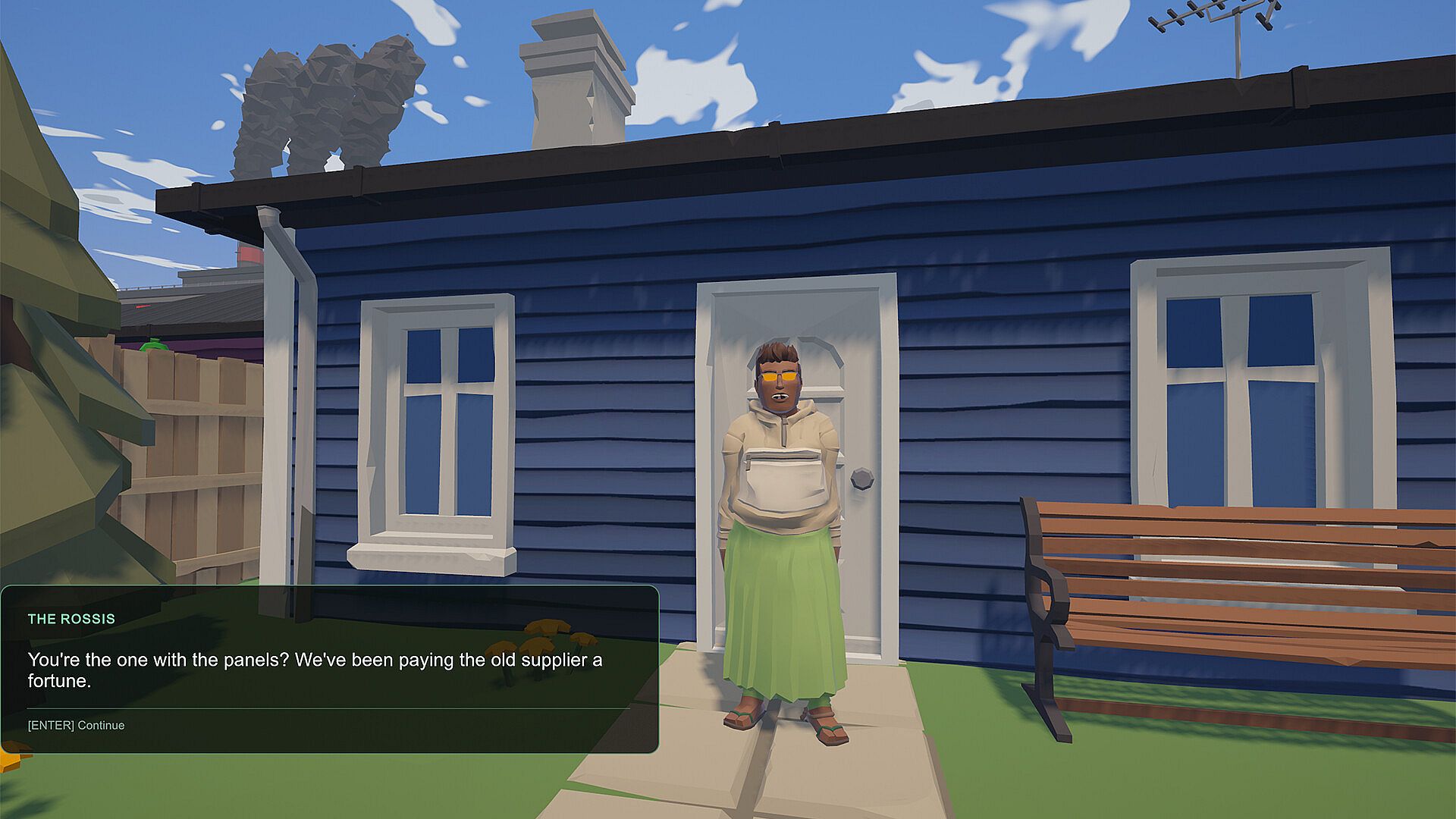
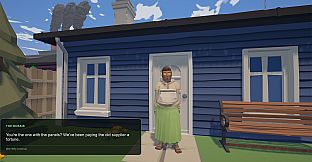
Customer acquisition happens through direct interaction: players knock on doors to sign up houses, apartment blocks, shops, and the local landfill. Each signed customer reduces Evil Corp's hold on the town. Power is sold to everyday devices including phones, scooters, electric cars, and highway traffic. Research unlocks new technology, and helper robots assist with operations. Trash collection feeds into biogas production as an additional energy source. The environment features a living town with moving traffic, pedestrians, day-night cycles, and weather that affect generation and demand.
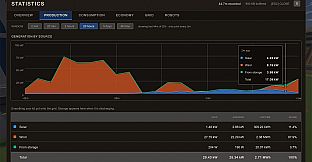
Contract management adds pressure. The City Hall street lighting agreement imposes a five-thousand-dollar fine for every hour the town experiences a blackout. Planning must account for the sun's movement, shifting wind patterns, machine wear, and extended nights that require reliable storage reserves. The rival coal plant continues operating visibly through its smokestacks until customers switch providers.
Game Modes
The game operates as a single-player simulation with no separate multiplayer or competitive modes. All activity centers on building, connecting, and expanding a power network within the fixed town setting while managing economic and reliability challenges. Progression follows a continuous campaign structure where players develop their company from a single panel to town-wide coverage.
Building and Expansion Systems
Core systems revolve around physical infrastructure. Players lay cables between machines and string power lines across new areas to reach untapped customers. Land acquisition opens fresh building space, and technology research improves efficiency or unlocks advanced equipment. Biogas from recycled litter provides a supplementary generation method that ties into the town's waste management.
Maintenance and environmental factors require ongoing attention. Equipment degrades over time, weather influences output, and storage must bridge gaps between peak generation and nighttime or low-wind periods. The goal remains consistent: grow capacity and customer base until the entire town relies on the player's renewable setup rather than the coal plant.
Is It Worth Playing?
The Last Kilowatt remains in Early Access with a planned development period of one to two years. The developer has stated that the core experience of building power infrastructure, signing customers, and maintaining supply is already playable, with further additions planned for more machines, land plots, customers, and polish. No user reviews or aggregate ratings exist yet because the title has not launched.
This simulation suits players who enjoy methodical resource management, infrastructure construction, and long-term economic competition against an established rival. Those interested in power systems, cable routing puzzles, and contract fulfillment will find the described mechanics align directly with those interests. Individuals seeking completed games with extensive post-launch support or multiplayer options may prefer to wait for further updates and the full release.