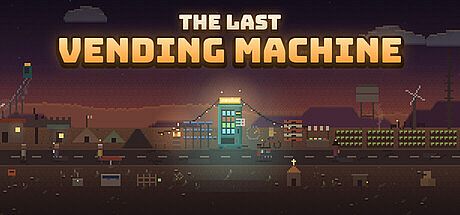


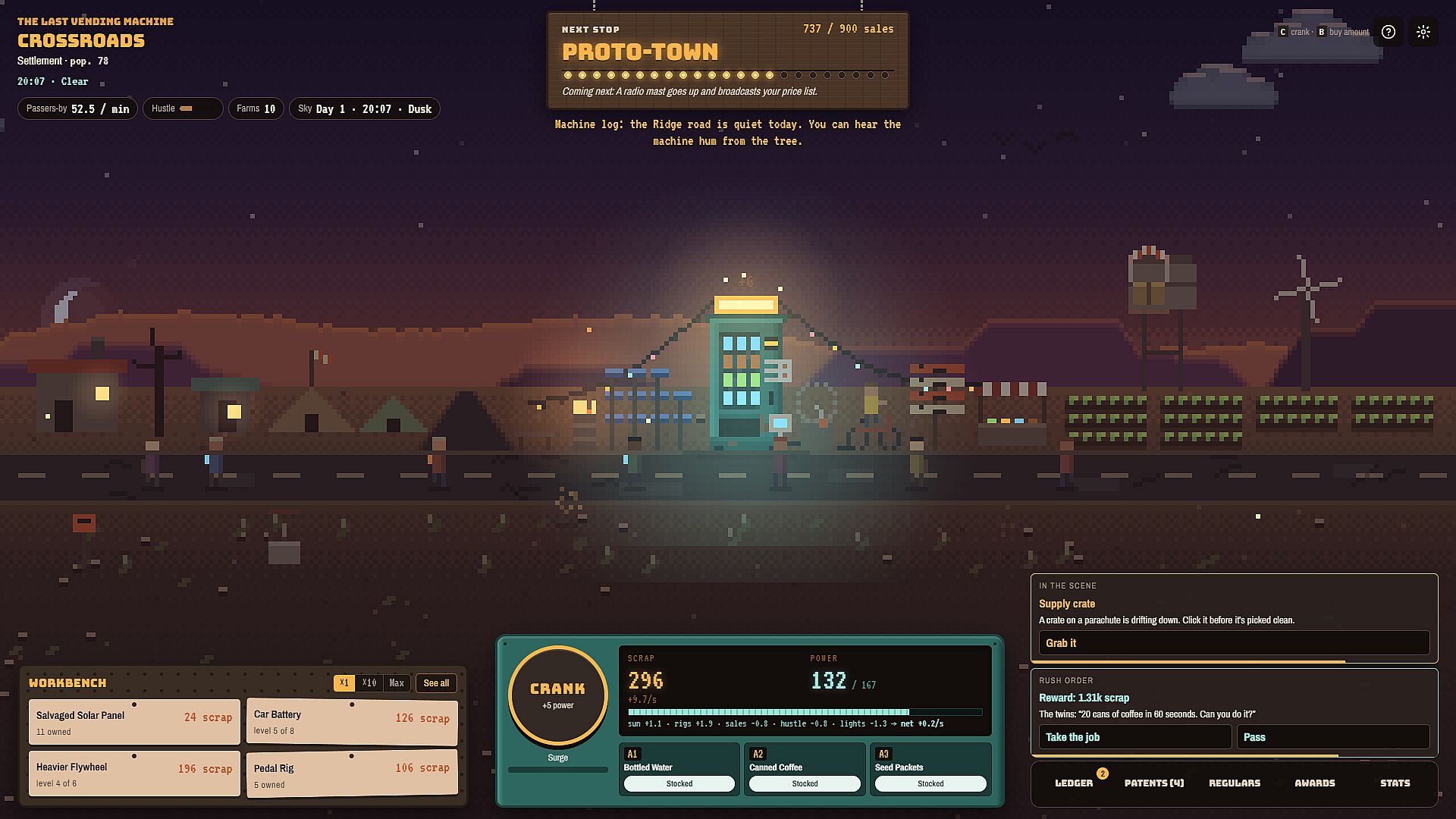
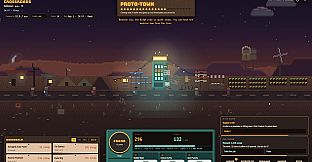


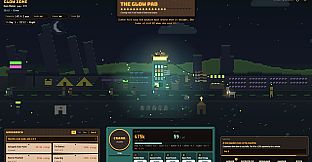
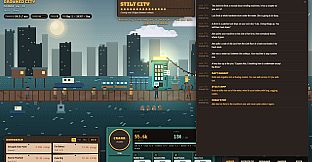
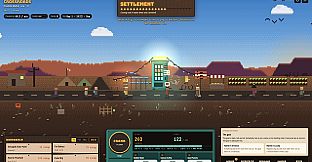
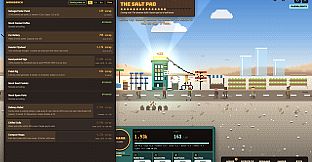

The Last Vending Machine is a strategy, casual, and simulation game set in a post-apocalyptic world where a single vending machine becomes the center of rebuilding efforts. Players manage the machine's operations to attract survivors, expand a settlement, and adapt to different environments across multiple runs.
Gameplay
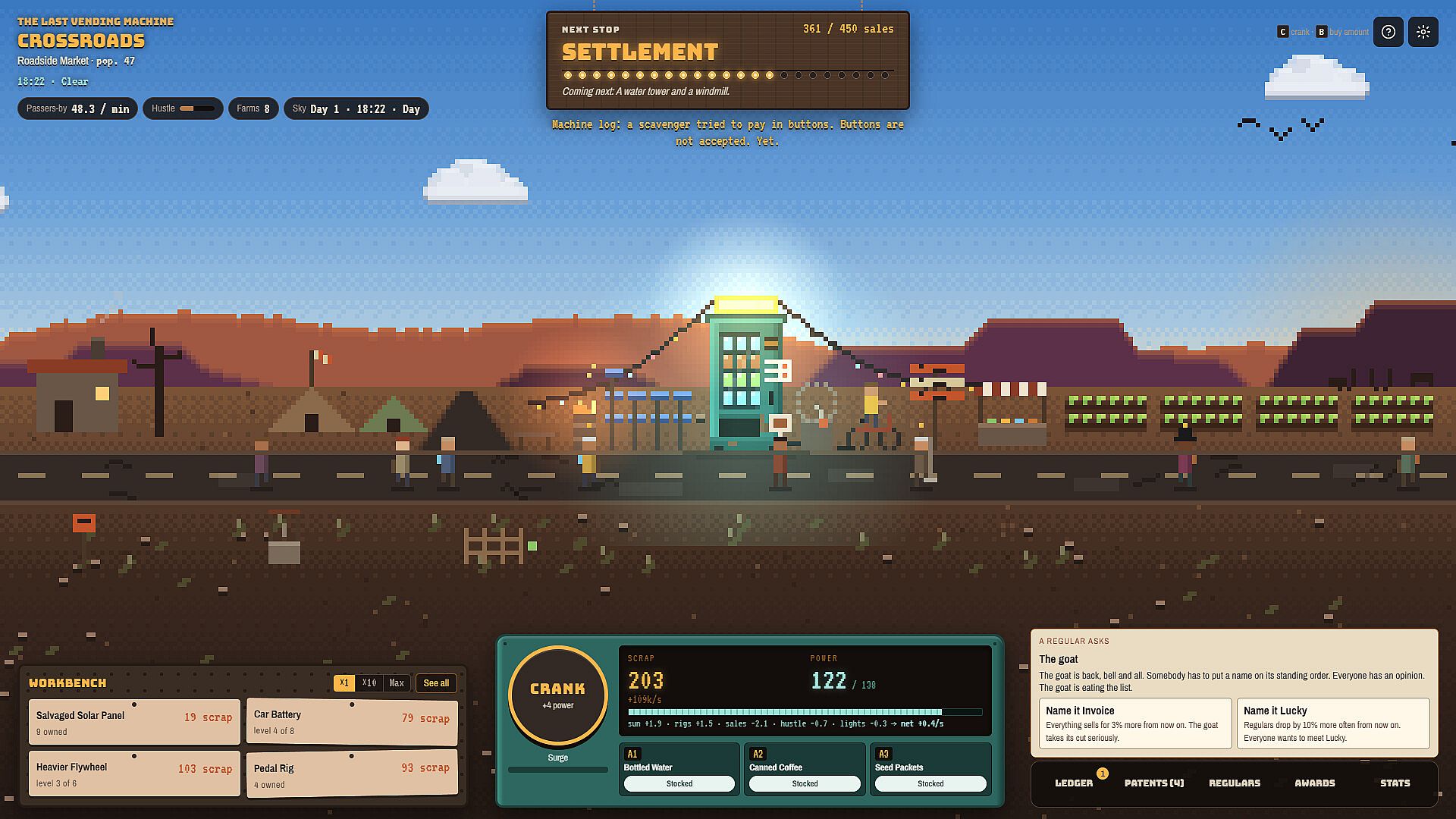
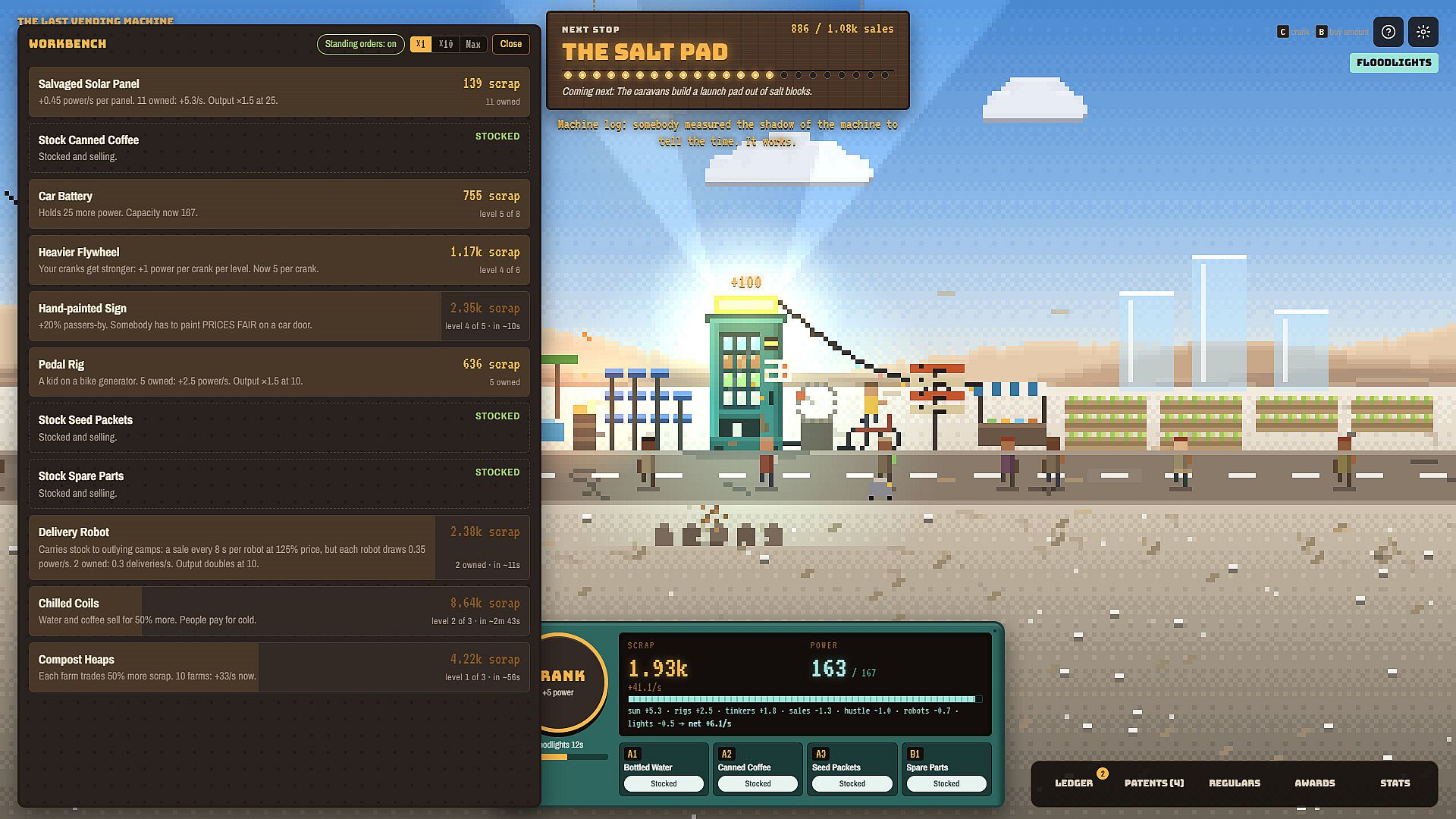
Core play revolves around operating the vending machine through manual cranking of its generator or automated upgrades like solar panels and batteries. Stocking different products influences the growing settlement, with items such as coffee speeding up activity at the cost of power or seeds leading to farms. Supply drops and rush orders add variety, while 32 regulars return with personal stories that branch based on player choices. Nineteen of these characters present key decisions that alter their arcs, settlement mechanics, and overall outcomes. A persistent goat companion requires its own standing order management.
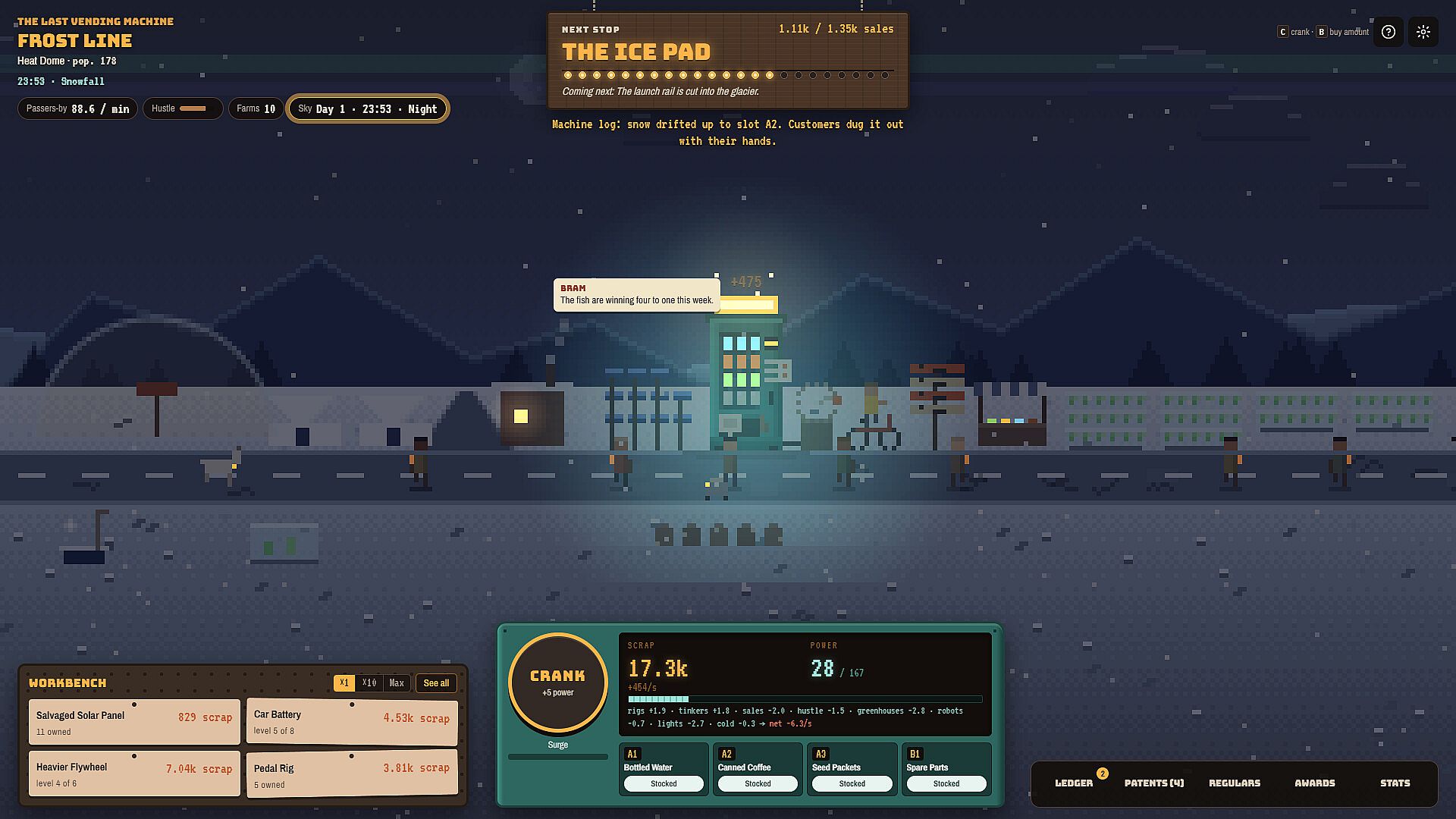
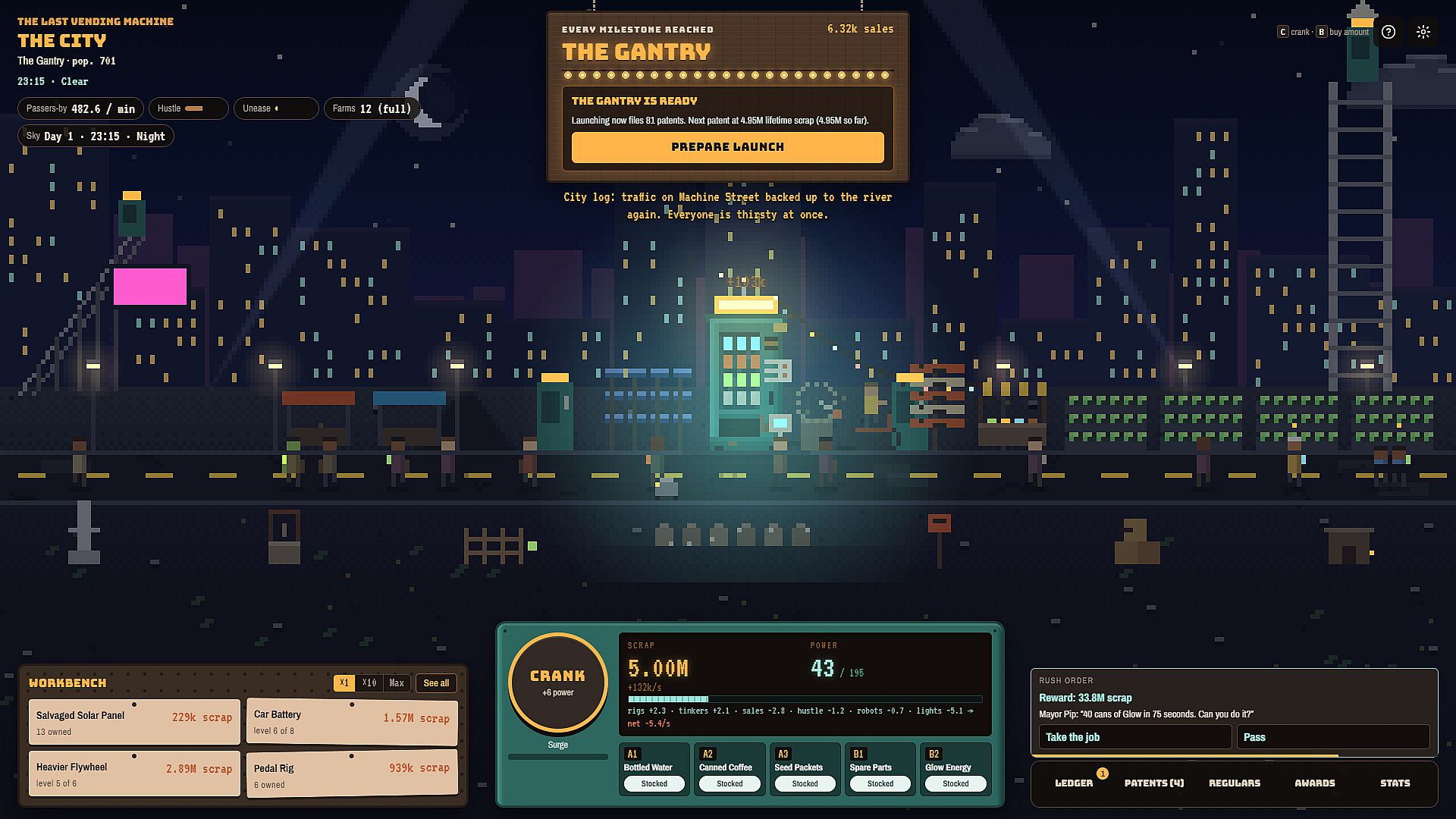
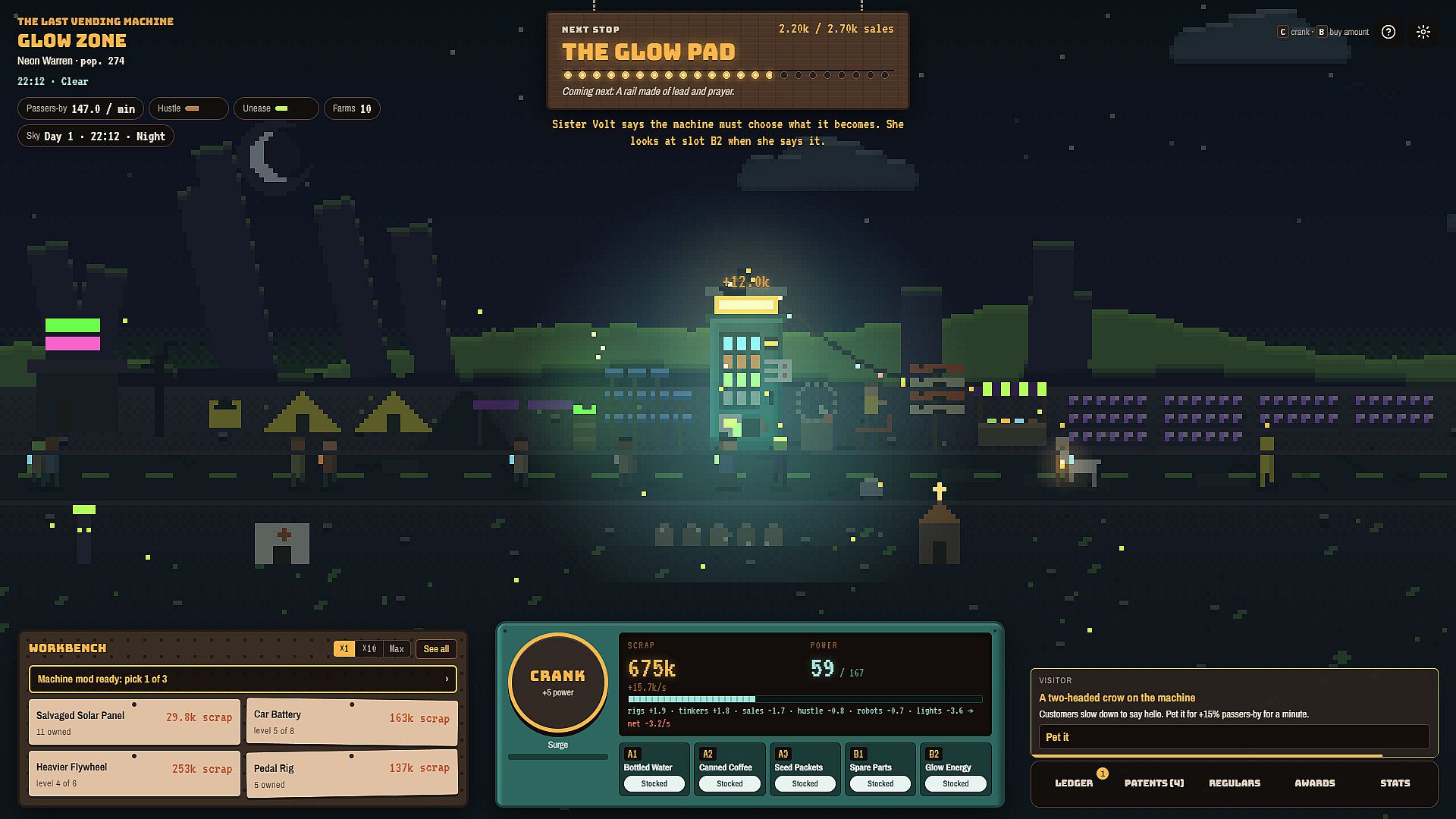
Progression includes patents carried across runs and 16 machine modifications. The settlement visibly expands from a simple burn barrel to a full town, with day-night cycles and weather affecting operations. Offline time accumulates in a bank for later use, supporting both active sessions and idle play. A strip mode reduces the interface to a thin bar suitable for secondary monitors.
Game Modes
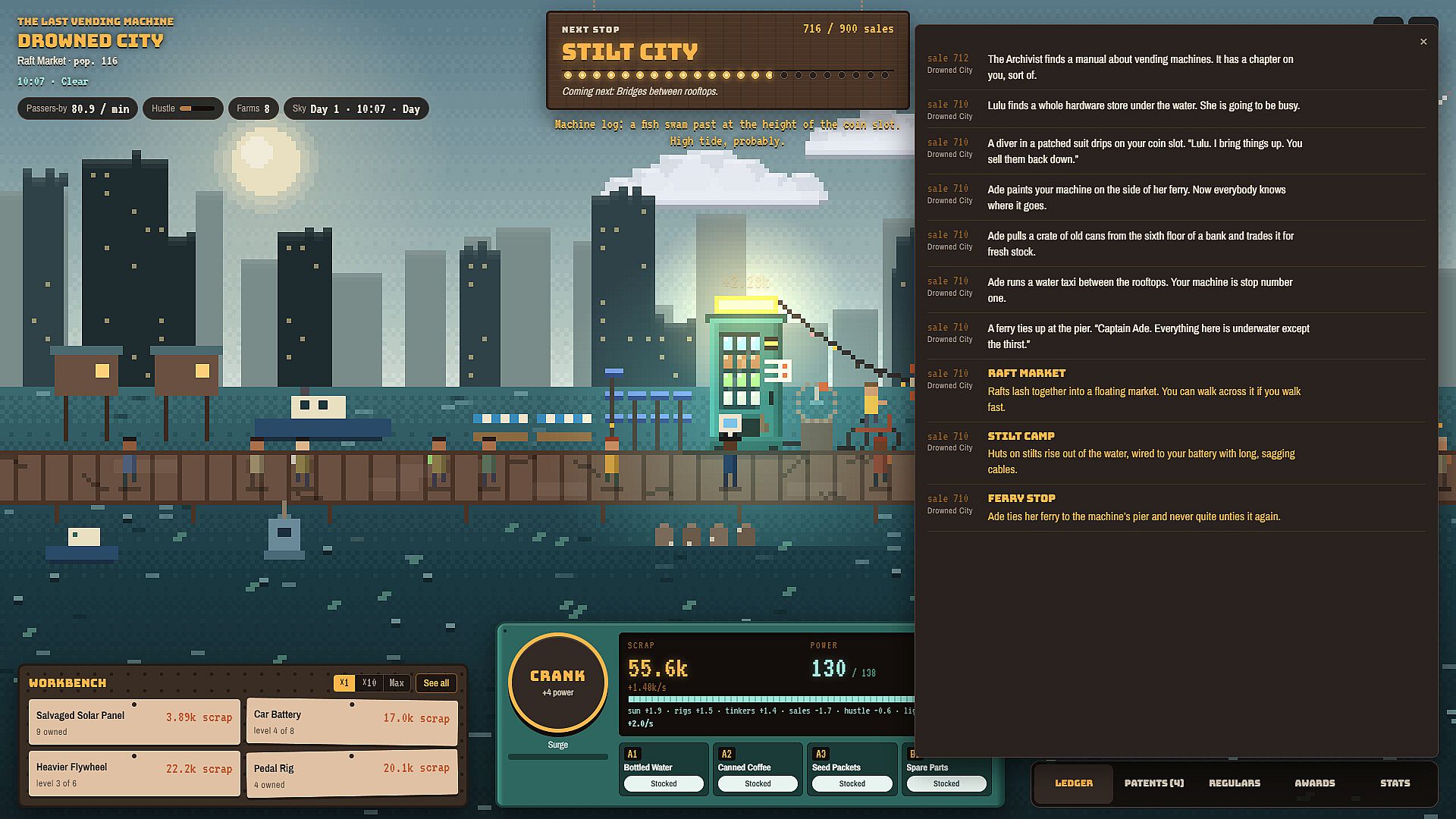
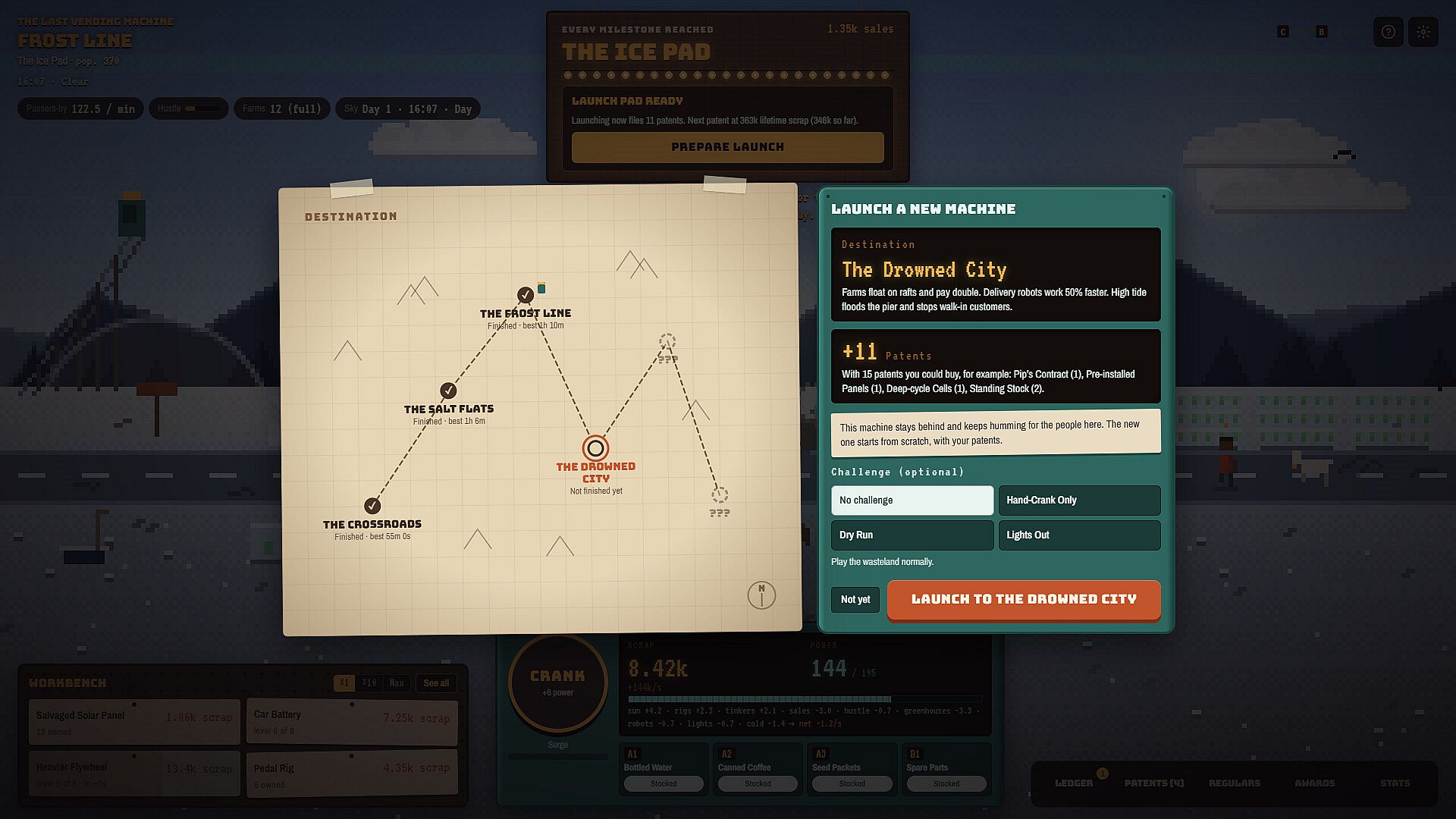
The game features a structured campaign across six distinct wastelands, each with unique products, weather patterns, events, and regulars. These include salt flats, a frozen rail line, a drowned city, a radiation zone, and the city built around vending infrastructure. After completing a run, players launch a new machine into another wasteland.
Three optional challenges cater to experienced players. A real ending concludes the main experience, followed by an endless mode for continued play. Time away from the game feeds into an offline bank that can be spent upon return, allowing flexible pacing between hands-on management and background progression.
Key Mechanics and Features
Hand-cranking generates power surges that draw crowds via floodlights, while upgrades reduce reliance on constant player input. Product choices create ripple effects, turning scrap into infrastructure and customer interactions into settlement growth. The narrative elements tie directly into gameplay, as decisions with regulars reshape both stories and practical systems like post offices or contracts.
Support for nine languages broadens accessibility. Visual feedback shows the settlement evolving in real time, reinforcing the incremental loop of selling, upgrading, and expanding amid the wasteland.
Is It Worth Playing?
This title suits players who enjoy incremental strategy and simulation with light narrative choices. The blend of active cranking, upgrade paths, and settlement building provides steady progression, while the choice-driven stories with regulars add replay value across the six wastelands. Offline support and multiple modes accommodate different schedules and playstyles, from focused sessions to background monitoring. Those drawn to cozy post-apocalyptic themes and machine-management loops will find consistent engagement without requiring constant attention.