




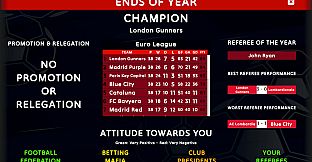
The Referee Committee is a strategy, indie, simulation, and sports game for PC. Players take control of a referee committee and navigate the hidden power structures, conspiracies, and political pressures that influence football outcomes. The experience centers on text and UI interactions rather than on-field action, with decisions that ripple through entire seasons and league standings.
Gameplay
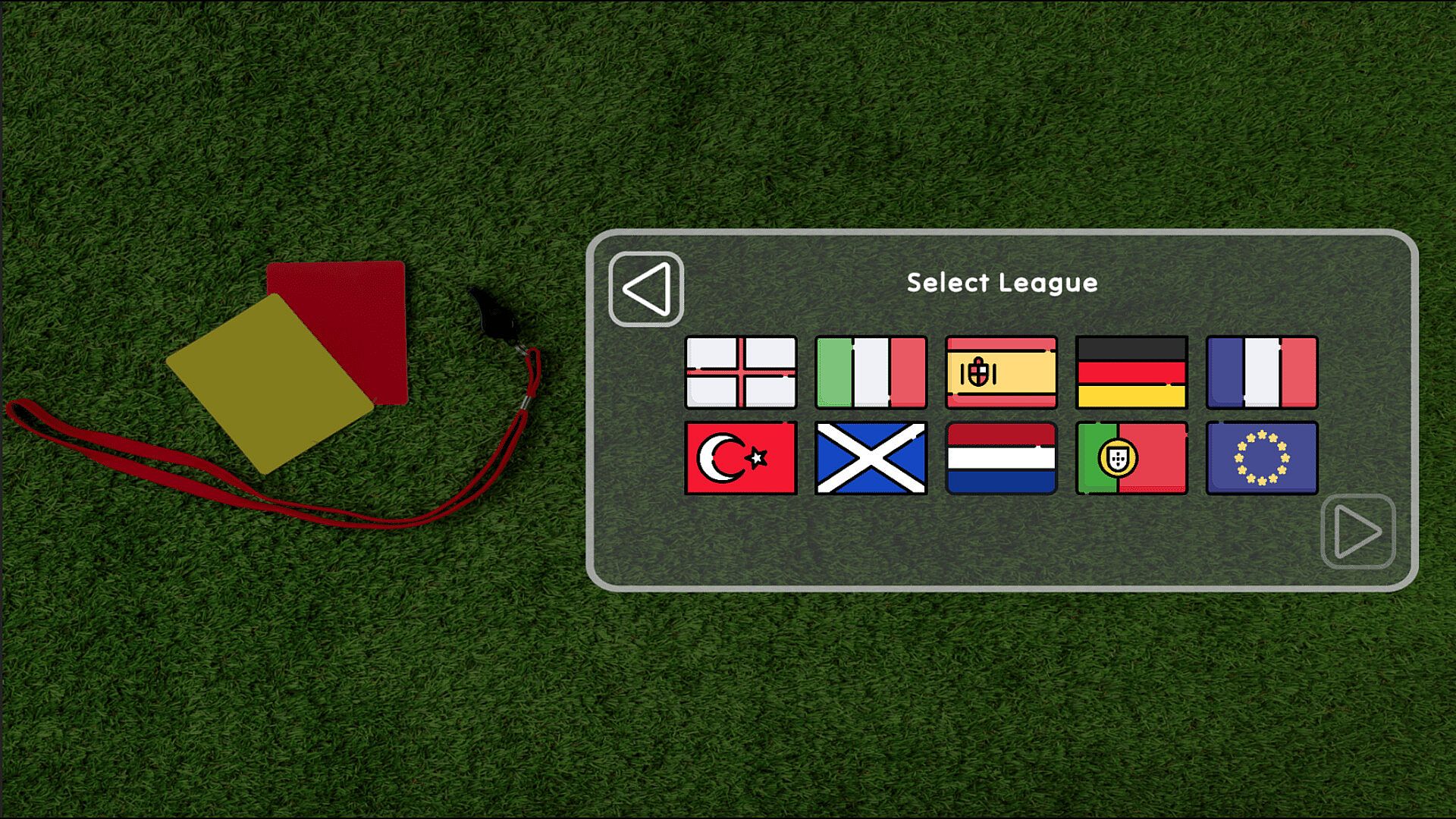
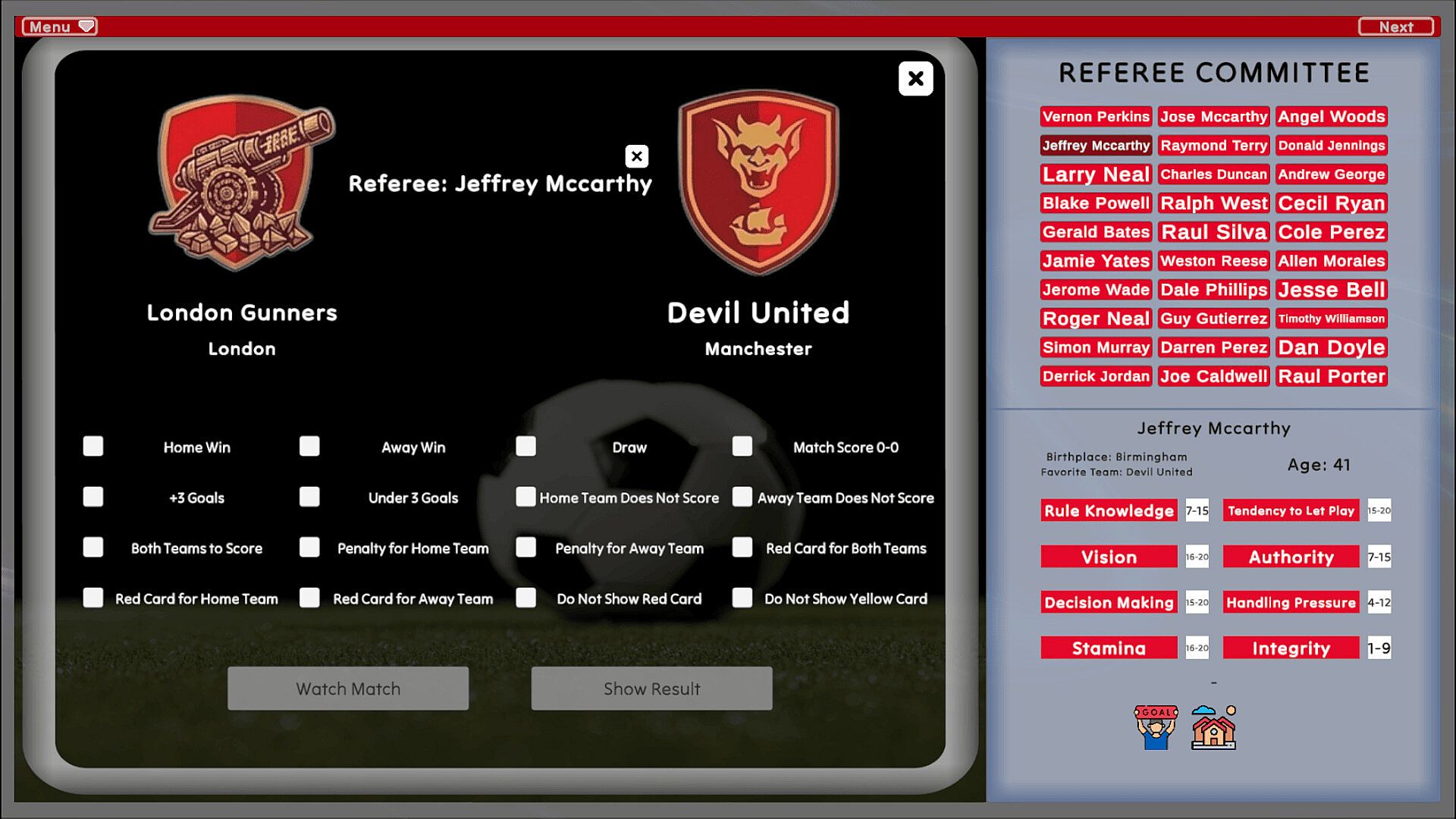
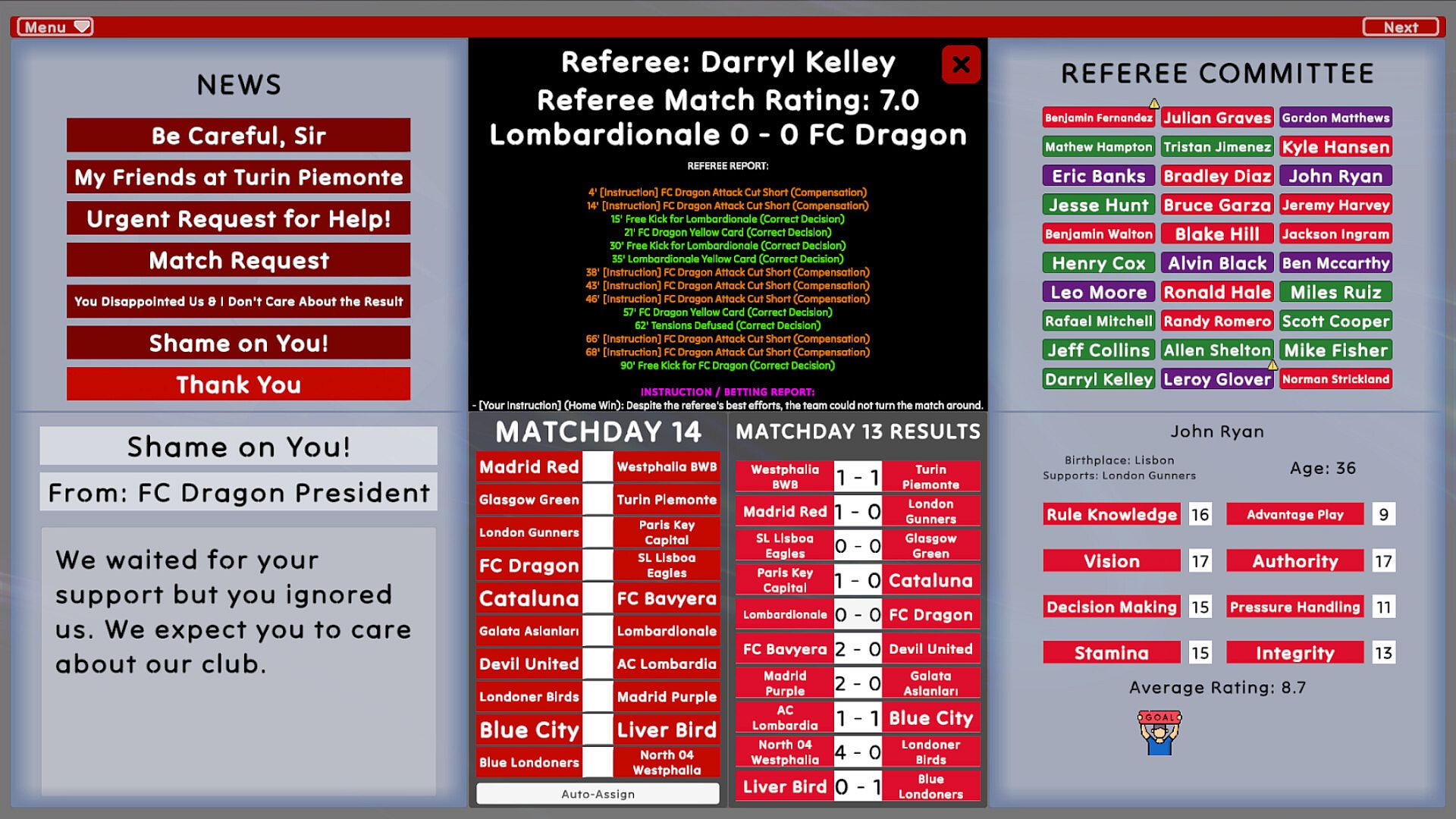
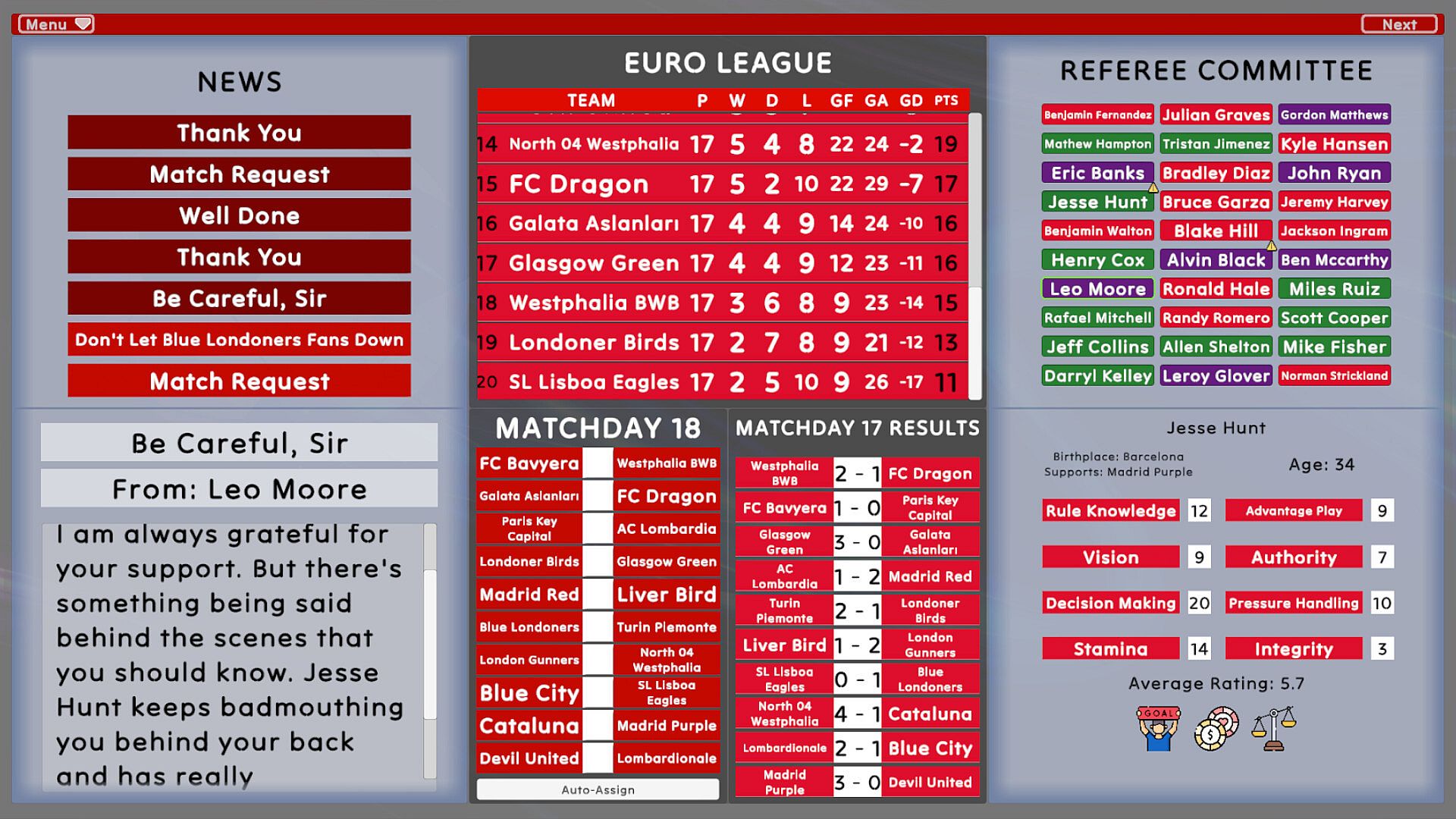
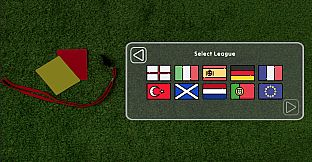
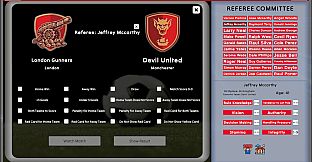
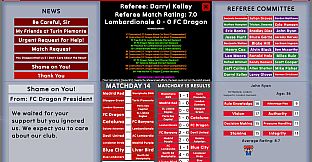
Core play revolves around assigning referees to matches while managing their personal traits and biases. Each referee carries details such as hometowns, favorite teams, and individual weaknesses that affect performance. A referee with a strong attachment to one club might favor that side, while another prone to gambling could ignore directives to pursue personal gains. Players select countries and enter historic seasons across ten leagues, where referees age and retire over time, requiring ongoing recruitment and adaptation to new committee members.
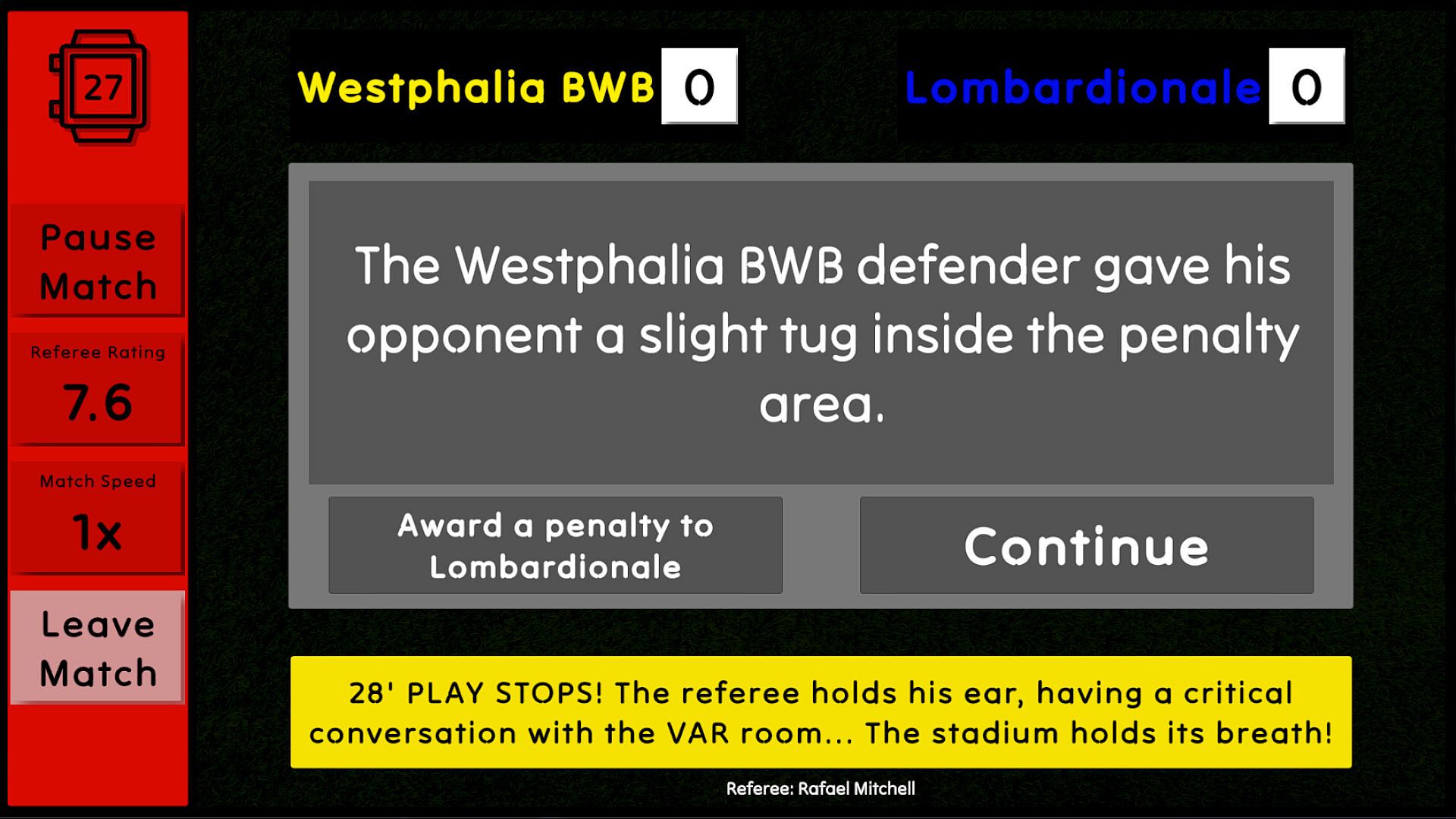
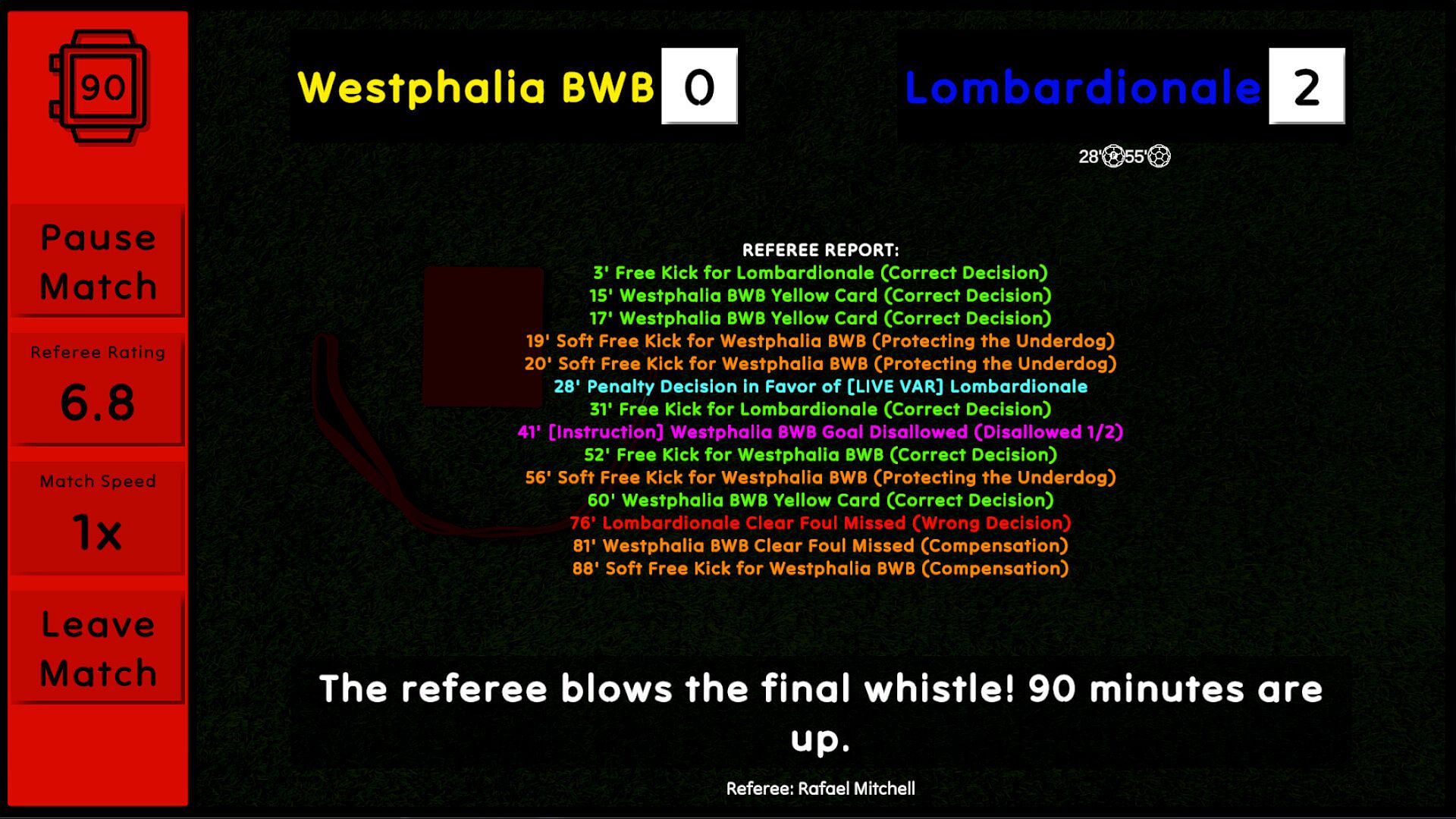
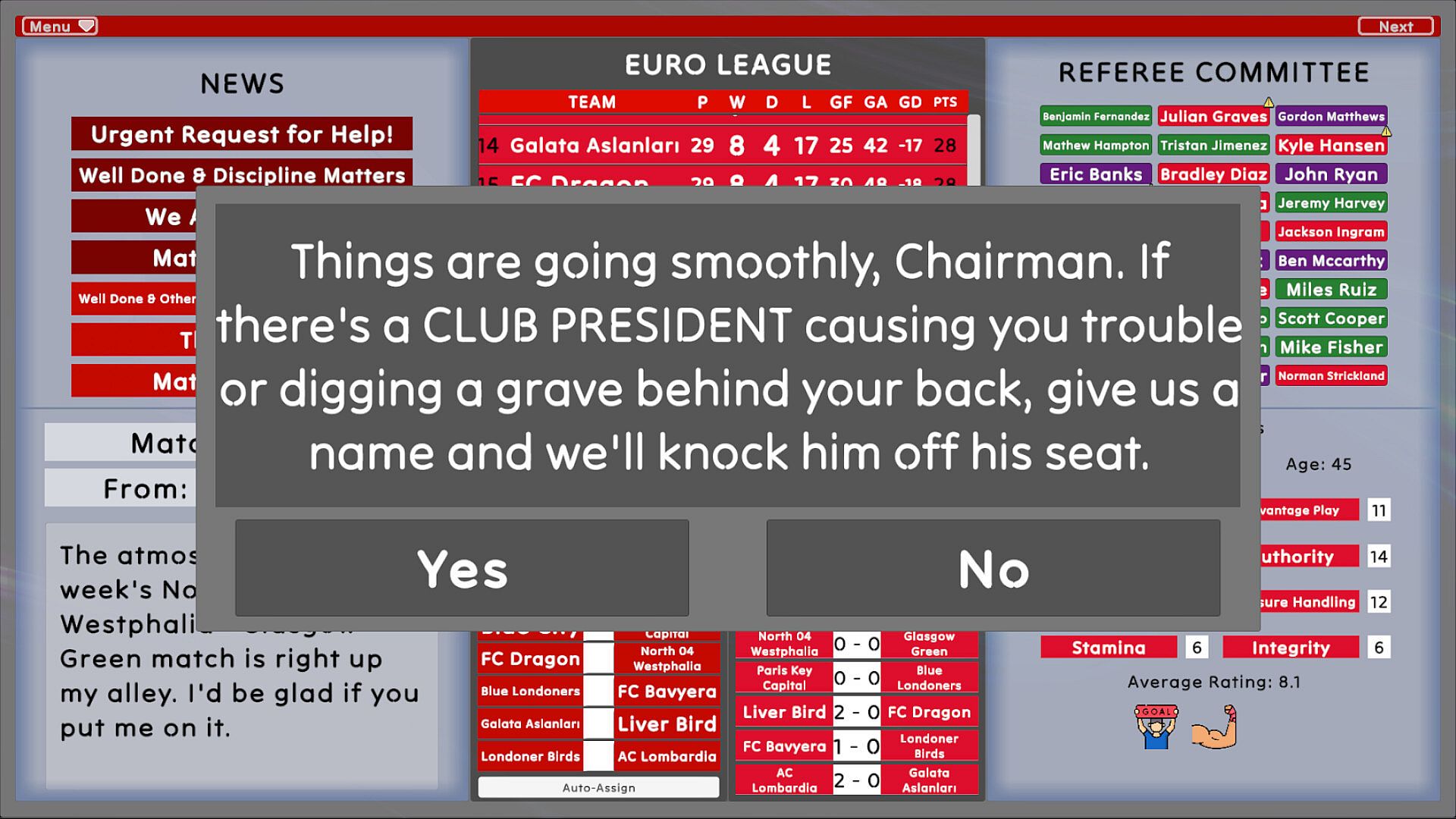
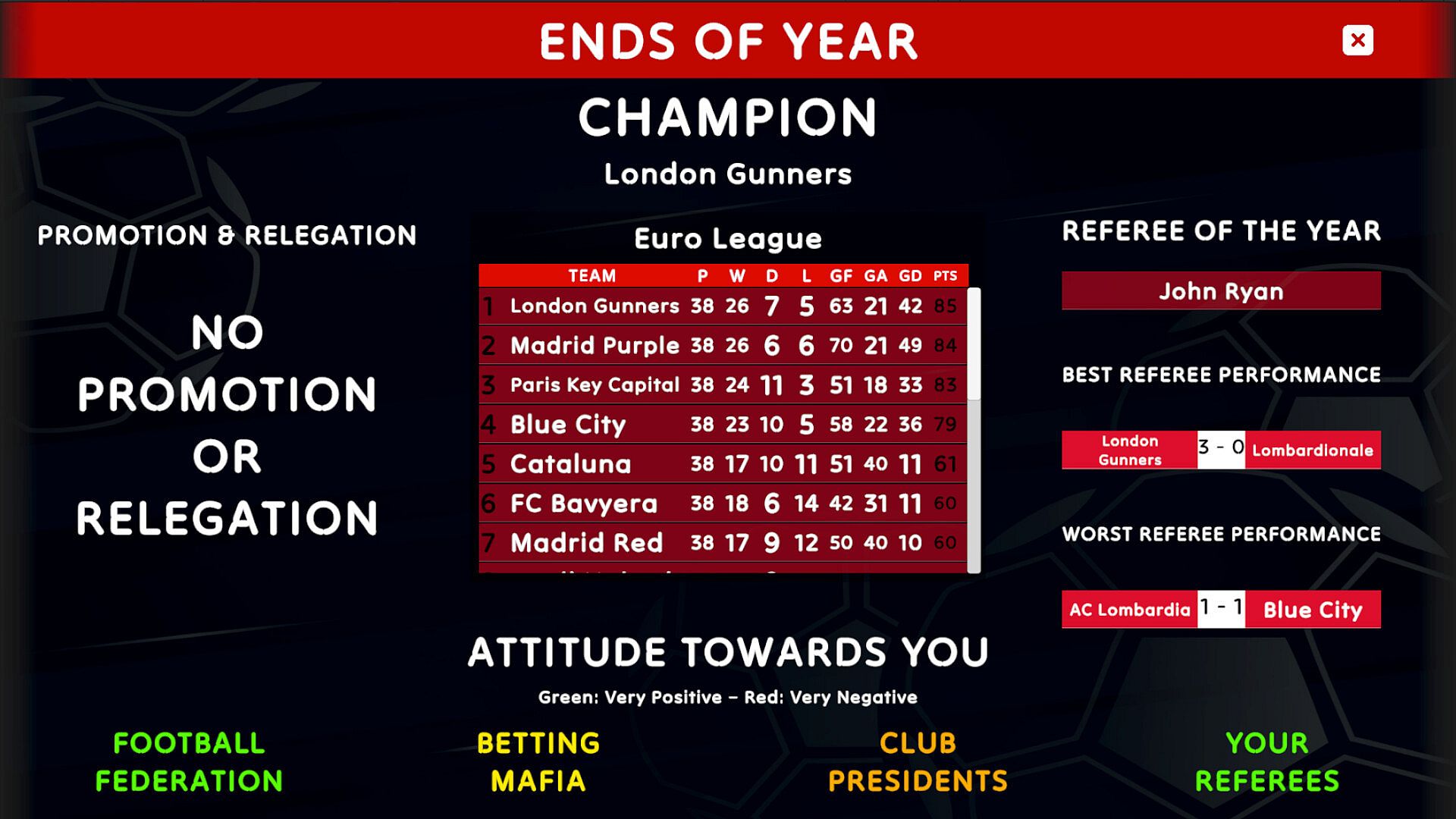
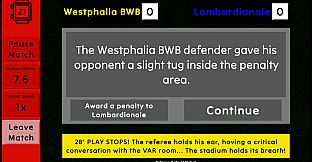
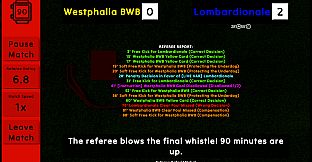
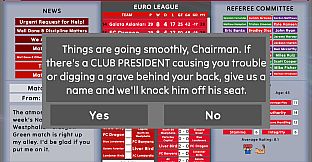
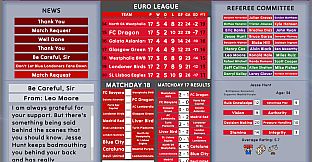
Critical moments shift to the VAR monitor. Timed Quick Time Events force rapid choices on disputed calls, such as overturning a goal or awarding a penalty. These decisions directly influence trust levels with key groups including the federation president, club presidents, media outlets, fans, and the betting mafia. Low trust with clubs can trigger petitions for removal, while crossing the mafia risks more severe retaliation. Weekly newspaper reports summarize the fallout, highlighting scandals or revolts that demand further management.
Secret instructions allow pre-match manipulation of results. Directives can target a home win, a specific goal tally, or multiple red cards. Success depends on the assigned referee's integrity and resistance to pressure, adding layers of risk to every plan. The system rewards careful balancing of short-term gains against long-term stability in a shifting environment.
Game Modes
The game operates as a continuous simulation where players oversee full seasons. Selection of leagues and eras provides variety, with options to revisit or alter events from past campaigns in places such as Scotland during the 2025/26 season or England in 2015/16. Progress unfolds through weekly cycles of assignments, interventions, and consequence reviews rather than discrete competitive ladders or versus formats.
Referee management forms the central loop. Players evaluate traits, assign individuals to matches that exploit or test those traits, and monitor how instructions play out. The simulation advances automatically between key decision points, keeping focus on committee oversight and faction relations instead of direct match control.
Key Mechanics and Systems
Trust management acts as the primary resource. Actions please some factions while alienating others, forcing trade-offs that shape future opportunities. Referee traits create emergent situations, such as placing a biased official in a high-stakes fixture or avoiding one whose habits could expose the committee. Match-fixing attempts introduce uncertainty, as even well-planned instructions can fail if the referee deviates.
Dynamic world elements include generational turnover among officials and evolving league conditions. Seasons bring fresh challenges through new personalities and shifting external pressures, requiring repeated adjustments to strategies. The text-based interface emphasizes reading reports, issuing orders, and interpreting outcomes over visual spectacle.
Is It Worth Playing?
This title suits players interested in management simulations that explore the political and ethical undercurrents of sports. The combination of referee assignment, timed decision events, and faction balancing delivers a focused single-player loop centered on long-term planning and risk assessment. Those who enjoy text-driven strategy experiences with branching consequences will find the systems rewarding, particularly when experimenting with different league histories and committee compositions. The game remains in active development on PC with no confirmed additional platforms or free tiers at this time.