

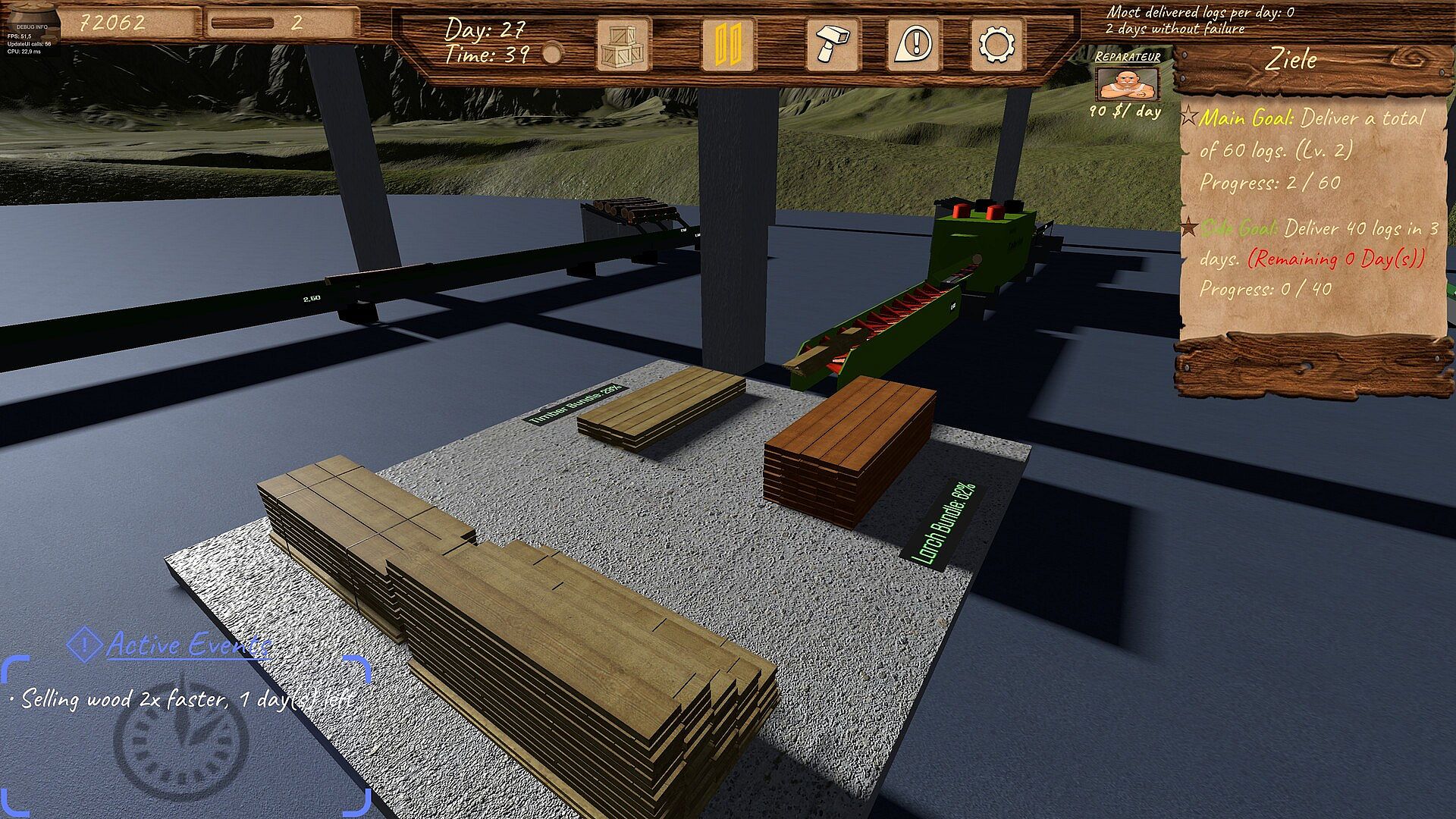
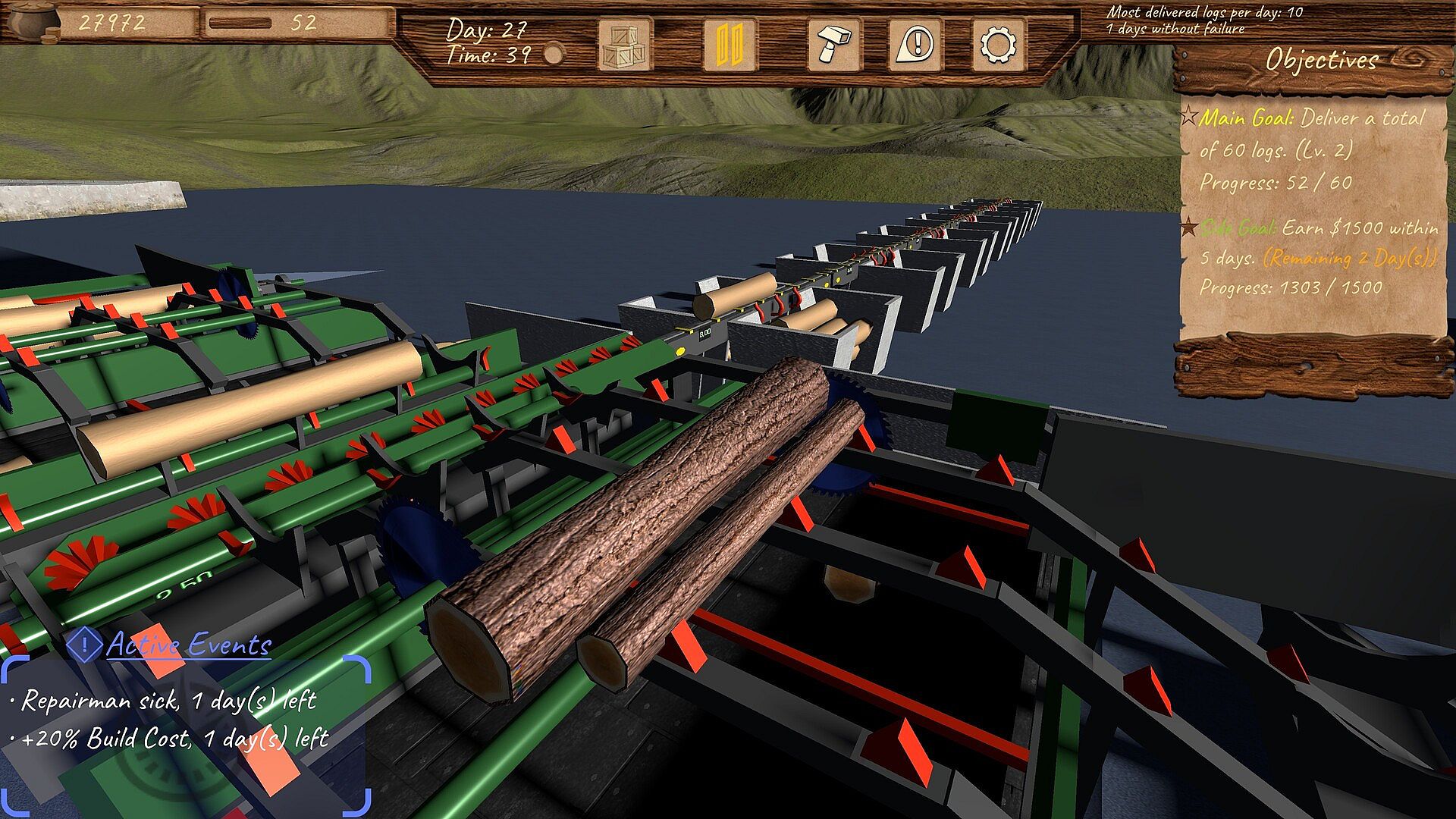
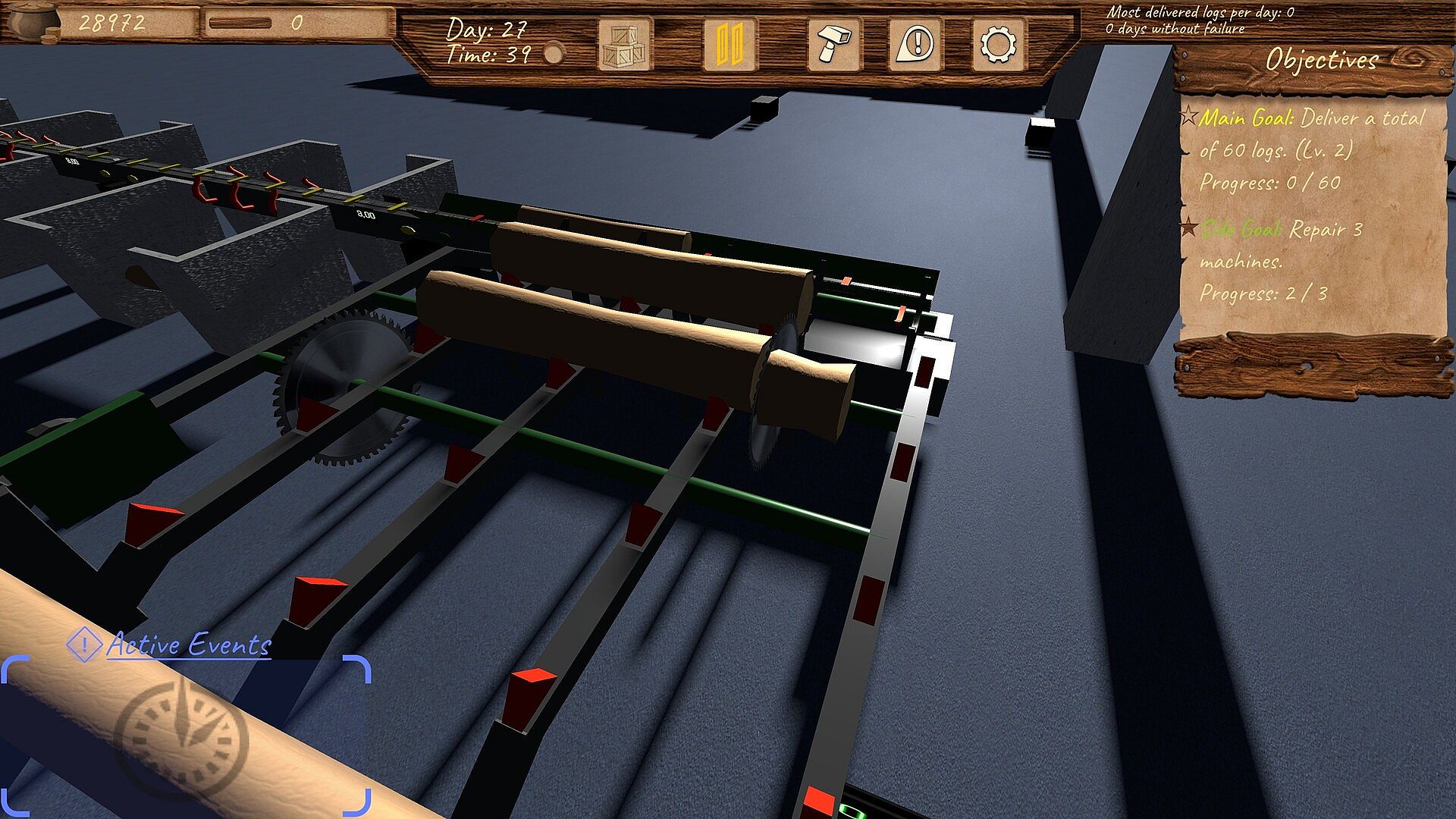
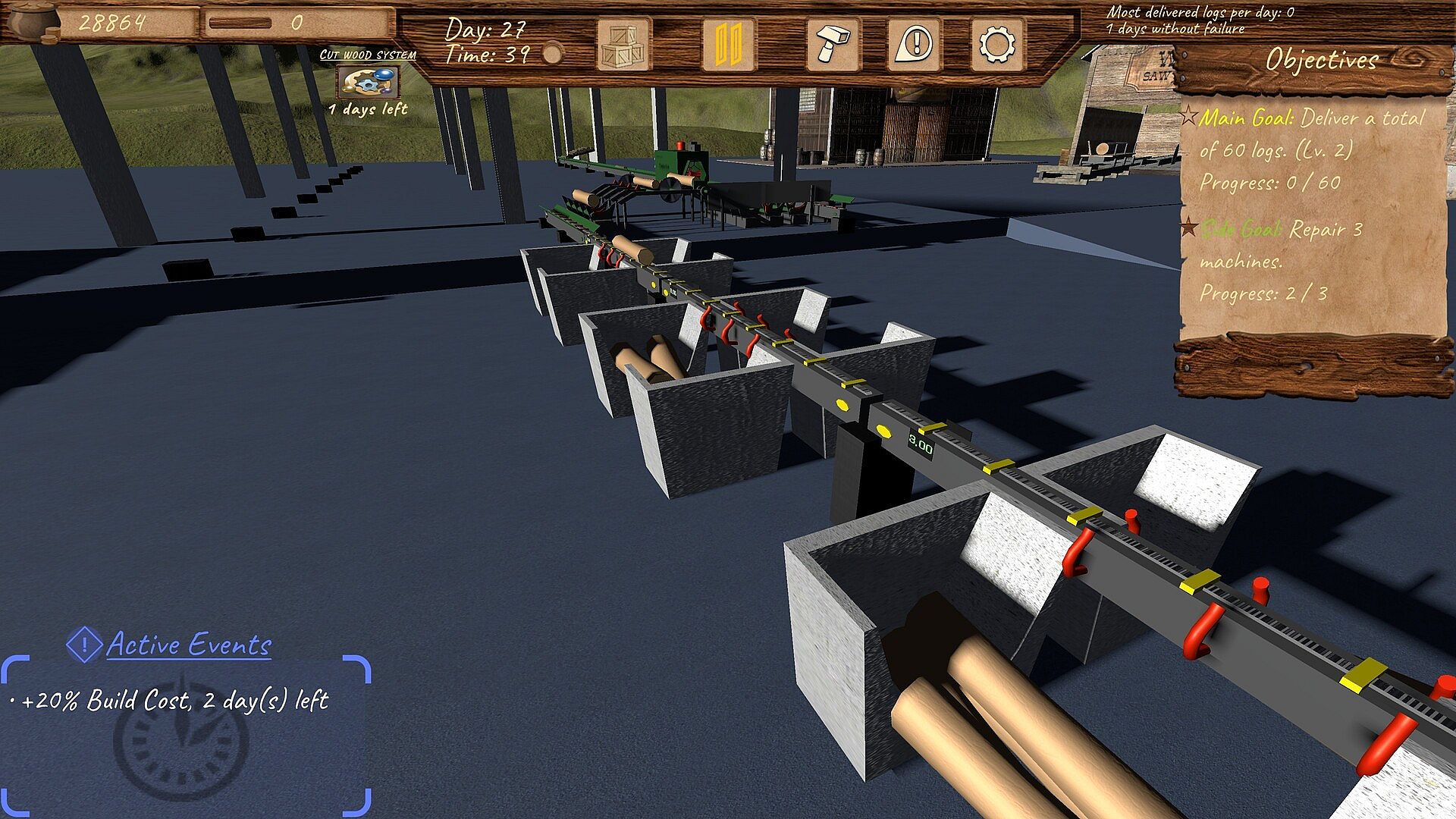
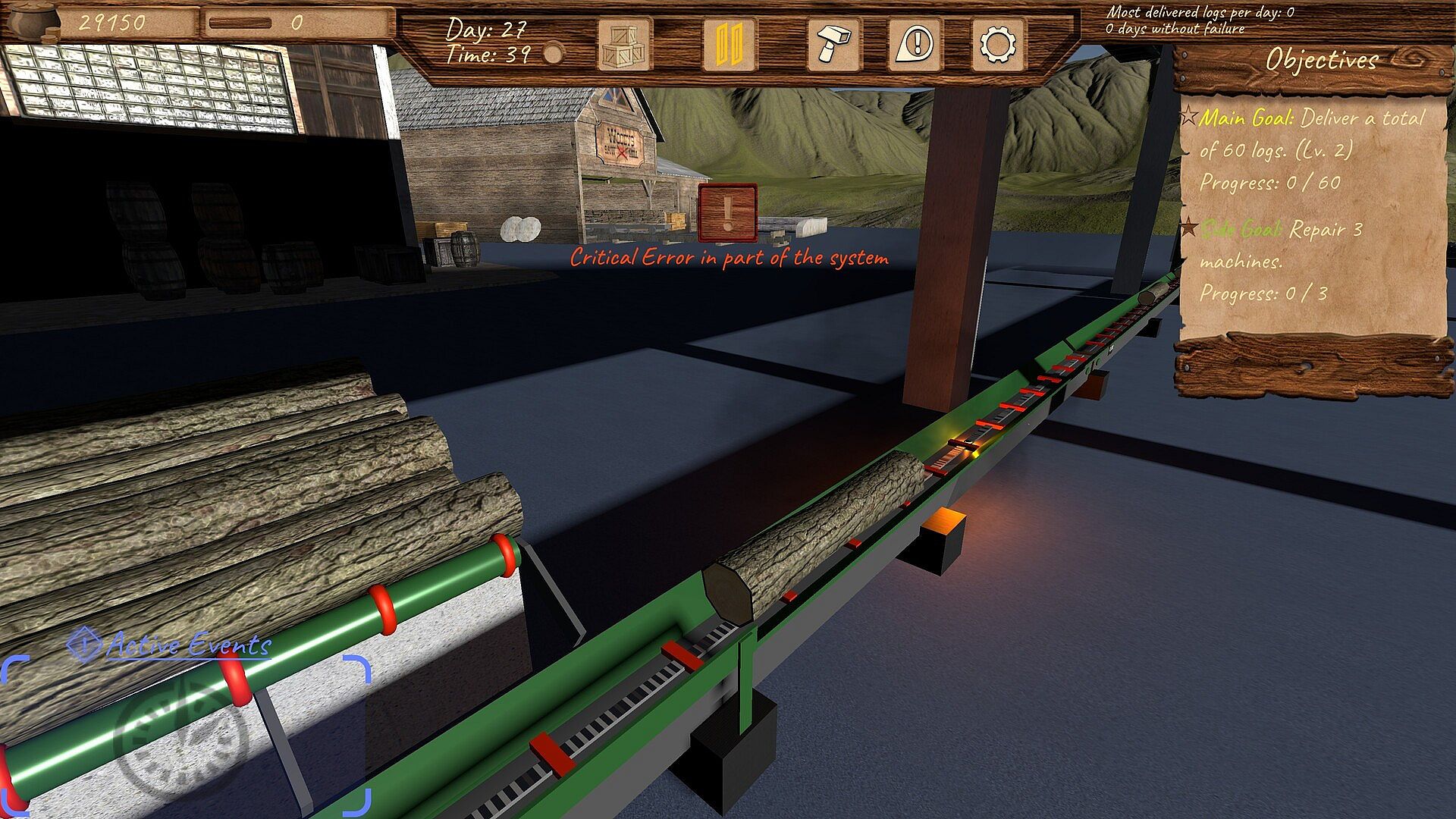
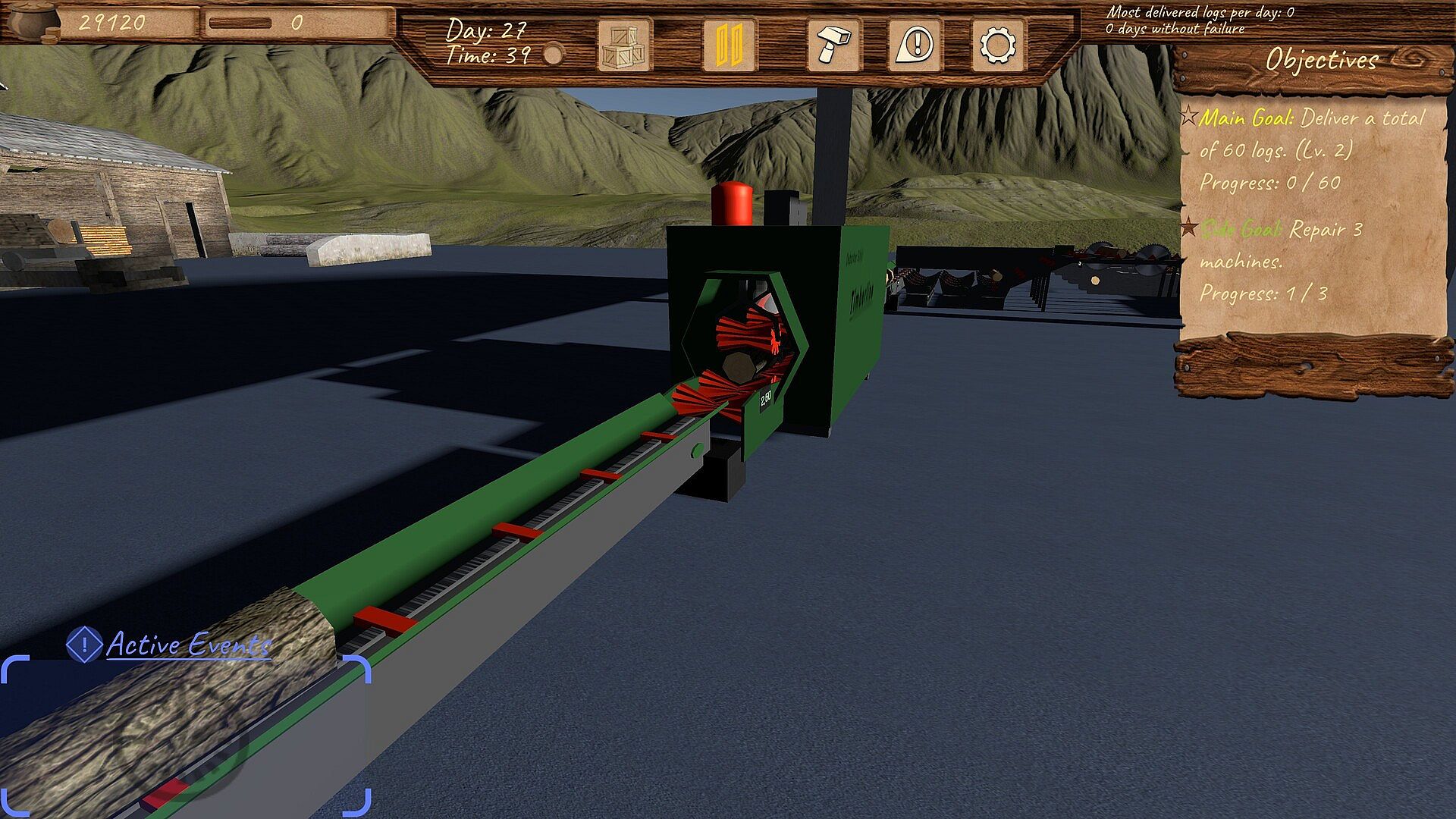
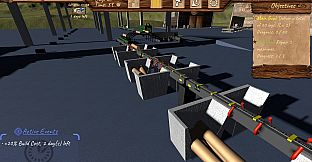
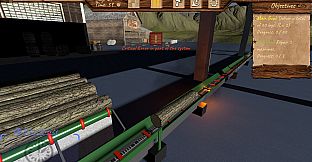
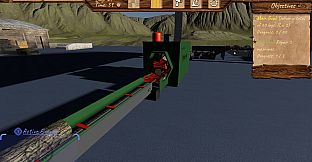
Timberline Factory is a single-player sawmill management simulation for PC that places players in charge of building and operating a wood-processing facility from the ground up. The experience centers on turning raw logs into finished lumber through hands-on design of production lines, with realistic physics governing how materials move and interact.
Gameplay
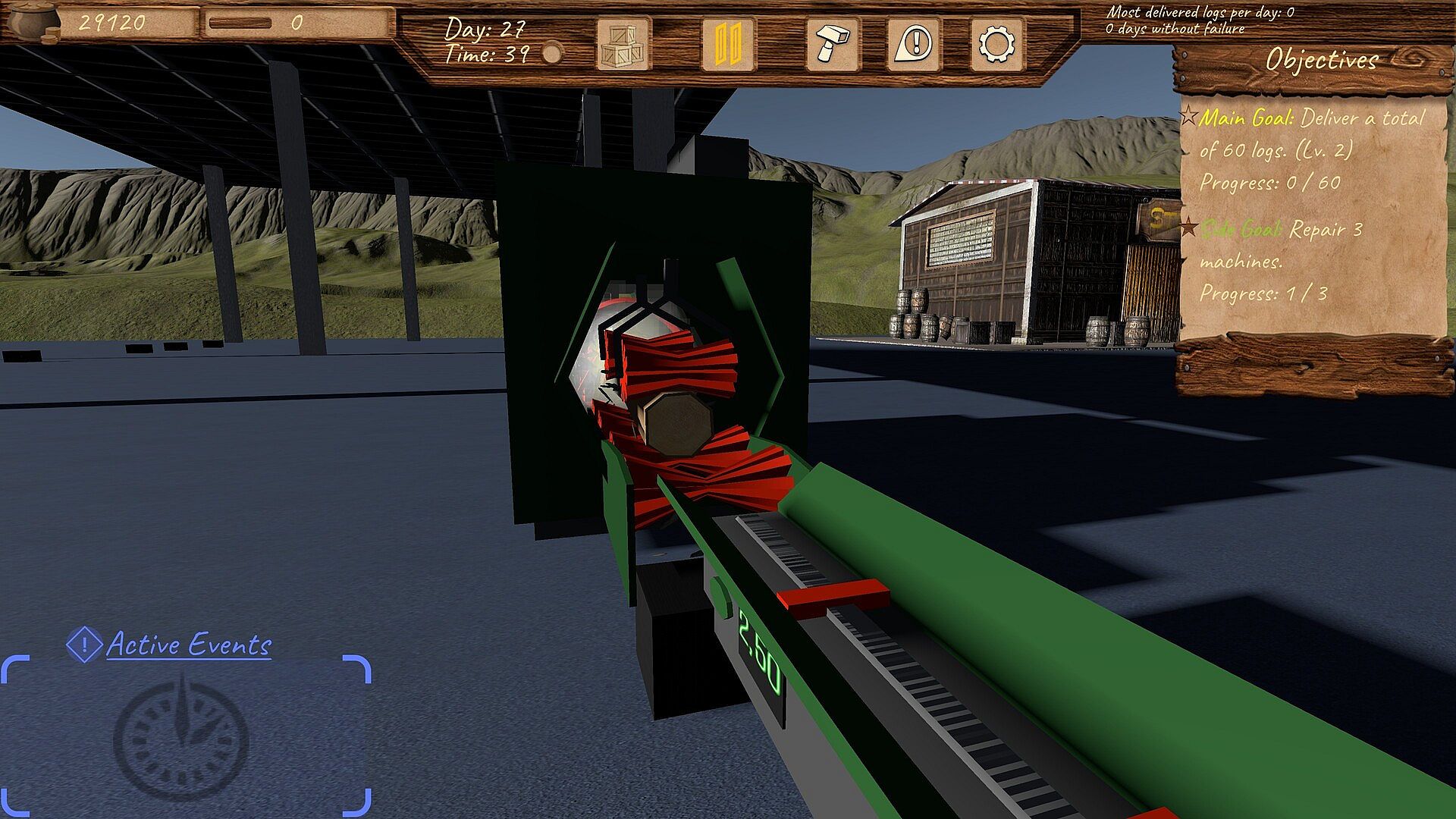
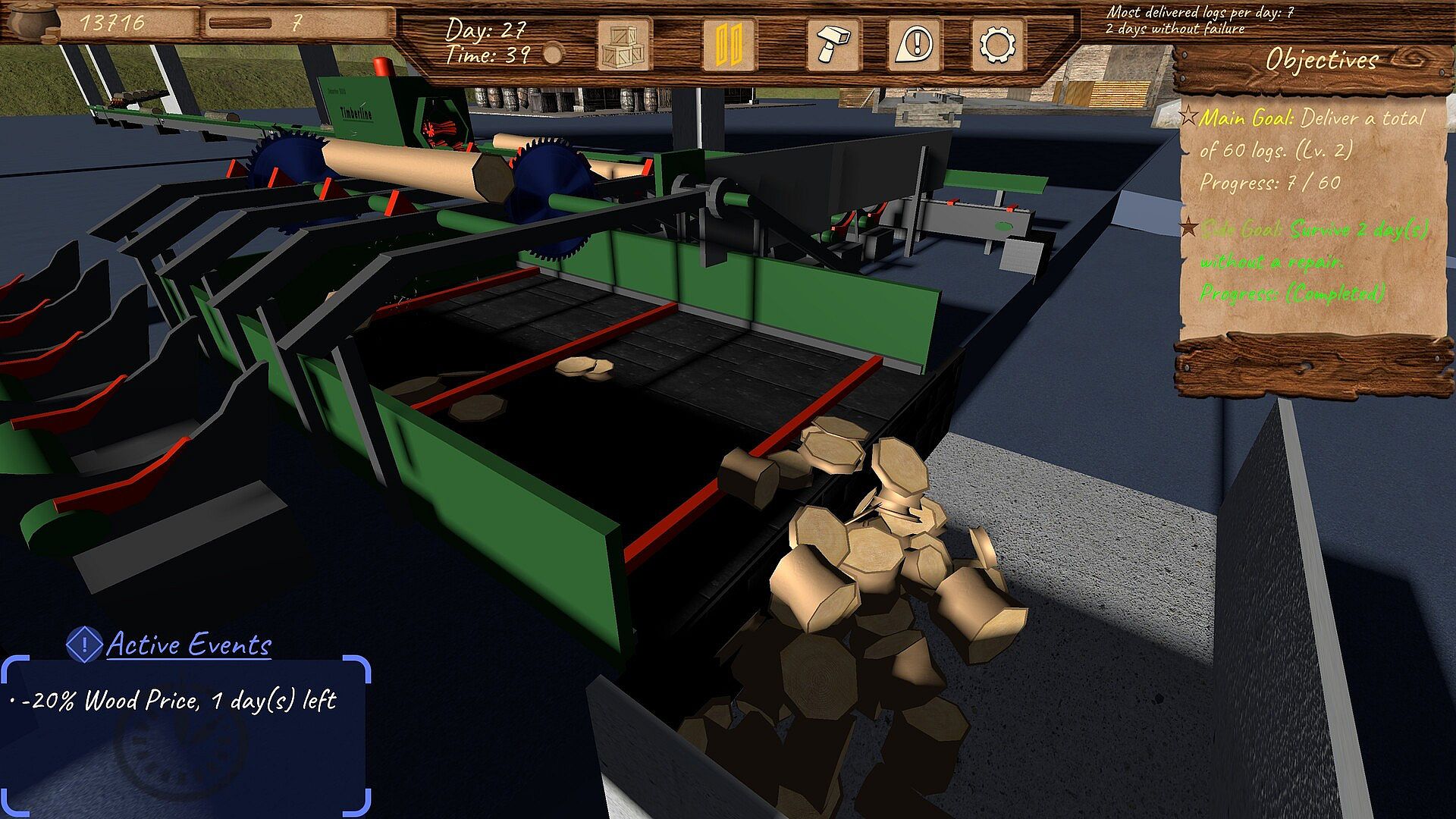
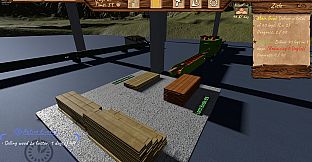
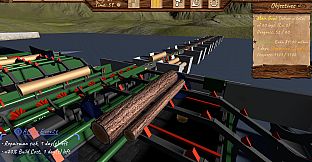
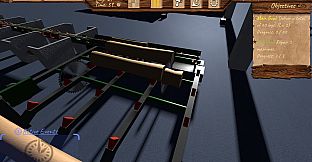
Players begin with a basic workshop and expand it by placing machines, saws, debarkers, and roller conveyors in flexible layouts. Logs roll and collide naturally on conveyor belts, requiring careful route planning to avoid jams and maintain steady flow. Different wood types introduce variation, as spruce processes easily while larch demands more attention but delivers better returns once refined into dried boards.
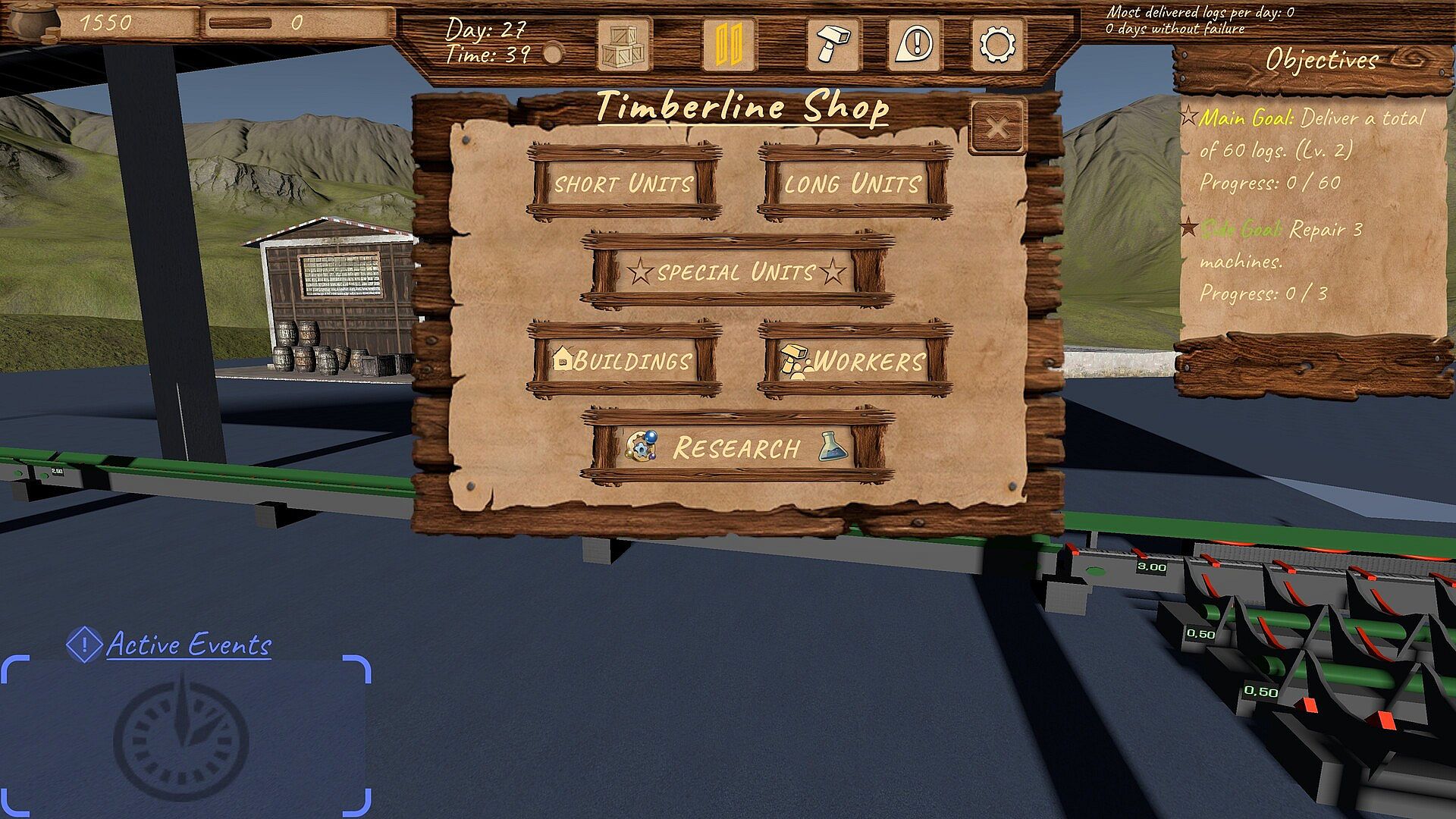
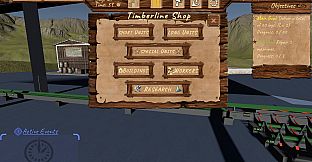
Machinery requires ongoing attention because sawing generates wear that raises failure risks. Timely repairs keep lines running, and upgrades such as the Titanium Upgrade reduce breakdowns over time. Profits fund research that unlocks equipment including the Crosscut System and improved saw blades, while hiring options like repair crews or sales staff handle routine tasks when operations scale up.
Daily maintenance costs and random events add pressure to the management side, forcing decisions on resource allocation between expansion, repairs, and order fulfillment. The loop rewards efficient layouts that minimize handling steps and maximize throughput from log intake to packaged boards ready for sale.
Game Modes
The game operates as a continuous single-player simulation without separate competitive or cooperative modes. Progression occurs through a dynamic order and goal system that mixes long-term plant expansion targets with shorter, time-sensitive side contracts. Completing these objectives unlocks new space and equipment while testing the ability to balance production speed against reliability.
Unexpected events and recurring expenses prevent any static routine, keeping the focus on adapting factory layouts in real time. The core loop remains consistent across play sessions, centered on iterative improvement of physics-driven transport and processing chains rather than distinct rule sets or scenarios.
Key Mechanics and Progression
Automation advances through specific unlocks such as the Headrig Line, which feeds logs straight into board production without intermediate steps, and the BoardStacker that prepares finished packages for market. These systems integrate with the physics simulation so that placement decisions directly affect collision risks and throughput rates.
Research trees expand options gradually, letting players tailor their facility toward higher-margin woods or more durable components. Staff hires provide relief from micromanagement, allowing focus on strategic layout changes as the operation grows from manual crafting to high-volume automated lines.
Is It Worth Playing?
Timberline Factory suits players who enjoy detailed factory automation and resource management in a single-player setting. The physics-based logistics create tangible feedback for layout choices, and the combination of wear mechanics, research, and goal tracking adds layers beyond simple building. Because the title remains in Early Access with a planned development window of six to twelve months, the experience continues to evolve based on player input regarding balance and new content.
Those interested in sawmill operations and conveyor optimization will find the core systems functional and engaging from the start. The absence of traditional multiplayer or alternate modes keeps the emphasis on personal efficiency and long-term facility growth. Early Access participants can influence future additions such as expanded wood varieties and processing depth while the game refines its current loop of production, maintenance, and profit management.