


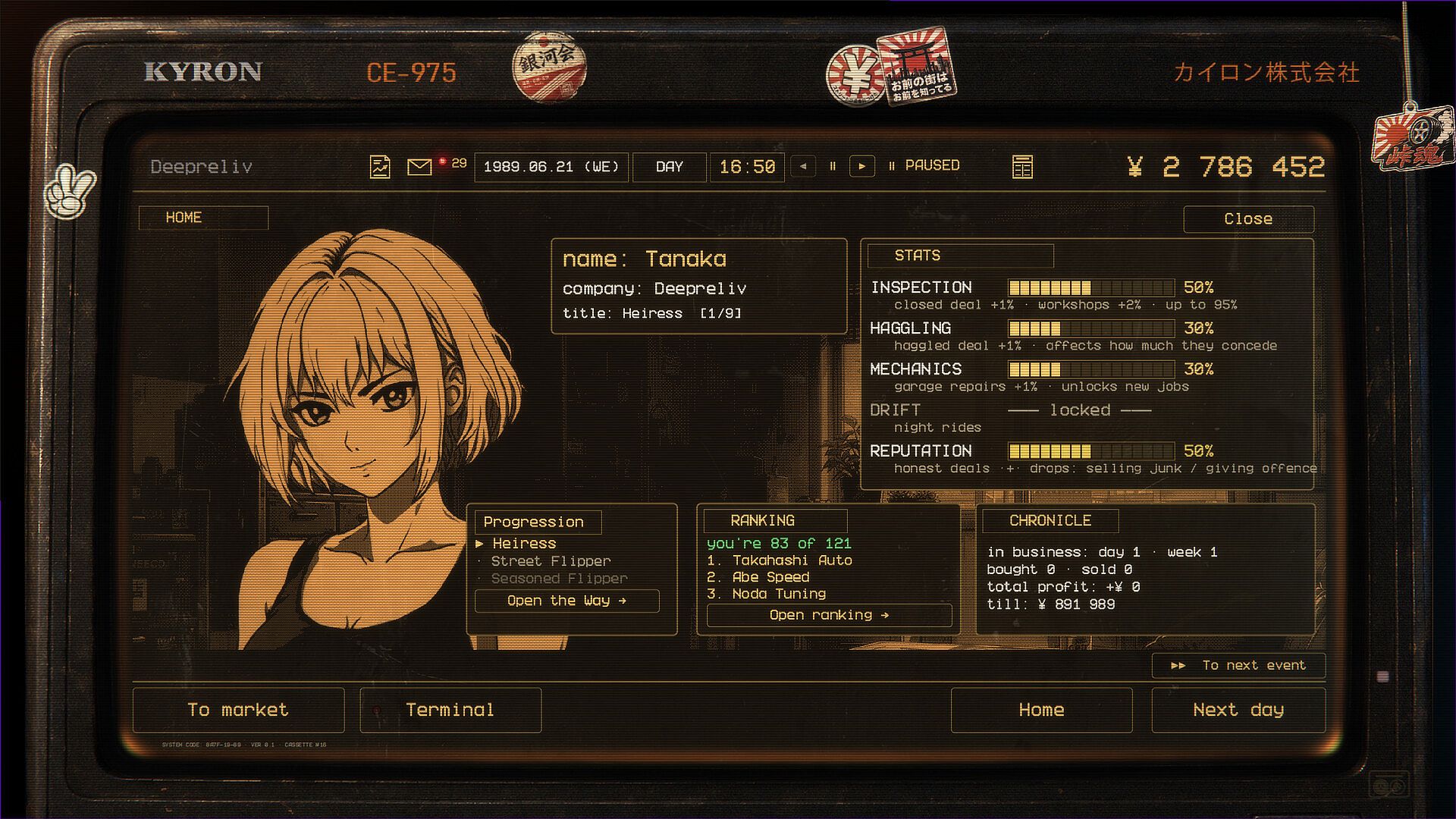
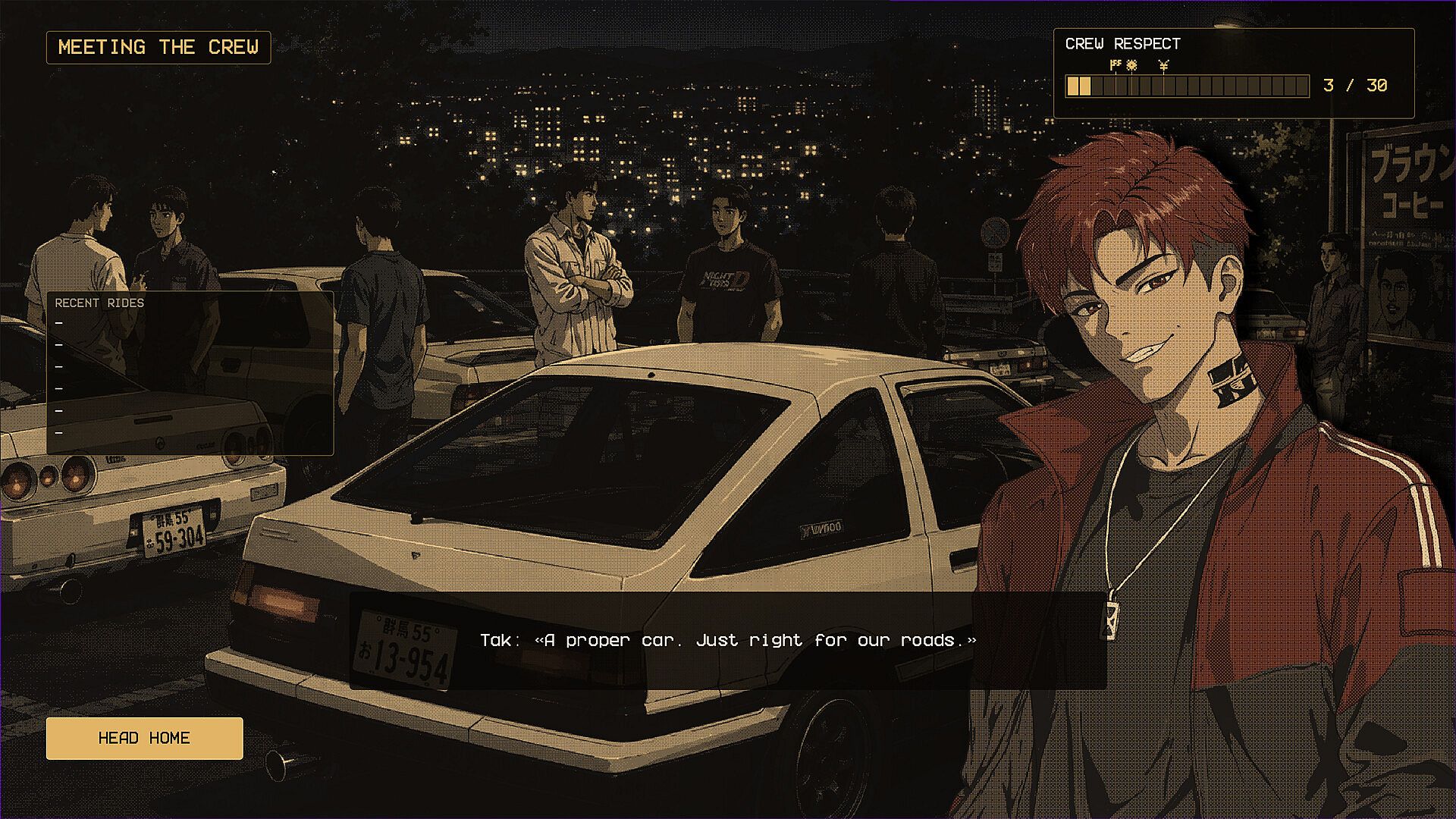
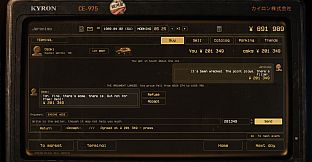
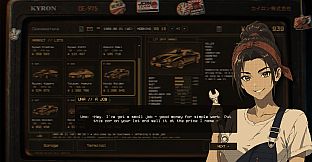
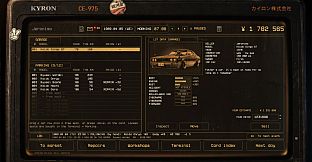
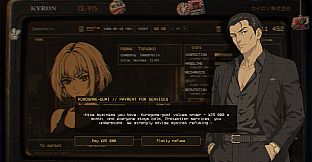

Touge: JDM Dealership Simulator is an indie simulation game set in an alternate version of Japan in spring 1989. Players inherit a single older Kaido Ginga GT from their father along with the name of the team that formed around it. The rest of the experience centers on building a car dealership through buying, inspecting, preparing, and selling vehicles while managing weekly finances and market shifts.
Gameplay
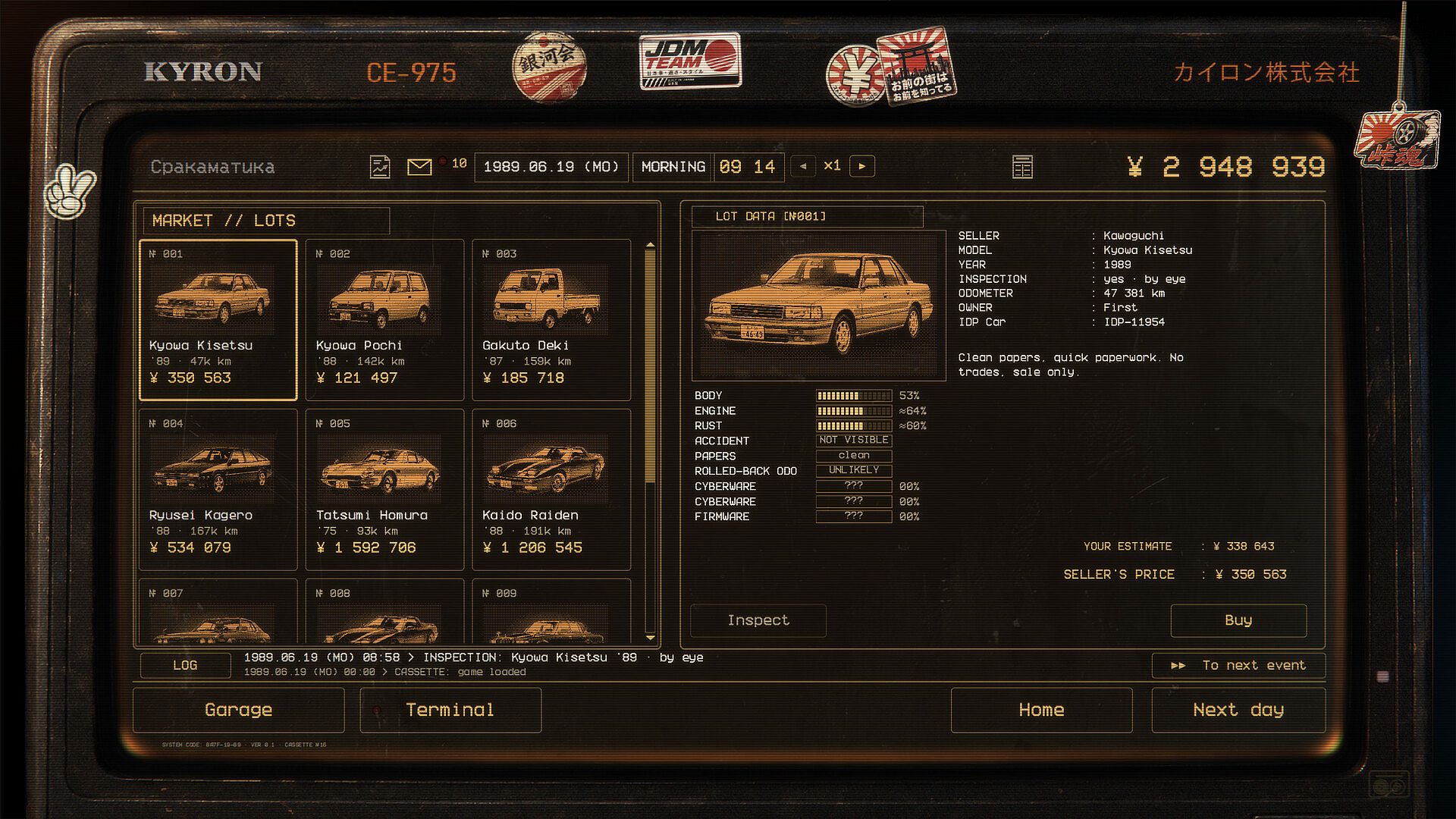
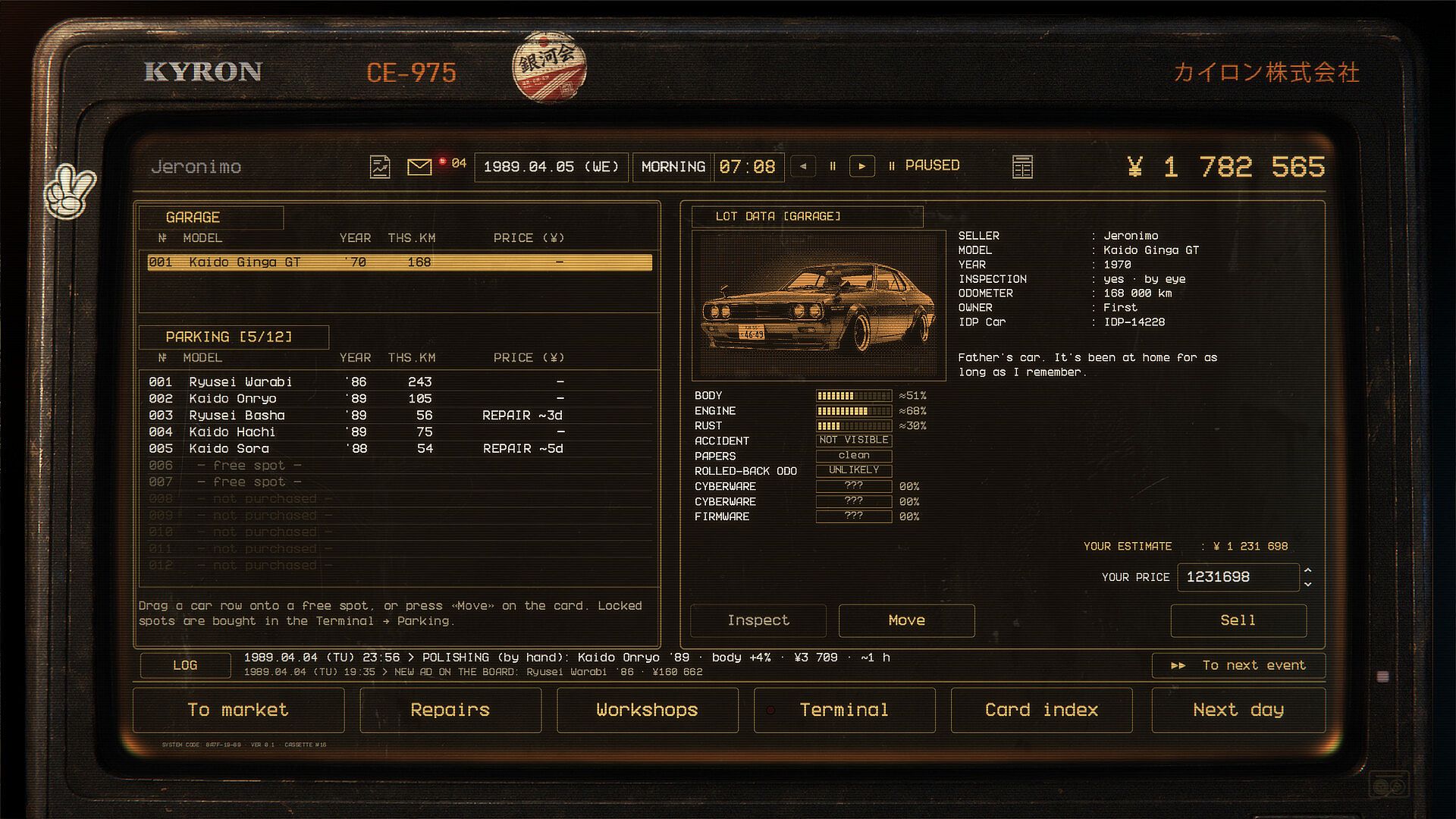
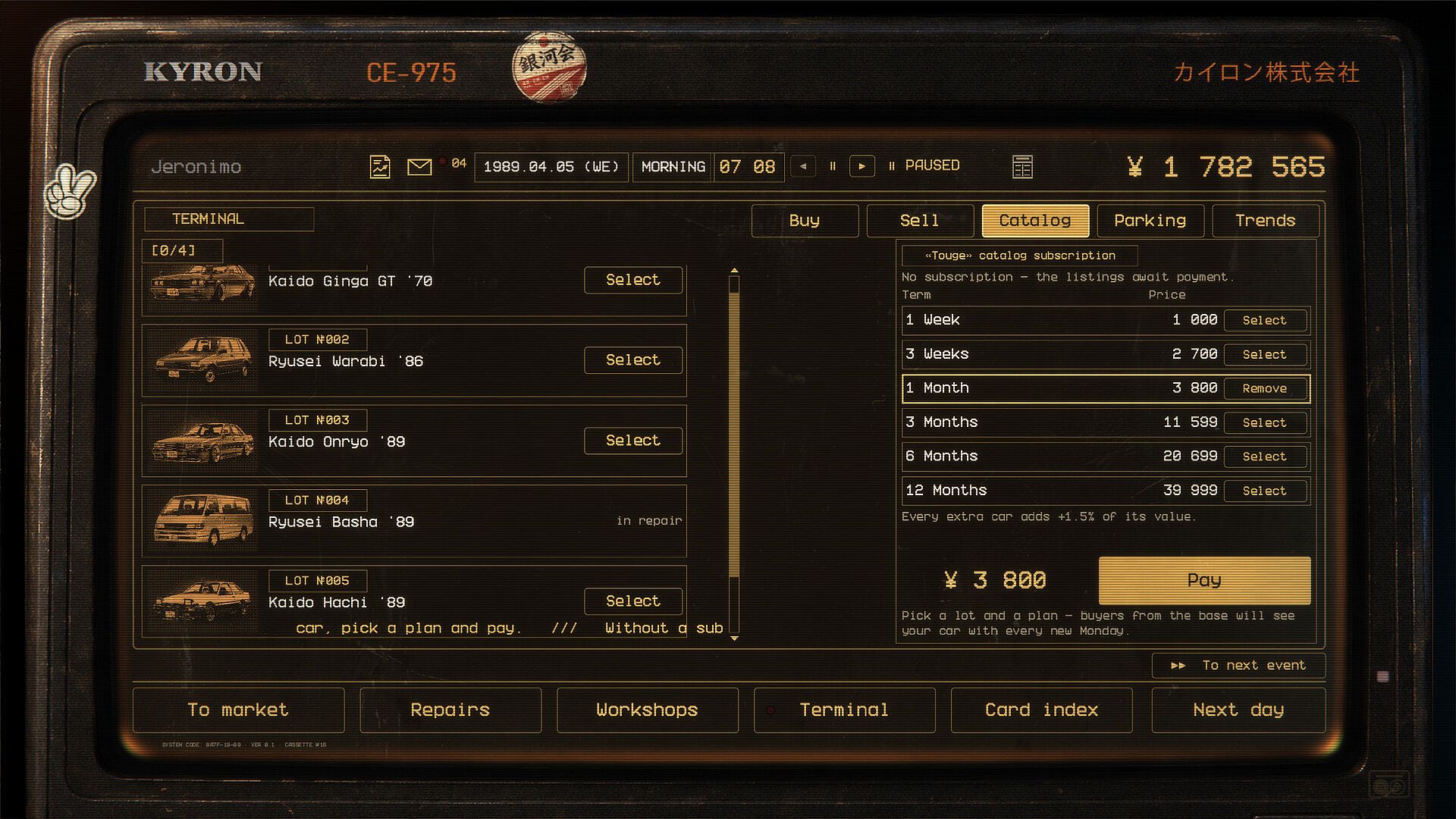
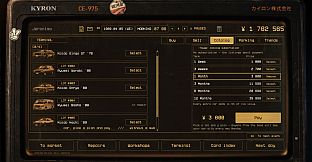
The core loop revolves around weekly cycles. Each Monday brings a new catalog of lots on cassette, while Friday requires settling bills. Between those deadlines, the focus stays on locating undervalued cars that others have overlooked. Visual inspection provides rough estimates on condition such as engine health or rust levels, but accuracy depends on experience and carries built-in uncertainty. Only a workshop diagnosis reveals the true state of a vehicle and the price it can realistically command.
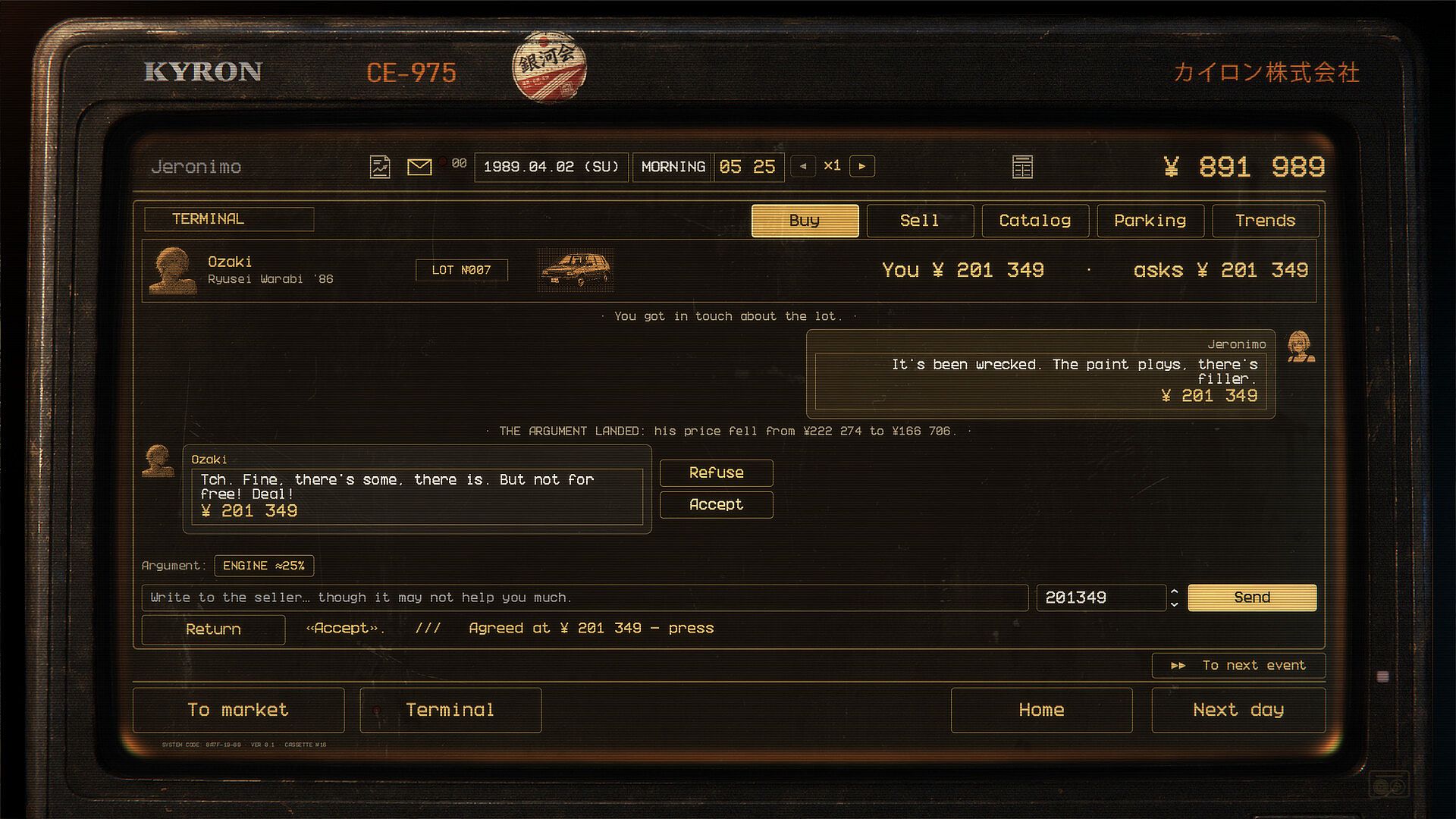
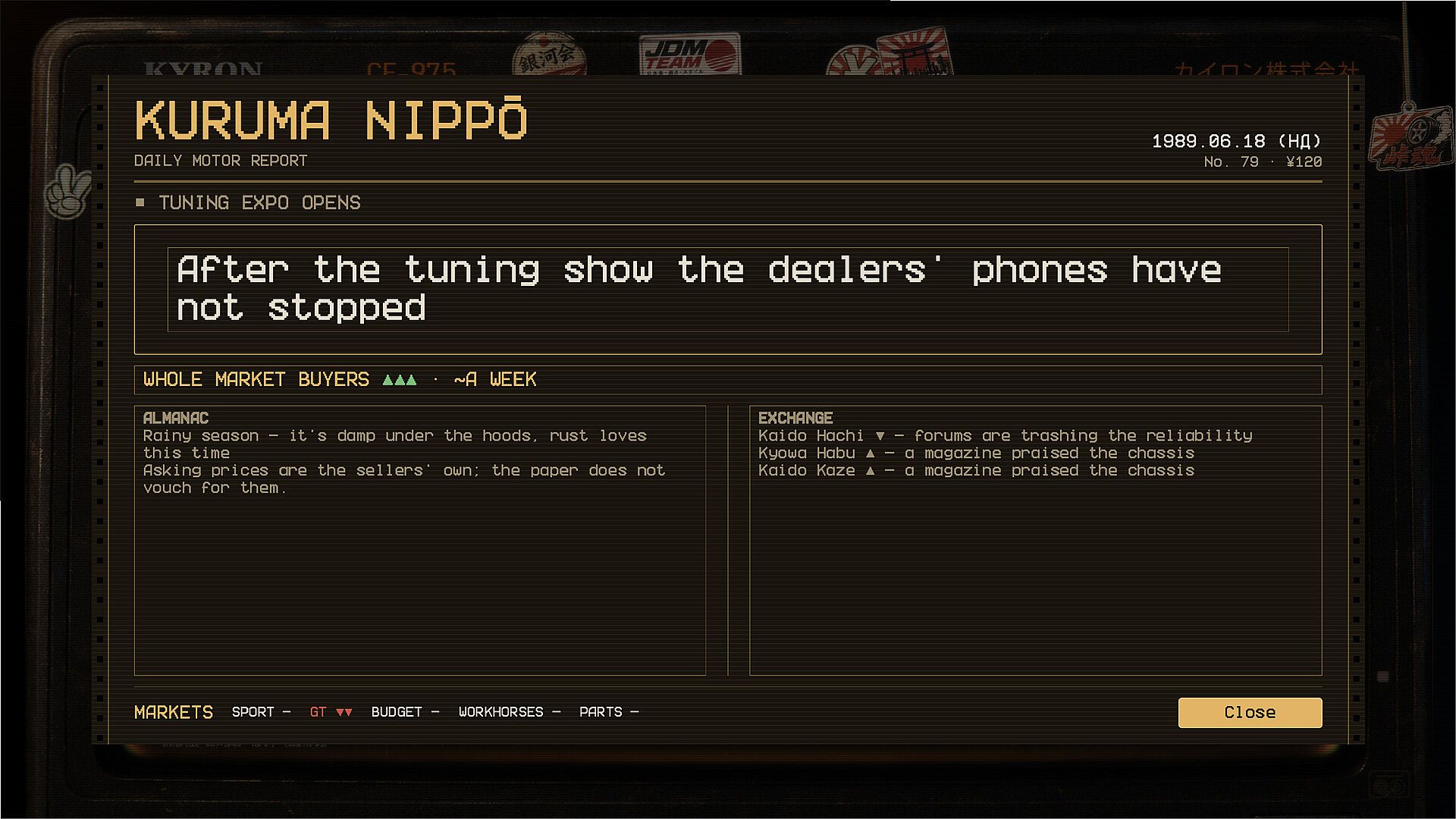
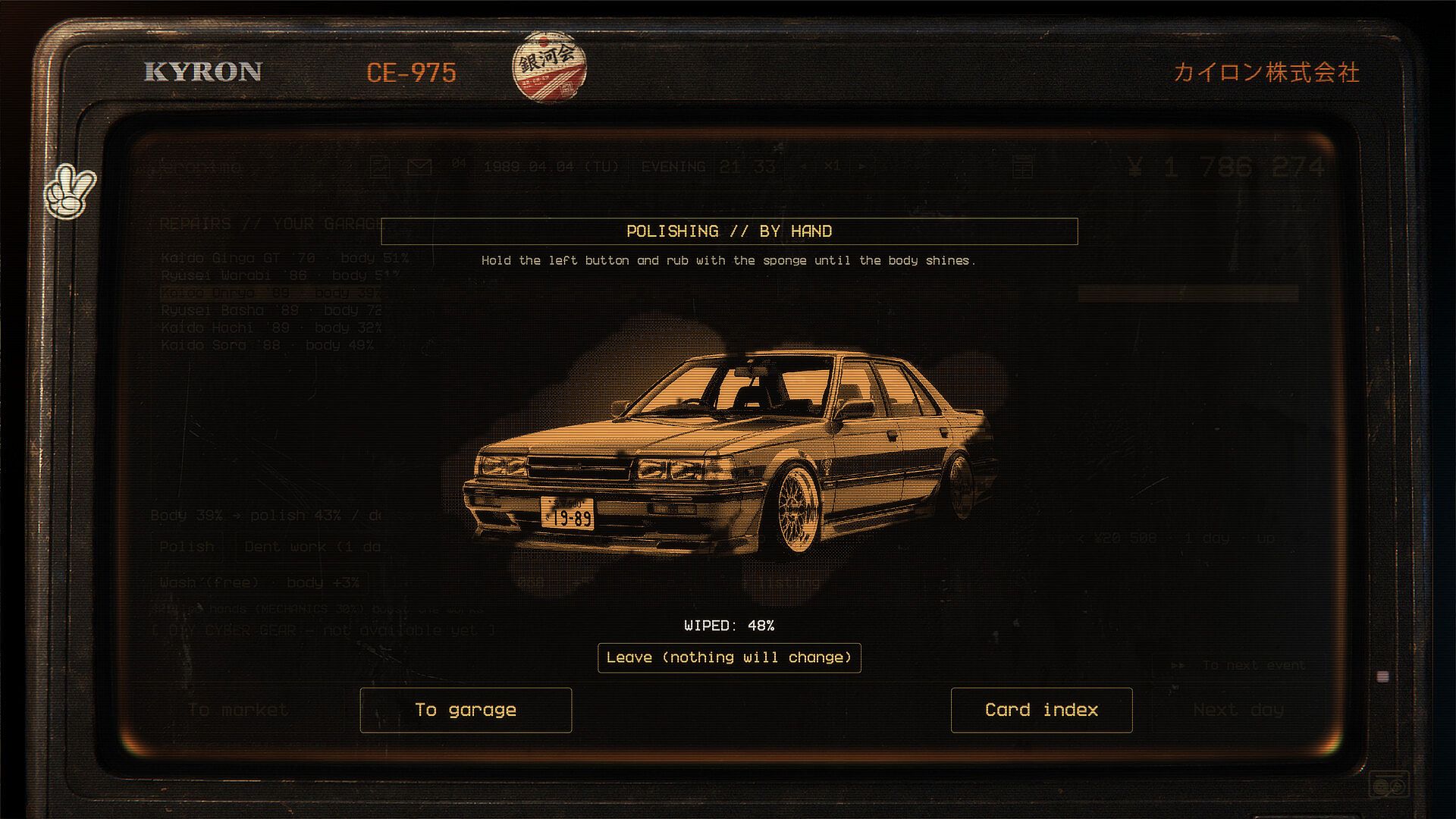
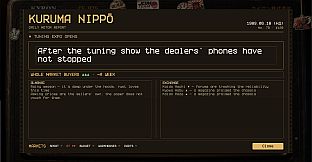
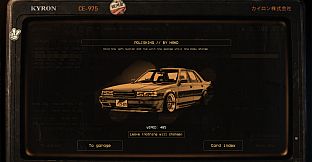
Market conditions evolve as 1989 draws to a close and capital begins leaving the country. Buyers become harder to reach, forcing decisions about inventory and timing rather than simply selecting desirable cars. Haggling occurs through chats with sellers and buyers who maintain their own memories of past transactions. Preparation steps like polishing or photography can improve appeal, while paying for workshop repairs adds another layer of cost and potential return. Sales channels include a basic windshield price tag for walk-up interest or the Touge catalog, which takes a cut in exchange for bringing targeted buyers. Morning newspapers deliver both routine updates and occasional larger announcements that reward attentive reading.
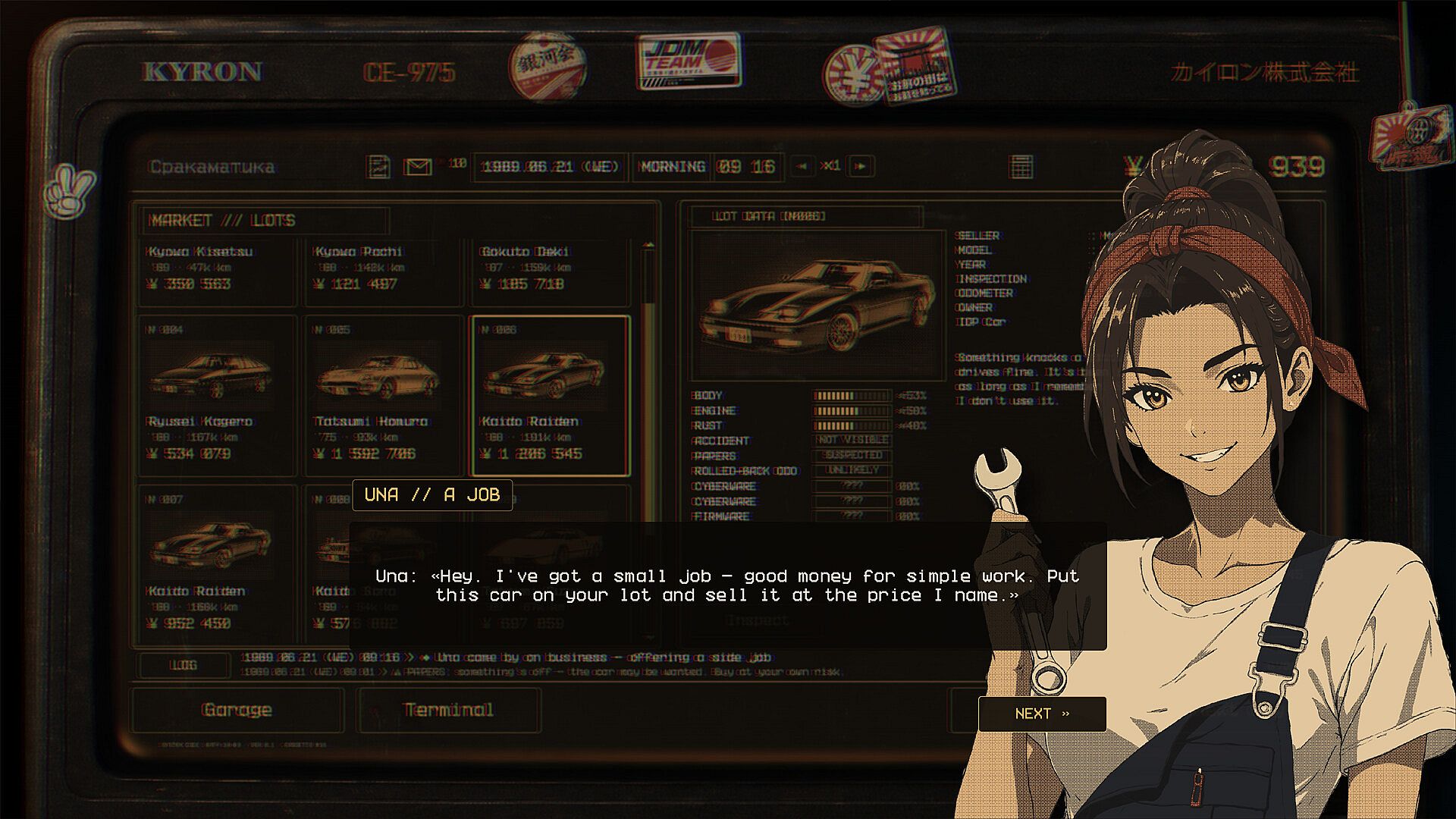
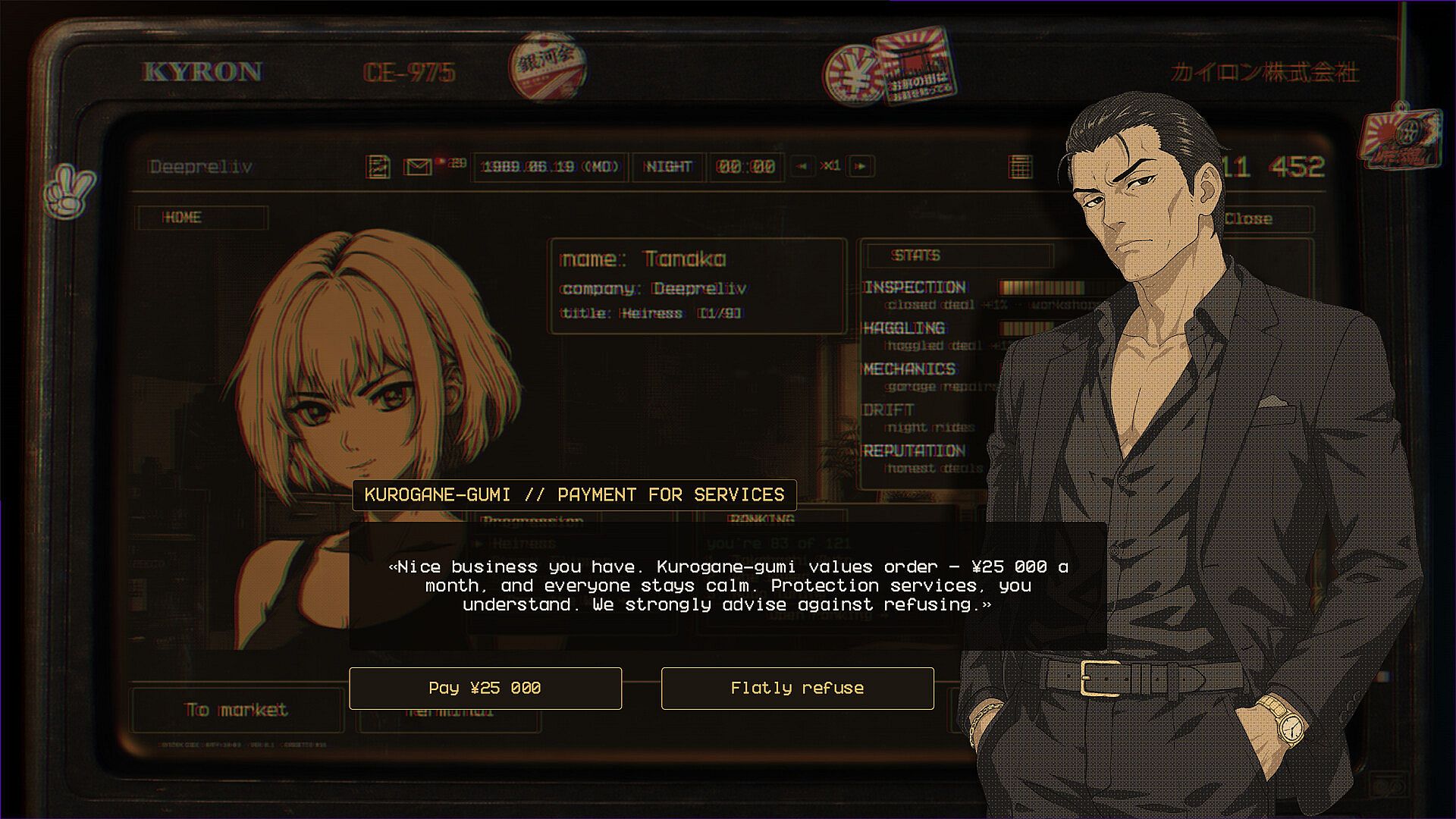
Respect earned through consistent dealings can unlock further opportunities, including mountain-road challenges that tie into the broader team legacy. Drift racing appears only as a high-stakes wager rather than a direct control activity. Almost every choice carries downstream effects on reputation and available options.
Game Modes
The game operates as a single-player economic simulation without separate named modes. All activity flows through the dealership management loop of sourcing, diagnosing, preparing, and selling cars under time and financial pressure. The structure emphasizes steady progression through weekly cycles and relationship building rather than distinct competitive or story branches.
Setting and Atmosphere
The 1989 alternate Japan setting shapes every transaction. Economic uncertainty at the end of the decade influences buyer behavior and inventory turnover. Cars carry potential complications such as accident history or questionable origins that only surface after purchase. The amber-screen presentation reinforces the period feel while keeping the focus on numbers, estimates, and negotiation outcomes.
Characters in the market remember prior deals, creating a persistent social layer. Sellers may delay responses or change terms, and buyers can vanish if market conditions worsen. These elements turn routine buying and selling into a series of calculated risks rather than straightforward flips.
Is It Worth Playing?
This title suits players who enjoy management simulators centered on resource evaluation, negotiation, and long-term reputation management. The gameplay rewards careful inspection habits and timing awareness over quick reflexes or collection goals. Because the game remains in its announcement phase with a teaser trailer recently released, no player reviews or ratings exist yet. Those drawn to the described systems of weekly lot management, workshop diagnostics, and consequence-driven haggling will find a focused experience once it launches on PC. Others seeking action-oriented driving or expansive multiplayer features may want to wait for more details after release.