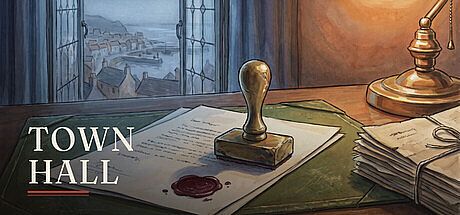


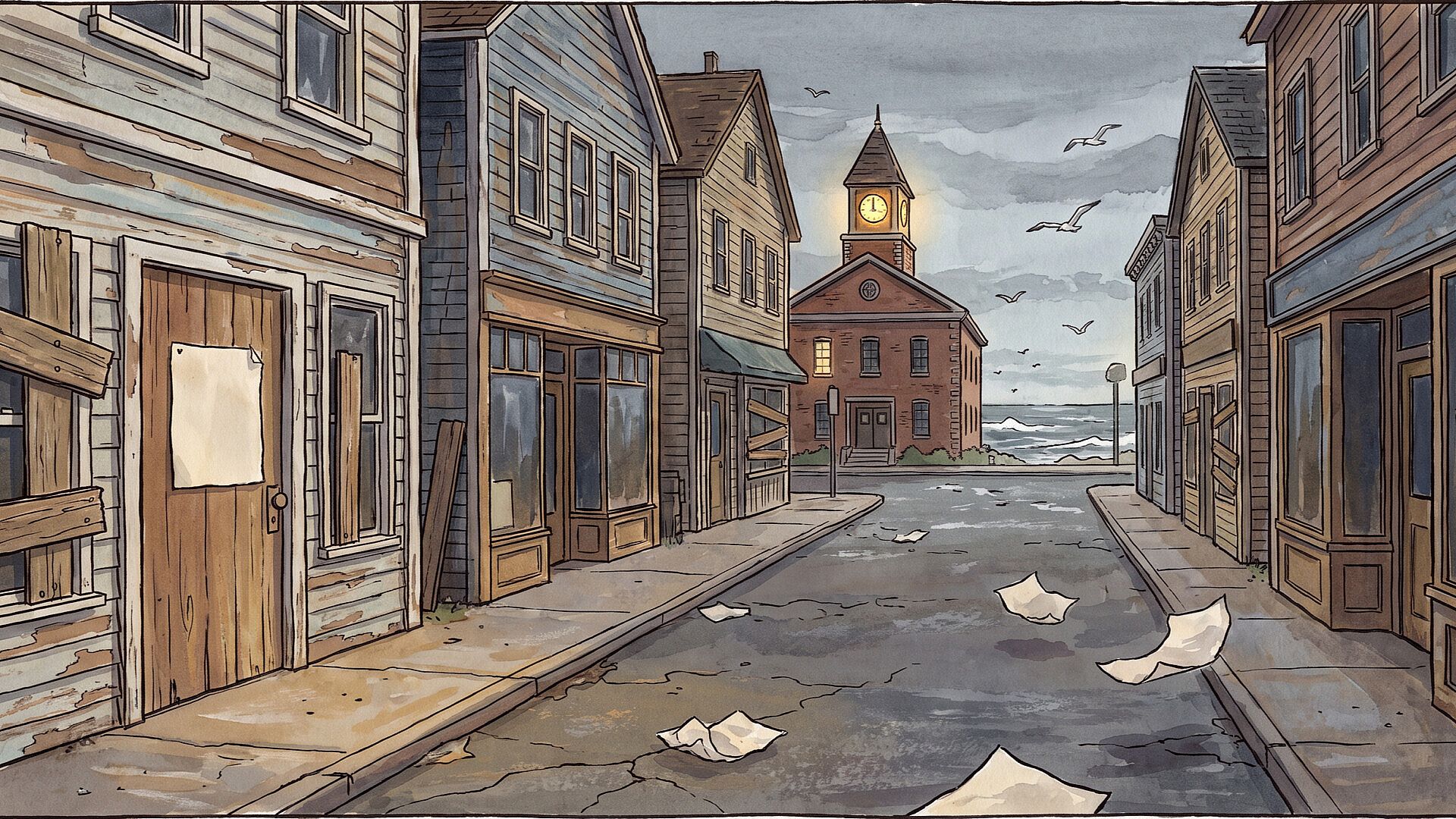
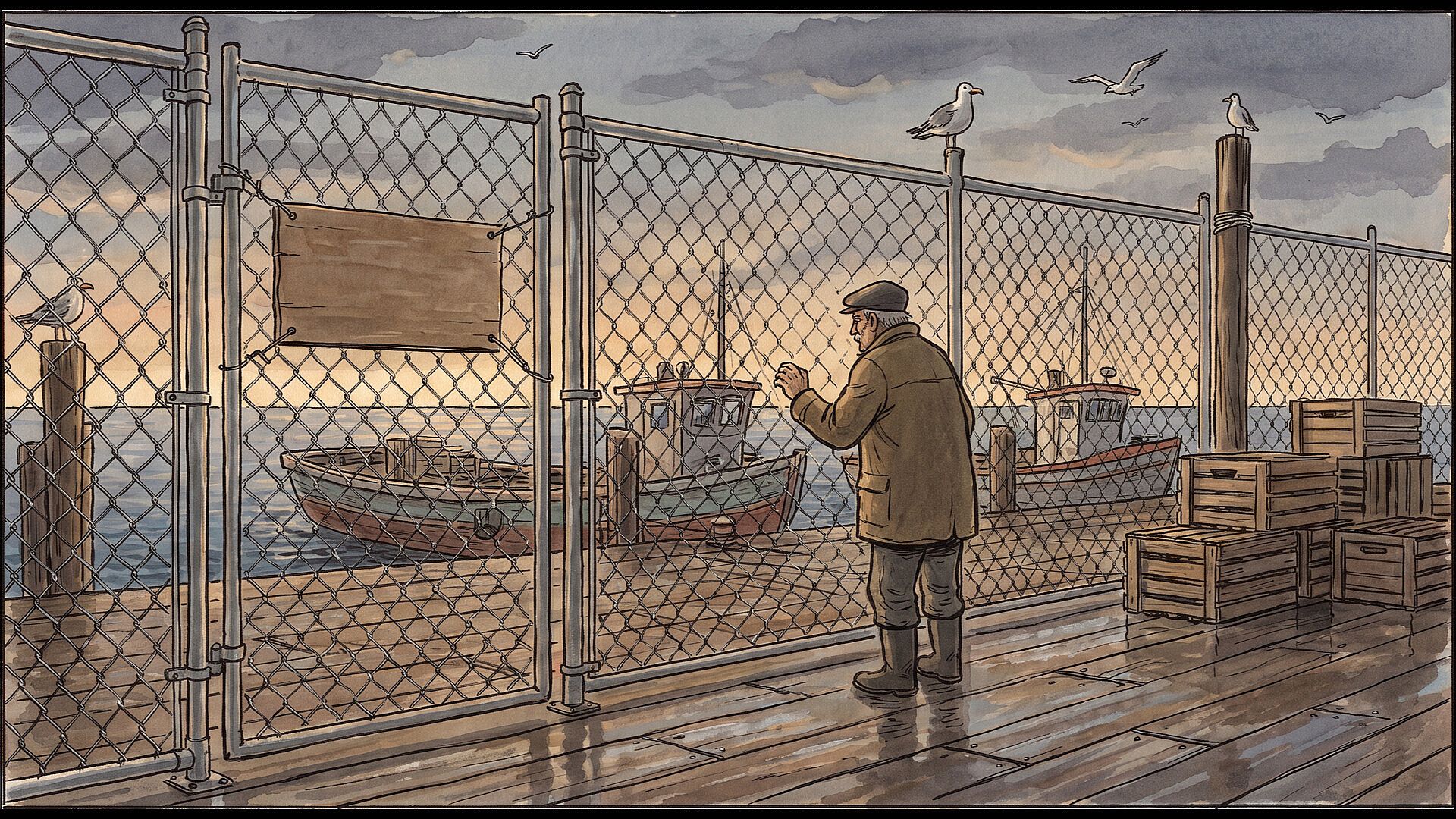
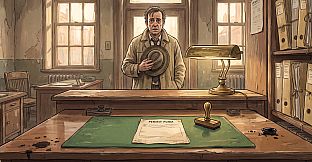
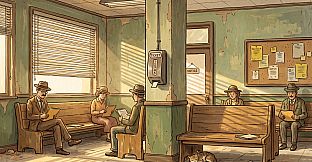

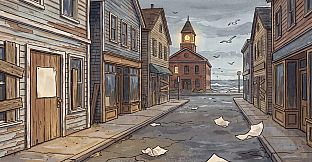

Town Hall is a first-person simulation and adventure game set in a single municipal building that serves as the last functioning government office in a fading town. Players take on the role of the town clerk, handling official documents with a rubber stamp that turns every approval or refusal into reality. The experience centers on managing permits, licenses, and certificates while navigating the personal and financial pressures that come with the position.
Gameplay
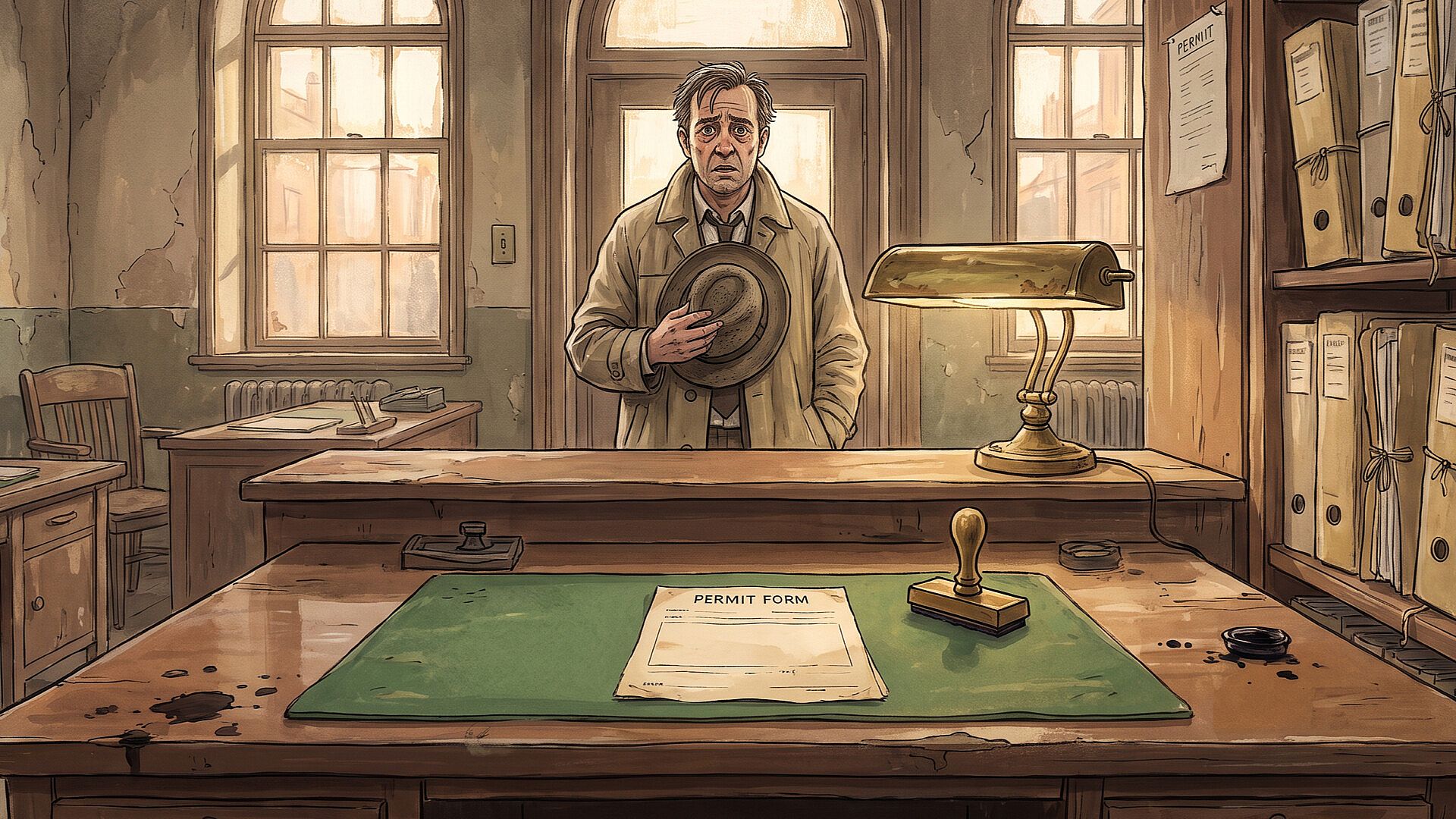
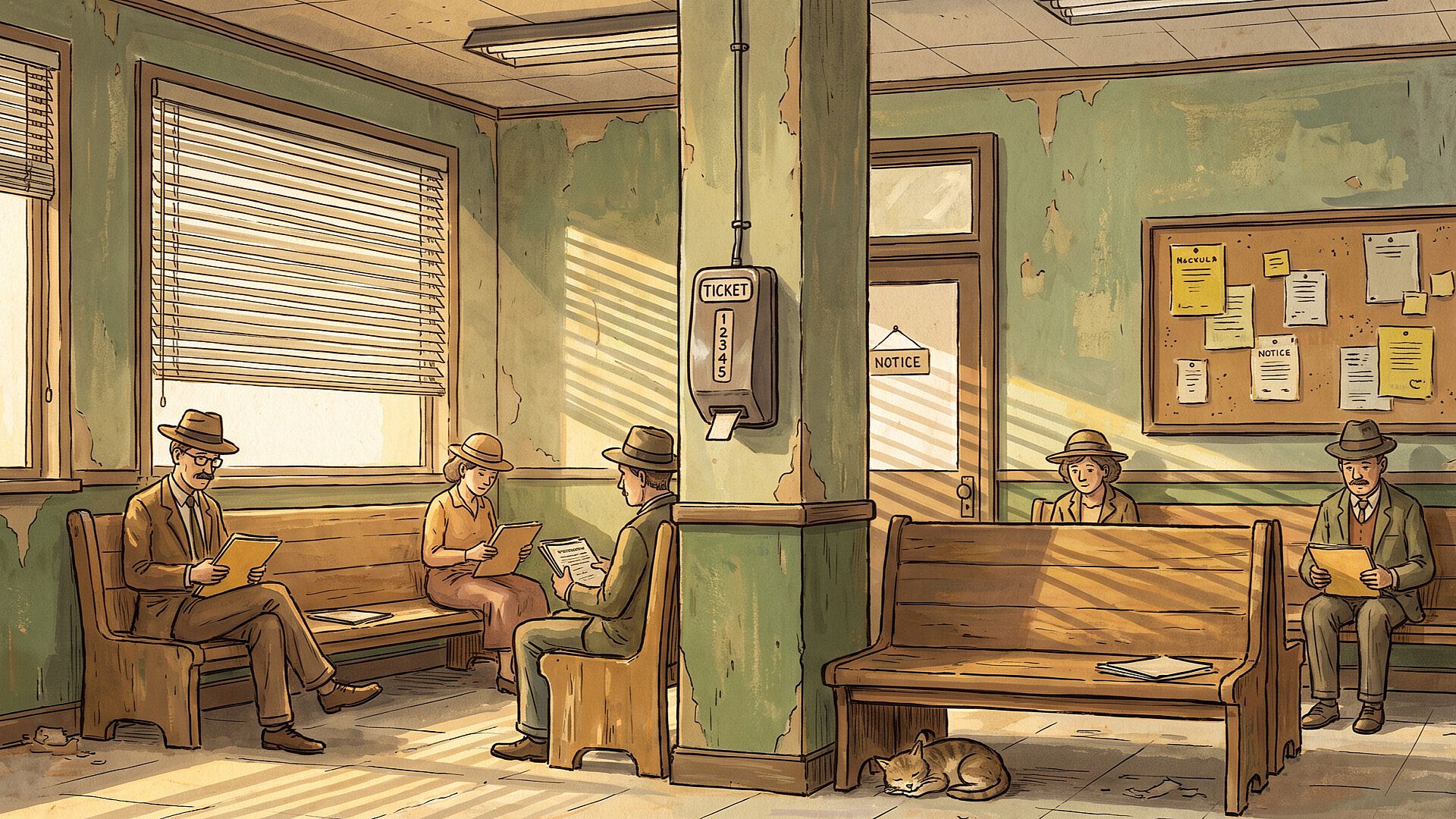
The core loop involves sitting at the desk and processing requests from a line of townspeople. Each document represents a claim about births, deaths, ownership, or business operations, and the stamp decides whether those claims hold. Approvals reshape the surrounding town, while refusals leave individuals to deal with the version of reality the clerk has chosen. Money factors into decisions through folded bills slipped into folders, and reputation builds or erodes based on patterns of choices in a community small enough to track every signature.
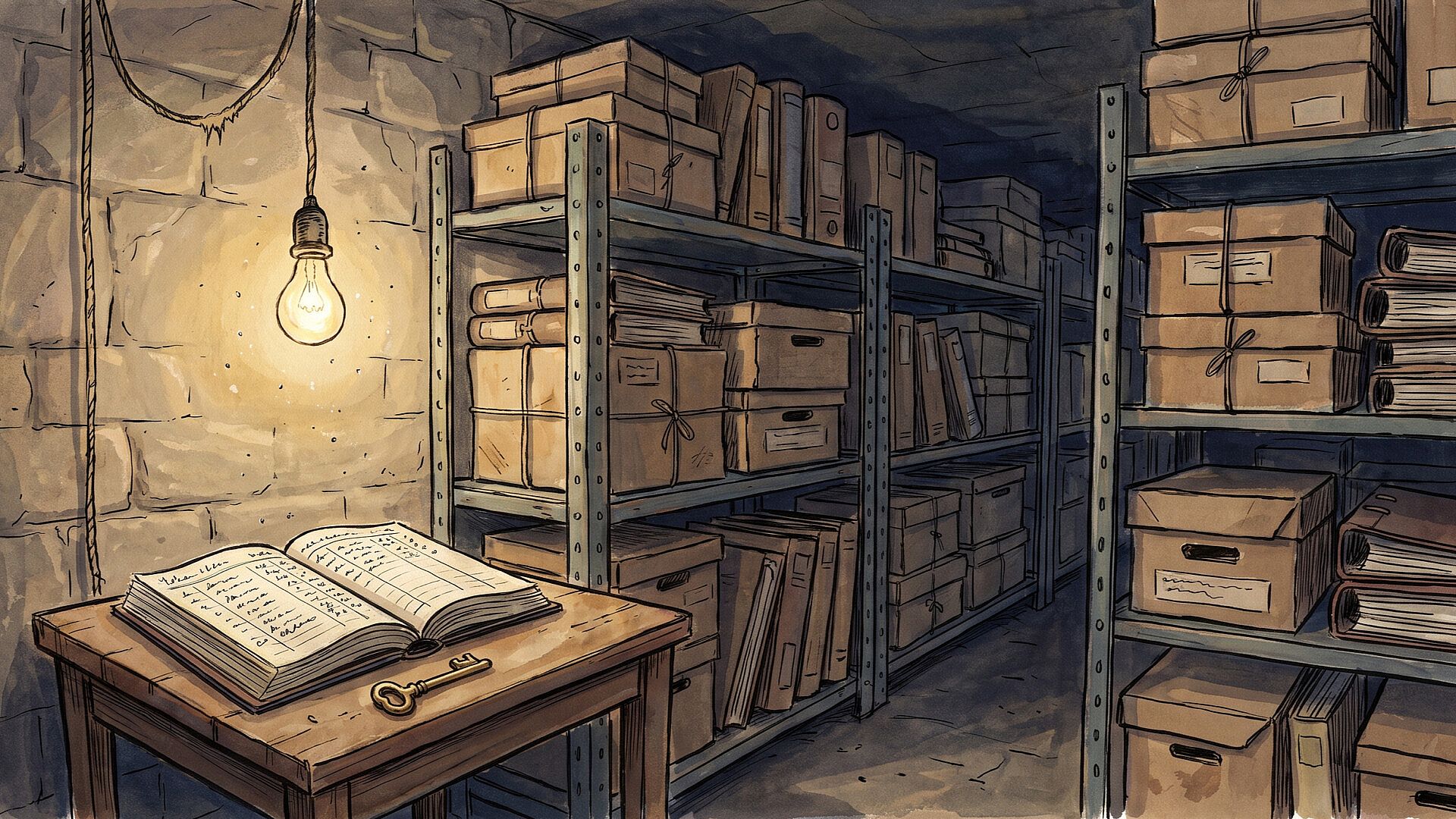
Stepping away from the desk opens access to a fully walkable 3D town map. Players can visit locations affected by prior stamps, such as newly reopened businesses or properties that have changed hands. Every interior space supports searching through drawers, ledgers, and scattered notes that reveal details about residents and the building itself. Below the main archive lies a basement section holding files on the town's past, with access granted gradually through favors exchanged at the desk.
Resource management revolves around a salary that arrives late and heating costs left unpaid, creating ongoing tension between personal needs and official duties. The absence of combat shifts focus entirely to the weight of administrative power and its visible consequences across the environment.
Game Modes
Town Hall operates as a single-player experience with no separate modes or multiplayer components. The entire session unfolds through the continuous cycle of desk work, exploration of stamp effects, and incremental discovery of the town's underlying history. Progress occurs naturally as decisions accumulate and new documents arrive, without branching campaigns or competitive elements.
Story and Setting
The narrative emerges from the interactions at the desk and the physical traces left throughout the building and town. Residents bring personal reasons for their requests, often tied to money or survival, while the unreachable mayor and darkened offices underscore the clerk's isolated authority. The basement archive provides optional layers of context about why the town has emptied, revealed only as keys and favors pass across the desk.
Environment details reinforce the theme of a government reduced to one functional room. The full 3D rendering of the municipal building and surrounding areas allows thorough examination, with objects and documents serving as both functional elements and sources of background information.
Is It Worth Playing?
Town Hall suits players interested in deliberate, choice-driven simulation without action or combat. Its mechanics emphasize the permanence of decisions and the ripple effects on a small community, supported by a money and reputation system that ties convenience to visible consequences. The game runs offline in single-player format across ten languages, with no account requirements or telemetry. Those who value narrative depth emerging from administrative tasks and environmental exploration will find the focused scope rewarding, while players seeking faster pacing or multiplayer features may prefer other titles. The experience remains consistent with its described systems and contains no runtime-generated content.